The Best Fantasy Novels About Secrets, Records, and Power

Looking for fantasy novels where information is the battlefield? Discover five fantasy books about secrets, espionage, bureaucracy, political intrigue, and the struggle to control the truth.

Most fantasy stories are ultimately about power.

Armies clash. Heroes fight villains. Kingdoms rise and fall.

But some of the most interesting fantasy novels I’ve read are about information.

Who controls it.

Who hides it.

Who gets to decide what’s true.

In these books, the decisive battles aren’t fought with swords. They’re fought with records, secrets, bureaucracy, manipulation, and the ability to shape what people believe.

If that sounds like your sort of thing, here are five books worth checking out.

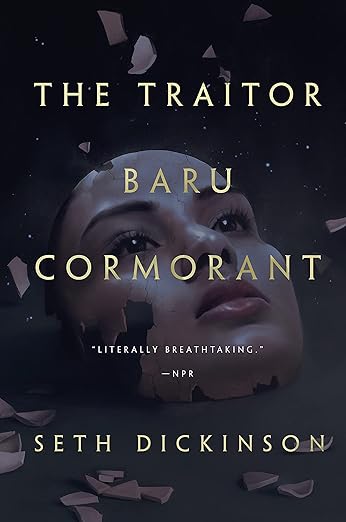
The Traitor Baru Cormorant — Seth Dickinson

This is probably the clearest example of what I’m talking about.

Baru comes from a conquered people and decides she’s going to destroy the empire that took her homeland.

The twist is that she doesn’t do it with an army.

She does it through administration. Tax policy. Economics. Bureaucracy.

It’s a novel where financial systems are weapons and accounting can be more dangerous than a sword.

What makes the book so compelling is the cost. To use the empire’s tools, Baru has to understand them. To understand them, she has to become part of them.

The result is one of the most devastating political fantasies I’ve ever read.

Sixteen Ways to Defend a Walled City — K. J. Parker

You could put several K. J. Parker novels on this list, but this is probably the easiest place to start.

The protagonist isn’t a great warrior or a chosen hero. He’s an engineer.

When a city comes under threat, he survives through logistics, planning, deception, and sheer nerve.

The joy of the novel is watching an intelligent person solve impossible problems.

The horror is realising how easily practical solutions can become moral compromises.

Parker understands better than almost anyone that institutions often run on paperwork, procedure, and people convincing themselves they’re being reasonable.

City of Stairs — Robert Jackson Bennett

On the surface, this is a murder mystery.

Underneath, it’s a story about history.

The world was once ruled by gods. The gods are gone, and the empire that defeated them has spent generations controlling how that past is remembered.

Archives are censored. Knowledge is restricted. Entire versions of history are treated as dangerous.

The central conflict isn’t simply who committed a murder.

It’s who gets to decide which stories survive.

A Shadow in Summer — Daniel Abraham

This is the quietest book on the list.

It’s also one of the most rewarding.

Abraham is interested in leverage rather than spectacle. Most of the important moments involve negotiations, agreements, obligations, and people understanding things their opponents don’t.

Very little is settled by violence.

Almost everything is settled by information.

What I love about Abraham’s work is that he never loses sight of the human cost. These aren’t abstract political manoeuvres. They’re choices that affect real people.

Silent Watcher — Jon Cronshaw

Book cover for Silent Watcher by Jon Cronshaw. In a narrow medieval alley at night, a young woman in a dark hooded cloak looks anxiously over her shoulder. Warm light spills from windows on either side, contrasting with the cold blue moonlight overhead. A wyvern-like dragon with glowing eyes spreads its wings between the rooftops, silhouetted against a full moon. Mist curls along the cobbled street, creating a tense, atmospheric mood. The title Silent Watcher appears in large silver lettering at the bottom, with the subtitle A Ravenglass Guardians Novel.

I hesitated to include my own book, but the truth is that the four novels above helped shape what I was trying to do with Silent Watcher.

The story follows Anselma, a member of an order responsible for observing events and creating the official record.

She arrives in a quiet town to investigate the death of another Watcher.

The official report says everything has been resolved.

The evidence suggests otherwise.

Then she discovers reports carrying her own signature authorising actions she has no memory of taking.

Like the books above, it’s a story where information is the battleground.

The central question isn’t who has the strongest army.

It’s who controls the truth.


If you’ve read any of these books, I’d love to know what you thought of them.

And if you’ve got recommendations for fantasy novels where information, bureaucracy, espionage, or institutional power sit at the heart of the story, let me know. I’m always looking for more.


Note: This post uses Amazon affiliate links.

Best Fantasy Books with Intrigue, Rebellion, and Conflict

Discover the best gritty political and military fantasy books that deliver complex characters, high-stakes battles, and intricate political intrigue. Perfect for fans of dark, thought-provoking fantasy worlds.

There’s something undeniably compelling about fantasy that delves into the darker side of human nature.

In gritty political and military fantasy, the stakes are high, the conflicts are complex, and the characters often walk a razor’s edge between right and wrong.

These stories invite readers into worlds where power is rarely pure, and survival often demands impossible choices.

Whether it’s the brutal realities of war, the intricate dance of political manoeuvring, or the personal sacrifices made for the greater good, this subgenre challenges readers to think deeply while delivering action-packed, emotionally charged narratives.

The books in this list exemplify the best of what political and military fantasy can offer.

They combine intricate worldbuilding, morally ambiguous characters, and high-stakes conflict to craft stories that stay with you long after you’ve turned the last page.

If you love tales where ambition collides with loyalty, and where every victory comes at a price, these works are sure to captivate you.

1. The Blade Itself by Joe Abercrombie

Joe Abercrombie’s First Law trilogy sets the standard for grimdark fantasy.

Packed with gritty battles, political machinations, and morally grey characters, this series is a masterclass in showing the complexities of power and war.

2. The Poppy War by R.F. Kuang

R.F. Kuang’s The Poppy War draws heavily on Chinese history to craft a tale of war, colonialism, and identity.

Through Rin, a young woman with extraordinary power, Kuang explores the devastating cost of ambition and the trauma of military conflict.

3. A Game of Thrones by George R.R. Martin

The first book in A Song of Ice and Fire needs little introduction.

Martin’s masterpiece is renowned for its brutal realism, political scheming, and sprawling cast of morally complex characters.

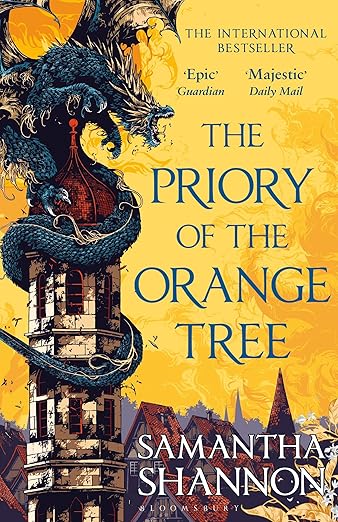
4. The Priory of the Orange Tree by Samantha Shannon

This epic standalone fantasy offers a refreshing perspective with its focus on female agency and diverse cultures.

Shannon weaves intricate politics, rich worldbuilding, and military strategy into a tale of dragons and rebellion.

5. The Dandelion Dynasty Series by Ken Liu

Ken Liu’s series, beginning with The Grace of Kings, combines epic battles with sharp political intrigue.

Blending fantasy with elements of Chinese history, Liu explores revolution, loyalty, and the cost of power.

6. The Broken Empire Trilogy by Mark Lawrence

Mark Lawrence’s Broken Empire trilogy is not for the faint of heart.

Told through the eyes of Jorg Ancrath, an antihero driven by vengeance, this series delves into the darker corners of military and political ambition.

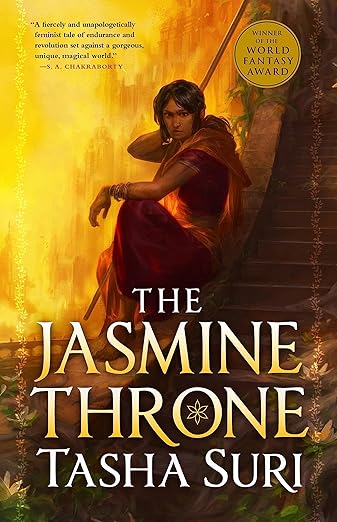
7. The Jasmine Throne by Tasha Suri

Inspired by Indian history and mythology, Tasha Suri’s The Jasmine Throne features a rebellion brewing in an empire rife with oppression.

With powerful prose and unforgettable characters, Suri delivers a story of power, betrayal, and resistance.

8. The Traitor Baru Cormorant by Seth Dickinson

Seth Dickinson’s The Traitor Baru Cormorant is a brilliant examination of imperialism and political manoeuvring.

Baru, a young savant, rises within the ranks of an oppressive empire while secretly plotting its downfall.

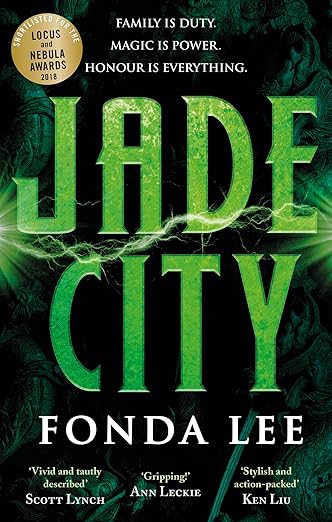
9. The Green Bone Saga by Fonda Lee

Fonda Lee’s Green Bone Saga, starting with Jade City, blends gritty urban fantasy with family drama and political power struggles.

With its mix of gang wars, military strategies, and complex characters, this series is a modern fantasy classic.

10. Black Sun by Rebecca Roanhorse

Rebecca Roanhorse’s Black Sun, inspired by Pre-Columbian civilisations, offers a richly diverse world of prophecy, power, and conflict.

With unforgettable characters and intricate political dynamics, this book is a standout in contemporary fantasy.

The Fall of Wolfsbane by Jon Cronshaw

If you’re looking for a gripping mix of rebellion, perilous politics, and ancient magic, The Fall of Wolfsbane is the perfect starting point.

The first book in the Ravenglass Legends series introduces Ragnar and Maja Wolfsbane, siblings navigating the upheaval of empire, rebellion, and destiny.

With its blend of high stakes, richly crafted worldbuilding, and complex characters, The Fall of Wolfsbane is a must-read for fans of gritty political and military fantasy.

Start your journey into Ravenglass Legends today—you won’t want to put it down!

The Five Best Fantasy Books to Win the Hugo Award: A Triumph Over Sci-Fi

Explore the best fantasy books to win the prestigious Hugo Award, triumphing over science fiction. Dive into enchanting tales of magic, gods, alternate worlds, and epic battles that have captivated readers and earned their place among the stars of speculative fiction.

Today, we delve into the fantastical world of the Hugo Awards.

Though primarily a sci-fi playground, over the years we’ve seen a few notable gems from the fantasy genre that have managed to claim the best novel prize.  

What are the Hugo Awards, and why do they matter?

Established in 1953, the Hugo Awards recognise the best works in science fiction and fantasy literature. Named in honour of Hugo Gernsback, the founding father of science fiction magazines, these awards are presented annually at the World Science Fiction Convention (Worldcon).

It’s not just about the honour, though—winners can also expect a rocket-shaped trophy, which we imagine makes quite the conversation starter.  

While sci-fi tends to dominate the Hugo Awards, a handful of fantasy novels have managed to swoop in and snatch the prize.

So, today I want to share five of the best fantasy novels that have won the Hugo Award.  

1. “Jonathan Strange & Mr Norrell” by Susanna Clarke (2005)

In an alternate history where magic once existed and is now all but forgotten, enter two magicians: the reclusive Mr Norrell and his ambitious pupil, Jonathan Strange. This enchanting tale of their rivalry, friendship, and the rediscovery of English magic is as thick as the ancient tomes they study (literally—it’s a hefty 800 pages). But fear not, for Susanna Clarke weaves a spellbinding narrative that will have you turning pages faster than you can say “Wingardium Leviosa.”  

2. “American Gods” by Neil Gaiman (2002)

Neil Gaiman, the master of modern myth-making, brings us an epic road trip through the hidden heart of America. The story follows Shadow, an ex-con who finds himself entangled in a war between old gods, brought to America by immigrants, and new gods born from modern obsessions. With a cast of characters that includes leprechauns, trickster gods, and an undead wife, “American Gods” is a fantastical, mind-bending experience that proves Gaiman’s status as a literary god himself.  

3. “The City & The City” by China Miéville (2010)

Imagine two cities, occupying the same geographical space but completely invisible to one another. Citizens of each city must “unsee” the inhabitants and buildings of the other, or risk the wrath of a mysterious force known as Breach. When a murder investigation forces Inspector Tyador Borlú to traverse the border between these cities, he uncovers a conspiracy that threatens the delicate balance between the two. Miéville’s mastery of blending fantasy, mystery, and political intrigue makes “The City & The City” a truly unique and captivating read.  

4. “A Game of Thrones” by George R.R. Martin (1997)

Ah, “A Game of Thrones”–the book that launched a thousand memes (and an incredibly popular television series). In this first instalment of the “A Song of Ice and Fire” series, George R.R. Martin transports us to the brutal and treacherous realm of Westeros, where noble houses vie for power, control, and ultimately, the Iron Throne. With a dizzying array of characters, intricate plotlines, and a penchant for killing off fan favourites, “A Game of Thrones” is an epic, blood-soaked fantasy that keeps readers on their toes and their hearts in their throats.  

5. “The Stone Sky” by N.K. Jemisin (2018)

In this triumphant conclusion to the “Broken Earth” trilogy, N.K. Jemisin takes us back to the Stillness—a continent plagued by catastrophic climate events, oppressive social structures, and the occasional earth-shattering superweapon. As mother and daughter Essun and Nassun face off to determine the fate of their shattered world, Jemisin weaves a masterful tale of power, sacrifice, and the lengths people will go to survive. “The Stone Sky” not only won the Hugo Award, but also completed Jemisin’s hat trick, as each book in the trilogy took home the prize.  

Fantasy for the WIn!

While science fiction may be the star of the Hugo Awards, these five fantasy novels have proven their worth by winning the coveted rocket trophy.

With their rich worlds, unforgettable characters, and spellbinding stories, they have earned their place among the stars of speculative fiction.

So, brew yourself a cuppa, grab a cosy blanket, and escape into the fantastical realms of these award-winning novels. Happy reading!