Jon Cronshaw – The King of Nobledark

Epic & dark fantasy author. Wyverns, assassins & hope that bleeds but never dies.

Jon Cronshaw – The King of Nobledark

Tag: character-driven narratives

  • The Real Darkness in Dark Fantasy: The Human Heart

    The Real Darkness in Dark Fantasy: The Human Heart

    Blood, blades, and betrayal might draw readers to dark fantasy.

    But it’s the quiet moments – the internal struggles, the fraying of conscience, the tested loyalties – that truly hook us.

    When done right, character depth transforms dark fantasy from mere violence into a profound exploration of human nature.

    Soren’s Transformation in Guild of Assassins

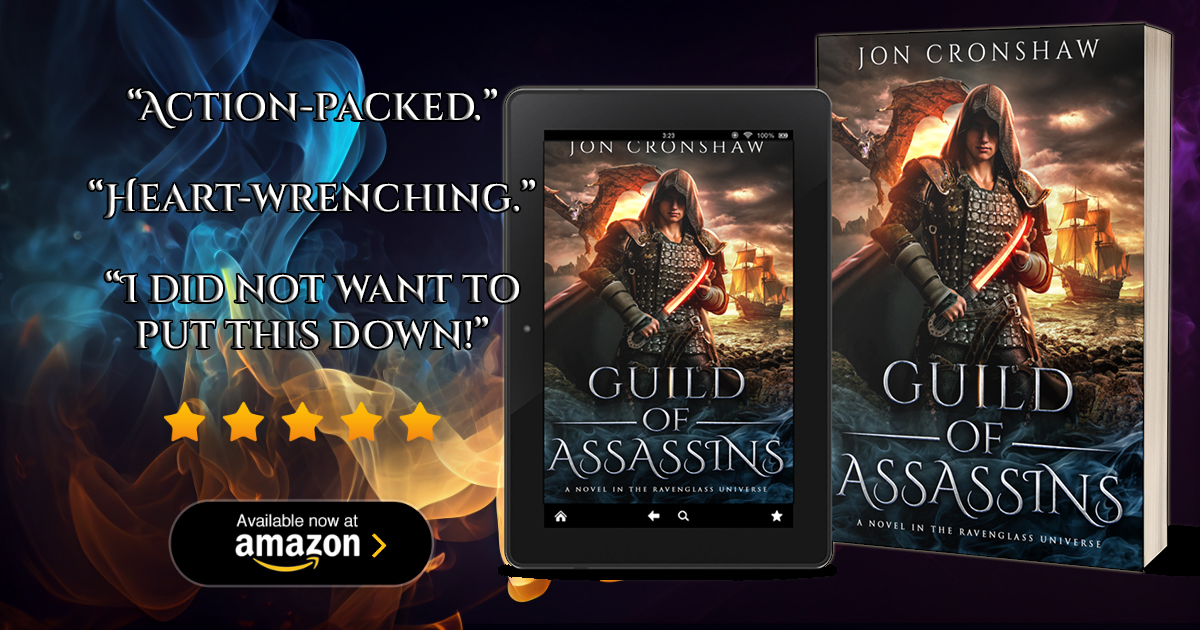
    Consider how my novel Guild of Assassins handles Soren’s transformation.

    Yes, there’s plenty of action – fights, assassinations, the brutal Threshing.

    But the story’s real power lies in watching Soren grapple with what he’s becoming.

    His hands, once devoted to creating beauty from stone, now deal death.

    Each kill chips away at his humanity, like a chisel slowly revealing a darker form beneath.

    The Cost of Vengeance

    This internal conflict elevates the narrative beyond simple revenge.

    We’re not just watching Soren learn to kill – we’re watching him struggle with the cost of vengeance.

    When he finally confronts Kierak during the Threshing, the physical battle matters less than the psychological one.

    Has Soren become the very thing he set out to destroy?

    External Conflicts as Catalysts for Internal Struggles

    The best dark fantasy recognises that external conflicts are merely catalysts for internal ones.

    Mark Lawrence’s Prince of Thorns works not because Jorg is brutal, but because we understand the trauma driving his brutality.

    Joe Abercrombie’s The Blade Itself captivates because Logen’s struggle with his berserker nature reveals universal truths about violence and identity.

    Evolving Friendships Under Pressure

    Character depth also transforms relationships.

    Soren and Alaric’s friendship resonates because we see how their bond evolves under pressure.

    Their loyalty isn’t just plot convenience – it’s repeatedly tested, questioned, and ultimately strengthened by their shared trauma.

    Like Fitz and the Fool in Robin Hobb’s works, their relationship becomes more meaningful precisely because we understand its cost.

    The Guild as More Than a Backdrop

    The guild itself becomes more than just a backdrop for training montages.

    Through Soren’s eyes, we see how each master embodies different aspects of the assassin’s craft.

    Varus’s brutality, Tamasin’s poisonous wisdom, Quillon’s clinical detachment – they’re not just teachers but mirrors reflecting what Soren might become.

    Depth in Secondary Characters

    Even secondary characters gain depth through their struggles.

    Nia’s street-smart cynicism masks deeper wounds.

    Isolde’s scholarly precision reveals a need for control in a chaotic world.

    Ganrel’s smooth manipulation hints at past betrayals.

    Their interactions create a web of competing motivations far more compelling than simple plot mechanics.

    Violence as Character Development

    This emotional complexity makes the violence matter.

    When Soren kills during the Threshing, it’s not just action – it’s character development.

    Each death forces him to confront what he’s becoming.

    The physical consequences pale compared to the psychological ones.

    Like the best dark fantasy, the external violence serves to illuminate internal battles.

    Moral Complexity Over Shock Value

    The genre works best when it recognises that darkness isn’t just about blood and death – it’s about moral complexity.

    Through Soren’s eyes, we explore how good intentions lead to atrocity, how survival demands compromise, how vengeance corrupts the vengeful.

    These themes resonate because they’re grounded in character, not plot.

    Beyond Grimdark: Character Depth in Dark Fantasy

    grDark fantasy often gets dismissed as grimdark violence porn.

    But stories like Guild of Assassins show how character depth transforms darkness from shock value into meaningful exploration of human nature.

    Real darkness isn’t found in gore or body counts – it’s in watching characters we care about make impossible choices.

    Why Character Depth Matters

    This is why character-driven dark fantasy lingers with us.

    Plot may drive the story forward, but character depth makes it matter.

    When we understand Soren’s internal struggle, his external battles gain meaning.

    His choices have weight because we feel the cost of each compromise, each lost piece of humanity.

    Finding Hope Amid Darkness

    Perhaps most importantly, character depth allows dark fantasy to explore hope amid darkness.

    Through Soren and Alaric’s enduring friendship, through small acts of loyalty in a brutal world, we see how light persists even in shadow.

    These moments of grace matter precisely because they’re earned through character development, not plot convenience.

    The Real Battlefield: The Human Heart

    In the end, the best dark fantasy recognises that true darkness isn’t found in violence but in the human heart.

    Through deep characterisation, it transforms genre tropes into vehicles for exploring fundamental truths about human nature.

    The magic and monsters serve only to illuminate the real battlefield – the one within.

    Your Thoughts

    How do you think character development enhances dark fantasy?

    What are your favourite examples of character-driven dark fantasy?

    Share your thoughts below.

  • How Fantasy Writers Can Draw Inspiration from Red Dwarf

    How Fantasy Writers Can Draw Inspiration from Red Dwarf

    In the boundless realm of fantasy literature, where authors conjure tales from the depths of their imagination, inspiration can emerge from a myriad of sources, including the world of science fiction comedy.

    “Red Dwarf,” a beloved sci-fi sitcom known for its unique blend of humour, character-driven stories, and speculative science, offers a wealth of creative insights for fantasy authors.

    Let’s venture aboard the mining spaceship Red Dwarf and uncover what fantasy writers can learn from this quirky and endearing series.

    1. The Importance of Strong Character Dynamics

    “Red Dwarf” excels in its portrayal of complex character dynamics and relationships.

    Fantasy authors can draw from this by creating diverse and multifaceted characters whose interactions and growth drive the narrative, adding depth and relatability to their fantastical worlds.

    1. Blending Humour with Serious Themes

    The show is adept at weaving humour into its narrative while tackling serious and sometimes existential themes.

    Fantasy writers can employ a similar balance, using humour to explore deep themes and add layers to their storytelling, making their tales both thought-provoking and entertaining.

    1. Utilizing High-Concept Ideas

    “Red Dwarf” is known for its high-concept sci-fi ideas, often used as a backdrop for character development and humour.

    Fantasy authors can incorporate high-concept ideas into their world-building, using them to challenge characters and develop the plot in creative ways.

    1. Embracing the Absurd and Unconventional

    The series often embraces absurdity and unconventional plotlines.

    Fantasy writers can take inspiration from this willingness to explore the bizarre and unusual, using their imagination to push the boundaries of traditional fantasy storytelling.

    1. Developing a Cohesive Narrative Arc

    Despite its episodic nature, “Red Dwarf” maintains a cohesive narrative arc across its seasons.

    Fantasy authors should aim to develop overarching storylines in their work, ensuring that each chapter or book contributes to the larger narrative while being enjoyable on its own.

    1. Balancing Different Tones and Genres

    “Red Dwarf” skilfully balances different tones and genres, from comedy to drama to sci-fi.

    Fantasy writers can similarly blend genres, combining elements of adventure, romance, mystery, or even horror to create a rich and varied reading experience.

    1. The Power of Nostalgia and References

    The show often references popular culture and sci-fi tropes, playing on nostalgia and familiarity.

    Fantasy authors can utilise references to classic myths, folklore, or other fantasy works to create resonance with readers and enrich their narrative tapestry.

    Crafting Fantastical Tales with Red Dwarf’s Ingenuity

    “Red Dwarf,” with its unique mix of humour, character depth, and imaginative sci-fi concepts, offers valuable lessons for fantasy authors.

    By integrating these elements, writers can craft fantasy stories that captivate and amuse, much like the adventures of Lister, Rimmer, Cat, and Kryten aboard the Red Dwarf.

    So, fantasy authors, are you ready to navigate through the cosmos of your imagination, inspired by the quirky genius of “Red Dwarf”?

    How will the show’s blend of comedy, character, and speculative ideas influence your fantastical worlds and stories?

    Share your thoughts, and let’s discuss how a spacefaring sitcom can inspire the art of fantasy literature.

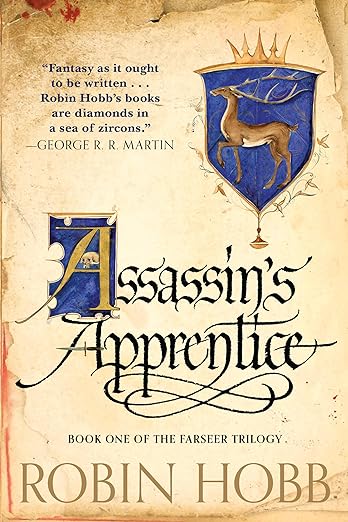
  • Exploring the Complex World of Robin Hobb’s Assassin’s Apprentice

    Exploring the Complex World of Robin Hobb’s Assassin’s Apprentice

    In the often bright and valiant world of fantasy literature, Robin Hobb‘s “Assassin’s Apprentice” arrived like a shadow in the night.

    With this book, Hobb didn’t just introduce readers to a new story; she introduced us to FitzChivalry Farseer – a hero as unlikely as finding a courteous goblin.

    This tale of an assassin’s apprentice was a sharp turn from the usual path of swords and sorcery, taking the road less travelled – and considerably darker.

    An Assassin with a Heart: Shaking Up the Hero Mold

    Fitz wasn’t your typical fantasy protagonist.

    He was no noble knight on a gleaming steed nor a wise wizard with a long beard and a penchant for riddles.

    Instead, he was a boy with a knack for killing and a complicated moral compass.

    Hobb crafted a character that was as complex as he was conflicted, bringing a depth to Fitz that went beyond the traditional good versus evil narrative.

    He was a walking contradiction, a hero in a role usually reserved for villains.

    Magic and Mind: A Different Kind of Power

    In “Assassin’s Apprentice”, magic wasn’t just about throwing fireballs or summoning storms.

    Hobb introduced the Wit and the Skill – two forms of magic that were as nuanced as they were powerful.

    The Wit, a bond with animals, was considered a lowly, almost taboo form of magic, while the Skill was a prestigious, mind-influencing ability.

    This reimagining of magic systems injected a fresh dose of intrigue into the fantasy genre, turning magic into a source of inner turmoil as much as external power.

    Narrative Grit: The Nitty-Gritty of Royal Politics

    Hobb’s narrative delved deep into the murky waters of court intrigue and politics, with all the backstabbing and power plays one might expect in a den of vipers rather than a royal court.

    This focus on the political, often from the perspective of someone usually left in the shadows, gave the fantasy genre a grittier, more realistic edge.

    It was like lifting a rock to see the unsightly creatures writhing underneath – fascinating, if somewhat unsettling.

    Influence on Modern Fantasy: The Echoes of Fitz’s Blade

    The influence of “Assassin’s Apprentice” on modern fantasy is as clear as the scars on Fitz’s soul.

    The series paved the way for a more nuanced approach to character development, where heroes were allowed to be flawed, and villains occasionally sympathetic.

    Hobb’s blend of personal struggle, political intrigue, and a less conventional approach to magic has left an indelible mark on the genre, inspiring authors to explore the grey areas of their characters and worlds.

    The Enduring Legacy of a Reluctant Assassin

    “Assassin’s Apprentice” was more than just a fantasy novel; it was a masterclass in character-driven storytelling.

    Robin Hobb created a world where the line between hero and villain was as thin as a knife’s edge, and just as sharp.

    In the annals of fantasy literature, FitzChivalry Farseer remains a testament to the genre’s ability to evolve, to push boundaries, and to redefine what it means to be a hero.

    The echoes of Fitz’s blade, and the choices he made with it, continue to resonate in the modern fantasy landscape.

  • Embracing the Morally Grey: A New Era in Fantasy Literature

    Embracing the Morally Grey: A New Era in Fantasy Literature

    Once upon a time in fantasy literature, heroes were as pure and straightforward as a glass of milk in a monastery.

    Then came the rise of the morally grey protagonist, as welcome in the genre as a goblin at a fairy convention.

    These characters brought a complexity to fantasy that was previously reserved for tax legislation, making the line between good and evil as blurry as a drunkard’s vision.

    From White Knights to Grey Squires

    Gone are the days when a hero’s armour shone brighter than their morals.

    Modern fantasy has embraced protagonists who are less ‘knight in shining armour’ and more ‘person in mildly tarnished chainmail’.

    These are characters who might save the world, but only after they’ve finished their pint and had a long think about whether the world is worth saving.

    The Lure of the Grey

    What is it about these morally ambiguous characters that captures our imagination?

    Perhaps it’s their relatable nature.

    After all, who among us is without sin, or at least a few parking tickets?

    Or maybe it’s the unpredictability they bring to a story – a welcome reprieve from the good old days when you could predict a hero’s actions with the reliability of a train timetable.

    Examples in the Wild

    Take George R.R. Martin’s “A Song of Ice and Fire” series, where characters frequently change sides, and you’re never quite sure who to root for.

    Or Joe Abercrombie’s “The First Law” trilogy, starring a barbarian with a conscience and a torturer with a heart.

    These characters are as morally consistent as a politician’s promises.

    The Appeal of the Dark Side

    The rise of the morally grey protagonist also reflects a shift in societal norms.

    In an age where we’re used to seeing heroes fall and villains rise on the evening news, these characters offer a mirror to our own world – albeit a slightly smudged one.

    They remind us that life is rarely black and white, but an endless spectrum of greys.

    Impact on the Genre

    This new breed of protagonist has revolutionised fantasy literature, leading to richer, more complex narratives.

    It’s an evolution from fairy tale simplicity to a genre that recognises the multifaceted nature of humanity.

    And let’s face it, it’s just more fun to read about a hero who might save the princess or might just pawn her crown for a quick buck.

    Long Live the Grey!

    The rise of morally grey protagonists in fantasy literature marks a maturation of the genre.

    These characters, with their complex motivations and questionable morals, offer a more nuanced exploration of the human condition.

    They prove that sometimes, the most interesting path isn’t the high road or the low road, but the winding path that meanders somewhere in between.

    In the end, isn’t that a bit like life itself?

  • The Allure of the Fish-out-of-Water Trope in Fantasy

    The Allure of the Fish-out-of-Water Trope in Fantasy

    In the sprawling annals of fantasy literature, the ‘fish-out-of-water’ trope is as permanent a fixture as a brooding hero in a murky tavern.

    Imagine plucking an unassuming character and tossing them into a realm where their understanding of the world is about as useful as a chocolate war hammer.

    Picture a character for whom the idea of quantum physics is less alien than their current predicament.

    And there you have the stage set for a delightful dance of the disoriented.

    The Appeal: A Symphony of Misfits

    There’s a peculiar charm in watching a character fumble through a world they find as baffling as a dragon at a vegan barbecue.

    It’s akin to the thrill of watching someone navigate a maze blindfolded.

    We find a strange kinship in their cluelessness, a shared sense of “Well, this should be interesting.”

    For the reader, the fish-out-of-water is less a literary device and more a comrade-in-arms, wading through the murky waters of the unknown, while we chuckle from the safety of our armchairs.

    And let’s be honest, there’s a certain schadenfreude in witnessing someone attempting to mount a dragon as if it were a slightly larger-than-average pony.

    Character Examples: From Zero to Hero, and Perhaps Back to Zero

    Bilbo Baggins in ‘The Hobbit‘: Here we have Mr. Baggins, a hobbit more suited to a quiet life of tea and scones, suddenly thrust into a world where dragons consider his kind more snack than conversationalist.

    His journey from hobbit-hole to dragon’s den is the epitome of bewildered bravery.

    Harry Potter in the ‘Harry Potter’ Series: Picture a boy who believes his biggest problem is the Dursleys, only to find out he’s supposed to play hero in a world that thinks safety regulations are for Muggles.

    Harry’s journey is a masterclass in “I’m sorry, you want me to do what now?”

    Arthur Dent in ‘The Hitchhiker’s Guide to the Galaxy’: Arthur, a man whose biggest worry was the council demolishing his house, suddenly finds himself traversing the universe.

    It’s less a leap of faith and more a tumble into the absurd.

    Thomas Covenant in ‘The Chronicles of Thomas Covenant’: Here’s a man dragged from his own bleak reality into one where he’s expected to be a savior.

    Covenant’s disbelief is almost as palpable as the reader’s amusement.

    Why It Works: The Joy of Disorientation

    This trope sings because it’s a mirror to every time we’ve felt like bringing a manual to a social gathering.

    It’s the universal experience of “I have no idea what I’m doing, but I’ll pretend I do,” set against a backdrop of elves and sorcery.

    In fantasy, this trope isn’t just relatable; it’s a masterclass in world-building by stealth.

    The reader, much like the protagonist, learns that sometimes, ignorance isn’t just bliss; it’s downright hilarious.

    The Unlikely Charm of Being Out of One’s Depth

    The enduring allure of the ‘fish-out-of-water’ trope in fantasy lies in its uncanny ability to blend the journey of self-discovery with the kind of mishaps that make for excellent dinner party anecdotes.

    It’s a reminder that sometimes, all it takes to find oneself is getting hopelessly lost in a world where even the laws of physics seem to have had one too many at the local tavern.

    In the end, there’s nothing quite like a character utterly out of their depth, yet doggedly paddling on, to remind us that sometimes, the best adventures begin with a healthy dose of bewilderment and a side of “What in the seven hells have I gotten myself into?”

  • 10 Signs You’re Reading Nobledark Fantasy

    10 Signs You’re Reading Nobledark Fantasy

    When you delve into the realm of fantasy literature, you’ll find yourself amidst an array of genres, each with its distinct flavour.

    But how do you know when you’ve stepped into the shadowy yet hopeful world of nobledark fantasy?

    This sub-genre, a curious blend of grim realities and moral resilience, is marked by certain unmistakable tropes and themes.

    Here are ten tropes you might find when reading a nobledark fantasy novel:

    1. The Rogue Who Dreams of Redemption

    One sure sign you’re reading nobledark fantasy is the presence of a rogue character yearning for redemption.

    This isn’t your average dashing rogue, content with their morally grey lifestyle.

    Instead, this character often grapples with their past misdeeds and seeks a path to make things right.

    Whether it’s a smuggler turning over a new leaf or a spy looking to correct past wrongs, their journey towards redemption is fraught with challenges, reflecting the genre’s blend of darkness and hope.

    2. The Loyal Thief with a Heart of Gold

    The loyal thief, another classic nobledark character, is a paradox in themselves.

    They may live outside the law, pilfering and sneaking around, but their loyalty and sense of justice shine through.

    This character often steals not out of greed, but necessity, or for a cause they believe in.

    Their moral compass, although unconventional, is unmistakably present, guiding them through the genre’s murky ethical landscape.

    3. The Assassin with a Conscience

    In nobledark fantasy, assassins aren’t cold-blooded killers but complex characters burdened with conscience.

    They kill, yes, but each action weighs heavily on their soul.

    This inner conflict – the struggle between their lethal profession and their moral inclinations—is a hallmark of the genre.

    It’s about the assassin who pauses, who questions, and who seeks meaning in a profession mired in darkness.

    4. The World Weary Warrior Fighting for a Lost Cause

    A nobledark narrative often features a warrior who’s seen too much and yet continues to fight for what often seems like a lost cause.

    This character has witnessed the horrors of their world, yet they hold onto a flicker of hope.

    They fight not because they want to, but because they must, driven by a deep-seated belief in something greater than themselves.

    5. The Corrupt World That Tests Morality

    The setting of a nobledark fantasy is a character in its own right—a world that’s often corrupt and unforgiving, testing the characters’ morals at every turn.

    It’s a world where the right choice is often the hardest one to make, where the line between good and evil is blurred and battered.

    6. Bittersweet Victories and Pyrrhic Triumphs

    Nobledark fantasy doesn’t shy away from the cost of heroism.

    Victories, when they come, are often bittersweet, and triumphs can feel Pyrrhic.

    Characters may achieve their goals, but not without sacrifice and loss, underscoring the genre’s theme that even in victory, darkness lingers.

    7. The Fallen Hero Seeking Redemption

    In nobledark fantasy, a common theme is the fallen hero, once revered, who has lost their way due to a tragic flaw or a past mistake.

    This character’s journey towards redemption is fraught with internal and external struggles, as they seek to regain their honour and atone for their sins.

    Their path is never straightforward, often filled with moral quandaries and the harsh realities of a world that may not believe in second chances.

    8. The Tyrant with a Conscience

    Unlike the traditional portrayal of tyrants as irredeemably evil, nobledark fantasy often presents them with a layer of complexity.

    These rulers may be driven by noble intentions gone awry or trapped by the very power they wield.

    Their actions, while harsh or cruel, are often shown to stem from a twisted sense of duty or a burdened conscience, adding depth to their character and creating a grey area in the moral landscape of the story.

    9. Sacrifice and the Cost of Power

    Nobledark fantasy frequently explores the theme of sacrifice, particularly the high cost of wielding power or pursuing a greater good.

    Characters are often faced with difficult choices that require them to sacrifice their personal desires, relationships, or even their ethical codes.

    This theme underscores the notion that in a complex world, power and success come at a significant personal and moral cost.

    10. The Blurred Lines Between Magic and Morality

    Magic in nobledark fantasy is not just a tool or a weapon; it’s often intertwined with the moral fabric of the universe.

    The use of magic can have far-reaching consequences, both beneficial and destructive, and characters who wield it must navigate its temptations and responsibilities.

    This creates a dynamic where magic is a double-edged sword, capable of both salvaging and shattering the world’s fragile balance.

    Recognising a nobledark fantasy novel is about identifying these unique elements—the flawed heroes striving for goodness, the oppressive worlds that challenge their morals, and the victories that come with their own set of losses.

    It’s a genre that mirrors the complexities of real life, where the light of hope and the shadow of despair are perpetually intertwined.

    So, the next time you find yourself empathising with an assassin’s plight or cheering for a thief with a cause, you might just be lost in the engrossing world of nobledark fantasy.