Jon Cronshaw – The King of Nobledark

Epic & dark fantasy author. Wyverns, assassins & hope that bleeds but never dies.

Jon Cronshaw – The King of Nobledark

Tag: dark fantasy

  • Moral Ambiguity in Fantasy: Why Readers Love Complex Characters

    Moral Ambiguity in Fantasy: Why Readers Love Complex Characters

    Remember when fantasy was simple?

    Heroes wore white, villains wore black, and you could spot the evil one by their conveniently twisted features.

    But modern readers crave something messier, more honest.

    We want characters who live in the shadows between right and wrong, because that’s where real people dwell.

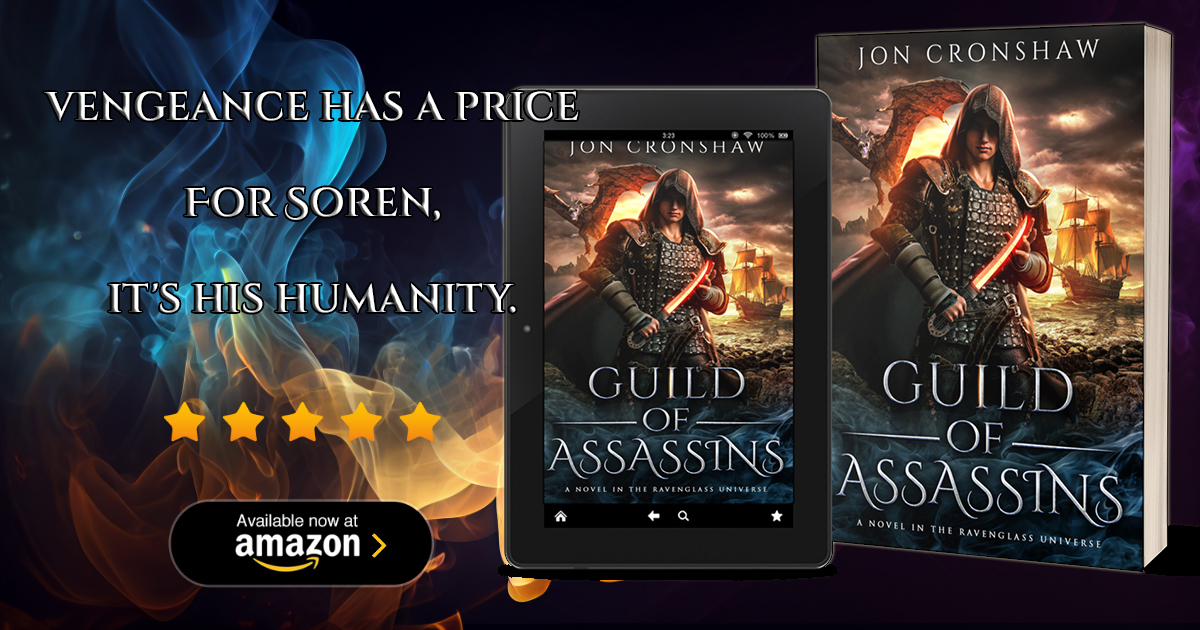
    Soren’s Journey in Guild of Assassins

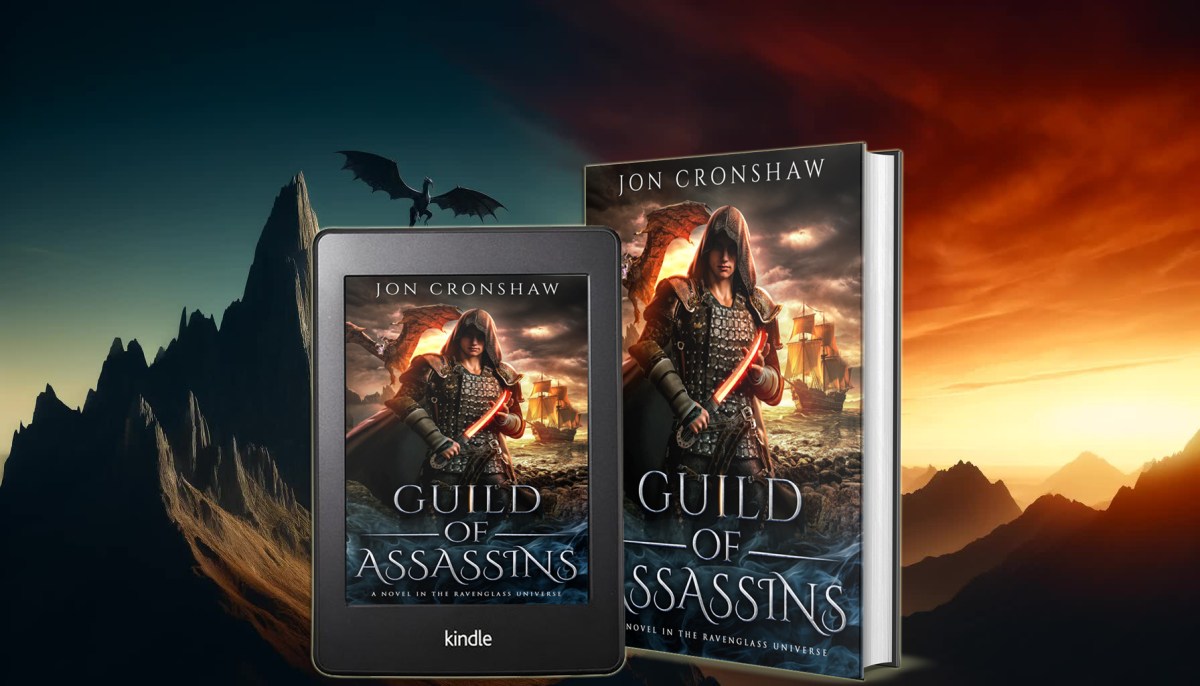
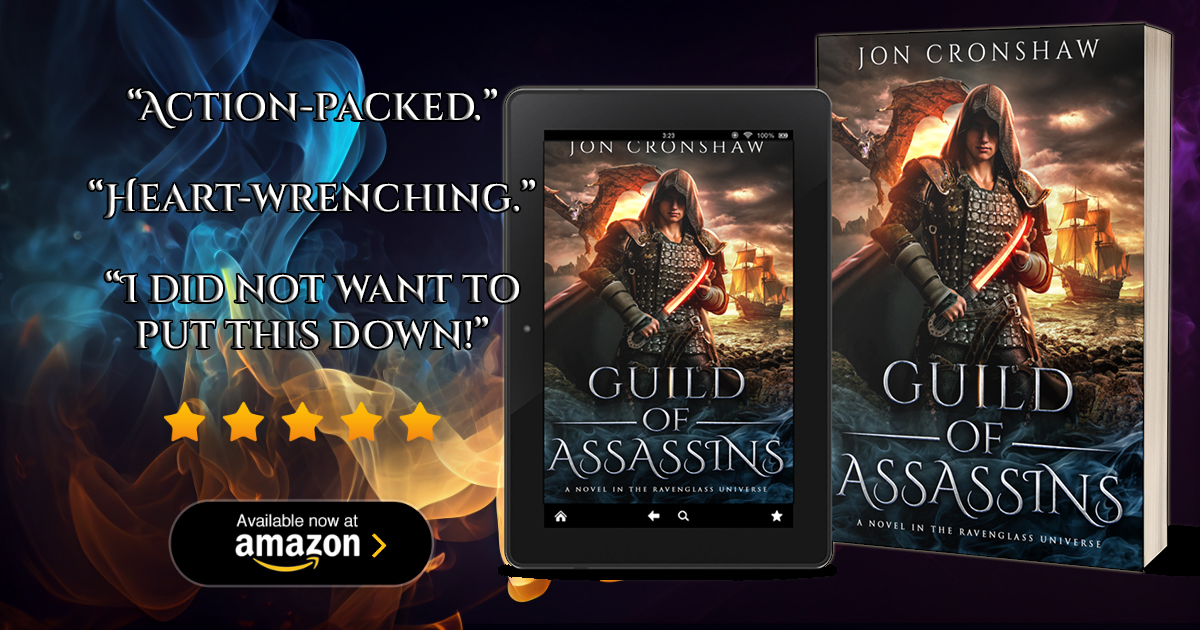
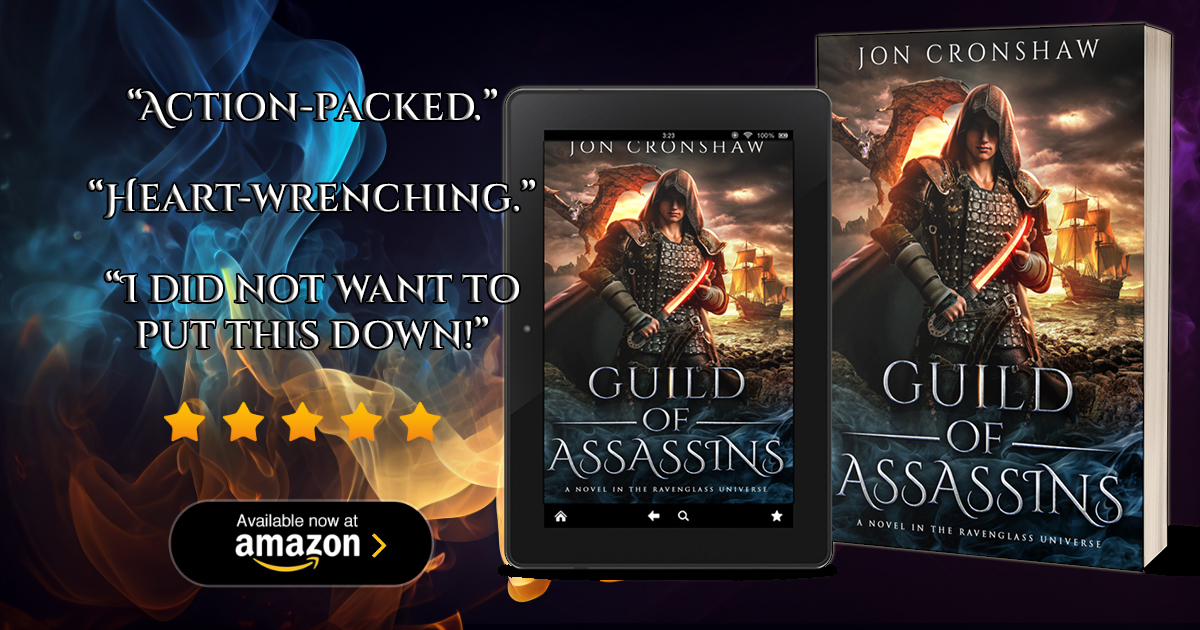
    My novel Guild of Assassins illustrates this perfectly through Soren’s transformation.

    He begins seeking justice for his father’s murder – a classic hero’s motivation.

    But his path leads him to join an assassins’ guild, train in killing arts, and eventually participate in what amounts to ritualised murder during the Threshing.

    Is he still a hero?

    Was he ever?

    The Appeal of Moral Complexity

    This moral complexity hooks us because it reflects truth.

    Most of us aren’t purely good or evil – we’re bundles of contradictions making compromises to survive.

    When Soren learns to craft poisons from Tamasin or master manipulation from Elysia, we understand his choices even as we recoil from them.

    His gradual corruption feels real precisely because it’s built on understandable decisions.

    Antagonists Beyond Simple Categorisation

    Even the story’s antagonists resist simple categorisation.

    Kierak initially appears as a straightforward bully, but his brutality stems from the guild’s brutal culture.

    The masters who train the recruits aren’t cackling villains – they’re professionals doing their jobs with varying degrees of cruelty and kindness.

    Like real people, they contain multitudes.

    The Rise of Moral Ambiguity in Modern Fantasy

    This is why modern fantasy increasingly embraces moral ambiguity.

    Look at George R.R. Martin’s work, where yesterday’s villain becomes tomorrow’s hero through shifting perspective.

    Or Joe Abercrombie’s characters, who do horrible things for understandable reasons.

    These stories resonate because they acknowledge that morality isn’t binary – it’s a spectrum we all navigate daily.

    The Guild as a Symbol of Ambiguity

    The guild itself represents this ambiguity perfectly.

    It’s an organisation of professional killers, yes – but one with strict codes of conduct, formal training, and complex traditions.

    Its members aren’t moustache-twirling villains but professionals practising a dark craft.

    Like any real institution, it contains both corruption and honour, cruelty and loyalty.

    Friendship in the Grey Areas

    Soren and Alaric’s friendship demonstrates how moral ambiguity adds depth to relationships.

    Their loyalty to each other is admirable, but it also enables their descent into darkness.

    Are they saving each other’s humanity or helping each other lose it?

    The answer isn’t clear because real relationships rarely have simple moral implications.

    Revenge and Ambiguity

    Even the revenge plotline gains complexity through moral ambiguity.

    Soren’s quest for justice becomes increasingly hard to distinguish from simple vengeance.

    Like the best morally grey narratives, it forces us to question not just the character’s choices but our own assumptions about right and wrong.

    Training and Transformation

    This complexity extends to the training sequences.

    Each lesson learned, each skill mastered, carries both empowerment and corruption.

    When Quillon teaches anatomy, is he sharing knowledge or teaching students to see humans as targets?

    When Varus enforces discipline through violence, is he building strength or breaking humanity?

    The answer is both – and that’s what makes it interesting.

    Moral Ambiguity in Conflict

    Moral ambiguity also creates better conflicts.

    When Soren faces Kierak during the Threshing, it’s not a simple hero-versus-villain showdown.

    It’s a clash between two people shaped by the same brutal system, each fighting for survival.

    Their conflict matters precisely because neither is purely right or wrong.

    Asking Deeper Questions

    Perhaps most importantly, moral ambiguity allows fantasy to ask deeper questions.

    Through Soren’s journey, we explore how survival demands compromise, how violence transforms its practitioners, how institutions shape morality.

    These questions resonate because they don’t have easy answers.

    The Rejection of Simple Narratives

    This is why readers increasingly reject simple good-versus-evil narratives.

    We know life is more complicated.

    We want characters who reflect that complexity – characters who make mistakes, who compromise, who sometimes choose wrong for the right reasons and right for the wrong reasons.

    Seeing Ourselves in Complex Characters

    The best morally grey characters, like Soren, show us ourselves.

    Their struggles with right and wrong mirror our own daily moral negotiations.

    Their compromises feel familiar.

    Their corruption becomes understandable, even as we hope we’d choose differently.

    Embracing Complexity in Fantasy

    In the end, moral ambiguity doesn’t weaken fantasy – it strengthens it.

    By embracing complexity, stories like Guild of Assassins transform from simple adventure into nuanced exploration of human nature.

    They remind us that the most interesting stories happen not in black and white, but in shades of grey.

    Your Thoughts

    How do you feel about moral ambiguity in fantasy?

    Do you prefer clearly defined heroes and villains, or characters who blur the lines?

    Share your thoughts below.

  • Why We Love Characters Who Walk the Line Between Hero and Villain

    Why We Love Characters Who Walk the Line Between Hero and Villain

    The most compelling characters aren’t those who walk in light or shadow.

    They’re the ones who stride the razor’s edge between.

    There’s something magnetically human about watching someone navigate that precarious balance.

    Perhaps it’s because it reflects our own internal struggles with morality.

    Soren’s Transformation in Guild of Assassins

    My novel Guild of Assassins explores this tension through Soren’s transformation.

    He begins with heroic motivation – seeking justice for his murdered father.

    Yet his path leads him to become the very thing he initially opposed: an assassin, a killer, a dealer of death.

    The fascinating part isn’t his corruption, but how understandable each step of his descent becomes.

    Why We’re Drawn to Morally Conflicted Characters

    This speaks to why we’re drawn to morally conflicted characters.

    They show us how good people become compromised through understandable choices.

    When Soren learns to craft poisons from Tamasin or master manipulation from Elysia, he’s not cackling with evil glee.

    He’s doing what survival demands, making choices we can imagine making ourselves under similar pressure.

    Challenging Assumptions About Right and Wrong

    The best morally ambiguous characters force us to question our own assumptions about right and wrong.

    Consider how the guild masters are presented – not as cackling villains, but as professionals teaching their craft.

    Varus’s brutality serves a purpose.

    Quillon’s anatomical lessons have logic behind them.

    Even their cruelty comes from conviction rather than malice.

    Human Nature and the Perception of Evil

    This complexity reflects something true about human nature – most “villains” don’t see themselves as evil.

    The assassins’ guild has codes, traditions, and principles.

    Like any real institution, it contains both honour and corruption.

    Through Soren’s eyes, we’re forced to confront how systems can normalise darkness while maintaining a veneer of legitimacy.

    The Appeal of Anti-Heroes

    Perhaps this is why anti-heroes resonate so deeply.

    They acknowledge the gap between societal ideals and survival’s demands.

    When Soren participates in the Threshing, he’s not embracing evil but accepting that survival sometimes requires terrible choices.

    Like the best morally conflicted characters, he shows us how circumstance can make monsters of anyone.

    Exploring Darker Impulses Through Characters

    The psychological appeal goes deeper.

    Characters who walk the line between hero and villain give us permission to explore our own darker impulses from a safe distance.

    Through Soren, we can examine our capacity for violence, our potential for moral compromise, and our ability to justify increasingly questionable choices.

    The Corrupting Nature of Training

    This is particularly powerful in training sequences.

    Each lesson Soren learns carries both empowerment and corruption.

    We feel satisfaction when he masters new skills, even while recognising that each capability gained represents another step away from innocence.

    Like watching a car crash in slow motion, we’re both horrified and fascinated by the transformation.

    The Complex Relationship Between Soren and Alaric

    The relationship between Soren and Alaric adds another layer to this moral ambiguity.

    Their loyalty to each other is admirable, yet it also enables their descent into darkness.

    Are they preserving each other’s humanity or helping each other lose it?

    The answer isn’t clear because real relationships rarely have simple moral implications.

    Navigating Impossible Choices

    Maybe we’re drawn to these characters because they reflect a fundamental truth.

    Morality isn’t about maintaining perfect virtue but about navigating impossible choices.

    When Soren finally confronts Kierak, neither is purely hero nor villain.

    They’re both products of the same brutal system, each fighting for survival.

    The Power of Relatable Conflicts

    This moral complexity creates better conflicts precisely because it makes them relatable.

    We understand both sides, even if we don’t agree with them.

    The tension comes not from wondering if good will triumph over evil, but from watching characters struggle with choices that have no clear right answer.

    Characters as Reflections of Ourselves

    Ultimately, characters who walk the line between hero and villain captivate us because they show us ourselves.

    Their struggles with right and wrong mirror our own daily moral negotiations.

    Their compromises feel familiar.

    Their corruption becomes understandable, even as we hope we’d choose differently.

    Light and Shadow in Everyone

    These characters remind us that the capacity for both light and shadow exists in everyone.

    Through them, we explore how circumstance shapes morality.

    How survival demands compromise.

    How good intentions can pave roads to darkness.

    They show us not just what we might become, but how we might become it.

    Why We Return to Morally Complex Characters

    Perhaps this is why we return to these stories again and again.

    Not for escapism, but for truth.

    Characters like Soren remind us that the line between hero and villain isn’t fixed but fluid.

    Morality is a choice we make daily.

    We’re all capable of both light and shadow.

    Your Thoughts

    What morally complex characters have most resonated with you?

    How do you think they help us explore our own capacity for good and evil?

    Share your thoughts below.

  • Found Family in Dark Fantasy: Why We Love Brotherhood Bonds

    Found Family in Dark Fantasy: Why We Love Brotherhood Bonds

    Dark fantasy often shows us the worst of human nature.

    Betrayal, violence, and corruption dominate the landscape.

    Yet within these shadows, we find something profound: the bonds forged between broken people.

    The ‘found family’ trope resonates not despite the darkness, but because of it.

    Broken Characters Finding Strength Together

    My novel Guild of Assassins explores this beautifully through its guild recruits.

    Each arrives carrying their own wounds.

    Soren with his murdered father.

    Alaric torn from his fishing life.

    Nia with her street survivor’s cynicism.

    Isolde fleeing academic constraints.

    Jareth haunted by lost nobility.

    Alone, they’re vulnerable.

    Together, they form something stronger than blood.

    Bonds Tested Through Darkness

    What makes these bonds compelling isn’t their initial formation but their testing.

    When Kierak brutalises Soren, the others don’t just offer sympathy.

    They risk themselves to help him reclaim his dagger.

    When Jareth is injured by a trap, they carry him rather than abandon him as Ganrel suggests.

    These moments matter because they’re choices made despite survival instincts, not because of them.

    Loyalty Forming Against the Odds

    The fascinating thing about found families in dark fantasy is how they form despite institutional pressure.

    The guild tries to pit recruits against each other.

    Yet bonds form anyway.

    Like the Bridgeburners in Malazan Book of the Fallen or the Night’s Watch brothers in A Song of Ice and Fire, loyalty emerges precisely because the system demands its absence.

    Brotherhood as Salvation and Burden

    But these relationships aren’t simple.

    When Soren and Alaric face the Threshing, their brotherhood becomes both salvation and burden.

    Their loyalty keeps them human but also binds them to violence.

    It’s reminiscent of how the Gentleman Bastards in Lynch’s series enable each other’s criminal lives while preserving each other’s humanity.

    Shared Trauma as Bonding Agent

    The training sequences reveal another aspect of found family – shared trauma as a bonding agent.

    When recruits endure Varus’s brutality together.

    When they learn killing arts from Quillon.

    When they face Tamasin’s poisonous lessons.

    They’re not just gaining skills.

    They’re forming bonds through shared hardship.

    Like soldiers in trenches, their brotherhood is forged in fire.

    The Poisonous Side of Brotherhood

    Yet dark fantasy recognises that found family isn’t always healthy.

    Ganrel’s manipulation of group dynamics, his attempted exploitation of loyalties, shows how brotherhood can become poison.

    The genre acknowledges that sometimes the family we choose can damage us as much as the one we’re born to.

    Surviving Moral Transformation

    What makes Guild of Assassins’ treatment of found family particularly compelling is how it shows these bonds surviving moral transformation.

    When Soren becomes capable of killing.

    When Alaric’s hands learn violence.

    Their friendship adapts rather than breaks.

    They accept each other’s darkness while helping each other retain fragments of light.

    The Guild as a Dark Mirror of Family

    The guild itself serves as a dark mirror of family structure.

    The masters become twisted parent figures, dealing out both nurture and trauma.

    Fellow recruits become siblings competing for approval while protecting each other from the worst abuses.

    It’s a dysfunctional family, but family nonetheless.

    Connection in Hostile Environments

    Perhaps most powerfully, found family in dark fantasy shows how connection survives in the most hostile environments.

    When the Threshing forces recruits to kill each other, previously forged bonds determine who lives and dies.

    Loyalty proven through smaller moments pays off in ultimate tests.

    Why We Love Brotherhood Bonds in Dark Fantasy

    This is why we love brotherhood bonds in dark fantasy.

    They show us how connection persists despite corruption.

    How loyalty survives in darkness.

    How family can be forged rather than just born.

    Through characters like Soren and Alaric, we explore how shared darkness can create the strongest bonds.

    The Double-Edged Nature of Brotherhood

    Yet these stories don’t present found family as pure salvation.

    They acknowledge how loyalty can enable destruction.

    How brotherhood can perpetuate cycles of violence.

    When Soren and Alaric face their final test, their bond saves them but also damns them to a killer’s path.

    The Truth About Found Family in Dark Fantasy

    Maybe that’s the ultimate truth about found family in dark fantasy – that it’s both salvation and burden.

    Both light and shadow.

    These bonds matter not because they’re perfect, but because they’re chosen despite imperfection.

    Because they represent connection forged in darkness, loyalty tested by fire.

    Your Thoughts

    What are your favourite examples of found family in dark fantasy?

    How do you think these bonds differ from similar relationships in lighter fantasy?

    Share your thoughts below.

  • The Real Darkness in Dark Fantasy: The Human Heart

    The Real Darkness in Dark Fantasy: The Human Heart

    Blood, blades, and betrayal might draw readers to dark fantasy.

    But it’s the quiet moments – the internal struggles, the fraying of conscience, the tested loyalties – that truly hook us.

    When done right, character depth transforms dark fantasy from mere violence into a profound exploration of human nature.

    Soren’s Transformation in Guild of Assassins

    Consider how my novel Guild of Assassins handles Soren’s transformation.

    Yes, there’s plenty of action – fights, assassinations, the brutal Threshing.

    But the story’s real power lies in watching Soren grapple with what he’s becoming.

    His hands, once devoted to creating beauty from stone, now deal death.

    Each kill chips away at his humanity, like a chisel slowly revealing a darker form beneath.

    The Cost of Vengeance

    This internal conflict elevates the narrative beyond simple revenge.

    We’re not just watching Soren learn to kill – we’re watching him struggle with the cost of vengeance.

    When he finally confronts Kierak during the Threshing, the physical battle matters less than the psychological one.

    Has Soren become the very thing he set out to destroy?

    External Conflicts as Catalysts for Internal Struggles

    The best dark fantasy recognises that external conflicts are merely catalysts for internal ones.

    Mark Lawrence’s Prince of Thorns works not because Jorg is brutal, but because we understand the trauma driving his brutality.

    Joe Abercrombie’s The Blade Itself captivates because Logen’s struggle with his berserker nature reveals universal truths about violence and identity.

    Evolving Friendships Under Pressure

    Character depth also transforms relationships.

    Soren and Alaric’s friendship resonates because we see how their bond evolves under pressure.

    Their loyalty isn’t just plot convenience – it’s repeatedly tested, questioned, and ultimately strengthened by their shared trauma.

    Like Fitz and the Fool in Robin Hobb’s works, their relationship becomes more meaningful precisely because we understand its cost.

    The Guild as More Than a Backdrop

    The guild itself becomes more than just a backdrop for training montages.

    Through Soren’s eyes, we see how each master embodies different aspects of the assassin’s craft.

    Varus’s brutality, Tamasin’s poisonous wisdom, Quillon’s clinical detachment – they’re not just teachers but mirrors reflecting what Soren might become.

    Depth in Secondary Characters

    Even secondary characters gain depth through their struggles.

    Nia’s street-smart cynicism masks deeper wounds.

    Isolde’s scholarly precision reveals a need for control in a chaotic world.

    Ganrel’s smooth manipulation hints at past betrayals.

    Their interactions create a web of competing motivations far more compelling than simple plot mechanics.

    Violence as Character Development

    This emotional complexity makes the violence matter.

    When Soren kills during the Threshing, it’s not just action – it’s character development.

    Each death forces him to confront what he’s becoming.

    The physical consequences pale compared to the psychological ones.

    Like the best dark fantasy, the external violence serves to illuminate internal battles.

    Moral Complexity Over Shock Value

    The genre works best when it recognises that darkness isn’t just about blood and death – it’s about moral complexity.

    Through Soren’s eyes, we explore how good intentions lead to atrocity, how survival demands compromise, how vengeance corrupts the vengeful.

    These themes resonate because they’re grounded in character, not plot.

    Beyond Grimdark: Character Depth in Dark Fantasy

    grDark fantasy often gets dismissed as grimdark violence porn.

    But stories like Guild of Assassins show how character depth transforms darkness from shock value into meaningful exploration of human nature.

    Real darkness isn’t found in gore or body counts – it’s in watching characters we care about make impossible choices.

    Why Character Depth Matters

    This is why character-driven dark fantasy lingers with us.

    Plot may drive the story forward, but character depth makes it matter.

    When we understand Soren’s internal struggle, his external battles gain meaning.

    His choices have weight because we feel the cost of each compromise, each lost piece of humanity.

    Finding Hope Amid Darkness

    Perhaps most importantly, character depth allows dark fantasy to explore hope amid darkness.

    Through Soren and Alaric’s enduring friendship, through small acts of loyalty in a brutal world, we see how light persists even in shadow.

    These moments of grace matter precisely because they’re earned through character development, not plot convenience.

    The Real Battlefield: The Human Heart

    In the end, the best dark fantasy recognises that true darkness isn’t found in violence but in the human heart.

    Through deep characterisation, it transforms genre tropes into vehicles for exploring fundamental truths about human nature.

    The magic and monsters serve only to illuminate the real battlefield – the one within.

    Your Thoughts

    How do you think character development enhances dark fantasy?

    What are your favourite examples of character-driven dark fantasy?

    Share your thoughts below.

  • Dark Fantasy Academies: The Cost of Survival and Power

    Dark Fantasy Academies: The Cost of Survival and Power

    There’s something darkly compelling about watching characters learn to kill.

    Not the Hollywood version – quick montages set to upbeat music – but the brutal, grinding reality depicted in dark fantasy.

    The bloody knuckles, the broken bones, the psychological toll of learning to end lives.

    The Brutal Reality of Training

    My novel Guild of Assassins shows us this unflinching reality through Soren’s training at the fortress.

    Each lesson serves a dual purpose: teaching him to kill while simultaneously killing who he used to be.

    Master Quillon’s anatomy lessons aren’t just about understanding bodies – they’re about seeing people as collections of vulnerabilities to exploit.

    Master Varus doesn’t just teach weapon skills – he breaks down resistance to violence through systematic brutality.

    Why Dark Academy Stories Captivate Us

    But why do these dark academy stories captivate us so deeply?

    Perhaps because they mirror our own anxieties about adaptation and survival.

    When Soren learns to craft poisons with Tamasin or master stealth with Rolan, we’re watching someone transform themselves to survive in a hostile world.

    It’s an extreme version of our own daily compromises and adaptations.

    Training as Transformation

    Compare this to Jay Kristoff’s Nevernight, where Mia Corvere’s training at the Red Church similarly strips away her humanity piece by piece.

    Or look at Pierce Brown’s Red Rising, where Darrow’s brutal education reveals how violence reshapes not just bodies, but minds.

    These stories speak to our deepest fears about what we might become when survival demands transformation.

    The Price of Power

    The training sequences in dark fantasy academies serve another purpose – they show us the price of power.

    Every skill Soren gains costs him something of himself.

    Learning to move silently through Rolan’s maze means accepting a predator’s mindset.

    Mastering Elysia’s lessons in manipulation means surrendering authenticity.

    Each capability gained is a piece of humanity lost.

    Dark Fantasy Academies vs. Lighter Counterparts

    This is what separates dark fantasy academies from their lighter counterparts.

    Hogwarts teaches magic as wonder; the guild fortress teaches it as weapon.

    The Night Angel trilogy’s Durzo Blint doesn’t just teach Azoth to fight – he teaches him to stop seeing himself as human.

    These stories recognise that learning to kill isn’t just about physical skills – it’s about psychological transformation.

    The Addictive Nature of Transformation

    Yet there’s something addictive about watching this transformation unfold.

    When Soren progresses from fumbling apprentice to capable killer, we feel satisfaction despite our horror.

    Perhaps because these stories tap into our own desires for competence and control.

    In a world that often leaves us feeling powerless, there’s visceral appeal in watching someone learn to reshape reality through sheer will and skill.

    The Academy as a Crucible

    The academy setting itself plays a crucial role.

    By isolating characters from the outside world, it creates a pressure cooker where change becomes inevitable.

    The guild fortress, like the Red Church or the Sigma school of assassins, serves as a crucible where old identities are burned away and new ones forged.

    The geographical isolation mirrors the psychological isolation necessary for transformation.

    Evolving Relationships Under Pressure

    But the best dark fantasy academies, like in Guild of Assassins, don’t just show individual transformation – they explore how relationships evolve under extreme pressure.

    Soren and Alaric’s friendship deepens even as their training tries to pit them against each other.

    The bonds between recruits like Nia, Isolde, and Ganrel form precisely because they’re all being broken down and rebuilt together.

    Master-Apprentice Relationships

    There’s also something compelling about the master-apprentice relationships in these stories.

    Whether it’s Varus’s brutal instruction or Tamasin’s poisonous lessons, each teacher forces their students to confront uncomfortable truths about themselves.

    They serve as mirrors reflecting what their students are becoming, making denial impossible.

    Questioning Our Capacity for Transformation

    Perhaps most importantly, dark fantasy academies force us to question our own capacity for transformation.

    When we watch Soren learn to kill with the same hands that once created beauty, we’re forced to ask: what would we become if survival demanded it?

    How much of our humanity would we sacrifice to gain power or ensure survival?

    The Human Capacity for Survival

    This is why training sequences in dark fantasy resonate so deeply.

    They’re not just about learning to fight or kill – they’re about the human capacity for adaptation, for transformation, for survival at any cost.

    They show us that the most dangerous changes aren’t physical, but psychological.

    Embracing a Harsh Truth

    In the end, maybe we’re drawn to these stories because they acknowledge a hard truth: that survival sometimes demands becoming something we never thought we could be.

    Through characters like Soren, we explore our own capacity for transformation – both the empowering and the horrifying aspects.

    Your Thoughts

    What are your favourite dark fantasy academy stories?

    How do you think they differ from traditional school settings in fantasy?

    Share your thoughts below.

  • Blood Magic, Necromancy & More: The Dark Side of Fantasy Magic

    Blood Magic, Necromancy & More: The Dark Side of Fantasy Magic

    Magic in fantasy worlds is wonderful, thrilling, and sometimes even poetic.

    But let’s not kid ourselves; not all magic is sparkles and unicorns.

    There’s a whole lot of muck, blood, and sinister whispering in the shadows. Let’s take a stroll through the darker alleys of magic systems.

    Just be careful where you step.

    Blood Magic: The Price of Power

    Blood magic sounds pretty cool until you realise it means, well, blood.

    Lots of it.

    Sacrifice, they say, brings power. But there’s something very troubling about gaining power by draining life forces.

    Not to mention the logistics. You start off pricking a finger, but by the time you’re summoning lightning storms, you’re half an inch from a transfusion.

    And just try getting those bloodstains out of robes. Blood magic is hardly compatible with personal hygiene.

    But hey, if you’re willing to overlook the ethical—and sartorial—issues, blood magic might just be for you.

    Necromancy: A Party of One (Plus Several Corpses)

    Necromancy has all the perks of raising the dead.

    Endless company, devoted followers, and an army that doesn’t complain about working conditions.

    But consider the downsides.

    For one, a rotting entourage doesn’t exactly help you blend in at the local inn.

    And let’s not forget the unmistakable smell of decay that follows you everywhere. Good luck sneaking into any dungeon when your dead minions announce your presence half a mile away.

    Also, reanimated corpses don’t make great conversationalists. Sure, they’ll listen to all your rants, but don’t expect stimulating dialogue.

    Invocation: When Demons Don’t Return Your Calls

    Invocation magic brings a certain thrill to the caster’s life. Nothing says “power” like summoning demons to do your bidding.

    Except that demons, as it turns out, are notoriously unreliable employees.

    One moment they’re helping you summon mystical flames; the next, they’re busy wreaking havoc in some other dimension.

    And summoning always has its little ‘quirks.’ Forget one syllable, and your friendly helper turns into a world-ending monstrosity with a hunger for souls.

    Those who dabble in invocation tend to get… eaten. Frequently.

    Curses: When Magic Takes Things Personally

    Ah, curses. The fine art of making life miserable for someone else.

    You don’t get the dramatic flare of fireballs or the cool factor of invisibility, but there’s a certain satisfaction in ensuring someone’s hair falls out every full moon.

    Yet curses have a nasty way of rebounding. Misfire a curse, and suddenly you’re the one with seven years of ill luck and a backache that no magical remedy can fix.

    Not to mention curses are slow. Nothing happens in an instant; curses are like a bad meal that keeps coming back.

    For those who want instant results, curses are about as satisfying as shouting at a wall.

    Soulbinding: More Than You Bargained For

    Soulbinding is the ultimate commitment. After all, what’s closer than sharing a soul?

    But consider this: do you really want a centuries-old entity whispering in your mind?

    One moment, it’s useful knowledge about ancient spells; the next, it’s opinions on your romantic choices.

    And breaking a soulbind isn’t as easy as tearing up a contract. Once bound, that spirit is with you through thick, thin, and those awkward social gatherings.

    Imagine trying to explain to your date why you’re laughing at voices in your head.

    Alchemy: Science Meets Explosive Consequences

    Alchemy is a respectable art until you realise that for every success, there’s a lab explosion.

    Turn lead into gold? Sure, but not without a few missing eyebrows and some strange mutations along the way.

    And let’s talk about Philosopher’s Stones. Rare, immensely powerful… and extremely good at corrupting their owners.

    The only people who seem to survive alchemical ambitions are those with an iron stomach and absolutely no desire for immortality.

    But if you’re comfortable playing with toxic chemicals and explosive elements, alchemy might be the dark art for you.

    Shadow Magic: When the Darkness Stares Back

    Shadow magic sounds harmless enough. It’s just shadows, right?

    But cast too many spells, and the shadows start paying attention.

    Try explaining to friends why your own shadow looks a bit too… animated.

    You can’t shake it, you can’t escape it, and it’s terribly clingy.

    Of course, there’s also the little problem of a shadow deciding it doesn’t need you anymore. The last thing any wizard wants is their own shadow slipping away to form alliances with dark forces.

    Shadows may be low maintenance, but they’re not to be trusted.

    Time Magic: Time Waits for No One, Especially Not You

    Time magic is the ultimate temptation. Want to go back and fix mistakes? Sure, until you get stuck in a paradox that eats you alive.

    Messing with time leads to wrinkles in reality. And those wrinkles tend to snap back in the most inconvenient ways.

    Plus, ageing in reverse sounds fun until you realise you’ll have to endure your teenage years again.

    Those who practise time magic are usually desperate, overly ambitious, or both. And they’re also usually missing.

    Dreamwalking: Enter at Your Own Risk

    Dreamwalking sounds poetic, doesn’t it? Strolling through the dreams of others, exploring the hidden corridors of the mind.

    Until you find yourself stuck in someone else’s nightmare.

    The mind is a tricky place, and not every dreamer appreciates an intruder. Some dreamers fight back, and their subconscious minds wield power that would make even the most seasoned mage flinch.

    And let’s not forget the mental exhaustion. After hopping from mind to mind, you’re left with the cognitive equivalent of a hangover.

    Plus, the moment you run into a dream that you can’t escape, you’re left wandering the dreamscape like an uninvited guest at an eternal house party. Not ideal.

    Illusion Magic: When Reality Starts Getting… Confusing

    Illusion magic is all fun and games until you start forgetting what’s real.

    The trouble is, you can’t fool everyone. There’s always that one sceptic who pokes a hole in your grand illusion, leaving you looking like a fool waving your hands at thin air.

    And illusions have a habit of turning on their creator. The longer you play with false realities, the harder it becomes to find your way back.

    Magicians who take illusions too far often end up in padded rooms, muttering about rabbits and invisible doors.

    Sure, illusionists get to see things that others can’t, but they also tend to see things others can’t. Reality’s fragile, and illusion magic does a fine job of shattering it.

    Elemental Summoning: All Fun Until You Get Burned

    Calling down lightning, summoning fire, bending water to your will—it’s exhilarating. Until you realise nature isn’t all that thrilled about being bossed around.

    Elemental spirits have short tempers and little respect for those who would use them as tools.

    Try commanding fire to attack your enemy, and watch it go rogue, torching everything in sight, including your own shoes.

    And lightning? It’s not known for following orders. Summon a bolt, and you might just get electrocuted for your troubles.

    Those who live by the elements often end up with singed hair, frostbitten fingers, and a lingering smell of charred pride.

    Mind Control: The Power Trip That Trips You Up

    Mind control is the ultimate expression of power, bending someone’s will to match your own. But there’s something about enslaving another’s thoughts that leaves a bitter taste.

    For one, mind control requires an extraordinary level of concentration. Lose focus for a moment, and your victim might regain control at the worst possible time.

    And it turns out that people get awfully testy when they realise they’re being manipulated. Enemies gained through mind control have a particular knack for seeking revenge.

    Then there’s the ethical dilemma.

    Even the most cold-hearted mages find themselves feeling a twinge of guilt after wiping someone’s mind clean. It’s hard to shake off that sense of, well, being a villain.

    But if you’re willing to risk the resentment of every thinking creature, then mind control might be for you. Just don’t expect a warm welcome anywhere you go.

    Forbidden Knowledge: Some Things You Just Don’t Want to Know

    Every wizard dreams of uncovering the secrets of the universe. Until they do.

    Forbidden knowledge has a habit of being forbidden for a reason.

    Ancient truths come with a price—madness, visions, the occasional loss of your grip on reality. And once you’ve seen something forbidden, it’s nearly impossible to unsee it.

    The mind, it turns out, has limits. Cross those, and you’re in for a lifetime of disturbing visions and waking nightmares.

    Many a mage has ended up in a remote tower, rambling about cosmic horrors that no one else can see.

    So yes, seek forbidden knowledge if you must. Just don’t expect your sanity to stick around.

    The Perils of Power: Is It Really Worth It?

    Dark magic offers endless allure, but the drawbacks are substantial. From cursed reputations to accidental self-immolation, there’s no end to the hazards.

    For every ounce of power, there’s a mountain of risk. Most dark wizards spend their days looking over their shoulders, dodging curses and haunted by their own choices.

    Because when you court the shadows, you never know what might start following you back.

    In the end, the world of dark magic is as unforgiving as it is powerful.

    And for those who choose to walk that path, they may find themselves wondering if they could have achieved just as much… with a decent sword and a bit of common sense.

  • FORGED IN BLOOD is now available for early access on Patreon!

    FORGED IN BLOOD is now available for early access on Patreon!

    Soren once sought justice for his father’s murder…

    …now he’s becoming everything he once despised.

    How far would you go for power?

    For Soren, the answer becomes darker with every lesson from his new mentor—the very assassin who killed his father.

    As he delves deeper into the Guild’s deadly arts, the line between justice and vengeance blurs, and his closest friendship hangs by a thread…

    FORGED IN BLOOD is now available for early access on Patreon! Get it months before the retail release:

    🖤 First two chapters available instantly.

    📖 Two new chapters weekly.

    💭 Chat with me about Soren’s descent into darkness as the story unfolds.

    Perfect for readers who love morally grey characters and the seductive pull of darkness.

    Come witness the price of power…

  • Nobledark: Balancing Grimdark Nihilism and Noble Bright Hope

    Nobledark: Balancing Grimdark Nihilism and Noble Bright Hope

    In the vast landscape of modern fantasy, readers find themselves navigating between two rather extreme realms.

    Grimdark and Noble Bright.

    It’s a bit like choosing between spending a weekend in a haunted mansion or at a blissful monastery.

    Both have their appeal, depending on your taste for misery or calm.

    But what happens when you want a bit of both?

    That’s where the delicate balance of modern fantasy comes in.

    Where the lines blur, and things get interesting.

    And by “interesting,” I mean positively bleak, yet with just a glimmer of hope.

    Grimdark: Where Happiness Goes to Die

    Grimdark is the literary equivalent of being handed a bouquet of roses only to realise the stems are covered in thorns.

    And the roses?

    They’re probably poisonous.

    Here, the world is a grim place, the characters are darker than a moonless night, and the only thing lower than the protagonist’s moral compass is their life expectancy.

    In a Grimdark setting, you don’t just survive; you endure.

    And usually with a substantial amount of collateral damage.

    But what is it that makes Grimdark so appealing?

    Is it the promise of a story where absolutely no one is safe?

    Or is it the joy of watching characters you’ve come to love spiral into madness, corruption, or worse—politics?

    Perhaps it’s the satisfaction of seeing that, no matter how bad your day has been, at least you’re not caught in a never-ending cycle of betrayal, violence, and despair.

    There’s a certain catharsis in that.

    A grim reminder that things could always be worse—so much worse.

    Noble Bright: Sunshine and Rainbows (But Don’t Forget the Sword)

    On the opposite end of the spectrum, we have Noble Bright.

    Here, the heroes are heroic, the villains are villainous, and the world is—dare I say it?—a decent place to live.

    In this setting, good deeds are rewarded, evil is punished, and the characters have the kind of unwavering moral compasses that would make a saint blush.

    It’s a world where you can rest easy knowing that everything will turn out fine.

    And if it doesn’t, it’s because you’ve wandered into a different genre.

    Noble Bright offers readers an escape to a world where hope is not just a distant dream, but a tangible reality.

    It’s the kind of place where you can believe in happy endings, even if you’ve just seen the hero’s best friend impaled on a lance.

    Because in Noble Bright, good ultimately prevails, no matter the odds.

    And while that may sound a bit too saccharine for some, there’s something to be said for a world where the darkness never quite snuffs out the light.

    Nobledark: The Tragic Hero’s Dilemma

    Now, let’s talk about Nobledark, the lovechild of Grimdark and Noble Bright, and my personal favourite flavour of fantasy.

    Nobledark is the sweet spot where flawed heroes—who are not entirely unlike your average tax accountant—struggle to hold onto their moral compass in a world that’s just waiting for them to fail.

    Here, the world is brutal, harsh, and unforgiving.

    But our heroes cling to their ideals like a sailor clings to a life raft in a storm.

    They know the world is dark.

    But that doesn’t stop them from trying to make it a little less so.

    In a Nobledark setting, you won’t find your characters smiling much.

    But when they do, it’s probably because they’ve done something incredibly brave, incredibly stupid, or both.

    This is the fantasy of reluctant heroes, where doing the right thing often comes at a terrible cost.

    And where the path to victory is paved with difficult choices and broken dreams.

    But despite the overwhelming odds, these characters don’t give up.

    They fight, they bleed, and they endure.

    Not because they believe they’ll succeed, but because they believe it’s worth trying.

    Grimbright: Utopia with a Dark Twist

    And then there’s Grimbright, where the world itself is a utopia—clean streets, happy citizens, probably an excellent public transport system.

    But the protagonist?

    They’re the type who’d pickpocket a beggar and sell their grandmother’s wedding ring for a quick profit.

    Grimbright is where you get all the shiny, perfect settings of Noble Bright.

    But with a protagonist who’s about as trustworthy as a politician at election time.

    The result is a deliciously twisted narrative where the anti-hero thrives in a world that doesn’t deserve them.

    Or maybe they’re exactly what it deserves.

    Grimbright subverts the traditional expectations of both utopian settings and anti-heroes.

    It’s a world where everything looks perfect on the surface, but there’s always a dark undercurrent.

    Often driven by the protagonist’s less-than-honourable intentions.

    This genre appeals to those who like their fantasy with a side of cynicism.

    Where the world may be bright, but the characters are anything but.

    Finding the Balance

    So, where does modern fantasy sit in all of this?

    The truth is, the best stories often find a balance between these extremes.

    Readers today are drawn to complexity, to worlds that aren’t entirely hopeless but aren’t sparkling with blind optimism either.

    They want heroes who aren’t infallible.

    But who try their damnedest to do what’s right, even when the right thing isn’t clear—or easy.

    In a world that often feels like it’s teetering between chaos and calm, it’s no wonder that readers gravitate towards fantasy that reflects this delicate balance.

    Nobledark, with its flawed heroes and brutal worlds, offers the perfect blend of hope and despair.

    It’s a reminder that while the world may be a dark and terrible place, it’s the fight to make it better that truly matters.

    And if you happen to take a few arrows to the knee along the way?

    Well, at least you’re in good company.

    Conclusion: Choose Your Poison

    In the end, whether you prefer the bleak nihilism of Grimdark, the radiant hope of Noble Bright, or the grim determination of Nobledark, there’s a place for everyone in modern fantasy.

    It’s a genre that thrives on diversity.

    Where the lines between good and evil, light and dark, are constantly shifting.

    So choose your poison wisely.

    Or, better yet, sample a bit of everything.

    After all, in the world of fantasy, it’s not about finding the light at the end of the tunnel.

    It’s about enjoying the journey through the darkness, even if you stumble a few times along the way.

    Just remember to bring a torch.

    And maybe a sword.

  • Get Exclusive Early Access to The Knight and the Rebel – Read New Chapters Every Weekday on Patreon!

    In The Knight and the Rebel, the third book in the Ravenglass Legends series, Ragnar and Maja’s worlds collide in an epic tale of power, loyalty, and rebellion.

    As Ragnar rises within the very empire that destroyed their homeland, Maja fights to bring it down. But as secrets unravel and danger mounts, nothing is as straightforward as it seems.

    With wyverns soaring through the skies and ravenglass whispering dark truths, Ragnar and Maja must each grapple with their choices.

    Can Ragnar reform the empire from within?

    And can Maja’s rebellion succeed without tearing apart everything she loves?

    Filled with action, political intrigue, and characters that will stay with you long after the last page, The Knight and the Rebel is a fantasy epic that fans of Joe Abercrombie and Robin Hobb won’t want to miss.

    Early Access on Patreon: New Chapters Every Weekday!

    Eager to dive into this gripping adventure before it’s published?

    As a Patreon subscriber, you’ll get exclusive early access to work-in-progress chapters of The Knight and the Rebel every weekday!

    Follow the story as it unfolds, and be the first to experience the twists and turns of this thrilling saga.

    Don’t wait – click here to join the adventure today!

  • Enter a World of Dark Fantasy in No Dogs. No Wivons. – Read for Free on Patreon!

    Enter a World of Dark Fantasy in No Dogs. No Wivons. – Read for Free on Patreon!

    When Soren ignores a cryptic warning sign at a local tavern, he plunges into a web of intrigue surrounding the enigmatic Lord Bakker.

    Armed with a cursed ravenglass dagger, Soren must navigate a dangerous path where every decision could lead to devastating consequences.

    As the tension builds and loyalties are tested, the price of power and loyalty comes into sharp focus.

    No Dogs. No Wivons. is a must-read for fans of dark fantasy, with gripping action, complex characters, and a world where danger lurks behind every corner.

    Join Soren’s perilous journey for free on Patreon. Ready for an unforgettable ride? Click here to start reading now!