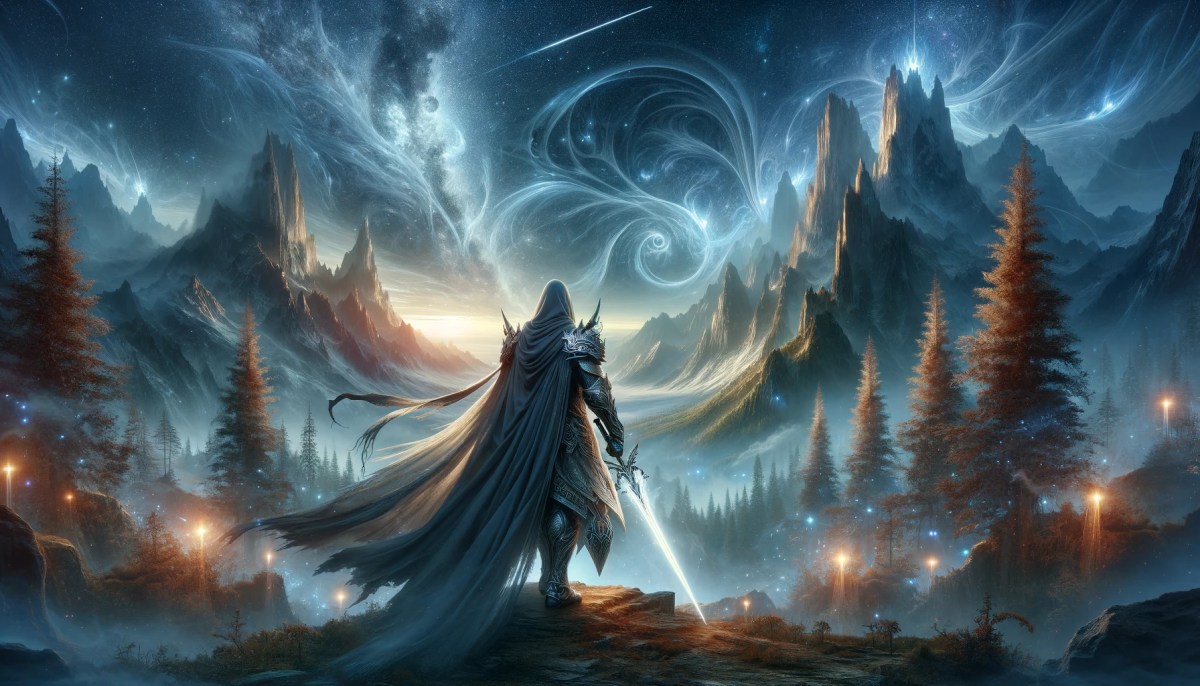
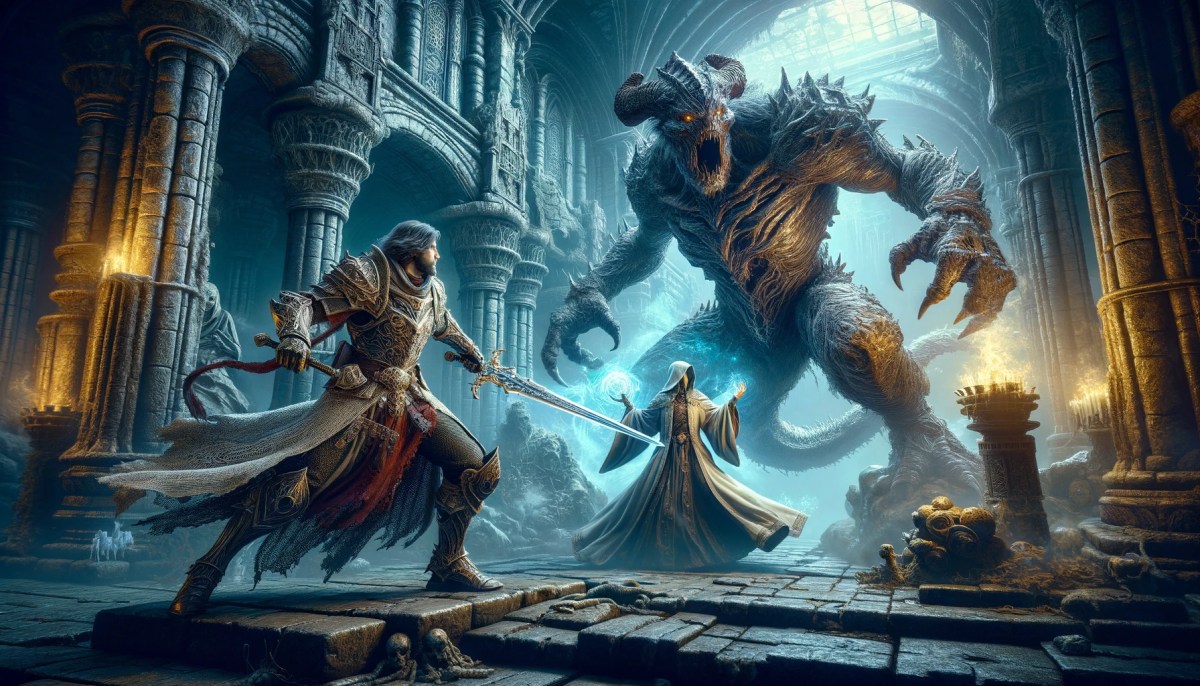
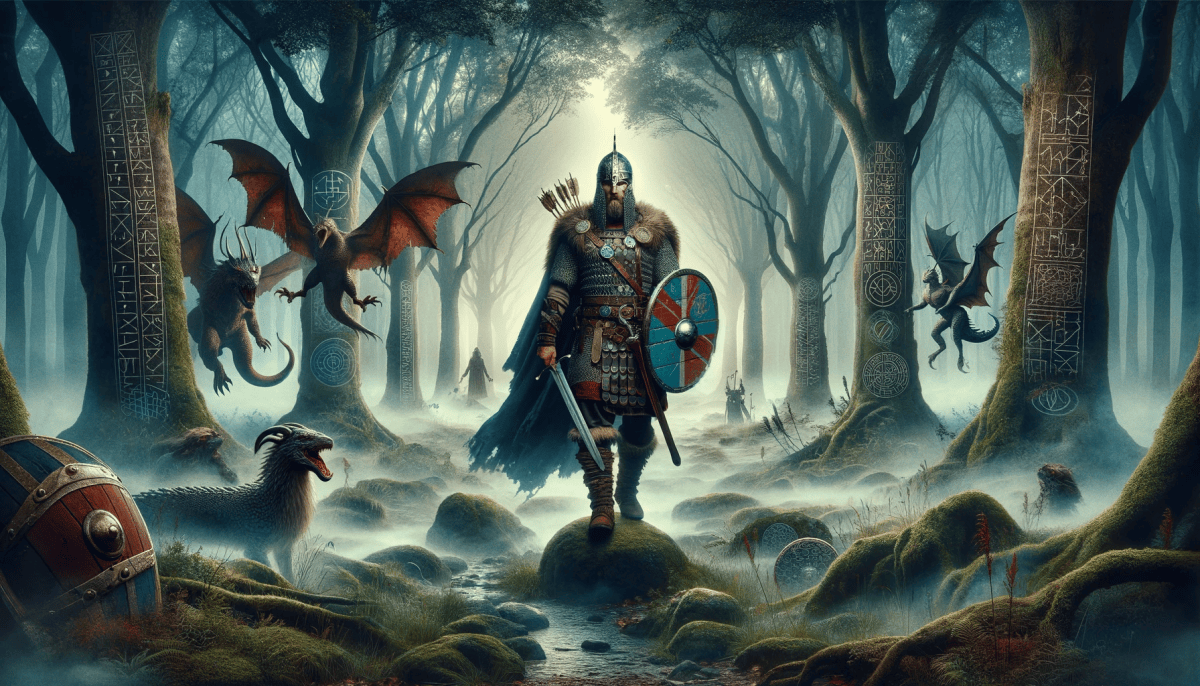
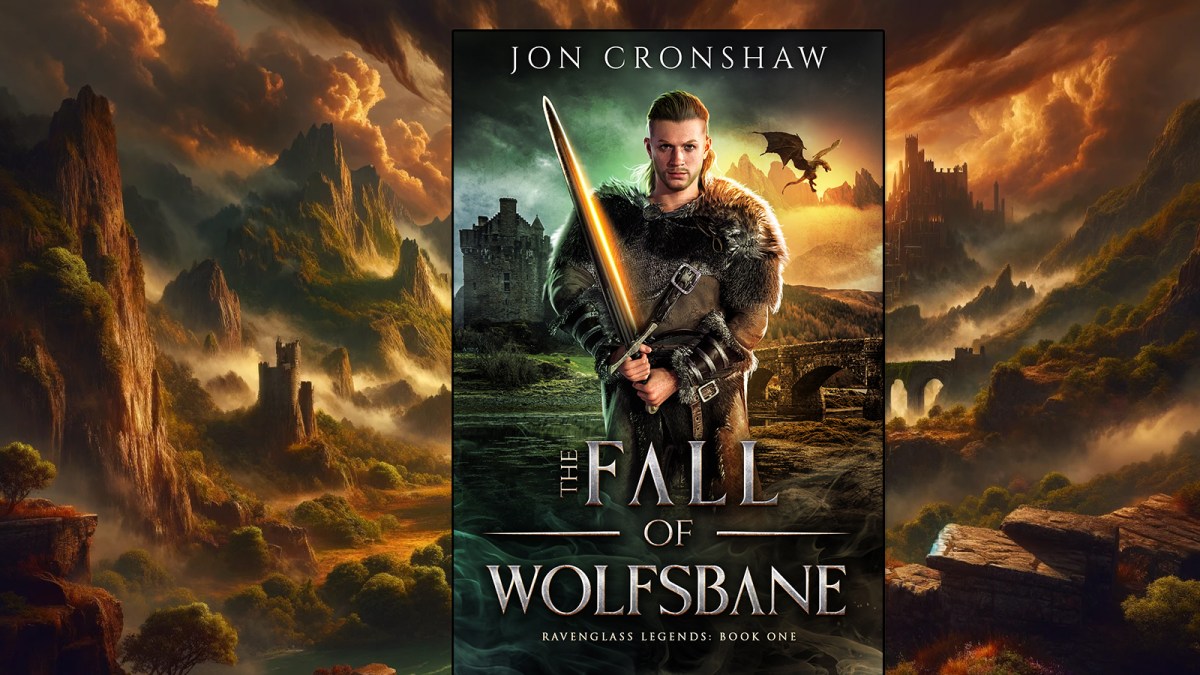
In the annals of fantasy literature, where heroes are typically as shiny and flawless as a knight’s armour, Stephen Donaldson’s “Thomas Covenant” series sticks out like a sore thumb – a leprous, cynical sore thumb.
Here comes Covenant, a man as unlikely a hero as a goblin at a fairy tea party, thrust into a fantastical world that he stubbornly refuses to believe in, even as it believes in him.
An Unheroic Hero: Flipping the Fantasy Script
Donaldson didn’t just create a protagonist; he lobbed a grenade into the cosy, comfortable lap of fantasy heroism.
Thomas Covenant is bitter, broken, and about as heroic as a wet weekend in Wales.
His arrival in the Land, a realm brimming with magic and wonder, is met not with valiant quests but with disbelief and despair.
Donaldson challenged the very notion of what a fantasy hero could be, giving readers a protagonist who was as relatable as he was frustrating.
The Power of Unbelief: A New Kind of Magic
In a genre where belief is often the key to magical powers and happy endings, Donaldson’s Covenant wields the power of unbelief.
His stubborn refusal to accept the reality of the Land becomes his strength, a curious inversion of the typical fantasy narrative where belief is the hero’s greatest weapon.
Donaldson asks the question: what happens when the chosen one refuses to choose?
Complex Moral Ambiguities: No Black and White Here
Donaldson’s series is as much a foray into moral ambiguity as it is into fantasy.
Covenant’s actions and decisions are not clear-cut; they are mired in shades of grey, forcing readers to grapple with the uncomfortable complexities of his character.
This is no tale of good versus evil; it’s a tale of human versus self, a journey into the darker recesses of the soul.
Influence on the Genre: The Anti-Hero Trendsetter
The “Thomas Covenant” series set a precedent for complex, morally ambiguous protagonists in fantasy.
It paved the way for a generation of anti-heroes, characters who defy the traditional mould of the noble, self-sacrificing hero.
In the wake of Covenant, fantasy became a playground for exploring the nuances of character and the inner conflicts that drive us.
The Lasting Legacy of Unbelief
Stephen Donaldson’s “Thomas Covenant” series is a landmark in fantasy literature, not just for its unconventional hero, but for its deep dive into the complexities of the human psyche.
Covenant’s journey through disbelief and despair, set against the backdrop of a richly imagined world, challenged readers to rethink what fantasy could be.
The series stands as a testament to the genre’s capacity for innovation and introspection, proving that sometimes, the most powerful magic lies in the murky waters of the human heart.
In the realm of fantasy literature, where dragons soar and magic courses through the very air, one game has cast a spell of inspiration and creativity like no other: Dungeons & Dragons (D&D).
Since its inception in the 1970s, this tabletop role-playing game hasn’t just entertained legions of players; it has profoundly influenced the landscape of fantasy literature.
Let’s embark on a quest to explore the dungeons (and perhaps a dragon or two) to discover how D&D has shaped the world of fantasy storytelling.
A Brief Expedition into the World of D&D
For those who haven’t rolled a twenty-sided die in the pursuit of adventure, Dungeons & Dragons is a fantasy role-playing game where players create characters to embark on imaginary quests, guided by a Dungeon Master.
It’s a game of limitless possibilities, where the only boundaries are the players’ imaginations.
Character Archetypes: The Birthplace of Heroes (and Villains)
The game’s classes – like wizards, rogues, and paladins – have become staples in fantasy literature, providing a template for authors to craft their characters.
The game’s influence is evident in the way these archetypes have evolved in literature, growing beyond their D&D origins into complex, multifaceted characters.
World-Building: Crafting Realms of Wonder
Another area where D&D has left its mark is in the art of world-building.
The game’s elaborate settings, like the Forgotten Realms and Greyhawk, offer richly detailed worlds, complete with histories, geographies, and cultures.
This attention to detail has inspired authors to create more immersive and intricate fantasy worlds in their writing, elevating the standard for what readers expect from fictional universes.
Plot and Narrative Structure: The Freedom of Storytelling
D&D’s open-ended narrative structure has influenced how stories are told in fantasy literature.
The game encourages collaborative storytelling, with players contributing to the narrative’s direction.
This has inspired a more dynamic form of storytelling in literature, where plots are not strictly linear but woven with the threads of character choices and chance.
The Monster Manual: A Bestiary of Inspiration
D&D’s Monster Manual, a compendium of creatures players might encounter, has become a rich source of inspiration for fantasy authors.
The detailed descriptions and lore of these creatures have sparked the imaginations of writers, leading to the creation of diverse and original monsters in fantasy literature.
Magic Systems: The Art of Arcane Mechanics
The game’s approach to magic, with its rules and schools of thought, has influenced how magic is portrayed in fantasy literature.
Authors have drawn on D&D’s structured magic systems to create their own unique and logical magical frameworks, adding depth and consistency to the fantastical elements of their stories.
Influence Beyond the Page
D&D’s impact extends beyond just literature.
It has permeated popular culture, influencing films, television, and other forms of media.
Its role in the development of computer RPGs and its presence in various digital media have further cemented its influence on the fantasy genre.
The Enduring Legacy of Dungeons & Dragons
Dungeons & Dragons has done more than provide a platform for imaginative play; it has profoundly influenced the genre of fantasy literature.
By providing a framework for character development, world-building, and storytelling, D&D has become a wellspring of inspiration for generations of writers.
In the grand saga of fantasy literature, D&D’s role is as pivotal as that of any hero or sage, a true architect in the realm of imagination and creativity.
Ah, the Hero’s Journey, a beloved trope as classic as a cup of strong tea and as ubiquitous as rain in Manchester.
It’s the secret sauce behind most fantasy tales, the narrative equivalent of a full English breakfast – satisfying and familiar, with just enough variety to keep you coming back for more.
Let’s start with The Ordinary World, which is anything but ordinary for the hero.
Here, our protagonist is as blissfully unaware of their grand destiny as someone who’s just stepped on a piece of Lego in the dark.
It’s a life of mundane routines and unfulfilled daydreams, much like queuing for a bus in the drizzle.
The Call to Adventure
Then The Call to Adventure arrives, typically at the worst possible moment, like a tax bill or a surprise visit from the in-laws.
It disrupts the hero’s comfortable, if slightly dull, existence, offering them a chance to change their story from a pamphlet to an epic novel.
The Refusal of the Call
Inevitably, our hero will experience The Refusal of the Call.
Who wouldn’t? It’s the narrative equivalent of being asked to give up Sunday roasts for kale smoothies.
But, much like the allure of a bank holiday sale, the call is too enticing to ignore for long.
Meeting with the Mentor
Then comes the Meeting with the Mentor, where our hero encounters someone older, wiser, and often more inclined to spout cryptic advice than a fortune cookie.
This mentor equips our protagonist with the tools, knowledge, or moral support needed to face the trials ahead, kind of like a fantasy version of a YouTube DIY tutorial.
Crossing the Threshold
Crossing the Threshold is next, where the hero steps into a world as different from their own as Marmite is from jam.
This is the point of no return, like accidentally sending a risky text and watching in horror as the ‘read’ receipt appears.
Tests, Allies, and Enemies
In Tests, Allies, and Enemies, the hero faces challenges that make a trip to IKEA on a Saturday seem like a walk in the park.
They gather allies – a fellowship, if you will – who are as varied as British weather and as dependable as a soggy paper bag.
Enemies also appear, often in the form of villains with more complex backstories than a soap opera character.
Approach to the Inmost Cave
The Approach to the Inmost Cave (not an actual cave, usually) is where our hero prepares for their biggest challenge yet, akin to gearing up for a full day of British summer (sunscreen, umbrella, and a winter coat, just in case).
The Ordeal
The Ordeal is the moment of truth, a test as harrowing as deciding whether to put the milk in before the tea bag.
Our hero confronts their greatest fear, which is often something deeply personal, like running out of tea or losing Wi-Fi.
The Reward
Surviving the ordeal, the hero experiences The Reward, gaining a prize of immense value, be it a magical object, knowledge, or a personal revelation, often accompanied by the realization that the return journey is going to be as easy as convincing a Brit to skip the queue.
The Road Back
The Road Back sees our hero deciding to return to the Ordinary World.
This decision is as weighty as choosing the lesser of two evils, like picking between washing the dishes or vacuuming.
The Resurrection
Upon The Resurrection, the hero faces a final test, often more dangerous than a last-minute dash to the shops on Christmas Eve.
This is where the transformation is completed, with the hero emerging as polished and refined as a scone at afternoon tea.
The Return with the Elixir
Finally, The Return with the Elixir.
Our hero comes back to the Ordinary World, but they’re as changed as a London boozer after a hipster makeover.
They bring something to improve their world, be it a magical elixir or a newfound understanding, much like returning from holiday with exotic spices that will sit in the cupboard for years.
In essence, the Hero’s Journey is about transformation.
It’s a wild ride from the ordinary to the extraordinary and back again, a bit like British politics but with more dragons and fewer debates.
It’s a narrative as comforting as a cuppa, and just like a good book or a rainy day, it’s something we return to time and time again.
In the sprawling annals of fantasy literature, the ‘fish-out-of-water’ trope is as permanent a fixture as a brooding hero in a murky tavern.
Imagine plucking an unassuming character and tossing them into a realm where their understanding of the world is about as useful as a chocolate war hammer.
Picture a character for whom the idea of quantum physics is less alien than their current predicament.
And there you have the stage set for a delightful dance of the disoriented.
The Appeal: A Symphony of Misfits
There’s a peculiar charm in watching a character fumble through a world they find as baffling as a dragon at a vegan barbecue.
It’s akin to the thrill of watching someone navigate a maze blindfolded.
We find a strange kinship in their cluelessness, a shared sense of “Well, this should be interesting.”
For the reader, the fish-out-of-water is less a literary device and more a comrade-in-arms, wading through the murky waters of the unknown, while we chuckle from the safety of our armchairs.
And let’s be honest, there’s a certain schadenfreude in witnessing someone attempting to mount a dragon as if it were a slightly larger-than-average pony.
Character Examples: From Zero to Hero, and Perhaps Back to Zero
Bilbo Baggins in ‘The Hobbit‘: Here we have Mr. Baggins, a hobbit more suited to a quiet life of tea and scones, suddenly thrust into a world where dragons consider his kind more snack than conversationalist.
His journey from hobbit-hole to dragon’s den is the epitome of bewildered bravery.
Harry Potter in the ‘Harry Potter’ Series: Picture a boy who believes his biggest problem is the Dursleys, only to find out he’s supposed to play hero in a world that thinks safety regulations are for Muggles.
Harry’s journey is a masterclass in “I’m sorry, you want me to do what now?”
Arthur Dent in ‘The Hitchhiker’s Guide to the Galaxy’: Arthur, a man whose biggest worry was the council demolishing his house, suddenly finds himself traversing the universe.
It’s less a leap of faith and more a tumble into the absurd.
Thomas Covenant in ‘The Chronicles of Thomas Covenant’: Here’s a man dragged from his own bleak reality into one where he’s expected to be a savior.
Covenant’s disbelief is almost as palpable as the reader’s amusement.
Why It Works: The Joy of Disorientation
This trope sings because it’s a mirror to every time we’ve felt like bringing a manual to a social gathering.
It’s the universal experience of “I have no idea what I’m doing, but I’ll pretend I do,” set against a backdrop of elves and sorcery.
In fantasy, this trope isn’t just relatable; it’s a masterclass in world-building by stealth.
The reader, much like the protagonist, learns that sometimes, ignorance isn’t just bliss; it’s downright hilarious.
The Unlikely Charm of Being Out of One’s Depth
The enduring allure of the ‘fish-out-of-water’ trope in fantasy lies in its uncanny ability to blend the journey of self-discovery with the kind of mishaps that make for excellent dinner party anecdotes.
It’s a reminder that sometimes, all it takes to find oneself is getting hopelessly lost in a world where even the laws of physics seem to have had one too many at the local tavern.
In the end, there’s nothing quite like a character utterly out of their depth, yet doggedly paddling on, to remind us that sometimes, the best adventures begin with a healthy dose of bewilderment and a side of “What in the seven hells have I gotten myself into?”
In the grand arena of modern fantasy, where authors duel with pens mightier than swords, one champion’s legacy remains as enduring as the legends he spun: David Gemmell.
Known for his rugged heroes, moral complexities, and a distinct blend of myth and muscle, Gemmell didn’t just write fantasy novels; he forged them in the fires of his indomitable imagination.
Let’s stride through the mist of time (without tripping over our cloaks) to examine how this master of heroic fantasy left an indelible mark on the genre.
For those unacquainted with his work, David Gemmell stands as a colossus in the realm of fantasy literature, renowned especially for his iconic ‘Drenai’ series among numerous other novels.
Born on August 1, 1948, in London, England, Gemmell’s journey into the world of fantasy writing was as storied as his novels.
Raised in a tough urban environment, he encountered struggles early in life that profoundly shaped his worldview and later, his writing.
His tales, rich with valiant warriors and epic battles, mirrored his own battles with adversity, echoing a theme prevalent throughout his life: the triumph of the human spirit against overwhelming odds.
Gemmell’s foray into writing was somewhat serendipitous.
His career began in journalism, but it was a false accusation of involvement in a robbery that prompted him to write his first novel, ‘Legend’, as a means of coping with the stress of the situation.
Published in 1984, ‘Legend’ launched him as a formidable voice in fantasy fiction.
His stories delve deeper than mere whimsical escapades; they are gritty narratives that explore themes of heroism, redemption, and the eternal struggle between light and darkness.
Gemmell’s characters were often flawed, burdened with complex moral dilemmas, and faced with the kind of difficult choices that define us as human beings.
This approach was heavily influenced by his personal experiences and his belief in the inherent resilience and nobility of the human spirit, even amidst darkness and despair.
In Gemmell’s world, heroes were not born; they were forged in the crucible of adversity, often battling inner demons as fierce as the dragons they faced.
His protagonists, such as Druss the Legend and Waylander, became archetypes of the genre, embodying a rugged, morally complex heroism that resonated deeply with readers.
Throughout his career, Gemmell’s works continually explored these themes, earning him a devoted following and critical acclaim.
His novels often drew inspiration from historical events and mythology, blended with his unique brand of storytelling.
The blend of historical realism with fantasy elements became a hallmark of his work, setting his novels apart in a genre often dominated by more traditional high fantasy narratives.
David Gemmell’s legacy in the world of fantasy literature is undeniable.
Before his untimely passing in 2006, he authored over thirty novels, each one contributing to a body of work that has left an indelible mark on the genre.
His influence extends beyond his novels, inspiring a generation of writers and readers who find solace, inspiration, and strength in the tales of heroes who, like Gemmell himself, faced the darkness and emerged triumphant.
Carving a Niche: Gemmell’s Brand of Fantasy
Gemmell’s influence in fantasy is akin to a masterfully wielded axe – sharp, undeniable, and leaving a mark.
He veered away from the high fantasy of elves, orcs, and distant, ethereal magic, grounding his tales in a realism that was both brutal and beautiful.
His heroes were flawed, relatable, and profoundly human, a stark contrast to the near-perfect paragons often depicted in fantasy narratives.
This approach resonated with readers, offering a more down-to-earth, gritty version of heroism.
One of Gemmell’s lasting impacts is his contribution to the archetype of the solitary, brooding hero – think Druss the Legend or Waylander.
This character type, the lone wolf with a troubled past and a heart of gold, has become a beloved staple in fantasy literature and media, influencing countless authors and creators in their portrayal of complex, anti-heroic protagonists.
Another Gemmell hallmark is the moral ambiguity he wove into his narratives.
In his worlds, the line between good and evil was often blurred, with heroes making questionable decisions and villains showing glimpses of humanity.
This nuanced approach to morality has become increasingly prevalent in modern fantasy, encouraging a deeper exploration of characters’ motivations and the ethical landscapes they navigate.
A Legacy Continued
Even after his passing, Gemmell’s influence continues through the David Gemmell Awards for Fantasy, established to celebrate the best in fantasy fiction.
Though the awards concluded in 2019, they played a significant role in recognising and promoting excellence in the genre, a testament to Gemmell’s enduring impact.
David Gemmell may have left our mortal plane, but his influence on fantasy literature is as alive as a Drenai warrior’s spirit.
He redefined heroic fantasy, giving us characters and stories that were not just escapades of escapism but reflections on heroism, sacrifice, and the human condition.
In the pantheon of fantasy greats, Gemmell stands tall, a solitary figure watching over a genre he helped shape with the might of his imagination and the strength of his tales.
Once upon a time, in the kingdom of modern fantasy literature, a new kind of hero began to emerge.
Gone are the days when heroes were as spotless as a knight’s freshly polished armour.
Today’s fantasy protagonists are more akin to a warrior who’s been through a few too many battles and perhaps one too many visits to the mead hall.
They’re flawed, complex, and as perfectly imperfect as a spell gone slightly awry.
The Not-So-Charming Charming Heroes
The modern fantasy hero is often as flawed as a dragon’s dental plan.
These characters might be brave, but they’re also battling their own demons, whether those be a shady past, a temper as fiery as a dragon’s breath, or a tendency to make decisions as poor as a goblin’s investment strategy.
They’re not the infallible paragons of virtue of yesteryear; they’re more like your mate Dave, who means well but occasionally sets the kitchen on fire.
A Journey of Self-Discovery (and Frequent Missteps)
It’s more like a meandering trek through a forest filled with pitfalls, detours, and the occasional existential crisis.
These characters grow and evolve, often through making mistakes that are as glaring as a wizard’s neon robe at a funeral.
Their journey is about learning, about growing, and often about redeeming themselves, which is a lot more relatable than being born with an innate sense of righteousness.
The Relatable Hero
Why this shift to flawed heroes, you ask?
Well, they say art imitates life, and let’s face it, none of us are as flawless as a fairy-tale prince.
Readers find themselves drawn to characters who struggle, who falter, who get up again – because that’s what we all do, minus the dragons and the magic (unfortunately).
These heroes reflect our own struggles, making their victories sweeter and their narratives more compelling than a bard’s tale on a stormy night.
Modern fantasy loves to play in the grey areas of morality.
Our heroes often face choices where the line between right and wrong is as blurred as your vision after a night at the tavern.
They make decisions that might not be strictly ‘heroic’, but are understandable, human.
It’s a far cry from the black-and-white morality of old, and frankly, a lot more interesting.
In the end, the rise of flawed protagonists in modern fantasy reflects a shift in our own understanding of heroism.
It’s no longer about being perfect; it’s about being brave enough to face your own imperfections.
It’s about doing the right thing, even when the right thing is as hard to find as a sober dwarf.
So here’s to the flawed heroes of modern fantasy – may their swords be sharp, their wits sharper, and their flaws just flawed enough to keep things interesting.
If you’re an ardent player of Dungeons & Dragons (D&D), chances are you’re no stranger to expansive world-building, intricate plots, and fascinating characters.
To keep your adventure cravings satisfied, we’ve compiled a list of ten fantasy books that will make you feel like you’re right back at the gaming table.
So, dust off your reading glasses and prepare for a literary journey that reflects the essence of D&D.
Kings of the Wyld by Nicholas Eames
For fans of D&D who love the classic quest format, Kings of the Wyld is a must-read.
The story follows a group of washed-up mercenaries on a high-stakes rescue mission.
The tale is rich in humour and camaraderie and calls back to the classic idea of adventuring parties in D&D.
The author’s affectionate and amusing nods to D&D tropes make it a book that’s not just an entertaining read but a nostalgic one for veteran D&D players.
This novel brings you into the lives of the Greatcoats – a group of wandering duellists tasked with upholding justice, reminiscent of D&D’s Fighters or Paladins.
With a mix of swashbuckling action, an intriguing justice system, and characters that are charmingly flawed yet noble, Traitor’s Blade showcases a camaraderie between characters that you might recognize from your D&D party.
Its engaging storyline and tactical combat will resonate with those who love detailed combat in their D&D sessions.
A satirical and clever take on classic fantasy tropes, Orconomics is a perfect blend of comedy, economics, and high fantasy.
Pike crafts a world where adventuring is an industry and monsters are hunted for their loot, akin to a D&D campaign but through a cleverly corporate lens.
The economic system’s intricacy, diverse cast of characters, and the detailed world-building provide elements D&D enthusiasts will appreciate.
Bardugo’s novel, set in the gritty underworld of Ketterdam, echoes D&D’s rogue-infested urban settings.
The narrative follows a band of six unlikely companions on an impossible heist, each with their unique skills and backstory, much like a D&D party.
The intricate heist plot will attract D&D players who love planning and strategizing their missions, and the immersive world-building makes it a compelling read for those who enjoy the depth of lore in their D&D campaigns.
The Final Empire (Mistborn Series) by Brandon Sanderson
The Final Empire offers a unique magic system that fans of D&D’s magic mechanics will enjoy.
The concept of Allomancy (using various metals to fuel magic) provides a fresh perspective on magical systems that D&D wizards or sorcerers might appreciate.
The book also explores themes of rebellion and revolution, set against a dystopian backdrop, offering intricate political manoeuvrings that may resonate with D&D campaigns full of intrigue and societal unrest.
This series is an excellent fit for fans of strong female characters and the Paladin class in D&D.
It follows Alanna of Trebond, who disguises herself as a boy to train as a knight.
Throughout her journey, she grapples with her identity, her magical abilities, and her duty to her kingdom.
The books are a fantastic exploration of courage, perseverance, and embracing one’s destiny, making them a great read for anyone who enjoys stories of heroic quests and overcoming great odds.
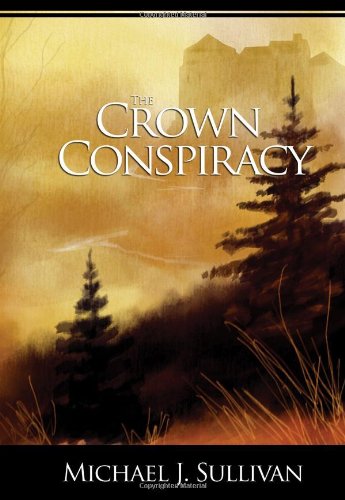
This novel introduces us to Royce Melborn, a skilled thief, and his sword-wielding companion, Hadrian Blackwater. Together, they form the notorious duo known as Riyria.
When the pair are falsely accused of killing the king, they must use their skills to prove their innocence and uncover a conspiracy.
Sullivan’s novel, full of witty banter, dynamic combat, and thrilling intrigue, makes it a joy to read for those D&D players who love the excitement of unexpected twists and plots within their campaigns.
Kohanek’s world is one where fate is mutable, and prophecies are a significant part of the narrative.
Eye of Obscurance presents an epic quest filled with magic, gods, and fate, sure to please D&D players who enjoy rich lore and divine intervention in their games.
Fans of the Sorcerer class might find a kindred spirit in the protagonist, an untrained sorcerer named Fate. His journey from novice to master is both engaging and inspiring, reflecting the growth D&D characters experience throughout their adventures.
No D&D-themed book list would be complete without mentioning R.A. Salvatore, particularly his book, Homeland.
This novel is the start of the legend of Drizzt Do’Urden, one of the most iconic characters from the Forgotten Realms setting in D&D.
This tale of resilience, integrity, and self-discovery in a dark and unforgiving world will resonate with fans who’ve braved the Underdark and faced drow societies in their D&D campaigns.
The immersive descriptions and the unique combat style of Drizzt will also provide valuable inspiration for both players and DMs.
For fans of D&D campaigns brimming with intrigue, moral complexity, and heart-pounding action, Guild of Assassins delivers in spades.
The story follows Soren, a young sculptor thrust into a cutthroat assassins’ guild after his father’s murder. His transformation from an idealistic artist to a relentless seeker of vengeance mirrors the development arcs many D&D characters undergo when shaped by tragedy and ambition.
With vivid world-building and a cast of morally ambiguous characters, the book offers a gritty, emotionally charged experience that will resonate with those who enjoy exploring the darker side of D&D campaigns. Soren’s harrowing training alongside his friend Alaric provides intense moments of camaraderie and tension, akin to the dynamics found in a tightly-knit adventuring party.
The focus on stealth, tactical combat, and the psychological cost of violence makes Guild of Assassins a must-read for players who favour rogue, assassin, or morally grey character archetypes. Its rich narrative and visceral storytelling will keep you gripped until the final page.
These novels each offer a unique perspective, with heroes and villains that could easily have stepped out of a D&D campaign.
If you’re looking for your next fantasy read or seeking inspiration for your upcoming D&D session, these books are a great place to start.
Now, grab your preferred beverage, find a comfy chair, and prepare to be transported to realms of high fantasy, thrilling adventure, and gripping intrigue.
Let me know in the comments what books you would recommend.
To provide the best experiences, we use technologies like cookies to store and/or access device information. Consenting to these technologies will allow us to process data such as browsing behavior or unique IDs on this site. Not consenting or withdrawing consent, may adversely affect certain features and functions.
Functional
Always active
The technical storage or access is strictly necessary for the legitimate purpose of enabling the use of a specific service explicitly requested by the subscriber or user, or for the sole purpose of carrying out the transmission of a communication over an electronic communications network.
Preferences
The technical storage or access is necessary for the legitimate purpose of storing preferences that are not requested by the subscriber or user.
Statistics
The technical storage or access that is used exclusively for statistical purposes.The technical storage or access that is used exclusively for anonymous statistical purposes. Without a subpoena, voluntary compliance on the part of your Internet Service Provider, or additional records from a third party, information stored or retrieved for this purpose alone cannot usually be used to identify you.
Marketing
The technical storage or access is required to create user profiles to send advertising, or to track the user on a website or across several websites for similar marketing purposes.