Exploring the Magic of “Jonathan Strange & Mr Norrell” by Susanna Clarke

Dive into the enchanting world of “Jonathan Strange & Mr Norrell,” where Susanna Clarke seamlessly blends historical Regency Britain with a rich tapestry of magic. Discover how this novel redefines fantasy with its unique mix of history, folklore, and subtle enchantments, captivating readers with its depth and innovation.

In the landscape of fantasy literature, often dominated by tales of distant lands and ancient times, Susanna Clarke’s “Jonathan Strange & Mr Norrell” arrived like a well-mannered gentleman at a barbarians’ banquet.

Set in an alternative 19th-century England where magic is as rare as a sunny day in November, Clarke’s novel reintroduced the fantastical into the drawing rooms and battlefields of Regency Britain with a subtlety and wit as sharp as a cut from a gentleman’s rapier.

A Not-So-Simple Tale of Two Magicians

The novel, a tome hefty enough to stop a door or crush a small goblin, revolves around two contrasting magicians: the cautious and studious Mr Norrell, and the adventurous and impulsive Jonathan Strange.

Their partnership, rivalry, and eventual conflict is less about flashy wand-waving and more about the nuances of power, influence, and the cost of knowledge.

In essence, it’s less a fireworks display and more a slowly burning fuse with an uncertain end.

Magic in the Real World: A New Kind of Spell

Clarke’s vision of magic is as intricate as lacework on a Victorian gown.

It’s a blend of folklore, history, and a painstakingly crafted magical system that makes the reader believe, just for a moment, that the fae might actually be lurking in the English hedgerows.

This integration of magic into a recognisable historical setting was a breath of fresh air – or, more accurately, a breath of musty, book-lined air from an old library.

The Footnotes: Where History Meets Myth

A unique feature of “Jonathan Strange & Mr Norrell” is its footnotes, an academic’s dream, providing a depth and richness to the world that most fantasy novels achieve through less scholarly means.

These footnotes add layers to the story, creating a history that feels as real as any textbook, but considerably more entertaining – unless one finds the Corn Laws particularly gripping.

Influence on Modern Fantasy: A Quiet Revolution

The impact of “Jonathan Strange & Mr Norrell” on modern fantasy has been as profound as it has been subtle.

Clarke’s novel showed that fantasy need not be set in an imaginary land far, far away; it could be nestled in our own history, hiding in the shadows of what we thought we knew.

It inspired a new wave of historical fantasy novels, stories that weave magic into the fabric of real history, inviting readers to look twice at the world around them.

A Lasting Enchantment

Jonathan Strange & Mr Norrell remains a landmark in fantasy literature, a novel that reminded us of the magic lurking in the corners of our own world.

It’s a story that weaves a spell over the reader, as intricate and compelling as the enchantments within its pages.

In the world of fantasy, Clarke’s novel stands as a testament to the power of subtlety and the allure of a well-spun yarn, proving that sometimes the most powerful magic is found not in the thunderous roar of a dragon, but in the whisper of an old book’s pages turning.

Exploring the Magic of “The Last Unicorn” by Peter S. Beagle

Delve into the enchanting world of “The Last Unicorn” by Peter S. Beagle, a tale that weaves melancholy with mythical beauty. Explore how this profound story transcends fantasy norms, speaking to our deepest emotions and redefining mythical storytelling with its poignant themes.

In the fantastical menagerie of fantasy literature, Peter S. Beagle‘s “The Last Unicorn” pranced into the scene with the grace of, well, a mythical unicorn.

This was not just another story about a mystical creature; it was a narrative that wove melancholy, beauty, and existential dread into a tapestry as enchanting as it was heart-wrenching.

Beagle’s tale redefined the boundaries of fantasy, proving that stories about mythical beasts could be as profound as they were whimsical.

Unicorns: Not Just for Tapestries Anymore

Before “The Last Unicorn“, these horned equines were relegated to the status of ornamental tapestry fillers or symbols of unattainable purity.

Beagle, however, presented the unicorn as a complex, sentient being grappling with loneliness, mortality, and the loss of her kind.

It was a far cry from the frolicking, maiden-attracting creature of lore, turning the unicorn trope on its horned head.

The Melancholy of Immortality

“The Last Unicorn” delved into themes seldom explored in fantasy at the time – the sorrow of immortality and the ache of ephemeral beauty.

Beagle’s unicorn is as cursed by her immortality as she is blessed, leading to a narrative tinged with a sense of tragic beauty.

This introspective take on the mythical creature challenged the genre to consider deeper, darker themes under its usually shimmering surface.

A Legacy of Enchantment and Desolation

The influence of Beagle’s work on modern fantasy is as subtle and pervasive as the magic of his unicorn.

Fantasy authors began to explore themes of loss, change, and the darker aspects of immortality with a newfound depth and sensitivity.

The echoes of “The Last Unicorn” can be seen in the works of authors like Neil Gaiman and Patrick Rothfuss, where the enchantment of the fantastical is often interlaced with the melancholy of the human condition.

The Lasting Spell of a Mythical Creature

“The Last Unicorn” remains a poignant figure in the forest of fantasy literature, a reminder that the most magical tales are those that speak to our deepest fears and longings.

Beagle’s narrative continues to resonate, a testament to the power of fantasy to explore the depths of the human heart, with or without a unicorn.

It’s a story that reminds us that even in a world brimming with magic, the most enchanting spells are those cast by the stories we tell.

Roger Zelazny’s Impact on the Fantasy Genre

Dive into the groundbreaking world of Roger Zelazny’s ‘The Chronicles of Amber,’ a series that revolutionized fantasy fiction with its intricate world-building, complex narratives, and the innovative concept of Shadow, reshaping the genre’s boundaries.

In the grand, often predictably medieval tapestry of fantasy fiction, Roger Zelazny‘s “The Chronicles of Amber” stands out like a neon sign in a monastery.

This series didn’t just push the boundaries of fantasy; it took those boundaries, gave them a good shake, and threw them into a kaleidoscope of infinite possibilities.

Here was a world (or rather, worlds) where reality was as fluid as the cocktails at a sorcerers’ soiree.

A Royal Family Drama: Game of Thrones, Eat Your Heart Out

Before George R.R. Martin made family drama and throne jostling a staple diet of fantasy readers, Zelazny gave us the Amber series, where the family squabbles make the antics at King’s Landing look like a polite disagreement over afternoon tea.

The princes and princesses of Amber don’t just vie for power; they manipulate realities, engage in metaphysical battles, and toss around witty one-liners like confetti at a wedding – a very chaotic, somewhat homicidal wedding.

Reality as a Plaything: The Concept of Shadow

Zelazny introduced the concept of ‘Shadow’, where infinite realities exist as variations of the true world, Amber.

This wasn’t just world-building; it was universe-building, with each character capable of shifting through these realities.

It was like offering the reader a ticket to an infinite number of fantasy worlds – a ‘choose your own adventure’ on a cosmic scale.

Amber’s Heirs: The Legacy in Modern Fantasy

The influence of Amber is as widespread as the shadows it portrays.

Modern fantasy, with its penchant for complex, morally grey characters and intricate, multi-layered worlds, owes a nod to Zelazny’s masterpiece.

The series showed that fantasy could be more than just a linear narrative set in a pseudo-European medieval world; it could be a wild, mind-bending ride through realities, a genre where anything and everything could happen.

Narrative Style: First-Person Snark

Zelazny also broke the mould with his first-person narrative style, giving us a protagonist in Corwin who was as likely to drop a sarcastic quip as he was to engage in a sword fight.

This narrative voice added a layer of intimacy and immediacy to the story, a departure from the often distant, third-person epic narratives of the time.

It was like having a protagonist who was not just a prince but also your sardonic best mate.

The Enduring Brilliance of Amber

“The Chronicles of Amber” may not have the mainstream recognition of some of its fantasy brethren, but its impact on the genre is undeniable.

Zelazny took fantasy literature, played with its realities, twisted its narratives, and gave us a series that was as intellectually challenging as it was entertaining.

In the grand scheme of fantasy literature, Amber shines brightly, a multi-faceted gem that reflects the myriad possibilities of the genre.

Reinventing the Fantasy Hero: A Look at “Elric of Melniboné”

Dive into Michael Moorcock’s “Elric of Melniboné,” where the sword Stormbringer and the anti-hero Elric redefine fantasy norms. Discover how this groundbreaking series shaped modern fantasy with its complex characters and innovative multiverse concept.

In the vibrant tapestry of fantasy literature, where heroic figures often brandish gleaming swords, Michael Moorcock‘s “Elric of Melniboné” series brought forth a weapon with more depth than many of its wielders.

This saga was not merely about heroes and their loyal arms; it revolved around a sword, Stormbringer, embodying a character as pivotal as Elric, the series’ fated hero.

Moorcock didn’t merely craft a narrative; he etched a complex and ominous rune onto the polished façade of fantasy fiction.

A Hero? More Like an Anti-Hero

Elric, the protagonist of the “Elric of Melniboné” series, stood in stark contrast to the typical stalwart, virtuous heroes of conventional fantasy.

As a frail, melancholic albino sorcerer reliant on drugs and his sword for vitality and endurance, Elric epitomised the anti-hero before it became a mainstay of the genre.

Moorcock depicted a protagonist more tormented and conflicted than any convoluted maze.

The Sword That Consumes Souls

In the “Elric of Melniboné” series, the sentient, soul-devouring sword Stormbringer emerged as a dark entity in its own right.

A paradoxical blend of curse and power for Elric, this weapon’s portrayal as an autonomous character with distinct motivations upended the usual sword-and-sorcery tropes, paving the way for numerous dark fantasy stories to follow.

Multiverse and Metafiction: Blurring the Lines

Moorcock’s narrative ambition extended beyond redefining characters and plots.

In his “Elric of Melniboné” series, he toyed with the foundations of reality itself, unveiling the concept of the multiverse.

His interwoven universes and the Eternal Champion motif transcended simple crossovers, merging various series and realities into a labyrinthine and fascinating tapestry.

This approach later influenced the realms of fantasy and science fiction, encouraging writers to envision narratives that spanned beyond single, linear worlds.

The Dark Legacy: Influencing Modern Fantasy

Moorcock’s “Elric of Melniboné” casts long, indelible shadows across the landscape of fantasy literature.

Its impact is evident in the moral grey areas, intricate characters, and sombre undertones prevalent in contemporary fantasy.

From George R.R. Martin’s “A Song of Ice and Fire” to Joe Abercrombie’s “The First Law” series, the ripples of Moorcock’s profound, nuanced narrative style and his exploration of power’s darker facets continue to resonate.

A Storm That Never Quite Passes

The “Elric of Melniboné” series remains a landmark in the realm of fantasy literature.

Its legacy is rooted not only in its groundbreaking character and story development but also in its courage to delve into the deeper, more complex aspects of power, heroism, and reality.

In the genre of swords and sorcery, the series, especially its iconic sword Stormbringer, stands as a beacon – a testament to the enduring power of stories that dare to navigate the tempests within.

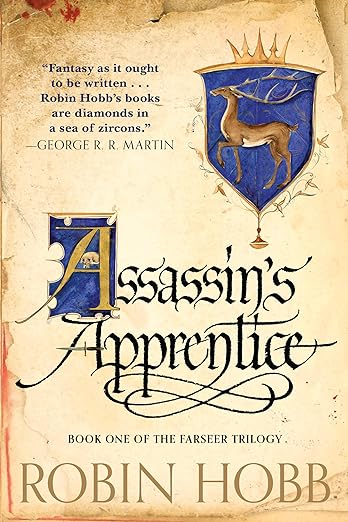
Exploring the Complex World of Robin Hobb’s Assassin’s Apprentice

Dive into Robin Hobb’s “Assassin’s Apprentice,” where fantasy meets complexity and morality blurs. Explore how FitzChivalry Farseer, an unlikely hero with a dark skill set, reshapes our understanding of fantasy protagonists. Unpack Hobb’s intricate world of magic and politics, delving into a narrative that goes beyond good vs. evil. Discover how this groundbreaking story influences modern fantasy, paving the way for deeper character development and more nuanced storytelling in the genre.

In the often bright and valiant world of fantasy literature, Robin Hobb‘s “Assassin’s Apprentice” arrived like a shadow in the night.

With this book, Hobb didn’t just introduce readers to a new story; she introduced us to FitzChivalry Farseer – a hero as unlikely as finding a courteous goblin.

This tale of an assassin’s apprentice was a sharp turn from the usual path of swords and sorcery, taking the road less travelled – and considerably darker.

An Assassin with a Heart: Shaking Up the Hero Mold

Fitz wasn’t your typical fantasy protagonist.

He was no noble knight on a gleaming steed nor a wise wizard with a long beard and a penchant for riddles.

Instead, he was a boy with a knack for killing and a complicated moral compass.

Hobb crafted a character that was as complex as he was conflicted, bringing a depth to Fitz that went beyond the traditional good versus evil narrative.

He was a walking contradiction, a hero in a role usually reserved for villains.

Magic and Mind: A Different Kind of Power

In “Assassin’s Apprentice”, magic wasn’t just about throwing fireballs or summoning storms.

Hobb introduced the Wit and the Skill – two forms of magic that were as nuanced as they were powerful.

The Wit, a bond with animals, was considered a lowly, almost taboo form of magic, while the Skill was a prestigious, mind-influencing ability.

This reimagining of magic systems injected a fresh dose of intrigue into the fantasy genre, turning magic into a source of inner turmoil as much as external power.

Narrative Grit: The Nitty-Gritty of Royal Politics

Hobb’s narrative delved deep into the murky waters of court intrigue and politics, with all the backstabbing and power plays one might expect in a den of vipers rather than a royal court.

This focus on the political, often from the perspective of someone usually left in the shadows, gave the fantasy genre a grittier, more realistic edge.

It was like lifting a rock to see the unsightly creatures writhing underneath – fascinating, if somewhat unsettling.

Influence on Modern Fantasy: The Echoes of Fitz’s Blade

The influence of “Assassin’s Apprentice” on modern fantasy is as clear as the scars on Fitz’s soul.

The series paved the way for a more nuanced approach to character development, where heroes were allowed to be flawed, and villains occasionally sympathetic.

Hobb’s blend of personal struggle, political intrigue, and a less conventional approach to magic has left an indelible mark on the genre, inspiring authors to explore the grey areas of their characters and worlds.

The Enduring Legacy of a Reluctant Assassin

“Assassin’s Apprentice” was more than just a fantasy novel; it was a masterclass in character-driven storytelling.

Robin Hobb created a world where the line between hero and villain was as thin as a knife’s edge, and just as sharp.

In the annals of fantasy literature, FitzChivalry Farseer remains a testament to the genre’s ability to evolve, to push boundaries, and to redefine what it means to be a hero.

The echoes of Fitz’s blade, and the choices he made with it, continue to resonate in the modern fantasy landscape.

The Enduring Influence of Jack Vance’s Dying Earth on Modern Fantasy

Delve into the captivating world of Jack Vance’s Dying Earth series and its significant impact on modern fantasy literature. Discover how Vance’s unique blend of whimsy, elaborate world-building, and innovative magic system has shaped the genre’s evolution


In the labyrinthine annals of fantasy literature, few works have cast as long and as quirky a shadow as Jack Vance’s ‘Dying Earth‘ series.

Its influence percolates through modern fantasy much like a fine, yet slightly unnerving, wine.

The series, set in a far, far future where the sun is a mere flicker on the brink of eternal night, blends sorcery and super-science in a way that makes you question whether Vance was writing fantasy, sci-fi, or inventing a new genre entirely.

And let’s not forget the magic system, where spells are so mind-bogglingly complex, they would give even the most astute Hogwarts graduate a migraine.

Indeed, the echoes of Vance’s work can be seen in the spellcasting of Dungeons & Dragons, where wizards must memorize spells and then forget them upon casting, much like trying to remember the lyrics to Bohemian Rhapsody after a few pints.

This idiosyncratic approach to magic, where one must essentially cram for a supernatural exam, has been adopted, adapted, and applauded by fantasy enthusiasts worldwide.

Furthermore, the ‘Dying Earth’ presents a peculiar mélange of high-falutin language and low-brow shenanigans.

Characters converse in a manner so florid and verbose that it makes Shakespeare seem like he’s writing in text-speak.

Yet, these same eloquent characters are as likely to pick your pocket as quote a sonnet, blending the grandiose with the gutter in a dance of the sublime and the ridiculous.

This narrative style, simultaneously grand and sly, has inspired a generation of fantasy writers to be bold with their prose and sneaky with their plot twists.

Vance’s work is also a masterclass in world-building, painting a universe so rich and textured that it feels like a tapestry woven by a slightly deranged, yet highly skilled, medieval monk.

His vision of a far-future Earth, teetering on the brink of entropy, sets the stage for tales that are as much about the peculiarities of human (and non-human) nature as they are about grand adventures.

It’s a setting where you’re as likely to encounter a melancholy robot as a sorcerer lamenting the loss of a particularly potent spell, like someone mourning the discontinuation of their favourite brand of tea.

The ‘Dying Earth’ series has, in its own peculiar way, expanded the horizons of fantasy literature.

It has shown that the genre can be more than just dragons and knights, but a space where the imagination can run wild in a playground of the bizarre and the brilliant.

Vance’s ‘Dying Earth’ series has not just left an impact on modern fantasy; it’s given it a good, hard, albeit loving, kick in the behind.

It’s a reminder that fantasy can be as deep as it is whimsical, and that sometimes, to find the truly extraordinary, one must be willing to take a stroll through the absurd.

The Impact of the Greatcoats Series by Sebastian de Castell

Dive into Sebastian de Castell’s ‘Greatcoats’ series, a thrilling blend of swashbuckling adventure, humor, and heart. Explore how this character-driven saga redefines fantasy, merging action with moral complexity.

In the grand realm of fantasy literature, Sebastian de Castell‘s “Greatcoats” series strides in with the swagger of a duelist and the charm of a bard.

This series, with its blend of action, humour, and heart, has not just carved its name in the genre but has done so with a flourish of a rapier and a tip of the hat.

Let’s don our cloaks and delve into the world of the Greatcoats, and explore how they’ve left their mark in the halls of fantasy.

A Tale Well Told: The Greatcoats in a Nutshell

For those who’ve yet to join Falcio, Kest, and Brasti on their adventures, the “Greatcoats” series is set in a world reminiscent of Renaissance Europe, rife with political intrigue, dueling, and a fair dose of magic.

The titular Greatcoats are itinerant magistrates, once revered, now disbanded and disgraced, striving to uphold justice in a corrupt world.

Think The Three Musketeers meets fantasy, with a side of witty banter.

Reviving the Swashbuckler: A Nod to the Classics

De Castell’s series has reinvigorated the swashbuckling adventure in fantasy.

In an age where dark and gritty narratives have become the norm, the Greatcoats harken back to the classic tales of Dumas, infusing the genre with a sense of adventure and chivalry that’s as refreshing as it is exciting.

It’s a reminder that fantasy can be fun and light-hearted, even while tackling themes of honour, betrayal, and moral ambiguity.

At the heart of the “Greatcoats” impact is its character-driven narrative.

De Castell crafts characters that are not just participants in the story but its very lifeblood. They’re flawed, funny, and profoundly human, making their journeys not just thrilling escapades but emotional odysseys.

This focus on character development has influenced modern fantasy to lean towards more nuanced, character-focused storytelling.

Another significant aspect of the “Greatcoats” series is its exploration of moral complexity.

In a world riddled with corruption and competing ideals, the Greatcoats’ quest for justice is fraught with ethical dilemmas and hard choices.

This grey morality has become increasingly prevalent in fantasy, urging readers and writers to consider the complexities of right and wrong in a world where the lines are often blurred.

A New Direction for Fantasy

The “Greatcoats” series has not just entertained; it’s influenced the trajectory of modern fantasy.

Its blend of action, wit, and moral exploration has shown that fantasy can be both exhilarating and thought-provoking.

The series has paved the way for more stories that combine the thrill of adventure with deep, character-driven narratives.

“Greatcoats” series is a dazzling display of storytelling, a blend of action, humour, and heart that has left an indelible mark on the fantasy genre.

It’s a celebration of the swashbuckling spirit, a reminder that fantasy can be both fun and profound, and a testament to the enduring power of stories that speak to the human condition.

In the world of fantasy, where dragons roam and magic abounds, the Greatcoats stand tall – not just as defenders of justice, but as icons of a genre forever enriched by their tale.

Epic Adventure and Humour: Exploring ‘Kings of the Wyld’

Discover Nicholas Eames’s ‘Kings of the Wyld’, a whirlwind of humour and adventure in fantasy literature. This novel isn’t just refreshing; it’s a revolution in storytelling that blends epic battles, heartwarming humour, and the spirit of rock. Join us as we explore this groundbreaking fantasy masterpiece.

In the often-serious kingdom of fantasy literature, where dragons soar and wizards weave spells, Nicholas Eames hit the scene like a power chord in a tranquil forest glen with his debut novel, “Kings of the Wyld.”

This book isn’t just a breath of fresh air; it’s a hurricane of humour, heart, and head-banging adventure that has redefined what a fantasy novel can be.

Let’s tighten our scabbards, tune our lutes, and dive into the glorious, rollicking world of ‘Kings of the Wyld.’

A Symphony of Swords and Rock

For the uninitiated, “Kings of the Wyld” is the first book in Eames’s ‘The Band’ series.

Imagine a world where mercenary bands are revered as rock stars, with all the swagger, fame, and groupies that come with it.

The story follows the legendary band Saga, long disbanded and grown old, as they reunite for one last tour – not to play music, but to rescue the daughter of one of their members from an army of monsters.

Eames’s novel is a head-banging twist on traditional fantasy tropes.

Where else would you find retired, beer-bellied warriors picking up their swords like electric guitars for a comeback tour?

The fusion of classic rock vibes with epic fantasy battles creates a rhythm that’s impossible not to tap your feet to.

It’s a mix that’s as unexpected as finding a dragon in your garage, and equally exhilarating.

The Power of Humour: Laughter in the Dark

What sets “Kings of the Wyld” apart in the realm of fantasy is its humour.

Eames has the rare ability to make you laugh out loud in the midst of heart-pounding action or touching moments.

The book is a reminder that even in a genre filled with dire stakes and dark themes, there’s ample room for laughter – and that sometimes, a good chuckle is as powerful as a magic spell.

Character Chords: A Band Like No Other

At the heart of “Kings of the Wyld” is its unforgettable characters.

Each member of Saga is crafted with a depth and humour that makes them feel like old friends.

They’re flawed, they’re funny, and they’re as real as characters in a fantastical world can be.

Their camaraderie and banter are the soul of the novel, capturing the essence of lifelong friendships forged in the fires of both stages and battles.

Impact on the Fantasy Genre: The Encore

Since its debut, “Kings of the Wyld” has not just gained a cult following; it’s influenced how fantasy can be written.

Eames showed that epic and entertaining aren’t mutually exclusive and that injecting heart and humour into a fantasy world can make it all the more engaging.

It’s encouraged authors to experiment with tone and style, proving that there’s still room for innovation in the genre.

“Kings of the Wyld” is more than a novel; it’s a celebration of everything that makes fantasy fun.

It’s a testament to Nicholas Eames’s talent and imagination, and a rallying cry for more stories that dare to mix the whimsical with the epic.

For those about to rock (or read), we salute you, and we salute “Kings of the Wyld” for reminding us that, in the end, the best adventures are those we share with friends, whether they’re battles against horrid beasts or simply the struggles of growing old.

Rock on, Saga, rock on.

Grimdark Evolution: How The First Law Trilogy Shaped Modern Fantasy

Dive into Joe Abercrombie’s First Law Trilogy, a groundbreaking fantasy series that reshaped the genre with its grimdark narrative, complex characters, and subversion of traditional tropes. Discover how Abercrombie’s masterpiece has influenced modern fantasy literature.

In the grand, often predictable banquet of modern fantasy, Joe Abercrombie‘s “The First Law Trilogy” strides in like a barbarian at a tea party, upsetting the table and redefining the taste of the genre.

Abercrombie, dubbed ‘Lord Grimdark‘ by fans, didn’t just write a fantasy series; he took a battle-axe to convention, carving out a niche that’s as deep and dark as his characters.

Let’s don our metaphorical mail and explore how this trilogy has left an indelible scar on the face of fantasy literature.

What’s the First Law Trilogy?

For those who’ve been gallivanting in less grim parts of the fantasy world, “The First Law Trilogy” consists of “The Blade Itself,” “Before They Are Hanged,” and “Last Argument of Kings.”

These books introduce us to a world where the line between hero and villain is as blurred as a drunkard’s vision, and moral ambiguity reigns supreme.

It’s a world filled with flawed, often unlikable characters, gritty realism, and a healthy dose of cynicism.

A New Kind of Hero

One of Abercrombie’s most significant impacts on fantasy is his redefinition of the ‘hero.’

Gone are the shining knights and wise wizards.

Instead, we meet the likes of Logen Ninefingers, a barbarian with a bloody past, and Sand dan Glokta, a torturer who’s as sharp with his words as he is with his instruments.

Abercrombie’s heroes are deeply flawed, often morally compromised, and incredibly human.

This shift has encouraged a wave of fantasy literature that embraces more complex and nuanced protagonists.

Gritty Realism

Abercrombie’s trilogy also stands out for its gritty realism.

Battles are brutal, victories are pyrrhic, and magic comes with a hefty price.

This unflinching look at the harsh realities of a fantasy world, where the ‘good guys’ don’t always win (or even know what ‘good’ is), has influenced modern fantasy to lean towards darker, more realistic narratives.

Subverting Tropes

Another jewel in Abercrombie’s grimdark crown is his skill at subverting traditional fantasy tropes.

Expectations are set up only to be toppled like a game of Jenga under a sorcerer’s curse.

This approach not only makes for compelling storytelling but also encourages readers and writers alike to question and rethink the standard fantasy narrative structures.

The Ripple of Grimdark

The ripple effects of “The First Law Trilogy” can be seen across modern fantasy.

The term ‘grimdark‘ has become a genre in itself, characterised by moral ambiguity, complex characters, and often a bleak outlook.

Abercrombie’s work has opened the gates for other writers to explore themes and characters that might have once been considered too dark or complex for fantasy.

The Sharp Edge of Change

Abercrombie’s “The First Law Trilogy” has, without doubt, sharpened the edge of modern fantasy.

It’s a series that invites us to explore the shadows, to see the world not in black and white, but in varying shades of grey.

In doing so, Abercrombie hasn’t just told a gripping story; he’s redefined what a fantasy story can be.

In the realm of fantasy literature, that’s no small feat – it’s as rare and valuable as a wizard’s final words.

Exploring the Lyrical World of The Kingkiller Chronicle

Dive into the enchanting world of ‘The Kingkiller Chronicle’ with our blog post. Discover how Patrick Rothfuss’s series redefines fantasy with its lyrical prose, deep themes, and a narrative as intricate as a spider’s web. Explore the new era it heralds in fantasy literature.

In the grand concert hall of contemporary fantasy, one series has plucked the heartstrings of readers with the finesse of a lute-playing protagonist: Patrick Rothfuss‘s “The Kingkiller Chronicle.”

With its lyrical prose and a story as intricate as a spider’s web, this series has not just entered the fantasy stage; it has taken the spotlight and refused to bow.

But what makes it resonate so deeply in the fantasy genre?

Time to tune our lutes and find out.

The Lay of the Land: A Brief Overture

For those who haven’t had the pleasure, “The Kingkiller Chronicle” is a trilogy (though, as of my last check, we’re all still holding our breaths for the final act) centered around Kvothe, a legendary figure turned innkeeper with a past as mysterious as the contents of a wizard’s pouch.

Told in a narrative as layered as an onion (and equally likely to bring tears to your eyes), the series spans Kvothe’s tumultuous journey from a gifted child to a renowned figure.

A New Spell in Storytelling: Beyond the Pages

Rothfuss’s approach to storytelling is like a fresh breeze in a genre sometimes accused of being as stale as last week’s bread.

The series shuns the conventional ‘quest’ narrative, opting instead for a deep, character-driven exploration.

It’s not just about defeating the dark lord or finding the magical amulet; it’s about the journey, the learning, the triumphs, and the heartaches.

In doing so, “The Kingkiller Chronicle” has nudged contemporary fantasy towards a more introspective, character-focused direction.

Music to Our Ears: The Power of Prose

One cannot discuss this series without tipping a hat to Rothfuss’s prose.

It’s as rich and melodic as any song Kvothe might play, turning what could have been a simple fantasy tale into something akin to a literary symphony.

This focus on the beauty of language has raised the bar for fantasy writing, encouraging a generation of writers to see their prose not just as a vehicle for story but as an art form in itself.

More Than Just a Hero’s Journey: Themes That Resonate

“The Kingkiller Chronicle” doesn’t shy away from themes as heavy as a lead-lined cloak.

It delves into issues like poverty, trauma, and the pursuit of knowledge, all while weaving a narrative that feels both fantastical and painfully real.

This willingness to tackle complex issues has set a precedent in the fantasy genre, pushing it towards more mature, thought-provoking territories.

The Legacy of the Chronicle: A New Chapter in Fantasy

As we await (somewhat impatiently) the final book, the influence of “The Kingkiller Chronicle” on contemporary fantasy is undeniable.

It has redefined what a fantasy narrative can be, encouraging a more introspective and poetic approach to world-building and character development.

The series has shown that fantasy can be as deep and rich as any ‘literary’ work, blurring the lines between genres and appealing to a broader audience.

“The Kingkiller Chronicle” then has sung a powerful song in the realm of fantasy literature.

With its intricate storytelling, breathtaking prose, and willingness to explore deep themes, it has not just captured the imagination of readers; it has inspired a new wave of fantasy writing.

It’s a series that reminds us that sometimes, the most powerful magic lies not in wands or spells, but in the simple, profound beauty of a well-told story.