
Where to Start in Fantasy: Five Paths for New Readers

Not sure where to start in fantasy? Five reading paths for new readers, from magic systems and adventure to character, prose and grit.

Search for where to start in fantasy and you will usually get the same handful of books.

Mistborn. The Name of the Wind. The Way of Kings. A Game of Thrones. Then probably Mistborn again, in case you missed it.

They are all worthwhile books. But fantasy is far bigger than any one list of obvious starting points.

The right place to begin depends on what you want from a story.

Some readers want magic with clear rules and clever pay-offs. Some want characters they can live with for thousands of pages. Some want a crew, a journey, and people who feel like friends by the end. Others want sentences that make them stop and read them twice.

And some want fantasy that understands violence has a cost.

I read more than I write, and after years of reading fantasy I do not think there is one correct entry point. There are different routes into the genre.

Below are five of them.

Each path has three books: a place to begin, a next step, and a book that opens things up further. Pick the one that sounds closest to what you want right now.

Do not worry too much about choosing perfectly. Read the first book. Give it a hundred pages. You will know soon enough whether it is for you.

None of these paths is more valid than the others. The only thing that matters is finding the kind of fantasy that makes you want to carry on.

Path 1: I Want Clear Rules and Clever Worldbuilding

This is for readers who want magic to make sense.

You want rules, limits, consequences, and climaxes built around information that was there all along. You want to understand how the world works well enough to spot the answer before the characters do.

Start with: Brandon Sanderson, Mistborn: The Final Empire

This remains one of the best places to start for readers who want a modern, accessible fantasy novel with a clear magic system.

Vin is a teenage thief in a world ruled by an immortal tyrant. She discovers she can use Allomancy, a form of magic based on burning metals to gain specific abilities.

Each metal does one thing. Each power has a cost. Sanderson makes the rules clear, then spends the book finding smart ways to push against them.

It is also a heist story, which helps. The characters have a plan, the plan has problems, and the magic is tied directly into the plot rather than sitting beside it.

If this works for you, there is plenty more Sanderson waiting. The wider Cosmere alone can keep you busy for years.

Then: Brian McClellan, Promise of Blood

Promise of Blood takes some of the pleasures of Sanderson’s work and puts them in a sharper, more political setting.

This is flintlock fantasy: muskets, revolutions, coups, and magic threaded through a world that feels close to the French Revolution.

There are several systems at work here. Powder mages can draw power from gunpowder. Privileged use more traditional sorcery. Knacked have small, strange gifts that can be useful in the right situation.

The plot moves quickly. The main characters are adults who know what they are doing, even when they are making terrible decisions. It has the pace of a thriller without losing the satisfaction of a well-built fantasy world.

Then: Will Wight, Unsouled

Unsouled is the first book in Will Wight’s completed twelve-book Cradle series.

Lindon comes from a society built around personal advancement and martial power. He has been marked as Unsouled: someone with no future, no gift, and no place in the hierarchy.

Then he is given a reason to fight anyway.

This is progression fantasy at its best. The pleasure is watching Lindon learn, train, fail, adapt, and become stronger through effort rather than luck.

The books are fast, addictive, and very hard to put down once the series finds its stride.

Where to go next

Try The Way of Kings if you want a much bigger Sanderson series with more characters, more history, and a larger canvas.

Try Robert Jackson Bennett’s Foundryside if you want a heist story with unusual magic and a more contained trilogy.

Path 2: I Want Characters Who Feel Like Real People

This is the path for readers who are there for the people.

The world can be interesting. The magic can be impressive. But what matters most is whether the characters feel alive.

You want to know what they are thinking. You want to see them make mistakes, carry regrets, hurt people they love, and try to become better.

Start with: Robin Hobb, Assassin’s Apprentice

Robin Hobb writes characters with a level of emotional precision that few fantasy writers can match.

Assassin’s Apprentice is told through Fitz, the bastard son of a prince. He grows up at court, caught between the people who want to use him and the people who claim to care about him.

Fitz is not always easy to read. He can be stubborn, loyal beyond reason, and blind to the damage being done around him.

That is part of why he works.

Hobb makes you feel every bad decision, every betrayal, and every small act of kindness. The first Farseer trilogy is a strong starting point, but it is only the beginning of Fitz’s story.

If you carry on through Tawny Man and Fitz and the Fool, you get one of the longest and most affecting character arcs in fantasy.

Then: Michael J. Sullivan, Theft of Swords

Where Hobb can break your heart, Michael J. Sullivan is often warmer.

Theft of Swords introduces Hadrian and Royce: a swordsman and a thief who work together as Riyria, taking jobs for people who can afford them.

The books grow into something bigger, with conspiracies, lost history, political upheaval, and old secrets coming back to the surface.

But the friendship between Hadrian and Royce is what holds it together.

They are different in almost every way. Hadrian believes people can be better. Royce generally assumes they cannot. Watching that partnership change over the series is one of the great pleasures of the books.

Then: Tad Williams, The Dragonbone Chair

Tad Williams helped shape much of what modern epic fantasy became.

The Dragonbone Chair begins with Simon, a kitchen boy in a castle who finds himself caught up in events far larger than he understands.

This is old-school epic fantasy in the best sense. It takes its time. It lets the world feel lived in. It gives its characters room to grow.

Simon starts out young, uncertain, and sometimes frustrating. That is deliberate. The pleasure comes from watching him become someone capable of carrying the weight the story puts on him.

Memory, Sorrow, and Thorn is a finished trilogy and remains one of the foundations of modern epic fantasy.

Where to go next

Try Lois McMaster Bujold’s The Curse of Chalion and Paladin of Souls for intelligent, character-led adult fantasy.

Try Guy Gavriel Kay’s Tigana for a more lyrical standalone about memory, loss, and the cost of liberation.

Path 3: I Want Adventure with Friendship at the Centre

This is for readers who want a party, a crew, or a band of people who become more important than the quest itself.

You want arguments around a campfire. You want badly timed jokes, impossible plans, old grudges, and people risking everything for each other.

Start with: Nicholas Eames, Kings of the Wyld

Imagine a group of ageing mercenaries getting the band back together for one last job.

That is the basic idea behind Kings of the Wyld, and it is much better than that description makes it sound.

Clay Cooper used to be part of the most famous mercenary band in the world. Years later, his old friend turns up needing help to rescue his daughter from a city surrounded by monsters.

The group reunites. They are older, slower, carrying injuries and baggage, but they still know how to fight.

The book is funny without feeling weightless. It understands nostalgia, friendship, and the strange pain of realising your best years might be behind you.

Then it makes you care enough to hurt you.

Then: Scott Lynch, The Lies of Locke Lamora

Locke Lamora is a thief, con artist, and professional liar in a fantasy city inspired by Renaissance Italy.

He and the Gentleman Bastards run elaborate scams on wealthy targets. Then they attract the attention of people far more dangerous than the people they usually steal from.

The plotting is intricate, but the relationships are what make the book work.

Lynch cuts between the present-day con and the earlier years when Locke’s crew came together. By the time the plan starts collapsing, you know exactly what these people mean to each other.

It is clever, fast, filthy, funny, and often brutal.

Then: Sebastian de Castell, Traitor’s Blade

Falcio val Mond is one of the last Greatcoats: travelling magistrates and swordsmen once sworn to serve the king.

The king is dead. The country is falling apart. Falcio and his two oldest friends are still trying to carry out their final duty.

Traitor’s Blade has duels, plots, betrayals, and plenty of swashbuckling energy. But it also has real moral weight.

Falcio, Kest, and Brasti feel like men who have known each other too long to bother pretending. Their friendship is built on loyalty, irritation, shared history, and the certainty that they will show up when it counts.

Where to go next

Try Joe Abercrombie’s The Heroes if you want a war story about the people trapped inside it.

Or go back to Michael J. Sullivan and read more Hadrian and Royce.

Path 4: I Want Literary Prose and Mythic Weight

This is for readers who come to fantasy through literary fiction, or who want fantasy where the writing itself is part of the pleasure.

You are not reading only to find out what happens next. You want atmosphere. You want ambiguity. You want stories that leave room for silence and unanswered questions.

Start with: Ursula K. Le Guin, A Wizard of Earthsea

Ursula K. Le Guin wrote fantasy with a clarity and control few writers have matched.

Earthsea is a world of islands, old names, dragons, sea journeys, and quiet danger. Magic comes through knowing the true names of things.

The first book follows Ged, a boy with enormous power and very little wisdom. He makes a mistake that follows him for years.

It is a short novel, but it does not feel small.

The books deepen as they go. The Tombs of Atuan is stranger and more intimate. Tehanu, written years later, is one of the best books fantasy has produced about adulthood, power, and the lives people are expected to live.

Then: Susanna Clarke, Piranesi

Do not read much about this one before you begin.

The narrator lives in a vast House filled with statues, halls, tides, birds, and bones. He believes he understands the House. Gradually, both he and the reader begin to realise he does not.

Piranesi is short, strange, and quietly moving.

It is the kind of book that changes shape as you read it. By the end, you may find yourself thinking back over details that seemed unimportant at the start.

Then: Patricia A. McKillip, The Riddle-Master of Hed

Patricia A. McKillip remains one of the most under-read great fantasy writers.

Her work has the texture of myth without feeling like an imitation of older stories. Songs matter. Names matter. Old stories matter because they are rarely as dead as people think.

The Riddle-Master of Hed follows Morgon, prince of a small island kingdom, who learns that his ordinary life is tied to something far older and more dangerous.

The trilogy is full of riddles, old powers, and a sense that the world is holding back more than it reveals.

If McKillip works for you, read The Forgotten Beasts of Eld next.

Where to go next

Try Robin Hobb’s Farseer books for character-led fantasy with real emotional depth.

Try Sofia Samatar’s A Stranger in Olondria for a book about books, language, memory, and ghosts.

Path 5: I Want Gritty Fantasy with Moral Complications

This is for readers who want fantasy that does not treat violence as clean or heroism as easy.

You want characters making difficult choices in bad situations. You want consequences. You want people trying to do the right thing when there may not be a right answer available.

That does not mean every book needs to be bleak.

The best dark fantasy still gives you people worth caring about.

Start with: John Gwynne, Malice

John Gwynne writes big, muscular epic fantasy with battle, monsters, old gods, betrayals, and large casts of characters.

But Malice has more heart than its reputation for bloodshed might suggest.

It is the first book in The Faithful and the Fallen, a completed quartet set in a world where old prophecies are starting to come true and the people caught in them have to decide what they are willing to become.

The story has darkness, but it also understands loyalty and courage. Gwynne gives you characters who are scared, angry, grieving, and still trying to stand up for each other.

If you like this, his later work is also worth reading, especially The Shadow of the Gods.

Then: Joe Abercrombie, The Blade Itself

Joe Abercrombie helped define what many readers now mean when they talk about grimdark.

The Blade Itself follows Logen Ninefingers, a northern warrior trying to leave his bloody past behind; Sand dan Glokta, a crippled torturer who has become very good at spotting lies; and Jezal dan Luthar, a vain nobleman with more confidence than sense.

The dialogue is brilliant. The violence is ugly. The characters are selfish, damaged, funny, and often more human than they want to admit.

Abercrombie does not offer easy moral lessons. He is more interested in what people do when they have already become the worst version of themselves.

The standalones that follow the original trilogy are some of his best work, especially The Heroes and Best Served Cold.

Then: Mark Lawrence, Red Sister
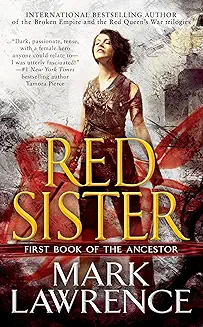
Nona Grey is sent to a convent where girls are trained to become warriors, assassins, scholars, and nuns.

The world is dying. The sun is failing. The convent holds secrets that reach far beyond its walls.

Red Sister has a strong central character, excellent action, and a setting that becomes stranger and more interesting the further you go.

Nona is dangerous, angry, and fiercely loyal. The book gives her room to be all of those things without pretending that any of them are simple.

Mark Lawrence’s earlier Prince of Thorns books are much harsher. I would start here.

Where to go next

Try Anna Smith Spark’s https://geni.us/N7yI for darker fantasy with a more lyrical style.

Try Glen Cook’s The Black Company for one of the books that helped establish the modern military fantasy tradition.

A Final Thought

Most readers do not stay on one path forever.

Readers who begin with Sanderson often end up reading Hobb. Readers who love Hobb often find their way to Le Guin. Readers who start with Le Guin sometimes want something harder and turn to Abercrombie.

The genre is bigger than any one shelf in a bookshop.

Do not worry about finding the perfect book. Pick the path that sounds right for you now. Read the first recommendation. See what it gives you.

If you finish it and want more, carry on.

If you finish it and feel nothing, try another route.

Part of becoming a fantasy reader is working out what you want from stories. The only real way to do that is to keep reading.

The five starting books here—Mistborn, Assassin’s Apprentice, Kings of the Wyld, A Wizard of Earthsea, and Malice—give you a good sense of the range fantasy can offer.

Read all five over the next year and you will know far more about your own taste than any guide can tell you.

Whatever path you choose, I hope it leads you to something you love.

Happy reading!


Note: This post includes affiliate links.

Your First Steps into the Gritty World of Grimdark Fantasy: Top 33 Books

Dive into the grim and gritty world of Grimdark Fantasy with our beginner’s guide. Uncover 33 essential reads that define this subgenre, featuring antiheroes, complex plots, and dark realities.

Welcome to the dark, brooding underworld of fantasy literature—the Grimdark genre.

If you fancy stories where the sunlight rarely breaks through the clouds and your heroes are just villains who’ve had a worse day, then you’ve come to the right place.

 This handy beginner’s guide to grimdark fantasy will help you navigate these shadowy realms like a pro.

Defining Grimdark: It’s Not All Unicorns and Rainbows

Unlike your usual fantasy fare where knights in shining armour gallantly rescue innocent princesses from fire-breathing dragons, grimdark doesn’t pull any punches.

It’s a sub-genre of fantasy where the line between good and evil gets as blurry as your vision after a Friday night at the pub.

Grimdark derives its name from the tagline of the tabletop game Warhammer 40,000: “In the grim darkness of the far future, there is only war.”

And in grimdark literature, there’s usually only war, torment, moral ambiguity, and buckets of blood.

Common Tropes: More Blood Than a Tarantino Film

Expect protagonists as cheerful as a goth at a beach party. These aren’t your heroic do-gooders with a heart of gold—they’re complex, flawed, and as likely to rob you as they are to save you.

They’ve got more in common with a seasoned convict than Prince Charming.

The settings are just as jolly.

Imagine if Mordor and the worse parts of Dickensian London had a baby—that’s your average grimdark world.

It’s bleak, it’s grimy, it’s brutal, and the chances of encountering a delightful enchanted forest are about as slim as finding a vegan at a steakhouse.

Themes and Characters: As Pleasant as a Root Canal

In a grimdark tale, don’t be surprised if your favourite character meets a grisly end.

The themes here tend to orbit around war, political intrigue, survival, and the darker side of humanity.

Characters are complex and exist in a moral grey area thicker than a London fog.

So, if you like your characters saintly and your endings happily-ever-after, this genre might give you more shocks than licking a battery.

But, if you’re intrigued by the depths of human depravity and how individuals navigate through a world as welcoming as a bed of nails, then grimdark could be your cup of tea’—dark and bitter.

How It Differs from Other Genres: Apples and Very Rotten Oranges

While traditional fantasy often revolves around a struggle between good and evil, grimdark plunges you into a world where those concepts are about as clear-cut as a Jackson Pollock painting.

Instead of lofty quests and noble heroes, grimdark stories focus on survival in a harsh world.

If epic fantasy is an inspiring orchestral symphony, grimdark is the guttural growl of a death metal band.

It’s raw, it’s intense, and it isn’t for the faint-hearted.

Where to Start Reading Grimdark Fantasy

Here are thirty-three formidable titles to cut your teeth on. Be warned: these aren’t your fluffy bedtime stories.

1. The First Law Trilogy by Joe Abercrombie

Abercrombie, fondly called Lord Grimdark, is the poster boy of this genre. His First Law Trilogy kicks off with ‘The Blade Itself,’ and its world is about as forgiving as a tax collector. Chock full of morally dubious characters, gratuitous violence, and a plot twistier than a pretzel, this series is a masterclass in grimdark.

2. Empires of Dust by Anna Smith Spark

Fancy poetry? Love a bit of the old ultra-violence? Then Anna Smith Spark’s Empires of Dust trilogy is your jam. The series starts with ‘Court of Broken Knives.’ Smith Spark’s style, a lyrical and visceral blend, mirrors the blend of beauty and brutality of the grimdark genre. Her characters are as ruthless as they come, so don’t expect to make any new friends here.

3. The Poppy War by R.F. Kuang

‘The Poppy War’ offers a grimdark tale drenched in historical and cultural richness. R.F. Kuang doesn’t shy away from depicting the raw brutality of war and its dehumanising effects. Here, the heroes make choices that will have you squirming in your seat. It’s as uplifting as a plummeting lift, but by God, it’s compelling.

4. War for the Rose Throne by Peter McLean

Starting with ‘Priest of Bones,’ Peter McLean’s series can be best described as Peaky Blinders with a grimdark twist. It’s filled with gang wars, political machinations, and a world as grim as a Monday morning. The writing is razor-sharp, and the characters are about as trustworthy as a three-pound note. It’s a grim ride, but worth every bloody moment.

5. The Malazan Book of the Fallen by Steven Erikson

This ten-book series is grimdark on an epic scale. With a complex plot, intricate world-building, and a character list longer than your arm, Erikson doesn’t ease up on the grimdark elements. It’s as light-hearted as a funeral in a downpour, but for those with the courage to take it on, it offers a reading experience like no other.

6. The Prince of Nothing series by R. Scott Bakker

Starting with ‘The Darkness That Comes Before,’ Bakker’s series is a philosophical deep-dive into a world that’s as friendly as a starving crocodile. The characters are complex, the philosophy is dense, and the world-building is as comprehensive as it gets. The Prince of Nothing series is perfect for readers who like their fantasy grim, their stakes high, and their themes heavy. It’s as cheery as a windowless cellar, but it’s an enthralling read nonetheless.

7. The Black Company by Glen Cook

Often credited as the grimdark progenitor, Glen Cook’s ‘The Black Company’ focuses on a mercenary company in a cynical, war-torn world. Expect plenty of morally grey characters, grim settings, and an all-round feeling of ‘we’re not in Kansas anymore’. It’s a series that smacks you in the face like a cold breeze, leaving you breathless and eager for more.

8. The Broken Empire Trilogy by Mark Lawrence

This series starts with ‘Prince of Thorns’, a book that introduces us to Jorg Ancrath, a protagonist as heartwarming as a kick in the shins. Lawrence’s narrative is as sharp as a well-honed blade, and his world is a place where hope goes to die. If you fancy a walk on the dark side with a character who wouldn’t know a moral compass if it bit him on the bum, give this trilogy a whirl.

9. The Nevernight Chronicles by Jay Kristoff

‘Nevernight,’ the first book in the series, presents us with Mia Corvere, a plucky young woman with a thirst for revenge and a shadowy talent for murder. She’s about as cuddly as a cactus, but you’ll find yourself rooting for her anyway. Kristoff’s grimdark saga is as dark as a pint of stout and as lethal as a viper’s bite. Strap in for a bumpy, bloody ride!

10. A Song of Ice and Fire by George R.R. Martin

This list wouldn’t be complete without mentioning George R.R. Martin’s epic series, starting with ‘A Game of Thrones’. Full of political intrigue, morally grey characters, and a level of unpredictability that makes Russian roulette look like a safe bet, this series is a must-read for grimdark enthusiasts. Just don’t get too attached to the characters; Martin is notorious for serving them up for dinner.

11. The Night Angel Trilogy by Brent Weeks

Starting with ‘The Way of Shadows,’ Brent Weeks presents a gripping tale of Azoth, a guild rat turned assassin. This trilogy is as cheerful as a tax audit, with moral ambiguity, dark magic, and a grimy underworld. Weeks paints a world steeped in shadows where life is cheap, and redemption comes with a high price. It’s a brutal, gritty ride that’s sure to satiate your grimdark cravings.

12. The Bone Ships series by RJ Barker

‘The Bone Ships’ sails into grimdark waters with a tale of ancient sea beasts, bone-made vessels, and a society that values death over life. Barker’s maritime world is as unwelcoming as a slap to the face, and his characters are hardened by a life of hardship and danger. If you’ve ever wondered what grimdark would look like on the high seas, this series is your answer.

13. The Steel Remains by Richard K. Morgan

Richard K. Morgan’s grimdark offering introduces us to Ringil Eskiath, a war hero with a biting wit and a preference for men. Expect a fair amount of brutality, cynicism, and the sort of banter that could make a sailor blush. It’s a dark, twisted journey that takes you through war, slavery, and betrayal. It’s as sweet as a vinegar smoothie, but its gripping narrative makes it a grimdark gem.

14. The Night Watch by Sergei Lukyanenko

Venturing into urban grimdark, ‘The Night Watch’ presents a modern-day Moscow teeming with supernatural beings. Lukyanenko’s world is as grim as a winter’s night, filled with vampires, witches, and shapeshifters living under a tense truce. It’s a thrilling, dark tale of power, conflict, and sacrifice that’ll have you wondering what lurks in the shadows of your own city.

15. A Crown for Cold Silver by Alex Marshall

The protagonist of ‘A Crown for Cold Silver’ is an ageing warrior who just wants to retire in peace but gets dragged back into the fray. It’s a tale of revenge filled with ruthless mercenaries, cruel demons, and political conspiracies. The world is as unforgiving as a hailstorm, and the characters are as warm as a winter’s morning. It’s a brutal, no-holds-barred ride into the grimdark genre.

16. Chronicles of the Unhewn Throne by Brian Staveley

Kicking off with ‘The Emperor’s Blades,’ Brian Staveley’s Chronicles of the Unhewn Throne is as light and fluffy as a lead balloon. The series presents a world on the brink of war, fraught with political intrigue, secret assassins, and divine powers. With complex characters and a multi-layered plot, it offers a delicious slice of grimdark pie.

17. The Vagrant by Peter Newman

Peter Newman’s ‘The Vagrant’ is a bit like Mad Max meets grimdark. In a post-apocalyptic world ravaged by demonic forces, the protagonist, a mute and nameless knight, travels towards a hopeful beacon carrying a legendary weapon and a baby. Newman’s desolate, war-torn landscape and his broken, desperate characters encapsulate the essence of grimdark.

18. The Chronicles of Thomas Covenant, the Unbeliever by Stephen R. Donaldson

This series, starting with ‘Lord Foul’s Bane,’ gives us Thomas Covenant, a leprosy-stricken writer transported to a magical realm where he’s destined to be the saviour. It’s a tale that delves into the darker aspects of the human psyche, shattering the boundaries between good and evil. With its flawed anti-hero and uncompromising narrative, this series is a grimdark classic.

19. The Farseer Trilogy by Robin Hobb

Robin Hobb’s Farseer Trilogy, beginning with ‘Assassin’s Apprentice,’ isn’t as relentlessly grim as some of the other titles on this list, but it’s got enough morally grey characters, political treachery, and brutal realism to earn a spot. It’s a beautifully written tale that delves into the cost of duty and the harsh realities of life. A grimdark offering that will tug at your heartstrings.

20. Beyond Redemption by Michael R. Fletcher

‘Beyond Redemption’ takes grimdark to a new level, exploring a world where insanity is power, and delusions can reshape reality. It’s a dark, unflinching story packed with flawed, deranged characters and a world as welcoming as a nest of vipers. Fletcher’s tale is a mind-bending descent into madness, epitomising the grimdark ethos.

21. Low Town by Daniel Polansky

In ‘Low Town,’ Polansky combines elements of grimdark fantasy with hard-boiled crime. The protagonist, known as the Warden, is a former investigator turned drug dealer navigating through a seedy underworld. It’s as uplifting as a rainy bank holiday, but its compelling mix of mystery, magic, and gritty realism makes for a compelling read.

22. Black Sun Rising by C.S. Friedman

‘Black Sun Rising’ marks the start of Friedman’s Coldfire Trilogy, a unique blend of science fiction and fantasy that’s as cheerful as a stubbed toe. Here, human fears and beliefs can manifest into reality, making for a dangerous, unforgiving world. The characters are a mix of morally ambiguous, complex individuals that fit right into the grimdark mould.

23. The Powder Mage Trilogy by Brian McClellan

The series begins with ‘Promise of Blood,’ and it’s a gunpowder-fuelled epic, teeming with political coups, ancient gods, and magic. McClellan’s world is grim and bloody, and his characters are far from the shining heroes of traditional fantasy. The Powder Mage trilogy is a fantastic entry point for those seeking a touch of the revolutionary in their grimdark reads.

24. The Grim Company by Luke Scull

With a title like ‘The Grim Company,’ you know what you’re getting yourself into. Scull delivers a world where the gods are dead, magic is dying, and humanity is not faring much better. It’s a tale of anti-heroes, dark magic, and a fight against oppressive forces. It’s grim by name and grim by nature, making it an excellent addition to your grimdark reading list.

25. The Gentleman Bastard Series by Scott Lynch

Starting with ‘The Lies of Locke Lamora,’ Lynch’s series is grimdark with a generous dose of wit. It’s a tale of con artists and thieves, set in a world rich with venetian-style intrigue and danger. It’s as light-hearted as a dentist appointment, but its blend of fast-paced plot, complex characters, and razor-sharp dialogue makes it a standout in the genre.

26. The Godblind Trilogy by Anna Stephens

Anna Stephens’s debut series, beginning with ‘Godblind,’ is about as cheerful as a funeral in the rain. With a religious war, morally ambiguous characters, and a truckload of brutality, Stephens takes us on a grimdark journey of epic proportions. It’s a relentless, blood-soaked series that pulls no punches, perfect for those who enjoy their fantasy dark and uncompromising.

27. The Acacia Series by David Anthony Durham

Kicking off with ‘Acacia: The War with the Mein,’ Durham’s series presents a story of political intrigue, war, and betrayal in a world as warm and welcoming as a bear trap. It’s a sweeping tale of power, ambition, and the cost of empire. The Acacia series is a grimdark journey with a touch of epic fantasy that will leave you pondering the grey areas of morality.

28. Chronicles of the Exile by Marc Turner

Marc Turner’s series, starting with ‘When the Heavens Fall,’ provides a grand saga of dark gods, magical artefacts, and a host of characters who’d probably rob their own grandmothers. With its complex plot, morally grey characters, and world steeped in darkness, this series is a grimdark feast for fans of high stakes and epic conflicts.

29. The Five Warrior Angels by Brian Lee Durfee

The series begins with ‘The Forgetting Moon,’ where Durfee serves a banquet of battle-hardened warriors, ancient prophecies, and looming apocalypse. It’s a story of war and destiny, where hope seems as distant as a summer’s day in a British winter. Its harsh world, complex characters, and intricate plot make it a fantastic entry to the grimdark genre.

30. The Worldbreaker Saga by Kameron Hurley

Starting with ‘The Mirror Empire,’ Hurley’s saga plunges us into a world where star-powered magic, sentient plants, and parallel universes are the norm. It’s as comforting as a bed of nails, exploring themes of power, identity, and survival in a world on the brink of annihilation. If you want your grimdark served with a side of originality, The Worldbreaker Saga is just the ticket.

31. The Grimnir Series by Scott Oden

Scott Oden takes us on a bloody romp through a Viking-inspired world in the Grimnir series, starting with ‘A Gathering of Ravens.’ It’s a tale of revenge, filled with brutal battles, ancient magic, and a protagonist who’s as cuddly as a cactus. Oden’s world is harsh and unforgiving, and his characters are as morally grey as they come. It’s a fantastic blend of historical fiction and grimdark fantasy that will leave you thirsting for more.

32. The Grey Bastards by Jonathan French

Jonathan French’s ‘The Grey Bastards’ is a wonderfully filthy dive into a world of half-orcs, treacherous humans, and deadly magic. It’s grimdark with a dash of grit and a generous helping of dark humour. The characters are rough, ready, and morally ambiguous, making it a standout entry in the grimdark genre. It’s a wild, raucous ride that isn’t for the faint-hearted, but if you can handle the grime, it’s well worth the journey.

33. The Coming of Conan the Cimmerian by Robert E. Howard

Although it predates the term ‘grimdark,’ Robert E. Howard’s Conan series, starting with ‘The Coming of Conan the Cimmerian,’ embodies many of the genre’s defining characteristics. Conan’s world is a savage, brutal place filled with dark magic and deadly creatures. The protagonist himself is a far cry from your typical hero, embodying a ruthless, take-no-prisoners approach to life. It’s a foundational work for the grimdark genre, demonstrating that even in fantasy, the world can be a dark, dangerous place.

Honorary Mention: The Horus Heresy Series in the Warhammer 40,000 Universe

Last but definitely not least, let’s delve into the grimdark depths of the Warhammer 40,000 universe with the Horus Heresy series.

This sprawling saga is a monumental piece of grimdark fiction.

Taking us to the 31st millennium, the series explores the galaxy-spanning civil war that nearly tore the imperium of man apart.

The Horus Heresy, spearheaded by the emperor’s favoured son, Horus, pits brother against brother in a devastating conflict.

From the lofty heights of the Imperial Palace to the bloody battlefields of a thousand worlds, no one is safe from the horrors of war.

In true grimdark fashion, the Horus Heresy is a tale of betrayal, of once-noble heroes falling to corruption, and the devastating price of ambition and power.

It offers a grim vision of the future where there is only war and the laughter of thirsting gods.

The series, with contributions from various authors, is a grimdark feast for fans of war-torn galaxies, morally ambiguous characters, and high-stakes battles.

Be warned, though—once you start, you’ll find yourself on a journey as vast and dark as the Warhammer 40k universe itself.

Grimdark fantasy is a journey that’s not for everyone. It’s like Marmite—you either love it, or it gives you nightmares.

But if you can stomach the grit and grime, if you can handle the moral ambiguity and the despair, you’ll find a genre that isn’t afraid to take risks, to defy expectations, and to show the world in all its brutal, messy glory.

So take a deep breath, grab one of these books, and step into the shadows. Who knows? You might find that you like the dark.

So there you have it, a quick and dirty introduction to the world of grimdark fantasy. It’s a genre that pulls no punches and isn’t afraid to show you the world in all its murky shades of grey. But remember, it’s not all doom and gloom’—there’s plenty of dark humour, thrilling action, and captivating stories. Dive in, and who knows? You might find that you enjoy exploring the shadows.

Get your free copy of Birth of Assassins as part of the Ravenglass Universe starter library.