Lessons for Fantasy Writers from Dostoevsky’s Crime and Punishment

Discover how Dostoevsky’s ‘Crime and Punishment’ offers invaluable lessons for fantasy writers, from complex character development to using moral ambiguities, enhancing settings, and effective dialogue to elevate your fantasy narratives.

Fyodor Dostoevsky’s “Crime and Punishment” is a towering masterpiece of literature.

While it might seem an unconventional choice for fantasy writers, the novel’s exploration of complex themes and its intense focus on character development offer valuable lessons for crafting compelling fantasy narratives that resonate with readers on multiple levels.

Examining Moral Ambiguities

At the heart of “Crime and Punishment” is the story of Raskolnikov.

He is a former student who believes himself above the law and capable of committing a crime for a greater good.

The novel painstakingly explores the moral and psychological repercussions of his actions, providing an in-depth examination of the grey areas of morality.

Lesson: Fantasy writers can similarly challenge their characters with moral dilemmas that test their beliefs and values.

By placing characters in situations where the right choice is not clear-cut, or where the decision could have profound personal and societal repercussions, writers can add depth to their narratives.

This engages readers in complex ethical questions.

The Importance of Setting as Character

Dostoevsky’s St. Petersburg is almost a character in its own right.

It reflects Raskolnikov’s turmoil and the societal conditions that influence his actions.

The oppressive atmosphere of the city, with its stifling heat and cramped, maze-like streets, mirrors the protagonist’s mental state.

It serves as a constant reminder of his isolation and paranoia.

Lesson: In fantasy writing, the setting should do more than just provide a backdrop for action.

It should actively reflect and enhance the themes and emotions of the narrative.

Whether it’s a sprawling city or a secluded magical forest, the environment can be used to mirror the internal conflicts of characters and to heighten the narrative tension.

The Psychological Complexity of Characters

Dostoevsky is a master of psychological realism.

“Crime and Punishment” is a profound exploration of the human psyche.

Raskolnikov’s complex motives, his fluctuating mental state, and his interactions with other characters provide a rich study of human psychology.

Lesson: Fantasy authors should strive to create characters with similar psychological complexity.

Characters should have clear motivations, fears, and desires that drive their actions and interactions.

This depth makes characters more relatable and their journeys more compelling, thereby enhancing the reader’s investment in the story.

Use of Foil Characters

“Crime and Punishment” features several characters that act as foils to Raskolnikov.

This includes the saintly Sonya, whose compassion contrasts sharply with his nihilism.

These characters highlight different facets of the protagonist’s personality.

They help explore the novel’s themes from various angles.

Lesson: Fantasy authors can effectively use foil characters to highlight and contrast the central themes of their stories.

By creating characters that embody opposing traits or ideologies, writers can explore the central conflicts of their narrative more fully and add layers of meaning to their work.

The Role of Dialogue in Unveiling Themes

Much of the philosophical and ethical exploration in “Crime and Punishment” occurs through dialogue.

This allows characters to voice different viewpoints and clash over key issues.

This interaction is crucial for unpacking the novel’s complex themes.

Lesson: Effective use of dialogue in fantasy can serve a similar purpose.

Rather than relying on narrative exposition, authors can use conversations to reveal character motivations, build the world, and address the story’s deeper themes.

Dialogue can be a dynamic tool for advancing the plot while also fleshing out the philosophical and moral underpinnings of the story.

Beyond the Fantasy Genre

Crime and Punishment” provides a blueprint for how deep psychological insight and moral complexity can elevate a narrative.

Fantasy writers looking to enrich their stories can draw from Dostoevsky’s approach to create novels that are not only engaging and imaginative but also profoundly resonant.

By integrating these lessons into their work, fantasy authors can craft stories that captivate the mind and stir the soul, much like Dostoevsky’s enduring classic.

The Legacy of “The Dragonbone Chair”: A New Era in Fantasy Storytelling

Explore how Tad Williams’s “The Dragonbone Chair” has shaped the landscape of fantasy literature, introducing deep world-building, complex characters, and slow-burn narratives that have influenced authors and captivated readers around the world.

In the shadowy corridors of fantasy literature, where dragons lurk and heroes abound, Tad Williams‘s The Dragonbone Chair sits quietly, perhaps deceptively so.

Published in 1988, it has woven its influence through the genre with the stealth of a thief in the night.

This seminal work, the first of the “Memory, Sorrow, and Thorn” series, might not always shout its presence from the rooftops, but it has undeniably shifted the foundations of fantasy literature.

The Slow Burn of Epic Fantasy

Tad Williams took a gamble in The Dragonbone Chair, betting on readers’ patience with a slow-burning narrative that rewards those who stick around for the long haul.

His meticulous pacing and deep world-building lay the groundwork for a complex story that unfolds with the inevitability of a prophecy foretold, nudging other writers to take their time.

After all, why rush to slay the dragon when you can savour the journey?

Richly Painted Worlds and the Depth They Demand

The world of Osten Ard, with its rich tapestry of cultures, languages, and histories, is a testament to Williams’s dedication to the craft of world-building.

He crafts a universe so detailed that one might need a map, a compass, and a good memory to navigate it.

This comprehensive approach has encouraged a generation of fantasy authors to deepen their own worlds, proving that readers can indeed handle more than the superficial glitz of magic—they crave depth and detail.

Characters as Real as Your Eccentric Uncle

Williams’s characters are a far cry from the cardboard heroes and two-dimensional villains often paraded in lesser tales.

Simon, the series’ young protagonist, stumbles and grows in ways that mirror the awkward journey through adolescence, resonating with authenticity.

This commitment to character complexity has pushed fantasy narratives towards more realistic, psychologically nuanced portrayals, where characters might be battling inner demons as fierce as any dragon.

The Ripple Effect on Modern Fantasy

The legacy of The Dragonbone Chair is subtle yet pervasive.

Its influence can be seen in the works of later fantasy luminaries like George R. R. Martin, who has admitted to its impact on his own sprawling epics.

Williams’s blend of the epic and the intimate has paved the way for books where the fate of the world might hinge on personal betrayals and quiet moments of doubt, infusing the genre with a refreshing dose of human frailty.

The Quiet Giant of Fantasy

While The Dragonbone Chair may not always be the loudest voice in the room, its whispers have permeated the halls of fantasy literature, urging a richer narrative blend, deeper world-building, and more complex characterisation.

In the grand tapestry of the genre, Tad Williams stitches quietly but deeply, leaving a pattern that other writers follow, often without realising they are treading a path first laid by a master.

So, as we stand in the echoing halls of modern fantasy, it’s worth listening closely—you might just hear the faint creaking of a certain chair, bearing the weight of a genre forever changed.

Roland Deschain: A New Type of Hero in Modern Fantasy

Discover how Stephen King’s “The Dark Tower” series has transformed fantasy literature, blending genres and redefining narrative structures. Explore the depth of Roland Deschain’s character and the series’ broad literary influence.

Stephen King’s The Dark Tower series stands as a monolith in the vast desert of fantasy literature.

Its sprawling narrative, which spans seven core books, a novella, and numerous connected works, has redefined what it means to embark on a fantastical quest.

It’s a journey that delves deep into the realms of horror, Westerns, and fantasy, blending them with the ease of a sorcerer mixing a particularly volatile potion.

Let’s explore how Roland Deschain’s relentless pursuit of the enigmatic Tower has reshaped fantasy literature, weaving through worlds as effortlessly as bullets fly in the Gunslinger’s wake.

A Darkly Woven Tapestry of Genres

At the heart of The Dark Tower‘s impact is its genre-defying nature.

King doesn’t just tip his hat to different genres; he commandeers them, creating a hybrid beast that refuses to sit neatly in any one category.

Fantasy literature, after its encounter with Roland and his ka-tet, has found itself freer to marry elements of the mundane with the mystical, the horrific with the heroic, proving that readers can handle more than elves and orcs—they crave gunslingers and doom-laden quests, too.

Character Complexity Beyond the Archetypes

King’s characters are not merely walking tropes.

They are deeply flawed, haunted by pasts as twisted as the paths they tread.

Roland himself, part knight errant, part antihero, challenges the clean-cut image of a protagonist.

His companions, too, bring shades of grey to the black-and-white morality often seen in fantasy narratives.

This complexity invites readers to explore the shadows within their heroes, rather than just cheering for their shining armour.

Narrative Architecture: A Tower of Stories

The structural ambition of The Dark Tower is something to behold.

King constructs a narrative that is as much a maze as it is a story, with doorways leading to different times and worlds.

Fantasy authors have taken note, pushing the boundaries of their own worlds’ architecture, inspired by King’s audacity.

The series encourages a narrative freedom where the universe is interconnected, time is mutable, and stories nest within stories like Russian dolls.

The Lingering Echo of Influence

King’s shadow looms large, and not just because of his knack for crafting towering tales.

His influence encourages a blending of genres, urging fantasy to flirt dangerously with horror, suspense, and even philosophical musing.

The Dark Tower demonstrates that fantasy can be a playground for the existential, the eerie, and the downright bizarre, and still be wildly compelling.

Beyond the Dark Tower

As Roland chases the Man in Black across deserts and through dimensions, King challenges writers to pursue their own creative horizons with similar relentlessness.

The landscape of fantasy literature, post-The Dark Tower, is one where the weird is welcomed with open arms, and stories are no longer bound by the traditional constraints of the genre.

In the end, as every reader of the series knows, the journey through King’s macabre and magnificent universe is about more than just reaching the Tower—it’s about the sprawling path we travel, the characters we journey with, and the worlds we discover along the way.

And in the landscape of fantasy literature, that path has become wilder, wider, and infinitely more interesting.

So, dear reader, in the spirit of King’s opus, may your fantasies be dark, your horizons broad, and your adventures perilous.

After all, what’s a little darkness in the quest for the extraordinary?

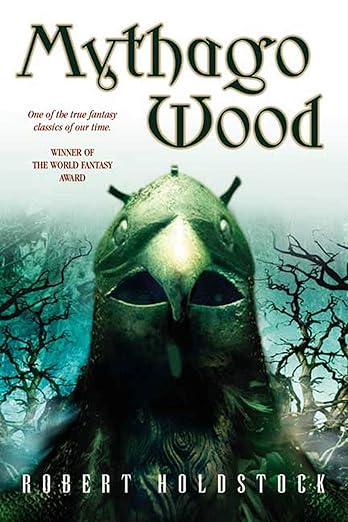
The Enduring Influence of “Mythago Wood” on Contemporary Fantasy

Discover the enchanting forest of “Mythago Wood,” where Robert Holdstock masterfully blends ancient myths with deep psychological themes. Explore a fantasy world where the lines between reality and legend blur, offering a unique and captivating reading experience that delves deep into the human psyche.

In the often neatly trimmed garden of fantasy literature, Robert Holdstock’s “Mythago Wood” series sprouted like a wild, untamed thicket, refusing to be pruned.

With its blend of ancient myth and psychological exploration, Holdstock didn’t just write a fantasy series; he dug down to the very roots of mythology and gave them a good, hard tug, unsettling more than a few earthworms in the process.

A Wood Not Just Haunted, But Alive

Holdstock’s Mythago Wood was no ordinary forest.

It was a place where myths and legends took physical form, sprouting from the collective unconscious like some sort of Freudian shrubbery.

This concept of a living, breathing woodland where heroes and monsters of legend roamed was as groundbreaking as it was eerie.

Gone were the typical castles and dragons; here was a forest where taking a wrong turn could mean coming face to face with a legend – and not all legends are particularly friendly.

Blurring Realities: Where Psyche Meets Myth

The genius of “Mythago Wood” lay in its blurring of the lines between psychological reality and mythical archetype.

Holdstock wove a narrative where personal traumas and family dynamics were entangled with the myths emerging from the wood.

This interplay between the personal and the mythical added a layer of complexity to the fantasy genre, exploring themes that went beyond the standard fare of quests and sword fights.

The Echoes Through Modern Fantasy

The influence of Holdstock’s work can be seen in the way modern fantasy often intertwines the deeply personal with the grandly mythical.

His exploration of ancient myths in a contemporary setting paved the way for works that delve into the psychological underpinnings of folklore and legend.

Authors like Neil Gaiman, with his blend of myth and modernity, owe a nod to the trails blazed by Mythago Wood.

Legacy: A Forest of Imagination

“Mythago Wood” remains a towering oak in the forest of fantasy literature.

Its legacy is found in its innovative approach to myth and psychology, its richly layered narrative, and its reimagining of what a fantasy setting can be.

Holdstock showed us that the oldest stories might be sleeping right beneath our feet, waiting to sprout forth in unexpected and sometimes unsettling ways.

CA Woodland Walk Like No Other

Robert Holdstock’s “Mythago Wood” invites us on a woodland walk that takes us deep into the heart of myth and psyche.

In its shadowed glades and dappled clearings, we encounter not just the stuff of legends but the very essence of storytelling itself.

Mythago Wood continues to inspire and challenge, a wild forest in the landscape of fantasy literature, where the myths are real and the reality is mythic.

Dune: The Spice of Life in the Fantasy Genre

Explore the monumental impact of Frank Herbert’s ‘Dune’ on fantasy literature. Discover how its unique blend of political intrigue, ecological themes, and deep cultural exploration reshaped the genre, setting new standards for world-building and philosophical depth.

In the grand, sweeping dunes of literary history, there lies a colossal sandworm of a novel: Frank Herbert’s “Dune”.

This isn’t just a book; it’s a seismic event in the fantasy landscape, reshaping everything in its wake.

You see, before “Dune”, fantasy was a realm of dragons, elves, and conveniently misplaced rings.

Herbert, however, decided that what the genre really needed was a desert planet, a hefty dose of political intrigue, and spice…

Lots of spice.

The Politics of Fantasy: More Treacherous Than a Sandworm

Before “Dune”, who would have thought that a fantasy novel could double as a crash course in political science?

Herbert introduced readers to a universe where power plays, backstabbing, and ecological exploitation were the order of the day.

Suddenly, fantasy wasn’t just about good versus evil; it was about complex moral ambiguities, resource control, and the kind of Machiavellian manoeuvres that would make a medieval king blush.

Ecology and Environment: More Than Just Backdrop

“Dune” took the idea of world-building (quite literally) and ran with it.

The planet Arrakis wasn’t just a stage for the drama; it was a character in its own right.

Herbert’s focus on ecology, environmentalism, and the interplay between a people and their landscape was groundbreaking.

He showed us that the environment could be a protagonist, an antagonist, and a plot point all rolled into one.

In “Dune”, the sands shift, and with them, the genre itself.

The Hero’s Journey: Redefined with Spice

Ah, the hero’s journey – a staple of fantasy literature.

But in “Dune”, Herbert took this well-trodden path and sprinkled it with spice (literally).

Paul Atreides isn’t your typical fantasy hero; he’s a messianic figure, a political pawn, and a prophet rolled into one.

His journey is less about defeating a dark lord and more about grappling with destiny, prophecy, and the weight of expectations.

It’s the hero’s journey, yes, but not as we knew it.

Influence Beyond the Sands: Dune’s Legacy

The ripples of “Dune” can be felt across the fantasy genre.

It encouraged authors to think bigger, to incorporate real-world issues like religion, politics, and environmentalism into their narratives.

Fantasy worlds became more complex, more nuanced.

Herbert didn’t just write a novel; he expanded the boundaries of what fantasy could be.

Post-“Dune”, the genre was a wilder, richer place – a landscape transformed, much like Arrakis itself.

Language and Culture: The Spice of Life

“Dune” was not just about sprawling deserts and political intrigue; it delved deep into the nuances of language and culture.

Herbert crafted a universe rich in different languages, customs, and social norms, reflecting the true diversity of human experience.

This intricate detailing set a new standard for world-building, pushing authors to create more immersive and believable fantasy worlds.

Philosophy and Religion: More Than Mere Fantasy

Herbert wove complex philosophical and religious themes throughout “Dune”.

He explored ideas of fate, free will, and the nature of power, transcending the traditional boundaries of fantasy.

“Dune” became a text that not only entertained but provoked thought, challenging readers to ponder deeper existential questions.

The Timeless Legacy of “Dune”

“Dune” stands as a monumental work in the realm of fantasy literature.

Its impact on the genre is immeasurable, inspiring generations of writers and readers alike.

Frank Herbert’s masterpiece remains a beacon of innovation in storytelling, world-building, and thematic exploration.

In the shifting sands of literary trends, “Dune” endures as a timeless classic, its influence as enduring and pervasive as the desert winds of Arrakis itself.

A Wizard of Earthsea: Its Impact and Influence

Explore the profound impact of Ursula Le Guin’s “The Wizard of Earthsea” on fantasy literature. Discover how Ged’s journey reshaped wizards, introduced intricate magic systems, and influenced modern fantasy with non-European cultures and themes of self-mastery.

Once upon a time, in the hallowed halls of fantasy literature, there was a little book that could – and it did.

Ursula Le Guin’s “The Wizard of Earthsea” not only waved its magical staff over the genre but also turned it on its head, gave it a cheeky slap, and sent it off in a completely new direction.

This wasn’t just a story about a wizard; it was a tale that redefined what a wizard could be.

Gone were the days of white-bearded men in starry robes muttering incantations over cauldrons; enter Ged, a young, brash wizard with more ambition than sense – a character trait we can all uncomfortably relate to.

The School of Hard Knocks: A Wizard’s Education

Before Hogwarts became the go-to institution for all your witching and wizarding needs, there was the School of Roke – a place where the curriculum was as likely to kill you as educate you.

Le Guin didn’t just create a school; she created a crucible where boys were broken down and remade into mages.

In Ged’s journey, we see the painful, often hilarious, process of learning that power without wisdom is like trying to eat soup with a fork – messy, frustrating, and ultimately, unfulfilling.

Shadows, Egos, and Other Personal Demons

Le Guin, in her infinite wisdom, decided that the greatest enemy a wizard could face wasn’t a dark lord with an army of minions, but his own shadow – literally.

In a stroke of darkly humorous genius, she made Ged’s own arrogance and overconfidence his nemesis.

The resulting cat-and-mouse (or wizard-and-shadow) chase across the islands of Earthsea is a masterclass in how to fight an enemy who knows all your worst thoughts because, well, he is your worst thoughts.

Magic: More Than Just Waving a Wand

In Earthsea, magic isn’t just about shouting Latin words louder than your opponent.

It’s a subtle art, where knowing the true name of a thing gives you power over it.

This was revolutionary; magic became a thing of beauty and complexity, rather than a convenient plot device.

Le Guin showed us that magic, like language, has power and depth, and that with great power comes great responsibility – and the occasional catastrophic backfire.

The Ripple Effect: Earthsea’s Legacy

The influence of “The Wizard of Earthsea” is as vast as the archipelago of Earthsea itself.

From the way magic is portrayed in modern fantasy to the introduction of fully realized, non-European cultures in a fantasy setting, Le Guin didn’t just raise the bar; she threw it into the stratosphere.

Authors who followed in her footsteps had to up their game.

Fantasy worlds became richer, more diverse; magic systems more intricate.

Ged’s shadow looms large over the genre, a reminder that true power lies not in dominion over others, but in mastery of oneself.

A Wizard’s Gift to Fantasy

In “The Wizard of Earthsea”, Ursula Le Guin didn’t just give us a story; she gave us a new way of seeing.

Her legacy is a genre that dares to dream bigger, think deeper, and challenge the status quo.

And all this from a book that, at first glance, is about a boy who screws up a spell.

That’s the magic of Le Guin – she takes the simple, weaves it with wit and wisdom, and creates something that endures, something that challenges us to look at the shadows within ourselves.

In Earthsea, as in life, the greatest adventures often start with a little self-reflection – and perhaps a healthy dose of humility.

Lost Civilisations and Fantasy: Graham Hancock as Story Fuel

Discover the intriguing impact of Graham Hancock’s theories on modern fantasy literature. This post explores how his ideas about ancient civilisations and lost knowledge inspire fantasy authors to craft captivating, boundary-pushing narratives.

In the labyrinthine library of modern fantasy literature, ancient myths and forgotten histories mingle with tales of magic and wonder.

One name stands out as an unlikely yet fascinating muse: Graham Hancock.

Hancock is known for his controversial theories on ancient civilisations and lost worlds.

His work has rippled through the fantasy genre.

It inspires authors to look beyond the known and into the realms of what-if.

Let’s embark on a journey, not to uncover lost civilisations, but to discover how Hancock’s unconventional ideas have left their mark on the fantastical worlds we escape to.

Ancient Mysteries: Hancock’s Historical Concoction

Before we dive into the fantastical, a quick detour into the real (or unreal, depending on whom you ask).

Graham Hancock’s work, such as “Fingerprints of the Gods,” posits theories of advanced ancient civilisations and cataclysmic events that have shaped human history.

While mainstream archaeology might raise an eyebrow (or two) at his hypotheses, there’s no denying their allure for storytellers.

Lost Worlds and Hidden Knowledge: Fuel for Fantasy

Hancock’s portrayal of lost worlds and forgotten advanced civilisations has provided a treasure trove of inspiration for fantasy literature.

Authors have long been drawn to the idea of ancient, hidden knowledge and civilisations that have achieved wonders beyond our current understanding.

In weaving these elements into their narratives, fantasy writers create worlds where the line between the possible and the impossible is tantalisingly blurred.

The Appeal of the Outlandish: Stretching Imagination’s Limits

One might argue that Hancock’s theories themselves read like fantasy.

This blurring of history and imagination challenges authors to stretch the limits of their creativity.

In a genre where readers are always hungry for originality, Hancock’s work serves as a reminder that sometimes the most engaging stories are those that dare to venture into the realm of the ‘unbelievably true.’

Cataclysms and Apocalypses: Echoes of Ancient Disasters

Hancock’s emphasis on global cataclysms and their impact on human history resonates deeply within the fantasy genre.

The concept of world-altering disasters, whether through natural or magical means, is a common trope in fantasy literature.

Hancock’s work inspires authors to explore the implications of such cataclysms on societies, cultures, and the very landscape of their fictional worlds.

Mysteries Uncovered: The Quest for Lost Truth

At the heart of Hancock’s work is the quest for lost truth, an idea that is inherently compelling in storytelling.

This notion has inspired fantasy narratives centred around uncovering hidden histories and unravelling the secrets of ancient powers.

It’s the literary equivalent of finding a hidden tomb, except the mummies might just be metaphorical (or not).

The Hancock Effect in Fantasy Literature

Graham Hancock’s work, with its blend of history, mystery, and a dash of the controversial, has undoubtedly left its mark on modern fantasy literature.

His exploration of ancient civilisations, lost knowledge, and cataclysmic events has provided a rich source of inspiration for authors seeking to craft narratives that captivate and intrigue.

In the world of fantasy, where the past is often as magical as the future, Hancock’s theories remind us that sometimes the most fantastic stories are buried not in the pages of a book, but in the sands of time.

The Impact of the Greatcoats Series by Sebastian de Castell

Dive into Sebastian de Castell’s ‘Greatcoats’ series, a thrilling blend of swashbuckling adventure, humor, and heart. Explore how this character-driven saga redefines fantasy, merging action with moral complexity.

In the grand realm of fantasy literature, Sebastian de Castell‘s “Greatcoats” series strides in with the swagger of a duelist and the charm of a bard.

This series, with its blend of action, humour, and heart, has not just carved its name in the genre but has done so with a flourish of a rapier and a tip of the hat.

Let’s don our cloaks and delve into the world of the Greatcoats, and explore how they’ve left their mark in the halls of fantasy.

A Tale Well Told: The Greatcoats in a Nutshell

For those who’ve yet to join Falcio, Kest, and Brasti on their adventures, the “Greatcoats” series is set in a world reminiscent of Renaissance Europe, rife with political intrigue, dueling, and a fair dose of magic.

The titular Greatcoats are itinerant magistrates, once revered, now disbanded and disgraced, striving to uphold justice in a corrupt world.

Think The Three Musketeers meets fantasy, with a side of witty banter.

Reviving the Swashbuckler: A Nod to the Classics

De Castell’s series has reinvigorated the swashbuckling adventure in fantasy.

In an age where dark and gritty narratives have become the norm, the Greatcoats harken back to the classic tales of Dumas, infusing the genre with a sense of adventure and chivalry that’s as refreshing as it is exciting.

It’s a reminder that fantasy can be fun and light-hearted, even while tackling themes of honour, betrayal, and moral ambiguity.

At the heart of the “Greatcoats” impact is its character-driven narrative.

De Castell crafts characters that are not just participants in the story but its very lifeblood. They’re flawed, funny, and profoundly human, making their journeys not just thrilling escapades but emotional odysseys.

This focus on character development has influenced modern fantasy to lean towards more nuanced, character-focused storytelling.

Another significant aspect of the “Greatcoats” series is its exploration of moral complexity.

In a world riddled with corruption and competing ideals, the Greatcoats’ quest for justice is fraught with ethical dilemmas and hard choices.

This grey morality has become increasingly prevalent in fantasy, urging readers and writers to consider the complexities of right and wrong in a world where the lines are often blurred.

A New Direction for Fantasy

The “Greatcoats” series has not just entertained; it’s influenced the trajectory of modern fantasy.

Its blend of action, wit, and moral exploration has shown that fantasy can be both exhilarating and thought-provoking.

The series has paved the way for more stories that combine the thrill of adventure with deep, character-driven narratives.

“Greatcoats” series is a dazzling display of storytelling, a blend of action, humour, and heart that has left an indelible mark on the fantasy genre.

It’s a celebration of the swashbuckling spirit, a reminder that fantasy can be both fun and profound, and a testament to the enduring power of stories that speak to the human condition.

In the world of fantasy, where dragons roam and magic abounds, the Greatcoats stand tall – not just as defenders of justice, but as icons of a genre forever enriched by their tale.

Terry Brooks and the Evolution of the Fantasy Genre

Explore how Terry Brooks’ ‘The Sword of Shannara’ left an indelible mark on fantasy literature, from its echoes of Middle-earth to its influence on genre evolution and the hero’s journey, shaping the path for future fantasy narratives.

In the grand melee of fantasy literature, one sword struck a chord (or a nerve, depending on who you ask) that echoed throughout the genre – Terry Brooks‘ “The Sword of Shannara”.

This 1977 novel wasn’t just a book; it was a declaration, a statement that fantasy was here to stay, and it didn’t mind borrowing a cup of sugar (or a whole pantry) from its neighbours.

A Not-So-Distant Mirror: Echoes of Middle-earth

“The Sword of Shannara” didn’t just tip its hat to J.R.R. Tolkien’s Middle-earth; it practically gave it a bear hug.

From elves and dwarves to a dark lord’s quest for domination, Brooks’ world was like a familiar tune played with a different instrument.

Some called it homage; others called it something less printable.

Either way, Brooks showed that fantasy had formulas, and they could be remixed, much like a bard remixing a classic ballad about dragons and lost crowns.

The Hero’s Journey: A Path Well-Trodden

Shea Ohmsford’s journey was the quintessential hero’s journey – so quintessential, in fact, that it could have been used as a teaching aid in Hero’s Journey 101.

The reluctant hero, the wise mentor, the quest for a magical object – Brooks took these tropes and ran with them.

It was a tale as old as time, but with a new set of boots.

The Ripple Effect: Inspiring Generations of Fantasy

What “The Sword of Shannara” lacked in originality, it made up for in influence.

Brooks’ success proved there was a ravenous appetite for fantasy, even for stories that felt as comfortable and familiar as an old cloak.

It paved the way for a deluge of fantasy novels in the late 20th century, each trying to capture a sliver of Shannara’s magic.

The book was like a starter pistol for the fantasy marathon that followed.

Legacy: A Double-Edged Sword

The legacy of “The Sword of Shannara” is as double-edged as the sword itself.

On one hand, it opened the floodgates for the genre, proving that the appetite for fantasy was not just limited to Tolkien.

On the other, it sparked a debate about originality and inspiration in fantasy writing that continues to this day.

Brooks’ work stands as a testament to the genre’s potential for both familiar comfort and innovative storytelling.

The Enduring Enchantment of Shannara

“The Sword of Shannara” may not have been the first fantasy novel, nor the most original, but its impact on the genre is undeniable.

It showed that the appetite for fantasy was not just about a single world (Middle-earth), but for an entire genre.

Brooks may have walked a path well-trodden, but he left footprints large enough for others to follow.

In the world of fantasy literature, that’s a feat as impressive as any heroic quest.

Myth to Magic: How Ancient Epics Shape Today’s Fantasy Worlds

Explore the rich legacy of ancient epics in modern fantasy literature. Discover how timeless sagas like the Iliad have shaped today’s magical tales.

In the annals of literature, the lineage of modern fantasy is as rich and enchanting as the tales themselves.

Today’s fantasy literature, with its sprawling worlds and complex characters, owes much to the epic sagas of yore.

These ancient narratives, woven with threads of magic, heroism, and the supernatural, have profoundly influenced the fantasy genre as we know it.

Let’s embark on a journey through time to uncover how these historic epics have shaped the fantasy literature of today.

The Epic Foundation

Epic sagas are the grandfathers of storytelling, dating back thousands of years.

These narratives, often orally transmitted before being written down, were more than mere entertainment; they were cultural cornerstones that encapsulated the beliefs, values, and history of a civilization.

From the Epic of Gilgamesh in Mesopotamia to Homer’s Iliad and Odyssey in ancient Greece, these stories laid the groundwork for narrative structure, character development, and thematic depth.

Mythological Influences

Mythology has always been a fertile ground for fantasy.

The pantheons of gods, heroes, and mythical creatures in these tales have directly inspired modern fantasy’s array of characters and creatures.

For instance, Tolkien’s The Lord of the Rings, often considered the bedrock of modern fantasy, draws heavily from Norse and Anglo-Saxon mythology.

The Hero’s Journey

Many ancient epics follow the ‘hero’s journey’ – a narrative arc that has become foundational in fantasy literature.

This journey often involves a call to adventure, a road of trials, a climactic confrontation, and a return home, transformed.

This template is vividly present in modern works, from The Hobbit to The Wheel of Time.

World-Building and Epic Scope

The sprawling worlds of modern fantasy, filled with detailed maps and complex histories, mirror the epic backdrops of ancient sagas.

The Mahabharata and Ramayana of India, for example, present vast, intricate worlds that have influenced the comprehensive world-building seen in series like George R.R. Martin’s A Song of Ice and Fire.

Moral and Philosophical Depth

Epic sagas often grapple with profound moral and philosophical questions, a trait that has permeated modern fantasy literature.

The struggle between good and evil, the exploration of destiny and free will, and the quest for wisdom and power are themes as resonant in today’s fantasy novels as they were in ancient epics.

The Enduring Appeal of the Saga

What makes these ancient epics so captivating, and why do they resonate even in our technologically advanced age?

The answer lies in their universal themes – love, loss, heroism, and the struggle against insurmountable odds.

These themes are timeless, appealing to the fundamental human condition, and they continue to inspire modern fantasy writers.


So, the epic sagas of history are not just relics of the past; they are living, breathing inspirations that continue to shape the fantasy literature of today.

Their influence is a testament to the enduring power of storytelling and its ability to transcend time, culture, and language.

As we delve into the latest fantasy novel, we are, in many ways, reconnecting with the ancient storytellers of old, continuing a narrative tradition that is as old as humanity itself.