Dawn vs Guild of Assassins: Which Series Comes First?

Not sure whether to start with Dawn of Assassins or Guild of Assassins? This reading guide breaks down the differences between the two series—from tone and themes to timeline and characters—so you can choose the perfect entry point.

Which Series Should You Read First—Dawn of Assassins or Guild of Assassins?

If you’re looking to dive into the assassin-filled corners of the Ravenglass Universe, you might be wondering where to begin: Dawn of Assassins or Guild of Assassins?

The answer is simple—you can start with either.

Both series stand alone and can be read in any order.

It really comes down to what kind of story you want to read first.

Let’s break it down.


Release Order vs Timeline Order

If you prefer to read books in the order they were published, start with Dawn of Assassins.

This was the first series released and introduces you to the world through the eyes of Fedor and Lev—street-smart thieves who find themselves dragged into a world of blades and blood by the brutal assassin Soren.

If you’d rather follow the story in chronological order, begin with Guild of Assassins.

This series explores Soren’s tragic backstory—how a sculptor’s apprentice seeking justice for his father’s murder slowly loses himself in the shadows of the Guild.


Understand Soren Before or After?

This is the heart of the choice.

  • If you read Guild of Assassins first, you’ll understand Soren before you fear him. You’ll follow his descent from idealistic boy to ruthless killer—and by the time he appears as the master assassin in Dawn, you’ll see just how far he’s fallen.
  • If you start with Dawn of Assassins, you’ll meet Soren at his coldest. He’s the brutal, calculating mentor who gives Fedor and Lev no choice but to become killers. Then, Guild becomes a powerful look into how he ended up that way.
Jon Cronshaw's Guild of Assassins series.

Tone and Style

Each series has its own distinct flavour:

  • Dawn of Assassins is fast-paced, banter-filled, and leans into roguish fantasy with cons, capers, and reluctant heroes. At its core, it’s a story of found family, friendship, and resisting the darkness of the world.
  • Guild of Assassins is darker and more introspective. It’s a psychological grimdark tale about the cost of revenge, the erosion of morality, and the slow transformation of a young man into something he once despised.

Final Verdict

  • Want something sharp, punchy, with streetwise thieves and reluctant heroes? Start with Dawn of Assassins.
  • Want something darker, more emotional, and morally complex? Go with Guild of Assassins.
  • Want to follow the story as it happened in the world? Begin with Guild.
  • Want to read the series in the order they were published? Begin with Dawn.

Whichever path you take, both series lead you deep into the shadows of the Ravenglass Universe—and neither promises an easy way out.


👉 Get Guild Assassin free at joncronshaw.com/guildassassin.


The Intertwined Themes of Revenge and Morality in “Guild of Assassins”

Explore the entwined themes of revenge, morality, and identity in “Guild of Assassins”. Delve into how this dark fantasy novel challenges the notions of justice and self in a treacherous world.

As a writer, one of my primary goals is to create stories that not only entertain but also challenge readers to consider deeper questions about the human experience.

In my upcoming dark fantasy novel, “Guild of Assassins,” I’ve woven a tapestry of themes that explore the complexities of vengeance, morality, and personal identity.

At its core, “Guild of Assassins” is a story about the consuming nature of revenge.

Soren’s Quest for Justice

When our protagonist, Soren, loses his father to a mysterious assassin, he’s driven by an all-consuming desire for justice.

But as he navigates the treacherous world of the assassins’ guild, Soren must confront the question of whether his quest for vengeance is truly justified, or if it’s merely a mask for his own anger and pain.

Morality in a Treacherous World

This ties into the larger theme of morality that permeates the novel.

In a world where killing is a profession and betrayal is a way of life, how does one maintain a sense of right and wrong?

Soren and his ally, Alaric, must grapple with the moral implications of their actions, questioning whether the ends justify the means when it comes to seeking justice.

The Search for Identity

But “Guild of Assassins” is more than just a tale of revenge and moral ambiguity.

It’s also a deeply personal story about the search for identity in a world that seeks to define you.

Who is Soren?

As Soren undergoes the brutal training of the assassins’ guild, he must confront the question of who he truly is.

Is he a sculptor, an assassin, or something else entirely?

Can he maintain his sense of self in a world that demands he become a ruthless killer?

Transformation and Identity

This theme of identity is closely tied to the idea of transformation.

Throughout the novel, we see Soren and Alaric evolve as characters, both physically and emotionally.

They’re forced to adapt to their harsh new reality, shedding their innocence and becoming harder, more ruthless versions of themselves.

But at what cost?

Is it possible to maintain one’s humanity when surrounded by so much darkness?

The Power of Choice

Another key theme in “Guild of Assassins” is the power of choice.

Even in a world where fate seems to have a cruel grip, Soren and Alaric must ultimately decide for themselves what path they will follow.

Will they succumb to the darkness within, or will they find the strength to forge their own destiny?

A Tale of Human Complexity

Ultimately, “Guild of Assassins” is a story about the human condition, in all its complexity and contradictions.

It’s a tale that asks readers to consider the depths of their own morality, the strength of their own convictions, and the malleability of their own identities.

A Writer’s Journey of Discovery

As a writer, exploring these themes has been a profound journey of self-discovery.

I’ve poured my own struggles and questions into these pages, and I hope that readers will find something of themselves in Soren and Alaric’s journey.

I invite you to delve into the dark, complex world of “Guild of Assassins” when it releases on June 12, 2024.

May it challenge you, move you, and leave you questioning long after you’ve turned the final page.

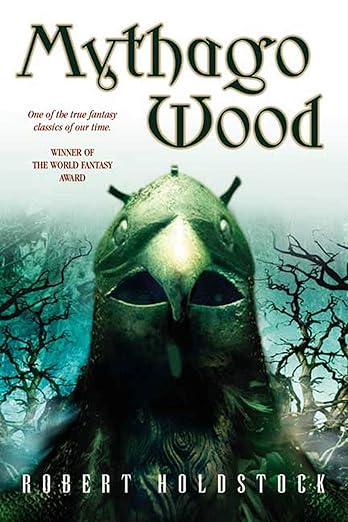
The Enduring Influence of “Mythago Wood” on Contemporary Fantasy

Discover the enchanting forest of “Mythago Wood,” where Robert Holdstock masterfully blends ancient myths with deep psychological themes. Explore a fantasy world where the lines between reality and legend blur, offering a unique and captivating reading experience that delves deep into the human psyche.

In the often neatly trimmed garden of fantasy literature, Robert Holdstock’s “Mythago Wood” series sprouted like a wild, untamed thicket, refusing to be pruned.

With its blend of ancient myth and psychological exploration, Holdstock didn’t just write a fantasy series; he dug down to the very roots of mythology and gave them a good, hard tug, unsettling more than a few earthworms in the process.

A Wood Not Just Haunted, But Alive

Holdstock’s Mythago Wood was no ordinary forest.

It was a place where myths and legends took physical form, sprouting from the collective unconscious like some sort of Freudian shrubbery.

This concept of a living, breathing woodland where heroes and monsters of legend roamed was as groundbreaking as it was eerie.

Gone were the typical castles and dragons; here was a forest where taking a wrong turn could mean coming face to face with a legend – and not all legends are particularly friendly.

Blurring Realities: Where Psyche Meets Myth

The genius of “Mythago Wood” lay in its blurring of the lines between psychological reality and mythical archetype.

Holdstock wove a narrative where personal traumas and family dynamics were entangled with the myths emerging from the wood.

This interplay between the personal and the mythical added a layer of complexity to the fantasy genre, exploring themes that went beyond the standard fare of quests and sword fights.

The Echoes Through Modern Fantasy

The influence of Holdstock’s work can be seen in the way modern fantasy often intertwines the deeply personal with the grandly mythical.

His exploration of ancient myths in a contemporary setting paved the way for works that delve into the psychological underpinnings of folklore and legend.

Authors like Neil Gaiman, with his blend of myth and modernity, owe a nod to the trails blazed by Mythago Wood.

Legacy: A Forest of Imagination

“Mythago Wood” remains a towering oak in the forest of fantasy literature.

Its legacy is found in its innovative approach to myth and psychology, its richly layered narrative, and its reimagining of what a fantasy setting can be.

Holdstock showed us that the oldest stories might be sleeping right beneath our feet, waiting to sprout forth in unexpected and sometimes unsettling ways.

CA Woodland Walk Like No Other

Robert Holdstock’s “Mythago Wood” invites us on a woodland walk that takes us deep into the heart of myth and psyche.

In its shadowed glades and dappled clearings, we encounter not just the stuff of legends but the very essence of storytelling itself.

Mythago Wood continues to inspire and challenge, a wild forest in the landscape of fantasy literature, where the myths are real and the reality is mythic.