Jon Cronshaw – The King of Nobledark

Epic & dark fantasy author. Wyverns, assassins & hope that bleeds but never dies.

Jon Cronshaw – The King of Nobledark

Tag: epic fantasy

  • Fantasy Redefined: How ‘A Song of Ice and Fire’ Changed the Game

    Fantasy Redefined: How ‘A Song of Ice and Fire’ Changed the Game


    In the tumultuous arena of contemporary fantasy, one series has ascended to dominance, seizing the Iron Throne of influence: George R.R. Martin’s “A Song of Ice and Fire.”

    This saga is so monumental, it’s transformed awaiting the next instalment into a pastime in its own right.

    But what is the true legacy of this titan in the realm of fantasy?

    Let’s set forth on a quest to discover, sans the peril of decapitations and nuptials morphing into carnage.

    The Westerosi Whirlwind: A Brief Recap for the Hermit

    For those rare individuals who have been sequestered under a Casterly Rock, “A Song of Ice and Fire” is the expansive, complex series that inspired the television phenomenon “Game of Thrones.”

    It narrates the tale of noble houses vying for supremacy while a supernatural menace looms, resembling a particularly bleak version of musical chairs.

    With a plethora of characters enough to populate a small nation and plot twists that could induce neck injuries, it’s as grand in scope as it is in length.

    Redefining Epic: The GRRM Effect

    Martin’s crowning achievement didn’t merely contribute to the fantasy genre; it cleaved through it with a Valyrian steel axe.

    The era of unequivocal heroes and villains was over, supplanted by characters as morally ambiguous as a Stark cloak.

    It’s as though he regarded the classic fantasy narrative, chuckled robustly, and hurled it from the Moon Door.

    This intricacy and realism redefined the parameters of epic fantasy, laying the groundwork for a more nuanced, character-centric approach within the genre.

    Politics and Schemes: More Convoluted Than a Lannister Family Gathering

    One of the most profound influences of “A Song of Ice and Fire” lies in its emphasis on political machinations.

    Martin’s Westeros focuses less on the magical (though it’s present, lurking like a direwolf in the shadows) and more on the power struggles, alliances, and betrayals.

    It’s akin to “The Godfather” set amidst castles.

    This focus on politics and realism has nudged the fantasy genre away from its more traditional, Tolkien-esque origins towards narratives where the pen (or poison) is mightier than the sword.

    The Waiting Game: A Legacy of Expectation

    We mustn’t overlook the unique legacy of “A Song of Ice and Fire” in cultivating a fanbase as patient as a Faceless Man biding time for the perfect assassination.

    The anticipation for the next book has become part of the culture, a testament to the series’ hold on its audience’s imagination.

    It’s a series that has taught us the profound meaning of expectation, along with the perils of becoming too attached to any character.

    May It Reign Long

    “A Song of Ice and Fire” has etched a lasting mark on the fantasy landscape.

    It’s a series that has challenged conventions, expanded the horizons of epic storytelling, and inspired a new wave of fantasy that is as politically astute as it is fantastical.

    It’s evidence that in the game of modern fantasy, you either revolutionise the genre, or you risk fading into obscurity.

    And Martin, with his flair for the unforeseen, has indeed played a masterful hand.

  • The Heart of Fantasy: Exploring Character-Driven Epic Tales

    The Heart of Fantasy: Exploring Character-Driven Epic Tales

    In the realm of high fantasy, where worlds are as vast as they are fantastical, it’s not just the sprawling landscapes or the intricate magic systems that keep the pages turning.

    Oh no. It’s the characters – those flawed, multifaceted beings who are as likely to stab you in the back as save the world.

    It’s their journeys, struggles, and triumphs that truly enchant us, making character-driven high fantasy a banquet for the soul, albeit a sometimes bitter one.

    Let’s face it: a good character can make us forgive even the most clichéd of plots.

    They are the heart and soul of the story, turning a simple quest into a saga of epic proportions.

    They bring the world to life, infusing the narrative with their ambitions, fears, and idiosyncrasies.

    A well-crafted character is like a good friend – you’re invested in their journey, you celebrate their victories, and you might occasionally want to throttle them.

    Take Robin Hobb‘s FitzChivalry Farseer, for example.

    Here’s a chap who’s been through the wringer more times than a medieval laundry.

    Bastard son, assassin, and a man constantly torn between duty and desire.

    Fitz’s complex inner world is what draws us into his story, making us root for him despite his often questionable choices.

    Or consider Cersei Lannister from George R.R. Martin’s “A Song of Ice and Fire“.

    Love her or loathe her, Cersei’s ambition and cunning make her a character you can’t ignore.

    She’s a masterclass in shades of grey – a woman trying to assert power in a man’s world, using every weapon in her arsenal, including her own children.

    Then there’s Locke Lamora, the quick-witted, sharp-tongued protagonist of Scott Lynch’s “Gentleman Bastard” series.

    A thief with a heart of gold (well, sometimes), Locke’s charm and cunning make him a hero you can’t help but cheer for, even as he’s picking your pocket.

    What makes these characters so appealing?

    They’re flawed, deeply human, and they often make a hash of things.

    Their struggles resonate with us, their failures make them relatable, and their victories feel like our own.

    In high fantasy, where the stakes are as high as the towers of Minas Tirith, these deeply drawn characters give us a grounding point – a human connection in a world of dragons and magic.

    Character-driven stories in high fantasy are not just about the destination; they’re about the journey.

    Watching a character evolve over time, overcome their demons, and maybe, just maybe, save the world in the process, is a compelling narrative force.

    It’s the difference between reading a book and living it.

    So, character-driven fantasy offers a rich tapestry of human experience, set against a backdrop of the extraordinary.

    It’s a genre where you can explore the depths of the human heart, all while enjoying a good old-fashioned battle between good and evil.

    So the next time you dive into a high fantasy novel, pay attention to the characters. They might just teach you a thing or two about life, love, and the proper way to wield a magic sword.

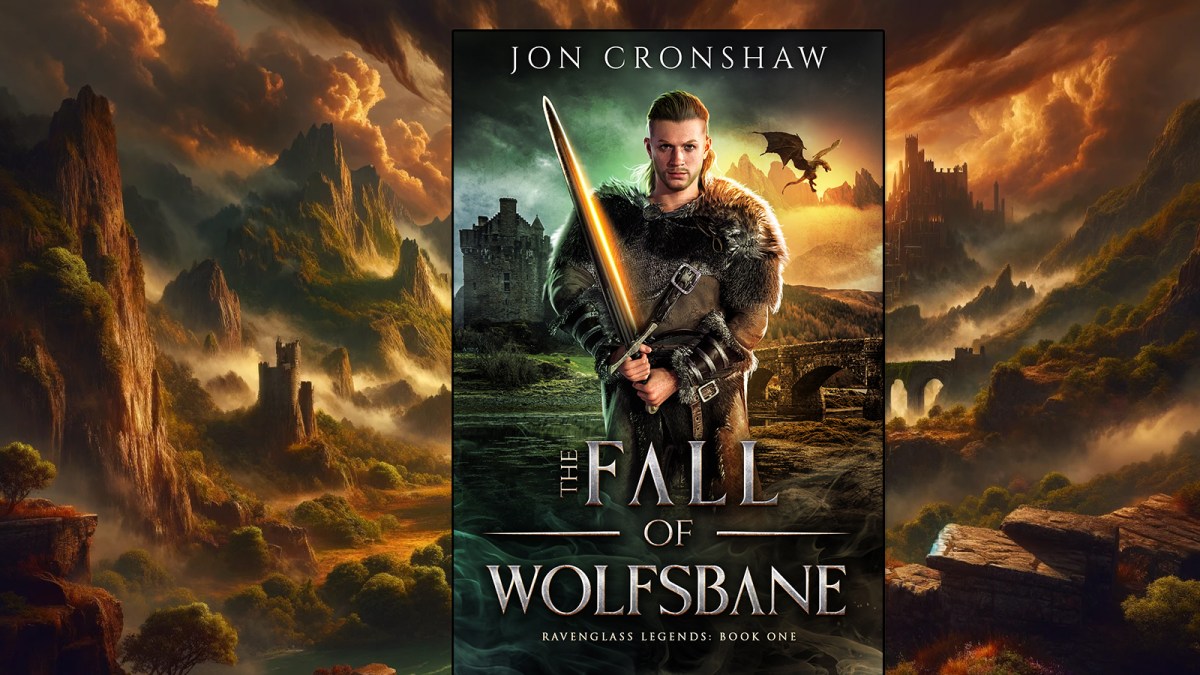
  • Out now! The Fall of Wolfsbane (Ravenglass Legends, book 1)

    Out now! The Fall of Wolfsbane (Ravenglass Legends, book 1)

    Hello from chilly Morecambe!

    I am beyond excited to announce the launch of my latest novel, The Fall of Wolfsbane, the first installment in the Ravenglass Legends series.

    This book holds a special place in my heart, as it brings to life a story that has been brewing in my mind for years.

    The Fall of Wolfsbane is set several centuries before the events of The Ravenglass Chronicles, during the tumultuous times when the Ostreich Empire first invaded Wiete.

    At its heart are two unforgettable characters – Ragnar and Maja Wolfsbane.

    The son and daughter of a chieftain, their lives are upended when the Empire ravages their homeland.

    Taken hostage and separated, they find themselves in the iron grip of their captors, forced to navigate a world where their very identities are under threat.

    As I penned Ragnar and Maja’s journey, I delved deep into themes of loss, resilience, and the indomitable human spirit.

    Their story is not just one of survival; it’s about the struggle to hold onto one’s values and identity in the face of overwhelming odds.

    Set in the Ravenglass Universe, The novel explores the complexity of family bonds, loyalty, and the fine line between compliance and rebellion.

    Early reviews have been overwhelmingly positive, praising the book for its “immersive tale,” “phenomenal world-building,” and “deep character development.”

    Readers have particularly enjoyed the intricate political intrigue and the rich, detailed setting I’ve crafted.

    But don’t just take their word for it – dive into the world of The Fall of Wolfsbane and experience the adventure for yourself!

    The Fall of Wolfsbane is more than just the beginning of a new series; it’s an invitation to lose yourself in a world where every decision can change the fate of an empire, where loyalty is tested, and where the fight for freedom becomes a fight for one’s soul.

    I want to extend my heartfelt gratitude to everyone who has supported me on this journey – my family, friends, editor, and of course, you, my readers.

    Your enthusiasm and encouragement have been the driving force behind this project.

    The Fall of Wolfsbane is now available for purchase in both digital and print formats.

    Grab your copy today and join Ragnar and Maja as they embark on an epic journey that promises to captivate, thrill, and inspire.

    Thank you for being a part of this exciting new chapter.

    Here’s to the adventures that await us in the pages of The Fall of Wolfsbane.

  • The Fall of Wolfsbane (Ravenglass Legends, book one) – chapter one (excerpt)

    The Fall of Wolfsbane (Ravenglass Legends, book one) – chapter one (excerpt)

    Chill wind bit into Ragnar Wolfsbane’s knuckles as he gripped his shield and spear. He planted his feet into solid earth, standing shoulder-to-shoulder in the shield wall with his brother warriors.

    Frost lay in the shadows, throwing blue ripples towards the patches of harsh sunlight.

    Ragnar braced himself with gritted teeth as his opponents smashed into him, shields clashing with shields, spears, and swords jutting this way and that.

    The berserker cries did little to mask the cold.

    A spear point thrust past Ragnar’s guard, jabbing his shoulder. With a cry, he fell backwards, letting an opening develop in the wall.

    A man jerked Ragnar’s shield aside, hacking and slashing his sword, felling young men like stems of summer wheat. Each strike sent a bolt of pain along Ragnar’s arms, in spite of the blunted weapons.

    Within a few heartbeats, the shield wall collapsed, the young men sprawling to the ground.

    “Enough.” Ragnar’s Uncle Olaf drew a hand down his braided beard, his lip curling as he eyed each of them in turn. Leather straps crossed his chest, while fur leggings clad his thighs. Even in the cold, he wore only a light tunic, leaving his arms bare to the shoulders. Dozens of silver kill bands jangled on his forearms, catching the light of the harsh winter sun.

    All around Ragnar, fellow warriors in training slumped to the ground, panting, and cursing, and wiping sweat from their brows.

    “Useless. Absolutely useless.” Olaf sneered at the trainees as he walked along the line, the gnarled scar down his cheek twisting with his words. “You cannot even hold the wall, let alone attack from behind the shields.” He stopped and glowered at one of the taller lads. “Why are you so pathetic?” His gaze swept along the broken line and lingered on Ragnar. “You are supposed to be warriors, not peasants.” He pointed to the sea. “How will you protect Meerand if the Northern Reachmen return?”

    A warm sensation pressed against Ragnar’s mind, a tendril of something like liquid slithering into his thoughts.

    Olaf’s words faded into the background, nothing more than a jumble of sounds on the wind.

    Ragnar slammed up his mind’s barriers, picturing an impenetrable shield wall, and he cast his gaze to the skies for what he knew must be there.

    Three years earlier, during his twelfth summer, Ragnar had felt the same sensation when a wyvern from the north had presented itself to him and his friend Kest. But as he scanned for the creature, he saw nothing but icy clouds and grey skies.

    He started at his uncle looming over him. “Am I boring you, boy?” Olaf sneered at him. “Is there something on the walls that demands your attention? Something more important than listening to me?”

    “Yes, uncle…”

    “Yes, sir!” Olaf delivered a backhanded slap to Ragnar’s cheek, jerking his head to the side and sending him to the ground.

    “Yes, sir.” Ragnar rubbed his chin and dipped his gaze. “Sorry, sir. I just—”

    “There is nothing more important than listening to me.” Olaf took a moment to glare at all the lads before returning his attention to Ragnar. “Because of your failure, you are all dead. One man cut seven of you down and broke the wall before you even had a chance to attack. Your mothers and sisters are raped. Your fathers are murdered and your lands, taken. The rest of your people are enslaved, and it’s all your fault.” He jabbed a finger at Ragnar. “Get up.”

    Ragnar got to his feet.

    “What do you have to say for yourself, boy?”

    “Sir, there’s a wyvern.”

    “A wyvern?” Olaf shielded his eyes and glanced up at the sky. “Can anyone else see a wyvern? I don’t see one.”

    “There is a wyvern. I swear it in the eyes of Creation.”

    Olaf squared up to Ragnar. “Are you calling me a liar, boy?”

    “No, sir. I can feel it inside my thoughts.” He looked for support from the others, but a few of the trainees snickered. “Can’t you feel that?”

    “Your thoughts are addled, boy.”

    Though Ragnar was the son of Meerand’s Chieftain, Olaf gave him no special treatment. Ragnar bunked with the other lads and took his beatings in the same way. Indeed, some days it seemed Olaf had special torments in mind for him alone.

    Ragnar raised his chin and gripped the chalice he wore around his neck—a constant reminder of Creation’s abundance, and a gift from his late mother. “I told you what I felt, sir. My word is stone.”

    Olaf spat on the ground. “Your word is nothing, boy.” He glanced up at the sky again. “Where is it? Show me. Show the others.” He leaned back and cupped his hands. “Oh, wyvern! Oh, wyvern! Come out and reveal yourself. Ragnar knows you are hiding.”

    A few of the trainees laughed. Others whispered to one another.

    The laughter stopped when a dark shadow crossed over the training ground.

    Olaf looked up, paling at the sight of the dark-winged creature above them. The wyvern circled the castle twice before heading back out over the Braun Sea.

    Olaf grunted but did not meet Ragnar’s gaze. “Pair up. Spar.” He spun on his heels and marched towards the castle.

    Ragnar gravitated towards Kest Jorensohn, who grabbed a blunt mace and shield.

    Ragnar took up his favourite shortsword and dagger, holding the dagger in his right hand, sword in his left.

    Kest gestured to the blades. “You’re not still piddling around with those?”

    Ragnar shrugged. “Not afraid, are you?”

    “Me? Never.” Kest grinned and slipped into a ready stance. “But if your father catches you, you’ll be in crap again.”

    “I don’t care what he says.” Ragnar began to circle his friend. “When I’m a master, he’ll eat his words.”

    “We’ll see about that.”

    Ragnar shifted forward and struck past Kest’s guard. “You know this is the superior technique.”

    Kest gave a quick nod and held up his shield. “If it’s so bloody great, why are you in the shield wall with the rest of us?”

    “Just to make you all feel better.” Ragnar gave a half-smile. “I was gracing you with my impressive presence.”

    “You’re about as impressive as narwhal crap.”

    Ragnar laughed and ducked Kest’s mace.

    “Almost got you, there.” Kest pushed Ragnar back with his shield and swung again. “You know it’s true, don’t you?”

    “What?”

    “That if someone put you next to a steaming pile of narwhal crap, everyone would point at the turd and go, ‘Ooh, look at that.’ They wouldn’t even notice you.”

    Ragnar grinned. “Just shut up and fight.” He danced backwards, spun, and pressed his blunted dagger against Kest’s throat. “That’s two.”

    “This is supposed to be training, Rag. You nearly took my bloody head off with that.”

    “Nearly.” Ragnar stuck his tongue out and slipped back into stance.

    Kest roared and charged forward, swinging the mace down in a vertical arc.

    Ragnar sidestepped, tripped Kest, sending him to the dirt, and stood over him with his sword point pressed against his friend’s chest.

    He helped Kest to stand. “You want to yield?”

    Kest shook his head and adjusted his helmet. “I’ll just have to start making an effort.” He circled Ragnar. “Tell me, Rag. How did you know that wyvern was there?”

    Ragnar aimed a backhanded cut at him. “It’s like that big red one a few years back.”

    “When?”

    “Three summers ago up on the bluffs. Back when we had that boys’ tourney.”

    Kest looked puzzled.

    “You were there.”

    Kest shook his head and shoved against Ragnar with his shield. He hooked a foot around Ragnar’s ankle and knocked him to the ground. Standing over him with his mace raised for the killing blow, Kest grinned. “One to me.”

    “I let you have that.” Ragnar got to his feet. “It’s only right that I do something to prevent your tears and misery.”

    Kest feigned a blow with the edge of his shield, cursing when Ragnar threw himself backwards.

    The pair exchanged blows alongside the other trainees until Kest halted and stared out to sea, the sparring seemingly forgotten.

    “I’m not falling for your trap.”

    Kest shook his head, his mouth dropping open, and gestured to the Braun Sea.

    Ragnar followed Kest’s gaze and gaped at the dark ships dotting the horizon—hundreds of them.

    —–


    Maja stood motionless before the Hammer of Wolfsbane, its deep black surface absorbing the meadhall’s dim light. The artefact’s shifting form filled her vision as the weight of its power pressed against her.

    She reached out tentatively, her fingers hovering just inches from the ravenglass. She sensed the hammer was no mere object but a connection to another mind, another place beyond her own, something distant, something ancient, something…other. It was as if the relic were alive, and she could sense a consciousness stirring within.

    As she stared, Maja sensed the faint whisper of a consciousness that was not her own. She cleared her thoughts and stilled her breaths, allowing herself to form a connection with the object.

    But whenever she felt the hints of connection, it was as if she caught her reflection in water, the solid image turning to ripples.

    Creation had gifted her the ability to sense the threads that bound all living things, but this connection ran deeper, eluding her understanding.

    Warning bells echoed through Meerand, shaking the ground beneath Maja’s feet. How long had they tolled?

    She spun around, her heart racing as she caught sight of her father, Ragnar the Elder, storming into the meadhall. His eyes locked onto hers, and a pang of guilt struck her chest.

    “What are you doing in here?”

    Maja stumbled back, searching for an excuse. “Nothing.”

    “You know not to touch this.”

    “I didn’t touch it.” She met her father’s gaze and sensed his fear and anger. She pushed out a wave of love and reassurance, which softened his expression.

    He reached out to ruffle her hair. “Come, Maja.” He took the hammer down from the wall and gestured to the door. “The Empire is here.”

    —–


    Warning bells rang across Meerand Castle as Ragnar made his way up to the top of the keep to join his father and uncle on the battlements.

    Sweat from his palms slickened his bow, and he wondered how he could nock an arrow with trembling fingers.

    Ragnar tried his best to hide his fear from his father, and gazed across the bay at the black-hulled ships of the Ostreich Empire.

    His father looked through a long-sight glass, which he then passed to Olaf, the younger man lifting it to his own eye.

    Out of Ragnar’s earshot, they exchanged heated words, whispering harshly to each other as his father’s bodyguard, Brandt, looked on.

    “What are they saying?” Ragnar asked.

    Brandt gave a helpless shrug. He held a shimmering greatsword, its pommel a carved wolf baring its fangs.

    Olaf strode off, leaving the three of them alone.

    Screams rose from the town below as the next wave of invaders made land.

    Townsfolk streamed towards the castle, fleeing their homes and businesses.

    Ragnar the Elder rubbed his brow and watched, his face a stoic mask behind his beard.

    Kest and some of the other lads arrived, each with their own bow and quiver, ready to mount a defence.

    “If they get me, make sure I’ve got a weapon in my hand,” Kest said, sidling up to Ragnar.

    “Creation would never believe you’re a true warrior.”

    Kest rolled his eyes. “Swear it, Rag. Please.”

    Ragnar had never heard such a serious tone from his friend. “I will.” He gripped Kest’s shoulder. “But it won’t come to that. We’re warriors, proud and true, and we’ll defend our home and send these arseholes back to Ostreich.” Ragnar turned to meet his father’s gaze.

    “We cannot win, son.” Ragnar the Elder shook his head. “There are too many of them.”

    “But, Father—”

    “It’s done, Ragnar.” His father squeezed the bridge of his nose and took in a long breath. “Olaf is sending a bird as we speak.”

    Ragnar frowned. “A bird? What kind of bird?”

    “To offer our surrender.”

    “Surrender?” Ragnar’s eyes bulged. “No. We can’t just give in.”

    “Look down there, son.” He pointed to the harbour. “Count the ships. There are nearly two hundred of them, each carrying at least fifty men, armed and ready to fight.”

    “But you always said—”

    Ragnar the Elder waved a silencing hand. “We have a force of sixty warriors and half that number of young ones in training.” He held his eyes closed for a long moment. “They will slaughter everyone if we don’t give them what they want.”

    The Ostreich soldiers stood poised and armoured in long, straight rows, each man wielding a spear and shield, their faces obscured by steel helmets.

    Anger rose in Ragnar’s chest—anger at the invaders, anger at his father’s cowardice, and anger at his own fear.

    A horn blared, and the soldiers turned as one. They marched towards the castle.

  • Exploring the Ravenglass Universe: A Realm of Fantasy and Magic

    Exploring the Ravenglass Universe: A Realm of Fantasy and Magic

    Hello from Morecambe!

    Today, I invite you to journey with me as we explore the Ravenglass Universe – a rich, dynamic, and multifaceted fantasy realm where countless stories unfold, from the earliest days to the farthest reaches of the future.

    The Essence of the Ravenglass Universe

    At its heart, the Ravenglass Universe is a fantastical world, a canvas on which an array of stories are painted.

    Here, imagination knows no bounds – from soaring wyverns in the sky to the mystical powers of a unique material known as ravenglass.

    A World of Magic and Wonder

    Magic is a vital thread in the fabric of the Ravenglass Universe.

    It is a world where magic intertwines with reality, creating a landscape filled with wonder and peril.

    The magic system is as diverse as it is intriguing:

    • Ravenglass: Central to our universe’s lore, ravenglass is a mystical material with properties that are both wondrous and enigmatic. It is the cornerstone of many magical feats and the source of much of the universe’s mysteries.
    • Elemental Magic: Harnessing the raw powers of nature, elemental magic is wielded by those who understand the deep connections to ravenglass
    • . Fire, water, earth, and air are not just parts of the world; they are forces to be summoned and controlled.
    • Mind Manipulation: In the darker corners of the Ravenglass Universe, some delve into the secrets of mind manipulation, a form of magic that blurs the lines between persuasion and control.
    • Parallel Worlds: The universe is not a singular plane; it encompasses numerous parallel worlds, each with its own secrets, dangers, and wonders.

    Heroes and Antiheroes: The Soul of Our Stories

    Our universe is inhabited by characters as complex and diverse as the world itself.

    From flawed heroes to morally ambiguous antiheroes, each character brings their unique perspective to the narrative.

    They navigate this magical world, sometimes as champions of their beliefs, other times as lost souls searching for redemption.

    Epic Sagas and Intimate Tales

    The range of stories within the Ravenglass Universe spans from grand, epic sagas that reshape the world to intimate, personal narratives that delve deep into the hearts and minds of individuals.

    Whether it’s a tale of an empire in turmoil or a quiet story of a lone assassin, each story is a piece of the larger puzzle, contributing to the universe’s rich tapestry.

    Adventures await!

    The Ravenglass Universe is more than just a setting for fantasy tales; it is a living, breathing world where every story, every character, and every magical element is part of a larger narrative.

    As the creator of this universe, I invite you to step into this world of endless possibilities, where the past and future intertwine, and magic is as real as the air we breathe.

    Join me in exploring this universe of wonder, magic, and adventure.

    Let’s uncover its secrets together.

    Until our paths cross again in the Ravenglass Universe,

    Jon

  • The Fall of Wolfsbane is now available to pre-order!

    The Fall of Wolfsbane is now available for pre-order, with its release slated for January 18, 2024.

    Dive into the first volume of the breathtaking Ravenglass Legends saga, an epic fantasy tale that weaves destiny, betrayal, and the relentless pursuit of justice.

    In the heart of a shattered realm, Ragnar, born to rule, faces the ultimate test of fate.

    His world crumbles as the Empire ravages his homeland, stripping him of his birthright.

    Captured and torn from his sister Maja, Ragnar is thrust into a treacherous dance of survival within the opulent but cruel walls of imperial captivity.

    As they fight to reunite and reclaim their legacy, Ragnar and Maja tread a perilous path.

    In the glittering halls of the Empire, each step could lead to salvation or doom.

    Will they bend to the will of their captors, or will their unyielding spirit pave the way to restore their homeland?

    The Fall of Wolfsbane is not just a novel—it’s a journey into a world of intrigue and resilience, where loyalty is tested, and every choice can alter the course of destiny.

    Pre-order your copy today and be among the first to explore this epic tale of courage, conspiracy, and the unbreakable bonds of family.

    Join Ragnar and Maja as they navigate the razor’s edge between risk and reward, duty and desire, in a high-stakes game that unfolds in the Imperial courts.

    Don’t miss out. Pre-order The Fall of Wolfsbane now and immerse yourself in the world of Ravenglass Legends, because this is a book you won’t want to put down.

  • What is the Difference Between High Fantasy and Epic Fantasy?

    What is the Difference Between High Fantasy and Epic Fantasy?

    In the grand, dragon-infested world of fantasy literature, distinguishing between high fantasy and epic fantasy can be as tricky as convincing a dragon to part with its gold.

    Both genres whisk readers away to realms of magic, heroism, and the occasional inconveniently-timed apocalypse.

    But fear not, intrepid reader! Let’s embark on a quest to untangle these subgenres.

    High Fantasy: More Than Just Elvish Linguistics

    High fantasy, also known as secondary-world fantasy, takes you to an entirely different world.

    Think J.R.R. Tolkien’s “The Lord of the Rings,” where Middle-earth is as real as the overdue bills on your kitchen counter.

    This genre features worlds with their own set of rules, races like elves and dwarves (who are notoriously bad at following any rules), and a magic system that often requires a PhD to understand.

    High fantasy is like that eccentric uncle who insists on speaking in Klingon; it immerses you completely in its world.

    Epic Fantasy: It’s Not Just Big, It’s Epic

    Epic fantasy, on the other hand, is characterised by its scale and the stakes involved.

    George R.R. Martin’s “A Song of Ice and Fire” series is a prime example. Here, it’s not just a personal quest but the fate of entire kingdoms hanging in the balance, often involving a cast of characters so vast you need a family tree to keep track.

    Epic fantasy is like a family reunion; you might not know everyone’s name, but you’re all in it together, usually against a tyrannical, power-hungry relative.

    The Blurred Line: Where High Meets Epic

    The boundary between high and epic fantasy is as blurred as your vision after reading a Brandon Sanderson novel in one sitting.

    Sanderson’s “The Stormlight Archive” series exemplifies this blend.

    It’s set in a meticulously crafted world (high fantasy) and revolves around grand, world-altering conflicts (epic fantasy).

    It’s like a banquet where every dish is both deliciously exotic and alarmingly large.

    The Magic Touch

    High fantasy often presents magic as an integral part of the world.

    In Terry Pratchett’s “Discworld” series, magic is as common as a rainy day in London.

    Epic fantasy, like Robert Jordan’s “The Wheel of Time,” might also feature magic, but the focus is more on the epic battles, political intrigue, and the characters’ journeys, which occasionally involve less magic and more trying not to get stabbed in the back.

    The Stakes Are High (And Epic)

    In high fantasy, the stakes might be significant but often more personal, like Frodo Baggins’ quest to destroy the One Ring.

    In epic fantasy, the stakes are, well, epic.

    Think of “The Malazan Book of the Fallen” by Steven Erikson, where the fate of entire civilizations rests on the outcomes of conflicts.

    While high fantasy takes you to an entirely different world, epic fantasy tells you a story of monumental scale and stakes in that world.

    Both genres offer an escape from reality, much like imagining yourself as a hero with fabulous hair and a sword, rather than someone who can’t even wield a frying pan properly.

    Whether you prefer the complete immersion of high fantasy or the grand tapestry of epic fantasy, one thing is certain: in these worlds, anything is possible, except perhaps a straightforward plot.

  • The Evolution of Epic Fantasy Tropes

    The Evolution of Epic Fantasy Tropes

    Epic fantasy, a genre as enduring as an overambitious wizard’s beard, has long been the home of grand tales and even grander clichés.

    Yet, in recent years, these tropes have undergone a transformation, much like a reluctant hero who realises he’s left the oven on in chapter one.

    Let’s delve into this fantastical world to see how these changes have unfolded.

    1. The Chosen One, or the Accidentally Selected

    The ‘Chosen One’ – a character as traditionally predictable as rain at a British barbecue. Once, they were the heart and soul of epic fantasy, plucked from obscurity to save the world.

    Think Tolkien’s “The Lord of the Rings” or Lewis’s “The Chronicles of Narnia”. But modern authors, like George R.R. Martin and Brandon Sanderson, have had a bit of a laugh with this trope.

    Now, our ‘chosen’ ones are more likely to stumble into destiny after a wrong turn, bringing a delightful blend of incompetence and unforeseen heroics to the table.

    2. Good vs. Evil, or How Everyone’s a Bit Dodgy

    Gone are the days when good and evil were as clear cut as a knight’s sword through a surprisingly soft dragon. In the past, we knew where we stood – or, more accurately, who we’d cheer for.

    Today, thanks to writers like Joe Abercrombie and Steven Erikson, characters inhabit moral grey areas, much like a politician’s promises.

    It’s no longer about good triumphing over evil; it’s about who’s less of a scoundrel.

    3. World-Building, Now with More Realism!

    Tolkien’s Middle-earth set the bar for world-building, but let’s face it, it lacked a certain… what’s the word? Ah, yes, diversity.

    Modern epic fantasies, such as N.K. Jemisin’s “The Broken Earth” trilogy, offer worlds with more layers than a wizard’s wardrobe, complete with cultures and languages that reflect our own world’s messy, wonderful diversity.

    4. Magic Systems, or Making Sense of the Nonsense

    Magic, once as mysterious as the contents of a deep, dark dungeon, has evolved.

    Earlier fantasies treated magic like a secret recipe, known only to a select few. Nowadays, authors like Brandon Sanderson give us ‘hard magic systems‘, where magic is so well-defined, it could feature in a physics exam.

    It’s less about waving wands and more about understanding the fine print of the universe.

    5. The Role of Women: From Damsels to Destroyers

    Remember when women in epic fantasy were as active as a painting on the wall?

    Thankfully, those days are as gone as a dragon’s diet plan.

    Now, female characters are leading the charge, armed with their own complexities and strengths.

    From G.R.R. Martin’s formidable women to Robin Hobb‘s influential heroines, these characters are shattering glass ceilings with a battle axe.

    Epic fantasy has certainly come a long way from its once-predictable roots, much like a hero on a quest who realises halfway that the real treasure was the friends they made along the way (or, perhaps, the enemies they gleefully thwarted).

    This genre’s evolution, laced with a touch of dark humour, shows us that even in worlds filled with magic and myth, change is the only true constant.

    So, let’s raise our goblets to the ever-shifting landscape of epic fantasy, where the only guarantee is a thrillingly unpredictable adventure.

    Cheers!

  • Blades of Wolfsbane – Full Free Audiobook by Jon Cronshaw

    Welcome to the immersive world of Blades of Wolfsbane, a high fantasy novella prequel to Jon Cronshaw’s Ravenglass Legends series.

    This captivating tale is an unforgettable journey into a vibrant universe filled with courageous heroes and electrifying sword fights.

    In the heart of the story, we meet Ragnar—a chieftain’s son yearning for his father’s respect.

    Secretly honing an unorthodox fighting style, he grapples with a choice: reveal his prowess in the imminent boys’ tournament and risk family disgrace, or submit to defeat.

    This epic tournament, a secret to safeguard, and a legacy at stake, sets the stage for a story that will ensnare your imagination.

    It is a tale of intrigue, honour, and brave hearts.

    Fans of rich world-building and high-stakes fantasy will feel right at home in the expansive Ravenglass Universe.

    Embark on Ragnar’s epic journey today.

    Dive into the world of chieftains, warriors, and ancient traditions. Experience the thrill of the tournament, the weight of a secret, and the struggle for respect.

    Don’t miss out on this exciting journey! Listen to the full audiobook of Blades of Wolfsbane for free right here on YouTube.

    Remember to like, share, and subscribe for more immersive audiobooks. Enjoy the adventure!

    Claim your FREE Ravenglass Universe ebook starter library by visiting joncronshaw.com/newsletter

  • Out now: Dawn of Assassins (books 1-3 boxed set)

    Fedor and Lev are thieves…

    …neither signed up to be killers.

    But when they’re unwillingly recruited by a master assassin with a dark agenda, the stakes turn lethal.

    Can they survive Soren’s increasingly perilous trials designed to twist their morals and endanger their lives?

    How far will Fedor and Lev go to reclaim their freedom?

    Perfect for mature readers, Dawn of Assassins delivers a fast-paced blend of suspense, moral ambiguity, and non-stop action.

    This collection brings together three gritty dark fantasy novels: Dawn of Assassins, Trial of Thieves, and Crucible of Shadows.

    In a world where trust is a luxury and assassins loom in the shadows, are you ready to confront the barriers of morality and survival?

    Dare you face the dawn?