I’ve been dying to share this with you for months, and the day has finally arrived. It’s my great pleasure to unveil the official book trailer for my upcoming epic fantasy novel, “Guild of Assassins”!
With this series. I wanted to create a tale that would transport you to a world of intrigue, where shadows hide secrets and danger lurks around every corner.
At the heart of “Guild of Assassins” is Soren, a young sculptor’s apprentice whose life is shattered when his father is murdered by a mysterious assassin.
Driven by grief and a thirst for justice, Soren sets out to uncover the truth. But his quest takes a dark turn when he’s forced to join the very guild responsible for his father’s death.
As Soren navigates the cutthroat politics of the assassins’ guild and endures a training regimen that pushes him to his limits, he discovers a web of secrets that could bring an empire to its knees.
But to survive, Soren must embrace the way of the assassin and become the very thing he hates most.
This story is packed with pulse-pounding action, searing betrayals, and a deeply human story of loss, redemption, and the price of vengeance.
“Guild of Assassins” is perfect for fans of Robin Hobb, Mark Lawrence, and Michael J. Sullivan. If you love gritty, immersive fantasy tales that keep you turning pages late into the night, this book is for you.
I’d love to hear your thoughts on the trailer…and of the story.
Drop a comment below and let me know what you think!
Explore the enchanting world of fantasy literature with our list of the top 10 iconic mother characters, from the wise and powerful to the fiercely protective. Meet Nanny Ogg, Catelyn Stark, Galadriel, and more!
In the enchanting world of fantasy literature, where magic and mystery blend seamlessly, there lies a special breed of characters: mothers.
These matriarchs of the mystical realms stand out not just for their maternal instincts, but also for their extraordinary abilities to juggle the fantastical with the familial.
Let’s dive into the pages of fantasy and meet ten of the most iconic mother figures, whose stories are woven with wit, wisdom, and a touch of dark humour.
Cersei Lannister (A Song of Ice and Fire by George R.R. Martin)
Love her or hate her, Cersei’s motherly love is as fierce as it is terrifying.
With a heart colder than the lands of Winterfell, Cersei’s maternal instincts are driven by power and ambition.
Cross her, and you might find yourself facing the wrath of a lioness.
Mrs. Coulter (His Dark Materials by Philip Pullman)
Marisa Coulter: a mother whose love is as complex as her moral compass.
Her nurturing side is as enigmatic as her ruthless ambitions.
Mrs. Coulter is a testament to the intricate layers of motherhood in a fantastical setting.
Polgara (The Belgariad by David Eddings)
Polgara the Sorceress, daughter of Belgarath, is a powerful figure who combines her magical prowess with a deeply ingrained maternal instinct, often guiding and protecting her charges with a firm yet loving hand.
Nanny Ogg (Discworld Series by Terry Pratchett)
Gytha Ogg, better known as Nanny Ogg, is the matriarch who proves that age and a large brood of children are no hindrance to a lively social life or to meddling in magical affairs.
With a pint in one hand and a bawdy song on her lips, Nanny Ogg navigates the Discworld with a mischievous twinkle in her eye.
Galadriel (The Lord of the Rings by J.R.R. Tolkien)
This elven queen exudes grace and wisdom.
Galadriel, mother to Celeborn, is a beacon of hope and an epitome of mystical prowess in Middle-Earth.
Her serene demeanor masks a power that even the mightiest fear.
Lady Jessica (Dune by Frank Herbert)
The Bene Gesserit mother of Paul Atreides, Lady Jessica’s role is pivotal in shaping the destiny of Arrakis.
Her strength, intelligence, and abilities in the Bene Gesserit ways make her a mother figure not just to Paul, but to an entire revolution.
Sally Jackson (Percy Jackson & The Olympians by Rick Riordan)
Sally Jackson deserves a medal for single-handedly raising Percy, a demigod whose life is a magnet for mythological mayhem.
Her love, resilience, and blue chocolate chip cookies make her a memorable mother in fantasy literature.
Lirael (The Old Kingdom Series by Garth Nix)
Lirael’s journey from a solitary librarian to a mother and Abhorsen-in-waiting is a tale of courage and self-discovery.
Her role as a mother adds a deeper layer to her character, blending her duty to the dead with the responsibilities of motherhood.
Coraline’s Mother (Coraline by Neil Gaiman)
Often seen as strict and not overly affectionate, Coraline’s real mother’s love for her daughter is true and unwavering.
In contrast to her other mother’s sinister affection, she represents the genuine, sometimes underappreciated, love of a parent.
Molly Weasley (Harry Potter Series)
The Weasley matriarch, Molly, is the warm, loving heart of her large family.
Her fierce protective nature is evident in her willingness to do anything (including duelling with Death Eaters) to ensure her family’s safety.
These mothers, with their remarkable qualities and flawed humanity, show us the myriad ways in which a mother can be powerful, influential, and unforgettable.
They may not always be perfect, but they navigate the fantastical realms with a tenacity and spirit that make them iconic figures in fantasy literature.
Here’s to the mothers who battle dragons, both literal and metaphorical, for the sake of their children and the worlds they inhabit.
Just remember, never underestimate the power of a fantasy mother – they might just have an ancient spell or a frying pan ready for those who do!
Discover the Ravenglass Universe: a realm of magic, epic sagas, elemental forces, and heroic journeys.
Hello from Morecambe!
Today, I invite you to journey with me as we explore the Ravenglass Universe – a rich, dynamic, and multifaceted fantasy realm where countless stories unfold, from the earliest days to the farthest reaches of the future.
The Essence of the Ravenglass Universe
At its heart, the Ravenglass Universe is a fantastical world, a canvas on which an array of stories are painted.
Here, imagination knows no bounds – from soaring wyverns in the sky to the mystical powers of a unique material known as ravenglass.
A World of Magic and Wonder
Magic is a vital thread in the fabric of the Ravenglass Universe.
It is a world where magic intertwines with reality, creating a landscape filled with wonder and peril.
The magic system is as diverse as it is intriguing:
Ravenglass: Central to our universe’s lore, ravenglass is a mystical material with properties that are both wondrous and enigmatic. It is the cornerstone of many magical feats and the source of much of the universe’s mysteries.
Elemental Magic: Harnessing the raw powers of nature, elemental magic is wielded by those who understand the deep connections to ravenglass
. Fire, water, earth, and air are not just parts of the world; they are forces to be summoned and controlled.
Mind Manipulation: In the darker corners of the Ravenglass Universe, some delve into the secrets of mind manipulation, a form of magic that blurs the lines between persuasion and control.
Parallel Worlds: The universe is not a singular plane; it encompasses numerous parallel worlds, each with its own secrets, dangers, and wonders.
Heroes and Antiheroes: The Soul of Our Stories
Our universe is inhabited by characters as complex and diverse as the world itself.
They navigate this magical world, sometimes as champions of their beliefs, other times as lost souls searching for redemption.
Epic Sagas and Intimate Tales
The range of stories within the Ravenglass Universe spans from grand, epic sagas that reshape the world to intimate, personal narratives that delve deep into the hearts and minds of individuals.
Whether it’s a tale of an empire in turmoil or a quiet story of a lone assassin, each story is a piece of the larger puzzle, contributing to the universe’s rich tapestry.
Adventures await!
The Ravenglass Universe is more than just a setting for fantasy tales; it is a living, breathing world where every story, every character, and every magical element is part of a larger narrative.
As the creator of this universe, I invite you to step into this world of endless possibilities, where the past and future intertwine, and magic is as real as the air we breathe.
Join me in exploring this universe of wonder, magic, and adventure.
Let’s uncover its secrets together.
Until our paths cross again in the Ravenglass Universe,
Discover ten fantasy books that capture the essence of Dungeons & Dragons (D&D), taking you on an epic literary journey filled with world-building, intricate plots, and captivating characters. Get ready for adventure and satisfy your D&D cravings with these must-reads.
If you’re an ardent player of Dungeons & Dragons (D&D), chances are you’re no stranger to expansive world-building, intricate plots, and fascinating characters.
To keep your adventure cravings satisfied, we’ve compiled a list of ten fantasy books that will make you feel like you’re right back at the gaming table.
So, dust off your reading glasses and prepare for a literary journey that reflects the essence of D&D.
Kings of the Wyld by Nicholas Eames
For fans of D&D who love the classic quest format, Kings of the Wyld is a must-read.
The story follows a group of washed-up mercenaries on a high-stakes rescue mission.
The tale is rich in humour and camaraderie and calls back to the classic idea of adventuring parties in D&D.
The author’s affectionate and amusing nods to D&D tropes make it a book that’s not just an entertaining read but a nostalgic one for veteran D&D players.
This novel brings you into the lives of the Greatcoats – a group of wandering duellists tasked with upholding justice, reminiscent of D&D’s Fighters or Paladins.
With a mix of swashbuckling action, an intriguing justice system, and characters that are charmingly flawed yet noble, Traitor’s Blade showcases a camaraderie between characters that you might recognize from your D&D party.
Its engaging storyline and tactical combat will resonate with those who love detailed combat in their D&D sessions.
A satirical and clever take on classic fantasy tropes, Orconomics is a perfect blend of comedy, economics, and high fantasy.
Pike crafts a world where adventuring is an industry and monsters are hunted for their loot, akin to a D&D campaign but through a cleverly corporate lens.
The economic system’s intricacy, diverse cast of characters, and the detailed world-building provide elements D&D enthusiasts will appreciate.
Bardugo’s novel, set in the gritty underworld of Ketterdam, echoes D&D’s rogue-infested urban settings.
The narrative follows a band of six unlikely companions on an impossible heist, each with their unique skills and backstory, much like a D&D party.
The intricate heist plot will attract D&D players who love planning and strategizing their missions, and the immersive world-building makes it a compelling read for those who enjoy the depth of lore in their D&D campaigns.
The Final Empire (Mistborn Series) by Brandon Sanderson
The Final Empire offers a unique magic system that fans of D&D’s magic mechanics will enjoy.
The concept of Allomancy (using various metals to fuel magic) provides a fresh perspective on magical systems that D&D wizards or sorcerers might appreciate.
The book also explores themes of rebellion and revolution, set against a dystopian backdrop, offering intricate political manoeuvrings that may resonate with D&D campaigns full of intrigue and societal unrest.
This series is an excellent fit for fans of strong female characters and the Paladin class in D&D.
It follows Alanna of Trebond, who disguises herself as a boy to train as a knight.
Throughout her journey, she grapples with her identity, her magical abilities, and her duty to her kingdom.
The books are a fantastic exploration of courage, perseverance, and embracing one’s destiny, making them a great read for anyone who enjoys stories of heroic quests and overcoming great odds.
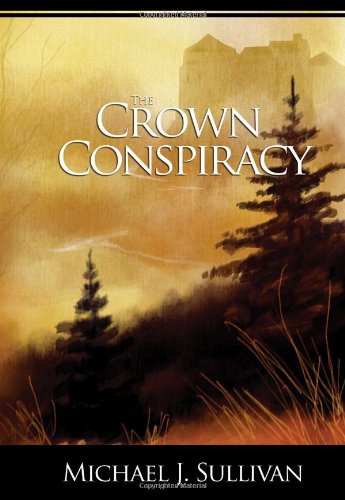
This novel introduces us to Royce Melborn, a skilled thief, and his sword-wielding companion, Hadrian Blackwater. Together, they form the notorious duo known as Riyria.
When the pair are falsely accused of killing the king, they must use their skills to prove their innocence and uncover a conspiracy.
Sullivan’s novel, full of witty banter, dynamic combat, and thrilling intrigue, makes it a joy to read for those D&D players who love the excitement of unexpected twists and plots within their campaigns.
Kohanek’s world is one where fate is mutable, and prophecies are a significant part of the narrative.
Eye of Obscurance presents an epic quest filled with magic, gods, and fate, sure to please D&D players who enjoy rich lore and divine intervention in their games.
Fans of the Sorcerer class might find a kindred spirit in the protagonist, an untrained sorcerer named Fate. His journey from novice to master is both engaging and inspiring, reflecting the growth D&D characters experience throughout their adventures.
No D&D-themed book list would be complete without mentioning R.A. Salvatore, particularly his book, Homeland.
This novel is the start of the legend of Drizzt Do’Urden, one of the most iconic characters from the Forgotten Realms setting in D&D.
This tale of resilience, integrity, and self-discovery in a dark and unforgiving world will resonate with fans who’ve braved the Underdark and faced drow societies in their D&D campaigns.
The immersive descriptions and the unique combat style of Drizzt will also provide valuable inspiration for both players and DMs.
For fans of D&D campaigns brimming with intrigue, moral complexity, and heart-pounding action, Guild of Assassins delivers in spades.
The story follows Soren, a young sculptor thrust into a cutthroat assassins’ guild after his father’s murder. His transformation from an idealistic artist to a relentless seeker of vengeance mirrors the development arcs many D&D characters undergo when shaped by tragedy and ambition.
With vivid world-building and a cast of morally ambiguous characters, the book offers a gritty, emotionally charged experience that will resonate with those who enjoy exploring the darker side of D&D campaigns. Soren’s harrowing training alongside his friend Alaric provides intense moments of camaraderie and tension, akin to the dynamics found in a tightly-knit adventuring party.
The focus on stealth, tactical combat, and the psychological cost of violence makes Guild of Assassins a must-read for players who favour rogue, assassin, or morally grey character archetypes. Its rich narrative and visceral storytelling will keep you gripped until the final page.
These novels each offer a unique perspective, with heroes and villains that could easily have stepped out of a D&D campaign.
If you’re looking for your next fantasy read or seeking inspiration for your upcoming D&D session, these books are a great place to start.
Now, grab your preferred beverage, find a comfy chair, and prepare to be transported to realms of high fantasy, thrilling adventure, and gripping intrigue.
Let me know in the comments what books you would recommend.
Explore fantasy literature’s unsung heroes—the steadfast sidekicks. From hobbits to wolves, they shape narratives with loyalty, humour, and courage.
Sidekicks & Sundry: Memorable Aides-de-Camp in Fantasy Literature
Fantasy literature, with its entrancing realms and bewitching narratives, has forever been the refuge for those who crave a bit of magical escapism.
But let’s take a moment to tip our proverbial hats to the unsung heroes of these tales—the trusty sidekicks.
They may not always bask in the limelight, but we’d be hard-pressed to imagine our heroes traversing treacherous terrains or vanquishing dastardly villains without them.
Samwise Gamgee (The Lord of the Rings by J.R.R. Tolkien)
We’d be as forgetful as a goldfish to not mention our dear old Sam. This hobbit doesn’t just carry Frodo’s luggage, but on occasion, Frodo himself.
Who needs a GPS when you’ve got Samwise?
Armed with his unyielding loyalty, pot of potatoes (boil ‘em, mash ‘em, stick ‘em in a stew), and the odd heroic monologue, Samwise truly encapsulates the spirit of a fantasy sidekick.
Nighteyes (Farseer Trilogy by Robin Hobb)
Who wouldn’t want a wolf as a sidekick? Nighteyes, with his ancient wisdom and candid observations, steals the show in Robin Hobb’s Farseer Trilogy.
While Fitz might be the royal bastard with assassin skills, it’s Nighteyes who provides the emotional support, humour, and even philosophy.
Fancy a good telepathic chat? Look no further.
Jean Tannen (Gentleman Bastard Sequence by Scott Lynch)
Every con artist needs a reliable partner, and Jean Tannen fits the bill perfectly for Locke Lamora.
Jean isn’t just your token big guy with an axe but a scholar, strategist, and a dab hand at intricate swearing.
He’s the meticulous planner to Locke’s hasty schemes.
His loyalty is as unwavering as his love for fine brandy.
Without Jean, Locke would be as lost as a pirate in a desert.
Bitterblue (Graceling Realm Series by Kristin Cashore)
Introduced as a minor character in ‘Graceling,’ Bitterblue blooms into a steadfast sidekick in ‘Fire’ before seizing the main stage in her titular book.
She might be a queen, but her relentless quest for truth and justice, combined with her pragmatic approach, make her a superb sidekick.
Also, she manages to retain her royal dignity while dealing with mystical nonsense, which is quite a feat, isn’t it?
Tia (Aru Shah Series by Roshani Chokshi)
Tia, the pigeon who’s really a vahana (vehicle of a deity), adds a dash of plucky charm and sass to the Aru Shah Series.
Sure, Aru Shah’s reincarnation as a Pandava is pretty cool, but who can overlook a pigeon who can transmogrify into a flashy car and dispense sage advice, all while looking impeccably stylish?
Asha (The Priory of the Orange Tree by Samantha Shannon)
An epic fantasy by Samantha Shannon, ‘The Priory of the Orange Tree’ introduces us to Asha, a dragon slayer of repute and a steadfast ally.
Asha provides an invigorating contrast to the courtly intrigues with her bluntness, courage, and a healthy dose of dragon-related badassery.
Wayne (Mistborn Series: Alloy of Law by Brandon Sanderson)
Wayne, an expert shapeshifter and quick-witted con artist, adds a dash of levity to the intense world of Brandon Sanderson’s Mistborn series.
Armed with an impressive array of accents, a love for hats, and a bizarre sense of humour, Wayne serves as the perfect foil to the more serious Waxillium.
They’re the dynamic duo of the rough-and-tumble world of the Roughs.
Loial (The Wheel of Time Series by Robert Jordan)
Loial, the Ogier scholar from Robert Jordan’s sprawling ‘Wheel of Time’ series, is as endearing as sidekicks come.
This giant, book-loving, somewhat naïve character offers a softer and often humorous contrast to the tumultuous world around him.
Despite his peaceful nature, Loial is stalwart in his loyalty, proving time and again that there’s more to this gentle giant than meets the eye.
Gurton (The Axe and the Throne by M. D. Ireman)
‘Gruff yet tender-hearted’ could be the motto of Gurton, the loyal sidekick from M. D. Ireman’s ‘The Axe and the Throne.’
With his masterful skills in tracking and survival, Gurton is more than just a supporting player.
His unyielding loyalty and unexpected depths keep the readers engaged and rooting for him.
Sophronia (The Inheritance Trilogy by N.K. Jemisin)
Sophronia, a godling in a child’s form in N.K. Jemisin’s ‘The Inheritance Trilogy’ provides comic relief, poignant moments, and powerful insight.
While she might appear as a playful child, her wisdom and ability to see through deception add layers to her character, making her an unforgettable sidekick.
Finn (The Thief Who Pulled On Trouble’s Braids by Michael McClung)
In Michael McClung’s Amra Thetys series, Finn is the steadfast companion of the titular thief, Amra.
A wizard with a mysterious past, Finn brings a balanced mix of wisdom and levity to the adventure-filled narrative.
His faithfulness to Amra, despite her criminal lifestyle, adds a touching depth to his character.
Minalan’s Familiars (Spellmonger Series by Terry Mancour)
The Spellmonger series introduces us to an unconventional sort of sidekick—a group of magical familiars who assist Minalan the Spellmonger.
These familiars, including a feisty fay, a resourceful raven, and a motherly hawk, each contribute their unique magic and perspective, making Minalan’s adventures a magical delight.
Kestrel (Kings or Pawns by J.J. Sherwood)
Kestrel, a cheeky yet highly skilled thief from the Steps of Power series, serves as an engaging counterpoint to the seriousness of the royal intrigue surrounding him.
His unorthodox methods and quick wit bring a refreshing touch of humour to the narrative, making him a memorable sidekick in this epic tale.
Snickers (Legends of Dimmingwood series by C. Greenwood)
In C. Greenwood’s ‘Legends of Dimmingwood’ series, Snickers might be a squirrel, but he’s a loyal friend and companion to the series’ protagonist, Ilan.
Don’t underestimate this furry little chap—his keen senses and quick reactions often help Ilan out of sticky situations.
Just goes to show, you don’t need to be big to make a big impact.
Bayaz (The First Law Trilogy by Joe Abercrombie)
Bayaz, the First of the Magi in Joe Abercrombie’s ‘The First Law’ Trilogy, may seem like a typical wise old wizard at first glance.
However, his mysterious past, hidden motives, and a decidedly manipulative streak add layers of complexity to his character.
He serves as a guiding light and occasional puppet master to the trilogy’s protagonists, ensuring that the narrative is anything but dull.
Falcio’s Greatcoats (The Greatcoats series by Sebastien de Castell)
Falcio’s companions, Kest and Brasti, in Sebastien de Castell’s ‘The Greatcoats’ series, form a trio that is truly greater than the sum of its parts.
They provide much-needed camaraderie, banter, and support for their leader, Falcio, making their adventures a delightful ride.
Their unwavering loyalty to each other and their shared cause makes them more than sidekicks—they are brothers in arms.
Kip’s Squad (Lightbringer Series by Brent Weeks)
In Brent Weeks’ ‘Lightbringer’ series, Kip’s squad of talented misfits serves as an engaging ensemble of sidekicks.
From the wise-cracking Gunner to the brave and resolute Teia, each member brings unique strengths to the table.
The dynamics within this diverse group are humorous, heartwarming, and at times, heart-wrenching, making them an unforgettable part of Kip’s journey.
Bronn (A Song of Ice and Fire by George R. R. Martin)
Let’s turn to George R. R. Martin’s sprawling saga, ‘A Song of Ice and Fire.’
Bronn, the sellsword who becomes an unlikely sidekick to Tyrion Lannister, is a fan favourite.
His pragmatism, dry humour, and surprising loyalty to Tyrion provide a refreshing contrast to the intrigue-laden world of Westeros.
And who can forget his notable mantra, “I’ll stand for the dwarf?”
Iorek Byrnison (His Dark Materials by Philip Pullman)
In Philip Pullman’s ‘His Dark Materials’, Lyra’s journey wouldn’t be quite the same without the mighty Iorek Byrnison.
The Panserbjørne (armoured bear) adds muscle and an unusual wisdom to Lyra’s quest.
Also, he’s a giant talking bear who can make and mend armour, so he’s ticking quite a few boxes on the cool sidekick checklist.
Tasslehoff Burrfoot (Dragonlance Series by Margaret Weis and Tracy Hickman)
The Dragonlance series introduces us to Tasslehoff Burrfoot, a kender (a race akin to hobbits) whose curiosity and kleptomania often lead to humorous and unexpected situations.
Tasslehoff’s sense of adventure and knack for getting out of sticky situations make him a sidekick to remember.
He’s the kind of fellow who’d ‘borrow’ your keys, wallet, and possibly your socks, but you’d still want him around for his unwavering optimism and courage.
Calcifer (Howl’s Moving Castle by Diana Wynne Jones)
In Diana Wynne Jones’ ‘Howl’s Moving Castle’, the fire demon Calcifer plays a key role as a sidekick.
Calcifer powers the titular castle and aids the young protagonist, Sophie, in her quest to break her curse.
With his sarcastic humour and hints of a deeper, more complex past, Calcifer lights up the narrative—and not just because he’s a literal flame.
Jimmy the Hand (The Riftwar Saga by Raymond E. Feist)
From Raymond E. Feist’s ‘Riftwar Saga’, we have the charming and resourceful Jimmy the Hand.
This master thief may start as a minor character, but his courage, quick-thinking, and knack for getting in and out of trouble make him an unforgettable sidekick.
Whether he’s navigating the dangerous alleys of Krondor or the intrigues of court, Jimmy proves time and again that a clever mind can be as potent as any sword.
The Luggage (Discworld Series by Terry Pratchett)
Finally, where would a list of sidekicks be without The Luggage from Terry Pratchett’s brilliant Discworld series?
This sentient, multi-legged travel case made of Sapient Pearwood has been a loyal and, shall we say, ‘forceful’ companion to Rincewind the inept wizard.
Unflinchingly loyal, literally eating up foes, and offering an infinite amount of storage, The Luggage redefines the term ‘travel buddy.’
Each of these sidekicks, in their unique ways, enhances the epic narratives they are part of, providing support, camaraderie, humour, and occasionally, a reality check for our heroes. They may not be the ones wearing the crown or sitting on the throne, but their role in shaping the story is just as important, if not more so.
Who are your favourites? Share yours in the comments.
Explore the rise of epic fantasy across literature, TV, film, video games, and music. Discover how this genre has revolutionized popular culture.
We’re about to embark on a thrilling ride through the expansive realms of epic fantasy.
It’s been said that we’re living in a golden age of this grand genre, and as we venture from literature and video games, to television and film, it’s hard to disagree.
The past decade or so has brought with it a resurgence of epic fantasy that would make even the most hardened orc shed a tear of joy.
This period, brimming with magical creatures, intricate world-building, and complex characters, has heralded a revolution in how we consume and perceive this genre.
No longer confined to dusty tomes enjoyed in candle-lit, wizard-themed bedrooms, epic fantasy has soared on dragon wings, spreading its influence far and wide across popular culture.
Today, it’s as common to hear chatter about the latest dragon-slaying escapade on the commute as it is to discuss the weather.
In this thrilling expedition, we’ll delve into the staggering impact of epic fantasy on our books, TV shows, films, video games, and music.
So, pull up a chair, summon your beverage of choice, and join us as we embark on this fantastical journey.
An Explosion of Fantasy on the Bookshelves
First, let’s pay a visit to the realm of literature. It’s hard to talk about epic fantasy without tipping our hats to the unstoppable force that is Brandon Sanderson.
Sanderson churns out novels with the same speed that a poorly trained wizard casts fireballs (and with far less collateral damage). His “Stormlight Archive” series has given us a world so epic it makes the Himalayas look like a minor inconvenience.
Then we have the fantastical work of N.K. Jemisin and her ‘Broken Earth’ trilogy. Her powerful prose and intricate plotting rocked the literary world. Not only did she bag the prestigious Hugo Award for each book in the trilogy, a first for any author, but she also managed to subtly weave poignant social commentary into her lore. She has, quite literally, redefined the landscape of fantasy.
And, of course, there’s George R. R. Martin. His ‘A Song of Ice and Fire’ series, a veritable ‘War and Peace’ of Westeros, continues to delight and horrify us in equal measure. (Of course, this mention is contingent upon the long-awaited sixth book ‘The Winds of Winter’ ever seeing the light of day. No pressure, George, but the kettle’s been on for a while now).
And Sarah J. Maas burst onto the scene like a unicorn on roller-skates with her ‘Throne of Glass’ and ‘A Court of Thorns and Roses’ series. (I always want to see what A Court of Guns and Roses might look like, but after this year’s Glastonbury performance it might not be the best idea). Maas’s enticing mix of fantasy, romance, and strong female leads has inspired a new generation of readers to pick up the mantle and read past their bedtime.
A New Chapter: Indie Heroes of the Epic Fantasy Realm
If the corporate publishing landscape is akin to a neatly trimmed English garden, then indie publishing is the wild, untamed forest just beyond, rife with the unknown and bursting with possibilities.
With the rise of the digital age, an ever-growing crop of talented wordsmiths have bravely ventured into this wilderness, bestowing upon us a treasure trove of self-published epic fantasies.
Leading the charge is none other than Michael J. Sullivan with his ‘Riyria Revelations’. If you’ve not had the pleasure, Sullivan’s series offers a refreshing brew of classic high fantasy with a generous dash of modern sensibility. His dynamic duo, Royce and Hadrian, steal more than just gold.
Then there’s Anthony Ryan, who exploded onto the scene with ‘Blood Song,’ the first book in the ‘Raven’s Shadow’ series. Ryan’s tale, as gritty as a winter’s day in Grimsby, is proof positive that you don’t need corporate backing to win over fans. His success caught the attention of Penguin Books, who re-published his work, thus transforming this self-published gem into a mainstream marvel.
We mustn’t overlook Will Wight’s ‘Cradle’ series, an ingenious blend of epic fantasy and xianxia (a Chinese genre focusing on cultivation of moral and spiritual virtues). As innovative as a solar-powered teapot, Wight demonstrates the creative liberties of indie publishing, delivering tales unfettered by conventional genre expectations and marketing executives.
Amanda Hocking, the queen of paranormal romance, took a leap into the epic fantasy genre with her ‘Trylle Trilogy.’ Hocking proves that when it comes to indie publishing, not even the sky’s the limit. Why stop at the sky when there are entirely new worlds to explore?
Of course, indie publishing isn’t as easy as a Sunday morning lie-in. It requires the tenacity of a determined terrier and the entrepreneurial spirit of Richard Branson.
These authors aren’t just writing, they’re also acting as their marketers, and, on occasion, therapists.
It’s a challenging path, but as our highlighted authors prove, it can lead to rewards as satisfying as the perfect biscuit dunk.
A Feast for Our Telly Boxes
Shifting our gaze from ink and paper, let’s flick on the telly and cast our eyes towards the fantasy genre’s successful infiltration of the small screen.
Let’s start with the behemoth in the room, or rather, the dragon on the screen. ‘Game of Thrones’ gave fantasy television a jolt stronger than a double espresso on a Monday morning. George R. R. Martin’s deliciously intricate storylines, coupled with HBO’s willingness to shell out more gold coins than Smaug’s treasure hoard, resulted in a series that captivated a global audience and redefined fantasy on television.
Not to be outdone, Netflix threw its hat in the ring with ‘The Witcher,’ based on Andrzej Sapkowski’s series of novels. Henry Cavill’s portrayal of the grizzled Geralt of Rivia became an overnight sensation, as did his catchy tune, ‘Toss a Coin to Your Witcher.’ Who knew monster hunting could have such a rousing soundtrack? The series adeptly balanced monster-of-the-week plots with a grand overarching narrative, and the production value was higher than a gentleman’s top hat.
Amazon, too, is keen on joining this magical melee with its ‘Lord of the Rings’ prequel series and the adaptation of Robert Jordan’s ‘The Wheel of Time’. Between you, me, and the lamppost, these ambitious projects are about as secretive as the Queen’s pudding recipe. Yet, the mere whiff of these beloved epics getting the screen treatment has fans twitching with excitement.
Fantasy TV has indeed proven itself as popular as a dog in a park full of squirrels, much to the delight of book lovers everywhere. The magic of these sprawling epics, replete with dragons, witches, and an alarming number of medieval political squabbles, has found a comfortable new home in our living rooms. Just be sure to keep your remote handy – there are endless worlds to explore, all from the comfort of your favourite armchair. What an age to be a fantasy lover, indeed!
A Silver Screen Spectacle
Just as the heartiest English breakfast isn’t complete without a slather of HP sauce, our tour of the golden age of epic fantasy wouldn’t be whole without a tip of the hat to its cinematic counterparts.
With bated breath, we’ve watched our favourite realms spring to life, one painstakingly rendered CGI dragon at a time.
First off, we must pay our respects to the grand-daddy of them all – ‘The Lord of the Rings’. Peter Jackson’s masterful adaptation of J.R.R. Tolkien’s epic saga broke records, hearts, and the established notion that “those fantasy tomes are unfilmable, old chap.”
Following in Bilbo’s furry footsteps, the ‘Harry Potter’ series proved that fantasy wasn’t just for us old-timers. J.K. Rowling’s charming blend of magic and quintessentially British boarding school life bewitched a generation, and the movies broadened that spell. Hogwarts, with its shifting staircases and genial ghosts, became as real as Buckingham Palace, just with fewer corgis and more house-elves.
Of course, not every cinematic expedition into fantasy is a skip through the Shire. Take the ‘Eragon’ film, for instance. As the saying goes, “the book was better,” and never have truer words been spoken. The film was about as well-received as a fox in a henhouse, proving that bringing an epic fantasy to life requires more than a few spells and a CGI dragon.
In recent years, Guillermo del Toro’s ‘Hellboy’ films and Duncan Jones’s ‘Warcraft’ have shown us that fantasy films can wear many hats, from dark comedy to high-stakes action. ‘Warcraft,’ though it didn’t charm critics, nevertheless proved a hit with the fans. After all, who could resist the lure of oversized armour and epic griffin flights?
These days, we fantasy buffs are spoilt for choice. Between the magic-infused majesty of ‘Fantastic Beasts and Where to Find Them’ and the whimsical journey of ‘Stardust,’ it’s clear that epic fantasy is alive and well in the cineplex.
Video Games: An Interactive Epic
As we continue our magical mystery tour of the golden age of epic fantasy, it’s only proper we take a side quest into the vibrant realm of video games.
First, we must traverse the snowy landscapes of Bethesda’s ‘The Elder Scrolls V: Skyrim’. With its stunning open-world design and dragon-shouting (Fus Ro Dah, anyone?), it’s been as big a hit as the Beatles. Players find themselves immersed in a world teeming with lore, dragons, and an alarming number of cheese wheels. Whether you’re bashing trolls or simply enjoying a breathtaking aurora over the mountains, ‘Skyrim’ offers an epic fantasy adventure as expansive as the London Underground, but with fewer delays.
Then there’s ‘The Witcher 3: Wild Hunt’, CD Projekt Red’s gloriously gritty adaptation of Andrzej Sapkowski’s novels. As Geralt of Rivia, players navigate a beautifully crafted world, grappling with beasties and moral conundrums in equal measure. The game’s rich narrative, engaging side quests, and dynamic combat system have been lauded as more satisfying than a perfectly brewed cup of English tea. A tip for the uninitiated: Beware the drowners and always – always – play Gwent.
Let’s not overlook ‘World of Warcraft’, an online universe so compelling, it’s been the cause of many a missed social engagement. Even after several years, its allure remains as potent as a nicely matured Stilton. The intricate lore, the sprawling world, the sense of community — it’s as thrilling as a surprise holiday, but with dragons.
For those with a penchant for intricate strategy, there’s ‘Dragon Age: Inquisition’. BioWare’s gem presents a world where player choices shape the narrative. Do you save the village from a marauding horde, or let it burn? It’s like being in your very own epic fantasy novel but without the risk of paper cuts.
Indeed, the appeal of these games extends beyond their fantastic visuals and engaging gameplay. They offer an immersive, interactive experience that’s as close as one can get to actually living in a fantasy realm, without the inconvenience of having to polish one’s own armour.
A Song of Ice and Fire: Epic Fantasy’s Influence on Popular Music
No grand journey through the golden age of epic fantasy would be complete without an exploration of its influence on the music scene.
The modern metal scene has been particularly bewitched by epic fantasy. Bands like Blind Guardian have entire albums dedicated to Tolkien’s Middle-earth, while others, like Burzum and Summoning, delve into the darker aspects of the genre. Their music is as grandiose and dramatic as the tales that inspired them, perfect for those moments when life calls for a bit more oomph.
And, of course, who could forget the hit TV show soundtracks? Ramin Djawadi’s ‘Game of Thrones’ score, haunting and heroic in equal measure, not only enhances the on-screen action but has found a life of its own in popular culture. You can’t swing a direwolf these days without hearing someone humming ‘The Rains of Castamere’ or ‘Light of the Seven.’
Music artists, just like authors, have seized upon the imagery, themes and mythology of epic fantasy to infuse their work with a sense of grandeur and adventure. Be it through lyrics, album artwork, or sonically through the music itself, the influence of epic fantasy reverberates throughout today’s music landscape.
And let’s face it, there’s something utterly epic about belting out a power ballad infused with references to dragon-fire and elven lore.
Beyond the Realms of Fantasy: Epic Fantasy’s Impact on Popular Culture
As our journey through the golden age of epic fantasy draws to a close, it’s time to take a step back and admire the spectacular view.
From the bound pages of a well-worn tome to the digital reaches of a role-playing game, it’s clear that epic fantasy has permeated more than just our bookshelves, TV screens, cinemas, and consoles. It has, in fact, seeped into the very fabric of our popular culture.
The surge of interest in epic fantasy has had a profound impact, like a truly magnificent cup of tea on a rainy afternoon.
Suddenly, it’s no longer the preserve of the niche and the nerdy. The age-old stereotypes associated with fantasy enthusiasts—you know, the image of a bespectacled recluse in a dragon-emblazoned T-shirt—have been banished to the shadowy corners of ignorance.
Nowadays, confessing your love for fantastical realms is as normal as complaining about the weather.
TV series like ‘Game of Thrones’ have transformed fantasy into a hot topic at the water cooler, with office chat just as likely to revolve around the latest dragon sighting as last night’s football match.
Harry Potter, that bespectacled wizard boy, has charmed our language, adding phrases like ‘Muggle’ and ‘Quidditch’ to our lexicon as easily as a ‘please’ and ‘thank you’.
On the fashion front, elven jewellery and wizarding robes have sashayed from the realms of cosplay into everyday street wear.
Don’t be surprised if your next date shows up sporting a T-shirt emblazoned with a witty Game of Thrones pun or if your local fast-fashion store showcases a line of Witcher-inspired accessories.
Even our food hasn’t escaped the fantasy influence. From Butterbeer to lembas bread, we’ve developed a taste for fictional fare.
Suddenly, hosting a ‘Hobbit’-themed dinner party seems as reasonable as a Sunday roast.
And who among us hasn’t yearned to sample a flagon of ale at The Prancing Pony or indulge in a Witcher-style feast?
What this all boils down to is this: epic fantasy has transformed from a secluded genre into a cultural powerhouse.
It has become a shared language, a social glue that binds us together in our quest for the magical, the mythical, the marvellous.
The golden age of epic fantasy has spun tales that entertain, yes, but it has also fostered communities, sparking connections across borders and cultures. It’s made the world a touch more magical and a whole lot more fun.
So, whether you’re a reader, a viewer, a gamer, a self-published author or simply someone who enjoys wearing a Gandalf-inspired hat, let’s raise a glass (or rather, a goblet) to the golden age of epic fantasy.
Its influence has made our reality a little more fantastical.