In the realm of high fantasy, where worlds are as vast as they are fantastical, it’s not just the sprawling landscapes or the intricate magic systems that keep the pages turning.
Oh no. It’s the characters – those flawed, multifaceted beings who are as likely to stab you in the back as save the world.
It’s their journeys, struggles, and triumphs that truly enchant us, making character-driven high fantasy a banquet for the soul, albeit a sometimes bitter one.
Let’s face it: a good character can make us forgive even the most clichéd of plots.
They are the heart and soul of the story, turning a simple quest into a saga of epic proportions.
They bring the world to life, infusing the narrative with their ambitions, fears, and idiosyncrasies.
A well-crafted character is like a good friend – you’re invested in their journey, you celebrate their victories, and you might occasionally want to throttle them.
Take Robin Hobb‘s FitzChivalry Farseer, for example.
Here’s a chap who’s been through the wringer more times than a medieval laundry.
Bastard son, assassin, and a man constantly torn between duty and desire.
Fitz’s complex inner world is what draws us into his story, making us root for him despite his often questionable choices.
Love her or loathe her, Cersei’s ambition and cunning make her a character you can’t ignore.
She’s a masterclass in shades of grey – a woman trying to assert power in a man’s world, using every weapon in her arsenal, including her own children.
Then there’s Locke Lamora, the quick-witted, sharp-tongued protagonist of Scott Lynch’s “Gentleman Bastard” series.
A thief with a heart of gold (well, sometimes), Locke’s charm and cunning make him a hero you can’t help but cheer for, even as he’s picking your pocket.
What makes these characters so appealing?
They’re flawed, deeply human, and they often make a hash of things.
Their struggles resonate with us, their failures make them relatable, and their victories feel like our own.
In high fantasy, where the stakes are as high as the towers of Minas Tirith, these deeply drawn characters give us a grounding point – a human connection in a world of dragons and magic.
Character-driven stories in high fantasy are not just about the destination; they’re about the journey.
Watching a character evolve over time, overcome their demons, and maybe, just maybe, save the world in the process, is a compelling narrative force.
It’s the difference between reading a book and living it.
So, character-driven fantasy offers a rich tapestry of human experience, set against a backdrop of the extraordinary.
It’s a genre where you can explore the depths of the human heart, all while enjoying a good old-fashioned battle between good and evil.
So the next time you dive into a high fantasy novel, pay attention to the characters. They might just teach you a thing or two about life, love, and the proper way to wield a magic sword.
In the grand, often tumultuous world of fantasy literature, the theme of rebellion is as common as a tavern brawl in a medieval inn.
It’s the spark that lights the fire of countless plots, the rallying cry that drives oppressed characters to stand up, often quite literally, against their malevolent overlords.
But what is it about this theme that keeps both authors and readers coming back for more, like moths to a revolutionary flame?
The Tyrant’s Rule
Every good rebellion needs a tyrant, and fantasy literature is teeming with them.
These despots range from slightly unhinged kings to megalomaniac wizards, each more tyrannical than the last.
They’re the kind of rulers who make you think, “Well, perhaps a democracy wouldn’t be such a bad idea.”
These oppressors serve as the perfect foil for our heroes, often a ragtag bunch who start off with little more than a righteous cause and an alarming lack of planning.
The Underdog’s Struggle
Let’s face it: everyone loves an underdog story.
There’s something inherently satisfying about watching a group of misfits and outcasts take on an all-powerful regime.
It’s the fantasy equivalent of cheering for the school chess club in a rugby match against the first XV.
The characters in these stories often start their journey facing insurmountable odds, with nothing but their wits, a noble cause, and usually, an ancient prophecy.
Rebellion as a Catalyst for Growth
In real life, change often comes with a healthy dose of pain and discomfort.
In fantasy, it’s no different.
Rebellion acts as a crucible for character development.
Our heroes are forged in the fires of revolution, emerging as polished swords ready to strike at the heart of tyranny – metaphorically speaking, of course.
Sometimes literally.
A Mirror to Our World
Rebellion in fantasy literature often mirrors real-world struggles against injustice and tyranny.
These stories offer a place to explore complex themes of power, freedom, and resistance.
They’re like a history lesson, but with more dragonsand fewer dates to remember.
The Moral Quandaries
The best fantasy rebellions are the ones that leave you pondering the moral implications of each action.
It’s not always as clear-cut as good versus evil.
Sometimes the rebels have to make questionable choices, like whether to ally with a neighbouring kingdom of questionable ethics or how to deal with that one traitor in their midst (there’s always one).
Rebellion in fantasy literature is more than just a plot device; it’s a narrative powerhouse that drives character development, explores complex themes, and keeps readers turning the pages (or swiping their e-readers).
It’s a testament to the human spirit, a reminder of the power of the many against the few, and an enduring symbol of hope – all wrapped up in a package of thrilling adventures, epic battles, and the occasional sarcastic sidekick.
Because, in the end, who doesn’t love a good old-fashioned tale of sticking it to the man, or the orc, or the dark lord, or whoever happens to be oppressing the masses this time around?
Ah, epic fantasy! It’s like stepping into a world where your daily commute could involve dodging fire-breathing dragons instead of traffic, and your boss might be an ancient sorcerer with a slight temper issue (though, come to think of it, that’s not too far off from reality).
But what’s the real appeal of these thick tomes adorned with dragons, wizards, and warriors?
Why Epic Fantasy? Well, Why Not?
Epic fantasy is not just a genre; it’s a full-on escape from the mundane.
Think of it as the literary equivalent of strapping on a pair of wings and flying off to a land where the impossible is just another Tuesday.
It’s where the line between good and evil is as clear as day until it isn’t, and where you can experience the thrill of adventure without the risk of actual dragon burns.
Ten Epic Fantasy Titles to Kickstart Your Magical Journey
Whether you’re a wide-eyed newcomer to the world of epic fantasy or a curious reader looking for your next grand escapade, this curated list of 10 must-read books is your gateway to a universe brimming with wonder, peril, and enchantment.
From timeless classics to modern masterpieces, each book is a portal to a world more thrilling and expansive than our own.
So, gather your cloaks and swords, summon your courage, and prepare to embark on a journey that will ignite your imagination and whisk you away to the farthest reaches of magic and beyond!
The first book in ‘The Broken Earth’ trilogy, this Hugo Award-winning novel is nothing short of groundbreaking.
It’s set in a world where the earth is fraught with seismic cataclysms, and the story centres around three women navigating through these tumultuous times.
What if the bad guy won and you had to live in his dystopia? Throw in a unique magic system involving metals, a heist plot, and a plucky group of rebels, and you’ve got a recipe for sleepless nights.
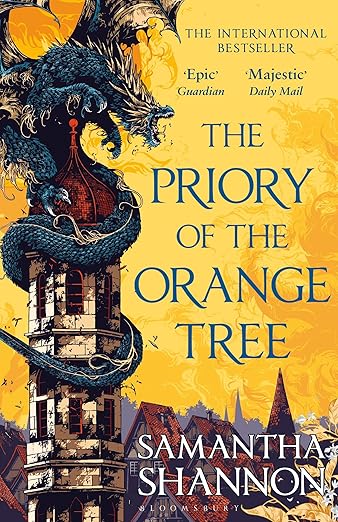
“The Priory of the Orange Tree” by Samantha Shannon
A standalone epic fantasy that deftly weaves together stories from different ends of a divided world, filled with dragons, forbidden magic, and a centuries-old conflict.
Shannon creates a rich, matriarchal world that’s as vast as it is intriguing, with a diverse cast and a gripping narrative.
This vibrant blend of high-stakes heist and gritty fantasy introduces Locke Lamora, a charming thief whose audacious schemes are as intricate as they are daring.
Lynch’s richly detailed world is a playground for the imagination, replete with unexpected twists and vivid, compelling characters.
Prepare for a thrilling ride through a narrative that is as cunningly deceptive as its protagonist, ensuring every page turns with anticipation.
Epic fantasy might seem overwhelming with its chunky books and complex plots, but it’s a journey worth embarking on.
You’ll travel to worlds you never knew existed, meet characters who feel like old friends (or terrifying acquaintances), and experience stories that stay with you long after the last page.
So grab a book, find a cosy corner, and prepare to fall down the rabbit hole.
Just watch out for the dragons.
They’re a bit nippy this time of year.
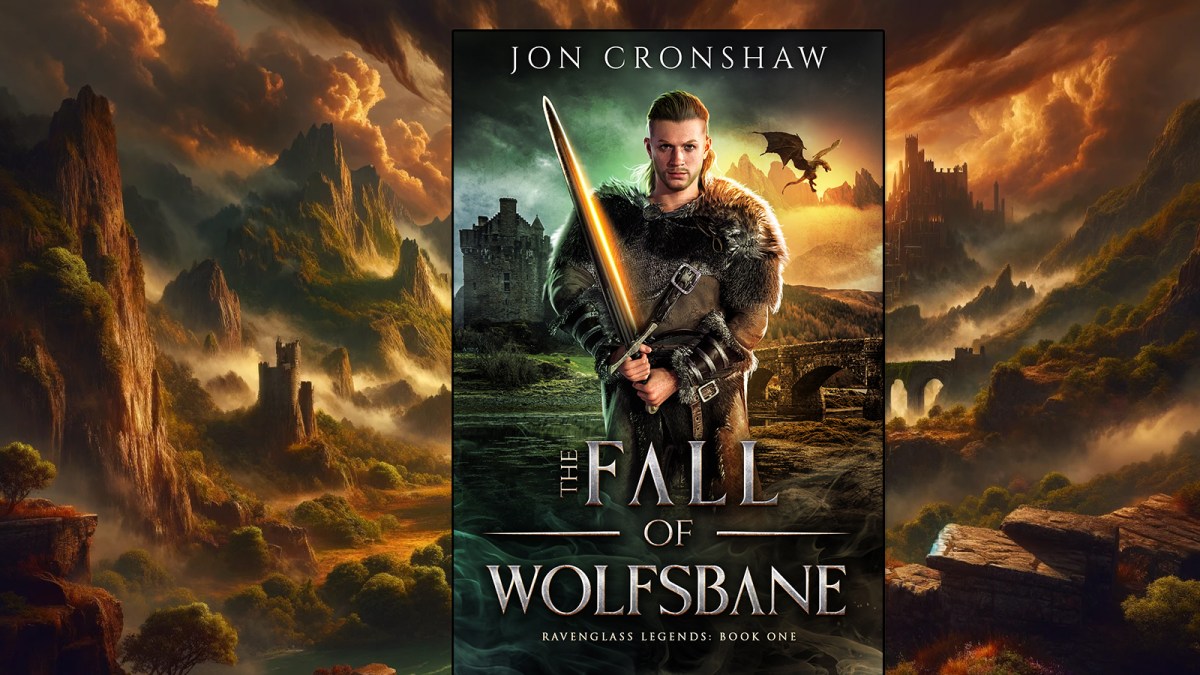
Out Now: The Fall of Wolfsbane (Ravenglass Legends, book 1)
Two siblings. One ravaged land.
An empire changed forever.
When the Ostreich Empire conquers his homeland, Ragnar Wolfsbane faces an impossible choice: resist and watch his sister suffer, or serve the power that shattered his world.
Navigating the treacherous world of imperial politics and ancient magic, Ragnar uncovers a destiny far greater than the fiefdom he was born to inherit.
Meanwhile, his sister Maja transforms her captivity into an opportunity for rebellion.
In a court where every smile hides a dagger, one false move could doom them both.
But Maja’s wit, will, and a dangerous gift might just change the fate of empires.
With pulse-pounding action, morally complex characters, and a magic system that redefines the rules of reality, The Fall of Wolfsbane is perfect for fans of Patrick Rothfuss, Mark Lawrence, and John Gwynne.
Immerse yourself in a world where loyalty is tested, power corrupts, and the line between hero and villain blurs with every page.
Discover the world of Ravenglass Legends and join Ragnar and Maja on their epic journey.
As seasoned voyagers of the boundless realms of fantasy literature, you’ve undoubtedly encountered all manner of fantastical worlds.
But occasionally, amidst your literary explorations, you might stumble into a realm where the air is thick with the scent of mead and the echoes of ancient sagas.
It’s here, amidst the clanging of swords and the mysterious whisperings of the old gods, that you realise you’re not just in any fantasy world – you’re in a Norse-inspired one.
So, how can you be sure that your latest escapade is steeped in the rich, mythic traditions of the Vikings?
Here are some tell-tale signs that you’re voyaging through the sagas of the North:
The Fashion Sense is…Pointy
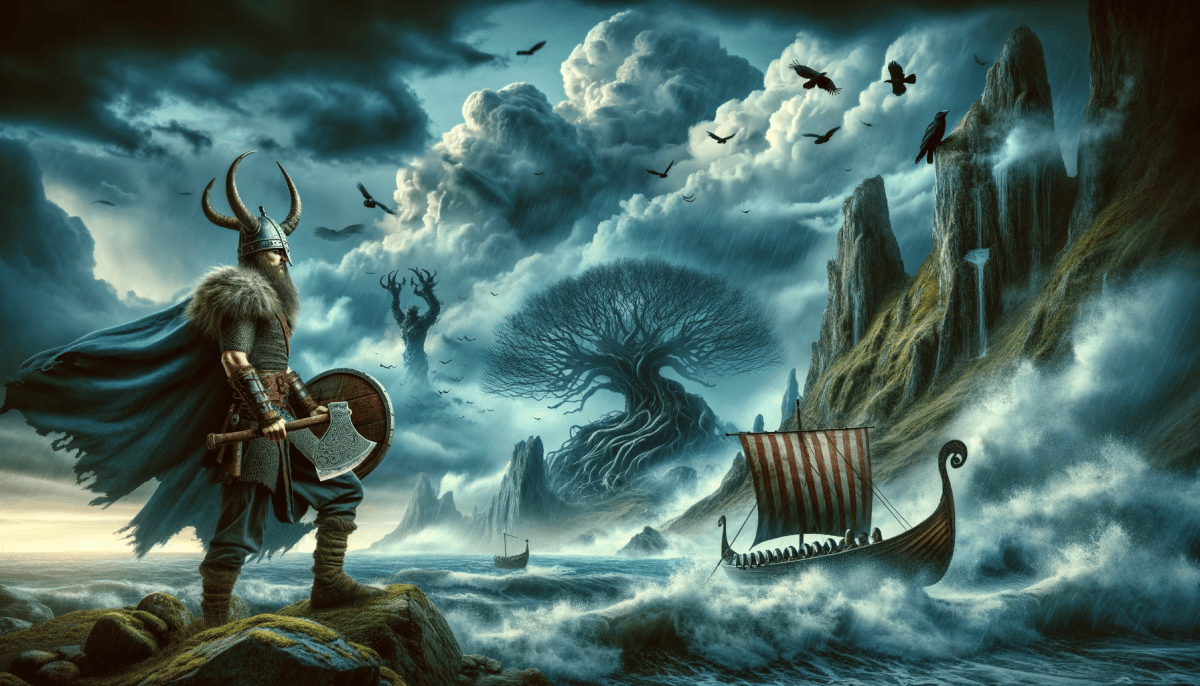
If you’re noticing an excessive amount of horned helmets, you’re not at a heavy metal concert – you’re in Viking territory.
Never mind the historical inaccuracy; these helmets are as essential to Norse fantasy as a dragon is to a knight’s career.
Names You Can’t Pronounce Without Spraining Your Tongue
Characters have names like Björnulf, Þórunn, and Hræsvelgr.
You’ll need a degree in Old Norse and a strong jaw to tackle these linguistic acrobatics.
Trees Aren’t Just Trees
You come across a tree, but it’s not just any tree – it’s Yggdrasil, the cosmic World Tree.
It’s not just for decoration; it’s a full-fledged character with more depth and backstory than the protagonist.
A Diet Rich in Mead and Monologues
Everyone drinks mead as if water was never invented, and they speak in monologues.
Forget small talk; these folks wouldn’t know subtlety if it hit them with a battle-axe.
The Weather is as Moody as the Gods
The weather can’t seem to decide if it wants to freeze you to death or soak you to the bone.
And speaking of gods, they’re as temperamental as the weather and twice as likely to meddle in your life.
Ravens Are Not Just Birds
Seeing ravens?
These are not your average birds; they’re probably spying for Odin.
Better watch what you say, or it might just reach the ears of the All-Father.
Longboats and Sea Voyages Are The Norm
If there’s more time spent on longboats than on land, and ‘raiding’ is considered a respectable career choice, then you’re definitely in Norse fantasy territory.
Epic Sagas Are Everyone’s Bedtime Stories
The characters are likely to reference epic sagas and heroic deeds like you talk about last night’s TV show.
Bonus points if they’re recited in verse by a skald around a fire.
Apocalyptic Obsession
If there’s an unusual fixation on an apocalyptic event involving a giant wolf swallowing the sun, welcome to Ragnarök obsession, a key feature of Norse-inspired narratives.
Dragons and Dwarves Galore
Dragons are hoarding gold, and dwarves are crafting magical items.
It’s like a mythological creature conference, and everyone’s invited.
So, if you find yourself nodding along to more than a few of these points, congratulations!
You’re deep in the realms of a Norse-inspired fantasy novel.
Embrace the madness, enjoy the mead, and remember, if you ever get lost, just follow the ravens – they know where the story is heading.
Just don’t expect them to give you straightforward directions.
Once upon a time, in the kingdom of modern fantasy literature, a new kind of hero began to emerge.
Gone are the days when heroes were as spotless as a knight’s freshly polished armour.
Today’s fantasy protagonists are more akin to a warrior who’s been through a few too many battles and perhaps one too many visits to the mead hall.
They’re flawed, complex, and as perfectly imperfect as a spell gone slightly awry.
The Not-So-Charming Charming Heroes
The modern fantasy hero is often as flawed as a dragon’s dental plan.
These characters might be brave, but they’re also battling their own demons, whether those be a shady past, a temper as fiery as a dragon’s breath, or a tendency to make decisions as poor as a goblin’s investment strategy.
They’re not the infallible paragons of virtue of yesteryear; they’re more like your mate Dave, who means well but occasionally sets the kitchen on fire.
A Journey of Self-Discovery (and Frequent Missteps)
It’s more like a meandering trek through a forest filled with pitfalls, detours, and the occasional existential crisis.
These characters grow and evolve, often through making mistakes that are as glaring as a wizard’s neon robe at a funeral.
Their journey is about learning, about growing, and often about redeeming themselves, which is a lot more relatable than being born with an innate sense of righteousness.
The Relatable Hero
Why this shift to flawed heroes, you ask?
Well, they say art imitates life, and let’s face it, none of us are as flawless as a fairy-tale prince.
Readers find themselves drawn to characters who struggle, who falter, who get up again – because that’s what we all do, minus the dragons and the magic (unfortunately).
These heroes reflect our own struggles, making their victories sweeter and their narratives more compelling than a bard’s tale on a stormy night.
Modern fantasy loves to play in the grey areas of morality.
Our heroes often face choices where the line between right and wrong is as blurred as your vision after a night at the tavern.
They make decisions that might not be strictly ‘heroic’, but are understandable, human.
It’s a far cry from the black-and-white morality of old, and frankly, a lot more interesting.
In the end, the rise of flawed protagonists in modern fantasy reflects a shift in our own understanding of heroism.
It’s no longer about being perfect; it’s about being brave enough to face your own imperfections.
It’s about doing the right thing, even when the right thing is as hard to find as a sober dwarf.
So here’s to the flawed heroes of modern fantasy – may their swords be sharp, their wits sharper, and their flaws just flawed enough to keep things interesting.
🏹 Embark on a thrilling journey with “The Long Night,” a gripping fantasy short story that combines action, suspense, and a touch of humour. Perfect for young adults and adults alike, this tale will immerse you in a Viking-inspired fantasy world where courage and loyalty are tested.
📖 Story Overview: “The Long Night” follows the adventures of Ragnar and Kest, young warriors-in-training, as they face their rite of passage – the daunting “Long Night” hunting ritual. Their journey takes an unexpected turn with the return of Sven, an exiled boy, who brings with him secrets and plots that threaten their village.
⚔️ Key Themes:
Courage in Adversity: Witness Ragnar and Kest’s bravery as they navigate the challenges of the Long Night and confront unexpected dangers. Loyalty and Betrayal: Explore the complex dynamics of friendship and trust, especially when Sven’s true intentions are revealed. Rite of Passage: Follow the protagonists’ transformation from trainees to warriors in this coming-of-age saga. Action-Packed Battles: Experience heart-pounding action as the village warriors defend against a treacherous raid. Redemption and Honour: Delve into themes of redemption as Ragnar and Kest prove their worth, not just as hunters but as protectors of their people. 🌌 Setting: Get lost in a beautifully crafted Viking-inspired fantasy world, where myths come to life, and ancient rituals define the path to adulthood.
🎬 Why Watch?
For Fantasy Lovers: If you’re a fan of epic fantasy fiction, “The Long Night” offers an exciting and fresh take on the genre. Character-Driven Plot: Engage with well-developed characters whose personal journeys and decisions drive the story forward. Perfect Blend: The story masterfully combines serious, epic tones with moments of light-hearted humour, providing a well-rounded narrative experience. 📌 Join Us: Dive into “The Long Night” and join Ragnar and Kest on their unforgettable adventure. Whether you’re a long-time fantasy enthusiast or new to the genre, this story promises to captivate and inspire.
🔔 Don’t forget to subscribe for more fantasy stories, character analyses, and discussions about the world of fantasy literature. Share your thoughts on the story in the comments below!
In the realm of fantasy literature, winter isn’t just a season; it’s a character, an antagonist, and sometimes, a stark (no pun intended) reminder that nature often has the upper hand.
From the ominous winters of “A Game of Thrones” to the eternal snows of “The Chronicles of Narnia” and the uniquely humorous yet poignant “Hogfather,” winter in fantasy books is as evocative as it is chillingly symbolic.
Let’s wrap up warm and explore how this frosty season weaves its magic in literature as is only appropriate when discussing endless nights and icy landscapes.
A Song of Ice and Fire: When Winter is Coming (Eventually)
In George R.R. Martin’s “A Some of Ice and Fire,” winter is less a season and more a looming existential threat, much like the in-laws arriving for Christmas.
The Stark family’s motto, “Winter is Coming,” serves as a constant, ominous reminder of the harsh, unforgiving landscape and the even more unforgiving human nature.
In Westeros, winter symbolises the brutal struggles for survival and power.
It’s a time when the line between life and death becomes as thin as the ice upon which one might foolishly decide to dance.
The Chronicles of Narnia: Eternal Winter, No Christmas
C.S. Lewis’s Narnia, under the White Witch’s rule, is a land where it’s “always winter but never Christmas.”
Talk about adding insult to injury.
This eternal winter represents a loss of hope and joy, a spell that needs breaking. It’s a world waiting for a thaw, both literally and metaphorically. The
Pevensie children’s arrival marks the beginning of this end, much like finding a long-lost pair of warm socks just when you need them.
Hogfather: Winter with a Terry Pratchett Twist
Terry Pratchett’s “Hogfather” takes the concept of winter in fantasy and turns it on its head, then gives it a gentle push down a snowy hill.
In the Discworld, the Hogfather (the equivalent of Father Christmas) is missing, and with him, the essence of the season. Here, winter is a time of belief, of the power of myths and stories.
It’s a season that balances the fine line between light-hearted celebration and the darker aspects of folklore.
Pratchett’s winter is a reminder that sometimes, even in the coldest of times, a bit of belief can go a long way in keeping the darkness at bay.
Winter in Fantasy: More Than Just a Setting
In these works, winter is more than a backdrop; it’s a catalyst for change.
It tests characters, shapes narratives, and often symbolises the hardships and challenges that must be overcome.
Winter in fantasy embodies the struggle against seemingly insurmountable odds, the fight for survival in the harshest of times, and occasionally, the dark humour in acknowledging that sometimes, life is indeed as unpredictable as a snowstorm in July.
So, as we close this frostbitten chapter, let’s acknowledge that winter in fantasy literature is as varied and deep as the snowdrifts in Narnia.
It can be a looming threat, a spell to be broken, or a time of belief and magic.
One thing is certain, though: when winter falls in these fantastical worlds, it brings with it a narrative chill that is as compelling as it is cold.
Just remember, when exploring these icy literary landscapes, it’s always wise to keep a cup of hot cocoa at hand – and perhaps a sword, just in case.
When you delve into the realm of fantasy literature, you’ll find yourself amidst an array of genres, each with its distinct flavour.
But how do you know when you’ve stepped into the shadowy yet hopeful world of nobledark fantasy?
This sub-genre, a curious blend of grim realities and moral resilience, is marked by certain unmistakable tropes and themes.
Here are ten tropes you might find when reading a nobledark fantasy novel:
1. The Rogue Who Dreams of Redemption
One sure sign you’re reading nobledark fantasy is the presence of a rogue character yearning for redemption.
This isn’t your average dashing rogue, content with their morally grey lifestyle.
Instead, this character often grapples with their past misdeeds and seeks a path to make things right.
Whether it’s a smuggler turning over a new leaf or a spy looking to correct past wrongs, their journey towards redemption is fraught with challenges, reflecting the genre’s blend of darkness and hope.
2. The Loyal Thief with a Heart of Gold
The loyal thief, another classic nobledark character, is a paradox in themselves.
They may live outside the law, pilfering and sneaking around, but their loyalty and sense of justice shine through.
This character often steals not out of greed, but necessity, or for a cause they believe in.
Their moral compass, although unconventional, is unmistakably present, guiding them through the genre’s murky ethical landscape.
3. The Assassin with a Conscience
In nobledark fantasy, assassins aren’t cold-blooded killers but complex characters burdened with conscience.
They kill, yes, but each action weighs heavily on their soul.
This inner conflict – the struggle between their lethal profession and their moral inclinations—is a hallmark of the genre.
It’s about the assassin who pauses, who questions, and who seeks meaning in a profession mired in darkness.
4. The World Weary Warrior Fighting for a Lost Cause
A nobledark narrative often features a warrior who’s seen too much and yet continues to fight for what often seems like a lost cause.
This character has witnessed the horrors of their world, yet they hold onto a flicker of hope.
They fight not because they want to, but because they must, driven by a deep-seated belief in something greater than themselves.
5. The Corrupt World That Tests Morality
The setting of a nobledark fantasy is a character in its own right—a world that’s often corrupt and unforgiving, testing the characters’ morals at every turn.
It’s a world where the right choice is often the hardest one to make, where the line between good and evil is blurred and battered.
6. Bittersweet Victories and Pyrrhic Triumphs
Nobledark fantasy doesn’t shy away from the cost of heroism.
Victories, when they come, are often bittersweet, and triumphs can feel Pyrrhic.
Characters may achieve their goals, but not without sacrifice and loss, underscoring the genre’s theme that even in victory, darkness lingers.
7. The Fallen Hero Seeking Redemption
In nobledark fantasy, a common theme is the fallen hero, once revered, who has lost their way due to a tragic flaw or a past mistake.
This character’s journey towards redemption is fraught with internal and external struggles, as they seek to regain their honour and atone for their sins.
Their path is never straightforward, often filled with moral quandaries and the harsh realities of a world that may not believe in second chances.
8. The Tyrant with a Conscience
Unlike the traditional portrayal of tyrants as irredeemably evil, nobledark fantasy often presents them with a layer of complexity.
These rulers may be driven by noble intentions gone awry or trapped by the very power they wield.
Their actions, while harsh or cruel, are often shown to stem from a twisted sense of duty or a burdened conscience, adding depth to their character and creating a grey area in the moral landscape of the story.
9. Sacrifice and the Cost of Power
Nobledark fantasy frequently explores the theme of sacrifice, particularly the high cost of wielding power or pursuing a greater good.
Characters are often faced with difficult choices that require them to sacrifice their personal desires, relationships, or even their ethical codes.
This theme underscores the notion that in a complex world, power and success come at a significant personal and moral cost.
10. The Blurred Lines Between Magic and Morality
Magic in nobledark fantasy is not just a tool or a weapon; it’s often intertwined with the moral fabric of the universe.
The use of magic can have far-reaching consequences, both beneficial and destructive, and characters who wield it must navigate its temptations and responsibilities.
This creates a dynamic where magic is a double-edged sword, capable of both salvaging and shattering the world’s fragile balance.
Recognising a nobledark fantasy novel is about identifying these unique elements—the flawed heroes striving for goodness, the oppressive worlds that challenge their morals, and the victories that come with their own set of losses.
It’s a genre that mirrors the complexities of real life, where the light of hope and the shadow of despair are perpetually intertwined.
So, the next time you find yourself empathising with an assassin’s plight or cheering for a thief with a cause, you might just be lost in the engrossing world of nobledark fantasy.
In the enchanting world of nobledark fantasy, where the light of hope stubbornly persists in the darkest of realms, readers find themselves drawn to stories of characters grappling with moral ambiguity amidst grim realities.
For those eager to explore this intriguing sub-genre, here’s a list of essential nobledark reads that masterfully blend the bitter with the sweet, the dark with the light.
1. “The Greycoats” by Sebastien de Castell
Sebastien de Castell’s “The Greycoats” series is a quintessential nobledark fantasy.
It follows the story of Falcio val Mond and his companions, who are part of a once-respected order of knights.
In a world where their ideals seem outdated and almost naïve, these characters struggle to uphold justice and righteousness.
The series is a brilliant tapestry of swashbuckling action and moral dilemmas, perfect for those who appreciate a story where the lines between right and wrong are as blurred as a drunkard’s vision.
It follows the duo of Royce and Hadrian, a pair of skilled mercenaries who find themselves embroiled in conspiracies and ancient secrets.
This series stands out for its intricate plot, memorable characters, and the way it weaves a sense of hope into a world riddled with corruption and deceit.
3. “The Vagrant” by Peter Newman
“The Vagrant” by Peter Newman is an unconventional tale set in a world ravaged by demonic corruption.
The story’s protagonist is a mute, nameless wanderer accompanied by a baby and a goat.
This novel is a journey through desolation, yet it resonates with an undercurrent of resilience and the unyielding human spirit, making it a unique addition to the nobledark genre.
4. “The Demon Cycle” by Peter V. Brett
Peter V. Brett’s “The Demon Cycle” series introduces a world where humanity is on the brink of extinction, besieged by night demons.
The series is renowned for its detailed world-building and the depth of its characters, who battle not only external horrors but also their own internal conflicts.
It’s a tale that perfectly embodies the nobledark theme—a grim world where hope and heroism burn fiercely.
In this richly detailed world, Fitz navigates political intrigue, forbidden magic, and a complex web of relationships.
The series is a deep dive into the psyche of a hero who is far from perfect, yet constantly strives for what is right, embodying the nobledark ethos.
Each of these series offers a foray into the world of nobledark fantasy, where characters fight not just their enemies but their own moral battles.
They highlight the genre’s key feature: the presence of hope and a striving for good in a world that often seems to reject both.
For those venturing into the realms of nobledark fantasy, these reads are not just essential; they are a gateway to worlds where the light of heroism shines through the darkest of times.
So, are you ready to walk the fine line between shadow and light in these enthralling tales?
In the grand, dragon-infested world of fantasy literature, distinguishing between high fantasy and epic fantasy can be as tricky as convincing a dragon to part with its gold.
Both genres whisk readers away to realms of magic, heroism, and the occasional inconveniently-timed apocalypse.
But fear not, intrepid reader! Let’s embark on a quest to untangle these subgenres.
High Fantasy: More Than Just Elvish Linguistics
High fantasy, also known as secondary-world fantasy, takes you to an entirely different world.
Think J.R.R. Tolkien’s “The Lord of the Rings,” where Middle-earth is as real as the overdue bills on your kitchen counter.
This genre features worlds with their own set of rules, races like elves and dwarves (who are notoriously bad at following any rules), and a magic system that often requires a PhD to understand.
High fantasy is like that eccentric uncle who insists on speaking in Klingon; it immerses you completely in its world.
Epic Fantasy: It’s Not Just Big, It’s Epic
Epic fantasy, on the other hand, is characterised by its scale and the stakes involved.
George R.R. Martin’s “A Song of Ice and Fire” series is a prime example. Here, it’s not just a personal quest but the fate of entire kingdoms hanging in the balance, often involving a cast of characters so vast you need a family tree to keep track.
Epic fantasy is like a family reunion; you might not know everyone’s name, but you’re all in it together, usually against a tyrannical, power-hungry relative.
The Blurred Line: Where High Meets Epic
The boundary between high and epic fantasy is as blurred as your vision after reading a Brandon Sanderson novel in one sitting.
Sanderson’s “The Stormlight Archive” series exemplifies this blend.
It’s set in a meticulously crafted world (high fantasy) and revolves around grand, world-altering conflicts (epic fantasy).
It’s like a banquet where every dish is both deliciously exotic and alarmingly large.
The Magic Touch
High fantasy often presents magic as an integral part of the world.
In Terry Pratchett’s “Discworld” series, magic is as common as a rainy day in London.
Epic fantasy, like Robert Jordan’s “The Wheel of Time,” might also feature magic, but the focus is more on the epic battles, political intrigue, and the characters’ journeys, which occasionally involve less magic and more trying not to get stabbed in the back.
The Stakes Are High (And Epic)
In high fantasy, the stakes might be significant but often more personal, like Frodo Baggins’ quest to destroy the One Ring.
In epic fantasy, the stakes are, well, epic.
Think of “The Malazan Book of the Fallen” by Steven Erikson, where the fate of entire civilizations rests on the outcomes of conflicts.
While high fantasy takes you to an entirely different world, epic fantasy tells you a story of monumental scale and stakes in that world.
Both genres offer an escape from reality, much like imagining yourself as a hero with fabulous hair and a sword, rather than someone who can’t even wield a frying pan properly.
Whether you prefer the complete immersion of high fantasy or the grand tapestry of epic fantasy, one thing is certain: in these worlds, anything is possible, except perhaps a straightforward plot.
To provide the best experiences, we use technologies like cookies to store and/or access device information. Consenting to these technologies will allow us to process data such as browsing behavior or unique IDs on this site. Not consenting or withdrawing consent, may adversely affect certain features and functions.
Functional
Always active
The technical storage or access is strictly necessary for the legitimate purpose of enabling the use of a specific service explicitly requested by the subscriber or user, or for the sole purpose of carrying out the transmission of a communication over an electronic communications network.
Preferences
The technical storage or access is necessary for the legitimate purpose of storing preferences that are not requested by the subscriber or user.
Statistics
The technical storage or access that is used exclusively for statistical purposes.The technical storage or access that is used exclusively for anonymous statistical purposes. Without a subpoena, voluntary compliance on the part of your Internet Service Provider, or additional records from a third party, information stored or retrieved for this purpose alone cannot usually be used to identify you.
Marketing
The technical storage or access is required to create user profiles to send advertising, or to track the user on a website or across several websites for similar marketing purposes.