

If you enjoy your science fiction with battle-scarred soldiers, psychological wounds, and moral compromises, military sci-fi might already be your go-to genre.
But not all entries are created equal.
The best gritty military sci-fi doesn’t just fire lasers—it hits you in the gut.
These ten standout novels go beyond the pew-pew and drop you into brutal conflicts, internal crises, and worlds where survival comes at a cost.
Outbound Recon by Logan Shields

A standout of the modern military sci-fi scene, Outbound Recon delivers everything fans of gritty space thrillers want.
Jack Rourke is the perfect soldier—until he’s sent to kill civilians.
When memories that aren’t his begin to surface, he questions the mission, the system, and himself.
A psychological gut-punch wrapped in classified missions and high-tech shadow ops.
If you like conspiracies, unreliable memory, and rogue soldiers flipping the script, start here.
Recommended for readers who enjoy: secret space programmes, identity crises, morally grey heroes.
Glory Boy by Rick Partlow

Caleb Mitchell walks away from a peaceful upbringing to join the fight against an alien empire.
But war doesn’t wait for permission.
Caught in a brutal ambush, declared dead, and reborn as a covert supersoldier, Cal must decide what’s left of his humanity—and whether to fight for the world that rejected him.
A solid blend of character-driven military action and sci-fi stakes.
Recommended for readers who enjoy: power armour, betrayal, and finding purpose through fire.
Renegade by Joel Shepherd

Court-martialled. Framed. Hunted.
Lieutenant Commander Erik Debogande didn’t sign up for any of that.
After his captain is killed and the fleet turns on him, Erik escapes aboard the UFS Phoenix, seeking the truth.
What he uncovers will shake the galaxy.
Renegade mixes fleet-scale action with political intrigue and betrayal on an epic scale.
Recommended for readers who enjoy: conspiracies, space opera with teeth, and relentless pacing.
Terms of Enlistment by Marko Kloos

Andrew Grayson signs up to escape the slums—real food, decent housing, and maybe a way off Earth.
But what he finds in the military is more bureaucracy, more violence, and a war machine that doesn’t care who it chews up.
A sharp, character-focused entry in the Frontlines series that pulls no punches.
Recommended for readers who enjoy: Heinlein with grit, grounded future warfare, class conflict.
Starfist: Lazarus Rising by David Sherman

The 34th FIST marines just won their toughest battle yet—but the aftermath is worse.
A new regime rises, and survivors with wiped memories struggle to piece together their identities.
One will uncover a truth that threatens everything.
This one leans into raw combat and existential fallout.
Recommended for readers who enjoy: military brotherhood, lost identity, and high-stakes recovery missions.
Deep Range by Aaron M. Lancaster
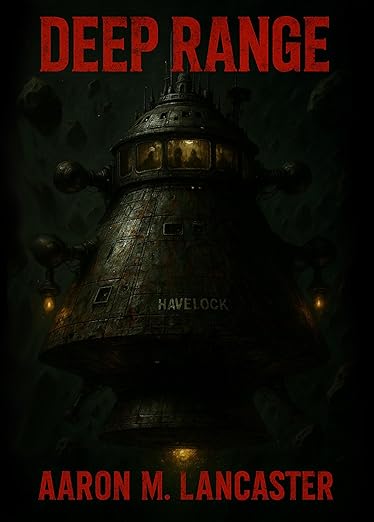
A working-class captain, a corporate favour, and a ticking secret.
The Havelock crew take a routine job in the Deep Range—but find themselves holding tech that could ignite war.
Lancaster’s story captures the claustrophobia of deep space and the pressure of grey-area decisions.
Recommended for readers who enjoy: space hauliers, working-class sci-fi, and slow-burn intensity.
Sten by Chris Bunch and Allan Cole

Raised on the hellhole factory world of Vulcan, Sten’s story is one of rage, rebellion, and survival.
A classic of the genre, this is old-school military SF with a working-class edge, kicking off a long-running series.
Fast-paced, sharp-tongued, and never short on bullets.
Recommended for readers who enjoy: rebellion from the gutter, industrial dystopias, no-nonsense protagonists.
Assassination Protocol by Andy Peloquin
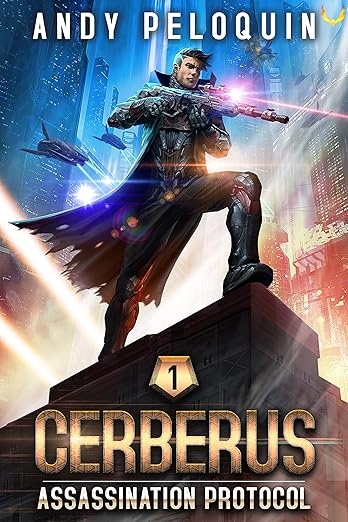
Nolan Garrett is a government-sanctioned killer in a cybernetic suit—until his past comes crashing through his door.
With a cartel on his back and a vulnerable ex-soldier in his care, Nolan must walk the line between duty and decency.
Cybernetics, corruption, and brutal shootouts make this an addictive read.
Recommended for readers who enjoy: assassins with hearts, cyberpunk tech, emotional stakes.
Dauntless by Jack Campbell

Captain Geary wakes from hibernation to find himself a legend—and the only hope for a fleet stranded in enemy territory.
He must lead them home, all while questioning his own myth and the realities of command.
This kicks off The Lost Fleet, a masterclass in space warfare, tactics, and leadership under pressure.
Recommended for readers who enjoy: space battles, military hierarchy, reluctant heroes.
Gritty military sci-fi doesn’t just tell stories of war—it asks what war does to the people who fight it.
These ten novels stand out for their raw intensity, moral complexity, and unforgettable characters.
Whether you’re new to the genre or neck-deep in tactical thrillers, each of these books has something worth bleeding for.
Got another title that deserves a mention? Let me know in the comments—or load up your reader and get ready for war.
Note: This article includes affiliate links.
Frequently Asked Questions About Gritty Military Sci-Fi
What is gritty military science fiction?
Gritty military sci-fi is a subgenre that focuses on the harsh realities of warfare in futuristic or spacefaring settings. It often features morally complex characters, brutal combat, and themes of duty, trauma, and sacrifice—eschewing glorified heroism for realism.
How is gritty military sci-fi different from space opera?
While space opera leans into grand adventures, high-stakes drama, and often romanticised conflict, gritty military sci-fi deals with the dirtier side of war—flawed soldiers, psychological fallout, and command decisions where no one wins cleanly.
What are the key themes in gritty military sci-fi?
Common themes include:
- The cost of war on the individual and society
- Loyalty, betrayal, and survival under pressure
- The ethics of military technology and artificial intelligence
- PTSD, indoctrination, and institutional corruption
- Brotherhood in combat and fractured leadership
Who are the best authors of gritty military sci-fi?
Notable authors include:
- Joe Haldeman (The Forever War)
- David Drake (Hammer’s Slammers)
- Richard K. Morgan (Thin Air, Black Man)
- Marko Kloos (Frontlines)
- Logan Shields (Outbound Recon)
What makes a military sci-fi novel feel gritty?
It’s not just violence—it’s the tone, realism, and moral ambiguity. Gritty military sci-fi pulls no punches, portraying war as brutal, confusing, and often pointless. Protagonists may be skilled, but they’re rarely clean-cut heroes.
Can gritty military sci-fi include alien races or advanced tech?
Yes. The genre often blends futuristic weapons, AI, cybernetic enhancements, and alien warfare—but always grounded in real-world military structure, strategy, and psychological realism.
Is gritty military sci-fi always dystopian?
Not necessarily. While many stories take place in bleak or authoritarian settings, some explore resistance, survival, or redemption. The key is emotional and thematic realism, not always a dark future.
What’s the difference between hard military sci-fi and gritty military sci-fi?
Hard military sci-fi focuses on technical accuracy—physics, weapons systems, realistic tactics—while gritty military sci-fi emphasises tone, trauma, and emotional consequence. Many books combine both.
What are common tropes in gritty military sci-fi?
Common tropes include:
- The battle-hardened veteran dealing with trauma or disillusionment
- The green recruit thrown into chaos and forced to grow up fast
- Moral ambiguity in leadership and mission objectives
- Failed missions and pyrrhic victories
- Advanced tech with unintended consequences
- Found family among the unit, often tested by loyalty and loss
These tropes serve to humanise the soldier’s experience and highlight the psychological toll of war.
How does gritty military sci-fi compare to nobledark fantasy?
Both genres centre on characters who strive to do what’s right in brutal, unforgiving worlds. Gritty military sci-fi mirrors nobledark fantasy in its refusal to offer easy victories or black-and-white morality. Soldiers and fighters in both genres must navigate systems that are broken, corrupt, or indifferent—yet they persist, often at great personal cost. Where nobledark has swords and sorcery, gritty military sci-fi trades them for rifles and orbital strikes—but the emotional weight remains the same.