
Unique Dragon Rider Fantasy Series with Rich World-Building

Looking for the best dragon rider fantasy series? These 10 must-read books go beyond clichés, offering rich world-building, political intrigue, and tactical warfare. Discover unique takes on human-dragon bonds in these epic fantasy adventures!

While Dragonflight and Eragon are well known, the dragon rider subgenre offers a wealth of complex and innovative takes on the bond between human and dragon.

These ten series bring fresh perspectives to this classic fantasy element, pushing beyond the expected to explore military tactics, political intrigue, and social dynamics in ways that deepen the genre.

Temeraire by Naomi Novik

This series reimagines the Napoleonic Wars with dragons as key players in aerial combat.

Captain Will Laurence, a disciplined naval officer, unexpectedly bonds with the intelligent and inquisitive dragon Temeraire, changing the course of his life.

The series explores themes of duty, loyalty, and the rights of sentient creatures within rigid social structures.

Rather than simply being war mounts, the dragons in Temeraire possess distinct personalities and perspectives, forcing both Laurence and the world around them to confront moral and ethical dilemmas.

With well-researched historical detail and a deep emotional core, this series stands out for its nuanced portrayal of the dragon-rider relationship.

Joust by Mercedes Lackey

Set in a desert kingdom inspired by ancient Egypt, this series presents a fresh approach to dragon riding.

Unlike many stories where riders form immediate, magical bonds with dragons, Joust delves into the painstaking process of raising, training, and caring for these creatures.

The protagonist, Vetch, begins as a serf in an oppressive society and gradually rises through the ranks as he learns the intricacies of dragon handling.

This focus on the practicalities of dragon care, from feeding to training methods, makes Joust a grounded and realistic take on the genre.

With its richly detailed setting and thoughtful exploration of power dynamics, this series offers a unique perspective on dragon rider fantasy.

The Summer Dragon by Todd Lockwood
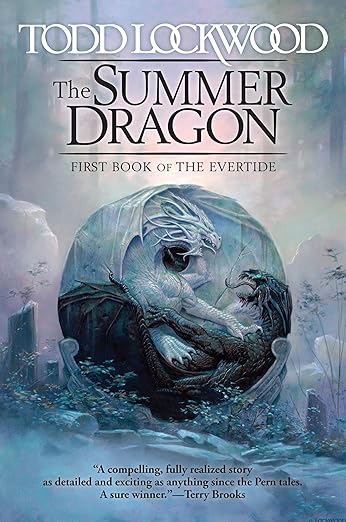
Written by a celebrated dragon artist, this novel brings an unparalleled level of visual and biological detail to its depiction of dragons.

The story follows Maia, a young woman who dreams of bonding with a dragon but finds herself caught in political and religious conflicts that threaten her world.

The novel delves into the breeding, training, and cultural significance of dragons, offering a fresh take on rider-dragon dynamics.

With stunning world-building and a protagonist who must navigate both external threats and internal doubts, The Summer Dragon is a richly layered story that brings a painter’s precision to its imagery and storytelling.

Tooth and Claw by Jo Walton

While not a traditional dragon rider series, Tooth and Claw presents an extraordinary vision of a Victorian-era society composed entirely of dragons.

In this world, dragons adhere to strict social hierarchies, engage in legal battles over inheritance, and even consume their dead to preserve wealth and status.

By mirroring Victorian customs through a draconic lens, Walton creates a sharp, thought-provoking examination of class, morality, and the constraints of tradition.

The novel’s deep world-building and sharp social commentary make it a must-read for fans of dragons who enjoy sophisticated storytelling beyond the usual fantasy tropes.

The Dragon Brigade by Margaret Weis and Robert Krammes
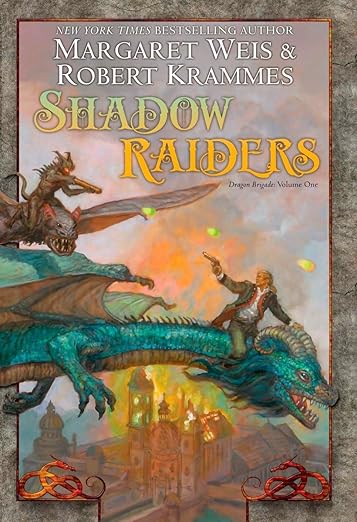
This series blends dragon riding with steampunk elements, creating a unique fusion of fantasy and technology.

Set in a world where skyships and dragons coexist, the story follows adventurers navigating political conspiracies, air battles, and mystical forces.

The integration of dragon-based warfare with early industrial-era inventions offers a fresh take on aerial combat, providing a striking contrast between the organic and the mechanical.

With fast-paced action and complex intrigue, The Dragon Brigade delivers a thrilling mix of high adventure and intricate world-building.

Dragon Champion by E.E. Knight

Instead of focusing on human riders, Dragon Champion shifts the perspective entirely to the dragon.

The series follows Auron, a rare grey dragon born into a dangerous world where his kind are hunted by humans and other dragons alike.

As he struggles to survive, he experiences betrayal, friendship, and shifting allegiances, giving readers an intimate look at dragon society from the inside.

By making the dragon the protagonist rather than a companion, this series explores themes of identity, survival, and what it means to be both predator and prey in a world dominated by humans.

Dragonmaster by Chris Bunch

This military fantasy series treats dragon riding not as an individual hero’s journey but as a disciplined component of large-scale warfare.

Rather than focusing on a single chosen rider, Dragonmaster follows the rise of Hal Kailas, a commoner who becomes a key figure in the development of dragon-based aerial combat.

The series delves into the logistics of training, organising, and deploying dragons as a legitimate military force, adding a level of strategic realism often missing from dragon rider stories.

With its emphasis on military tactics and the gritty realities of war, Dragonmaster will appeal to readers who enjoy fantasy with a strong dose of realism.

Race the Sands by Sarah Beth Durst
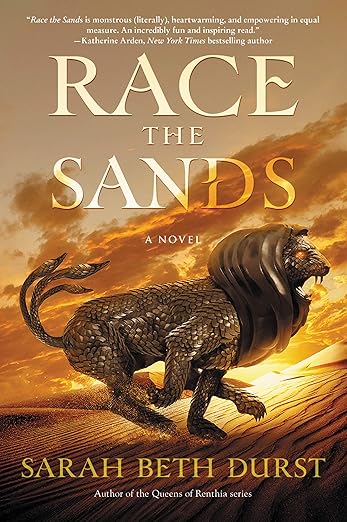
Though not strictly a dragon rider novel, Race the Sands explores the dynamics of bonded riding in a way that will appeal to fans of the subgenre.

Set in a world where fierce, monstrous creatures known as kehoks can only be tamed through sheer determination and force of will, the novel follows a trainer and a desperate young rider who aim to win the nation’s most dangerous race.

The intense training, shifting alliances, and high-stakes competition create a thrilling narrative that examines the psychological and emotional complexities of rider-beast partnerships.

By applying fresh ideas to the concept of mounted combat and racing, Race the Sands offers an exhilarating alternative to traditional dragon rider stories.

The Ravenglass Throne by Jon Cronshaw

This series integrates wyvern riding into a sophisticated political and military landscape, elevating it beyond standard fantasy fare.

The ravenglass network, which maintains the bond between riders and their mounts, serves as a fascinating metaphor for power, control, and the delicate balance between loyalty and authority.

The military aspects are grounded in tactical realism, focusing on the logistics of wyvern-based warfare rather than relying on spectacle alone.

The political intrigue adds depth, making The Ravenglass Throne a compelling choice for readers who enjoy intelligent world-building and character-driven storytelling.

What sets these series apart is their willingness to consider the practical, political, and strategic implications of dragon riding.

Rather than using dragons as mere fantasy set dressing, these books explore how their presence would reshape warfare, societies, and power structures.

The best dragon rider stories go beyond the traditional hero narrative to examine the complexities of partnership, duty, and survival.

For readers seeking deeper, more intelligent takes on human-dragon relationships, these series prove that the genre continues to evolve in exciting and unexpected ways.

Note: This post includes affiliate links.

Why We Love Rider Fantasy: The Power of Magical Connections

Discover how the bond between wyverns, dragons, and their riders has evolved in fantasy literature. From dominance to partnership, explore the psychology, politics, and future of rider fantasy in The Ravenglass Throne series and beyond.

There’s something primal about the fantasy of bonding with a magnificent winged beast.

Perhaps it’s the ancient longing to experience flight, to see the world from above.

Or perhaps it’s the yearning for a companion who understands us completely, whose loyalty transcends the limitations of human relationships.

Whatever the root of this fascination, the rider-mount relationship has evolved dramatically throughout fantasy literature, reflecting our changing values and understanding of partnership.

From Beasts of Burden to Bonded Companions

In early fantasy literature, dragons and their kin were often little more than magical horses—mounts to be tamed, controlled, and utilised.

They served as living vehicles, impressive but ultimately subservient to human will and ambition.

Think of the dragons in McCaffrey‘s early Pern novels, impressive but essentially domesticated, or the flying beasts in pulp fantasy that existed primarily to make their riders seem more impressive.

These relationships reflected humanity’s historical view of animals as resources rather than beings with their own agency.

But just as our understanding of animal cognition and emotional complexity has evolved, so too has the portrayal of these magnificent creatures in fantasy.

In more sophisticated modern interpretations, including my Ravenglass Throne series, wyverns and dragons possess distinct personalities, independent thoughts, and genuine emotional lives.

The bond between rider and mount has transformed from ownership to partnership, from dominance to mutual respect.

The Psychology of the Bond

What makes the rider-mount bond so compelling is its unique blend of the physical and metaphysical.

In the most resonant rider fantasies, the connection transcends mere telepathy or practical partnership.

It becomes something deeper—a sharing of souls, a blending of identities that remains distinct yet unified.

In The Ravenglass Throne, I’ve explored this through the ravenglass network that amplifies the natural connection between wyverns and their riders.

The bond becomes not just a personal relationship but part of a larger tapestry connecting the entire Kingdom.

This evolution reflects our growing understanding of interconnectedness in the real world, the recognition that no relationship exists in isolation.

Each pairing affects the larger community, creating ripples that extend far beyond the individuals involved.

The Political Implications of Bonded Creatures

As rider fantasy has matured, authors have increasingly engaged with the political implications of these powerful bonds.

Who gets to be a rider?

What privileges does this status confer?

How does having an elite group with access to flying, fire-breathing companions affect power structures?

The most thoughtful modern rider fantasies recognise that such extraordinary capabilities would inevitably shape societies in profound ways.

In Ostreich, the military advantage of wyvern riders has created specific hierarchies and tensions, while the threat of corrupted bonds threatens the Kingdom’s very foundation.

This political dimension adds complexity to what might otherwise be simply a fascinating magical system.

It forces characters—and readers—to consider questions of responsibility, privilege, and the potential for abuse of power.

The Corruption of Sacred Bonds

One of the most interesting developments in modern rider fantasy is the exploration of what happens when these sacred bonds become corrupted or broken.

In earlier works, the bond was often presented as unbreakable, a perfect union that could withstand any challenge.

But contemporary fantasy recognises that all relationships, even magical ones, can face threats both external and internal.

The corruption spreading through the ravenglass network in my series represents the vulnerability of even the strongest connections.

It raises questions about trust, about the fragility of systems we take for granted, about the constant maintenance that any relationship requires.

This exploration of imperfect bonds reflects our modern understanding of relationship complexity and the work required to maintain healthy connections.

From Individual to Communal Identity

Perhaps the most significant evolution in rider fantasy has been the shift from focusing solely on the individual pair to examining how these bonds form communities and cultures.

Earlier works often centred on the exceptional rider-mount pair, set apart from society by their unique connection.

More nuanced modern approaches, including The Ravenglass Throne, consider how multiple bonded pairs create networks of relationships, traditions, and shared experiences.

The wyverns in Ostreich don’t exist in isolation—they form their own social structures that parallel and intersect with human hierarchies.

This complexity better reflects our understanding of real-world animal societies and creates richer, more believable fantasy worlds.

The Future of Rider Fantasy

As we look to the future of this subgenre, several exciting developments seem likely to continue.

We’ll likely see more exploration of non-Western cultural influences on rider relationships, moving beyond the predominantly European medieval framework.

Questions of environmental impact and responsibility will become increasingly central, reflecting our real-world concerns about humanity’s relationship with nature.

The psychological aspects of the bond may be explored with even greater sophistication, perhaps incorporating our evolving understanding of neuroscience and consciousness.

And most importantly, the notion of consent and choice within these bonds will continue to be examined, reflecting our changing values around autonomy and partnership.

The Ravenglass Throne series attempts to push in these directions, while acknowledging its debt to the rich tradition of rider fantasy that came before.

Beyond Simple Wish Fulfilment

The most compelling rider fantasies have always been about more than simply fulfilling the wish to fly on dragonback.

They explore what it means to truly know another being, to communicate beyond words, to share a connection that transforms both parties.

They ask questions about power, responsibility, and the nature of trust.

They examine how extraordinary abilities might shape societies and individuals.

In my own work, I’ve tried to honour this tradition while pushing into new territory.

The wyverns of Ostreich aren’t just magical steeds—they’re fully realised characters with their own perspectives, desires, and fears.

Their bonds with human riders create both strength and vulnerability, both privilege and responsibility.

Because the most enduring fantasy doesn’t just help us escape reality—it helps us understand it more deeply.

And what could teach us more about connection, trust, and partnership than the ancient, evolving dream of soaring through the skies on the back of a magnificent winged companion?


The Ravenglass Throne series continues with monthly novella instalments, exploring the complex bonds between wyverns and their riders in a kingdom teetering on the edge of collapse. Available on all major ebook platforms.