Read the opening chapter of Silent Watcher for free on Patreon. A dark political fantasy of espionage, conspiracy, and betrayal set in the Ravenglass Universe.
I’ve started posting my new novel Silent Watcher on Patreon—and you can read the opening chapter right now for free.
This one’s a bit different. Darker. More claustrophobic. The kind of story where the truth keeps shifting just out of reach the closer you get to it.
Here’s the setup:
A dead Watcher. A town that won’t speak. A truth someone is desperate to bury.
Anselma Versen arrives in Halborg to investigate a colleague’s death. Officially, it was an accident.
It doesn’t feel like one.
The streets are scrubbed too clean.
The townsfolk speak like they’ve rehearsed it.
And the dead Watcher left behind a journal he was never meant to write.
Then things start to get… stranger.
Records don’t match.
Witnesses remember different versions of the same events.
And Anselma finds her own name—her own signature—on reports she never wrote.
At that point, it’s no longer just an investigation.
It’s a system.
And it’s already accounting for her.
If she follows orders, she survives.
If she keeps digging… she probably doesn’t.
If you like your fantasy with a strong espionage edge—something closer to a spy thriller in tone—this might be your kind of thing. Think conspiracies, institutional power, and a protagonist who refuses to accept the official version of events.
I’ll be posting chapters on Patreon, starting now, and the first one’s free if you want to take a look.
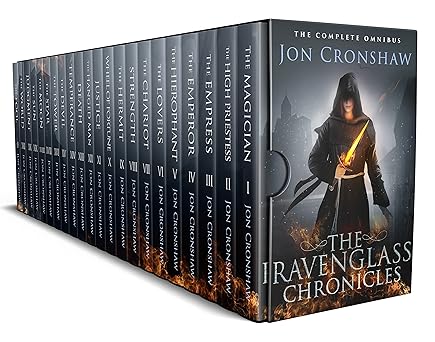
Kat returns in Ace of Swords, the next chapter of the Ravenglass Chronicles.
A new Empress faces political enemies, hidden conspiracies, moral consequence, and a crown that already threatens to break her.
Read exclusive chapters on Patreon as the story unfolds.
I have some exciting news…
Kat is back.
After a five-year break, I have returned to the next arc of The Ravenglass Chronicles.
I have started posting chapters of Ace of Swords, set just three weeks after Kat takes the throne.
Now the crown is testing her in ways steel never did.
Her right hand is bound in a sling, useless when she most needs control.
The wyvern who destroyed her family has vanished, leaving only fear and unanswered questions.
Her court is no longer united.
The conservative houses sense weakness and begin to circle.
A foreign prince arrives without warning, charming, observant, and impossible to read.
Every decision costs her something.
Every pause gives her enemies room to move.
Kat is hunted by forces she cannot see.
She is haunted by dreams she cannot explain.
She is isolated by duty, injury, and a crown that grows heavier each day.
This is a story about power after victory.
It is about the cost of moral certainty.
It is about what happens when doing the right thing is only the beginning.
I am posting three chapters per week, exclusively to Patreon.
Patreon is where you can discuss events, speculate, and follow Kat’s struggle as it unfolds in real time.
If you have been waiting for Kat’s return, this is it.
If you want to experience her reign from the very first fracture, I would love to have you there.
Thank you, as always, for reading and for supporting my work.
Discover 10 powerful fantasy novels featuring the conquered homeland trope. From grimdark revenge to political rebellion, this list includes The Fall of Wolfsbane, The Rage of Dragons, and more must-read epic fantasy titles.
There’s something deeply compelling about fantasy stories where the protagonist’s home is invaded, destroyed, or taken over.
The conquered homeland trope is a powerful foundation for tales of resistance, identity, and revenge—and it’s one that’s resonated with readers for generations.
Here are ten gripping fantasy novels where everything is lost… and the real story begins.
1. The Rage of Dragons by Evan Winter
Tau’s people are attacked. His family is destroyed. He turns from soldier to weapon.
Set in a world inspired by African cultures, The Rage of Dragons turns the vengeance dial up to ten.
Tau’s homeland may be ruled by a rigid caste system and caught in endless war, but he’s determined to break the cycle—even if it kills him.
Severed Bonds, part three of The Ravenglass Throne epic fantasy serial, is out now. With the solstice nearing and chaos rising, three princesses must unite to save their kingdom. Political intrigue, magic, and danger await.
The third instalment of The Ravenglass Throne is here!
The corruption spreads. The solstice nears. Time is running out.
In Severed Bonds, the stakes rise as the three princesses—Adelinde, Elana, and Irmin—find themselves caught in the tightening grip of betrayal, secrets, and mounting danger.
Adelinde’s forbidden experiments unleash a catastrophe that reveals a terrible truth buried in the heart of the ravenglass. Elana’s diplomatic efforts teeter on the edge of collapse as hidden enemies reveal themselves. And Irmin’s battlefield command is threatened from within, leaving her vulnerable just as war looms on the horizon.
With the bonds between wyverns and their riders failing across the realm, and the winter solstice drawing near, the sisters must overcome suspicion and division to confront the forces threatening to shatter Ostreich.
But will unity come too late?
If you’ve been enjoying the blend of magical mystery, political intrigue, and character-driven drama, this is where everything starts to unravel.
Severed Bonds is available now on Amazon in ebook and paperback.
iscover The Fall of Wolfsbane, a gritty epic fantasy novel of war, empire, and survival. Follow Ragnar and Maja Wolfsbane as they fight for identity, resist conquest, and uncover the dark magic of ravenglass weapons.
The Fall of Wolfsbane is the first book in my epic fantasy series, Ravenglass Legends.
It is a story about war, empire, and survival. It is a story about identity and resistance in a world shaped by conquest.
I wanted to write a fantasy novel that didn’t shy away from the complexity of empire.
This isn’t a simple tale of good versus evil. It’s a story about people caught in impossible situations.It’s about the cost of survival and the price of power.
The novel follows two main characters.
Ragnar Wolfsbane is a warrior and heir to the northern territory of Meerand.
His world is destroyed when the expansionist Ostreich Empire conquers his homeland.
He watches his father executed. He is taken hostage. He is forced to live among the people who murdered his family and renamed his home.
Ragnar is a character shaped by loss and rage. But he is also a character who learns to adapt.
He forms alliances. He learns the language of the Empire. He survives by understanding his enemies.
Maja Wolfsbane, Ragnar’s younger sister, is taken to the imperial capital and is forced into the role of a court project, paraded as proof that the Empire civilises its captives.But Maja has her own quiet resistance.
She learns their ways while never forgetting her own. She uses their lessons against them. She plots her escape in secret.
I wanted the dual narrative to show two sides of the same war.
One sibling survives within the Empire. The other fights to break free from it.
The world of The Fall of Wolfsbane is shaped by politics, power, and cultural conflict. It’s a world where ancient magic exists but comes at a cost.
Magic in my story is tied to blood, memory, and sacrifice.
Ravenglass is a rare black mineral that can be forged into weapons.
These weapons aren’t just tools—they are bound to the person who creates them.
To forge a ravenglass weapon, blood must be spilled, tears must be shed.
I wanted magic to feel dangerous. I wanted it to feel personal.
At its heart, The Fall of Wolfsbane is about identity.
It’s about what we cling to when everything else is taken. It’s about how we change when we are forced to survive in hostile worlds.
The story is gritty and violent at times, but I never wanted it to feel nihilistic.
There is honour in resistance.
There is courage in survival.
Ragnar and Maja both carry the spirit of their lost home, even as they are shaped by the Empire.
They are both forced to make impossible choices.
Sometimes they win. Sometimes they lose. But they endure.
I wrote The Fall of Wolfsbane for readers who enjoy complex worlds and morally grey characters, for readers who want their fantasy to feel real, grounded, and emotionally honest.
If you enjoy stories about empire, rebellion, and the quiet strength of those who resist, I think you’ll find something here for you.
This is a story about conquest. This is a story about resistance. This is a story about magic that hurts and heals in equal measure.
This is The Fall of Wolfsbane. And this is only the beginning…
Wyvern’s Shadow (The Ravenglass Throne: Part Two) is a gripping high fantasy ebook filled with magic, betrayal, and political intrigue. As corruption spreads, three princesses must fight to save their kingdom from collapse. Available now.
The next instalment of The Ravenglass Throne is here!
As ravenglass corruption threatens to tear the Kingdom apart, the three royal sisters must confront enemies within and beyond. With wyvern bonds failing and trust fraying, the stakes have never been higher.
Irmin hunts for traitors among the ranks. Adelinde fights to protect the kingdom’s magical core. Elana faces growing danger in the political court of Molotok.
But the deeper they go, the more they realise: the true rot lies closer to home…
📖 Wyvern’s Shadow is available now in ebook format. This gripping high fantasy serial continues with magic, betrayal, and sisterhood under pressure.
Political fantasy does more than entertain—it reflects real-world power struggles, corruption, and leadership. Explore how The Ravenglass Throne and other fantasy worlds mirror political dynamics in our own society.
Political fantasy has grown in popularity over the past decade.
Audiences are drawn to its complex characters, intricate plots, and high-stakes power struggles.
Beyond the dragons, magic, and medieval settings lies something deeply familiar.
Fantasy often mirrors the same power dynamics that shape our own world.
When crafting The Ravenglass Throne series, I found myself drawing parallels between fantasy politics and real-world systems of power.
Sometimes, this was intentional.
Other times, it was entirely subconscious.
The Veiled Critique: Fantasy as Political Commentary
Fantasy has long served as a way to examine real-world issues from a safe distance.
By shifting political conflicts to imaginary realms, authors can explore sensitive topics without directly challenging existing power structures.
This tradition dates back to works like Swift’s Gulliver’s Travels and continues in modern political fantasy.
In The Ravenglass Throne, the struggle between noble houses after the king’s assassination reflects historical succession crises.
Baron Gerlach’s manipulation of evidence to frame House Darius echoes real-world propaganda tactics.
Political operatives have always used misinformation to discredit their opponents.
By placing these dynamics in a fantasy setting, readers can recognise familiar patterns.
The fantasy backdrop allows for critical examination without the emotional weight of real-world conflicts.
The ravenglass corruption spreading through Ostreich serves as a metaphor for institutional decay.
Just as real institutions can be corroded by self-interest, prejudice, and abuse of power, the kingdom’s magical foundation faces an existential threat.
Many refuse to acknowledge the crisis—until it is nearly too late.
Three Faces of Power: Military, Knowledge, and Diplomacy
Political scientist Joseph Nye distinguished between hard power (military and economic coercion) and soft power (persuasion and influence).
In The Ravenglass Throne, these ideas manifest through the three royal sisters.
Irmin: Hard Power
Irmin embodies military strength and direct action.
She believes in confronting threats head-on.
Her leadership reflects the enduring importance of military force in politics, both in fantasy and reality.
Yet, the series also explores its limitations.
Even the sharpest sword cannot cut through corruption, mistrust, and divided loyalties.
Elana: Soft Power
Elana represents diplomatic influence and strategic alliance-building.
She understands that perception often matters more than reality.
In both fantasy and modern politics, power frequently operates through narrative control and relationship management rather than brute force.
Her visual impairment reminds us that those underestimated by traditional power structures often develop alternative ways to wield influence.
Adelinde: Structural Power
Adelinde reflects knowledge as power.
She embodies what political theorists call structural or institutional power—the ability to shape the systems that others must operate within.
Her research into ravenglass and its corruption represents how specialised knowledge can reveal vulnerabilities and opportunities.
These three approaches to power highlight a crucial truth: real-world leadership is rarely one-dimensional.
The most effective rulers combine multiple forms of influence.
Just as the three sisters must learn to unite their strengths, successful leaders adapt their methods to different challenges.
The Political Economy of Magic
Fantasy often treats magic as a mystical force, detached from economic and political concerns.
In The Ravenglass Throne, I wanted to explore how a magical resource would inevitably become a source of political and economic power.
The control of ravenglass in Ostreich mirrors how access to oil, rare earth minerals, or water shapes political leverage in our world.
Those who control these resources wield immense influence.
Those without access remain vulnerable.
The Guardians’ knowledge of ravenglass mirrors the way technical expertise translates into political authority in modern society.
The corruption spreading through the ravenglass network reflects concerns about environmental degradation and resource depletion.
Just as real-world nations face the consequences of overusing finite resources, Ostreich’s leaders must confront the dangers of assuming their magical foundation is limitless.
Identity Politics in Fantasy Realms
Modern political discussions often revolve around identity—race, gender, class, and privilege.
Fantasy frequently reflects these dynamics while offering a space to reimagine them.
In The Ravenglass Throne, the question of whether a woman can inherit the throne mirrors real-world debates on gender and leadership.
Elana’s visual impairment challenges assumptions about disability—both in fantasy and modern society.
The different perspectives of wyverns and humans highlight how political systems often fail to account for all affected groups.
These elements are not decorative additions to make the world feel realistic.
They are central to the story’s exploration of power, legitimacy, and who gets a voice in political decisions.
Fantasy settings allow readers to reconsider their assumptions about leadership, representation, and privilege in an indirect but meaningful way.
The Personal as Political
Fantasy and real-world politics share one fundamental truth.
Power structures are ultimately shaped by personal relationships, loyalties, and betrayals.
Behind every major political shift—whether in Ostreich or our own world—lie individuals with complex motivations, ambitions, and fears.
The sisters’ strained relationship after their father’s death reflects how personal grief shapes political decision-making.
Baron Gerlach’s ambition and Lord Darius’s concern for appearances mirror the self-interest that drives political figures throughout history.
Even the bonds between wyverns and riders serve as a metaphor for how relationships shape our understanding of the world.
By exploring these interpersonal dimensions of power, fantasy reminds us that political systems are not just abstract institutions.
They are animated by real people, making choices based on values, survival, and strategy.
This recognition does not simplify politics.
It complicates it—because it demands an acknowledgment of the full humanity of everyone involved.
Why Political Fantasy Matters
In a time of increasing political polarisation, fantasy offers a shared space where readers can explore complex political questions.
It allows discussions of power without triggering the defensive reactions that often arise in real-world debates.
When we recognise fictional power struggles as reflections of real-world dynamics, we gain fresh perspectives on issues that might otherwise seem insurmountable.
Like all political fantasy, The Ravenglass Throne offers more than escapism.
It serves as a laboratory for examining power—how it works, how it corrupts, and how it might be wielded more justly.
By journeying through Ostreich’s political crisis alongside the three royal sisters, readers are invited to reflect on their own relationship with power.
How do we seek it?
How do we use it?
How do we react when others wield it?
The best political fantasies do not simply recreate real-world power structures with added magic and monsters.
They help us imagine alternatives—new ways to govern, resolve conflicts, and distribute influence.
At a time when many real-world political systems face unprecedented challenges, this imaginative function of fantasy may be its greatest strength.
The Ravenglass Throne continues with monthly novella releases. Join Irmin, Elana, and Adelinde as they navigate the treacherous politics of a kingdom on the brink of collapse.
Discover how the bond between wyverns, dragons, and their riders has evolved in fantasy literature. From dominance to partnership, explore the psychology, politics, and future of rider fantasy in The Ravenglass Throne series and beyond.
There’s something primal about the fantasy of bonding with a magnificent winged beast.
Perhaps it’s the ancient longing to experience flight, to see the world from above.
Or perhaps it’s the yearning for a companion who understands us completely, whose loyalty transcends the limitations of human relationships.
Whatever the root of this fascination, the rider-mount relationship has evolved dramatically throughout fantasy literature, reflecting our changing values and understanding of partnership.
From Beasts of Burden to Bonded Companions
In early fantasy literature, dragons and their kin were often little more than magical horses—mounts to be tamed, controlled, and utilised.
They served as living vehicles, impressive but ultimately subservient to human will and ambition.
Think of the dragons in McCaffrey‘s early Pern novels, impressive but essentially domesticated, or the flying beasts in pulp fantasy that existed primarily to make their riders seem more impressive.
These relationships reflected humanity’s historical view of animals as resources rather than beings with their own agency.
But just as our understanding of animal cognition and emotional complexity has evolved, so too has the portrayal of these magnificent creatures in fantasy.
In more sophisticated modern interpretations, including my Ravenglass Throne series, wyverns and dragons possess distinct personalities, independent thoughts, and genuine emotional lives.
The bond between rider and mount has transformed from ownership to partnership, from dominance to mutual respect.
The Psychology of the Bond
What makes the rider-mount bond so compelling is its unique blend of the physical and metaphysical.
In the most resonant rider fantasies, the connection transcends mere telepathy or practical partnership.
It becomes something deeper—a sharing of souls, a blending of identities that remains distinct yet unified.
In The Ravenglass Throne, I’ve explored this through the ravenglass network that amplifies the natural connection between wyverns and their riders.
The bond becomes not just a personal relationship but part of a larger tapestry connecting the entire Kingdom.
This evolution reflects our growing understanding of interconnectedness in the real world, the recognition that no relationship exists in isolation.
Each pairing affects the larger community, creating ripples that extend far beyond the individuals involved.
The Political Implications of Bonded Creatures
As rider fantasy has matured, authors have increasingly engaged with the political implications of these powerful bonds.
Who gets to be a rider?
What privileges does this status confer?
How does having an elite group with access to flying, fire-breathing companions affect power structures?
The most thoughtful modern rider fantasies recognise that such extraordinary capabilities would inevitably shape societies in profound ways.
In Ostreich, the military advantage of wyvern riders has created specific hierarchies and tensions, while the threat of corrupted bonds threatens the Kingdom’s very foundation.
This political dimension adds complexity to what might otherwise be simply a fascinating magical system.
It forces characters—and readers—to consider questions of responsibility, privilege, and the potential for abuse of power.
The Corruption of Sacred Bonds
One of the most interesting developments in modern rider fantasy is the exploration of what happens when these sacred bonds become corrupted or broken.
In earlier works, the bond was often presented as unbreakable, a perfect union that could withstand any challenge.
But contemporary fantasy recognises that all relationships, even magical ones, can face threats both external and internal.
The corruption spreading through the ravenglass network in my series represents the vulnerability of even the strongest connections.
It raises questions about trust, about the fragility of systems we take for granted, about the constant maintenance that any relationship requires.
This exploration of imperfect bonds reflects our modern understanding of relationship complexity and the work required to maintain healthy connections.
From Individual to Communal Identity
Perhaps the most significant evolution in rider fantasy has been the shift from focusing solely on the individual pair to examining how these bonds form communities and cultures.
Earlier works often centred on the exceptional rider-mount pair, set apart from society by their unique connection.
More nuanced modern approaches, including The Ravenglass Throne, consider how multiple bonded pairs create networks of relationships, traditions, and shared experiences.
The wyverns in Ostreich don’t exist in isolation—they form their own social structures that parallel and intersect with human hierarchies.
This complexity better reflects our understanding of real-world animal societies and creates richer, more believable fantasy worlds.
The Future of Rider Fantasy
As we look to the future of this subgenre, several exciting developments seem likely to continue.
We’ll likely see more exploration of non-Western cultural influences on rider relationships, moving beyond the predominantly European medieval framework.
Questions of environmental impact and responsibility will become increasingly central, reflecting our real-world concerns about humanity’s relationship with nature.
The psychological aspects of the bond may be explored with even greater sophistication, perhaps incorporating our evolving understanding of neuroscience and consciousness.
And most importantly, the notion of consent and choice within these bonds will continue to be examined, reflecting our changing values around autonomy and partnership.
The Ravenglass Throne series attempts to push in these directions, while acknowledging its debt to the rich tradition of rider fantasy that came before.
Beyond Simple Wish Fulfilment
The most compelling rider fantasies have always been about more than simply fulfilling the wish to fly on dragonback.
They explore what it means to truly know another being, to communicate beyond words, to share a connection that transforms both parties.
They ask questions about power, responsibility, and the nature of trust.
They examine how extraordinary abilities might shape societies and individuals.
In my own work, I’ve tried to honour this tradition while pushing into new territory.
The wyverns of Ostreich aren’t just magical steeds—they’re fully realised characters with their own perspectives, desires, and fears.
Their bonds with human riders create both strength and vulnerability, both privilege and responsibility.
Because the most enduring fantasy doesn’t just help us escape reality—it helps us understand it more deeply.
And what could teach us more about connection, trust, and partnership than the ancient, evolving dream of soaring through the skies on the back of a magnificent winged companion?
The Ravenglass Throne series continues with monthly novella instalments, exploring the complex bonds between wyverns and their riders in a kingdom teetering on the edge of collapse. Available on all major ebook platforms.
Discover the hidden historical influences behind The Ravenglass Throne. From Byzantine court politics to the War of the Roses and Chinese bureaucracy, explore how real-world history shaped the Ostreich Kingdom’s power struggles, corruption, and intrigue.
When crafting the world of The Ravenglass Throne, I did not simply pull ideas from thin air.
Like many fantasy authors, I have drawn deeply from history, bringing together elements from various civilisations and eras to create something that feels both fresh and familiar.
Today, I’d like to take you behind the scenes to examine some of the historical influences that helped shape the Ostreich Kingdom and the struggles of our three royal sisters.
The Byzantine Empire and Court Politics
Those who have followed Elana’s chapters closely might recognise echoes of Byzantine court intrigue in the political manoeuvring of Ostreich’s nobles.
The Byzantine Empire, with its complex hierarchies, ceremonial protocols, and intricate politics, provided rich inspiration for the Ravenglass court.
The role of the Imperial wyvern, Witz, in particular, draws from the position of Byzantine eunuchs, who often wielded immense behind-the-scenes influence.
These court officials were not eligible for the throne themselves but frequently controlled who sat upon it.
Similarly, Witz cannot rule directly but plays a crucial role in determining succession.
I was particularly influenced by the reign of Empress Irene (752–803 CE), who ruled as regent for her son before eventually seizing power in her own right.
She was the first woman to rule the Byzantine Empire independently.
The challenges she faced as a female ruler in a patriarchal society informed my approach to the sisters’ struggles for legitimacy in a kingdom that has never been ruled by a woman.
The War of the Roses and Familial Division
The conflict between the houses of York and Lancaster during the Wars of the Roses provided a blueprint for how familial bonds can fracture under the weight of political ambition.
While our three sisters are not fighting each other directly, the divisions between them and the way noble houses attempt to exploit these divisions are heavily influenced by this period of English history.
Baron Gerlach’s machinations, in particular, echo the role of kingmakers such as Richard Neville, Earl of Warwick, who shifted allegiances and manipulated succession to serve his own interests.
The way House Darius is framed for the King’s assassination similarly reflects the propaganda wars waged between noble houses during this turbulent period.
What fascinates me about the Wars of the Roses is not just the battles but how perception often mattered more than reality.
A noble house’s reputation could be destroyed through rumour and insinuation—a theme that plays out in how the noble houses of Ostreich manoeuvre for position in the wake of the King’s death.
Ancient Chinese Bureaucracy and Institutional Power
The structure of the Guardians and their relationship with ravenglass draws inspiration from imperial Chinese bureaucracy, particularly the examination system and the role of scholar-officials.
Just as Chinese bureaucrats gained power through mastery of Confucian texts and complex administrative systems, the Guardians derive their authority from specialised knowledge of ravenglass and its properties.
The corruption that spreads through the ravenglass network parallels historical periods when institutional corruption undermined Chinese imperial governance.
During the late Ming dynasty, for instance, the examination system that had once ensured meritocratic government became increasingly compromised by bribery and factional interests.
Adelinde’s research into ancient texts and her discovery of deliberately obscured knowledge reflects the historical practice of “literary inquisition” in imperial China, where texts deemed threatening to the established order were censored or destroyed.
The revelation that someone deliberately damaged crucial passages about ravenglass corruption echoes these historical attempts to control information.
In creating the Guardians, I wanted to examine how institutions meant to protect can sometimes become the greatest threat when their original purpose is corrupted or forgotten.
History is full of examples of this pattern, and I found the evolution of Chinese bureaucracy over centuries particularly instructive in imagining how the Guardians might have drifted from their founding principles.
The Real-World Inspirations Behind Fantasy
At its best, fantasy does not merely provide escapism—it offers a lens through which we can examine our own world and history from new perspectives.
By drawing from these historical influences, I have tried to create a world that, despite its wyverns and magical ravenglass, reflects recognisable patterns of power, corruption, and resistance.
The struggles of Irmin, Elana, and Adelinde may take place in a fictional realm, but they grapple with challenges that have faced real people throughout history.
How to maintain unity in the face of division.
How to determine who can be trusted.
How to reform systems that have become corrupted from within.
As the series continues to unfold, these historical influences will deepen and evolve.
After all, history is not just something that happened in the past—it is a living process that continues to shape how we understand power, politics, and the bonds that both unite and divide us.
I would love to hear which historical periods or civilisations come to mind when you read The Ravenglass Throne.
Sometimes, readers spot influences I was not even consciously aware of incorporating!
Dive into Robin Hobb’s “Assassin’s Apprentice,” where fantasy meets complexity and morality blurs. Explore how FitzChivalry Farseer, an unlikely hero with a dark skill set, reshapes our understanding of fantasy protagonists. Unpack Hobb’s intricate world of magic and politics, delving into a narrative that goes beyond good vs. evil. Discover how this groundbreaking story influences modern fantasy, paving the way for deeper character development and more nuanced storytelling in the genre.
In the often bright and valiant world of fantasy literature, Robin Hobb‘s “Assassin’s Apprentice” arrived like a shadow in the night.
With this book, Hobb didn’t just introduce readers to a new story; she introduced us to FitzChivalry Farseer – a hero as unlikely as finding a courteous goblin.
This tale of an assassin’s apprentice was a sharp turn from the usual path of swords and sorcery, taking the road less travelled – and considerably darker.
An Assassin with a Heart: Shaking Up the Hero Mold
Fitz wasn’t your typical fantasy protagonist.
He was no noble knight on a gleaming steed nor a wise wizard with a long beard and a penchant for riddles.
Instead, he was a boy with a knack for killing and a complicated moral compass.
Hobb crafted a character that was as complex as he was conflicted, bringing a depth to Fitz that went beyond the traditional good versus evil narrative.
He was a walking contradiction, a hero in a role usually reserved for villains.
Magic and Mind: A Different Kind of Power
In “Assassin’s Apprentice”, magic wasn’t just about throwing fireballs or summoning storms.
Hobb introduced the Wit and the Skill – two forms of magic that were as nuanced as they were powerful.
The Wit, a bond with animals, was considered a lowly, almost taboo form of magic, while the Skill was a prestigious, mind-influencing ability.
This reimagining of magic systems injected a fresh dose of intrigue into the fantasy genre, turning magic into a source of inner turmoil as much as external power.
Narrative Grit: The Nitty-Gritty of Royal Politics
Hobb’s narrative delved deep into the murky waters of court intrigue and politics, with all the backstabbing and power plays one might expect in a den of vipers rather than a royal court.
This focus on the political, often from the perspective of someone usually left in the shadows, gave the fantasy genre a grittier, more realistic edge.
It was like lifting a rock to see the unsightly creatures writhing underneath – fascinating, if somewhat unsettling.
Influence on Modern Fantasy: The Echoes of Fitz’s Blade
The influence of “Assassin’s Apprentice” on modern fantasy is as clear as the scars on Fitz’s soul.
The series paved the way for a more nuanced approach to character development, where heroes were allowed to be flawed, and villains occasionally sympathetic.
Hobb’s blend of personal struggle, political intrigue, and a less conventional approach to magic has left an indelible mark on the genre, inspiring authors to explore the grey areas of their characters and worlds.
The Enduring Legacy of a Reluctant Assassin
“Assassin’s Apprentice” was more than just a fantasy novel; it was a masterclass in character-driven storytelling.
Robin Hobb created a world where the line between hero and villain was as thin as a knife’s edge, and just as sharp.
In the annals of fantasy literature, FitzChivalry Farseer remains a testament to the genre’s ability to evolve, to push boundaries, and to redefine what it means to be a hero.
The echoes of Fitz’s blade, and the choices he made with it, continue to resonate in the modern fantasy landscape.