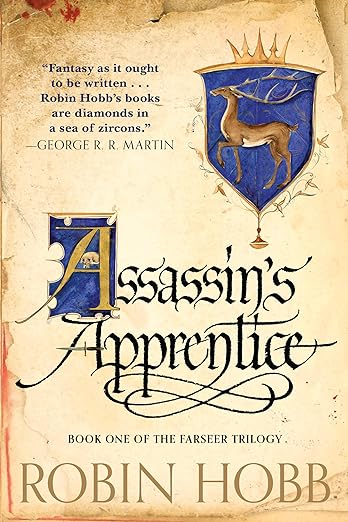
Exploring the Complex World of Robin Hobb’s Assassin’s Apprentice

Dive into Robin Hobb’s “Assassin’s Apprentice,” where fantasy meets complexity and morality blurs. Explore how FitzChivalry Farseer, an unlikely hero with a dark skill set, reshapes our understanding of fantasy protagonists. Unpack Hobb’s intricate world of magic and politics, delving into a narrative that goes beyond good vs. evil. Discover how this groundbreaking story influences modern fantasy, paving the way for deeper character development and more nuanced storytelling in the genre.

In the often bright and valiant world of fantasy literature, Robin Hobb‘s “Assassin’s Apprentice” arrived like a shadow in the night.

With this book, Hobb didn’t just introduce readers to a new story; she introduced us to FitzChivalry Farseer – a hero as unlikely as finding a courteous goblin.

This tale of an assassin’s apprentice was a sharp turn from the usual path of swords and sorcery, taking the road less travelled – and considerably darker.

An Assassin with a Heart: Shaking Up the Hero Mold

Fitz wasn’t your typical fantasy protagonist.

He was no noble knight on a gleaming steed nor a wise wizard with a long beard and a penchant for riddles.

Instead, he was a boy with a knack for killing and a complicated moral compass.

Hobb crafted a character that was as complex as he was conflicted, bringing a depth to Fitz that went beyond the traditional good versus evil narrative.

He was a walking contradiction, a hero in a role usually reserved for villains.

Magic and Mind: A Different Kind of Power

In “Assassin’s Apprentice”, magic wasn’t just about throwing fireballs or summoning storms.

Hobb introduced the Wit and the Skill – two forms of magic that were as nuanced as they were powerful.

The Wit, a bond with animals, was considered a lowly, almost taboo form of magic, while the Skill was a prestigious, mind-influencing ability.

This reimagining of magic systems injected a fresh dose of intrigue into the fantasy genre, turning magic into a source of inner turmoil as much as external power.

Narrative Grit: The Nitty-Gritty of Royal Politics

Hobb’s narrative delved deep into the murky waters of court intrigue and politics, with all the backstabbing and power plays one might expect in a den of vipers rather than a royal court.

This focus on the political, often from the perspective of someone usually left in the shadows, gave the fantasy genre a grittier, more realistic edge.

It was like lifting a rock to see the unsightly creatures writhing underneath – fascinating, if somewhat unsettling.

Influence on Modern Fantasy: The Echoes of Fitz’s Blade

The influence of “Assassin’s Apprentice” on modern fantasy is as clear as the scars on Fitz’s soul.

The series paved the way for a more nuanced approach to character development, where heroes were allowed to be flawed, and villains occasionally sympathetic.

Hobb’s blend of personal struggle, political intrigue, and a less conventional approach to magic has left an indelible mark on the genre, inspiring authors to explore the grey areas of their characters and worlds.

The Enduring Legacy of a Reluctant Assassin

“Assassin’s Apprentice” was more than just a fantasy novel; it was a masterclass in character-driven storytelling.

Robin Hobb created a world where the line between hero and villain was as thin as a knife’s edge, and just as sharp.

In the annals of fantasy literature, FitzChivalry Farseer remains a testament to the genre’s ability to evolve, to push boundaries, and to redefine what it means to be a hero.

The echoes of Fitz’s blade, and the choices he made with it, continue to resonate in the modern fantasy landscape.

Discover the Enchanting World of Fantasy Palaces with These Must-Read Books

Explore captivating fantasy palaces in these must-read books. Delve into a world of magic, power struggles, and intrigue. Discover epic tales set in enchanting palace settings.

Fantasy novels offer a unique blend of magic and imagination, and when set in palaces, they become even more captivating.

Palaces serve as a backdrop for power struggles, hidden secrets, and magical adventures.

Here are five must-read fantasy novels set in palaces:

1. “A Song of Ice and Fire” series by George R.R. Martin:

The palace of King’s Landing is the political centre of the Seven Kingdoms and the scene of many of the series’ most significant events. From the scheming of Queen Cersei Lannister to the machinations of Lord Petyr Baelish, the palace is a hub of intrigue and power.

2. “Throne of Glass” by Sarah J. Maas:

The palace of the kingdom of Adarlan is the setting for this action-packed fantasy novel. The kingdom is ruled by a tyrannical king, and the palace is filled with political intrigue, dangerous magic, and powerful assassins.

3. “Assassin’s Apprentice” by Robin Hobb:

The palace of the Six Duchies is the setting for this coming-of-age story about a young assassin. The palace is filled with danger, political maneuvering, and magic, and the protagonist must navigate these treacherous waters in order to survive.

4. “The Goblin Emperor” by Katherine Addison:

The palace of the Elfen Empire is the setting for this political fantasy novel. The new goblin emperor must navigate the intricacies of court life and the treacherous politics of the imperial palace in order to secure his rule and bring peace to the empire.

5. “Gormenghast” by Mervyn Peake:

The sprawling, ancient palace of Gormenghast is the setting for this dark and imaginative fantasy novel. The palace is filled with strange, grotesque characters and eerie magic, and the protagonist must navigate its labyrinthine halls in order to uncover its secrets.

If you love fantasy set in palaces, you can get The Fool for free as part of the Ravenglass Universe starter library.

How Robin Hobb’s Farseer Trilogy Changed the Fantasy Genre

Explore the deep impact of Robin Hobb’s Farseer Trilogy on modern fantasy literature, its character evolution and redefining portrayal of heroes.

Unbeknownst to some, the fantastical world of modern literature has a secret benefactor.

Robin Hobb, with her Farseer Trilogy, has bestowed riches upon the genre that would make Smaug blush.

Kicking things off with “Assassin’s Apprentice,” Hobb didn’t just open a book—she flung open the gates to a new realm of character development.

Our protagonist, FitzChivalry Farseer, doesn’t merely grow, he unfolds, evolves, and occasionally unravels, like a well-kept tapestry being slowly unveiled.

His journey from royal bastard to skilled assassin shows us that heroes don’t always come in shining armour or with a penchant for loquacious speeches about destiny.

Sometimes, they come with a complex past and an uncertainty about the future that feels remarkably human.

Before we knew it, “Royal Assassin” and “Assassin’s Quest” followed suit, guiding us through Fitz’s adventures and growth in an intricate world with more twists and turns than a hedge maze after a few sherries.

This focus on personal evolution and the realities of the human condition amidst high fantasy turned the genre on its head, and we’ve been doing headstands ever since.

While traditional fantasy was busy grappling with trolls and casting arcane spells, Hobb was subtly changing the game.

Her potent mix of complex characters, political intrigue, and emotional depth offered readers a fresh perspective.

Suddenly, a dragon wasn’t merely a fire-breathing lizard, but a symbol of our deepest desires and fears.

The once clear-cut lines between good and evil began to blur, just like in our everyday life, showing that the realm of fantasy isn’t so removed from reality after all.

It was this depth, this infusion of reality into a fantastical world that had a seismic impact on modern fantasy.

Today, you can see Hobb’s influence strewn across the genre like breadcrumbs in the Grimm’s tales.

Authors have started focusing on characters who feel real, not just because of their witty dialogue or mysterious pasts, but due to their relatability, their flaws, their triumphs, and their growth.

They have started weaving worlds where magic and politics dance in harmony, and where morality is more nuanced than simple black and white.

Hobb’s Farseer Trilogy, an understated game-changer, has left a mark on the sand of fantasy literature that’s as enduring as a dragon’s footprint.

After all, who needs a knight in shining armour when you can have a complex, evolving hero with a knack for assassination?

If you enjoy reading about flawed characters, you might enjoy my Dawn of Assassins series.

You can read the prequel novel Birth of Assassins for free as part of the Ravengass Universe starter library.

Unlocking the Magic: Exploring the World of Coming-of-Age Fantasy

Embark on a captivating journey through the enchanting world of coming-of-age fantasy. Explore themes, top books, and claim your free starter library. Let the adventure begin!

Welcome to the enchanting world of coming-of-age fantasy!

In this post, you’ll discover the heart of this genre, exploring why readers are so drawn to these tales, and highlighting the top books and authors that have defined it.

And as a special treat, don’t miss the chance to claim your free Ravenglass Universe starter library when you join our newsletter today.

What is Coming-of-Age Fantasy?

Coming-of-age fantasy is a subgenre of fantasy literature that focuses on the growth and development of a young protagonist.

The stories often centrr around themes of self-discovery, responsibility, and the transition from childhood to adulthood.

With the backdrop of a magical world, these narratives resonate with readers as they follow the protagonist’s journey, both physical and emotional.

Themes and Subjects of Coming-of-Age Fantasy

Coming-of-age fantasy stories are rich in themes that explore the human experience. Common themes include:

Self-Discovery: As the protagonist navigates their world, they often discover hidden talents, powers, or abilities that define their identity and influence their destiny.

Friendship: The bonds formed with companions on the journey are integral to the protagonist’s growth, teaching them about trust, loyalty, and sacrifice.

Responsibility: As they mature, the protagonist learns to shoulder the weight of their newfound powers and the expectations placed upon them.

Conflict: Coming-of-age fantasy tales often involve battles against external forces, such as evil sorcerers or malevolent creatures, as well as internal struggles within the protagonist’s own heart and mind.

Good vs. Evil: The protagonist discovers moral ambiguity and navigates the complexities of right and wrong, light and dark.

Love: The protagonist experiences various forms of love—familial, romantic, platonic—that shape their character and choices.

Choice: At critical junctures, the protagonist must make difficult decisions that determine their fate and the fate of others.

Identity: The protagonist undertakes a journey of self-discovery to determine who they are and who they want to become.

Independence: The protagonist gains freedom from authority figures or home environments, allowing them to think and act for themselves.

Courage: Finding bravery in the face of fear and danger is central to the protagonist’s triumph over adversity.

Top Coming-of-Age Fantasy Books

Some of the most celebrated books and authors in coming-of-age fantasy include:

The Hobbit by J.R.R. Tolkien:

This classic novel follows the journey of Bilbo Baggins, a young hobbit who discovers his own courage and resourcefulness as he embarks on a perilous quest.

Harry Potter series by J.K. Rowling:

This beloved series chronicles the life of young wizard Harry Potter as he navigates the magical world of Hogwarts, learning about friendship, love, and the power of courage.

His Dark Materials trilogy by Philip Pullman:

A thought-provoking series that explores themes of self-discovery, morality, and the nature of consciousness, as young Lyra Belacqua sets out on an epic journey through parallel worlds.

The Name of the Wind by Patrick Rothfuss:

This captivating novel follows the life of Kvothe, a legendary figure who recounts his rise from a lowly orphan to a renowned magician and adventurer.

A Wrinkle in Time by Madeleine L’Engle:

A moving story of Meg Murry, an awkward teen girl who embarks on an adventure across dimensions to find her missing father.

Sabriel by Garth Nix:

Sabriel, a young necromancer, must venture into the perilous Old Kingdom to rescue her father from the Land of the Dead.

The Belgariad by David Eddings:

Garion, an orphaned farm boy, discovers his destiny in a quest to retrieve a powerful orb and fulfill an ancient prophecy.

A Wizard of Earthsea by Ursula K. Le Guin:

The story of Ged, a sorcerer who must journey far from home to escape the darkness he unleashed into the world.

The Rithmatist by Brandon Sanderson:

Joel, a non-magical student at a school for Rithmatists–those who can animate chalk drawings and use them for defense–gets caught up in a dangerous mystery.

Assassin’s Apprentice by Robin Hobb:

This novel follows the life of FitzChivalry Farseer, a royal bastard who is apprenticed to become an assassin in the Six Duchies. As Fitz navigates court intrigue and the skills of his grim trade, he also struggles to find his place in a world that does not always welcome him.

Now that you’ve been introduced to the captivating world of coming-of-age fantasy, it’s time to embark on your own adventure.

Join my newsletter today and receive a free Ravenglass Universe starter library, filled with spellbinding tales that will transport you to a world of magic, mystery, and wonder.

Don’t miss this exclusive offer—claim your free books now and let the adventure begin!

From Shadows to Steel: Evolution of the Assassin Fantasy Genre

Dive into the evolution of the assassin fantasy genre, from ancient folklore to modern literature. Explore classic tales, seminal works, and today’s intricate narratives that mix mystery, action, and moral ambiguity.

Throughout the vast realms of fantasy literature, there exists a subgenre that focuses on the moral ambiguities of being a killer—the assassin fantasy genre.

From the mysterious and silent killers of ancient tales to the morally complex anti-heroes of modern sagas, the portrayal of assassins in literature has evolved significantly over time.

Today, we’ll delve into the evolution of the assassin fantasy genre, exploring its earliest examples and tracing its development into the modern day.

Origins: Shadows in the Pages

The roots of the assassin fantasy genre can be traced back to ancient civilizations and folklore.

Stories of assassins and their deadly skills have captivated audiences across different cultures.

Ancient texts such as “One Thousand and One Nights” (Arabian Nights) contain tales of skilled killers like the legendary Sinbad, whose exploits blurred the line between hero and assassin.

These early examples showcased the mystique and cunning of assassins, establishing the foundation for the genre.

Assassin Fantasy in Classic Literature

The 19th and early 20th centuries witnessed the emergence of classic literature that incorporated assassin characters.

One of the most notable works was Alexandre Dumas’ “The Count of Monte Cristo.”

Although not primarily an assassin fantasy, it featured the protagonist Edmond Dantès adopting the persona of the Count to exact his revenge.

Dumas’ novel, with its themes of hidden identities, intricate plots, and morally ambiguous characters, set the stage for future developments in the genre.

Rise of the Modern Assassin Fantasy

The modern era marked a significant shift in the portrayal of assassins.

This transformation can be attributed to groundbreaking works such as Fafhrd and the Gray Mouser series by Fritz Leiber, which began in the 1930s.

Leiber’s characters, Fafhrd and the Gray Mouser, were skilled swordsman-thieves who, at times, were employed as assassins.

This series showcased complex anti-heroes operating in a morally gray world, reflecting the shifting perspectives of readers.

In the 1990s, the assassin fantasy genre experienced a surge in popularity with the publication of Robin Hobb’s Farseer Trilogy. Hobb introduced readers to FitzChivalry Farseer, a royal assassin plagued by inner conflicts and external challenges.

Through Fitz’s journey, Hobb delved into themes of loyalty, sacrifice, and the psychological toll of a life bound to shadows and death.

This series ignited a fascination with morally complex assassins and their tormented souls.

The Modern-Day Assassin: A Multifaceted Hero

In contemporary literature, the assassin fantasy genre has evolved to embrace diverse representations of assassins.

Authors like Brent Weeks, with his Night Angel Trilogy, and Jay Kristoff, with the Nevernight Chronicle, have contributed to the genre’s evolution by creating protagonists who are both deadly killers and complex individuals with rich backstories and personal motivations.

These narratives explore the grey areas of morality, offering readers a chance to explore the complexities of the human condition.

Appeal and Enduring Allure

The assassin fantasy genre continues to captivate readers due to several key factors.

First, the enigmatic nature of assassins, shrouded in secrecy and skill, evokes a sense of fascination and curiosity.

Their lethal abilities and the danger they face in their treacherous world create an exhilarating reading experience.

Moreover, the exploration of morally ambiguous characters challenges readers’ perceptions of right and wrong, delving into complex ethical dilemmas.

Furthermore, assassins often navigate treacherous political landscapes, unveiling conspiracies and unveiling hidden truths.

These stories offer a thrilling blend of action, suspense, and intricate plotting, keeping readers on the edge of their seats.

The internal conflicts faced by assassins, as they grapple with their choices and the consequences of their actions, add depth and emotional resonance to the narratives.

10 Essential Assassin Fantasy Reads

“The Blade Itself” by Joe Abercrombie

“The Blade Itself” introduces readers to a gritty and dark world filled with complex characters. Set in a land on the brink of war, the story follows a diverse cast, including Inquisitor Glokta, a former swordsman turned torturer; Logen Ninefingers, a legendary warrior seeking redemption; and Jezal dan Luthar, a self-centered nobleman. Abercrombie’s skillful characterisation and vivid world-building create a compelling narrative that explores themes of power, betrayal, and the blurred lines between heroism and villainy.

“Throne of Glass” by Sarah J. Maas

In “Throne of Glass,” Sarah J. Maas presents readers with a tale of an assassin named Celaena Sardothien. Once the most feared assassin in the kingdom, Celaena finds herself imprisoned and offered a chance at freedom by competing in a deadly tournament. As she navigates the treacherous world of court politics and supernatural forces, Celaena’s journey unfolds with intrigue, romance, and surprising alliances. Maas’ writing captivates readers with its blend of action, magic, and a strong-willed protagonist who must confront her past while forging her future.

“The Lies of Locke Lamora” by Scott Lynch

“The Lies of Locke Lamora” follows the exploits of Locke Lamora, a charming thief and con artist in the city of Camorr. Lynch’s novel combines elements of fantasy, heists, and political intrigue as Locke and his band of fellow thieves get embroiled in a dangerous game with a mysterious antagonist known as the Gray King. The book weaves intricate plots and clever schemes while showcasing a richly detailed city and complex characters. Lynch’s prose is witty, immersive, and filled with twists and turns that keep readers guessing until the very end.

“Assassin’s Apprentice” by Robin Hobb

Assassin’s Apprentice” is the first book in Robin Hobb’s Farseer Trilogy, introducing readers to FitzChivalry Farseer, a royal bastard who becomes an apprentice to the kingdom’s assassin. Hobb delves deep into Fitz’s coming-of-age story, exploring his struggles with identity, loyalty, and the burdens of his secret heritage. As Fitz learns the art of assassination, he also discovers the high-stakes political landscape and the challenges of being entangled in the kingdom’s intrigues. Hobb’s exquisite prose and introspective narrative style create an emotionally rich and immersive reading experience.

“Nevernight” by Jay Kristoff

“Nevernight” introduces readers to Mia Corvere, a young woman seeking revenge against those who destroyed her family. In a world where three suns never truly set, Mia trains to become an assassin in the Red Church, an institution that worships the goddess of murder. Jay Kristoff’s writing blends dark fantasy, intricate world-building, and poetic prose to create a gripping tale of vengeance, ambition, and the blurred lines between light and shadow. Mia’s journey is filled with political intrigue, deadly trials, and a touch of forbidden romance.

“Graceling” by Kristin Cashore:

In “Graceling,” Kristin Cashore presents a realm where certain individuals are born with Graces—unique and extraordinary talents. The protagonist, Katsa, possesses a killing Grace and is forced to serve as a deadly weapon for her king. However, as she questions her purpose and fights against oppression, Katsa discovers her own agency and embarks on a quest that challenges her beliefs. Cashore’s novel combines elements of adventure, romance, and self-discovery, crafting a compelling narrative that explores themes of power, choice, and the search for personal identity.

“Kushiel’s Dart” by Jacqueline Carey

Set in a richly imagined alternate version of medieval Europe, “Kushiel’s Dart” follows Phèdre nó Delaunay, a courtesan-spy with a unique ability to experience pleasure and pain as one. As she delves into political intrigue and uncovers conspiracies, Phèdre’s journey takes her across continents, unveiling a complex web of power struggles and forbidden desires. Jacqueline Carey’s novel blends elements of romance, politics, and adventure, creating a lush and sensual narrative that explores themes of love, loyalty, and the consequences of choices made.

“The Way of Shadows” by Brent Weeks

“The Way of Shadows” introduces readers to Azoth, a young orphan in a corrupt city who dreams of becoming the world’s greatest assassin. Under the tutelage of master assassin Durzo Blint, Azoth faces trials that test his skills, resilience, and morality. Brent Weeks’ debut novel combines elements of coming-of-age, dark fantasy, and intricate world-building to deliver a tale of secrets, political intrigue, and the high cost of power. The story delves into the shadows of a morally gray world, exploring themes of sacrifice, redemption, and the search for identity.

“Red Sister” by Mark Lawrence

In “Red Sister,” Mark Lawrence presents a world where young girls are trained in the art of combat and assassination within the walls of the Convent of Sweet Mercy. The story follows Nona Grey, a girl with extraordinary abilities, as she navigates a dangerous and divided empire. Lawrence’s novel combines elements of fantasy, mystery, and action, immersing readers in a complex world filled with ancient prophecies, rival factions, and deadly adversaries. The book explores themes of friendship, loyalty, and the resilience of the human spirit.

“The Emperor’s Blades” by Brian Staveley

“The Emperor’s Blades” is the first installment of the Chronicles of the Unhewn Throne trilogy. The story follows three siblings—Kaden, Valyn, and Adare—as they face separate challenges in a world torn by war and political turmoil. Kaden trains in a remote monastery, Valyn becomes an elite warrior, and Adare fights for political power. Brian Staveley weaves together a tale of treachery, family loyalty, and the struggle for survival. The book features complex characters, intricate world-building, and a plot that intertwines personal journeys with larger geopolitical conflicts.

The assassin fantasy genre has evolved from ancient tales to modern narratives that explore the complexities of assassins, their moral dilemmas, and their treacherous worlds.

With a rich tapestry of characters and intricate plots, these stories continue to captivate readers by combining elements of mystery, action, and introspection.

Whether you’re drawn to the enigmatic nature of assassins or the exploration of moral ambiguity, the assassin fantasy genre offers a thrilling and thought-provoking reading experience. So, dive into the shadows and steel, and discover the fascinating world of assassins in literature.

The book that made me want to write: Robin Hobb’s Assassin’s Apprentice

Robin Hobb’s ‘Assassin’s Apprentice’ is the book that inspired me to write fiction. Explore the immersive world, compelling characters, and expertly crafted plot of this character-driven epic fantasy. Discover the influence of Hobb’s writing on the author’s own work.

As a fantasy reader, I’m always on the lookout for my next great adventure.

But Robin Hobb’s Assassin’s Apprentice is the book that made me want to write fiction.

I’d worked as a professional writer throughout my twenties and early-thirties in both academia and journalism, and I knew I wanted to write a novel.

In 2013, I’d just turned thirty, I was a new dad, and I read Assassin’s Apprentice for the first time.

I fell in love with Fitz’s story from the very first page. He is a complex and relatable character who is easy to care about and I quickly found myself invested in his journey.

And of course, there is the Fool—the non-binary court jester, and mentor to Fitz who repels and intrigues those around him in equal measure. Over the nine-book series, we get to watch one of the best platonic love stories in fiction play out.

The writing is excellent. Hobb’s prose is evocative and poetic, making for a truly immersive reading experience. Her attention to detail, whether in describing the world or the characters, is remarkable and adds to the realism of the story.

The world-building in Assassin’s Apprentice is incredible. Hobb has created a rich and detailed world that is both believable and fantastical. The world of the Six Duchies is one that I found myself fully immersing in and exploring, and I couldn’t help but feel like I was right there alongside Fitz.

The book deals with the themes of identity, belonging, and the nature of power, the inevitable clash between duty and desire (which is something I find myself revisiting again and again in my own fiction). Hobb explores these themes with subtlty and nuance that makes the story feel grounded in reality.

The plot itself is expertly crafted, unfurling slowly, but in a way that never drags. It is full of twists and turns that keep readers guessing.

Assassin’s Apprentice and the rest of the Farseer series is essential reading for anyone who loves character-driven epic fantasy.

And I’m sure that if you have read my Ravenglass Chronicles series, you will see her influence on my writing.

To claim your FREE Ravenglass Universe starter library, click HERE.