Discover why moral ambiguity in fantasy creates richer, more compelling stories. Explore themes of grey morality, complex characters, and power dynamics in the genre.
When I first discovered fantasy through works like The Hobbit and The Chronicles of Narnia, the moral lines were clearly drawn.
Good characters wore white (or at least earth tones), villains wore black, and you always knew who to root for.
As I’ve grown as both a reader and a writer, I’ve become increasingly drawn to stories that explore the murkier territories of morality.
In The Knight and the Rebel, I deliberately set out to create a story where both sides could be right—or wrong—depending on your perspective.
Ragnar believes he can reform the Empire from within, using his position and influence to protect his people.
Maja fights to tear that same Empire down, seeing it as an irredeemable force of oppression.
Both are acting out of love for their homeland and people, but their methods and beliefs put them in direct opposition.
Examples of Moral Complexity in Fantasy
This kind of moral complexity isn’t new to fantasy.
Joe Abercrombie’s First Law trilogy masterfully subverts traditional fantasy tropes by presenting characters who defy easy categorisation.
Take Sand dan Glokta—a torturer who commits horrible acts, yet remains oddly sympathetic due to his own suffering and sharp wit.
Or consider George R.R. Martin’s Jaime Lannister, who begins as a seemingly irredeemable villain but reveals layers of honour and complexity that force readers to question their initial judgments.
Why Moral Ambiguity Resonates
What makes these morally ambiguous stories so compelling?
I’d argue it’s because they better reflect the reality of human nature and historical conflict.
Real people rarely see themselves as villains.
The coloniser believes they’re spreading civilisation and progress.
The resistance fighter believes they’re defending their way of life.
Both can commit acts of terrible cruelty while believing they serve a greater good.
This is why I chose to show both sides of the conflict in The Knight and the Rebel.
Through Ragnar’s eyes, we see the Empire’s genuine belief in its civilising mission, its complex political mechanisms, and the real relationships and loyalties that bind it together.
Through Maja, we witness the brutal reality of occupation, the desperation of resistance, and the way violence can corrupt even the most noble cause.
Balancing Good and Evil in Storytelling
Some readers have asked why I didn’t make the Empire more overtly evil or the rebels more clearly heroic.
The answer is simple: that would have been a less honest story.
History teaches us that empires aren’t cartoonishly evil—they’re systems of power built on genuine beliefs about progress and civilisation, maintained by people who often sincerely believe in their mission.
Similarly, resistance movements, however justified their cause, can become twisted by violence and revenge.
The Role of Fantasy in Examining Morality
The beauty of fantasy is that it allows us to examine these complex moral questions in a removed context.
When we’re not caught up in the specifics of real-world conflicts, we can more easily analyse the underlying dynamics of power, resistance, and moral compromise.
This doesn’t mean there’s no place for more traditionally heroic fantasy—sometimes we need those stories of clear good triumphing over obvious evil.
But I believe the genre is enriched by works that dare to explore the grey areas, challenging readers to question their assumptions and sympathies.
Why Moral Ambiguity Matters
After all, isn’t that what great literature should do?
Make us think, make us question, and help us see the world in new ways?
In my view, moral ambiguity isn’t just a storytelling technique—it’s a tool for understanding the complexity of human nature and the difficult choices we all face.
What Do You Think?
Do you prefer your fantasy with clear heroes and villains, or do you appreciate stories that explore moral grey areas?
Explore how emotional depth and character development transform dark fantasy from mere action to powerful storytelling. Discover why internal struggles, tested loyalties, and moral complexity give dark fantasy its lasting impact on readers.
Blood, blades, and betrayal might draw readers to dark fantasy.
But it’s the quiet moments – the internal struggles, the fraying of conscience, the tested loyalties – that truly hook us.
When done right, character depth transforms dark fantasy from mere violence into a profound exploration of human nature.
Soren’s Transformation in Guild of Assassins
Consider how my novel Guild of Assassins handles Soren’s transformation.
Yes, there’s plenty of action – fights, assassinations, the brutal Threshing.
But the story’s real power lies in watching Soren grapple with what he’s becoming.
His hands, once devoted to creating beauty from stone, now deal death.
Each kill chips away at his humanity, like a chisel slowly revealing a darker form beneath.
The Cost of Vengeance
This internal conflict elevates the narrative beyond simple revenge.
We’re not just watching Soren learn to kill – we’re watching him struggle with the cost of vengeance.
When he finally confronts Kierak during the Threshing, the physical battle matters less than the psychological one.
Has Soren become the very thing he set out to destroy?
External Conflicts as Catalysts for Internal Struggles
The best dark fantasy recognises that external conflicts are merely catalysts for internal ones.
Mark Lawrence’s Prince of Thorns works not because Jorg is brutal, but because we understand the trauma driving his brutality.
Joe Abercrombie’s The Blade Itself captivates because Logen’s struggle with his berserker nature reveals universal truths about violence and identity.
Evolving Friendships Under Pressure
Character depth also transforms relationships.
Soren and Alaric’s friendship resonates because we see how their bond evolves under pressure.
Their loyalty isn’t just plot convenience – it’s repeatedly tested, questioned, and ultimately strengthened by their shared trauma.
Like Fitz and the Fool in Robin Hobb’s works, their relationship becomes more meaningful precisely because we understand its cost.
The Guild as More Than a Backdrop
The guild itself becomes more than just a backdrop for training montages.
Through Soren’s eyes, we see how each master embodies different aspects of the assassin’s craft.
Varus’s brutality, Tamasin’s poisonous wisdom, Quillon’s clinical detachment – they’re not just teachers but mirrors reflecting what Soren might become.
Depth in Secondary Characters
Even secondary characters gain depth through their struggles.
Nia’s street-smart cynicism masks deeper wounds.
Isolde’s scholarly precision reveals a need for control in a chaotic world.
Ganrel’s smooth manipulation hints at past betrayals.
Their interactions create a web of competing motivations far more compelling than simple plot mechanics.
Violence as Character Development
This emotional complexity makes the violence matter.
When Soren kills during the Threshing, it’s not just action – it’s character development.
Each death forces him to confront what he’s becoming.
The physical consequences pale compared to the psychological ones.
Like the best dark fantasy, the external violence serves to illuminate internal battles.
Moral Complexity Over Shock Value
The genre works best when it recognises that darkness isn’t just about blood and death – it’s about moral complexity.
Through Soren’s eyes, we explore how good intentions lead to atrocity, how survival demands compromise, how vengeance corrupts the vengeful.
These themes resonate because they’re grounded in character, not plot.
Beyond Grimdark: Character Depth in Dark Fantasy
grDark fantasy often gets dismissed as grimdark violence porn.
But stories like Guild of Assassins show how character depth transforms darkness from shock value into meaningful exploration of human nature.
Real darkness isn’t found in gore or body counts – it’s in watching characters we care about make impossible choices.
Why Character Depth Matters
This is why character-driven dark fantasy lingers with us.
Plot may drive the story forward, but character depth makes it matter.
When we understand Soren’s internal struggle, his external battles gain meaning.
His choices have weight because we feel the cost of each compromise, each lost piece of humanity.
Finding Hope Amid Darkness
Perhaps most importantly, character depth allows dark fantasy to explore hope amid darkness.
Through Soren and Alaric’s enduring friendship, through small acts of loyalty in a brutal world, we see how light persists even in shadow.
These moments of grace matter precisely because they’re earned through character development, not plot convenience.
The Real Battlefield: The Human Heart
In the end, the best dark fantasy recognises that true darkness isn’t found in violence but in the human heart.
Through deep characterisation, it transforms genre tropes into vehicles for exploring fundamental truths about human nature.
The magic and monsters serve only to illuminate the real battlefield – the one within.
Your Thoughts
How do you think character development enhances dark fantasy?
What are your favourite examples of character-driven dark fantasy?
Two siblings. Two paths. One destiny that could shake an empire to its core.
In The Knight and the Rebel, the third book in the Ravenglass Legends series, Ragnar and Maja’s worlds collide in an epic tale of power, loyalty, and rebellion.
As Ragnar rises within the very empire that destroyed their homeland, Maja fights to bring it down. But as secrets unravel and danger mounts, nothing is as straightforward as it seems.
With wyverns soaring through the skies and ravenglass whispering dark truths, Ragnar and Maja must each grapple with their choices.
Can Ragnar reform the empire from within?
And can Maja’s rebellion succeed without tearing apart everything she loves?
Filled with action, political intrigue, and characters that will stay with you long after the last page, The Knight and the Rebel is a fantasy epic that fans of Joe Abercrombie and Robin Hobb won’t want to miss.
Early Access on Patreon: New Chapters Every Weekday!
Eager to dive into this gripping adventure before it’s published?
As a Patreon subscriber, you’ll get exclusive early access to work-in-progress chapters of The Knight and the Rebel every weekday!
Follow the story as it unfolds, and be the first to experience the twists and turns of this thrilling saga.
Explore the grimdark fantasy genre, where moral ambiguity, dark themes, and gritty settings redefine fantasy literature. Discover key books and authors like Mark Lawrence and Joe Abercrombie that make grimdark a compelling choice for modern readers.
Welcome, fantasy aficionados, to the delightful world of grimdark, where rainbows are a myth, unicorns are carnivorous, and happy endings are as rare as a dragon’s polite dinner conversation.
If you’ve ever wondered what grimdark is and whether it’s for you, then prepare yourself for a journey through the murkiest swamps of fantasy literature.
Grab your rusty swords, don your tattered cloaks, and let’s dive in!
Grimdark: The Basics
Grimdark is a subgenre of fantasy that revels in the gritty, the grim, and the disturbingly realistic.
Think of it as fantasy’s rebellious teenager, smashing the rose-tinted glasses of high fantasy and replacing them with cracked monocles.
In the world of grimdark, heroes are deeply flawed, morality is a luxury few can afford, and the line between good and evil is blurrier than an ogre’s vision after a night in the tavern.
Where Hope Goes to Die
In grimdark, hope is that quaint little concept you can reminisce about while dodging arrows in a war-torn wasteland.
This genre thrives on the brutal realities of life, where even the most valiant knight has skeletons in their closet—sometimes literally.
Expect betrayal, bloodshed, and a level of moral ambiguity that would make even the most seasoned politician blush.
Characters with More Issues Than a Tabloid
Grimdark characters aren’t your typical noble heroes on a quest to save the world.
They’re more likely to be anti-heroes, mercenaries, or downright villains.
Picture a protagonist who’s as charming as a rattlesnake and as trustworthy as a used car salesman.
These characters are scarred, both physically and emotionally, and their backstories are darker than the bottom of a wizard’s cauldron.
Worlds That Make Mordor Look Cosy
The settings in grimdark are about as welcoming as a dragon’s lair.
Expect desolate landscapes, corrupt cities, and societies that make you grateful for your boring nine-to-five job.
Whether it’s a plague-ridden medieval town or a dystopian future, the world-building in grimdark is meticulously detailed and relentlessly bleak.
It’s the perfect backdrop for the endless parade of suffering and strife that the characters endure.
Plot Twists with a Side of Trauma
If you like your plots predictable and your endings happy, grimdark might not be for you.
In this genre, plot twists are as common as goblins in a cave, and they usually come with a side of existential dread.
Characters you love will die, alliances will shatter, and the closest thing to a victory is surviving another day.
It’s like a rollercoaster ride where the tracks are falling apart and the operator has a sinister grin.
Dark Humour: The Silver Lining
Despite—or perhaps because of—the darkness, grimdark often comes with a healthy dose of black humour.
When life is constantly trying to kill you, sometimes all you can do is laugh.
Expect witty one-liners, gallows humour, and a general sense that the characters are well aware of their miserable lot in life.
It’s this humour that provides a twisted sort of relief amidst the carnage.
Notable Grimdark Works
If you’re ready to plunge into the abyss, here are some notable grimdark works to get you started:
“A Song of Ice and Fire” by George R.R. Martin: The poster child for grimdark, where weddings are deadly and power is a game of thrones.
“The First Law Trilogy” by Joe Abercrombie: Featuring morally ambiguous characters and a world where heroes are hard to find.
“The Broken Empire Trilogy” by Mark Lawrence: Following the charmingly ruthless Jorg Ancrath as he carves a bloody path to power.
“The Black Company” by Glen Cook: Chronicling the mercenary company as they navigate a world full of magic and betrayal.
Grimdark is not for the faint of heart.
It’s a genre that strips away the fantasy veneer to reveal a world as brutal and unforgiving as our own, only with more swords and sorcery.
If you’re tired of the same old tales of chivalry and virtue, give grimdark a try.
Embrace the darkness, relish the moral complexity, and above all, enjoy the ride—no matter how bumpy it gets.
Welcome to the grimdark side; we’ve got misery and mayhem in spades.
Dive into the shadowy realm of assassin fantasy, where morality blurs and danger lurks at every turn. Explore the main tropes, themes, and what makes this subgenre a captivating branch of fantasy literature.
Welcome to the dimly lit world of assassin fantasy, a genre where the heroes are as sharp as the knives they hide and moral ambiguities are as common as cloaks and daggers.
For those new to the concept, assassin fantasy delves into the tales of those who operate from the shadows, executing justice or vengeance (and sometimes both) for the right price—or the right cause.
Here, we’ll slice through the main tropes and themes that define this intriguing subgenre.
What is Assassin Fantasy?
Assassin fantasy is a subgenre of fantasy literature that revolves around the lives and lethal escapades of assassins.
Unlike traditional fantasy, where battles are fought in broad daylight with armies clashing over the fate of empires, assassin fantasy tends to focus on the individual, often delving into the darker, more personal conflicts that play out in the back alleys of bustling cities or the silent corridors of power.
Tropes and Themes of Asssassin Fantasy
The Moral Ambiguity of Killing for a Cause
One of the most deliciously complex tropes in assassin fantasy is the ever-present question of morality.
Assassins in these stories often grapple with the ethics of their profession, blurring the lines between right and wrong until they’re as indistinct as footprints in a busy marketplace.
It’s a world where the end often justifies the means, and the means are usually fatal.
The Lone Wolf with a Code
Many assassin characters are crafted in the mould of the lone wolf—a solitary figure who operates outside the law but adheres to a personal code.
This code is as crucial to their identity as their stealthy footwear.
They might kill for money or revenge, but there are always lines they won’t cross… usually.
Complex Mentor-Apprentice Relationships
In a world where trust is as rare as a truthful politician, the relationships between mentors and their apprentices are fraught with tension and fraught with betrayal.
These relationships are a core element of training sequences, where deadly skills are passed down and life lessons are learned in the most hazardous ways imaginable.
Intrigue and Political Machinations
Assassin fantasy novels often unfold against a backdrop of intricate political plots.
Assassins are not just weapons but also key players in games of power, where thrones are the prizes and the players are seldom innocent.
The cloak and dagger aren’t just tools of the trade; they’re metaphors for the subterfuge that runs rampant in the corridors of power.
A Dance with Death
At the heart of assassin fantasy is the ever-present dance with death.
Assassins flirt with their own mortality daily, and their survival depends as much on their skill with a blade as it does on their ability to navigate the perilous politics of their professions.
Their lives are a high-stakes game where a single slip could be fatal.
Why Dive Into Assassin Fantasy?
For those intrigued by the darker side of human nature, assassin fantasy offers a compelling blend of adrenaline and intrigue.
It’s a place where every shadow could hold a secret and every character has an agenda.
If you’re ready to explore the depths of human resolve and the heights of treachery, assassin fantasy might just be your next favourite read.
So, sharpen your blades—or your wits, which are safer—and prepare to delve into tales where the most dangerous thing is not the assassin lurking in the shadows, but the truths they uncover.
Welcome to the dark, intricate world of assassin fantasy, where survival is an art, and the brush strokes are often painted in blood.
Essential Assassin Fantasy Titles
As you embark on a shadowy journey through assassin fantasy, you’ll want to be well-armed with the best titles the genre has to offer.
Here’s a rundown of five essential books where the characters are as sharp as the blades they wield, and survival is the name of the game—if it were ever that simple.
The Way of Shadows by Brent Weeks
In The Way of Shadows, Brent Weeks takes us on a stroll through the city of Cenaria, a place where even the shadows seem to be plotting something nefarious.
This is the story of Azoth, a street urchin who apprentices himself to Durzo Blint, a master assassin whose curriculum vitae is as long as a life sentence.
This novel is an intensive masterclass in dark arts and darker ethics, perfect for those who like their morals as murky as a foggy night in Victorian London.
Jay Kristoff’s Nevernight is as subtle as a dagger to the ribs, and twice as sharp.
Here we meet Mia Corvere, who joins the deadliest flock of acolytes at the Red Church, a school where they teach you how to end lives just after morning chapel.
Mia’s quest for vengeance is fraught with literary booby traps and a shadowy companion that’s literally her own shadow.
Ideal for readers who enjoy their education sprinkled with a bit of murder.
Vlad Taltos by Steven Brust offers a unique blend of high fantasy with a dash of organized crime—think The Godfather with swords and sorcery.
Vlad, a low-ranking thug-turned-assassin, navigates the cutthroat world of Dragaeran society, where social climbers are likely to use actual climbers to dispose of rivals.
This series is a guide on how to manage your career prospects in a world where your next promotion might just come at the sharp end of a dagger.
Joe Abercrombie‘s The Blade Itself plunges us into the grim and gritty Union, where Logen Ninefingers, also known as “the Bloody-Nine,” proves that you can indeed lose a finger and gain a title.
This book isn’t strictly about assassins, but it has enough backstabbing and literal stabbing to qualify.
Abercrombie crafts a world where every alliance is a potential death sentence and the only thing cheaper than life is one’s dignity.
If you ever thought about mixing pirates with assassins and throwing in a magical curse for good measure, The Assassin’s Curse is your kind of tale.
Cassandra Rose Clarke introduces us to Ananna, a pirate princess on the run who inadvertently triggers a curse binding her to an assassin sent to kill her.
This book offers a swashbuckling escape with a duo who could kill each other at any moment but must work together to survive.
It’s like a magical version of couple’s therapy, but with more knives.
In Red Sister, Mark Lawrence proves that the deadliest assassins might just come from a convent.
Nona Grey’s journey from condemned prisoner to novice in the Convent of Sweet Mercy is littered with enough blood and betrayal to make a stone weep.
This is not your typical school; here, they teach you how to survive first and pray later.
The nuns are more likely to pass you a blade than a bible, making it the perfect school for those who like their education with a side of existential dread.
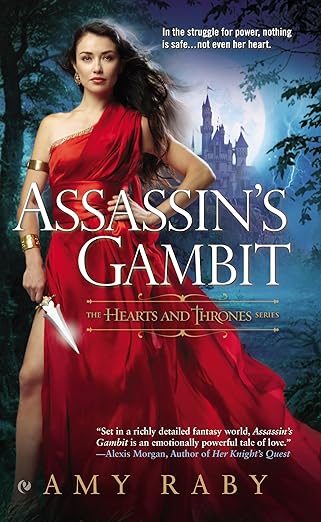
Assassin’s Gambit thrusts us into the heart of an empire where hearts are won with charm but empires are kept with daggers.
Vitala, an assassin and spy, targets the emperor but ends up entangled in a dangerous game of court intrigue and romance.
This novel blends the sharp precision of assassination with the unpredictability of love, proving that the heart can be as effective a target as the back.
Terry Pratchett’s The Hogfather brings his trademark wit to the fore, weaving a tale where the Discworld faces a crisis of mythical proportions that can only be solved by an assassin.
The Guild of Assassins is tasked with a contract on the Hogfather, Discworld’s version of Santa.
What follows is a hilariously twisted tale that questions the foundations of belief and holiday traditions, all while navigating the perils of professional killing.
Andy Peloquin’s Darkblade introduces us to the Hunter of Voramis, an assassin with a blade as cursed as his own soul.
Haunted by his past and feared by almost everyone, the Hunter is a master of death who battles not only his external enemies but also his inner demons.
This novel is an exploration of darkness, not just the kind that fills alleyways at night, but the kind that fills a man’s soul.
Set in a grim world reminiscent of the European Middle Ages, this novel follows Thomas Cale, who has been raised from childhood to be an assassin in the religious sanctuary known as the Sanctuary of the Redeemers.
Cale’s deadly skills are put to the test as he escapes the oppressive environment and faces a wider world rife with war and chaos.
Starting with A Dance of Cloaks, this series features Aaron Felhorn, who is trained from childhood to be the heir to his father’s criminal empire and a master assassin.
The series delves into themes of power, betrayal, and familial bonds, set against a backdrop of a city rife with corruption and violence.
In this opening book of The Chronicle of the Unhewn Throne, the children of the Emperor each follow different paths—one as a monk, another as a soldier, and the third as a minister.
The novel skillfully weaves their stories together with elements of political intrigue, ancient magic, and assassins playing pivotal roles in the unfolding drama of an empire.
The first book in the Farseer Trilogy, Assassin’s Apprentice introduces readers to Fitz, the bastard son of a prince, who is secretly trained in the ways of a royal assassin.
Through Fitz’s eyes, readers explore a realm where loyalty, political intrigue, and dark magic intertwine, setting the stage for a deeply personal and epic-scale adventure.
Robin Hobb’s detailed world-building and complex character development make this a cornerstone of the genre.
Assassin fantasy provides a darkly mesmerizing escape into worlds where the sharp edge of a blade can alter destinies and where whispered secrets wield the power to topple kingdoms.
Each book in this genre offers a unique blend of intrigue, danger, and moral complexity, drawing readers into the shadows alongside characters who are both compelling and conflicted.
From the gritty streets of Cenaria in Brent Weeks’ The Way of Shadows to the holy halls of the Convent of Sweet Mercy in Mark Lawrence’s Red Sister, these stories explore the nuances of power, loyalty, and survival.
They invite us into the minds and hearts of those who operate on the fringes of society, bound by codes that blur the lines between right and wrong.
For readers looking to dive deeper into the shadowy world of assassin fantasy, Jon Cronshaw’s Guild of Assassins offers a thrilling journey into the life of Soren, an apprentice sculptor turned lethal assassin after the brutal murder of his father.
As Soren navigates the treacherous waters of the assassins’ guild, he is forced to confront not only external enemies but also the internal struggle between his quest for vengeance and his remaining shreds of conscience.
Guild of Assassins is a must-read for anyone fascinated by the complexities of a life pledged to secrecy and the pursuit of justice through unconventional means.
Whether you’re a seasoned aficionado of assassin fantasy or a newcomer to the genre, Cronshaw’s vivid storytelling and rich character development promise an engaging and thought-provoking experience.
So, if your reading list needs a dose of danger and a touch of moral ambiguity, pick up a copy of Guild of Assassins.
Let the adventure begin where the shadows deepen, and discover why assassin fantasy continues to captivate the hearts and minds of readers around the world.
Explore the rise of morally grey protagonists in fantasy literature, where characters challenge traditional notions of heroism. Delve into the world of complex, flawed heroes who reflect the nuanced realities of morality, shaping a new, more relatable and thrilling landscape in modern fantasy fiction.
Once upon a time in fantasy literature, heroes were as pure and straightforward as a glass of milk in a monastery.
Then came the rise of the morally grey protagonist, as welcome in the genre as a goblin at a fairy convention.
These characters brought a complexity to fantasy that was previously reserved for tax legislation, making the line between good and evil as blurry as a drunkard’s vision.
From White Knights to Grey Squires
Gone are the days when a hero’s armour shone brighter than their morals.
Modern fantasy has embraced protagonists who are less ‘knight in shining armour’ and more ‘person in mildly tarnished chainmail’.
These are characters who might save the world, but only after they’ve finished their pint and had a long think about whether the world is worth saving.
After all, who among us is without sin, or at least a few parking tickets?
Or maybe it’s the unpredictability they bring to a story – a welcome reprieve from the good old days when you could predict a hero’s actions with the reliability of a train timetable.
Examples in the Wild
Take George R.R. Martin’s “A Song of Ice and Fire” series, where characters frequently change sides, and you’re never quite sure who to root for.
Or Joe Abercrombie’s “The First Law” trilogy, starring a barbarian with a conscience and a torturer with a heart.
These characters are as morally consistent as a politician’s promises.
The Appeal of the Dark Side
The rise of the morally grey protagonist also reflects a shift in societal norms.
In an age where we’re used to seeing heroes fall and villains rise on the evening news, these characters offer a mirror to our own world – albeit a slightly smudged one.
They remind us that life is rarely black and white, but an endless spectrum of greys.
Impact on the Genre
This new breed of protagonist has revolutionised fantasy literature, leading to richer, more complex narratives.
It’s an evolution from fairy tale simplicity to a genre that recognises the multifaceted nature of humanity.
And let’s face it, it’s just more fun to read about a hero who might save the princess or might just pawn her crown for a quick buck.
Long Live the Grey!
The rise of morally grey protagonists in fantasy literature marks a maturation of the genre.
These characters, with their complex motivations and questionable morals, offer a more nuanced exploration of the human condition.
They prove that sometimes, the most interesting path isn’t the high road or the low road, but the winding path that meanders somewhere in between.
Dive into Joe Abercrombie’s First Law Trilogy, a groundbreaking fantasy series that reshaped the genre with its grimdark narrative, complex characters, and subversion of traditional tropes. Discover how Abercrombie’s masterpiece has influenced modern fantasy literature.
In the grand, often predictable banquet of modern fantasy, Joe Abercrombie‘s “The First Law Trilogy” strides in like a barbarian at a tea party, upsetting the table and redefining the taste of the genre.
Abercrombie, dubbed ‘Lord Grimdark‘ by fans, didn’t just write a fantasy series; he took a battle-axe to convention, carving out a niche that’s as deep and dark as his characters.
Let’s don our metaphorical mail and explore how this trilogy has left an indelible scar on the face of fantasy literature.
What’s the First Law Trilogy?
For those who’ve been gallivanting in less grim parts of the fantasy world, “The First Law Trilogy” consists of “The Blade Itself,” “Before They Are Hanged,” and “Last Argument of Kings.”
These books introduce us to a world where the line between hero and villain is as blurred as a drunkard’s vision, and moral ambiguity reigns supreme.
It’s a world filled with flawed, often unlikable characters, gritty realism, and a healthy dose of cynicism.
A New Kind of Hero
One of Abercrombie’s most significant impacts on fantasy is his redefinition of the ‘hero.’
Gone are the shining knights and wise wizards.
Instead, we meet the likes of Logen Ninefingers, a barbarian with a bloody past, and Sand dan Glokta, a torturer who’s as sharp with his words as he is with his instruments.
Abercrombie’s heroes are deeply flawed, often morally compromised, and incredibly human.
This shift has encouraged a wave of fantasy literature that embraces more complex and nuanced protagonists.
Gritty Realism
Abercrombie’s trilogy also stands out for its gritty realism.
Battles are brutal, victories are pyrrhic, and magic comes with a hefty price.
This unflinching look at the harsh realities of a fantasy world, where the ‘good guys’ don’t always win (or even know what ‘good’ is), has influenced modern fantasy to lean towards darker, more realistic narratives.
Expectations are set up only to be toppled like a game of Jenga under a sorcerer’s curse.
This approach not only makes for compelling storytelling but also encourages readers and writers alike to question and rethink the standard fantasy narrative structures.
The Ripple of Grimdark
The ripple effects of “The First Law Trilogy” can be seen across modern fantasy.
The term ‘grimdark‘ has become a genre in itself, characterised by moral ambiguity, complex characters, and often a bleak outlook.
Abercrombie’s work has opened the gates for other writers to explore themes and characters that might have once been considered too dark or complex for fantasy.
The Sharp Edge of Change
Abercrombie’s “The First Law Trilogy” has, without doubt, sharpened the edge of modern fantasy.
It’s a series that invites us to explore the shadows, to see the world not in black and white, but in varying shades of grey.
In doing so, Abercrombie hasn’t just told a gripping story; he’s redefined what a fantasy story can be.
In the realm of fantasy literature, that’s no small feat – it’s as rare and valuable as a wizard’s final words.
Discover what sets heroic fantasy apart in this exploration of its evolution, character focus, and unique blend of action, adventure, and wit.
Heroic fantasy, a genre as time-honoured as a knight’s rusty armour, has been a cornerstone of fantasy literature for decades.
It’s the realm of bold heroes, dastardly villains, and quests that are as perilous as trying to find a decent cup of tea in a goblin’s lair.
But what exactly is heroic fantasy, and how does it stand out in the crowded tavern of fantasy sub-genres?
The Heroic Heart of Fantasy
At its core, heroic fantasy is about larger-than-life characters embarking on quests that involve a great deal of sword-swinging, spell-casting, and occasionally, moral dilemmas.
Classic examples include Robert E. Howard’s Conan the Barbarian, where the muscle-bound hero faces off against foes as varied as his collection of loincloths.
Evolution: Not Just Swords Anymore
Heroic fantasy has evolved from its early days of muscle and magic.
Initially, it was all about the brawn; today, brains hold equal footing.
Gone are the days when a sharp sword and a sharp jawline were enough.
Modern heroic fantasy, like Joe Abercrombie’s “The First Law” series, combines physical prowess with cunning, strategy, and a healthy dose of political intrigue.
It’s less about defeating the monster and more about what defeating the monster does to you.
Standing Apart from the Fantasy Crowd
Heroic fantasy differs from its cousins in the fantasy genre in several ways.
Unlike high fantasy, which often involves world-saving quests, heroic fantasy tends to focus on personal battles and smaller scale conflicts.
Think more ‘saving the village’ rather than ‘saving the world’.
In contrast to epic fantasy, which can have a sprawling cast of characters, heroic fantasy often centres on a single protagonist or a small group.
It’s less ‘Game of Thrones’ and more ‘The Witcher‘.
Heroism and Humour: A Fine Balance
One of the defining features of modern heroic fantasy is its ability to balance heroism with a touch of irony.
Our heroes are often flawed, grappling with internal demons that are as challenging as the literal demons they fight.
This adds a layer of depth and relatability to the characters, making them more human than the stoic heroes of yore.
Heroic fantasy has come a long way from its origins.
It’s adapted, evolved, and grown more complex, much like a wizard growing a beard.
This sub-genre continues to captivate readers with its blend of action, adventure, and increasingly complex characters.
Whether you’re in it for the sword fights, the sorcery, or the sardonic wit, heroic fantasy offers a realm where bravery and a sense of humour can coexist, often in the face of insurmountable odds.
After all, what’s a hero without a little quirk in their armour?
Discover FFVII’s subtle influence on modern fantasy tales, from Midgar’s shadows to materia magic.
The roaring ‘90s saw not only the birth of slap bracelets and Tamagotchis, but also the dawn of a gaming icon: Final Fantasy VII (FFVII) on the PlayStation.
The tale of Cloud, Aerith, and the metropolis of Midgar wasn’t just content with conquering our gaming consoles; it subtly wormed its way into the heart of modern fantasy literature. Here’s how.
Midgar and the Megacity:
Midgar, a city divided between the haves and the have-nots, feels eerily familiar.
Think of the multi-layered metropolis in China Miéville’s “Perdido Street Station.”
The gritty, mechanical feel, the sense of a world both ahead and behind its time.
A reflection of Midgar’s gleaming topside and shadowy slums?
Eco-Conscious Narratives:
Shinra sucking the life out of the planet with Mako reactors is a bold eco-warning.
Paolo Bacigalupi’s “The Windup Girl,” set in a biopunk future, delves into the consequences of unchecked corporate greed on the environment, echoing the struggles between AVALANCHE and Shinra.
The Amnesiac Hero:
Cloud’s tangled memories and mysterious past have become something of a trope in fantasy literature.
Scott Lynch’s Locke Lamora from “The Lies of Locke Lamora” has a similarly clouded (pun absolutely intended) history, creating an intricate dance between what’s real and what’s forgotten.
Sephiroth’s Shadow:
The chilling, silver-haired Sephiroth set the bar for antagonists.
His influence might be traced in characters like the Darkling from Leigh Bardugo’s “Shadow and Bone” series.
Charismatic, with unclear motivations and a penchant for the dramatic?
Sounds about right.
Materia Magic:
The delightful system of materia in FFVII, gems granting abilities, isn’t too far off from the ‘grisha’ powers in Bardugo’s Grishaverse or the skill rings in Joe Abercrombie’s “The First Law” series.
The magic system, once a tool, now becomes a character in itself, defining hierarchies, personalities, and plot twists.
Unlikely Group Dynamics:
FFVII’s motley crew, from the fierce Tifa to the wise Red XIII, is reminiscent of the band of unlikely heroes in ensemble cast novels.
Think of Kaz’s crew in “Six of Crows.”
They’re all from different walks of life, united by a common goal, leading to an interplay of quirks, past traumas, and, of course, humour.
By weaving in the essence of FFVII, modern fantasy hasn’t just borrowed aesthetics or plot points but embraced its soul.
The journey from Midgar to the Northern Crater is more than a game—it’s a legacy.
And just like Cloud on his Hardy Daytona motorcycle, this legacy speeds forward, blurring the lines between pixels and print.
Explore Brent Weeks’ transformative impact on fantasy through his novel, ‘The Way of Shadows,’ and the subsequent rise of the grimdark subgenre.
From the sun-kissed lands of Tolkien’s Middle Earth to the frostbitten realms of Martin’s Westeros, we thought we’d seen it all in fantasy.
Ah, bless our naïve little socks. Little did we know, the genre was primed to be knocked squarely on its ethereal arse by an unassuming bloke named Brent Weeks and his seminal novel, “The Way of Shadows.”
In the dimly-lit world of fantasy, where elves prance about with their pointy ears, dragons spew fire like faulty North Sea gas wells, and wizards wield staffs with the girth of telegraph poles, Weeks cast a dark, smoky shadow of refreshing realism.
‘The Way of Shadows,’ published in 2008, introduced us to the enchanting city of Cenaria, a place as pleasant as a wet weekend in Scunthorpe and twice as grimy.
Here, Weeks crafted his protagonist, Azoth, a scamp with the morals of a pickpocket and the fortitude of a stale pork pie.
But the lad had ambition. And that’s always a good start, right? Well, not quite.
Weeks took Azoth, our lovable rogue, and yanked him through a schooling as a wetboy—a word Weeks insists means ‘assassin,’ but I can’t help picturing a soggy tween wielding a knife down by the bus station.
Nevertheless, this was a stark contrast to the usual well-lit halls of wizardry or dashing knight academies of conventional fantasy.
Instead, we delved headfirst into an underworld teeming with grit, grime, and more moral ambiguity than an MP’s expenses claim (I went there).
And there, precisely, lies the crux of Weeks’ influence on fantasy fiction: ‘The Way of Shadows’ sidestepped the well-trodden path of light vs dark, good vs evil, Marmite vs Bovril.
The lines were smudged, the moral compasses skewed, and reader expectations tossed out like a controversial referendum result.
Suddenly, fantasy wasn’t about some prophesied lad with the personality of a damp lettuce leaf taking down a dark lord with an affinity for eye makeup.
Instead, it focused on the common man, or, in this case, the common guttersnipe, and his moral journey in a world where the road to power is paved with daggers and dodgy dealings.
Moreover, Weeks was unflinching in his depictions of violence and societal horrors.
It was as if he took George R.R. Martin’s penchant for character decimation and said, “Hold my pint, Georgie.”
He wove a tapestry of a world where life was cheaper than a Lidl’s meal deal, and, let’s be honest, was it mesmerising.
Weeks’ gift to fantasy was a murky, grimy realm where the heroes are just as broken as the villains and the outcome is as predictable as a British summer.
With ‘The Way of Shadows,’ Weeks proved that even in a world overflowing with magic and monsters, the most compelling stories revolve around characters with depth and a sense of humour darker than a bar of Bournville.
Post ‘The Way of Shadows,’ we’ve seen a surge of grimdark fiction, a subgenre that’s less ‘unicorns and rainbows’, more ‘corpses and rainclouds…smashed into the mud…with blood and guts everywhere…and screams…lots of screams…and bits of sick.’
A more sinister tone to the fantasy genre seems to have taken root, spreading like unchecked ivy across a trellis.
And for this, we have Brent Weeks to thank (or to send a sternly worded letter, depending on your disposition).
So, Brent Weeks didn’t so much change the face of fantasy as grabbed it by the jowls, gave it a good shake, and told it to buck up its ideas.
His influence continues to be felt with every morally ambiguous protagonist, every sinister cityscape, and every grim depiction of reality that creeps into our beloved genre.
For better or worse, ‘The Way of Shadows’ gave fantasy a gritty facelift. And honestly, it’s a look we’re starting to quite fancy.
Ten Essential Assassin Fantasy Books for Fans of Brent Weeks
Here are ten fantastic fantasy novels featuring assassins, published after Brent Weeks’ Night Angel trilogy.
Each of these will plunge you into worlds of shadowy intrigue, where lives can be taken as quickly as a pint at last call:
“The Emperor’s Edge” (The Emperor’s Edge #1) by Lindsay Buroker (2010)
Buroker’s charming and cunning ensemble, led by an infamous assassin, will keep you entertained and hooked from beginning to end.
“Half a King” (Shattered Sea #1) by Joe Abercrombie (2014)
This series opener introduces us to a gripping world of politics, backstabbing (literal and otherwise), and a royal youth thrust into the midst of it all.
“Blade’s Edge” (Chronicles of Gensokai #1) by Virginia McClain (2015)
In a world where magic is forbidden, two young girls must use their secret abilities to survive.
“Darkblade Assassin” (Hero of Darkness #1) by Andy Peloquin (2018)
The title says it all, really. Peloquin’s moody hero, the Hunter, stalks the grimy streets of Voramis, serving as judge, jury, and executioner.
“Never Die” by Rob J. Hayes (2019)
This is an East Asian-inspired fantasy, where a band of ‘heroes’ is resurrected to serve the whims of a mysterious child. Among them is an infamous assassin, whose skills prove essential to their mission.
“Blood Song” (Raven’s Shadow #1) by Anthony Ryan (2011)
In a tale of warfare, intrigue, and dark magic, a young boy, trained to be a killer, rises to power.
“Dance of Cloaks” (Shadowdance #1) by David Dalglish (2013)
Follow the journey of a young heir to a criminal empire, trained in the arts of stealth and murder.
“Kings of Paradise” (Ash and Sand #1) by Richard Nell (2018)
Dive into a world of shadowy politics, brutal warfare, and a protagonist who knows a thing or two about killing.
“Free the Darkness” (King’s Dark Tidings #1) by Kel Kade (2015)
Follow the story of Rezkin, an assassin with a stringent code of honour, in a tale that blends action and adventure in a fantastic fantasy
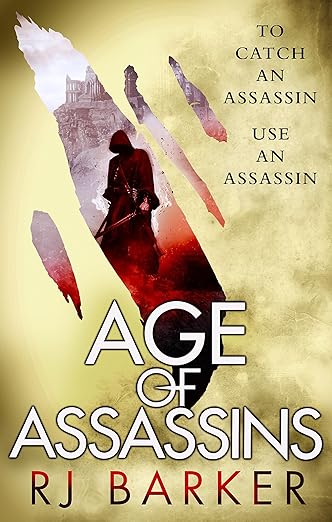
“Age of Assassins” (The Wounded Kingdom #1) by RJ Barker (2017)
Barker has certainly outdone himself with this rousing foray into the fantasy genre. “Age of Assassins” is an exhilarating rollercoaster ride of deceit, intrigue, and surprise that gleefully chucks you into the life of our protagonist, Girton Club-Foot.
Now there’s a selection to make an assassin blush!
Just remember to tread lightly as you wander through these pages, as these are worlds where shadows often bite back.
Would you like a free copy of my novel Birth of Assassins? Grab your copy as part of the free Ravenglass Universe starter library.