Discover why moral ambiguity in fantasy creates richer, more compelling stories. Explore themes of grey morality, complex characters, and power dynamics in the genre.
When I first discovered fantasy through works like The Hobbit and The Chronicles of Narnia, the moral lines were clearly drawn.
Good characters wore white (or at least earth tones), villains wore black, and you always knew who to root for.
As I’ve grown as both a reader and a writer, I’ve become increasingly drawn to stories that explore the murkier territories of morality.
In The Knight and the Rebel, I deliberately set out to create a story where both sides could be right—or wrong—depending on your perspective.
Ragnar believes he can reform the Empire from within, using his position and influence to protect his people.
Maja fights to tear that same Empire down, seeing it as an irredeemable force of oppression.
Both are acting out of love for their homeland and people, but their methods and beliefs put them in direct opposition.
Examples of Moral Complexity in Fantasy
This kind of moral complexity isn’t new to fantasy.
Joe Abercrombie’s First Law trilogy masterfully subverts traditional fantasy tropes by presenting characters who defy easy categorisation.
Take Sand dan Glokta—a torturer who commits horrible acts, yet remains oddly sympathetic due to his own suffering and sharp wit.
Or consider George R.R. Martin’s Jaime Lannister, who begins as a seemingly irredeemable villain but reveals layers of honour and complexity that force readers to question their initial judgments.
Why Moral Ambiguity Resonates
What makes these morally ambiguous stories so compelling?
I’d argue it’s because they better reflect the reality of human nature and historical conflict.
Real people rarely see themselves as villains.
The coloniser believes they’re spreading civilisation and progress.
The resistance fighter believes they’re defending their way of life.
Both can commit acts of terrible cruelty while believing they serve a greater good.
This is why I chose to show both sides of the conflict in The Knight and the Rebel.
Through Ragnar’s eyes, we see the Empire’s genuine belief in its civilising mission, its complex political mechanisms, and the real relationships and loyalties that bind it together.
Through Maja, we witness the brutal reality of occupation, the desperation of resistance, and the way violence can corrupt even the most noble cause.
Balancing Good and Evil in Storytelling
Some readers have asked why I didn’t make the Empire more overtly evil or the rebels more clearly heroic.
The answer is simple: that would have been a less honest story.
History teaches us that empires aren’t cartoonishly evil—they’re systems of power built on genuine beliefs about progress and civilisation, maintained by people who often sincerely believe in their mission.
Similarly, resistance movements, however justified their cause, can become twisted by violence and revenge.
The Role of Fantasy in Examining Morality
The beauty of fantasy is that it allows us to examine these complex moral questions in a removed context.
When we’re not caught up in the specifics of real-world conflicts, we can more easily analyse the underlying dynamics of power, resistance, and moral compromise.
This doesn’t mean there’s no place for more traditionally heroic fantasy—sometimes we need those stories of clear good triumphing over obvious evil.
But I believe the genre is enriched by works that dare to explore the grey areas, challenging readers to question their assumptions and sympathies.
Why Moral Ambiguity Matters
After all, isn’t that what great literature should do?
Make us think, make us question, and help us see the world in new ways?
In my view, moral ambiguity isn’t just a storytelling technique—it’s a tool for understanding the complexity of human nature and the difficult choices we all face.
What Do You Think?
Do you prefer your fantasy with clear heroes and villains, or do you appreciate stories that explore moral grey areas?
xplore how moral ambiguity transforms fantasy storytelling. From complex characters like Soren in Guild of Assassins to relationships shaped by loyalty and betrayal, discover why readers are drawn to the grey areas between good and evil.
Remember when fantasy was simple?
Heroes wore white, villains wore black, and you could spot the evil one by their conveniently twisted features.
But modern readers crave something messier, more honest.
We want characters who live in the shadows between right and wrong, because that’s where real people dwell.
Soren’s Journey in Guild of Assassins
My novel Guild of Assassins illustrates this perfectly through Soren’s transformation.
He begins seeking justice for his father’s murder – a classic hero’s motivation.
But his path leads him to join an assassins’ guild, train in killing arts, and eventually participate in what amounts to ritualised murder during the Threshing.
Most of us aren’t purely good or evil – we’re bundles of contradictions making compromises to survive.
When Soren learns to craft poisons from Tamasin or master manipulation from Elysia, we understand his choices even as we recoil from them.
His gradual corruption feels real precisely because it’s built on understandable decisions.
Antagonists Beyond Simple Categorisation
Even the story’s antagonists resist simple categorisation.
Kierak initially appears as a straightforward bully, but his brutality stems from the guild’s brutal culture.
The masters who train the recruits aren’t cackling villains – they’re professionals doing their jobs with varying degrees of cruelty and kindness.
Like real people, they contain multitudes.
The Rise of Moral Ambiguity in Modern Fantasy
This is why modern fantasy increasingly embraces moral ambiguity.
Look at George R.R. Martin’s work, where yesterday’s villain becomes tomorrow’s hero through shifting perspective.
Or Joe Abercrombie’s characters, who do horrible things for understandable reasons.
These stories resonate because they acknowledge that morality isn’t binary – it’s a spectrum we all navigate daily.
The Guild as a Symbol of Ambiguity
The guild itself represents this ambiguity perfectly.
It’s an organisation of professional killers, yes – but one with strict codes of conduct, formal training, and complex traditions.
Its members aren’t moustache-twirling villains but professionals practising a dark craft.
Like any real institution, it contains both corruption and honour, cruelty and loyalty.
Friendship in the Grey Areas
Soren and Alaric’s friendship demonstrates how moral ambiguity adds depth to relationships.
Their loyalty to each other is admirable, but it also enables their descent into darkness.
Are they saving each other’s humanity or helping each other lose it?
The answer isn’t clear because real relationships rarely have simple moral implications.
Revenge and Ambiguity
Even the revenge plotline gains complexity through moral ambiguity.
Soren’s quest for justice becomes increasingly hard to distinguish from simple vengeance.
Like the best morally grey narratives, it forces us to question not just the character’s choices but our own assumptions about right and wrong.
Training and Transformation
This complexity extends to the training sequences.
Each lesson learned, each skill mastered, carries both empowerment and corruption.
When Quillon teaches anatomy, is he sharing knowledge or teaching students to see humans as targets?
When Varus enforces discipline through violence, is he building strength or breaking humanity?
The answer is both – and that’s what makes it interesting.
Moral Ambiguity in Conflict
Moral ambiguity also creates better conflicts.
When Soren faces Kierak during the Threshing, it’s not a simple hero-versus-villain showdown.
It’s a clash between two people shaped by the same brutal system, each fighting for survival.
Their conflict matters precisely because neither is purely right or wrong.
Asking Deeper Questions
Perhaps most importantly, moral ambiguity allows fantasy to ask deeper questions.
Through Soren’s journey, we explore how survival demands compromise, how violence transforms its practitioners, how institutions shape morality.
These questions resonate because they don’t have easy answers.
The Rejection of Simple Narratives
This is why readers increasingly reject simple good-versus-evil narratives.
We know life is more complicated.
We want characters who reflect that complexity – characters who make mistakes, who compromise, who sometimes choose wrong for the right reasons and right for the wrong reasons.
Seeing Ourselves in Complex Characters
The best morally grey characters, like Soren, show us ourselves.
Their struggles with right and wrong mirror our own daily moral negotiations.
Their compromises feel familiar.
Their corruption becomes understandable, even as we hope we’d choose differently.
Embracing Complexity in Fantasy
In the end, moral ambiguity doesn’t weaken fantasy – it strengthens it.
By embracing complexity, stories like Guild of Assassins transform from simple adventure into nuanced exploration of human nature.
They remind us that the most interesting stories happen not in black and white, but in shades of grey.
Your Thoughts
How do you feel about moral ambiguity in fantasy?
Do you prefer clearly defined heroes and villains, or characters who blur the lines?
Discover how Dostoevsky’s ‘Crime and Punishment’ offers invaluable lessons for fantasy writers, from complex character development to using moral ambiguities, enhancing settings, and effective dialogue to elevate your fantasy narratives.
Fyodor Dostoevsky’s “Crime and Punishment” is a towering masterpiece of literature.
While it might seem an unconventional choice for fantasy writers, the novel’s exploration of complex themes and its intense focus on character development offer valuable lessons for crafting compelling fantasy narratives that resonate with readers on multiple levels.
Examining Moral Ambiguities
At the heart of “Crime and Punishment” is the story of Raskolnikov.
He is a former student who believes himself above the law and capable of committing a crime for a greater good.
The novel painstakingly explores the moral and psychological repercussions of his actions, providing an in-depth examination of the grey areas of morality.
Lesson: Fantasy writers can similarly challenge their characters with moral dilemmas that test their beliefs and values.
By placing characters in situations where the right choice is not clear-cut, or where the decision could have profound personal and societal repercussions, writers can add depth to their narratives.
This engages readers in complex ethical questions.
The Importance of Setting as Character
Dostoevsky’s St. Petersburg is almost a character in its own right.
It reflects Raskolnikov’s turmoil and the societal conditions that influence his actions.
The oppressive atmosphere of the city, with its stifling heat and cramped, maze-like streets, mirrors the protagonist’s mental state.
It serves as a constant reminder of his isolation and paranoia.
Lesson: In fantasy writing, the setting should do more than just provide a backdrop for action.
It should actively reflect and enhance the themes and emotions of the narrative.
Whether it’s a sprawling city or a secluded magical forest, the environment can be used to mirror the internal conflicts of characters and to heighten the narrative tension.
The Psychological Complexity of Characters
Dostoevsky is a master of psychological realism.
“Crime and Punishment” is a profound exploration of the human psyche.
Raskolnikov’s complex motives, his fluctuating mental state, and his interactions with other characters provide a rich study of human psychology.
Lesson: Fantasy authors should strive to create characters with similar psychological complexity.
Characters should have clear motivations, fears, and desires that drive their actions and interactions.
This depth makes characters more relatable and their journeys more compelling, thereby enhancing the reader’s investment in the story.
Use of Foil Characters
“Crime and Punishment” features several characters that act as foils to Raskolnikov.
This includes the saintly Sonya, whose compassion contrasts sharply with his nihilism.
These characters highlight different facets of the protagonist’s personality.
They help explore the novel’s themes from various angles.
Lesson: Fantasy authors can effectively use foil characters to highlight and contrast the central themes of their stories.
By creating characters that embody opposing traits or ideologies, writers can explore the central conflicts of their narrative more fully and add layers of meaning to their work.
The Role of Dialogue in Unveiling Themes
Much of the philosophical and ethical exploration in “Crime and Punishment” occurs through dialogue.
This allows characters to voice different viewpoints and clash over key issues.
This interaction is crucial for unpacking the novel’s complex themes.
Lesson: Effective use of dialogue in fantasy can serve a similar purpose.
Rather than relying on narrative exposition, authors can use conversations to reveal character motivations, build the world, and address the story’s deeper themes.
Dialogue can be a dynamic tool for advancing the plot while also fleshing out the philosophical and moral underpinnings of the story.
Beyond the Fantasy Genre
“Crime and Punishment” provides a blueprint for how deep psychological insight and moral complexity can elevate a narrative.
Fantasy writers looking to enrich their stories can draw from Dostoevsky’s approach to create novels that are not only engaging and imaginative but also profoundly resonant.
By integrating these lessons into their work, fantasy authors can craft stories that captivate the mind and stir the soul, much like Dostoevsky’s enduring classic.
Discover how Mark Lawrence’s “The Prince of Thorns” transformed fantasy literature with its grimdark themes and morally complex characters. Explore the book’s profound influence on the genre and why it remains a cornerstone of modern dark fantasy fiction.
When Mark Lawrence unleashed “The Prince of Thorns” upon the unsuspecting world, it was like dropping a ravenous wolf into a pen of fluffy sheep.
In a genre often adorned with noble quests and honourable heroes, Lawrence’s grimdark tale stormed in with blood, vengeance, and a protagonist who makes Joffrey Baratheon look like a choirboy.
Let’s take a look at how “The Prince of Thorns” has left its mark on the fantasy genre.
A Thorn in the Side of Traditional Fantasy
“The Prince of Thorns” introduced us to Jorg Ancrath, a charming young lad whose hobbies include murder, arson, and generally being the worst dinner guest imaginable.
Forget your chivalrous knights and gallant princes—Jorg is the poster child for ‘How to Win Friends and Influence People’ in a post-apocalyptic wasteland.
Lawrence didn’t just break the mould; he smashed it with a war hammer and then set it on fire for good measure.
This book is a refreshing antidote to the saccharine tales of virtue that had been multiplying like rabbits on fertility drugs.
A Protagonist to Die For…Literally
Jorg Ancrath is a character you wouldn’t want to meet in a dark alley—or a well-lit one, for that matter.
He’s not your average anti-hero; he’s the guy who makes anti-heroes question their life choices.
With a backstory darker than a black hole’s basement, Jorg’s rise to power is paved with corpses, betrayal, and the kind of moral ambiguity that would make Machiavelli proud.
In the grand tradition of rooting for the bad guy, Lawrence has given us a protagonist who is unapologetically ruthless.
And let’s be honest, it’s a breath of fresh air—or perhaps more accurately, a gust of acrid smoke from a burning village.
Grimdark: The New Black
“The Prince of Thorns” is a cornerstone of the grimdark subgenre, where hope goes to die and the only light at the end of the tunnel is the flicker of a flaming sword.
Lawrence’s writing revels in the gritty and the grim, painting a world where life is cheap and death is often a relief.
This bleak yet captivating style has influenced a new wave of fantasy authors who have embraced the darker side of storytelling.
If you’ve ever read a book where the hero’s greatest triumph is simply not getting disembowelled, you’ve got Mark Lawrence to thank.
The Ripple Effect
Lawrence’s success with “The Prince of Thorns” has opened the floodgates for more complex, morally grey characters in fantasy literature.
Publishers, previously wary of anything less wholesome than a Disney princess, suddenly found themselves inundated with tales of treachery, bloodshed, and protagonists who’d sooner stab you in the back than pat you on it.
Aspiring writers, inspired by Lawrence’s audacity, have ventured into darker territories, crafting stories where the line between good and evil is not just blurred but utterly obliterated.
It’s a beautiful, bloody mess, and we wouldn’t have it any other way.
The Legacy of Lawrence
Mark Lawrence has carved out a niche in the fantasy genre that’s as jagged and treacherous as Jorg’s path to power.
“The Prince of Thorns” stands as a testament to the power of unconventional storytelling and the appeal of characters who are more likely to steal your wallet than save your life.
So, whether you revel in the darkness or simply enjoy watching the world burn from a safe distance, “The Prince of Thorns” has left an indelible mark on fantasy literature.
It reminds us that sometimes, the best stories are those that drag us through the mud and leave us gasping for breath—and maybe a stiff drink.
So, here’s to Mark Lawrence, the dark prince of grimdark, and his unforgettable contribution to the world of fantasy.
Dive deep into “His Dark Materials” by Philip Pullman, a series that blends fantasy with reality and challenges societal norms through rich narrative and complex characters. Discover why it’s a pivotal work in modern fantasy literature.
Philip Pullman’s “His Dark Materials” is a series that doesn’t just dabble in the realms of fantasy; it dives into the deep end, emerging not only with a story told but with a mirror held up to our own world.
The trilogy, has left a profound impact on the fantasy genre, challenging conventions and pushing the boundaries of what fantasy can explore.
Rethinking Fantasy Frameworks
At its heart, “His Dark Materials” is an audacious reimagining of John Milton’s “Paradise Lost,” intertwined with elements of quantum physics, theology, and philosophy.
Pullman takes the traditional ingredients of epic fantasy—prophecy, a battle between cosmic forces, and a young protagonist on a quest—and repurposes them.
It’s not just about saving the world, but about questioning why the world, any world, needs saving in the first place.
The series has encouraged a generation of fantasy writers to think bigger and dig deeper, proving that the scaffolding of fantasy is limited only by the breadth of one’s imagination.
If fantasy was a house, Pullman didn’t just redecorate; he tore down walls to see what could be built in their place.
Dark Themes and Deeper Meanings
Pullman’s trilogy does not shy away from exploring dark and complex themes.
From the manipulation of religion to the loss of innocence and the corrosive nature of power, these books serve up life’s big questions on a platter, albeit not always with a comforting answer.
This willingness to confront the darker aspects of human nature and societal structures has set a new standard for what is possible in fantasy narratives.
It’s like inviting a dementor to a party—unsettling but undeniably captivating.
The Legacy of Lyra and Will
The characters of Lyra Belacqua and Will Parry are not merely inhabitants of their world—they are catalysts for change, challenging the status quo and battling forces much larger than themselves.
Their journeys and growth resonate deeply with readers, offering more than the standard ‘hero triumphs over evil’ trope.
In fantasy literature, character development can often play second fiddle to world-building or plot.
However, Pullman’s work reminds us that at the core of every great saga are characters who breathe, bleed, and aspire—making their victories (and losses) our own.
A New Dawn for Fantasy Realism
Pullman’s blend of the fantastical with the real—be it through the scientifically intriguing concept of Dust or the palpable pains and joys of his characters—has blurred the lines between fantasy and reality more effectively than any disillusionment charm.
“His Dark Materials” has inspired authors to infuse their fantastical tales with a sense of real-world relevance, making the genre accessible to those who might not typically venture into fantasy realms.
It’s a series that doesn’t just whisk you away to other worlds; it also brings those worlds uncomfortably close to our own.
The Unsettling Brilliance of His Dark Materials
Philip Pullman’s “His Dark Materials” series is a cornerstone of modern fantasy that has influenced the genre in profound ways.
The series challenges readers and writers alike to reconsider what fantasy can be—a space not only for escapism but for confrontation with our deepest fears and highest hopes.
So, if you find yourself yearning for a fantasy that offers both an escape and a reflection, delve into the world of “His Dark Materials.”
It’s a journey that promises to shake the foundations of how you view not just fantasy, but the very world around you.
Explore how the surreal and eclectic music of Mr. Bungle can inspire fantasy writers to blend genres, embrace the absurd, and innovate with narrative style, enhancing their storytelling with a touch of musical chaos.
In the realm of fantasy literature, where worlds are bound only by the limits of imagination, finding unique sources of inspiration is crucial.
For writers looking to inject a dose of the extraordinary into their narratives, the eclectic and often surreal music of Mr. Bungle offers a treasure trove of creative cues.
Known for their genre-defying soundscapes and theatrical flair, Mr. Bungle transcends conventional musical boundaries, providing a rich palette for fantasy writers seeking to spice up their creations.
The Art of Blending Genres
Mr. Bungle is infamous for their fearless fusion of genres—from metal and funk to jazz and circus music—creating a sound that is as unpredictable as it is compelling.
Fantasy writers can take a leaf out of Mr. Bungle’s book by mixing elements from various fantasy subgenres.
Imagine a world where high fantasy meets steampunk, or dark fantasy is infused with comic relief, much like how a Mr. Bungle track might weave heavy riffs with whimsical carnival tunes.
This approach not only sets a work apart but also enriches the narrative landscape, offering readers an experience as unexpected and refreshing as the band’s music.
Embracing the Absurd
Mr. Bungle’s lyrics often delve into the absurd, drawing on bizarre and grotesque imagery that challenges the listener’s perception of reality.
Fantasy writers can draw inspiration from this willingness to explore the strange and the surreal.
By incorporating elements of the absurd into their worlds—be it through peculiar characters, surreal environments, or illogical rules that govern the world—authors can create a distinct narrative voice that captures the imagination in uniquely profound ways.
Creating Complex Characters
The members of Mr. Bungle are known for their theatricality and ability to assume various personas, much like actors in a play.
This fluid identity is something fantasy writers can use to develop their characters.
Just as a Mr. Bungle song might shift perspectives and tones, characters in fantasy novels can be crafted with layers that reveal complexity and depth over time, surprising readers and adding a dynamic quality to the storytelling.
Utilizing Rich Symbolism
Mr. Bungle’s music is rife with symbolism, using sounds and lyrics to evoke emotions and ideas.
Fantasy writers can similarly enrich their narratives with symbols drawn from their worlds’ unique cultures and mythologies.
Whether it’s a cursed relic, a sacred animal, or a weather phenomenon peculiar to the fictional land, these symbols can deepen the thematic resonance of the story, much like how a haunting melody might underscore a pivotal moment in a song.
The Power of Unpredictability
If there’s one thing Mr. Bungle teaches us, it’s the power of unpredictability.
Their music never follows a predictable path, often veering off into unexpected directions.
In fantasy writing, maintaining an element of surprise can keep the readers engaged and on their toes.
Plot twists, unconventional world rules, or mysterious character motives—all these can make the narrative as thrilling and innovative as a Mr. Bungle album.
In the symphony of fantasy writing, drawing inspiration from a band like Mr. Bungle reminds us that the conventional can always be twisted into something spectacularly novel.
Just as the band blends disparate musical styles to create something entirely new, fantasy writers are challenged to meld diverse elements into their narratives, crafting worlds that resonate with originality and vibrancy.
So, tune into your favourite Mr. Bungle track, let the fusion of sounds transport you, and channel that creative energy into your writing.
Who knows what fantastic realms you might dream up with a little musical inspiration from one of the most avant-garde bands in the history of alternative music?
Dive into the shadowy realm of assassin fantasy, where morality blurs and danger lurks at every turn. Explore the main tropes, themes, and what makes this subgenre a captivating branch of fantasy literature.
Welcome to the dimly lit world of assassin fantasy, a genre where the heroes are as sharp as the knives they hide and moral ambiguities are as common as cloaks and daggers.
For those new to the concept, assassin fantasy delves into the tales of those who operate from the shadows, executing justice or vengeance (and sometimes both) for the right price—or the right cause.
Here, we’ll slice through the main tropes and themes that define this intriguing subgenre.
What is Assassin Fantasy?
Assassin fantasy is a subgenre of fantasy literature that revolves around the lives and lethal escapades of assassins.
Unlike traditional fantasy, where battles are fought in broad daylight with armies clashing over the fate of empires, assassin fantasy tends to focus on the individual, often delving into the darker, more personal conflicts that play out in the back alleys of bustling cities or the silent corridors of power.
Tropes and Themes of Asssassin Fantasy
The Moral Ambiguity of Killing for a Cause
One of the most deliciously complex tropes in assassin fantasy is the ever-present question of morality.
Assassins in these stories often grapple with the ethics of their profession, blurring the lines between right and wrong until they’re as indistinct as footprints in a busy marketplace.
It’s a world where the end often justifies the means, and the means are usually fatal.
The Lone Wolf with a Code
Many assassin characters are crafted in the mould of the lone wolf—a solitary figure who operates outside the law but adheres to a personal code.
This code is as crucial to their identity as their stealthy footwear.
They might kill for money or revenge, but there are always lines they won’t cross… usually.
Complex Mentor-Apprentice Relationships
In a world where trust is as rare as a truthful politician, the relationships between mentors and their apprentices are fraught with tension and fraught with betrayal.
These relationships are a core element of training sequences, where deadly skills are passed down and life lessons are learned in the most hazardous ways imaginable.
Intrigue and Political Machinations
Assassin fantasy novels often unfold against a backdrop of intricate political plots.
Assassins are not just weapons but also key players in games of power, where thrones are the prizes and the players are seldom innocent.
The cloak and dagger aren’t just tools of the trade; they’re metaphors for the subterfuge that runs rampant in the corridors of power.
A Dance with Death
At the heart of assassin fantasy is the ever-present dance with death.
Assassins flirt with their own mortality daily, and their survival depends as much on their skill with a blade as it does on their ability to navigate the perilous politics of their professions.
Their lives are a high-stakes game where a single slip could be fatal.
Why Dive Into Assassin Fantasy?
For those intrigued by the darker side of human nature, assassin fantasy offers a compelling blend of adrenaline and intrigue.
It’s a place where every shadow could hold a secret and every character has an agenda.
If you’re ready to explore the depths of human resolve and the heights of treachery, assassin fantasy might just be your next favourite read.
So, sharpen your blades—or your wits, which are safer—and prepare to delve into tales where the most dangerous thing is not the assassin lurking in the shadows, but the truths they uncover.
Welcome to the dark, intricate world of assassin fantasy, where survival is an art, and the brush strokes are often painted in blood.
Essential Assassin Fantasy Titles
As you embark on a shadowy journey through assassin fantasy, you’ll want to be well-armed with the best titles the genre has to offer.
Here’s a rundown of five essential books where the characters are as sharp as the blades they wield, and survival is the name of the game—if it were ever that simple.
The Way of Shadows by Brent Weeks
In The Way of Shadows, Brent Weeks takes us on a stroll through the city of Cenaria, a place where even the shadows seem to be plotting something nefarious.
This is the story of Azoth, a street urchin who apprentices himself to Durzo Blint, a master assassin whose curriculum vitae is as long as a life sentence.
This novel is an intensive masterclass in dark arts and darker ethics, perfect for those who like their morals as murky as a foggy night in Victorian London.
Jay Kristoff’s Nevernight is as subtle as a dagger to the ribs, and twice as sharp.
Here we meet Mia Corvere, who joins the deadliest flock of acolytes at the Red Church, a school where they teach you how to end lives just after morning chapel.
Mia’s quest for vengeance is fraught with literary booby traps and a shadowy companion that’s literally her own shadow.
Ideal for readers who enjoy their education sprinkled with a bit of murder.
Vlad Taltos by Steven Brust offers a unique blend of high fantasy with a dash of organized crime—think The Godfather with swords and sorcery.
Vlad, a low-ranking thug-turned-assassin, navigates the cutthroat world of Dragaeran society, where social climbers are likely to use actual climbers to dispose of rivals.
This series is a guide on how to manage your career prospects in a world where your next promotion might just come at the sharp end of a dagger.
Joe Abercrombie‘s The Blade Itself plunges us into the grim and gritty Union, where Logen Ninefingers, also known as “the Bloody-Nine,” proves that you can indeed lose a finger and gain a title.
This book isn’t strictly about assassins, but it has enough backstabbing and literal stabbing to qualify.
Abercrombie crafts a world where every alliance is a potential death sentence and the only thing cheaper than life is one’s dignity.
If you ever thought about mixing pirates with assassins and throwing in a magical curse for good measure, The Assassin’s Curse is your kind of tale.
Cassandra Rose Clarke introduces us to Ananna, a pirate princess on the run who inadvertently triggers a curse binding her to an assassin sent to kill her.
This book offers a swashbuckling escape with a duo who could kill each other at any moment but must work together to survive.
It’s like a magical version of couple’s therapy, but with more knives.
In Red Sister, Mark Lawrence proves that the deadliest assassins might just come from a convent.
Nona Grey’s journey from condemned prisoner to novice in the Convent of Sweet Mercy is littered with enough blood and betrayal to make a stone weep.
This is not your typical school; here, they teach you how to survive first and pray later.
The nuns are more likely to pass you a blade than a bible, making it the perfect school for those who like their education with a side of existential dread.
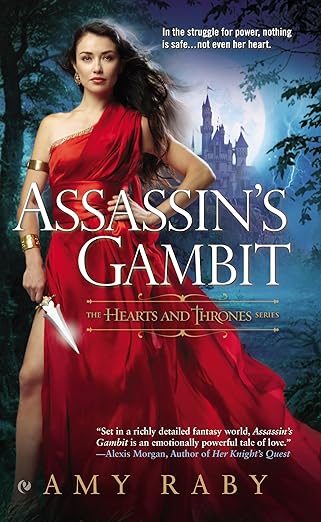
Assassin’s Gambit thrusts us into the heart of an empire where hearts are won with charm but empires are kept with daggers.
Vitala, an assassin and spy, targets the emperor but ends up entangled in a dangerous game of court intrigue and romance.
This novel blends the sharp precision of assassination with the unpredictability of love, proving that the heart can be as effective a target as the back.
Terry Pratchett’s The Hogfather brings his trademark wit to the fore, weaving a tale where the Discworld faces a crisis of mythical proportions that can only be solved by an assassin.
The Guild of Assassins is tasked with a contract on the Hogfather, Discworld’s version of Santa.
What follows is a hilariously twisted tale that questions the foundations of belief and holiday traditions, all while navigating the perils of professional killing.
Andy Peloquin’s Darkblade introduces us to the Hunter of Voramis, an assassin with a blade as cursed as his own soul.
Haunted by his past and feared by almost everyone, the Hunter is a master of death who battles not only his external enemies but also his inner demons.
This novel is an exploration of darkness, not just the kind that fills alleyways at night, but the kind that fills a man’s soul.
Set in a grim world reminiscent of the European Middle Ages, this novel follows Thomas Cale, who has been raised from childhood to be an assassin in the religious sanctuary known as the Sanctuary of the Redeemers.
Cale’s deadly skills are put to the test as he escapes the oppressive environment and faces a wider world rife with war and chaos.
Starting with A Dance of Cloaks, this series features Aaron Felhorn, who is trained from childhood to be the heir to his father’s criminal empire and a master assassin.
The series delves into themes of power, betrayal, and familial bonds, set against a backdrop of a city rife with corruption and violence.
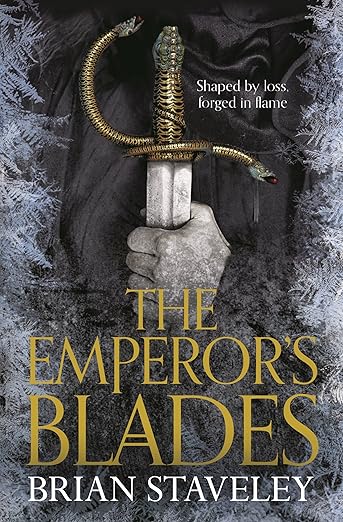
In this opening book of The Chronicle of the Unhewn Throne, the children of the Emperor each follow different paths—one as a monk, another as a soldier, and the third as a minister.
The novel skillfully weaves their stories together with elements of political intrigue, ancient magic, and assassins playing pivotal roles in the unfolding drama of an empire.
The first book in the Farseer Trilogy, Assassin’s Apprentice introduces readers to Fitz, the bastard son of a prince, who is secretly trained in the ways of a royal assassin.
Through Fitz’s eyes, readers explore a realm where loyalty, political intrigue, and dark magic intertwine, setting the stage for a deeply personal and epic-scale adventure.
Robin Hobb’s detailed world-building and complex character development make this a cornerstone of the genre.
Assassin fantasy provides a darkly mesmerizing escape into worlds where the sharp edge of a blade can alter destinies and where whispered secrets wield the power to topple kingdoms.
Each book in this genre offers a unique blend of intrigue, danger, and moral complexity, drawing readers into the shadows alongside characters who are both compelling and conflicted.
From the gritty streets of Cenaria in Brent Weeks’ The Way of Shadows to the holy halls of the Convent of Sweet Mercy in Mark Lawrence’s Red Sister, these stories explore the nuances of power, loyalty, and survival.
They invite us into the minds and hearts of those who operate on the fringes of society, bound by codes that blur the lines between right and wrong.
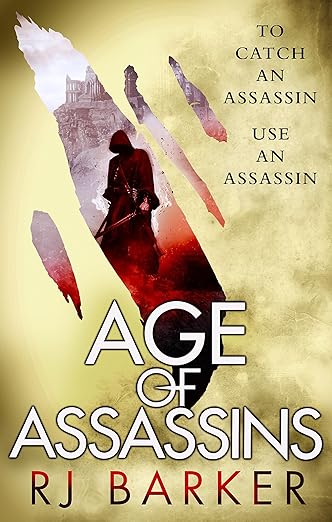
For readers looking to dive deeper into the shadowy world of assassin fantasy, Jon Cronshaw’s Guild of Assassins offers a thrilling journey into the life of Soren, an apprentice sculptor turned lethal assassin after the brutal murder of his father.
As Soren navigates the treacherous waters of the assassins’ guild, he is forced to confront not only external enemies but also the internal struggle between his quest for vengeance and his remaining shreds of conscience.
Guild of Assassins is a must-read for anyone fascinated by the complexities of a life pledged to secrecy and the pursuit of justice through unconventional means.
Whether you’re a seasoned aficionado of assassin fantasy or a newcomer to the genre, Cronshaw’s vivid storytelling and rich character development promise an engaging and thought-provoking experience.
So, if your reading list needs a dose of danger and a touch of moral ambiguity, pick up a copy of Guild of Assassins.
Let the adventure begin where the shadows deepen, and discover why assassin fantasy continues to captivate the hearts and minds of readers around the world.
Explore the enthralling world of assassin’s guilds in fantasy fiction. Discover why these dark collectives captivate readers with their mix of secrecy, intrigue, and complex characters in Guild of Assassins.
In the darker corners of fantasy literature, where the moral compass spins like a weather vane in a storm, the Assassin’s Guild stands as a beacon of structured chaos.
This trope, beloved by authors and readers alike, serves up an irresistible concoction of secrecy, skills, and, more often than not, a side of sedition.
What Exactly Is an Assassin’s Guild?
Imagine a place where every cloak hides a dagger, and the air is thick with the scent of intrigue and whispered secrets.
An Assassin’s Guild is essentially a structured organization, often shrouded in mystery, where professionals of the lethal arts gather, train, and ply their trade.
These guilds are not just about managing contracts for killing (though, admittedly, that is a significant part of their business model); they are also about political power plays, maintaining a balance of fear and respect, and the occasional internal betrayal because, well, habits die hard.
The Appeal: Why We Love a Good Assassin’s Guild
The allure of the Assassin’s Guild in fantasy fiction is manifold.
Firstly, there’s the thrill of the forbidden—delving into the lives of those who operate from the shadows appeals to our baser instincts.
These narratives allow us to explore the darker sides of human nature from the safety of our favourite reading nooks.
Moreover, Assassin’s Guilds often come with their own richly detailed lore and codes of conduct, which can be as intricate as any magic system in fantasy literature.
The concept of honour among thieves (or killers, in this case) provides a fascinating backdrop against which complex characters are developed, and moral lines are blurred until they resemble the scribbles of a toddler with a crayon.
Why They Make for Fun Stories
Assassin’s Guilds are fertile ground for storytelling for several reasons:
High Stakes: When your protagonist is an assassin, every decision could be a matter of life and death—ideal for keeping those pages turning.
Complex Characters:Assassins often have morally ambiguous natures and complex backstories. They’re not born in a guild; they end up there, and that journey is usually paved with drama.
Rich World-Building: The guild itself provides a ready-made society with its own rules, hierarchy, and traditions.
This setting invites readers into a world where every shadow could hold a secret or a knife (sometimes both).
From Fantasy Pages to Your Bookshelf
Guilds offer more than just contracts and covert operations; they are a microcosm of society, a dark mirror that reflects the complexities of power, loyalty, and ambition.
For those enchanted by these dark bastions of intrigue, the trope provides a playground of narrative possibilities where characters face not just external enemies but also internal conflicts.
If this shadowy world captivates your imagination, you won’t want to miss Guild of Assassins.
The story draws you into the life of Soren, a sculptor’s apprentice who plunges into the depths of an assassin’s guild following his father’s murder.
His journey from artisan to adept assassin is fraught with danger, moral dilemmas, and the quintessential quest for vengeance.
As Soren navigates this cutthroat world, he must decide if the price of his quest is worth the slice of his soul.
For a tale that cuts to the heart of what assassin’s guilds are truly about, Guild of Assassins promises to be a thrilling addition to your fantasy collection, delivering all the intrigue and peril that make the Assassin’s Guild trope a beloved pillar of fantasy fiction.
Delve into the enchanting world of “The Last Unicorn” by Peter S. Beagle, a tale that weaves melancholy with mythical beauty. Explore how this profound story transcends fantasy norms, speaking to our deepest emotions and redefining mythical storytelling with its poignant themes.
In the fantastical menagerie of fantasy literature, Peter S. Beagle‘s “The Last Unicorn” pranced into the scene with the grace of, well, a mythical unicorn.
This was not just another story about a mystical creature; it was a narrative that wove melancholy, beauty, and existential dread into a tapestry as enchanting as it was heart-wrenching.
Beagle’s tale redefined the boundaries of fantasy, proving that stories about mythical beasts could be as profound as they were whimsical.
Unicorns: Not Just for Tapestries Anymore
Before “The Last Unicorn“, these horned equines were relegated to the status of ornamental tapestry fillers or symbols of unattainable purity.
Beagle, however, presented the unicorn as a complex, sentient being grappling with loneliness, mortality, and the loss of her kind.
It was a far cry from the frolicking, maiden-attracting creature of lore, turning the unicorn trope on its horned head.
The Melancholy of Immortality
“The Last Unicorn” delved into themes seldom explored in fantasy at the time – the sorrow of immortality and the ache of ephemeral beauty.
Beagle’s unicorn is as cursed by her immortality as she is blessed, leading to a narrative tinged with a sense of tragic beauty.
This introspective take on the mythical creature challenged the genre to consider deeper, darker themes under its usually shimmering surface.
A Legacy of Enchantment and Desolation
The influence of Beagle’s work on modern fantasy is as subtle and pervasive as the magic of his unicorn.
Fantasy authors began to explore themes of loss, change, and the darker aspects of immortality with a newfound depth and sensitivity.
The echoes of “The Last Unicorn” can be seen in the works of authors like Neil Gaiman and Patrick Rothfuss, where the enchantment of the fantastical is often interlaced with the melancholy of the human condition.
The Lasting Spell of a Mythical Creature
“The Last Unicorn” remains a poignant figure in the forest of fantasy literature, a reminder that the most magical tales are those that speak to our deepest fears and longings.
Beagle’s narrative continues to resonate, a testament to the power of fantasy to explore the depths of the human heart, with or without a unicorn.
It’s a story that reminds us that even in a world brimming with magic, the most enchanting spells are those cast by the stories we tell.
Discover how ‘Peep Show’s’ unique storytelling and humour inspire fantasy writing in our blog. Learn to blend first-person narrative, flawed characters, and social commentary into your fantasy tales, drawing from this TV comedy’s innovative approach.
In the boundless world of fantasy literature, unexpected sources like the British TV comedy “Peep Show” offer fresh lessons.
Let’s dive into Mark and Jez’s absurdly funny world to see what it offers the realm of fantasy writing.
Mastering First-Person Narration
“Peep Show” excels with its intimate first-person perspective.
Fantasy writers can take a leaf from this book, adopting a similar narrative style for a closer connection between readers and characters, adding immediacy to their fantastical worlds.
Developing Flawed and Relatable Characters
Mark and Jez’s shortcomings make them feel genuine.
Fantasy characters, too, benefit from such realism – their flaws and quirks lend authenticity, even amid magical settings.
Balancing Humor with Character Development
The show skillfully uses humour to flesh out characters.
Fantasy writers can use this approach to add layers to their characters, using humour to reveal, build, and deepen relationships.
The Importance of Realistic Dialogue
“Peep Show” is renowned for its realistic and witty dialogue.
Effective dialogue in fantasy can bring characters to life, anchoring the fantastical in the relatable.
Exploring the Mundane in the Fantastic
The show finds humour in the everyday.
Fantasy narratives can similarly ground the extraordinary in the ordinary, making the world more tangible and relatable.
Tackling Social Commentary
“Peep Show” often delves into social and cultural themes.
Fantasy worlds offer a canvas for similar commentary, reflecting and critiquing real-world issues through a fantastical lens.
Keeping the Narrative Fresh
The show’s ever-evolving scenarios keep viewers hooked.
Fantasy writers should similarly aim for dynamism, continually developing their worlds and characters.
“Peep Show,” with its distinctive storytelling, relatable humour, and societal insights, is a goldmine for fantasy writers.
Integrating these elements can add the same depth and originality to fantasy stories as seen in this comedic gem.
Fantasy authors, are you ready to weave “Peep Show’s” awkward hilarity into your epic tales?
Share your ideas, and let’s explore how this comedy can enhance fantasy storytelling.