Join the Ravenglass Universe Community: Exclusive Content Awaits

Join the adventure with exclusive early access to “The Knight and the Rebel” and other fantasy tales by Jon Cronshaw. Become a founding member on Patreon for a chance to shape the story and connect with fellow fans in the Ravenglass Universe.

Good news, everyone!!

I’m thrilled to announce the launch of my official Patreon page, and I want you to be part of this journey into the heart of the Ravenglass Universe.

🌟 Why Join Our Community? 🌟

🗡️Exclusive Early Access: Read “The Knight and the Rebel” (Ravenglass Legends Book 3) before anyone else!

I’m currently posting a new chapter of my work-in-progress every weekday, and Patreon members get first dibs.

📖 A Treasure Trove of Tales: There’s already a wealth of stories waiting for you.

Even as a free member, you’ll receive regular short stories.

🎖️Connect with Fellow Fans: Debate character motivations, share fan theories, and forge friendships with readers who share your passion for fantasy.

Visit: patreon.com/joncronshawauthor


🌟 Introducing the Exclusive Rogue Tier – Limited Time Offer! 🌟

As a founding member, you’ll gain unparalleled access to the Ravenglass Universe.

Here’s what awaits you:

🗡️ Exclusive Early Access: Be the first to experience raw, unfiltered drafts before they reach the editor. Witness the story unfold in real-time!

📜 Regular Updates: Enjoy at least one new chapter or story update every week, ensuring a constant stream of engaging content.

🍻 Influence the Story: Your feedback directly shapes the narrative.

Share your thoughts, theories, and reactions to help guide the destiny of Ravenglass.

📖 Advance Copies: Receive completed novels in your preferred ebook format weeks before they hit retail stores.

🎖️ Special Acknowledgment: See your name featured in the acknowledgments of retail releases.

The Rogue tier includes everything from the regular Hero tier, but with a 30% lifetime discount off the Hero tier price.

This is an unprecedented opportunity to be at the forefront of the Ravenglass Universe community.

Visit: patreon.com/joncronshawauthor


🔥 What’s Happening Now 🔥

“The Knight and the Rebel” (Ravenglass Legends Book 3) is in full swing, with chapter updates every weekday.

Join now to catch up and be part of the excitement!

Remember, even if you’re not ready to become a Rogue, you can still enjoy free short stories and updates as a free community member.

There’s a place for everyone in this adventure!

Ready to claim your spot as a founding member?

Click the link below to join our exclusive Patreon community:

Visit: patreon.com/joncronshawauthor


This is your chance to be a cornerstone of an epic journey.

Don’t miss out on this limited-time offer!

Hope to see you there.

Jon

P.S. The Rogue tier is strictly limited. Once it’s gone, it’s gone forever.

Top 10 Underrated Epic Fantasy Novels You Need to Read

Discover the top 10 underrated epic fantasy series you need to read. From Lloyd Alexander’s Prydain to Margaret Weis and Tracy Hickman’s Death Gate Cycle, these hidden gems offer unique worlds and compelling stories that rival the giants of the genre.

Epic fantasy often brings to mind the titans of the genre: Tolkien, Martin, and Sanderson.

However, there exists a treasure trove of lesser-known gems that deserve your attention.

Here are ten underrated epic fantasy novels and series that you absolutely need to read.

Chronicles of Prydain by Lloyd Alexander

Move over, Middle-earth. Lloyd Alexander’s Prydain series offers a rich tapestry of Welsh mythology, endearing characters, and a journey of self-discovery.

Follow Taran, an assistant pig-keeper turned hero, as he navigates a world brimming with magic and danger.

It’s like “The Lord of the Rings” but with more farm animals and fewer hobbits.

The Forgotten Beasts of Eld by Patricia McKillip

Patricia McKillip weaves a lyrical tale of a reclusive sorceress and her menagerie of magical beasts.

“The Forgotten Beasts of Eld” is a standalone novel that packs the punch of an entire series.

Expect profound themes, enchanting prose, and a storyline that doesn’t require a flowchart to follow.

The Divine Cities by Robert Jackson Bennett

In “The Divine Cities” trilogy, Robert Jackson Bennett delivers a masterclass in world-building and political intrigue.

The cities once ruled by gods are now in the hands of mortals, leading to chaos and conflict.

This series mixes noir detective vibes with divine shenanigans.

It’s like “Blade Runner” meets “The Iliad,” but better.

Gene Wolfe’s Book of the New Sun

Gene Wolfe’s “Book of the New Sun” is an intricate, mind-bending journey through the life of Severian, a torturer with a conscience.

This series is a dense, philosophical read that makes “War and Peace” look like a children’s book.

If you enjoy puzzles wrapped in enigmas, this one’s for you.

The Mageborn Series by Michael G. Manning

Michael G. Manning’s “Mageborn” series is the underdog story of Mordecai, a commoner who discovers his magical heritage.

It’s a refreshing take on the chosen one trope, with plenty of wit, charm, and epic battles.

Think “Harry Potter” meets “Game of Thrones,” without the annoying teen angst.

Initiate Brother Duology by Sean Russell

Sean Russell’s “Initiate Brother” duology transports you to a fantastical version of feudal Japan.

It’s a world of political intrigue, spiritual mysticism, and philosophical depth.

The duology combines the elegance of “Memoirs of a Geisha” with the brutality of “Shogun.”

It’s a samurai sword fight with added metaphysical contemplation.

Deryni Chronology by Katherine Kurtz

Katherine Kurtz’s “Deryni Chronology” series is a pioneer of the historical fantasy genre.

Set in a medieval world where magic and politics intertwine, the Deryni books offer a rich, character-driven narrative.

It’s “The Tudors” with spellcasting and fewer beheadings.

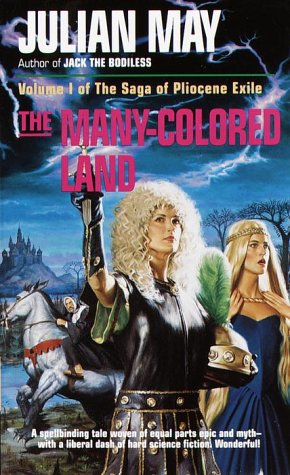
Saga of the Pliocene Exile by Julian May

Julian May’s “Saga of the Pliocene Exile” is a genre-bending masterpiece that mixes science fiction with fantasy.

Time-traveling misfits find themselves in a prehistoric Earth ruled by aliens with godlike powers.

It’s like “Doctor Who” met “The Silmarillion” at a wild party and decided to write a novel together.

Deathstalker Series by Simon R. Green

Simon R. Green’s “Deathstalker” series is a space opera on steroids.

It follows Owen Deathstalker as he battles an evil empire with a ragtag band of misfits.

The series combines elements of fantasy, sci-fi, and horror into a whirlwind of non-stop action.

It’s “Star Wars” if George Lucas had a darker sense of humour and no restraint.

The Death Gate Cycle by Margaret Weis and Tracy Hickman

Margaret Weis and Tracy Hickman’s “The Death Gate Cycle” takes place in a universe shattered into multiple realms, each with its own unique magic system.

The series explores themes of prejudice, power, and redemption.

It’s “The Chronicles of Narnia” for adults, with more existential dread and fewer talking animals.

These ten underrated epic fantasy series prove that there’s more to the genre than the usual suspects.

Each series offers a unique world, compelling characters, and storytelling that rivals the giants of fantasy.

So, if you’re tired of waiting for winter to come or for Kvothe to finally open those damn doors, give these hidden gems a try.

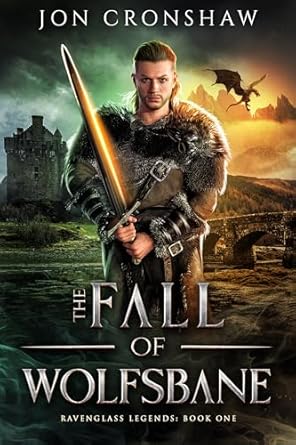
Out now: The Fall of Wolfsbane

When the Ostreich Empire shatters his world and enslaves his people, Ragnar Wolfsbane vows to fight back.

Thrust into a dangerous game of imperial intrigue, Ragnar must learn to navigate a world of forbidden magic and hidden agendas.

But as the true power of ravenglass emerges, Ragnar’s choices could lead to salvation or ruin for those he holds dear.

Immerse yourself in a vivid fantasy realm where the lines between hero and villain blur.

Will Ragnar rise to become the leader his clan needs, or will the Empire’s machinations crush his resolve?

Find out in The Fall of Wolfsbane, a character-driven high fantasy novel.

The Impact of The Prince of Thorns on Fantasy Literature

Discover how Mark Lawrence’s “The Prince of Thorns” transformed fantasy literature with its grimdark themes and morally complex characters. Explore the book’s profound influence on the genre and why it remains a cornerstone of modern dark fantasy fiction.

When Mark Lawrence unleashed “The Prince of Thorns” upon the unsuspecting world, it was like dropping a ravenous wolf into a pen of fluffy sheep.

Fantasy literature would never be the same.

In a genre often adorned with noble quests and honourable heroes, Lawrence’s grimdark tale stormed in with blood, vengeance, and a protagonist who makes Joffrey Baratheon look like a choirboy.

Let’s take a look at how “The Prince of Thorns” has left its mark on the fantasy genre.

A Thorn in the Side of Traditional Fantasy

“The Prince of Thorns” introduced us to Jorg Ancrath, a charming young lad whose hobbies include murder, arson, and generally being the worst dinner guest imaginable.

Forget your chivalrous knights and gallant princes—Jorg is the poster child for ‘How to Win Friends and Influence People’ in a post-apocalyptic wasteland.

Lawrence didn’t just break the mould; he smashed it with a war hammer and then set it on fire for good measure.

This book is a refreshing antidote to the saccharine tales of virtue that had been multiplying like rabbits on fertility drugs.

A Protagonist to Die For…Literally

Jorg Ancrath is a character you wouldn’t want to meet in a dark alley—or a well-lit one, for that matter.

He’s not your average anti-hero; he’s the guy who makes anti-heroes question their life choices.

With a backstory darker than a black hole’s basement, Jorg’s rise to power is paved with corpses, betrayal, and the kind of moral ambiguity that would make Machiavelli proud.

In the grand tradition of rooting for the bad guy, Lawrence has given us a protagonist who is unapologetically ruthless.

And let’s be honest, it’s a breath of fresh air—or perhaps more accurately, a gust of acrid smoke from a burning village.

Grimdark: The New Black

“The Prince of Thorns” is a cornerstone of the grimdark subgenre, where hope goes to die and the only light at the end of the tunnel is the flicker of a flaming sword.

Lawrence’s writing revels in the gritty and the grim, painting a world where life is cheap and death is often a relief.

This bleak yet captivating style has influenced a new wave of fantasy authors who have embraced the darker side of storytelling.

If you’ve ever read a book where the hero’s greatest triumph is simply not getting disembowelled, you’ve got Mark Lawrence to thank.

The Ripple Effect

Lawrence’s success with “The Prince of Thorns” has opened the floodgates for more complex, morally grey characters in fantasy literature.

Publishers, previously wary of anything less wholesome than a Disney princess, suddenly found themselves inundated with tales of treachery, bloodshed, and protagonists who’d sooner stab you in the back than pat you on it.

Aspiring writers, inspired by Lawrence’s audacity, have ventured into darker territories, crafting stories where the line between good and evil is not just blurred but utterly obliterated.

It’s a beautiful, bloody mess, and we wouldn’t have it any other way.

The Legacy of Lawrence

Mark Lawrence has carved out a niche in the fantasy genre that’s as jagged and treacherous as Jorg’s path to power.

“The Prince of Thorns” stands as a testament to the power of unconventional storytelling and the appeal of characters who are more likely to steal your wallet than save your life.

So, whether you revel in the darkness or simply enjoy watching the world burn from a safe distance, “The Prince of Thorns” has left an indelible mark on fantasy literature.

It reminds us that sometimes, the best stories are those that drag us through the mud and leave us gasping for breath—and maybe a stiff drink.

So, here’s to Mark Lawrence, the dark prince of grimdark, and his unforgettable contribution to the world of fantasy.

Long may his reign of literary terror continue.

Eragon’s Enduring Impact on Fantasy Fiction and Aspiring Writers

Discover how Christopher Paolini’s “Eragon” revolutionised fantasy literature, sparking a resurgence in dragon-themed novels and inspiring countless aspiring writers. Explore the book’s profound impact on the genre and its lasting legacy in modern fantasy fiction.

When Christopher Paolini released “Eragon,” few could have predicted the seismic shift it would cause in the fantasy genre.

What began as a homeschooled teenager’s project turned into a dragon-powered juggernaut, mercilessly clawing its way into the hearts of millions.

Let’s take a sardonic look at how a farm boy and his dragon left an indelible mark on fantasy literature.

A Teenager and His Word Processor

In 2002, Paolini, then a 15-year-old, decided he had read enough Tolkien to give the world his own interpretation of Middle-earth.

Armed with a thesaurus and the boundless ambition of youth, he embarked on crafting “Eragon.”

Critics might argue that Paolini’s youth is evident in his writing, but let’s not kid ourselves—if given the chance, who wouldn’t want to publish a bestselling novel before learning to drive?

Dragons: The Ultimate Fantasy Accessory

Eragon reintroduced dragons as the ultimate fantasy accessory, much like mobile phones for teenagers.

Before “Eragon,” dragons were formidable, fearsome, and somewhat rare.

After “Eragon,” every budding fantasy writer thought, “If Paolini can do it, so can I!” and thus began the draconic population boom in literature.

We now have more dragons than you can shake a magic staff at.

Plot Twists and Familiar Territory

Let’s not ignore the elephant—or rather, the dragon—in the room: “Eragon” borrows heavily from established fantasy tropes.

Farm boy discovers he’s special?

Check.

Mysterious mentor?

Check.

Evil overlord?

Triple check.

While some might call it derivative, others—probably sitting on dragon-shaped piles of money—call it a homage.

Besides, originality is overrated, especially when you can just rearrange the furniture in Tolkien’s living room and call it your own.

Impact on Aspiring Writers

Paolini’s success was a beacon of hope to countless aspiring writers.

His journey from self-publishing to international acclaim whispered sweet nothings into the ears of many: “You, too, can be a published author.”

This led to a surge in fantasy novels hitting the market, each trying to capture the same lightning in a bottle.

It was like watching a medieval version of the X Factor, but with more sword fights and fewer power ballads.

The Legacy of Eragon

“Eragon” has undeniably left its mark on the fantasy genre.

It brought dragons back into vogue, inspired a new generation of writers, and taught us that sometimes, just sometimes, a teenager with a dream and a penchant for purple prose can conquer the literary world.

If you ever find yourself rolling your eyes at yet another “chosen one” narrative, remember—you have Eragon to thank for it.

So, whether you love it, hate it, or love to hate it, “Eragon” has etched itself into the annals of fantasy literature.

It serves as a reminder that dragons, much like literary success, can come from the most unexpected places.

So next time you see a young writer hunched over their laptop, churning out the next big fantasy epic, give them a nod.

They might just be the next Paolini—armed with a thesaurus and a dragon-sized dream.

Top 10 Epic Fantasy Series of All Time

Explore the top 10 epic fantasy series of all time, from legendary adventures to unforgettable characters. Dive into these completed series that have set the standard for fantasy literature, perfect for binge-reading and discovering magical worlds.

Fantasy readers, gather round and dust off your tattered cloaks, because today we delve into the greatest epic fantasy series that have ever graced the shelves of our libraries, bookstores, and undoubtedly your overburdened e-readers.

These series are not only complete but also iconic in the realms of magic, heroism, and occasionally, more bloodshed than a dragon’s dinner party.

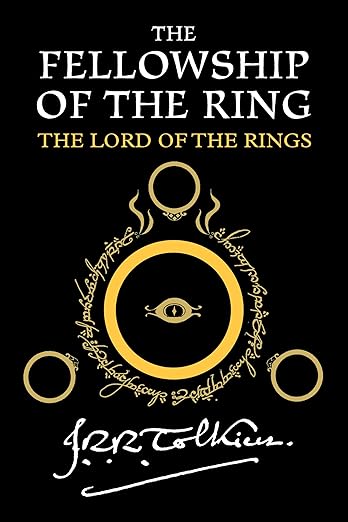
The Lord of the Rings by J.R.R. Tolkien

We start with the granddaddy of them all, the series that put epic fantasy on the map.

Follow Frodo, Sam, and the rest of the fellowship as they embark on a journey to destroy the One Ring.

Beware: You may never look at jewellery the same way again.

The Wheel of Time by Robert Jordan (and Brandon Sanderson)

Spanning 14 books, this mammoth series takes you through a world of intricate plots, endless prophecies, and more characters than you can shake a sword at.

Robert Jordan started it, but it took Brandon Sanderson to finally wrap things up, proving that even epic tales can, indeed, have an end.

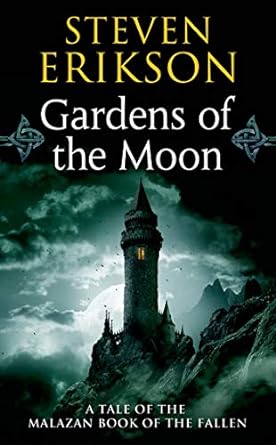
The Malazan Book of the Fallen by Steven Erikson

Prepare for a deep dive into a world where gods meddle, soldiers curse, and plots twist more than a politician’s promises.

With ten books of complex narratives and epic battles, it’s the perfect series for those who like their fantasy dark and their storylines labyrinthine.

The Broken Empire Trilogy by Mark Lawrence

Meet Jorg Ancrath, the charmingly sociopathic protagonist who makes most fantasy heroes look like kindergarten teachers.

This trilogy is grimdark at its finest, with enough moral ambiguity to keep your ethics professor up at night.

The Dark Tower Series by Stephen King

Stephen King’s magnum opus blends fantasy, horror, and western genres into a sprawling epic that spans eight books.

Follow the gunslinger Roland as he pursues the enigmatic Dark Tower, encountering strange creatures and even stranger plot twists.

The Earthsea Cycle by Ursula K. Le Guin

Step into the archipelago of Earthsea, where magic is about balance and true names hold power.

This series, comprised of five novels and a collection of short stories, explores deep themes of identity, power, and redemption.

Also, dragons.

Did we mention the dragons?

The First Law Trilogy by Joe Abercrombie

In this grim and gritty series, there are no heroes, only varying degrees of villainy.

Follow the adventures of Logen Ninefingers, Inquisitor Glokta, and Jezal dan Luthar in a world where moral greys dominate and happy endings are strictly prohibited.

Memory, Sorrow, and Thorn by Tad Williams

This series may start with a humble kitchen boy named Simon, but it quickly evolves into a tale of epic proportions.

Williams’ work laid the groundwork for many modern fantasy series, proving that the journey from scullery to saviour is one worth taking.

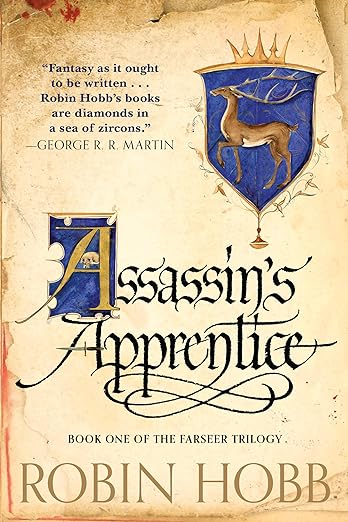
The Farseer Trilogy by Robin Hobb

Follow the life of FitzChivalry Farseer, a royal bastard trained as an assassin.

With its rich character development and intricate plotting, this series is a masterclass in fantasy storytelling.

Plus, it’s nice to read about a protagonist who really knows how to hold a grudge.

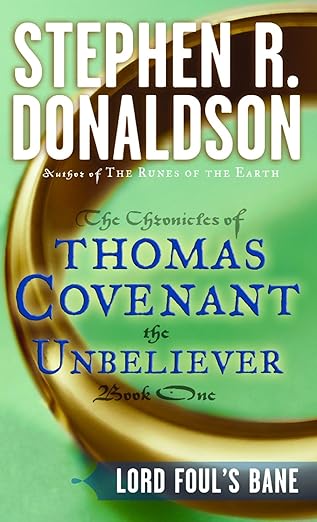
The Chronicles of Thomas Covenant by Stephen R. Donaldson

Enter the Land, a world as beautiful as it is brutal.

Thomas Covenant, an anti-hero with a serious attitude problem, must navigate this perilous realm.

It’s a series that combines deep philosophical questions with high-stakes adventure, ideal for those who enjoy their fantasy with a side of existential dread.

These top ten epic fantasy series have stood the test of time and offer the perfect escape from the mundane.

So grab your swords, ready your spells, and dive into these completed tales of adventure, magic, and enough plot twists to keep you guessing until the very last page.

Out now: The Fall of Wolfsbane

When the Ostreich Empire shatters his world and enslaves his people, Ragnar Wolfsbane vows to fight back.

Thrust into a dangerous game of imperial intrigue, Ragnar must learn to navigate a world of forbidden magic and hidden agendas.

But as the true power of ravenglass emerges, Ragnar’s choices could lead to salvation or ruin for those he holds dear.

Immerse yourself in a vivid fantasy realm where the lines between hero and villain blur.

Will Ragnar rise to become the leader his clan needs, or will the Empire’s machinations crush his resolve?

Find out in The Fall of Wolfsbane, a character-driven high fantasy novel.

Exploring the Rich World of “A Song for Arbonne” by Guy Gavriel Kay

Dive into “A Song for Arbonne” by Guy Gavriel Kay, where medieval history and fantasy blend into a captivating narrative filled with intrigue, politics, and deep character studies. Explore why this novel is a treasure in fantasy literature.

Guy Gavriel Kay’s “A Song for Arbonne” stands as a towering achievement in the realm of fantasy literature, masterfully blending historical finesse with a rich narrative full of intrigue and conflict.

Based loosely on the Albigensian Crusade in medieval France, the novel transcends the typical boundaries of historical fantasy to offer a story that is both familiar and startlingly original.

Let’s delve into the elements that make this novel a must-read for fans of the genre.

The Art of Subtle World Building

“A Song for Arbonne” is renowned for its intricate world-building that steps away from the usual swords-and-sorcery backdrop to embrace a more nuanced, almost Renaissance-like setting.

The lands of Arbonne and its surrounding territories are depicted with a complexity that mirrors the political and cultural intricacies of medieval Occitania, crafting a world that feels alive and teeming with possibility.

The novel’s setting avoids becoming a dry historical lecture and instead presents a vibrant stage upon which the drama of the narrative unfolds, captivating the reader’s imagination with every page.

A Symphony of Characters

The real magic of “A Song for Arbonne” lies in its rich ensemble of characters, each woven into the plot with care and depth.

The multitude of perspectives offered in the novel adds layers of understanding and emotion to the story, making the characters’ journeys feel incredibly real and compelling.

This narrative approach allows the reader to see the world through various eyes, enhancing the emotional and thematic richness of the story.

The Thrill of Political Intrigue

At the heart of the novel throbs a complex web of political intrigue, with plots and counterplots that unfold like a chess game with fatal stakes.

The political machinations are not just background noise but are central to the driving force of the plot, engaging the reader with their realism and relevance.

This element of the story keeps you guessing at every turn, making “A Song for Arbonne” a thrilling read that’s hard to put down.

Characters with Depth

Kay excels in creating characters who are as flawed as they are fascinating.

Far from the one-dimensional figures often found in lesser tales, the characters in “A Song for Arbonne” are driven by personal motives, desires, and the kind of deep-seated complexities that make them resonate with the reader.

They are heroes with their own fears and villains with their own charms, each contributing to the narrative’s gripping allure.

A Lasting Impression

“A Song for Arbonne” is more than just a staple in the fantasy genre; it is a narrative that weaves historical elements with rich storytelling to leave a lasting impact on its readers.

Guy Gavriel Kay offers a novel that sings with its own unique voice, much like the troubadours of Arbonne, whose melodies could sway the hearts of men and alter the course of history.

For anyone who loves fantasy that breathes with life, plots that captivate, and characters that stay with you long after you turn the last page, “A Song for Arbonne” is an essential read.

Dive into its pages and let yourself be transported into a world where history and fantasy dance together in a beautiful, unforgettable symphony.

Exploring Vengeance and Justice in Assassin Fantasy Literature

Explore the enthralling themes of vengeance and justice in assassin fantasy, where morality is as sharp as a dagger’s edge. Discover how these themes drive complex narratives and characters, making for compelling reads like Guild of Assassins.

In the shadow-strewn alleys of assassin fantasy, where daggers are as sharp as the wits of those who wield them, the tropes of vengeance and justice dance a perilous tango.

It’s a genre where every shadow could be a judge, and every whisper might be a sentence.

Here, we explore how these themes carve deep narratives into the very bones of assassin stories, with a smirk and a flourish.

Vengeance: A Dish Best Served with a Side of Irony

Vengeance is the bread and butter of the assassin’s diet, often setting them on a path that’s as bloody as it is cathartic.

It’s the primal scream in a darkened forest, the crack of a spine in a silent library.

The quest for personal revenge gives our cloaked protagonists a rather compelling reason to sharpen their blades, not to mention their life choices.

In assassin fantasy, vengeance is rarely straightforward.

It comes layered with the irony that those seeking retribution often end up adopting the very traits they despise in their adversaries.

They become mirrors of their enemies—albeit better dressed and with superior one-liners.

This trope challenges readers to question whether vengeance is merely justice without the paperwork, or a wild beast that gnaws at the roots of one’s morality.

Justice: The Light at the End of a Blood-Soaked Tunnel

Then there’s justice, a concept as elusive as a sympathetic tax collector.

In the realms of assassin fantasy, justice is often what the assassins are either fighting against or striving for.

It’s the carrot dangled before the thoroughbred racehorse of their moral compass, assuming it hasn’t been sold to buy more daggers.

Justice in these stories usually has more masks than a Venetian ball.

Whether it’s the rough justice meted out by our protagonists, or the higher moral ideals they aspire to achieve, it serves as a guiding light—a lighthouse for ships navigating the stormy seas of ethical ambiguity.

But as every good assassin knows, light makes it easier for your enemies to aim.

Why Do We Root for the Knife-Wielder?

What makes these tropes endlessly fascinating is the reader’s own precarious moral balancing act.

We cheer for the assassin, the underdog with a questionable moral code, because they disturb the sediment at the bottom of the pond of justice.

They force us to confront uncomfortable truths about right, wrong, and everything in-between—preferably from a safe distance.

Plus, let’s be honest, there’s something inherently satisfying about seeing someone settle their scores with a well-placed blade rather than a sternly worded letter.

Let’s Cut to the Chase

Assassin fantasy novels provide a murky reflection of our own world’s struggles with vengeance and justice, wrapped up in a blood-soaked bow of thrilling narratives and dark deeds.

These themes resonate with us because they are as human as the desire for revenge on someone who spoils the ending of a book.

If your thirst for vengeance—or is it justice?—leads you down dark literary alleys, you might consider picking up Guild of Assassins.

Follow Soren as he navigates the treacherous waters of an assassin’s guild, where every choice is between being the blade or the sheath.

Will he find justice, or will his quest for vengeance change him beyond recognition?

Uncover the answers wrapped in thrilling action, dubious morals, and the ultimate quest for retribution.

After all, isn’t justice just vengeance with an official stamp?

Discover the Most Intriguing Assassins’ Guilds in Popular Novels

Dive into the shadowy world of assassins’ guilds with our guide to the coolest and most lethal organizations in fantasy fiction. Explore guilds that shape stories with intrigue, power struggles, and complex characters.

In the shadow-drenched corridors of fiction, there are establishments that don’t bother with such trivialities as customer service or opening hours, unless, of course, you count opening hours as the time it takes to open a lock or someone’s throat.

Welcome to the world of assassins’ guilds, where the members are always sharp, both in wit and weaponry.

Here are some of the coolest guilds where killing is less of a sin and more of an art form.

The Faceless Men of Braavos – A Song of Ice and Fire, George R.R. Martin

Nestled in the Free City of Braavos, the House of Black and White doesn’t stand out for its vibrant decor.

Home to the Faceless Men, this guild is more than just assassins; they are religious zealots of the god of Death.

They change faces quicker than a politician changes policies, making them not only deadly but also untraceable – the ultimate combination for occupational longevity.

The Assassins’ Guild – Discworld, Terry Pratchett

On the Discworld, assassination is as much a part of the culture as is a strong cup of tea accompanied by a distrust of anything foreign.

The Guild of Assassins in Ankh-Morpork operates like a well-oiled machine, complete with a school curriculum that includes such diverse subjects as ‘Artful Dodging’, ‘Creative Writing’, and ‘Advanced Humbug’.

It’s one of the few schools where you literally ‘pass’ or ‘die trying’.

The Wetboys of Cenaria – The Night Angel Trilogy, Brent Weeks

Forget everything you thought you knew about subtlety because, in Cenaria, Wetboys take the art of assassination to another level.

These are not mere assassins; they are the elite with magical talents, who consider regular assassins as amateurs playing with pointy sticks.

The term ‘Wetboy’ comes from the fact that, unlike mere assassins who leave dry corpses, their targets are often left in a more… ‘liquid’ state.

The Hashashin – The Alamut Series, Vladimir Bartol

Often considered the historical (and some would argue, mythological) forebears of all subsequent fictional assassins’ guilds, the Hashashin of Alamut were both feared and revered across the Middle East.

Their stronghold in Alamut was a place of legend, and their leader, Hassan-i Sabbah, was the sort who believed in motivational speaking through targeted killings.

Their motto might well have been, ‘Join us or die terrified’.

The No Peak Clan – The Green Bone Saga, Fonda Lee

In the city of Janloon, jade is the source of all power and the No Peak Clan are the master wielders of its power, combining martial arts with deadly politics.

This family-run guild deals in protection, enforcement, and when necessary, calculated assassinations.

It’s like a family business, but with more bloodshed and fewer board meetings.

Choose Your Guild Wisely

Whether you’re in the mood for a straightforward throat-slitting or an elaborate political manoeuvre with a side of assassination, these guilds have something for everyone (except, perhaps, the targets).

If this has whetted your appetite for shadowy figures and moral ambiguity, don’t miss delving into Guild of Assassins.

Follow the story of Soren as he navigates through the deadly politics of his own guild, where every day could be his last, and every decision could cost more than he’s willing to pay.

It’s the perfect read for those who like their ethics murky and their action sharp.

The Lethal Allure of the Assassin’s Guild in Fantasy Fiction

Explore the enthralling world of assassin’s guilds in fantasy fiction. Discover why these dark collectives captivate readers with their mix of secrecy, intrigue, and complex characters in Guild of Assassins.

In the darker corners of fantasy literature, where the moral compass spins like a weather vane in a storm, the Assassin’s Guild stands as a beacon of structured chaos.

This trope, beloved by authors and readers alike, serves up an irresistible concoction of secrecy, skills, and, more often than not, a side of sedition.

What Exactly Is an Assassin’s Guild?

Imagine a place where every cloak hides a dagger, and the air is thick with the scent of intrigue and whispered secrets.

An Assassin’s Guild is essentially a structured organization, often shrouded in mystery, where professionals of the lethal arts gather, train, and ply their trade.

These guilds are not just about managing contracts for killing (though, admittedly, that is a significant part of their business model); they are also about political power plays, maintaining a balance of fear and respect, and the occasional internal betrayal because, well, habits die hard.

The Appeal: Why We Love a Good Assassin’s Guild

The allure of the Assassin’s Guild in fantasy fiction is manifold.

Firstly, there’s the thrill of the forbidden—delving into the lives of those who operate from the shadows appeals to our baser instincts.

These narratives allow us to explore the darker sides of human nature from the safety of our favourite reading nooks.

Moreover, Assassin’s Guilds often come with their own richly detailed lore and codes of conduct, which can be as intricate as any magic system in fantasy literature.

The concept of honour among thieves (or killers, in this case) provides a fascinating backdrop against which complex characters are developed, and moral lines are blurred until they resemble the scribbles of a toddler with a crayon.

Why They Make for Fun Stories

Assassin’s Guilds are fertile ground for storytelling for several reasons:

  • High Stakes: When your protagonist is an assassin, every decision could be a matter of life and death—ideal for keeping those pages turning.
  • Complex Characters: Assassins often have morally ambiguous natures and complex backstories. They’re not born in a guild; they end up there, and that journey is usually paved with drama.
  • Rich World-Building: The guild itself provides a ready-made society with its own rules, hierarchy, and traditions.

This setting invites readers into a world where every shadow could hold a secret or a knife (sometimes both).

From Fantasy Pages to Your Bookshelf

Guilds offer more than just contracts and covert operations; they are a microcosm of society, a dark mirror that reflects the complexities of power, loyalty, and ambition.

For those enchanted by these dark bastions of intrigue, the trope provides a playground of narrative possibilities where characters face not just external enemies but also internal conflicts.

If this shadowy world captivates your imagination, you won’t want to miss Guild of Assassins.

The story draws you into the life of Soren, a sculptor’s apprentice who plunges into the depths of an assassin’s guild following his father’s murder.

His journey from artisan to adept assassin is fraught with danger, moral dilemmas, and the quintessential quest for vengeance.

As Soren navigates this cutthroat world, he must decide if the price of his quest is worth the slice of his soul.

For a tale that cuts to the heart of what assassin’s guilds are truly about, Guild of Assassins promises to be a thrilling addition to your fantasy collection, delivering all the intrigue and peril that make the Assassin’s Guild trope a beloved pillar of fantasy fiction.

What Makes Assassin Fantasy a Must-Read?

Dive into the enthralling world of assassin fantasy, where stealth, intrigue, and complex characters dominate. Discover why this genre captivates readers and explore must-read books like “Guild of Assassins” for a tale of vengeance and justice.

In the darker corners of the fantasy genre, where morals are as grey as a stormy twilight, assassin fantasy carves out a niche that attracts readers with a penchant for the lethal dance of cloak and dagger.

This subgenre, steeped in the clandestine arts of stealth and murder, offers a thrilling escape into worlds where the deadliest characters are often the most compelling.

What Exactly Is Assassin Fantasy?

Assassin fantasy, a subgenre of fantasy literature, focuses on the lives and exploits of assassins, often entwining their fates with political intrigue, moral dilemmas, and the gritty underbelly of society.

These narratives usually revolve around skilled protagonists who wield their deadly expertise not only to survive but to manipulate the balance of power around them.

Popular Examples That Cut to the Quick

Some shining examples in this shadowy genre include The Night Angel Trilogy by Brent Weeks, where the young street rat Azoth becomes the apprentice of Durzo Blint, a master assassin.

Then there’s Assassin’s Apprentice by Robin Hobb, which follows the bastard son of a prince, trained as an assassin in the royal court.

Not forgetting The Throne of Glass series by Sarah J. Maas, featuring Celaena Sardothien, a deadly assassin fighting for her freedom and survival in a corrupt kingdom.

Tropes That Keep Readers on the Edge of Their Seats

Assassin fantasy thrives on a few key tropes that can be as predictable as they are delightful.

There’s the mentor-apprentice relationship, filled with hard lessons in bloody classrooms.

Secret identities and double lives add a layer of tension and intrigue, as characters navigate a world where anyone could be a target—or a threat.

Redemption arcs are common, with assassins often portrayed as tortured souls seeking salvation through their actions, whether they admit it or not.

Revenge plots are particularly juicy, thick with personal stakes and the inevitable question: will vengeance bring satisfaction or only more sorrow?

Then, of course, there’s the ever-popular lethal protagonist, a character who is as charismatic as they are capable of killing.

Why Do Readers Revel in Such Deadly Tales?

The allure of assassin fantasy lies in its exploration of the forbidden and the thrill of vicariously living through characters who operate outside societal norms.

Readers are drawn to the complexity of assassins—antiheroes who do the necessary dirty work, often motivated by a warped sense of justice or personal vendettas.

The high stakes and constant danger provide an adrenaline rush, while the strategic mind games and moral conundrums force readers to question their own values and the nature of right and wrong.

Essential read: Guild of Assassins

If your appetite for shadowy figures and sharp objects has been whetted, then you should definitely check out Guild of Assassins.

The story plunges you into the life of Soren, a sculptor’s apprentice who is swept into the dark world of an assassins’ guild after his father’s murder.

What starts as a quest for justice spirals into a gripping tale of vengeance, challenging the boundaries between right and wrong, and testing the strength of human resolve.

So, if you revel in tales where the scent of blood is often masked by the smell of rain on cobblestones, where figures lurk in the shadows ready to change the course of history with a single well-placed blow, then the world of assassin fantasy is waiting for you with open arms—and perhaps a hidden blade.