

Epic fantasy often brings to mind the titans of the genre: Tolkien, Martin, and Sanderson.
However, there exists a treasure trove of lesser-known gems that deserve your attention.
Here are ten underrated epic fantasy novels and series that you absolutely need to read.
Chronicles of Prydain by Lloyd Alexander

Move over, Middle-earth. Lloyd Alexander’s Prydain series offers a rich tapestry of Welsh mythology, endearing characters, and a journey of self-discovery.
Follow Taran, an assistant pig-keeper turned hero, as he navigates a world brimming with magic and danger.
It’s like “The Lord of the Rings” but with more farm animals and fewer hobbits.
The Forgotten Beasts of Eld by Patricia McKillip

Patricia McKillip weaves a lyrical tale of a reclusive sorceress and her menagerie of magical beasts.
“The Forgotten Beasts of Eld” is a standalone novel that packs the punch of an entire series.
Expect profound themes, enchanting prose, and a storyline that doesn’t require a flowchart to follow.
The Divine Cities by Robert Jackson Bennett

In “The Divine Cities” trilogy, Robert Jackson Bennett delivers a masterclass in world-building and political intrigue.
The cities once ruled by gods are now in the hands of mortals, leading to chaos and conflict.
This series mixes noir detective vibes with divine shenanigans.
It’s like “Blade Runner” meets “The Iliad,” but better.
Gene Wolfe’s Book of the New Sun

Gene Wolfe’s “Book of the New Sun” is an intricate, mind-bending journey through the life of Severian, a torturer with a conscience.
This series is a dense, philosophical read that makes “War and Peace” look like a children’s book.
If you enjoy puzzles wrapped in enigmas, this one’s for you.
The Mageborn Series by Michael G. Manning

Michael G. Manning’s “Mageborn” series is the underdog story of Mordecai, a commoner who discovers his magical heritage.
It’s a refreshing take on the chosen one trope, with plenty of wit, charm, and epic battles.
Think “Harry Potter” meets “Game of Thrones,” without the annoying teen angst.
Initiate Brother Duology by Sean Russell

Sean Russell’s “Initiate Brother” duology transports you to a fantastical version of feudal Japan.
It’s a world of political intrigue, spiritual mysticism, and philosophical depth.
The duology combines the elegance of “Memoirs of a Geisha” with the brutality of “Shogun.”
It’s a samurai sword fight with added metaphysical contemplation.
Deryni Chronology by Katherine Kurtz

Katherine Kurtz’s “Deryni Chronology” series is a pioneer of the historical fantasy genre.
Set in a medieval world where magic and politics intertwine, the Deryni books offer a rich, character-driven narrative.
It’s “The Tudors” with spellcasting and fewer beheadings.
Saga of the Pliocene Exile by Julian May
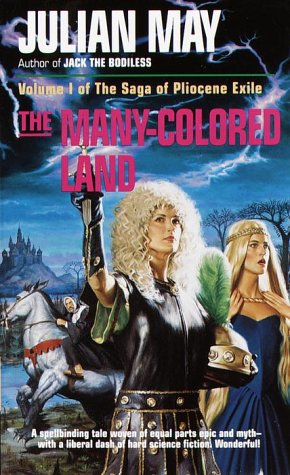
Julian May’s “Saga of the Pliocene Exile” is a genre-bending masterpiece that mixes science fiction with fantasy.
Time-traveling misfits find themselves in a prehistoric Earth ruled by aliens with godlike powers.
It’s like “Doctor Who” met “The Silmarillion” at a wild party and decided to write a novel together.
Deathstalker Series by Simon R. Green

Simon R. Green’s “Deathstalker” series is a space opera on steroids.
It follows Owen Deathstalker as he battles an evil empire with a ragtag band of misfits.
The series combines elements of fantasy, sci-fi, and horror into a whirlwind of non-stop action.
It’s “Star Wars” if George Lucas had a darker sense of humour and no restraint.
The Death Gate Cycle by Margaret Weis and Tracy Hickman

Margaret Weis and Tracy Hickman’s “The Death Gate Cycle” takes place in a universe shattered into multiple realms, each with its own unique magic system.
The series explores themes of prejudice, power, and redemption.
It’s “The Chronicles of Narnia” for adults, with more existential dread and fewer talking animals.
These ten underrated epic fantasy series prove that there’s more to the genre than the usual suspects.
Each series offers a unique world, compelling characters, and storytelling that rivals the giants of fantasy.
So, if you’re tired of waiting for winter to come or for Kvothe to finally open those damn doors, give these hidden gems a try.
Out now: The Fall of Wolfsbane
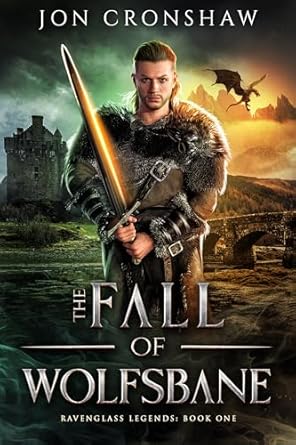
When the Ostreich Empire shatters his world and enslaves his people, Ragnar Wolfsbane vows to fight back.
Thrust into a dangerous game of imperial intrigue, Ragnar must learn to navigate a world of forbidden magic and hidden agendas.
But as the true power of ravenglass emerges, Ragnar’s choices could lead to salvation or ruin for those he holds dear.
Immerse yourself in a vivid fantasy realm where the lines between hero and villain blur.
Will Ragnar rise to become the leader his clan needs, or will the Empire’s machinations crush his resolve?
Find out in The Fall of Wolfsbane, a character-driven high fantasy novel.

