Explore the pivotal influence of Dungeons & Dragons on fantasy literature, delving into its role in shaping character archetypes, world-building, and narrative structures that continue to inspire modern fantasy writers and storytellers.
In the realm of fantasy literature, where dragons soar and magic courses through the very air, one game has cast a spell of inspiration and creativity like no other: Dungeons & Dragons (D&D).
Since its inception in the 1970s, this tabletop role-playing game hasn’t just entertained legions of players; it has profoundly influenced the landscape of fantasy literature.
Let’s embark on a quest to explore the dungeons (and perhaps a dragon or two) to discover how D&D has shaped the world of fantasy storytelling.
A Brief Expedition into the World of D&D
For those who haven’t rolled a twenty-sided die in the pursuit of adventure, Dungeons & Dragons is a fantasy role-playing game where players create characters to embark on imaginary quests, guided by a Dungeon Master.
It’s a game of limitless possibilities, where the only boundaries are the players’ imaginations.
Character Archetypes: The Birthplace of Heroes (and Villains)
The game’s classes – like wizards, rogues, and paladins – have become staples in fantasy literature, providing a template for authors to craft their characters.
The game’s influence is evident in the way these archetypes have evolved in literature, growing beyond their D&D origins into complex, multifaceted characters.
World-Building: Crafting Realms of Wonder
Another area where D&D has left its mark is in the art of world-building.
The game’s elaborate settings, like the Forgotten Realms and Greyhawk, offer richly detailed worlds, complete with histories, geographies, and cultures.
This attention to detail has inspired authors to create more immersive and intricate fantasy worlds in their writing, elevating the standard for what readers expect from fictional universes.
Plot and Narrative Structure: The Freedom of Storytelling
D&D’s open-ended narrative structure has influenced how stories are told in fantasy literature.
The game encourages collaborative storytelling, with players contributing to the narrative’s direction.
This has inspired a more dynamic form of storytelling in literature, where plots are not strictly linear but woven with the threads of character choices and chance.
The Monster Manual: A Bestiary of Inspiration
D&D’s Monster Manual, a compendium of creatures players might encounter, has become a rich source of inspiration for fantasy authors.
The detailed descriptions and lore of these creatures have sparked the imaginations of writers, leading to the creation of diverse and original monsters in fantasy literature.
Magic Systems: The Art of Arcane Mechanics
The game’s approach to magic, with its rules and schools of thought, has influenced how magic is portrayed in fantasy literature.
Authors have drawn on D&D’s structured magic systems to create their own unique and logical magical frameworks, adding depth and consistency to the fantastical elements of their stories.
Influence Beyond the Page
D&D’s impact extends beyond just literature.
It has permeated popular culture, influencing films, television, and other forms of media.
Its role in the development of computer RPGs and its presence in various digital media have further cemented its influence on the fantasy genre.
The Enduring Legacy of Dungeons & Dragons
Dungeons & Dragons has done more than provide a platform for imaginative play; it has profoundly influenced the genre of fantasy literature.
By providing a framework for character development, world-building, and storytelling, D&D has become a wellspring of inspiration for generations of writers.
In the grand saga of fantasy literature, D&D’s role is as pivotal as that of any hero or sage, a true architect in the realm of imagination and creativity.
Dive into the thrilling world of “Dragonlance,” where Margaret Weis and Tracy Hickman transformed fantasy literature. Discover how their groundbreaking series bridged the gap between tabletop gaming and epic storytelling, reshaping tropes and introducing unforgettable characters.
In the grand, often solemn halls of fantasy literature, the arrival of the “Dragonlance” series was akin to a group of rowdy adventurers kicking in the door, armed with dice and character sheets.
Conceived by Margaret Weis and Tracy Hickman and born from the world of Dungeons & Dragons, “Dragonlance” not only introduced a generation to the wonders of fantasy but also proved that the leap from tabletop to novel could land with the grace of a gold dragon.
Rolling the Dice on Fantasy Tropes
“Dragonlance” didn’t just borrow from the established tropes of fantasy; it embraced them with the gusto of a kender encountering a shiny object.
The series was a smorgasbord of dragons, wizards, knights, and, of course, the all-important quest.
But there was a twist in this tale: the characters felt like they’d leapt straight out of a D&D campaign, complete with their quirks, flaws, and dice-determined destinies.
In doing so, “Dragonlance” offered a refreshing take on familiar archetypes, breathing new life into the old bones of the genre.
Character Ensemble: A Party, Not a Solo
One of “Dragonlance’s” most significant contributions to fantasy was its focus on the ensemble cast.
This wasn’t a story of a lone hero’s journey; it was a party’s journey.
Characters like Tanis Half-Elven, Raistlin Majere, and Tasslehoff Burrfoot each brought their unique flavours to the narrative stew, creating a dynamic that was as unpredictable as it was engaging.
This focus on group dynamics paved the way for future authors to explore the complexities and camaraderie of ensemble casts.
The Dark Art of Subverting Expectations
At its heart, “Dragonlance” was a masterclass in the art of subversion.
It took established tropes and gave them a good shake.
The noble knight was as flawed and uncertain as the next man; the wizard, as much a danger to himself as to others.
This penchant for turning expectations on their head resonated with readers and influenced a wave of fantasy literature that delighted in doing the unexpected.
Legacy: A New Kind of Fantasy Epic
The legacy of “Dragonlance” in modern fantasy is as vast as the Plains of Dust.
It showed that the leap from game to novel could not only be successful but could also offer a new perspective on the epic fantasy tale.
The series’ impact is evident in the way contemporary fantasy often blends elements of gaming, ensemble casts, and a willingness to play with traditional tropes.
The Continuing Adventure
The “Dragonlance” series, with its blend of adventure, camaraderie, and a healthy dose of dragonfire, left an indelible mark on the fantasy genre.
It was a reminder that at the heart of every great fantasy story is a great adventure, and sometimes, that adventure starts with a simple roll of the dice.
In the world of fantasy literature, “Dragonlance” continues to stand as a testament to the power of imagination and the enduring appeal of gathering your friends, both real and fictional, and embarking on a quest.
Delve into the captivating world of Jack Vance’s Dying Earth series and its significant impact on modern fantasy literature. Discover how Vance’s unique blend of whimsy, elaborate world-building, and innovative magic system has shaped the genre’s evolution
In the labyrinthine annals of fantasy literature, few works have cast as long and as quirky a shadow as Jack Vance’s ‘Dying Earth‘ series.
Its influence percolates through modern fantasy much like a fine, yet slightly unnerving, wine.
The series, set in a far, far future where the sun is a mere flicker on the brink of eternal night, blends sorcery and super-science in a way that makes you question whether Vance was writing fantasy, sci-fi, or inventing a new genre entirely.
And let’s not forget the magic system, where spells are so mind-bogglingly complex, they would give even the most astute Hogwarts graduate a migraine.
Indeed, the echoes of Vance’s work can be seen in the spellcasting of Dungeons & Dragons, where wizards must memorize spells and then forget them upon casting, much like trying to remember the lyrics to Bohemian Rhapsody after a few pints.
This idiosyncratic approach to magic, where one must essentially cram for a supernatural exam, has been adopted, adapted, and applauded by fantasy enthusiasts worldwide.
Furthermore, the ‘Dying Earth’ presents a peculiar mélange of high-falutin language and low-brow shenanigans.
Characters converse in a manner so florid and verbose that it makes Shakespeare seem like he’s writing in text-speak.
Yet, these same eloquent characters are as likely to pick your pocket as quote a sonnet, blending the grandiose with the gutter in a dance of the sublime and the ridiculous.
This narrative style, simultaneously grand and sly, has inspired a generation of fantasy writers to be bold with their prose and sneaky with their plot twists.
Vance’s work is also a masterclass in world-building, painting a universe so rich and textured that it feels like a tapestry woven by a slightly deranged, yet highly skilled, medieval monk.
His vision of a far-future Earth, teetering on the brink of entropy, sets the stage for tales that are as much about the peculiarities of human (and non-human) nature as they are about grand adventures.
It’s a setting where you’re as likely to encounter a melancholy robot as a sorcerer lamenting the loss of a particularly potent spell, like someone mourning the discontinuation of their favourite brand of tea.
The ‘Dying Earth’ series has, in its own peculiar way, expanded the horizons of fantasy literature.
It has shown that the genre can be more than just dragons and knights, but a space where the imagination can run wild in a playground of the bizarre and the brilliant.
Vance’s ‘Dying Earth’ series has not just left an impact on modern fantasy; it’s given it a good, hard, albeit loving, kick in the behind.
It’s a reminder that fantasy can be as deep as it is whimsical, and that sometimes, to find the truly extraordinary, one must be willing to take a stroll through the absurd.
Discover ten fantasy books that capture the essence of Dungeons & Dragons (D&D), taking you on an epic literary journey filled with world-building, intricate plots, and captivating characters. Get ready for adventure and satisfy your D&D cravings with these must-reads.
If you’re an ardent player of Dungeons & Dragons (D&D), chances are you’re no stranger to expansive world-building, intricate plots, and fascinating characters.
To keep your adventure cravings satisfied, we’ve compiled a list of ten fantasy books that will make you feel like you’re right back at the gaming table.
So, dust off your reading glasses and prepare for a literary journey that reflects the essence of D&D.
Kings of the Wyld by Nicholas Eames
For fans of D&D who love the classic quest format, Kings of the Wyld is a must-read.
The story follows a group of washed-up mercenaries on a high-stakes rescue mission.
The tale is rich in humour and camaraderie and calls back to the classic idea of adventuring parties in D&D.
The author’s affectionate and amusing nods to D&D tropes make it a book that’s not just an entertaining read but a nostalgic one for veteran D&D players.
This novel brings you into the lives of the Greatcoats – a group of wandering duellists tasked with upholding justice, reminiscent of D&D’s Fighters or Paladins.
With a mix of swashbuckling action, an intriguing justice system, and characters that are charmingly flawed yet noble, Traitor’s Blade showcases a camaraderie between characters that you might recognize from your D&D party.
Its engaging storyline and tactical combat will resonate with those who love detailed combat in their D&D sessions.
A satirical and clever take on classic fantasy tropes, Orconomics is a perfect blend of comedy, economics, and high fantasy.
Pike crafts a world where adventuring is an industry and monsters are hunted for their loot, akin to a D&D campaign but through a cleverly corporate lens.
The economic system’s intricacy, diverse cast of characters, and the detailed world-building provide elements D&D enthusiasts will appreciate.
Bardugo’s novel, set in the gritty underworld of Ketterdam, echoes D&D’s rogue-infested urban settings.
The narrative follows a band of six unlikely companions on an impossible heist, each with their unique skills and backstory, much like a D&D party.
The intricate heist plot will attract D&D players who love planning and strategizing their missions, and the immersive world-building makes it a compelling read for those who enjoy the depth of lore in their D&D campaigns.
The Final Empire (Mistborn Series) by Brandon Sanderson
The Final Empire offers a unique magic system that fans of D&D’s magic mechanics will enjoy.
The concept of Allomancy (using various metals to fuel magic) provides a fresh perspective on magical systems that D&D wizards or sorcerers might appreciate.
The book also explores themes of rebellion and revolution, set against a dystopian backdrop, offering intricate political manoeuvrings that may resonate with D&D campaigns full of intrigue and societal unrest.
This series is an excellent fit for fans of strong female characters and the Paladin class in D&D.
It follows Alanna of Trebond, who disguises herself as a boy to train as a knight.
Throughout her journey, she grapples with her identity, her magical abilities, and her duty to her kingdom.
The books are a fantastic exploration of courage, perseverance, and embracing one’s destiny, making them a great read for anyone who enjoys stories of heroic quests and overcoming great odds.
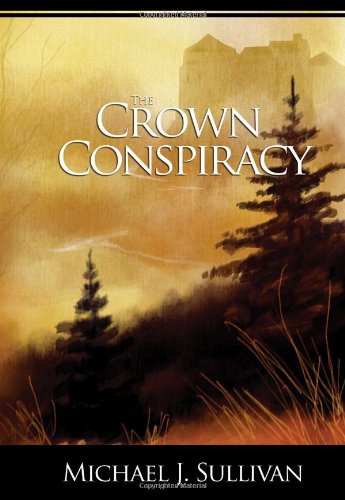
This novel introduces us to Royce Melborn, a skilled thief, and his sword-wielding companion, Hadrian Blackwater. Together, they form the notorious duo known as Riyria.
When the pair are falsely accused of killing the king, they must use their skills to prove their innocence and uncover a conspiracy.
Sullivan’s novel, full of witty banter, dynamic combat, and thrilling intrigue, makes it a joy to read for those D&D players who love the excitement of unexpected twists and plots within their campaigns.
Kohanek’s world is one where fate is mutable, and prophecies are a significant part of the narrative.
Eye of Obscurance presents an epic quest filled with magic, gods, and fate, sure to please D&D players who enjoy rich lore and divine intervention in their games.
Fans of the Sorcerer class might find a kindred spirit in the protagonist, an untrained sorcerer named Fate. His journey from novice to master is both engaging and inspiring, reflecting the growth D&D characters experience throughout their adventures.
No D&D-themed book list would be complete without mentioning R.A. Salvatore, particularly his book, Homeland.
This novel is the start of the legend of Drizzt Do’Urden, one of the most iconic characters from the Forgotten Realms setting in D&D.
This tale of resilience, integrity, and self-discovery in a dark and unforgiving world will resonate with fans who’ve braved the Underdark and faced drow societies in their D&D campaigns.
The immersive descriptions and the unique combat style of Drizzt will also provide valuable inspiration for both players and DMs.
For fans of D&D campaigns brimming with intrigue, moral complexity, and heart-pounding action, Guild of Assassins delivers in spades.
The story follows Soren, a young sculptor thrust into a cutthroat assassins’ guild after his father’s murder. His transformation from an idealistic artist to a relentless seeker of vengeance mirrors the development arcs many D&D characters undergo when shaped by tragedy and ambition.
With vivid world-building and a cast of morally ambiguous characters, the book offers a gritty, emotionally charged experience that will resonate with those who enjoy exploring the darker side of D&D campaigns. Soren’s harrowing training alongside his friend Alaric provides intense moments of camaraderie and tension, akin to the dynamics found in a tightly-knit adventuring party.
The focus on stealth, tactical combat, and the psychological cost of violence makes Guild of Assassins a must-read for players who favour rogue, assassin, or morally grey character archetypes. Its rich narrative and visceral storytelling will keep you gripped until the final page.
These novels each offer a unique perspective, with heroes and villains that could easily have stepped out of a D&D campaign.
If you’re looking for your next fantasy read or seeking inspiration for your upcoming D&D session, these books are a great place to start.
Now, grab your preferred beverage, find a comfy chair, and prepare to be transported to realms of high fantasy, thrilling adventure, and gripping intrigue.
Let me know in the comments what books you would recommend.
Explore the colourful spectrum of character alignments in fantasy fiction. From Lawful Good heroes to Chaotic Evil villains, discover how these archetypes shape narratives and deepen character development.
Today, we’re going to delve into the captivating world of character alignments in fantasy fiction.
You see, fantasy fiction isn’t just all fire-breathing dragons and chivalrous knights, it’s also a grand tapestry woven with intricate character threads.
And the tool that helps us sort these threads into a tidy, comprehensive pattern is what we lovingly call ‘character alignment.’
But, what is this character alignment tomfoolery, you ask?
Imagine a giant Sudoku puzzle.
On one axis, we’ve got the moral compass: good, evil, and of course, the fence-sitting neutral. On the other, we find the scale of obeisance to rules: lawful, chaotic, and, you guessed it, another neutral option.
It’s where these two axis intersect that we discover our character alignments.
The concept of character alignment hails from the granddaddy of fantasy role-playing games, Dungeons & Dragons, and is used to define a character’s ethical and moral perspectives.
A character’s alignment isn’t just a label, it’s a fundamental part of their belief system, acting as a guideline for their actions, reactions, thoughts, and motivations.
Understanding these alignments can help readers to make sense of a character’s behaviour.
It aids in comprehending why a character might slay a dragon to rescue a princess, betray their best friend for power, or choose to sit out an epic battle to enjoy a pint at their local inn.
As such, character alignments are incredibly useful for readers and writers alike, as they help flesh out characters, giving them depth and dimension.
In the following sections, we’re going to journey into each specific alignment, exploring their quirks, understanding their motivations, and spotlighting examples from popular fantasy fiction.
From Lawful Good heroes to Chaotic Evil villains and all those intriguing folks in-between, we’re about to discover how these alignments shape the colourful, fantastical world of fantasy fiction.
Lawful
Neutral
Chaotic
Good
Lawful Good
Neutral Good
Chaotic Good
Neutral
Lawful Neutral
True Neutral
Chaotic Neutral
Evil
Lawful Evil
Neutral Evil
Chaotic Evil
Lawful Good: Unsung Heroes of Fantasy
In the top left corner of the character alignment sheet, with a shiny gold star for good behaviour, we find the Lawful Good character.
Lawful Good characters are morally righteous and abide by the laws and norms of society.
They’re the ones who, when faced with a moral dilemma, always go for the right thing, even if it’s as tough as a two-quid steak.
They’re the reliable ones, the steady Eddies and Edinas, always stepping up to the plate and swinging for justice.
“But, where’s the fun in predictability?”
Sure, Lawful Good characters may not have the madcap unpredictability of their Chaotic Neutral counterparts, but they’ve got something equally appealing—moral fibre.
They’re a beacon of hope, a shining light in the grimmest of times, embodying a sense of justice and righteousness that resonates deeply with us.
Take, for instance, Samwise Gamgee from ‘The Lord of the Rings.’
Reliable, brave, and always putting Frodo’s welfare before his own, even when Frodo’s about as cheerful as a rainy Bank Holiday.
Samwise, the loyal gardener, is a classic Lawful Good character, embodying the ideals of courage, friendship, and unwavering loyalty.
He’s a beacon of justice and morality in the midst of a realm mired in corruption and deceit.
His strict adherence to the law and moral codes is as consistent as a cup of Yorkshire Tea—always high quality, but not quite as entertaining as some of those with a bit more mischief in them.
While Chaotic Neutral characters are the ones who chuck the Monopoly board in the air when they’re losing, Lawful Good characters are the ones who meticulously count every note and ensure everyone’s got the correct change.
And we need these characters.
In a world where it’s all gone a bit pear-shaped, their unwavering moral compass guides us, reminding us of the power of honesty, integrity, and steadfastness.
Neutral Good Characters: The Unseen Heroes of Fantasy Fiction
In between the pillars of ‘Lawful Good’ and ‘Chaotic Good’, comfortably situated like a lovely country pub halfway through a Sunday walk, we find our ‘Neutral Good’ characters.
Neutral Good characters, you see, are a charming blend of righteousness and flexibility.
They are committed to doing what’s right, but aren’t as concerned about adhering to laws or bucking the system.
They’re like that mate who always recycles, but occasionally sneaks a Quality Street into the cinema.
They’re all about the greater good, but they don’t mind bending a rule or two to achieve it.
“But, what’s so great about a goody two-shoes?”
While the Neutral Good characters may not have the thrilling unpredictability of Chaotic Neutrals or the moral rigidity of Lawful Goods, they possess a captivating flexibility.
They’re the ‘pragmatic heroes,’ willing to do what’s necessary to achieve good, and that makes them a right interesting bunch.
Take, for instance, the beloved wizard, Albus Dumbledore from ‘Harry Potter’.
While he is generally a force for good, old Dumbles doesn’t mind bending a few school rules here and there, does he?
As long as it’s in the name of stopping He-Who-Must-Not-Be-Named, of course.
He embodies the Neutral Good alignment, maintaining a strong moral core whilst occasionally sidestepping the rules when necessary.
Then there’s Bilbo Baggins from ‘The Hobbit’, a quiet, peace-loving hobbit who steps out of his comfort zone (and the Shire) to do what’s right, even if it involves a bit of burglary.
He’s the epitome of a Neutral Good character, isn’t he?
Comfortably sitting between a saint and a scoundrel, doing what’s necessary for the greater good.
In a world that’s often as clear as mud, Neutral Good characters offer a refreshing middle ground.
They represent the balance that we often seek in our own lives—the desire to do good, without being bound too rigidly by the rules or slipping into utter chaos.
Chaotic Good Characters: The Unruly Heroes We Can’t Help But Love
In the realm of ‘good’ but on the side of ‘chaos’, we find the Chaotic Good characters, causing a ruckus and saving the day.
Chaotic Good characters are the mavericks of fantasy.
They’re driven by a moral compass as true as a Yorkshire terrier to its favourite toy, but they won’t let a silly thing like ‘rules’ stand in their way.
They’re the sort of characters who will pick the lock to a city’s gates to let in reinforcements, all while flashing a mischievous grin.
“But isn’t that just anarchy wrapped up in a hero’s cloak?”
Chaotic Good characters infuse the narrative with a thrilling unpredictability, while their steadfast commitment to doing good keeps us firmly in their corner.
Consider Robin Hood, the legendary socialist outlaw who stole from the rich to give to the poor.
He broke the law left, right, and centre, but always with the aim of helping those less fortunate.
He’s a top-notch example of a Chaotic Good character—a rebel with a righteous cause.
And who could forget everyone’s favourite smuggler, Han Solo from ‘Star Wars’?
He may not be one for protocol (or for paying his debts), but when push comes to shove, he always ends up fighting for the forces of good.
Chaotic Good characters remind us that sometimes, rules need to be bent to achieve a greater good.
They are the embodiment of moral flexibility, proving that it’s possible to remain on the side of good without always following the straight and narrow.
Lawful Neutral Characters: The Unswerving Champions of Balance
Tucked in the middle of the Lawful spectrum and neither good nor evil, we find our steadfast Lawful Neutral characters.
These characters are the epitome of structure and order.
They abide by laws, traditions, and personal codes with a dogged determination that makes a bulldog chewing a bone look positively lackadaisical.
But they’re not necessarily out to save the world or plunge it into darkness—they’re all about the balance, the fairness of it all.
“But isn’t that a tad dull?”
Lawful Neutral characters may not ignite the page with anarchic antics or saintly deeds, but they provide a crucial anchor in the fantastical storm.
They uphold the rules of the world, lending an air of realism and balance that’s as comforting as a mug of hot cocoa on a cold winter’s eve.
Take Stannis Baratheon from ‘Game of Thrones.’
Now there’s a bloke who sticks to the rules, even if it won’t make him the life of the party.
His rigid adherence to the law, without leaning towards good or evil, makes him a classic Lawful Neutral character.
And consider Judge Dredd, the iconic comic book character who serves as judge, jury, and executioner in the dystopian future city of Mega-City One.
He’s not out to serve personal morality or malevolence, but simply to enact the law, making him a solid Lawful Neutral chap.
Lawful Neutral characters remind us that not everything is about good vs evil.
Sometimes it’s about maintaining balance, upholding traditions, and sticking to one’s principles.
They’re the steadfast lighthouses in the chaotic seas of fantasy narratives, guiding the story with their unwavering dedication to order and fairness.
True Neutral Characters: The Balanced Conduits of Fantasy Fiction
Bang in the centre of our character alignment square, refusing to take sides like a well-behaved football referee, we find our True Neutral characters.
True Neutral characters are the epitome of balance.
They’re not overly concerned with moral standings or societal norms.
They’re the types who’d happily sit on a seesaw all day, making sure neither end touches the ground.
Their primary concern isn’t with good, evil, law, or chaos, but with neutrality and equilibrium.
“But doesn’t that make them as bland as unbuttered toast?”
True Neutral characters may not blaze a trail of heroism or villainy, but their dedicated impartiality provides a unique perspective that’s as intriguing as a twist in an Agatha Christie novel.
Consider, for instance, the enigmatic Tom Bombadil from J.R.R. Tolkien’s ‘The Lord of the Rings.’
This whimsical character lives in harmony with nature and shows a conspicuous indifference to the power of the One Ring.
He’s neither swayed by its evil, nor particularly invested in the quest to destroy it.
Bombadil is a classic example of a True Neutral character, following his own beat without getting tangled in moral or societal knots.
Another fine example is Dr. Manhattan from ‘Watchmen,’ who observes the world with an almost aloof detachment.
He doesn’t bend to human morals, laws, or chaos, but rather maintains an absolute neutrality, making him a brilliantly engaging True Neutral character.
True Neutral characters, in their refusal to pick sides, remind us of the importance of balance.
They’re the tranquil centre in the maelstrom of fantasy narrative, providing a counterpoint to the grand battles of good and evil, law and chaos.
Chaotic Neutral Characters
Moving to the middle-right square of the character alignment Sudoko, we find the Chaotic Neutral characters.
They’re a right ‘mish-mash,’ aren’t they?
Neither good nor evil, neither lawful nor completely disregardful of rules.
They’re guided by their whims and desires, and they don’t fancy being shackled by rules or a dogged determination to do the ‘right thing’.
These are the ‘bloody hell, what are they going to do next?’ type of characters.
The ones that make the audience shout, “You did what, mate?!” at their telly, Kindle, or maybe even an actual physical book if you’re a bit old school.
But why do we love these unpredictable rapscallions?
It’s simple, isn’t it? They’re unpredictable, cheeky, and bring a breath of fresh air to the classic hero-villain narrative.
They’re like that one unpredictable mate in your group, the one who might show up at the pub wearing a tuxedo or maybe just their pyjamas. They keep things exciting.
Traditional heroes are predictable.
You know they’ll always do the right thing, the honourable thing.
They’re like a comforting, predictable old British weather. “Oh look, it’s raining… again.”
You know what’s coming, and it’s mostly, well, rain.
In contrast, the chaotic neutral character is like a whirlwind trip to the local fair.
They’re the candy floss, the rickety roller coaster, and the dodgy bloke who scams you at the ring toss.
They’re an entire experience packaged into one unpredictable and compelling entity.
Take, for example, Captain Jack Sparrow from Pirates of the Caribbean. A veritable poster boy for the chaotic neutral alignment.
He’s self-serving, unpredictable, but he’s entertaining as hell.
Is he going to save the day or nick the treasure and do a runner?
Who knows, but we can’t wait to find out!
Another such character is Locke Lamora from Scott Lynch’s Gentlemen Bastards series.
Now there’s a gent who doesn’t give two hoots about laws or social order.
He’s an absolute rogue—but with that irresistible charm and quick wit, we can’t help but cheer him on, even when he’s pickpocketing the city’s elite.
Lawful Evil Characters: The Dark, Orderly Titans of Fantasy Fiction
At the intersection of orderliness and a decidedly wicked agenda, we find our Lawful Evil characters.
Lawful Evil characters are the meticulously organised villains of the fantasy world.
They’ve a grand evil scheme, sure, but they also have a five-year plan, colour-coded spreadsheets, and a solid retirement strategy.
They adhere to a set of rules and codes, even if their ultimate aim is as friendly as a wasp at a picnic.
“But isn’t that just a rather fussy baddie?”
Lawful Evil characters may not be the anarchic villains of nightmares, but their cunning, organisation, and adherence to their own codes make them captivating figures to follow.
Take Tywin Lannister from ‘Game of Thrones’ as a prime example.
He might not be the sort to cackle manically in a dark tower, but his ruthless dedication to family legacy, power, and order embodies the Lawful Evil alignment.
He is a villain with principles and rules, making him an intriguing and complex character.
Another shining (or should we say, shadowy) example is Lord Voldemort from ‘Harry Potter.’
Despite his unquestionable evil, he still adheres to certain rules, showing respect for ancient wizarding laws and customs.
This complex mix of evil and lawfulness makes him a character we love to hate.
Lawful Evil characters are the dark stars of the narrative cosmos.
They may be the baddies, but their respect for order, laws, and personal codes adds layers of complexity, making them deeply compelling.
Neutral Evil Characters: The Self-Serving Strategists of Fantasy Fiction
Nestled between chaos and order on the evil axis, we discover Neutral Evil.
Neutral Evil characters are the opportunistic pragmatists of the fantasy realm.
They have an agenda as sour as a week-old lemon, but they aren’t fussed about obeying laws or inciting anarchy to achieve it.
They’re about as loyal as a tomcat on the prowl and won’t let anything, or anyone, obstruct their path to power.
“But aren’t they just nasty without a cause?”
Neutral Evil characters may not champion a cause or adhere to strict rules, but their crafty manoeuvres and flexible morals make for a riveting read.
Take Petyr ‘Littlefinger’ Baelish from ‘Game of Thrones’ as an exemplar.
His moral compass is as reliable as a chocolate teapot, but he’s not exactly a rabble-rouser either.
He’ll scheme, manipulate, and play all sides to get what he wants—a classic Neutral Evil tactician.
And who could forget the White Witch from C.S. Lewis’s ‘The Chronicles of Narnia?’
She’s not about upholding order or fomenting chaos; she’s simply after power and will use deceit, magic, and a particularly tempting Turkish delight to get it.
Neutral Evil characters, with their flexible strategies and personal agendas, add a hefty dose of intrigue to the narrative stew.
They’re the self-serving schemers that keep us guessing, proving that sometimes, the middle road can be the most treacherous one.
Chaotic Evil Characters: The Unpredictable Malefactors of Fantasy Fiction
Where chaos and wickedness converge, we unearth our Chaotic Evil characters.
Chaotic Evil characters are the unrestrained villains of the fantasy world.
They’ve got a moral compass that spins more wildly than a child on a sugar rush, and a respect for rules that’s about as sturdy as a paper umbrella.
They’re the wild cards of malevolence, pursuing their own selfish desires without a jot of regard for law, order, or the well-being of others.
“But isn’t that just being unpleasant without any trousers?”
Chaotic Evil characters may not be tied to rules or causes, but their anarchic villainy creates unpredictability that’s as addictive as a bag of sherbet lemons.
Consider the inimitable Joker from the Batman franchise, a character who takes pleasure in sowing chaos and relishes his own unpredictable malevolence.
With no respect for laws or other people’s well-being, he embodies the Chaotic Evil alignment in all its unsettling glory.
Another sterling example is Bellatrix Lestrange from ‘Harry Potter.’
This lady isn’t exactly what you’d call a stickler for rules, and her wickedness is as untamed as her hair.
Chaotic Evil characters, in their unbridled pursuit of their own whims and desires, infuse the narrative with a volatile energy.
They’re the stormy seas in the voyage of a fantasy narrative, unpredictable and dangerous.
The Fluid Spectrum of Character Alignments: A Conclusion
As we reach the end of our journey through the varied alignments of fantasy fiction, it’s time to set down our tea and contemplate what we’ve learned.
From the righteous Lawful Good characters to the untamed Chaotic Evil personas, and the delightful mix of characters in-between, it’s clear that these alignments provide a framework to understand and predict character actions.
They’ve given us insight into the motivations behind our favourite characters, shedding light on the underpinnings of their choices and behaviours.
However, it’s important to remember that just as the bumblebee doesn’t exclusively stick to one flower, characters needn’t be bound by a single alignment for their entire existence.
Indeed, one of the great joys in fiction is observing character development, which can often involve a shift in alignment.
Consider Jaime Lannister from ‘Game of Thrones.’
He starts as a seemingly clear-cut example of a Lawful Evil character, but throughout the series, we witness a dramatic character arc.
As his story unfolds, he moves away from the ruthless dedication to his family’s power, towards a more morally complex identity, embodying aspects of the Neutral and even Lawful Good alignments.
In a similar vein, characters might temporarily adopt different alignments in specific situations, providing depth and flexibility to their characters.
This fluidity of alignment keeps readers on their toes, preventing characters from becoming as predictable as rain in a British summer.
So, as we come to a close, let’s raise our last cup of tea to the rich tapestry of character alignments.
Whether you’re a writer looking to flesh out your characters, or a reader seeking to delve deeper into the worlds you love, understanding character alignments is a tool as useful as a compass for an adventurer.
And remember, the best characters, much like a well-brewed cup of English breakfast, are a blend of several elements, making them all the more delightful to savour.