Delve into the rise of moral ambiguity in modern fantasy literature. Explore why morally grey characters have become essential, enriching plots and themes alike.
The classic tale of good versus evil is a narrative as old as storytelling itself.
But lo and behold, the literary landscape has undergone a seismic shift.
The manichean struggle has faded into obscurity, replaced by the intoxicating aroma of moral ambiguity.
Welcome to modern fantasy, where the heroes aren’t as virtuous as they seem and the villains aren’t necessarily in need of a good smiting.
Gone Are the Days of the Unblemished Hero
Remember the paragons of virtue, those champions of justice that graced the pages of early fantasy novels?
Well, it’s time to retire those lily-white conceptions of heroism.
The modern fantasy hero is as pure as a puddle in London—murky and filled with complexities.
Today’s protagonists come with vices, make questionable decisions, and show us that even heroes have a dark side.
Think Geralt of Rivia, the monster slayer with his own monstrous tendencies, or Kvothe from The Kingkiller Chronicle, who’s as flawed as he is brilliant.
Villains You Could Have a Pint With
If the heroes are grey, then the villains must be… also grey?
Yes, you read that right.
Gone are the days of malevolent dark lords brooding in their lairs, twirling their proverbial mustaches.
Modern fantasy presents antagonists you can empathize with, whose motivations go beyond mere world domination.
Look at Sanderson’s Moash from the Stormlight Archive, or Martin’s Jamie Lannister—a man who goes from pushing a child out a window to becoming one of the series’ most complicated and endearing characters.
The World Isn’t Black and White, So Why Should Fantasy Be?
Real-world politics and ethics are messy, so it only makes sense that modern fantasy reflects this complexity.
Authors incorporate sociopolitical and ethical questions into their works, pushing readers to confront their own beliefs.
Characters become mouthpieces for conflicting philosophies, creating a playground for ethical debate.
The lines between right and wrong are deliciously blurred, leaving readers to wrestle with moral quandaries long after the book is closed.
Complexity as a Narrative Tool
Moral ambiguity serves more than just thematic depth; it’s a potent narrative tool.
A morally grey character keeps readers on their toes, injecting unpredictability into the plot.
Will the antihero redeem themselves or plunge further into darkness?
It’s this suspense that turns casual readers into frothing fanatics, discussing theories online as if life depended on it.
What’s Fueling This Trend?
One could argue that this trend is a reflection of our increasingly complex world.
Or perhaps it’s due to the natural evolution of the genre, influenced by postmodernist ideas questioning the nature of truth and morality.
Then again, maybe writers are just fed up with archetypes and want to play in the muddy waters of human complexity.
The Takeaway
Moral ambiguity is more than a trend—it’s a revelation that has invigorated the fantasy genre.
It allows for more nuanced storytelling, richer characters, and a direct line to the messy questions that occupy our real-world selves.
So here’s to the morally grey characters who have made fantasy more colourful.
They’ve not only complicated our understanding of right and wrong, they’ve made it infinitely more interesting to read about.
Discover ten fantasy books that capture the essence of Dungeons & Dragons (D&D), taking you on an epic literary journey filled with world-building, intricate plots, and captivating characters. Get ready for adventure and satisfy your D&D cravings with these must-reads.
If you’re an ardent player of Dungeons & Dragons (D&D), chances are you’re no stranger to expansive world-building, intricate plots, and fascinating characters.
To keep your adventure cravings satisfied, we’ve compiled a list of ten fantasy books that will make you feel like you’re right back at the gaming table.
So, dust off your reading glasses and prepare for a literary journey that reflects the essence of D&D.
Kings of the Wyld by Nicholas Eames
For fans of D&D who love the classic quest format, Kings of the Wyld is a must-read.
The story follows a group of washed-up mercenaries on a high-stakes rescue mission.
The tale is rich in humour and camaraderie and calls back to the classic idea of adventuring parties in D&D.
The author’s affectionate and amusing nods to D&D tropes make it a book that’s not just an entertaining read but a nostalgic one for veteran D&D players.
This novel brings you into the lives of the Greatcoats – a group of wandering duellists tasked with upholding justice, reminiscent of D&D’s Fighters or Paladins.
With a mix of swashbuckling action, an intriguing justice system, and characters that are charmingly flawed yet noble, Traitor’s Blade showcases a camaraderie between characters that you might recognize from your D&D party.
Its engaging storyline and tactical combat will resonate with those who love detailed combat in their D&D sessions.
A satirical and clever take on classic fantasy tropes, Orconomics is a perfect blend of comedy, economics, and high fantasy.
Pike crafts a world where adventuring is an industry and monsters are hunted for their loot, akin to a D&D campaign but through a cleverly corporate lens.
The economic system’s intricacy, diverse cast of characters, and the detailed world-building provide elements D&D enthusiasts will appreciate.
Bardugo’s novel, set in the gritty underworld of Ketterdam, echoes D&D’s rogue-infested urban settings.
The narrative follows a band of six unlikely companions on an impossible heist, each with their unique skills and backstory, much like a D&D party.
The intricate heist plot will attract D&D players who love planning and strategizing their missions, and the immersive world-building makes it a compelling read for those who enjoy the depth of lore in their D&D campaigns.
The Final Empire (Mistborn Series) by Brandon Sanderson
The Final Empire offers a unique magic system that fans of D&D’s magic mechanics will enjoy.
The concept of Allomancy (using various metals to fuel magic) provides a fresh perspective on magical systems that D&D wizards or sorcerers might appreciate.
The book also explores themes of rebellion and revolution, set against a dystopian backdrop, offering intricate political manoeuvrings that may resonate with D&D campaigns full of intrigue and societal unrest.
This series is an excellent fit for fans of strong female characters and the Paladin class in D&D.
It follows Alanna of Trebond, who disguises herself as a boy to train as a knight.
Throughout her journey, she grapples with her identity, her magical abilities, and her duty to her kingdom.
The books are a fantastic exploration of courage, perseverance, and embracing one’s destiny, making them a great read for anyone who enjoys stories of heroic quests and overcoming great odds.
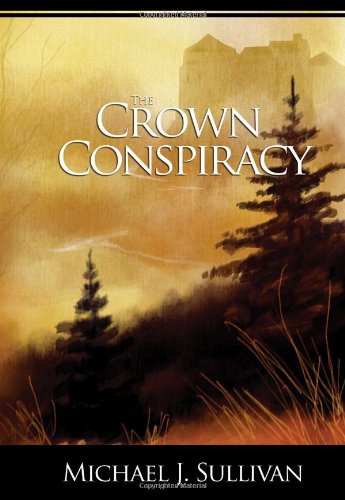
This novel introduces us to Royce Melborn, a skilled thief, and his sword-wielding companion, Hadrian Blackwater. Together, they form the notorious duo known as Riyria.
When the pair are falsely accused of killing the king, they must use their skills to prove their innocence and uncover a conspiracy.
Sullivan’s novel, full of witty banter, dynamic combat, and thrilling intrigue, makes it a joy to read for those D&D players who love the excitement of unexpected twists and plots within their campaigns.
Kohanek’s world is one where fate is mutable, and prophecies are a significant part of the narrative.
Eye of Obscurance presents an epic quest filled with magic, gods, and fate, sure to please D&D players who enjoy rich lore and divine intervention in their games.
Fans of the Sorcerer class might find a kindred spirit in the protagonist, an untrained sorcerer named Fate. His journey from novice to master is both engaging and inspiring, reflecting the growth D&D characters experience throughout their adventures.
No D&D-themed book list would be complete without mentioning R.A. Salvatore, particularly his book, Homeland.
This novel is the start of the legend of Drizzt Do’Urden, one of the most iconic characters from the Forgotten Realms setting in D&D.
This tale of resilience, integrity, and self-discovery in a dark and unforgiving world will resonate with fans who’ve braved the Underdark and faced drow societies in their D&D campaigns.
The immersive descriptions and the unique combat style of Drizzt will also provide valuable inspiration for both players and DMs.
For fans of D&D campaigns brimming with intrigue, moral complexity, and heart-pounding action, Guild of Assassins delivers in spades.
The story follows Soren, a young sculptor thrust into a cutthroat assassins’ guild after his father’s murder. His transformation from an idealistic artist to a relentless seeker of vengeance mirrors the development arcs many D&D characters undergo when shaped by tragedy and ambition.
With vivid world-building and a cast of morally ambiguous characters, the book offers a gritty, emotionally charged experience that will resonate with those who enjoy exploring the darker side of D&D campaigns. Soren’s harrowing training alongside his friend Alaric provides intense moments of camaraderie and tension, akin to the dynamics found in a tightly-knit adventuring party.
The focus on stealth, tactical combat, and the psychological cost of violence makes Guild of Assassins a must-read for players who favour rogue, assassin, or morally grey character archetypes. Its rich narrative and visceral storytelling will keep you gripped until the final page.
These novels each offer a unique perspective, with heroes and villains that could easily have stepped out of a D&D campaign.
If you’re looking for your next fantasy read or seeking inspiration for your upcoming D&D session, these books are a great place to start.
Now, grab your preferred beverage, find a comfy chair, and prepare to be transported to realms of high fantasy, thrilling adventure, and gripping intrigue.
Let me know in the comments what books you would recommend.
Embark on a thrilling adventure with this beginner’s guide to Sword and Sorcery fantasy literature. Uncover this subgenre’s unique tropes, characters, and dive into our top ten recommended books.
Grab your enchanted swords and dust off your spellbooks, as today we’re delving into the rip-roaring world of Sword and Sorcery fantasy.
So, buckle up, or rather, belt up—we wouldn’t want your scabbards to slip, would we?
What is Sword and Sorcery?
Picture this: a rugged hero with biceps like boulders, wielding a sword so big that it’s probably compensating for something.
He’s joined by a sidekick who can summon a fireball quicker than you can say “abracadabra.”
Together, they’re thrust into a world of high adventure and low cunning, facing off against dastardly villains, ferocious monsters, and the occasional damsel in distress (or quite often, causing the distress).
Welcome to Sword and Sorcery. It’s a subgenre of fantasy that delightfully mashes up elements of action, adventure, magic, and a pinch of romance if we’re lucky.
It’s about the thrill of the quest, the clash of steel, and the incantation of mystic forces, all served with a healthy side of danger and daring-do.
How Does Sword and Sorcery Differ from Other Fantasy Subgenres?
You might be thinking, “Hold on, isn’t that just fantasy?”
Well, not quite.
Sword and Sorcery is like fantasy’s wild and unruly cousin, the one who turns up to the family reunion with a dragon’s tooth earring and a cloak made of griffin feathers.
While epic fantasy (think J.R.R. Tolkien’s “Lord of the Rings”) often focuses on world-shattering stakes, where the destiny of nations or even the whole world hangs in the balance, Sword and Sorcery is more intimate.
It’s about personal quests and small-scale conflicts.
Don’t get me wrong, there’s still plenty of action and adventure, but our heroes are more concerned with their own survival than saving the world.
And unlike high fantasy, which often takes itself rather seriously, Sword and Sorcery isn’t afraid to have a bit of fun.
It revels in its pulp fiction roots, so expect plenty of thrilling escapades, improbable plot twists, and a dash of witty banter.
What Tropes and Characters Can I Expect?
Ah, tropes, those delightful genre conventions that make us feel all warm and fuzzy inside. Sword and Sorcery has them in spades.
First off, our heroes. They tend to be roguish, adventurous types, more likely to solve problems with a sword than a soliloquy.
Think Robert E. Howard’s Conan the Barbarian, a chap who’s never met a problem he couldn’t cleave in two.
And then there’s the sorcerer, a wily character who’s handy to have around when you need a fireball or a convenient plot device.
Sword and Sorcery worlds are generally untamed and dangerous, filled with ancient ruins, cursed treasures, and a startling number of things with too many teeth.
Good job our heroes are usually quite adept at dealing with these. Or, if not adept, at least enthusiastic.
And let’s not forget the villains. They’re often dark sorcerers, tyrannical rulers, or monstrous beasts—sometimes all three in one if it’s been a slow day.
They’re as dastardly as they come, and our heroes will need all their brawn and brains to overcome them.
Sword and Sorcery is a subgenre that offers a thrilling ride, filled with daring heroes, nefarious villains, and plenty of sword-swinging action.
If you’re after some high-stakes adventure without the burden of saving the world, then this might just be the genre for you.
Ten Essential Sword and Sorcery Books for Novice Adventurers
Here are ten enchanting tales that will whisk you away to realms filled with brave knights, cunning sorcerers, and enough fantastical creatures to fill a dragon’s hoard.
“Conan the Barbarian” by Robert E. Howard
The book that started it all. Howard’s Conan is the quintessential warrior, battling foes with his brawn and outwitting them with his cunning.
A word of caution, however: these tales are as rough and ready as their eponymous hero.
And there you have it, ten tomes to start your Sword and Sorcery adventure. But remember, the real magic is not just in the destination, but in the journey.
So, gather your courage, grab a book, and delve into the thrilling world of Sword and Sorcery.