The Mind Behind the Magic: An Interview with T. L. Branson

Embark on a thrilling journey where gaming and fantasy collide! Join us as we uncover the captivating world of T.L. Branson, the mastermind behind action-packed tales. Discover the inspiration behind his books and the secrets of his creative process. Get ready for an immersive adventure that will leave you craving for more.

nterview with Author T. L. Branson

If you’re a fan of immersive and action-packed stories that blend elements of gaming and fantasy, then you’re in for a treat.

In this interview, we’ll get to know the author T. L. Branson, about his books, his inspiration, and the answer to the most important question—what would he name his pet dragon?

So, grab a cup of tea and join us as we delve into the mind of T.L. Branson.

What inspired you to start writing in the fantasy genre?

From the moment I picked up R.A. Salvatore’s The Hundred Orcs, I’ve been in love with fantasy novels. I’d “fantasized” about writing my own for years. I pictured myself out on a park bench in the beautiful sunshine creating worlds of adventure…

Yeah, that never happened.

But, I did get to a point where the stories in my head were bursting at the seams to get out and onto the page, and in 2016, I bit the bullet and started writing.

It was in a house in Western Pennsylvania where it’s gray, overcast, and cold most of the year, but the location wasn’t what mattered. The time spent writing was, and it’s a process that still works today. We authors like to say “Butt in chair” time.

How do you approach world-building in your stories?

I try to have a fully-formed world before I even begin the writing process. This takes a lot of brainstorming sessions. Usually I’ll be mulling over ideas for days or weeks.

This might be a scheduled time where I’m actively writing notes in Word, or while I’m driving my car (the worst because I can’t write things down), or waiting at a doctor’s office.

As soon as I’m able, I’m adding notes to my file. It works best when my laptop and phone are synced to the same Note so I can update it no matter where I am and the changes are there.

My notes will often contradict themselves as I come up with newer and better ideas. I never delete old ideas, just add new ones to the Note.

Then when I’m ready to begin writing, I go through, compile all the good ideas, throw out the old, and start organizing them into a cohesive whole.

Can you walk us through your writing process?

I’m what they call a plotster. There are three kinds of writers: plotters, pantsers, and plotsters.

The first plots out their entire novel in great detail before ever beginning. They have pages and pages of outlines with detailed info about what happens in each scene and how the plot progresses.

Pantsers have no plan at all. They just start writing and what happens happens.

A plotster is a pantser that doesn’t like having no direction at all. We like a little structure, but we also don’t want to be so bogged down by a formal outline. We want the ability for the story to go a different direction if it feels like it needs to while writing.

To change anything to a plotter means hours of revision work to their outline. And hours wasted.

So what I prefer to do is map out the next 3-4 chapters. Sometimes this is very detailed about what exactly needs to happen. Sometimes it just includes a note like “We must meet the water elf queen in this chapter.” Other times it includes full blocks of dialogue that popped into my head one day and I wrote it all down line for line.

The point is, I like my story to be organized, yet open to interpretation and change without losing hours of work thanks to a rigid outline.

Would you survive in your own fantasy world?

Probably. Very few people have magic, so most everyone is an ordinary person. And all of the conflict happens between the nobles and rebels. If you’re not a rebel or a noble, you’re probably safe.

There is always collateral damage, and I couldn’t help it if my house suddenly collapsed due to a conflict I couldn’t control. But it’s not a brutal world where no one leaves the safety of the commune or anything.

What themes do you explore in your work?

I don’t really do themes. I write for fun. Just good old romps, battles, and magical creativity.

What do you consider to be your biggest influences as a writer?

Other writers. I’m a voracious reader. Also video games. The amount of story elements or inspirations that came from playing RPGs is amazing.

This isn’t copying something that already exists. It’s usually a small element that influence how my world already operates, but heightens it.

For instance, I was watching Dr. Strange while writing my first novel, and he punched a guy in the chest and his spirit flew out of him. Or something like that. The magic in my books deals a lot with souls, so this seemed like an excellent opportunity to heighten the main character’s magical abilities by allowing him to eject souls with something like a punch, rather than simply removing them from the body.

What do you hope readers take away from your stories?

Just like themes, this isn’t something I think about. I’ve got a story in my head, and I write about it because it sounds fun to me. I don’t have any hidden messages intentionally built in. We all have pasts and history and values that we inherently bake into the story because it’s who we are, but I don’t ever sit down and say “I want this book to influence people this way”

Would you rather have a pet dragon or a unicorn, why?

Dragon, no question. I’m sure a unicorn is safer, but I’m not much of a horse person. Dragons just sound fun. I’m kind of like Hagrid in that regard.

If you could have any magical ability, what would it be?

Either invisibility or flight, though I’m almost certain it’s flight.

If you were stuck on a deserted island with one of your characters, who would it be and why?

Ocken. He’s tall and strong. He’d be great for building shelter and doing all the “hard work.” Not that I wouldn’t do anything, but surviving on an island is no joke and having some muscle around would be helpful. Plus, he doesn’t talk much, so he wouldn’t bother me while I was reading, provided I had a crate full of books whilst being stranded on the island.

What would you name your pet dragon?

No idea. Fireball?

Where is the best place to start reading your work?

“We start at the very beginning. A very good place to start.” But no seriously, Book 1 is a great place to start. It doesn’t matter what series.

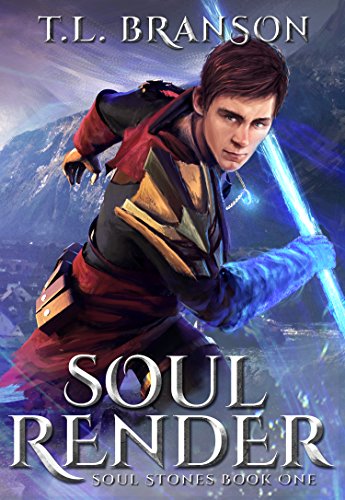
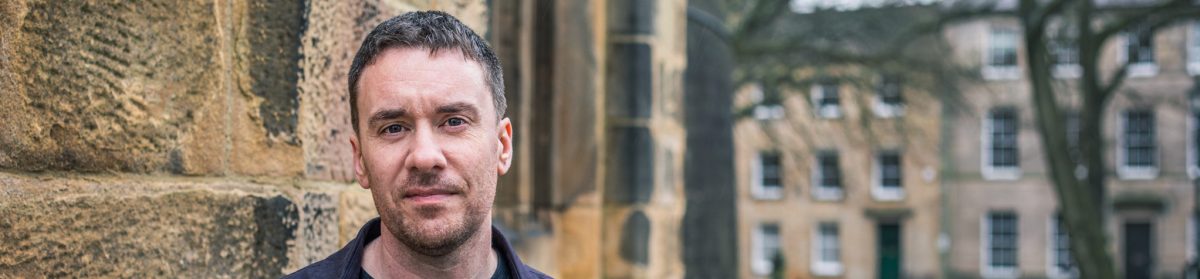
T.L. Branson is an author of YA and Epic Fantasy. His debut novel, Soul Render, is the first in a planned quartet. Branson started writing when he was eighteen but didn’t take it seriously until eleven years later. Born in Pennsylvania, he currently lives in California with his wife and two children.

He finds his inspiration from the kings (and queen) of story, J.R.R. Tolkien, C.S. Lewis, George Lucas, and J.K. Rowling. That’s code for “he’s a total nerd!”

Branson first fell in love with fantasy when he picked up a copy of R.A. Salvatore’s The Thousand Orcs. Since then, not a day goes by where his mind doesn’t wander into the realm of elves, dwarves, and orcs or crave for an epic adventure.

Find T. L. Branson online:

Amazon: amazon.com/stores/T.L.-Branson/author/B075GDCPK5

Website: tlbranson.com

21 Ways You Know You’re a Fantasy Reader

Dive into the unique world of fantasy readers! Discover tell-tale signs you’re part of this tribe, from debating magical creatures to sporting fantasy-inspired tattoos.

Fantasy readers are a unique breed. We’re the ones who’ve wandered through the enchanted forests of Middle-earth, battled dragons in Westeros, and tracked down spell tomes in the Unseen University.

We’ve dreamed of soaring on the backs of dragons, casting spells with a flick of a wand, and fighting evil with our trusty swords.

And it’s fair to say we’ve also picked up some quirks along the way that set us apart from the non-fantasy readers of the world.

So, if you’re wondering whether you’re one of us, here are some tell-tale signs that you might be a true fantasy reader.

1. You know you’re a fantasy reader when you’ve debated the merits of various magical creatures over a pint of ale.

2. You know you’re a fantasy reader when you’ve tried to open a door with a magic spell instead of a key.

3. You know you’re a fantasy reader when you’re more excited about a book’s map than its table of contents.

4. You know you’re a fantasy reader when you’ve contemplated the logistics of having a hobbit-sized home.

5. You know you’re a fantasy reader when you’ve had to explain what “Tolkien-esque” means to someone who’s never read a fantasy novel.

6. You know you’re a fantasy reader when you’ve felt personally betrayed by a fictional character’s death.

7. You know you’re a fantasy reader when you’ve caught yourself muttering spells under your breath when faced with a particularly difficult task.

8. You know you’re a fantasy reader when you’ve tried to solve a real-life problem by asking “What would Gandalf do?”

9. You know you’re a fantasy reader when you’ve rolled your eyes at a non-fantasy reader who said “It’s just a book, it’s not real.”

10. You know you’re a fantasy reader when you’ve imagined yourself as a powerful wizard or witch casting spells in a crowded room.

11. You know you’re a fantasy reader when you’ve tried to learn a fictional language, like Elvish or Dothraki.

13. You know you’re a fantasy reader when you’ve considered getting a tattoo inspired by your favourite fantasy book or series.

15. You know you’re a fantasy reader when you’ve felt a sense of camaraderie with other fantasy readers, even if you’ve never met them.

16. You know you’re a fantasy reader when you’ve contemplated whether you could actually survive in a world with dragons, magic, and other fantastical creatures.

17. You know you’re a fantasy reader when you’ve used obscure fantasy references in casual conversation, only to be met with blank stares.

18. You know you’re a fantasy reader when you’ve wished that you could attend a ball at the High Court of Faerie, even though you know it probably wouldn’t end well.

19. You know you’re a fantasy reader when you’ve named your pets after fantasy characters or creatures.

20. You know you’re a fantasy reader when you’ve dressed up as your favourite fantasy character for Halloween and had to explain your costume to everyone who asked.

21. You know you’re a fantasy reader when you’ve cried over the ending of a book or series, and had to take a break from reading for at least a week.

Want a free Ravenglass Universe starter library? You can get the novel Birth of Assassins, and the novellas Blades of Wolfsbane and The Fool when you join the VIP newsletter.

Five Fire-Breathing Beasts: The Top Dragons in Fantasy Literature

Discover the top dragons in fantasy literature! From Smaug to Drogon, explore the iconic fire-breathing beasts that have captivated readers throughout history. Dive into the enchanting world of dragons in this thrilling blog post.

Dragons are one of the most iconic and enduring fantasy creatures, appearing in stories and legends throughout history.

From the ancient tales of Asian and European folklore to modern fantasy literature, dragons have captured the imagination of people all over the world.

Here are five awesome dragons in fantasy literature:

1. Smaug from J.R.R. Tolkien’s The Hobbit.

Smaug is one of the most famous and fearsome dragons in fantasy literature. He is known for his vast hoard of treasure and his ability to breathe fire.

2. Drogon, Rhaegal, and Viserion from George R.R. Martin’s A Song of Ice and Fire series.

Drogon, Rhaegal, and Viserion, also known as the dragons of Daenerys Targaryen, play a central role in the story, and are known for their ferocity and loyalty to their mother, Daenerys.

3. Glaurung from J.R.R. Tolkien’s The Silmarillion.

Also known as the “Father of Dragons,” Glaurung was the first dragon created by Morgoth, the main antagonist of the story.

Glaurung is known for his intelligence and his ability to speak. He is able to use his cunning and manipulation to control the minds of others, making him one of the most dangerous creatures in Middle-earth.

4. Saphira from Christopher Paolini’s Inheritance Cycle series.

Saphira is the dragon companion of the protagonist, Eragon. She is known for her intelligence, loyalty and fierce power. She is able to communicate telepathically with Eragon, and the two form a deep bond throughout the series.

5. Tintaglia from Robin Hobb’s Liveship Traders series.

Tintaglia is the last of her kind and is initially seen as a powerful, majestic and proud creature. She is fiercely protective of her eggs and will stop at nothing to defend them. However, as the story progresses, we see Tintaglia’s vulnerability and her struggle for survival as she faces illness and injury.

Click HERE to claim your free Ravenglass Universe starter library.