From Drunken Faeries to Lost Ancients: An Exclusive Chat with Marie Andreas

Exclusive insights from fantasy author Marie Andreas. Dive into her creative process, inspirations, and journey through the realms of elves and faeries

In the realm of fantasy, few voices resonate as distinctly as that of Marie Andreas.

With elven artifacts, whimsical drunken faeries, and worlds that captivate the imagination, Andreas has etched a significant mark on the genre.

Today, we peel back the layers of the fantastical, diving deep into the mind of the multi-award-winning SFF author.

What inspired you to start writing in the fantasy genre?

There were stories I wanted to read but weren’t written yet!  I’ve always loved fantasy :).

How do you approach world-building in your stories?

I’m very much a pantser in my writing and that goes for world building. It’s done as I go along (I have a general idea of the world in question, but the rest is SURPRISE!)

Can you walk us through your writing process?

I’m not normal-LOL. Just wanted to get that out first. Something sparks an idea and a character–maybe two. Then I just start writing. Yup- I’m one of those evil pantser’s your teachers warned you about ;).

 I’m a full-time author, so have a set schedule (5 days a week- 4k words daily target) also, I will usually have more than one project at a time. Right now, I’m working on the next book in my second Lost Ancient’s fantasy series as my primary WIP.  However, I’ve also started my third steampunk. So I switch if I get stuck, or just as a brain cleanser.

I re-read what I wrote the prior day before I start that day’s writing. It gets me in the mindspace for that world and catches a few typos.

I go through the book a few times when done, have my group of reader/editors go at it, then a final proof. BOOM! It’s a BOOK!

Would you survive in your own fantasy world?

Probably not–although, I would LOVE being in a world with my drunken faeries–so it would be worth it.

What themes do you explore in your work?

Friendship is probably the biggest. I’m not writing to be deep, I write to escape :).

What do you consider to be your biggest influences as a writer?

Every single fantasy book or movie that I’ve loved.

What do you hope readers take away from your stories?

That they had a great escape from the world, and a sense of my characters being like old friends.  I love it when a reader tells me they re-read the books on a regular basis.

Would you rather have a pet dragon or a unicorn, why?

Can’t I have both?  I have both living happily on my desk…dunno why I can’t have both.  Okay, do NOT tell my Scottish battle-corn, but a dragon. They fly. I really want that.

If you were stuck on a deserted island with one of your characters, who would it be and why?

Taryn.  She’s kinda cool and if she were there, the drunken faeries would show up too ;).

What would you name your pet dragon?

Herbert.

The Glass Gargoyle (The Lost Ancients book 1)

Archeologist Taryn St. Giles has spent her life mining the ruins of the elves who vanished from the Four Kingdoms a thousand years ago. But when her patrons begin disappearing too—and then turning up dead—she finds herself unemployed, restless, and desperate. So she goes looking for other missing things: as a bounty hunter.

Tracking her first fugitive—the distractingly handsome and strangely charming Alric—she unearths a dangerous underworld of warring crime lords, demonic squirrels, and a long-lost elven artifact capable of unleashing a hell on earth.

Chased, robbed, kidnapped, and distressingly low on rent money, Taryn just wants one quiet beer and to catch her fugitive. But there’s more to Alric than his wicked grin—is he a wanted man or the city’s only hope? With menacing mages in pursuit and her three alcoholic faery sidekicks always in her hair, Taryn’s curiosity might finally solve the mystery of the elves… or be the death of her and destroy her world.

About the Author

Marie is a multi-award-winning fantasy and science fiction author with a serious reading addiction. If she wasn’t writing about all the people in her head, she’d be lurking about coffee shops annoying total strangers with her stories. So really, writing is a way of saving the masses. She lives in Southern California and is owned by two very faery-minded cats. She is also a member of SFWA (Science Fiction and Fantasy Writers Association).

When not saving the masses from coffee shop shenanigans, Marie likes to visit the UK and keeps hoping someone will give her a nice summer home in the Forest of Dean or Conwy, Wales.

Find Marie online:

Website: marieandreas.com

Facebook: facebook.com/marieandreaswriter

Diving into the Magic: An Author Interview with Fantasy Writer R.E. Sanders

Join us as we delve into the mind of R.E. Sanders, acclaimed fantasy author of ‘A Path of Blades’, exploring his unique world-building process.

Today, I’m delighted to introduce a captivating conversation with fantasy author R.E. Sanders.

From humble beginnings inspired by the likes of J.R.R. Tolkien and Michael Moorcock, Sanders has crafted a unique blend of intricate world-building, deeply rooted in historical and cultural influences.

With his novel ‘A Path of Blades’ serving as a vibrant showcase of his storytelling prowess, Sanders dives deep into the realms of internal conflict and human resilience.

In this interview, Sanders reveals his creative process, his love for a good ‘what if’ question in world-building, and even his preference for dragons over unicorns.

From mythical creatures to tackling real-world issues, Sanders explores it all.

So whether you’re an ardent fan or new to his works, buckle up for an exciting journey into the mind of this fantasy luminary.

What inspired you to start writing in the fantasy genre?

My inspiration to write is driven by my love of reading. As a child and then a teenager I read voraciously and the defining moment was when I took my dad’s battered copy of ‘The Fellowship of the Ring‘ down from the shelf. The huge scope of the  world and the stories blew my mind, and led me to read more fantasy; Eddings, Gemmel, brooks, Morwood, Moorcock, Jordan and others. It sparked my imagination and soon I began to create my own worlds where the grand, dramatic stories I wanted to tell could take place.

How do you approach world-building in your stories?

I start with broad, culture-defining questions, sometimes in a ‘what if’ kind of way (like, ‘what if there had been no Roman empire…what would medieval Europe look like?’). The ideas that flow from this lead me to more detailed questions about society, history and organisation. Answering these start to build nations and continents as concepts. I put a lot of focus on history, to the extent that for many of my fantasy countries I’ve written legends, myths and historical texts as backstory. The last level of detail is to imagine myself arriving in the particular location and picturing the details that stand out; the differences that make that place rich, interesting and unique. I want it all to feel real.

Can you walk us through your writing process?

For, ‘A Path of Blades’ the seed was sown by an earlier novella (Tann’s Last Stand). At the conclusion of that story I felt that two of the characters (Ingvar Omarsson and Ammie Cowl) left a lot of unanswered questions about their backstory. A Path of Blades was the tale I told myself to fill in the detail on that story. Once I had the basic outline I just started writing! The tale flowed and the characters developed as I wrote more, sometimes just as I had planned but other times with unexpected turns! I tend to outline loosely and write quite freely within that – I like the sense of overall direction alongside a freedom to be spontaneous and creative.

Would you survive in your own fantasy world?

Tricky! It would depend where and when! Danger ebbs and flows in the world, so I think if I was around during the events of A Path of Blades I’d have a good chance. However, I’m working on a series in the same world where the stakes are about to be raised for everyone. No-one will be safe.

What themes do you explore in your work?

Although I write fantasy I try to confront real-world issues as I write. A Path of Blades asks questions about how people deal with internal conflicts; duty against morality, friendship against family, peace against action.

What do you consider to be your biggest influences as a writer?

I draw inspiration from everything that inspires me; culture, history, landscape and the natural world. I can no longer watch TV documentaries without a notepad nearby! Specific influences are other fantasy authors like I’ve mentioned, but also historical fiction authors such as Cornwell and Iggulden. I also aspire to be able to tell a story with the drama, flair and excitement of a Marvel movie, but I’m not sure it’s very cool to admit that!

What’s the strangest thing you’ve had to research for your stories?

I did a bit of reading about grave digging. But who hasn’t done that?

What do you hope readers take away from your stories?

I like to think there is a thread of hope that runs through my stories. The characters go through dark times, but they come out the other side changed, but not broken. They lose much but they learn what is really important. Relationships fail but some are strengthened.

Would you rather have a pet dragon or a unicorn, why?

I’d have a pet dragon because it would be much more practical for trips out the the beach for a barbecue.

If you could have any magical ability, what would it be?

In A Wheel of Time, Rand Al’Thor learns how to make gateways in the air to travel instantly anywhere in the world. I can’t help think I could make good use of that. Reducing my carbon emissions, if nothing else.

If you were stuck on a deserted island with one of your characters, who would it be and why?

My stories include a Dwarf character called Klay Garrant. He can make a fire literally anywhere and always has a supply of food. I think he’d be the best bet.

What would you name your pet dragon?

Fluffles, Destroyer of Worlds.

Where is the best place to start reading your work?

A Path of Blades is a good example of my style and a small window on the world that I will gradually reveal in my subsequent books.

Author bio

Rob is a fantasy author based in the UK. A degree in archaeology and a fascination with British history has led him to create a world of his own in which to spin tales and create adventures.

Find Rob online

Website: resanderswrites.wixsite.com/r-e–sanderswrites

Twitter: twitter.com/RobSanders56

Interview with G J Kemp: Writing Fantasy that Explores Disability, Friendship, and Trust

Explore the creative process of renowned fantasy author G J Kemp. Dive into his world-building approach, thematic arcs, writing journey, and much more in this exclusive author interview.

Immerse yourself into a realm of magic as we delve into the fantastical mind of epic fantasy author G J Kemp.

From his early beginnings, Kemp’s love for the fantasy genre blossomed in the face of adversity.

In this exclusive interview, Kemp invites us into his unique approach to world-building, his meticulous plotting process, and the thematic cores woven into his spellbinding narratives.

The twists and turns of his creative process are as intriguing as his novels, providing valuable insights for aspiring writers and readers alike.

So, grab yourself a cuppa and let’s embark on this fascinating expedition into the depths of Kemp’s creative world.

.What inspired you to start writing in the fantasy genre?

When I was young, I had a number of operations to try combat me being born with Cerebral Palsy. This meant, that I was immobile for large periods of my life. Bear in mind that this was in the 1970’s. To combat the boredom, my mother bought me every Enid Blyton book available. I devoured them followed by Lord of the Rings and The Magician. From there, my love for the fantasy genre was born.

How do you approach world-building in your stories?

Through dialogue coupled with action. I hardly ever describe a scene. My characters describe the scene for my by moving through the world they are in. Sometimes, a character will talk about a piece of the world, but only if this is really necessary.

Can you walk us through your writing process?

I am a major, major, plotter. Here it is high level. I start with working out the story structure. This usually comes in the form of a template. I am a firm believer that all good stories follow a structure. From there, I write a general outline for each Act, Block and Chapter. Once the outline has been done, I then re-outline against each scene. Once that is done, I re-outline in detail. Only then do I start working on the manuscript. Juno and the Lady is 111k words long. My plotting outline is nearly 100k words long.

Would you survive in your own fantasy world?

Absolutely. Since I am the writer I would give myself new powers every time I needed them! 🙂

What themes do you explore in your work?

I work on a three-theme structure. Each book I write, needs to have three themed arcs. Take Miles and the Soldier for instance. Theme 1 – Disability, Theme 2 – Friendship, Theme 3 – Loyalty and Trust.

What do you consider to be your biggest influences as a writer?

Enid Blyton, Raymond E. Feist, Stephen King, J. R. R. Tolkien.

What’s the strangest thing you’ve had to research for your stories?

I think the strangest thing is for my upcoming series, Abbie Vera. She has an angel and demon sitting on each shoulder who consistently whisper stuff into her ears. Researching the interaction between these entities is a bit of a minefield!

What do you hope readers take away from your stories?

A sense of joy and hopefully something to think about. Most of my stories look at the worlds problems from different angles. If my stories give my readers another perspective, I am a happy author.

Would you rather have a pet dragon or a unicorn, why?

I would combine the two and have a Pegasus, thank you very much. A fire breathing, flying horse! Dragons and unicorns wouldn’t stand a chance!

If you could have any magical ability, what would it be?

I would have the ability to ward off death. I would like to live as long as I choose and only when I am done with exploring life, can the depths of darkness take me.

If you were stuck on a deserted island with one of your characters, who would it be and why?

I think Genevie. A vampire princess. Although I think I would just end up being her food!

What would you name your pet dragon?

Geoff

Where is the best place to start reading your work?

Juno and the Lady (An Acre Story Book 1), available on Amazon.

Website: gjkemp.co.uk

Author bio

A nomad at heart, GJ has lived in nine countries across Africa, Europe and the Middle East. His career has included working as a Divemaster in The Red Sea, a zookeeper in Israel, and a proofreader in Sweden.

Born with cerebral palsy, GJ has spent a lifetime trying to tie his shoelaces while standing up in the hope of not falling over. It is a constant challenge, but sometimes he occasionally succeeds.

Finding the love for writing later in life, GJ spends most of his free time going for walks and dreaming of story ideas. He hopes to one day have a small place on the oceanfront where he can walk his dogs on the beach.

Exploring the Goblin Realms: An Interview with Jaq D. Hawkins

Discover the captivating fantasy world of author Jaq D Hawkins. Explore her unique characters and immersive world-building in this exclusive interview. Get a sneak peek into her fantastical works and be inspired by her creative process.

Interview with Jaq D Hawkins

Author Jaq D Hawkins has made a name for herself in the world of fantasy fiction with her captivating world-building and unique characters.

In this exclusive interview, we delve into her creative process, inspirations, and what she has in store for readers.

Join us as we learn more about this incredible author and get a sneak peek into the fantastical worlds she has created.

What inspired you to start writing in the fantasy genre?

My love of reading fantasy made me always want to create my own world. Then one day, the goblins kidnapped me and showed me theirs.

How do you approach world-building in your stories?

It tends to flow organically with me. A need to explain how something works extracts that information from the secret compartment in my brain where the Akashic records for that reality are held.

Can you walk us through your writing process?

It varies, but basically an idea will spawn characters who then take over and drag me into their world.

For example, I threw some magicians into my goblin world just because magic is my thing and the blighters took over, formed a government and based it on their LARP games.

I never got a look in!

Would you survive in your own fantasy world?

Probably. I’m pretty down to earth and sensible. I know better than to go mucking around in the wrong caverns.

What themes do you explore in your work?

Prejudice is a big one. Preconceptions. The tendency of most people to accept what they are taught when young and not ask questions.

Asking myself why goblins should be at odds with humans was a big part of the early stages of forming that world.

Generally what we perceive as evil isn’t just mindless malice (serial killers excepted). There’s a reason why peoples would be enemies.

What do you consider to be your biggest influences as a writer?

A whole lot of sci-fi and fantasy from age twelve, after a childhood of enjoying stories with magic. Interesting worlds especially.

What’s the strangest thing you’ve had to research for your stories?

Not related to my goblin series, but finding what metal the cutlery used in Victorian workhouses was took me down a rather extensive rabbit hole. Obviously they wouldn’t use silver.

Another one is the varying theories on magnetic pole shifts of the Earth and the possible consequences if the planet reversed position.

What do you hope readers take away from your stories?

A bittersweet longing to be part of the goblin world. It’s actually rather a stress-free sort of life. Most of the time anyway.

Would you rather have a pet dragon or a unicorn, why?

Dragon! As long as it could talk. I’ve always had a fascination with reptilian creatures. Unicorns are cool too though.

If you were stuck on a deserted island with one of your characters, who would it be and why?

Haghuf, definitely. He would probably know a way off the island, perhaps through a deep cavern under the ocean. If not he’s still the most practical goblin I know.

What would you name your pet dragon?

Khadri (see my story, A Wizard’s Quandary).

Where is the best place to start reading your work?

That depends if you like exposition or quick action. Dance of the Goblins for the former, Demoniac Dance for quick action. It can stand alone.

Of course, if you prefer flying with airship pirates, The Wake of the Dragon is a steampunk adventure written for adult readers.

Jaq D Hawkins is the author of The Goblin Trilogy, which includes Dance of the Goblins, Demoniac Dance and Power of the Dance. She has also written the Airship Mechanoids Steampunk series which begins with The Wake of the Dragon and a science fantasy romp, The Chase For Choronzon.

Find Jaq online:

Website: jaqdhawkins.com

Facebook: facebook.com/GoblinSeries

Goodreads: goodreads.com/author/show/218599.Jaq_D_Hawkins

Twitter: @jaqdhawkins

Pinterest: uk.pinterest.com/jaqdhawkins

Exploring the Art of Fantasy Writing with Melissa Ragland

Melissa Ragland, the critically acclaimed author of the A Crown of Lilies fantasy series, takes us on a captivating journey in this interview. Discover her inspiration, writing process, and thoughts on fantasy writing. Grab a cuppa and delve into the world of Melissa Ragland’s enchanting stories. Perfect for fans of Scott Lynch, Robin Hobb, and Brent Weeks.

Melissa Ragland author

Melissa Ragland is the critically acclaimed author by the A Crown of Lilies fantasy series.

In this interview, we will delve into her journey as a writer, her inspiration, and her thoughts on fantasy writing.

So grab yourself a cuppa and let’s get started…

What inspired you to start writing in the fantasy genre?

I’ve been making up stories since I was a little girl. By the time I began writing them down, the subject matter had begun to trend toward the types of books I loved the most: fantasy. From the dragons of Pern to Anne Bishop’s dark epics, tales of magic and adventure have always resonated deeply with me. I wanted to paint those kinds of worlds, those kinds of characters, with a brush of my own.

How do you approach world-building in your stories?

I’m obsessed with world-building. For my own part, I work out every piece of the universe I want to write in. Politics, culture, traditions, religion, wars, geography, you name it, and it’s probably scribbled in a journal somewhere. I think it’s important that the author understands their world to that extent. I think it’s equally important not to dump all of it on the reader, though.

Giving some context about a nation’s history is one thing, but readers don’t need to know the main export of the neighboring province of the main character’s second cousin. The payoff for your restraint, as a writer, is those little moments where you get to reveal another critical piece of this vast world you’ve built to the reader. You know that they’ll experience a little ‘aha’ moment, and become even more invested in the universe because they understand a bit better how all the pieces work together.

Can you walk us through your writing process?

I started as a pantser, only plotting out the next chapter as I went along. My desk was a mess of notecards and ideas scribbled in journals. When I started the edits for my second book, I realized what a mistake that was and my organizer-brain took over. Now I’m a strict plotter and I use Dabble to keep my outline and notes in order.

As for the process itself, I’m pretty Plain Jane. I know many authors jump around their manuscript to keep writing when they get stuck, but I can’t do it. I have to start at the beginning and work through it. Even though I outline, there’s a lot of nuance that comes out in the actual drafting and by jumping around, I feel like it’s too easy to drop those threads.

Would you survive in your own fantasy world?

I’d like to think so! I’m resourceful and a good problem-solver. Honestly, though, I have absolutely no poker face so I’d be worthless at court. Maybe I’d be okay if I was incarnated as something mundane like a dressmaker’s apprentice or a stable hand.

What themes do you explore in your work?

I like to think that humanity is the primary theme behind all my writing. Fiction has a tendency to portray characters and events in terms of good an evil, but human nature spans such an immense range between the two that those concepts almost lose all meaning. Most of our actions in life fall in the gray space between. That is where I believe the greatest strength of our species lies: in enduring, in making mistakes, in facing our failures and striving to be better.

What do you consider to be your biggest influences as a writer?

Music can get me into the flow when nothing else can. I don’t always listen to music when I’m writing, but I’m gearing up for a session or doing some brainstorming, it’s a must.

What’s the strangest thing you’ve had to research for your stories?

For book 2 (Lazerin), I spent hours researching how thatched roofs are made. I watched dozens of videos on YouTube, read articles about historic buildings, crawled through blog posts. In the end, it ended up only impacting a few paragraphs, but I learned a lot!

What do you hope readers take away from your stories?

Entertainment, of course, but also inspiration. I hope my characters inspire readers to look at themselves and their lives in a more forgiving light. It’s possible to make all the wrong choices, to make costly mistakes, and still be a force for good. Keep getting back up. Keep fighting. It might not always work out, but keep trying to do the right thing.

Would you rather have a pet dragon or a unicorn, why?

Dragon, of course! But maybe just a small one because I don’t think my grocery budget can support a Game of Thrones level dragon. Meat is expensive, these days!

If you could have any magical ability, what would it be?

Immortality. I’d spend centuries learning every language, reading every book, writing all the stories in my head, and perfecting my chocolate chip cookie recipe.

If you were stuck on a deserted island with one of your characters, who would it be and why?

Aubrey! Because if Pirates of the Caribbean taught us anything, it’s that deserted islands always have hidden stashes of rum and Aubrey would be the most fun on a multi-day bender.

What would you name your pet dragon?

Assuming it’s a small library-guardian sort of dragon, I’m gonna go with Frank.

Where is the best place to start reading your work?

All my books are free to read on Kindle Unlimited and I also offer review copies on Story Origin.

Traitor (A Crown of Lilies, Book 1)

About the Author:

A voracious reader from her youth, Melissa Ragland has spent her life absorbing stories. In libraries and bookstores, she devoted three decades to the study of fiction, dissecting the weave and weft of good storytelling.

​Now, after a long stint in the much-beloved heat of Austin, Texas, Ragland has returned to the Midwest woodlands of her youth to pursue her lifelong passion for writing. Her lush and unapologetic debut fantasy series has earned accolades from readers and fellow authors alike, with book one (‘Traitor’) being selected as a Page Turner Awards finalist and earning a Reedsy Discovery five-star review.

Find Melissa online

Website: raglandwrites.com

Instagram: instagram.com/authormelissaragland

Facebook: facebook.com/RaglandWrites

Unleashing the Magic: An Interview with Fantasy Author Clayton Wood

Discover the captivating fantasy worlds crafted by Clayton Wood, the mastermind behind the Runic, Fate of Legends, and Magic of Havenwood series. Join us as we delve into his writing journey, inspiration, and insights into the realm of fantasy fiction.

Fantasy Author Clayton Wood

Clayton Wood is the mastermind behind several popular fantasy series, including the Runic series, Fate of Legends series, and Magic of Havenwood series.

In this interview, we will delve into Clayton’s journey as a writer, his inspiration, and his thoughts on fantasy writing.

So without further ado, let’s get started!

What inspired you to start writing in the fantasy genre?

Fantasy books were my go-when I was a kid, and I devoured series by Piers Anthony, R.A. Salvatore, Raymond E. Feist, Terry Brooks, Robert Jordan, and many more. Why fantasy appeals to me, I cannot honestly say. All I know is that my muse constantly conjures new ideas for me to work with, and she’ll make my life a living hell if I let her down by not using them!

How do you approach world-building in your stories?

For me, world-building usually grows from the main theme or themes I’m exploring in a series. For example, The Magic Collector was about art and creativity as magical forces, and so I incorporated works of art quite literally into the world. Books about castles made castles, and books about giants made giants. In contrast, Elazar the Magician was in part about dogma and ways of knowing, and thus a scientific and technologically more advanced society clashed with a religious one. Both were slaves to their own dogma, and the truly enlightened were magicians. Magicians who gained their powers through magic mushrooms, which inspired mushroom-shaped symbolism in the world-building process.

Can you walk us through your writing process?

Normally an idea for a new series comes out of the blue for me (see note on my abusive muse above), and I let it grow and mutate in my brain for a year or so. I know it’s ready for writing when it stops changing, solidifying into a world, narrative, and a couple of characters. I have an idea of the beginning, middle, and end, and when I write, I let the characters fill in the rest. Mostly because if I try to get in their way, they’ll stage a mutiny.

As for how I structure my time, I usually order book covers from my cover designer 6 months in advance. 2 for the Spring, 2 for the Fall. Nothing is written yet when I order them, but they gotta be done by the time the covers are due to be made. That way I keep a pace of around 4 books published a year.

Would you survive in your own fantasy world?

My wife says no, ’cause I’m soft. But she’s totally wrong.

What themes do you explore in your work?

For the Runic series, it was the role of various father figures in growth and self-actualization…how negative father figures can create conflict that forces growth through adversity, and how positive father figures can do so with mentoring and nurturing.

For the Fate of Legends series, I explored group identity vs. individual identity, and the magnetic-field-like forces that force those with weaker wills to align with stronger wills. Also, the ways in which failing to identify as part of the greater world can lead to calamity.

For the Magic of Havenwood series, I explored the creative process itself, making art magical. Writers wrote books that created entire lands and monsters, while sculptures came to life. Musicians could manipulate emotions and time itself, while Actors could literally transform into who they played. And Painters could take objects and living creatures they’d painted out of their canvases, bringing them to life. It was a fun way to explore my own creative process, teaching the reader some things that I’d learned. It was also a way to explore secondary themes of the dark and light parts of the human soul, and the somewhat lost idea of redemption.

For Inappropriate Magic, I explored the themes pertinent to the mid-life crisis, where one realizes they’re going to die, the life they’ve lived is one they fell into and no longer want, and that they need to find meaning and purpose in their life.

What do you consider to be your biggest influences as a writer?

Most authors I liked made me want to write a book like theirs. Piers Anthony made me want to be as creative as possible in my writing, instead of just parroting books I’ve read.

What’s the strangest thing you’ve had to research for your stories?

Coral reef reproduction as it pertains to a character from the battle over Alexandria during the rein of King Ptolemy VIII.

What do you hope readers take away from your stories?

First and foremost that they enjoy themselves. Secondly that each book makes them think a little bit. And third, that someone – even one person – is inspired to write their own book after reading mine. That’s what fantasy authors did for me, and if I can do that for someone else, that would be amazing.

Would you rather have a pet dragon or a unicorn, why?

Dragon. They’re badass. Although I’ve had both in my books. A rude, sarcastic skeletal dragon called Nemesis, and a…gifted unicorn named Peter.

If you could have any magical ability, what would it be?

Healing people. I’m a physician, so I naturally want to make people better!

If you were stuck on a deserted island with one of your characters, who would it be and why?

Vi. I feel like her survival skills would keep me alive…if she didn’t kill me for my lame Dad jokes, that is. My wife has considered it, but she’s waiting for my life insurance application to be processed.

What would you name your pet dragon?

Unicorn. Now I get to have both!

Where is the best place to start reading your work?

*It depends on your tastes. If you like classic coming-of-age fantasy, Runic Awakening.

If you prefer to have your heartstrings pulled at, The Magic Collector. If you like gritty medieval fantasy, Hunter of Legends.

If magic mushroom-based magic in a steampunk world is your thing, Elazar the Magician.

And if you enjoy inappropriate humor, Inappropriate Magic!

About the author.

Clayton Wood is the author of the Runic series, the Fate of Legends series, the Magic of Havenwood series, the Magic of Magic series, and the Masks of Eternity series. He’s been a computer programmer, graphics designer, martial-arts instructor, and now works in the medical field. He has a wife and three wonderful children.

Writing was always Clayton’s passion, but it wasn’t until the birth of his first son that he found the inspiration necessary to finish his first book. Five years later, he published Runic Awakening, the first entry in the Runic Series.

Find Clayton online:

Website: havenwoodpublishing.com

Facebook: facebook.com/claytontaylorwood

Instagram: instagram.com/claytontaylorwood

The Mind Behind the Magic: An Interview with T. L. Branson

Embark on a thrilling journey where gaming and fantasy collide! Join us as we uncover the captivating world of T.L. Branson, the mastermind behind action-packed tales. Discover the inspiration behind his books and the secrets of his creative process. Get ready for an immersive adventure that will leave you craving for more.

nterview with Author T. L. Branson

If you’re a fan of immersive and action-packed stories that blend elements of gaming and fantasy, then you’re in for a treat.

In this interview, we’ll get to know the author T. L. Branson, about his books, his inspiration, and the answer to the most important question—what would he name his pet dragon?

So, grab a cup of tea and join us as we delve into the mind of T.L. Branson.

What inspired you to start writing in the fantasy genre?

From the moment I picked up R.A. Salvatore’s The Hundred Orcs, I’ve been in love with fantasy novels. I’d “fantasized” about writing my own for years. I pictured myself out on a park bench in the beautiful sunshine creating worlds of adventure…

Yeah, that never happened.

But, I did get to a point where the stories in my head were bursting at the seams to get out and onto the page, and in 2016, I bit the bullet and started writing.

It was in a house in Western Pennsylvania where it’s gray, overcast, and cold most of the year, but the location wasn’t what mattered. The time spent writing was, and it’s a process that still works today. We authors like to say “Butt in chair” time.

How do you approach world-building in your stories?

I try to have a fully-formed world before I even begin the writing process. This takes a lot of brainstorming sessions. Usually I’ll be mulling over ideas for days or weeks.

This might be a scheduled time where I’m actively writing notes in Word, or while I’m driving my car (the worst because I can’t write things down), or waiting at a doctor’s office.

As soon as I’m able, I’m adding notes to my file. It works best when my laptop and phone are synced to the same Note so I can update it no matter where I am and the changes are there.

My notes will often contradict themselves as I come up with newer and better ideas. I never delete old ideas, just add new ones to the Note.

Then when I’m ready to begin writing, I go through, compile all the good ideas, throw out the old, and start organizing them into a cohesive whole.

Can you walk us through your writing process?

I’m what they call a plotster. There are three kinds of writers: plotters, pantsers, and plotsters.

The first plots out their entire novel in great detail before ever beginning. They have pages and pages of outlines with detailed info about what happens in each scene and how the plot progresses.

Pantsers have no plan at all. They just start writing and what happens happens.

A plotster is a pantser that doesn’t like having no direction at all. We like a little structure, but we also don’t want to be so bogged down by a formal outline. We want the ability for the story to go a different direction if it feels like it needs to while writing.

To change anything to a plotter means hours of revision work to their outline. And hours wasted.

So what I prefer to do is map out the next 3-4 chapters. Sometimes this is very detailed about what exactly needs to happen. Sometimes it just includes a note like “We must meet the water elf queen in this chapter.” Other times it includes full blocks of dialogue that popped into my head one day and I wrote it all down line for line.

The point is, I like my story to be organized, yet open to interpretation and change without losing hours of work thanks to a rigid outline.

Would you survive in your own fantasy world?

Probably. Very few people have magic, so most everyone is an ordinary person. And all of the conflict happens between the nobles and rebels. If you’re not a rebel or a noble, you’re probably safe.

There is always collateral damage, and I couldn’t help it if my house suddenly collapsed due to a conflict I couldn’t control. But it’s not a brutal world where no one leaves the safety of the commune or anything.

What themes do you explore in your work?

I don’t really do themes. I write for fun. Just good old romps, battles, and magical creativity.

What do you consider to be your biggest influences as a writer?

Other writers. I’m a voracious reader. Also video games. The amount of story elements or inspirations that came from playing RPGs is amazing.

This isn’t copying something that already exists. It’s usually a small element that influence how my world already operates, but heightens it.

For instance, I was watching Dr. Strange while writing my first novel, and he punched a guy in the chest and his spirit flew out of him. Or something like that. The magic in my books deals a lot with souls, so this seemed like an excellent opportunity to heighten the main character’s magical abilities by allowing him to eject souls with something like a punch, rather than simply removing them from the body.

What do you hope readers take away from your stories?

Just like themes, this isn’t something I think about. I’ve got a story in my head, and I write about it because it sounds fun to me. I don’t have any hidden messages intentionally built in. We all have pasts and history and values that we inherently bake into the story because it’s who we are, but I don’t ever sit down and say “I want this book to influence people this way”

Would you rather have a pet dragon or a unicorn, why?

Dragon, no question. I’m sure a unicorn is safer, but I’m not much of a horse person. Dragons just sound fun. I’m kind of like Hagrid in that regard.

If you could have any magical ability, what would it be?

Either invisibility or flight, though I’m almost certain it’s flight.

If you were stuck on a deserted island with one of your characters, who would it be and why?

Ocken. He’s tall and strong. He’d be great for building shelter and doing all the “hard work.” Not that I wouldn’t do anything, but surviving on an island is no joke and having some muscle around would be helpful. Plus, he doesn’t talk much, so he wouldn’t bother me while I was reading, provided I had a crate full of books whilst being stranded on the island.

What would you name your pet dragon?

No idea. Fireball?

Where is the best place to start reading your work?

“We start at the very beginning. A very good place to start.” But no seriously, Book 1 is a great place to start. It doesn’t matter what series.

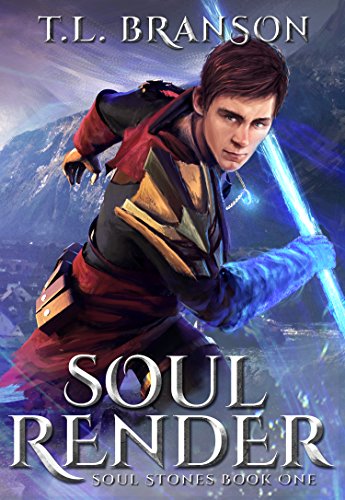
T.L. Branson is an author of YA and Epic Fantasy. His debut novel, Soul Render, is the first in a planned quartet. Branson started writing when he was eighteen but didn’t take it seriously until eleven years later. Born in Pennsylvania, he currently lives in California with his wife and two children.

He finds his inspiration from the kings (and queen) of story, J.R.R. Tolkien, C.S. Lewis, George Lucas, and J.K. Rowling. That’s code for “he’s a total nerd!”

Branson first fell in love with fantasy when he picked up a copy of R.A. Salvatore’s The Thousand Orcs. Since then, not a day goes by where his mind doesn’t wander into the realm of elves, dwarves, and orcs or crave for an epic adventure.

Find T. L. Branson online:

Amazon: amazon.com/stores/T.L.-Branson/author/B075GDCPK5

Website: tlbranson.com

Author Spotlight: Jan Foster and Her Historical Fantasy Worlds

Dive into the magical worlds of Jan Foster, British historical fantasy author, as she discusses her inspirations, writing process, and magical creatures in her stories.

Dive into the magical worlds of Jan Foster, British historical fantasy author, as she discusses her inspirations, writing process, and magical creatures in her stories.

Today we are joined by British historical fantasy author Jan Foster.

With a passion for history, Jan has created a world filled with magic and intrigue.

In this interview, we’ll dive into the inspiration behind her world, her writing process, and what readers can expect from her books.

So grab yourself a cuppa and join us on this journey into the world of historical fantasy.

What inspired you to start writing in the fantasy genre?

I write historical fantasy and history, although written often by the victors, could be read as absolute. Fantasy allows me to ask the ‘What if’ questions – like, what if I had to live with wings but pass as a human, what if the world as fae knew it was ruled by an immortal woman, and what if a bastard son was made vampire and took over the English throne. It’s fun to explore these ideas and play with them in a parallel world.

How do you approach world-building in your stories?

I have a world within the human world, whose society structure is based on nature’s creatures. The beings who inhabit this hidden world have to, at times, interact with the human world though but because they are more ancient, it’s accepted that they shouldn’t interfere too much and change the course of human history. Because its a parallel world, there is crossover though, and I tried to imagine the view which an ancient observer would have on the human world with the benefit of their long life and experience. Naturae itself is on a real (geographically speaking) island, so I had to incorporate the topography into the design of it!

Can you walk us through your writing process?

My stories are quite character driven (as in, I want the character to start at one point in their journey, face their challenge and then, grow from it – thus making up their arc), but I always start the plotting with the history. I look for years where there was a lot happening in the society – preferably a seismic shift because of change in ruler/religion/discovery and imagine how that might effect a character’s aims in their story arc. Once I’ve noted down those events and plotted out the character’s arc within the context, the storyline is virtually broken down into chunks for me to write. It takes a lot of research and pondering to see how the jigsaw of multiple POV’s is going to fit together so its a long process. Recently, I thought it would be quicker to write against a beat sheet, for a romantic fantasy, but it actually took me longer because I was so worried about keeping to the desired structure and at times, it just didn’t ‘feel’ right to move ahead with the plotline then. I think, when all is said and done, I’m a plantster through and through – I have a rough idea of where things are heading and when in the story, but let it evolve a bit more naturally than sticking to a word count for an intended end number of words!

Would you survive in your own fantasy world?

Absolutely – but not if I was still a human. I’d quite like to be a witch though.

What themes do you explore in your work?

Belief, right to rule, female empowerment (in a time when women were definitely second class citizens)

What do you consider to be your biggest influences as a writer?

I read widely, especially historical/historical fantasy, but I also LOVE thrillers. I’d like to think some of my influences are those who write in these genres, but I also highly rate authors / specialists who talk about story structure like John Truby and Lisa Cron.

What’s the strangest thing you’ve had to research for your stories?

Blacksmithing and medieval spycraft!

What do you hope readers take away from your stories?

I’d love it if they could see the parallels I infer with modern life from the history I cover, but perhaps that’s a wish too far. Mostly, I just want to tell a good story to escape into!

Would you rather have a pet dragon or a unicorn, why?

Dragon – I grew up with probably every Anne McCaffrey book she ever wrote so it had to be really!

If you could have any magical ability, what would it be?

I’m easy to please – I just want to be able to fly. Telekinesis would be cool though, or am I just too lazy to reach for my brew when I’m reading?

If you were stuck on a deserted island with one of your characters, who would it be and why?

Spenser – my Fae Ambassador to Europe. He’s a bit of a fop, a dandy, highly entertaining and well travelled, but would have so many tales to tell I’d never get bored. Plus he’s kinda hunky for a fae.

What would you name your pet dragon?

Clawsome

Where is the best place to start reading your work?

Sign up to my newsletter and receive a free novel – the prequel set in Viking era, Risking Destiny. You can sign up on my website and find out more about the Naturae series there as well.

Visit: escapeintoatale.com

About the Author.

By day, Jan juggles consultancy work with her family, but by night she sneaks off, into the past. Her penchant for sprinkling history with magic is fueled by coffee and Cadburys. When not writing, Jan takes her dogs and small monsters into the countryside, especially if there is a castle or historic building there with a cosy coffee shop in which to escape the rain of Manchester, England

Find Jan online:

Facebook: facebook.com/janfosterauthor

Amazon Author Page: amazon.com/~/e/B084LF154S

Blog: escapeintoatale.com/short-stories-and-articles/

Twitter: twitter.com/escapeintoatale

Goodreads: goodreads.com/author/show/20093349.Jan_Foster

Instagram: instagram.com/jan.foster.author

Tiktok: tiktok.com/@janfosterauthor

Newsletter: subscribepage.com/mailingsubscribe

Magic, Mythology, and More: A Conversation with E C Greaves

Discover the world of fantasy adventure with E C Greaves. Explore captivating tales, unique world-building, and the author’s creative process.

Author E C Greaves interview

Welcome to this exciting interview with E C Greaves, an author and illustrator who has made a name for himself in the world of fantasy adventure stories.

Born in Solihull, UK, Ed now resides in Christchurch, New Zealand, where he continues to create unique and interesting tales that have a mildly Slavic tinge to them.

When he’s not weaving tales of magic and adventure, Ed can be found pursuing a variety of passions. He restores old vehicles, codes video games, and teaches history to high school kids. It’s hard to believe that he manages to fit all of this into his schedule, but perhaps his secret lies in the fact that he seems to be completely immune to the effects of aging—despite being far too old to explain the lack of grey hair!

As we delve deeper into this interview, we’ll learn more about Ed’s creative process and how he approaches his work as an author. So sit back, relax, and join us as we explore the fascinating world of E C Greaves…

What inspired you to start writing in the fantasy genre?

In short; long and exceptionally boring train rides to a long (and by some eldritch curse) even more boring job in finance—believe it or not, but I wrote the entire first novel on my phone!

And, I suppose since I grew up with a total nerd for a dad (playing D&D, and various fantasy games on the Atari STE with him, as a kid) fantasy was really the only genre I’d ever read, so it was all I thought to write.

How do you approach world-building in your stories?

Whilst I do have a general idea of what the world looks like—tech level, magic or whatever, types of creatures and peoples, regions, etc.—I pretty much just write stories that take my characters wherever they need to go. From there, I sorta make it up as I go along, and flesh out whatever I need to.

I take this, and jot it down in one of about 35,000 google docs (on my phone, of course), and forget about it until I catch a contradiction once a book is already pretty much finished!

Can you walk us through your writing process?

During the day, I procrastinate a whole lot. Then, in the evening, I reread some existing stuff. Finally, at around midnight, once I can no longer escape it, I start writing. It takes me through til perhaps 2 or 3 am. Which is when I try desperately to get enough sleep to survive the following day!

I usually begin with a conversation, description, or situation that sorta comes to me from the ether—more often than not, something I thought of when I was driving. And then I build on that.

My characters tend to take the story where they want it to go, and I’m most definitely not a “plan every chapter” kind of author.

As such, I let them guide me, and I then go through and tie the stuff I wrote back to the general idea I had for an overarching plot, or I try to work in stuff that references earlier things—you know, to make it seem like I actually DID plan that sweet twist!

The entire time, because I have ADHD and it’s one of the best ways I’ve found I can focus, I drink a billion litres of caffeine—coffee, cola, energy drinks—and I usually chain smoke home-grown tobacco.

Would you survive in your own fantasy world?

You know what? I think I just might.

It’s not all that much more dangerous than our own history was. I grew up on a small farm, and I am fairly handy.

Oh, and I know how to make blackpowder. Anyone with that knowledge would do just fine in a pseudo-medieval (low magic) fantasy world, I think.

What themes do you explore in your work?

Identity and belonging, motherhood, legacy, freedom vs responsibility/authority, and what exactly constitutes “right.”

What do you consider to be your biggest influences as a writer?

In all honesty—and this really isn’t something I’ve seen another author admit,—but…

I don’t actually read many books.

As such, I am more influenced and informed by general conversation and discussion on politics and philosophy, by life and the real world (particularly ancient and medieval history), and by childhood influences—earlier fantasy works (usually films) like Conan, Dungeons and Dragons sessions I played when I was like 7, hours spent poring over the pictures in Dragon magazines, countless video games (from Drakkhen and Hero’s Quest, to Ultima 7 and Baldur’s Gate).

What’s the strangest thing you’ve had to research for your stories?

The stages of pregnancy, and then what happens AFTER you’ve had a baby—how long before milk dries up, and under what conditions? how long before periods come back? what happens to your body? Etc etc

Needless to say, the algorithms started targeting me with a lot of maternity stuff on devices where I’d forgotten to block ads!

What do you hope readers take away from your stories?

I don’t aim to convince readers of anything, and I try very hard to separate my own views from those of my characters. For me, my writing serves as entertainment first and foremost.

That said, I do hope they consider their own views on some of the thematic stuff, and some of the more “thorny” or “weighty” topics discussed within.

Would you rather have a pet dragon or a unicorn, why?

A unicorn. When I was a kid, I had this beautifully illustrated book about woodland critters who hung out with these industrious little gnomes.

In one of the books, they meet these total dick elves, who at one point, steal a unicorn egg or something. I honestly can’t recall much more than a few pictures (of a stripy guy transforming into a fish, and of a telescope putting ink around another guy’s eye).

What I remember clearly, however, is this beautiful picture of a unicorn/pegasus hatched out of an egg. It was really cute and pure, and for a weird little kid who liked goblins and mud, and who was picked on quite a bit, that little white horse creature seemed to represent an innocence and goodness that I think I sorely wished was more prevalent in the world.

Weird, I know.

Wish I knew what those books were!

If you could have any magical ability, what would it be?

Teleportation.

It is, by far, the most powerful/useful ability besides perhaps just straight-up omnipotence. 9-out-of-10 dentists agree.

If not that, cos it’s cheating, then the ability to live happily and healthily without doing harm to any other living being. Photosynthesis or something!

I would also like to be able to communicate with any other living being too (maybe even some dead ones… Just to spice it up!)

If you were stuck on a deserted island with one of your characters, who would it be and why?

I’d want to pick one of the Vulkari, but they’d all probably just eat me.

And whilst Zyntael could perhaps use her weird necromancy to convince the Spirits to help us, I think Phobos Lend would know of some way off the island. Either that, or he’d have a stash of rum and pipe leaf.

What would you name your pet dragon?

Wait, you mean that I didn’t get the Unicorn after all? And I poured my heart out for that question!

Fine.

“Little Stinker.”

It is my go-to pet name in anything where you can have a pet.

Where is the best place to start reading your work?

It’s available on Amazon here:

But, you know what? I really appreciate you humouring me.

So here, have the first book in the trilogy for free!

https://BookHip.com/BDZBZTW

Find out more.

Website: ecgreaves.com

Facebook: facebook.com/ECGreaves.Author

Twitter: twitter.com/GreavesEc