Finished Two of Swords, Started Three of Swords | Author Diary, January 30, 2026

Finished writing Two of Swords and kicked off Three of Swords. I also share thoughts on Dark Matter by Blake Crouch—well worth a read if you like twisty sci-fi thrillers.

This week I finished writing Two of Swords and started work on Three of Swords, continuing my return to The Ravenglass Chronicles.

I also enjoyed reading Dark Matter by Blake Crouch.

In exciting news, The Ravenglass Throne: Parts 5–8 boxed set is out today on Kindle and paperback.

And if you’ve not started the series yet, Parts 1–4 is free on Kindle until February 1.

Working on Two of Swords and Embracing Smart Tech | Author Diary, January 23, 2026

Nearly finished Two of Swords! This week I talk writing progress and how Meta’s smart glasses are helping me navigate the world as a visually impaired author.

This week I’ve nearly finished Two of Swords, with just three chapters left to draft.

I also share my thoughts on using Meta’s smart glasses and how they’re proving surprisingly useful for someone like me with a visual impairment.

Secret Project Revealed: The Ravenglass Chronicles Returns! | Author Diary, January 16, 2026

The Ravenglass Chronicles is back! This week I reveal my secret project, post Ace of Swords to Patreon, try Meta’s Smart Glasses for vision aid, and talk about finishing Stranger Things.

This week I reveal my long-hinted secret project—I’m back writing The Ravenglass Chronicles!

The first two chapters of Ace of Swords is now live on Patreon, and I’m deep into Two of Swords.

I also tried out Meta’s Smart Glasses, a game-changer for accessibility, and share my thoughts on the Stranger Things finale.
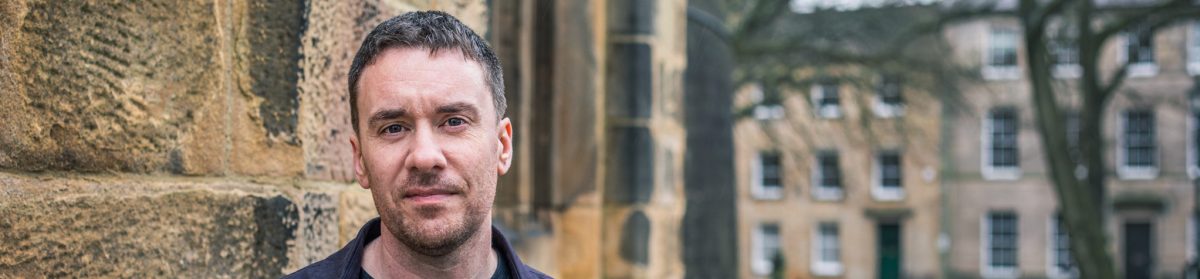
From Wyverns to Whispers: How J. Cronshaw Moved from Fantasy to Thriller

Fantasy author Jon Cronshaw shares how writing The Nanny’s Secret—his first domestic thriller—reignited his creativity after completing The Ravenglass Chronicles. Discover how his new pen name, J. Cronshaw, opened a new chapter in his storytelling career.

If you’ve been following my work for a while, you probably know me for wyverns, assassins, and dark fantasy worlds.

I’ve been publishing fantasy and speculative fiction since 2016, and I’ve been a full-time author since 2018.

Most of my readers found me through The Ravenglass Chronicles—a long-running epic about magic, destiny, and rebellion that spanned half-a-million words. It was an intense creative journey, and by the time I finished it, I needed to catch my breath.

In 2022, I decided to write something completely different. No magic. No kingdoms. No wyverns. Just people. Ordinary lives under extraordinary pressure. It started as a palate cleanser, a little side project to clear my head before diving into my next fantasy series. That story became The Nanny’s Secret.

At the time, I didn’t think I’d ever publish it. It didn’t fit with my other books. I love reading psychological thrillers, but I saw them as something separate from what I wrote. I wasn’t keen on setting up a new pen name or building a whole second author brand. So I set the manuscript aside and got on with other things.

But the idea of writing thrillers stuck with me.

The stories kept coming—small-town secrets, lies, betrayals, and the dark undercurrents that run beneath everyday life. Before long, I’d written a second thriller, then a third. Now, I’ve written eight and I’m working on my ninth.

When I showed them to a friend who writes thrillers, he told me I was mad not to publish them. I told him I didn’t want to annoy my regular eaders, and I didn’t want the stress of juggling two identities. He gave me a simple solution: drop my first name.

So “Jon Cronshaw” became “J. Cronshaw.”

Same writer. Different shelf.

That small change made everything click.

I’ve since built a new website, newsletter, and social media presence for J. Cronshaw—the domestic thriller author.

I’ll admit, I was reluctant at first. Starting over from scratch after years of building my fantasy world felt strange. But once I began, I rediscovered something I hadn’t felt in a long time: the spark of building something brand new.

These domestic thrillers are grounded in real life. They draw on my years as a court reporter, on real places near where I live—Morecambe, Heysham, Lancaster.

The stories are intimate and claustrophobic, the kind of tension that doesn’t need magic to feel dangerous. And in a way, writing them has made me a better fantasy author too. They’ve sharpened my sense of pacing, dialogue, and emotional realism.

I’m still writing fantasy—always will.

The Ravenglass Legends series is continuing, and there are more stories from that world on the way. But writing thrillers under J. Cronshaw has reminded me how much I love storytelling in all its forms. It’s a different kind of worldbuilding—one built from truth, not myth.

So if you ever fancy reading something a little different from me—something without wyverns, but still full of secrets and twists—you can download your free copy of The Lodger HERE to give you a flavour of what I’ve been doing.

And if you’d like to hear more about what I’m working on—both fantasy and thriller—you can listen to my weekly Author Diary podcast. I’ve been recording every week since 2017 and haven’t missed an episode.

It’s been a strange journey from wyverns to whispers, but I’m glad I took it. Because sometimes, stepping outside your world is the best way to remember why you built it in the first place.

From Drunken Faeries to Lost Ancients: An Exclusive Chat with Marie Andreas

Exclusive insights from fantasy author Marie Andreas. Dive into her creative process, inspirations, and journey through the realms of elves and faeries

In the realm of fantasy, few voices resonate as distinctly as that of Marie Andreas.

With elven artifacts, whimsical drunken faeries, and worlds that captivate the imagination, Andreas has etched a significant mark on the genre.

Today, we peel back the layers of the fantastical, diving deep into the mind of the multi-award-winning SFF author.

What inspired you to start writing in the fantasy genre?

There were stories I wanted to read but weren’t written yet!  I’ve always loved fantasy :).

How do you approach world-building in your stories?

I’m very much a pantser in my writing and that goes for world building. It’s done as I go along (I have a general idea of the world in question, but the rest is SURPRISE!)

Can you walk us through your writing process?

I’m not normal-LOL. Just wanted to get that out first. Something sparks an idea and a character–maybe two. Then I just start writing. Yup- I’m one of those evil pantser’s your teachers warned you about ;).

 I’m a full-time author, so have a set schedule (5 days a week- 4k words daily target) also, I will usually have more than one project at a time. Right now, I’m working on the next book in my second Lost Ancient’s fantasy series as my primary WIP.  However, I’ve also started my third steampunk. So I switch if I get stuck, or just as a brain cleanser.

I re-read what I wrote the prior day before I start that day’s writing. It gets me in the mindspace for that world and catches a few typos.

I go through the book a few times when done, have my group of reader/editors go at it, then a final proof. BOOM! It’s a BOOK!

Would you survive in your own fantasy world?

Probably not–although, I would LOVE being in a world with my drunken faeries–so it would be worth it.

What themes do you explore in your work?

Friendship is probably the biggest. I’m not writing to be deep, I write to escape :).

What do you consider to be your biggest influences as a writer?

Every single fantasy book or movie that I’ve loved.

What do you hope readers take away from your stories?

That they had a great escape from the world, and a sense of my characters being like old friends.  I love it when a reader tells me they re-read the books on a regular basis.

Would you rather have a pet dragon or a unicorn, why?

Can’t I have both?  I have both living happily on my desk…dunno why I can’t have both.  Okay, do NOT tell my Scottish battle-corn, but a dragon. They fly. I really want that.

If you were stuck on a deserted island with one of your characters, who would it be and why?

Taryn.  She’s kinda cool and if she were there, the drunken faeries would show up too ;).

What would you name your pet dragon?

Herbert.

The Glass Gargoyle (The Lost Ancients book 1)

Archeologist Taryn St. Giles has spent her life mining the ruins of the elves who vanished from the Four Kingdoms a thousand years ago. But when her patrons begin disappearing too—and then turning up dead—she finds herself unemployed, restless, and desperate. So she goes looking for other missing things: as a bounty hunter.

Tracking her first fugitive—the distractingly handsome and strangely charming Alric—she unearths a dangerous underworld of warring crime lords, demonic squirrels, and a long-lost elven artifact capable of unleashing a hell on earth.

Chased, robbed, kidnapped, and distressingly low on rent money, Taryn just wants one quiet beer and to catch her fugitive. But there’s more to Alric than his wicked grin—is he a wanted man or the city’s only hope? With menacing mages in pursuit and her three alcoholic faery sidekicks always in her hair, Taryn’s curiosity might finally solve the mystery of the elves… or be the death of her and destroy her world.

About the Author

Marie is a multi-award-winning fantasy and science fiction author with a serious reading addiction. If she wasn’t writing about all the people in her head, she’d be lurking about coffee shops annoying total strangers with her stories. So really, writing is a way of saving the masses. She lives in Southern California and is owned by two very faery-minded cats. She is also a member of SFWA (Science Fiction and Fantasy Writers Association).

When not saving the masses from coffee shop shenanigans, Marie likes to visit the UK and keeps hoping someone will give her a nice summer home in the Forest of Dean or Conwy, Wales.

Find Marie online:

Website: marieandreas.com

Facebook: facebook.com/marieandreaswriter

Diving into the Magic: An Author Interview with Fantasy Writer R.E. Sanders

Join us as we delve into the mind of R.E. Sanders, acclaimed fantasy author of ‘A Path of Blades’, exploring his unique world-building process.

Today, I’m delighted to introduce a captivating conversation with fantasy author R.E. Sanders.

From humble beginnings inspired by the likes of J.R.R. Tolkien and Michael Moorcock, Sanders has crafted a unique blend of intricate world-building, deeply rooted in historical and cultural influences.

With his novel ‘A Path of Blades’ serving as a vibrant showcase of his storytelling prowess, Sanders dives deep into the realms of internal conflict and human resilience.

In this interview, Sanders reveals his creative process, his love for a good ‘what if’ question in world-building, and even his preference for dragons over unicorns.

From mythical creatures to tackling real-world issues, Sanders explores it all.

So whether you’re an ardent fan or new to his works, buckle up for an exciting journey into the mind of this fantasy luminary.

What inspired you to start writing in the fantasy genre?

My inspiration to write is driven by my love of reading. As a child and then a teenager I read voraciously and the defining moment was when I took my dad’s battered copy of ‘The Fellowship of the Ring‘ down from the shelf. The huge scope of the  world and the stories blew my mind, and led me to read more fantasy; Eddings, Gemmel, brooks, Morwood, Moorcock, Jordan and others. It sparked my imagination and soon I began to create my own worlds where the grand, dramatic stories I wanted to tell could take place.

How do you approach world-building in your stories?

I start with broad, culture-defining questions, sometimes in a ‘what if’ kind of way (like, ‘what if there had been no Roman empire…what would medieval Europe look like?’). The ideas that flow from this lead me to more detailed questions about society, history and organisation. Answering these start to build nations and continents as concepts. I put a lot of focus on history, to the extent that for many of my fantasy countries I’ve written legends, myths and historical texts as backstory. The last level of detail is to imagine myself arriving in the particular location and picturing the details that stand out; the differences that make that place rich, interesting and unique. I want it all to feel real.

Can you walk us through your writing process?

For, ‘A Path of Blades’ the seed was sown by an earlier novella (Tann’s Last Stand). At the conclusion of that story I felt that two of the characters (Ingvar Omarsson and Ammie Cowl) left a lot of unanswered questions about their backstory. A Path of Blades was the tale I told myself to fill in the detail on that story. Once I had the basic outline I just started writing! The tale flowed and the characters developed as I wrote more, sometimes just as I had planned but other times with unexpected turns! I tend to outline loosely and write quite freely within that – I like the sense of overall direction alongside a freedom to be spontaneous and creative.

Would you survive in your own fantasy world?

Tricky! It would depend where and when! Danger ebbs and flows in the world, so I think if I was around during the events of A Path of Blades I’d have a good chance. However, I’m working on a series in the same world where the stakes are about to be raised for everyone. No-one will be safe.

What themes do you explore in your work?

Although I write fantasy I try to confront real-world issues as I write. A Path of Blades asks questions about how people deal with internal conflicts; duty against morality, friendship against family, peace against action.

What do you consider to be your biggest influences as a writer?

I draw inspiration from everything that inspires me; culture, history, landscape and the natural world. I can no longer watch TV documentaries without a notepad nearby! Specific influences are other fantasy authors like I’ve mentioned, but also historical fiction authors such as Cornwell and Iggulden. I also aspire to be able to tell a story with the drama, flair and excitement of a Marvel movie, but I’m not sure it’s very cool to admit that!

What’s the strangest thing you’ve had to research for your stories?

I did a bit of reading about grave digging. But who hasn’t done that?

What do you hope readers take away from your stories?

I like to think there is a thread of hope that runs through my stories. The characters go through dark times, but they come out the other side changed, but not broken. They lose much but they learn what is really important. Relationships fail but some are strengthened.

Would you rather have a pet dragon or a unicorn, why?

I’d have a pet dragon because it would be much more practical for trips out the the beach for a barbecue.

If you could have any magical ability, what would it be?

In A Wheel of Time, Rand Al’Thor learns how to make gateways in the air to travel instantly anywhere in the world. I can’t help think I could make good use of that. Reducing my carbon emissions, if nothing else.

If you were stuck on a deserted island with one of your characters, who would it be and why?

My stories include a Dwarf character called Klay Garrant. He can make a fire literally anywhere and always has a supply of food. I think he’d be the best bet.

What would you name your pet dragon?

Fluffles, Destroyer of Worlds.

Where is the best place to start reading your work?

A Path of Blades is a good example of my style and a small window on the world that I will gradually reveal in my subsequent books.

Author bio

Rob is a fantasy author based in the UK. A degree in archaeology and a fascination with British history has led him to create a world of his own in which to spin tales and create adventures.

Find Rob online

Website: resanderswrites.wixsite.com/r-e–sanderswrites

Twitter: twitter.com/RobSanders56

Interview with G J Kemp: Writing Fantasy that Explores Disability, Friendship, and Trust

Explore the creative process of renowned fantasy author G J Kemp. Dive into his world-building approach, thematic arcs, writing journey, and much more in this exclusive author interview.

Immerse yourself into a realm of magic as we delve into the fantastical mind of epic fantasy author G J Kemp.

From his early beginnings, Kemp’s love for the fantasy genre blossomed in the face of adversity.

In this exclusive interview, Kemp invites us into his unique approach to world-building, his meticulous plotting process, and the thematic cores woven into his spellbinding narratives.

The twists and turns of his creative process are as intriguing as his novels, providing valuable insights for aspiring writers and readers alike.

So, grab yourself a cuppa and let’s embark on this fascinating expedition into the depths of Kemp’s creative world.

.What inspired you to start writing in the fantasy genre?

When I was young, I had a number of operations to try combat me being born with Cerebral Palsy. This meant, that I was immobile for large periods of my life. Bear in mind that this was in the 1970’s. To combat the boredom, my mother bought me every Enid Blyton book available. I devoured them followed by Lord of the Rings and The Magician. From there, my love for the fantasy genre was born.

How do you approach world-building in your stories?

Through dialogue coupled with action. I hardly ever describe a scene. My characters describe the scene for my by moving through the world they are in. Sometimes, a character will talk about a piece of the world, but only if this is really necessary.

Can you walk us through your writing process?

I am a major, major, plotter. Here it is high level. I start with working out the story structure. This usually comes in the form of a template. I am a firm believer that all good stories follow a structure. From there, I write a general outline for each Act, Block and Chapter. Once the outline has been done, I then re-outline against each scene. Once that is done, I re-outline in detail. Only then do I start working on the manuscript. Juno and the Lady is 111k words long. My plotting outline is nearly 100k words long.

Would you survive in your own fantasy world?

Absolutely. Since I am the writer I would give myself new powers every time I needed them! 🙂

What themes do you explore in your work?

I work on a three-theme structure. Each book I write, needs to have three themed arcs. Take Miles and the Soldier for instance. Theme 1 – Disability, Theme 2 – Friendship, Theme 3 – Loyalty and Trust.

What do you consider to be your biggest influences as a writer?

Enid Blyton, Raymond E. Feist, Stephen King, J. R. R. Tolkien.

What’s the strangest thing you’ve had to research for your stories?

I think the strangest thing is for my upcoming series, Abbie Vera. She has an angel and demon sitting on each shoulder who consistently whisper stuff into her ears. Researching the interaction between these entities is a bit of a minefield!

What do you hope readers take away from your stories?

A sense of joy and hopefully something to think about. Most of my stories look at the worlds problems from different angles. If my stories give my readers another perspective, I am a happy author.

Would you rather have a pet dragon or a unicorn, why?

I would combine the two and have a Pegasus, thank you very much. A fire breathing, flying horse! Dragons and unicorns wouldn’t stand a chance!

If you could have any magical ability, what would it be?

I would have the ability to ward off death. I would like to live as long as I choose and only when I am done with exploring life, can the depths of darkness take me.

If you were stuck on a deserted island with one of your characters, who would it be and why?

I think Genevie. A vampire princess. Although I think I would just end up being her food!

What would you name your pet dragon?

Geoff

Where is the best place to start reading your work?

Juno and the Lady (An Acre Story Book 1), available on Amazon.

Website: gjkemp.co.uk

Author bio

A nomad at heart, GJ has lived in nine countries across Africa, Europe and the Middle East. His career has included working as a Divemaster in The Red Sea, a zookeeper in Israel, and a proofreader in Sweden.

Born with cerebral palsy, GJ has spent a lifetime trying to tie his shoelaces while standing up in the hope of not falling over. It is a constant challenge, but sometimes he occasionally succeeds.

Finding the love for writing later in life, GJ spends most of his free time going for walks and dreaming of story ideas. He hopes to one day have a small place on the oceanfront where he can walk his dogs on the beach.

Discover the Enchanting Fantasy World of Helen Garraway: An Author Interview

Discover the captivating world of fantasy author Helen Garraway as she shares her inspirations, writing process, and the magic behind her acclaimed novels. Dive into a literary journey filled with adventure and imagination.

Step into the world of fantasy with author Helen Garraway as she shares her inspirations, writing process, and the themes she explores in her captivating novels.

In this interview, Helen discusses her love for fantasy and how she crafts intricate worlds and characters that resonate with readers. Join us on this literary journey that delves into the essence of fantasy storytelling.

 Get ready to discover a new author and be transported to realms filled with adventure, magic, and unforgettable tales.

So grab yourself a cuppa and embark on an enchanting adventure with this talented fantasy author.

What inspired you to start writing in the fantasy genre?

I wrote what I love to read. My favourite genre is fantasy and I love world building. I came up with the idea behind the Sentinals series while walking through local woods. I wondered what tales the trees could tell since they had stood there for up to hundred years, if not more. And then I thought what if they could talk, and that led to what if there were people in the trees, and so was born the Sentinals series.

I was at a crossroads in my life, big changes, and I suddenly had time on my hands, and so I began writing, a creative dam was released and out poured seven books! I have gradually been working my way through them, editing, polishing and self publishing them.

How do you approach world-building in your stories?

With the Sentinals series it grew as I wrote each book. Each book is set in a different land, and the terrain and environment contributes to the plot and atmosphere. With the importance of woods and trees, the first country was like the leafy shires I live in the UK. Plenty of water, rain or rivers and plenty of greenery. I didn’t want to explain or describe technology, so my world was a no-to-low technology world and then that led to what was possible. Out of that grew the history of the world, the political and religious structure, and then the conflicts.

For the SoulMist series my starting point was light and dark, the land of angels was sunny and bright,  the land of the soulless was dim and grim. The environment and atmosphere were driven by that starting point, but as the first line says ‘Not all that was good was in the light; there was good in the dark too, if you bothered to look.’ And then I wanted to play with the idea of prejudice and assumptions. Why should the shadowy world be bad just because they were in the shadows? And off you go!

Can you walk us through your writing process?

Well, I could try. I am a bit spontaneous! Though the more I write, the more I have become a planner. I know where I’m starting and where I want to end, the middle can end up a surprise! I tend to write scenes in isolation. As I think of them, I have to capture the idea before I forget it, and then slot them into the timeline after. The most frustrating part is when a scene pops into your head for a different book when you’re trying to finish off another. Distractions happen all the time for writers, sometimes I think it is amazing we actually finish a book!

Would you survive in your own fantasy world?

Yes, I think so. I would love to sun myself on the beaches of Birtoli, though not so sure about the fish diet!

What themes do you explore in your work?

At the heart of my Sentinals story is the chosen one, a person who would never have believed he was the one to save the world, and the fact that he doesn’t have to everything on his own. It is not wrong to ask for expect others to help. He has a supporting cast of wonderful characters which varies from book to book, but reinforce the found family supporting each other no matter the task. There is also a theme of protection, of protecting those who can’t protect themselves, the Sentinals are the guardians, of the people and the land.

What do you consider to be your biggest influences as a writer?

I grew up reading anything I could get my hands on, but my love of fantasy comes from reading David Eddings ‘Belgarion’ and ‘Mallorean’ series. They would be my main influence, followed by Lois Bujold McMasters and her fantasy books. The Curse of Chalion being my favourite, but I also love Space opera, thrillers, historical books, and more, all of which contribute to your writing as you don’t just write a ‘fantasy’ it has romance, action, betrayal, the world has a history, everything feeds into the final story.

What’s the strangest thing you’ve had to research for your stories?

I needed to find natural substances that explode when combined. I didn’t have gunpowder so I was looking for which natural products I could substitute and describe, with it being possible in my world!   Fertilizers can be quite interesting!!

What do you hope readers take away from your stories?

I hope readers manage to escape into a new world and forget their real life. A moment of pure entertainment and escapism. I don’t claim to have any moral high ground, but I hope there is an element of good prevailing over bad, and that we should look after each other and work together for a better life.

Would you rather have a pet dragon or a unicorn, why?

I would love a pet dragon, they are just so beautiful and varied, and I would love to fly!

If you could have any magical ability, what would it be?

To be able to Heal would be amazing, preferably me as well!

If you were stuck on a deserted island with one of your characters, who would it be and why?

It would have to be Birlerion. I love him and he is so resourceful. He’d find a way to get us off the island. I would also have the chance to understand him further, as there is much still hidden and yet to be written about!.

What would you name your pet dragon?

Hmmm! This might change a few times till I get the right name. The one that’s feels just right! I suppose it depends on what he looks like. Keair, maybe… or Keaire (just added an ‘e”) I would play with the letters and sounds and evolve the them into one that feels just right. For example my Arifels, started out as Alfie, the name of my cat as he was the inspiration, and evolved from there.

Where is the best place to start reading your work?

https://geni.us/FNRirThe first book in the epic fantasy Sentinals Series is Sentinals Awaken, though there is a prequel novella Sentinals Stirring where the main characters first meet, it’s a free download, if you sign up to my newsletter, (link on my website http://www.helengarraway.com) or you can purchase it via Amazon. The Sentinal series currently comprises of five books and three novellas.

The first book in the Romantic Fantasy SoulMist series is SoulBreather. I’ve just finished writing the second book, so on to editing.

All my books are on Amazon and in Kindle Unlimited. Paperback/Hardcover can be found at the bookstore of your choice, and the first two books of the Sentinals series are available in Audible, with the third currently being narrated.

About the Author:

Helen Garraway is the USA Today Bestselling author of the award-winning epic fantasy Sentinal series which was first published in 2020, followed by the first book of the fantasy romance SoulMist series, SoulBreather, released in 2022 as part of the Realm of Darkness boxset.

An avid reader of many different fiction genres, a love she inherited from her mother, Helen writes fantasy novels and also enjoys paper crafting and scrapbooking as an escape from the pressure of the day job.

Having graduated from the University of Southampton with a Degree in Politics and International Relations, she remains an active member of their alumni.

Find Helen online:

Website: https://www.helengarraway.com.

Everything else: https://linktr.ee/HelenGarraway

Unleashing the Magic: An Interview with Fantasy Author Clayton Wood

Discover the captivating fantasy worlds crafted by Clayton Wood, the mastermind behind the Runic, Fate of Legends, and Magic of Havenwood series. Join us as we delve into his writing journey, inspiration, and insights into the realm of fantasy fiction.

Fantasy Author Clayton Wood

Clayton Wood is the mastermind behind several popular fantasy series, including the Runic series, Fate of Legends series, and Magic of Havenwood series.

In this interview, we will delve into Clayton’s journey as a writer, his inspiration, and his thoughts on fantasy writing.

So without further ado, let’s get started!

What inspired you to start writing in the fantasy genre?

Fantasy books were my go-when I was a kid, and I devoured series by Piers Anthony, R.A. Salvatore, Raymond E. Feist, Terry Brooks, Robert Jordan, and many more. Why fantasy appeals to me, I cannot honestly say. All I know is that my muse constantly conjures new ideas for me to work with, and she’ll make my life a living hell if I let her down by not using them!

How do you approach world-building in your stories?

For me, world-building usually grows from the main theme or themes I’m exploring in a series. For example, The Magic Collector was about art and creativity as magical forces, and so I incorporated works of art quite literally into the world. Books about castles made castles, and books about giants made giants. In contrast, Elazar the Magician was in part about dogma and ways of knowing, and thus a scientific and technologically more advanced society clashed with a religious one. Both were slaves to their own dogma, and the truly enlightened were magicians. Magicians who gained their powers through magic mushrooms, which inspired mushroom-shaped symbolism in the world-building process.

Can you walk us through your writing process?

Normally an idea for a new series comes out of the blue for me (see note on my abusive muse above), and I let it grow and mutate in my brain for a year or so. I know it’s ready for writing when it stops changing, solidifying into a world, narrative, and a couple of characters. I have an idea of the beginning, middle, and end, and when I write, I let the characters fill in the rest. Mostly because if I try to get in their way, they’ll stage a mutiny.

As for how I structure my time, I usually order book covers from my cover designer 6 months in advance. 2 for the Spring, 2 for the Fall. Nothing is written yet when I order them, but they gotta be done by the time the covers are due to be made. That way I keep a pace of around 4 books published a year.

Would you survive in your own fantasy world?

My wife says no, ’cause I’m soft. But she’s totally wrong.

What themes do you explore in your work?

For the Runic series, it was the role of various father figures in growth and self-actualization…how negative father figures can create conflict that forces growth through adversity, and how positive father figures can do so with mentoring and nurturing.

For the Fate of Legends series, I explored group identity vs. individual identity, and the magnetic-field-like forces that force those with weaker wills to align with stronger wills. Also, the ways in which failing to identify as part of the greater world can lead to calamity.

For the Magic of Havenwood series, I explored the creative process itself, making art magical. Writers wrote books that created entire lands and monsters, while sculptures came to life. Musicians could manipulate emotions and time itself, while Actors could literally transform into who they played. And Painters could take objects and living creatures they’d painted out of their canvases, bringing them to life. It was a fun way to explore my own creative process, teaching the reader some things that I’d learned. It was also a way to explore secondary themes of the dark and light parts of the human soul, and the somewhat lost idea of redemption.

For Inappropriate Magic, I explored the themes pertinent to the mid-life crisis, where one realizes they’re going to die, the life they’ve lived is one they fell into and no longer want, and that they need to find meaning and purpose in their life.

What do you consider to be your biggest influences as a writer?

Most authors I liked made me want to write a book like theirs. Piers Anthony made me want to be as creative as possible in my writing, instead of just parroting books I’ve read.

What’s the strangest thing you’ve had to research for your stories?

Coral reef reproduction as it pertains to a character from the battle over Alexandria during the rein of King Ptolemy VIII.

What do you hope readers take away from your stories?

First and foremost that they enjoy themselves. Secondly that each book makes them think a little bit. And third, that someone – even one person – is inspired to write their own book after reading mine. That’s what fantasy authors did for me, and if I can do that for someone else, that would be amazing.

Would you rather have a pet dragon or a unicorn, why?

Dragon. They’re badass. Although I’ve had both in my books. A rude, sarcastic skeletal dragon called Nemesis, and a…gifted unicorn named Peter.

If you could have any magical ability, what would it be?

Healing people. I’m a physician, so I naturally want to make people better!

If you were stuck on a deserted island with one of your characters, who would it be and why?

Vi. I feel like her survival skills would keep me alive…if she didn’t kill me for my lame Dad jokes, that is. My wife has considered it, but she’s waiting for my life insurance application to be processed.

What would you name your pet dragon?

Unicorn. Now I get to have both!

Where is the best place to start reading your work?

*It depends on your tastes. If you like classic coming-of-age fantasy, Runic Awakening.

If you prefer to have your heartstrings pulled at, The Magic Collector. If you like gritty medieval fantasy, Hunter of Legends.

If magic mushroom-based magic in a steampunk world is your thing, Elazar the Magician.

And if you enjoy inappropriate humor, Inappropriate Magic!

About the author.

Clayton Wood is the author of the Runic series, the Fate of Legends series, the Magic of Havenwood series, the Magic of Magic series, and the Masks of Eternity series. He’s been a computer programmer, graphics designer, martial-arts instructor, and now works in the medical field. He has a wife and three wonderful children.

Writing was always Clayton’s passion, but it wasn’t until the birth of his first son that he found the inspiration necessary to finish his first book. Five years later, he published Runic Awakening, the first entry in the Runic Series.

Find Clayton online:

Website: havenwoodpublishing.com

Facebook: facebook.com/claytontaylorwood

Instagram: instagram.com/claytontaylorwood

Exploring the Enchanted Worlds of A. L. Lorensen’s Writing

Discover the imaginative world of A. L. Lorensen, a talented fantasy author, as we delve into her writing journey, inspiration, and creative process. Explore the magic of storytelling and get inspired by her captivating works.

Welcome to our latest blog interview, where we get to know some of the most talented and creative writers in the fantasy genre.

Today, we have the pleasure of talking to A. L. Lorensen, a fantasy author with a lifetime passion for writing and the art of storytelling.

Get ready to be transported to the magical worlds of A. L. Lorensen’s imagination, and learn more about the author behind For Evergreens and Aspen Trees.

What inspired you to start writing in the fantasy genre?

I have always loved fantasy. Growing up, I was one of those weird kids that only played imagination games where I ran around my neighborhood pretending to be an empress of some far off land or a powerful sorceress, or what have you.

When I started actually writing when I was about seven or eight, those games were the inspiration I drew from, and then they developed into what I write today.

How do you approach world-building in your stories?

I ask myself a lot of “why” questions while I write. Why do these characters have to get from Point A to Point B? Why does the super-cool-sword look the way it does? Why is my bad guy the bad guy?

With the main world I am writing, it grew up with me, so as I was learning to write, I was also learning more about how to craft stories and worlds, so those “why” questions saved me.

Can you walk us through your writing process?

Absolutely! When I first started writing, I flew by the seat of my pants. If something sounded exciting, I put it in.

Some people thrive off this type of writing, but as I got older I realized that it stressed me out more than anything. The story and the world felt overwhelmingly broad when I had no plans in place for it, and I had no idea when it would or should end and how to get there and what I needed to focus on. It gave me writing paralysis.

So, I discovered a new method from Joe Nassise, and it has saved my writing career. These are now the steps I follow when I write:

1. Get a bunch of blank index cards and write every scene I can think of on them. Doesn’t matter which order or how many or how “stupid” I’ll think they are later. I just write them all down.

2. I organize the index cards into chronological order and see which ones I don’t need, and if there’s any I need to add.

3. I handwrite my first draft. I’m allergic to writing chronologically, so I’ll just pick a scene from my index cards to write that day, and then mark it off when I’m done. It also satisfies my love of marking off to-do lists.

4. I type all my handwritten scenes/chapters and edit as I go.

5. When all the scenes are written and typed, I print them all and go through them with a red pen to mark anything I need to change/add.

6. I change/add the things I’ve marked.

7. I send that draft to my beta readers to look at.

8. I edit again based on beta reader feedback.

9. I do another read through, because I have crippling perfectionism syndrome and can’t just leave it alone.

10. I realize my eyes will bleed if I look at it anymore, and send it off for two rounds of professional edits.

11. I fix the things that need fixing from the professional edits.

12. Take a few weeks to binge Netflix on my couch and recover.

13. I publish the book.

Would you survive in your own fantasy world?

That would depend on if my characters knew who I was or not. If they knew me and knew what I had done, absolutely not.

If I was a lone, anonymous agent and able to do my own thing, though? Also no.

What themes do you explore in your work?

I explore the themes of identity and self, prejudices, corrupt leadership, and the power of love and hope, whether it be for good or evil.

What’s the strangest thing you’ve had to research for your stories?

Oh, golly. I did most of my research when I was much, much younger, so I don’t remember most of it. However, as I got older, I was more of a knowledge goblin—just kind of scavenging and hoarding tidbits that I found in random places.

One of my most recent finds was an assassin’s teapot that held both tea and poison in two separate compartments inside of it. There were airholes you could put your fingers over, which would affect which of the liquids came out, so you could pour yourself a perfectly fine cup of tea, and then poison your enemy all in one go.

That’s a thing you know now!

What do you hope readers take away from your stories?

I would hope that my readers finish my stories and believe that hope and beauty still exist in the world, that hardships can be overcome, and that pure love really and truly can change the world.

Would you rather have a pet dragon or a unicorn, why?

The horse-girl inside of me wants to say unicorn, but I have to say dragon, 100%. They are one of my absolute favorite fantasy creatures, and I want to bond with one and ride one and gleefully set fire to all my enemies (mostly spiders).

If you were stuck on a deserted island with one of your characters, who would it be and why?

If I had my choice, it would be Aspen Tanner, because she is unendingly resilient and competent, and will not rest until she has accomplished what she needs to do. She’ll also make sure to keep any nefarious critters at bay.

If it was based on who would actually end up on a deserted island with me, it would be Tristan, because he tends to get yanked around by the winds of fate more than anyone else.

What would you name your pet dragon?

Cinder is the only one my brain can think of currently. But I know I would be so much better at naming them when I met the dragon in person.

Where is the best place to start reading your work?

For Evergreens and Aspen Trees: The Songs of Loralan: Book 1

About the author:

A. L. Lorensen has had a lifetime passion for writing and the art of storytelling. She graduated fromUtah State University with a Bachelor of Science in Social Work and maintained her writing on the side.A. L. mainly writes fantasy, but has dabbled in fiction, mystery, comedy, and anything else that may strike her fancy.

A. L. Lorensen currently resides in Logan, UT with her husband, their cat, Muse, and their many, many bookshelves. If you would like to keep in touch with A. L. Lorensen (and get a free short story), you can join her newsletter at allwrites.com.

Find A. L. Lorensen online:

Website: allwrites.com

Facebook: facebook.com/allorensen.writes

Instagram: instagram.com/authorallorensen

TikTok: tiktok.com/@authorallorensen