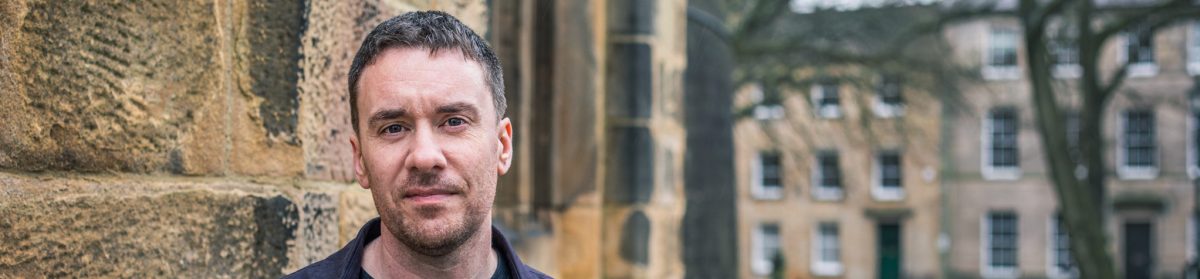
Diving into the Magic: An Author Interview with Fantasy Writer R.E. Sanders

Join us as we delve into the mind of R.E. Sanders, acclaimed fantasy author of ‘A Path of Blades’, exploring his unique world-building process.

Today, I’m delighted to introduce a captivating conversation with fantasy author R.E. Sanders.

From humble beginnings inspired by the likes of J.R.R. Tolkien and Michael Moorcock, Sanders has crafted a unique blend of intricate world-building, deeply rooted in historical and cultural influences.

With his novel ‘A Path of Blades’ serving as a vibrant showcase of his storytelling prowess, Sanders dives deep into the realms of internal conflict and human resilience.

In this interview, Sanders reveals his creative process, his love for a good ‘what if’ question in world-building, and even his preference for dragons over unicorns.

From mythical creatures to tackling real-world issues, Sanders explores it all.

So whether you’re an ardent fan or new to his works, buckle up for an exciting journey into the mind of this fantasy luminary.

What inspired you to start writing in the fantasy genre?

My inspiration to write is driven by my love of reading. As a child and then a teenager I read voraciously and the defining moment was when I took my dad’s battered copy of ‘The Fellowship of the Ring‘ down from the shelf. The huge scope of the  world and the stories blew my mind, and led me to read more fantasy; Eddings, Gemmel, brooks, Morwood, Moorcock, Jordan and others. It sparked my imagination and soon I began to create my own worlds where the grand, dramatic stories I wanted to tell could take place.

How do you approach world-building in your stories?

I start with broad, culture-defining questions, sometimes in a ‘what if’ kind of way (like, ‘what if there had been no Roman empire…what would medieval Europe look like?’). The ideas that flow from this lead me to more detailed questions about society, history and organisation. Answering these start to build nations and continents as concepts. I put a lot of focus on history, to the extent that for many of my fantasy countries I’ve written legends, myths and historical texts as backstory. The last level of detail is to imagine myself arriving in the particular location and picturing the details that stand out; the differences that make that place rich, interesting and unique. I want it all to feel real.

Can you walk us through your writing process?

For, ‘A Path of Blades’ the seed was sown by an earlier novella (Tann’s Last Stand). At the conclusion of that story I felt that two of the characters (Ingvar Omarsson and Ammie Cowl) left a lot of unanswered questions about their backstory. A Path of Blades was the tale I told myself to fill in the detail on that story. Once I had the basic outline I just started writing! The tale flowed and the characters developed as I wrote more, sometimes just as I had planned but other times with unexpected turns! I tend to outline loosely and write quite freely within that – I like the sense of overall direction alongside a freedom to be spontaneous and creative.

Would you survive in your own fantasy world?

Tricky! It would depend where and when! Danger ebbs and flows in the world, so I think if I was around during the events of A Path of Blades I’d have a good chance. However, I’m working on a series in the same world where the stakes are about to be raised for everyone. No-one will be safe.

What themes do you explore in your work?

Although I write fantasy I try to confront real-world issues as I write. A Path of Blades asks questions about how people deal with internal conflicts; duty against morality, friendship against family, peace against action.

What do you consider to be your biggest influences as a writer?

I draw inspiration from everything that inspires me; culture, history, landscape and the natural world. I can no longer watch TV documentaries without a notepad nearby! Specific influences are other fantasy authors like I’ve mentioned, but also historical fiction authors such as Cornwell and Iggulden. I also aspire to be able to tell a story with the drama, flair and excitement of a Marvel movie, but I’m not sure it’s very cool to admit that!

What’s the strangest thing you’ve had to research for your stories?

I did a bit of reading about grave digging. But who hasn’t done that?

What do you hope readers take away from your stories?

I like to think there is a thread of hope that runs through my stories. The characters go through dark times, but they come out the other side changed, but not broken. They lose much but they learn what is really important. Relationships fail but some are strengthened.

Would you rather have a pet dragon or a unicorn, why?

I’d have a pet dragon because it would be much more practical for trips out the the beach for a barbecue.

If you could have any magical ability, what would it be?

In A Wheel of Time, Rand Al’Thor learns how to make gateways in the air to travel instantly anywhere in the world. I can’t help think I could make good use of that. Reducing my carbon emissions, if nothing else.

If you were stuck on a deserted island with one of your characters, who would it be and why?

My stories include a Dwarf character called Klay Garrant. He can make a fire literally anywhere and always has a supply of food. I think he’d be the best bet.

What would you name your pet dragon?

Fluffles, Destroyer of Worlds.

Where is the best place to start reading your work?

A Path of Blades is a good example of my style and a small window on the world that I will gradually reveal in my subsequent books.

Author bio

Rob is a fantasy author based in the UK. A degree in archaeology and a fascination with British history has led him to create a world of his own in which to spin tales and create adventures.

Find Rob online

Website: resanderswrites.wixsite.com/r-e–sanderswrites

Twitter: twitter.com/RobSanders56

Discover the Enchanting Fantasy World of Helen Garraway: An Author Interview

Discover the captivating world of fantasy author Helen Garraway as she shares her inspirations, writing process, and the magic behind her acclaimed novels. Dive into a literary journey filled with adventure and imagination.

Step into the world of fantasy with author Helen Garraway as she shares her inspirations, writing process, and the themes she explores in her captivating novels.

In this interview, Helen discusses her love for fantasy and how she crafts intricate worlds and characters that resonate with readers. Join us on this literary journey that delves into the essence of fantasy storytelling.

 Get ready to discover a new author and be transported to realms filled with adventure, magic, and unforgettable tales.

So grab yourself a cuppa and embark on an enchanting adventure with this talented fantasy author.

What inspired you to start writing in the fantasy genre?

I wrote what I love to read. My favourite genre is fantasy and I love world building. I came up with the idea behind the Sentinals series while walking through local woods. I wondered what tales the trees could tell since they had stood there for up to hundred years, if not more. And then I thought what if they could talk, and that led to what if there were people in the trees, and so was born the Sentinals series.

I was at a crossroads in my life, big changes, and I suddenly had time on my hands, and so I began writing, a creative dam was released and out poured seven books! I have gradually been working my way through them, editing, polishing and self publishing them.

How do you approach world-building in your stories?

With the Sentinals series it grew as I wrote each book. Each book is set in a different land, and the terrain and environment contributes to the plot and atmosphere. With the importance of woods and trees, the first country was like the leafy shires I live in the UK. Plenty of water, rain or rivers and plenty of greenery. I didn’t want to explain or describe technology, so my world was a no-to-low technology world and then that led to what was possible. Out of that grew the history of the world, the political and religious structure, and then the conflicts.

For the SoulMist series my starting point was light and dark, the land of angels was sunny and bright,  the land of the soulless was dim and grim. The environment and atmosphere were driven by that starting point, but as the first line says ‘Not all that was good was in the light; there was good in the dark too, if you bothered to look.’ And then I wanted to play with the idea of prejudice and assumptions. Why should the shadowy world be bad just because they were in the shadows? And off you go!

Can you walk us through your writing process?

Well, I could try. I am a bit spontaneous! Though the more I write, the more I have become a planner. I know where I’m starting and where I want to end, the middle can end up a surprise! I tend to write scenes in isolation. As I think of them, I have to capture the idea before I forget it, and then slot them into the timeline after. The most frustrating part is when a scene pops into your head for a different book when you’re trying to finish off another. Distractions happen all the time for writers, sometimes I think it is amazing we actually finish a book!

Would you survive in your own fantasy world?

Yes, I think so. I would love to sun myself on the beaches of Birtoli, though not so sure about the fish diet!

What themes do you explore in your work?

At the heart of my Sentinals story is the chosen one, a person who would never have believed he was the one to save the world, and the fact that he doesn’t have to everything on his own. It is not wrong to ask for expect others to help. He has a supporting cast of wonderful characters which varies from book to book, but reinforce the found family supporting each other no matter the task. There is also a theme of protection, of protecting those who can’t protect themselves, the Sentinals are the guardians, of the people and the land.

What do you consider to be your biggest influences as a writer?

I grew up reading anything I could get my hands on, but my love of fantasy comes from reading David Eddings ‘Belgarion’ and ‘Mallorean’ series. They would be my main influence, followed by Lois Bujold McMasters and her fantasy books. The Curse of Chalion being my favourite, but I also love Space opera, thrillers, historical books, and more, all of which contribute to your writing as you don’t just write a ‘fantasy’ it has romance, action, betrayal, the world has a history, everything feeds into the final story.

What’s the strangest thing you’ve had to research for your stories?

I needed to find natural substances that explode when combined. I didn’t have gunpowder so I was looking for which natural products I could substitute and describe, with it being possible in my world!   Fertilizers can be quite interesting!!

What do you hope readers take away from your stories?

I hope readers manage to escape into a new world and forget their real life. A moment of pure entertainment and escapism. I don’t claim to have any moral high ground, but I hope there is an element of good prevailing over bad, and that we should look after each other and work together for a better life.

Would you rather have a pet dragon or a unicorn, why?

I would love a pet dragon, they are just so beautiful and varied, and I would love to fly!

If you could have any magical ability, what would it be?

To be able to Heal would be amazing, preferably me as well!

If you were stuck on a deserted island with one of your characters, who would it be and why?

It would have to be Birlerion. I love him and he is so resourceful. He’d find a way to get us off the island. I would also have the chance to understand him further, as there is much still hidden and yet to be written about!.

What would you name your pet dragon?

Hmmm! This might change a few times till I get the right name. The one that’s feels just right! I suppose it depends on what he looks like. Keair, maybe… or Keaire (just added an ‘e”) I would play with the letters and sounds and evolve the them into one that feels just right. For example my Arifels, started out as Alfie, the name of my cat as he was the inspiration, and evolved from there.

Where is the best place to start reading your work?

https://geni.us/FNRirThe first book in the epic fantasy Sentinals Series is Sentinals Awaken, though there is a prequel novella Sentinals Stirring where the main characters first meet, it’s a free download, if you sign up to my newsletter, (link on my website http://www.helengarraway.com) or you can purchase it via Amazon. The Sentinal series currently comprises of five books and three novellas.

The first book in the Romantic Fantasy SoulMist series is SoulBreather. I’ve just finished writing the second book, so on to editing.

All my books are on Amazon and in Kindle Unlimited. Paperback/Hardcover can be found at the bookstore of your choice, and the first two books of the Sentinals series are available in Audible, with the third currently being narrated.

About the Author:

Helen Garraway is the USA Today Bestselling author of the award-winning epic fantasy Sentinal series which was first published in 2020, followed by the first book of the fantasy romance SoulMist series, SoulBreather, released in 2022 as part of the Realm of Darkness boxset.

An avid reader of many different fiction genres, a love she inherited from her mother, Helen writes fantasy novels and also enjoys paper crafting and scrapbooking as an escape from the pressure of the day job.

Having graduated from the University of Southampton with a Degree in Politics and International Relations, she remains an active member of their alumni.

Find Helen online:

Website: https://www.helengarraway.com.

Everything else: https://linktr.ee/HelenGarraway

Author Spotlight: Jan Foster and Her Historical Fantasy Worlds

Dive into the magical worlds of Jan Foster, British historical fantasy author, as she discusses her inspirations, writing process, and magical creatures in her stories.

Dive into the magical worlds of Jan Foster, British historical fantasy author, as she discusses her inspirations, writing process, and magical creatures in her stories.

Today we are joined by British historical fantasy author Jan Foster.

With a passion for history, Jan has created a world filled with magic and intrigue.

In this interview, we’ll dive into the inspiration behind her world, her writing process, and what readers can expect from her books.

So grab yourself a cuppa and join us on this journey into the world of historical fantasy.

What inspired you to start writing in the fantasy genre?

I write historical fantasy and history, although written often by the victors, could be read as absolute. Fantasy allows me to ask the ‘What if’ questions – like, what if I had to live with wings but pass as a human, what if the world as fae knew it was ruled by an immortal woman, and what if a bastard son was made vampire and took over the English throne. It’s fun to explore these ideas and play with them in a parallel world.

How do you approach world-building in your stories?

I have a world within the human world, whose society structure is based on nature’s creatures. The beings who inhabit this hidden world have to, at times, interact with the human world though but because they are more ancient, it’s accepted that they shouldn’t interfere too much and change the course of human history. Because its a parallel world, there is crossover though, and I tried to imagine the view which an ancient observer would have on the human world with the benefit of their long life and experience. Naturae itself is on a real (geographically speaking) island, so I had to incorporate the topography into the design of it!

Can you walk us through your writing process?

My stories are quite character driven (as in, I want the character to start at one point in their journey, face their challenge and then, grow from it – thus making up their arc), but I always start the plotting with the history. I look for years where there was a lot happening in the society – preferably a seismic shift because of change in ruler/religion/discovery and imagine how that might effect a character’s aims in their story arc. Once I’ve noted down those events and plotted out the character’s arc within the context, the storyline is virtually broken down into chunks for me to write. It takes a lot of research and pondering to see how the jigsaw of multiple POV’s is going to fit together so its a long process. Recently, I thought it would be quicker to write against a beat sheet, for a romantic fantasy, but it actually took me longer because I was so worried about keeping to the desired structure and at times, it just didn’t ‘feel’ right to move ahead with the plotline then. I think, when all is said and done, I’m a plantster through and through – I have a rough idea of where things are heading and when in the story, but let it evolve a bit more naturally than sticking to a word count for an intended end number of words!

Would you survive in your own fantasy world?

Absolutely – but not if I was still a human. I’d quite like to be a witch though.

What themes do you explore in your work?

Belief, right to rule, female empowerment (in a time when women were definitely second class citizens)

What do you consider to be your biggest influences as a writer?

I read widely, especially historical/historical fantasy, but I also LOVE thrillers. I’d like to think some of my influences are those who write in these genres, but I also highly rate authors / specialists who talk about story structure like John Truby and Lisa Cron.

What’s the strangest thing you’ve had to research for your stories?

Blacksmithing and medieval spycraft!

What do you hope readers take away from your stories?

I’d love it if they could see the parallels I infer with modern life from the history I cover, but perhaps that’s a wish too far. Mostly, I just want to tell a good story to escape into!

Would you rather have a pet dragon or a unicorn, why?

Dragon – I grew up with probably every Anne McCaffrey book she ever wrote so it had to be really!

If you could have any magical ability, what would it be?

I’m easy to please – I just want to be able to fly. Telekinesis would be cool though, or am I just too lazy to reach for my brew when I’m reading?

If you were stuck on a deserted island with one of your characters, who would it be and why?

Spenser – my Fae Ambassador to Europe. He’s a bit of a fop, a dandy, highly entertaining and well travelled, but would have so many tales to tell I’d never get bored. Plus he’s kinda hunky for a fae.

What would you name your pet dragon?

Clawsome

Where is the best place to start reading your work?

Sign up to my newsletter and receive a free novel – the prequel set in Viking era, Risking Destiny. You can sign up on my website and find out more about the Naturae series there as well.

Visit: escapeintoatale.com

About the Author.

By day, Jan juggles consultancy work with her family, but by night she sneaks off, into the past. Her penchant for sprinkling history with magic is fueled by coffee and Cadburys. When not writing, Jan takes her dogs and small monsters into the countryside, especially if there is a castle or historic building there with a cosy coffee shop in which to escape the rain of Manchester, England

Find Jan online:

Facebook: facebook.com/janfosterauthor

Amazon Author Page: amazon.com/~/e/B084LF154S

Blog: escapeintoatale.com/short-stories-and-articles/

Twitter: twitter.com/escapeintoatale

Goodreads: goodreads.com/author/show/20093349.Jan_Foster

Instagram: instagram.com/jan.foster.author

Tiktok: tiktok.com/@janfosterauthor

Newsletter: subscribepage.com/mailingsubscribe

10 Common Mistakes Fantasy Heroes Make

Discover the 10 common mistakes that fantasy heroes make in epic quests. From ignoring signs of danger to not asking for help, explore relatable character flaws and growth. Dive into the world of fantasy novels and learn from their missteps.

Fantasy novels are filled with exciting and epic stories of heroes and heroines on quests to save the world.

But even the greatest fantasy protagonists are guilty of making some pretty stupid decisions.

Here are ten common mistakes that fantasy protagonists make that can drive readers crazy:

1. Not asking for help when they clearly need it.

Whether it’s from a wise old wizard, a powerful sorcerer, or just a friendly farmer, there are plenty of people who could help our heroes out of a jam. But instead, they often choose to go it alone and suffer the consequences.

2. Refusing to use their magical abilities when they would clearly be useful.

Many fantasy protagonists are reluctant to use their powers, either because they don’t want to be seen as different, or because they’re afraid of the consequences. But when the fate of the world is at stake, sometimes it’s necessary to embrace your inner wizard and unleash a few dozen fireballs.

3. Ignoring obvious signs of danger.

Whether it’s a dark and foreboding forest, a cursed object, or a creepy old mansion, fantasy protagonists often choose to ignore the obvious signs of peril and charge headfirst into danger.

4. Trusting the wrong people.

Fantasy protagonists often trust the wrong people, whether it’s a charming rogue, a smooth-talking wyvern, or a seemingly innocent peasant. And while they may have the best of intentions, these shady characters often end up betraying our heroes.

5. Not being prepared for battle.

Heroes are often caught off guard when it comes to battle, whether it’s not having enough arrows for their bow, or not having a plan of attack. This often leads to them being captured, or see their friends killed.

6. Neglecting their friends and loved ones.

Sometimes our hero gets so caught up in their quest that they neglect the people who care about them the most. This can lead to strained relationships and even the loss of important allies. Pick up a phone, it’s not that hard.

7. Not thinking things through.

Fantasy protagonists often rush into things without thinking things through, whether it’s charging into battle without a plan, or making a hasty decision that has long-term consequences.

8. Being too confident.

Heroes sometimes overestimate their own abilities and underestimate their opponents, which can lead to some very bad decisions.

9. Not learning from their mistakes.

Fantasy protagonists often make the same mistakes over and over again, whether it’s trusting the wrong people or not being prepared for battle.

10. Not listening to their inner voice.

Heroes often ignore their gut instincts and instead listen to others, usually an old dude with a beard. But sometimes your inner voice is the only one you can trust.

While our favourite heroes can make some pretty stupid decisions, it’s also what makes them relatable and human.

And even when they make mistakes, we can’t help but root for them as they learn and grow.

Click HERE to claim your free Ravenglass Universe starter library.