Explore the enthralling themes of vengeance and justice in assassin fantasy, where morality is as sharp as a dagger’s edge. Discover how these themes drive complex narratives and characters, making for compelling reads like Guild of Assassins.
In the shadow-strewn alleys of assassin fantasy, where daggers are as sharp as the wits of those who wield them, the tropes of vengeance and justice dance a perilous tango.
It’s a genre where every shadow could be a judge, and every whisper might be a sentence.
Here, we explore how these themes carve deep narratives into the very bones of assassin stories, with a smirk and a flourish.
Vengeance: A Dish Best Served with a Side of Irony
Vengeance is the bread and butter of the assassin’s diet, often setting them on a path that’s as bloody as it is cathartic.
It’s the primal scream in a darkened forest, the crack of a spine in a silent library.
The quest for personal revenge gives our cloaked protagonists a rather compelling reason to sharpen their blades, not to mention their life choices.
In assassin fantasy, vengeance is rarely straightforward.
It comes layered with the irony that those seeking retribution often end up adopting the very traits they despise in their adversaries.
They become mirrors of their enemies—albeit better dressed and with superior one-liners.
This trope challenges readers to question whether vengeance is merely justice without the paperwork, or a wild beast that gnaws at the roots of one’s morality.
Justice: The Light at the End of a Blood-Soaked Tunnel
Then there’s justice, a concept as elusive as a sympathetic tax collector.
In the realms of assassin fantasy, justice is often what the assassins are either fighting against or striving for.
It’s the carrot dangled before the thoroughbred racehorse of their moral compass, assuming it hasn’t been sold to buy more daggers.
Justice in these stories usually has more masks than a Venetian ball.
Whether it’s the rough justice meted out by our protagonists, or the higher moral ideals they aspire to achieve, it serves as a guiding light—a lighthouse for ships navigating the stormy seas of ethical ambiguity.
But as every good assassin knows, light makes it easier for your enemies to aim.
Why Do We Root for the Knife-Wielder?
What makes these tropes endlessly fascinating is the reader’s own precarious moral balancing act.
We cheer for the assassin, the underdog with a questionable moral code, because they disturb the sediment at the bottom of the pond of justice.
They force us to confront uncomfortable truths about right, wrong, and everything in-between—preferably from a safe distance.
Plus, let’s be honest, there’s something inherently satisfying about seeing someone settle their scores with a well-placed blade rather than a sternly worded letter.
Let’s Cut to the Chase
Assassin fantasy novels provide a murky reflection of our own world’s struggles with vengeance and justice, wrapped up in a blood-soaked bow of thrilling narratives and dark deeds.
These themes resonate with us because they are as human as the desire for revenge on someone who spoils the ending of a book.
If your thirst for vengeance—or is it justice?—leads you down dark literary alleys, you might consider picking up Guild of Assassins.
Follow Soren as he navigates the treacherous waters of an assassin’s guild, where every choice is between being the blade or the sheath.
Will he find justice, or will his quest for vengeance change him beyond recognition?
Uncover the answers wrapped in thrilling action, dubious morals, and the ultimate quest for retribution.
After all, isn’t justice just vengeance with an official stamp?
Dive into the shadowy realm of assassin fantasy, where morality blurs and danger lurks at every turn. Explore the main tropes, themes, and what makes this subgenre a captivating branch of fantasy literature.
Welcome to the dimly lit world of assassin fantasy, a genre where the heroes are as sharp as the knives they hide and moral ambiguities are as common as cloaks and daggers.
For those new to the concept, assassin fantasy delves into the tales of those who operate from the shadows, executing justice or vengeance (and sometimes both) for the right price—or the right cause.
Here, we’ll slice through the main tropes and themes that define this intriguing subgenre.
What is Assassin Fantasy?
Assassin fantasy is a subgenre of fantasy literature that revolves around the lives and lethal escapades of assassins.
Unlike traditional fantasy, where battles are fought in broad daylight with armies clashing over the fate of empires, assassin fantasy tends to focus on the individual, often delving into the darker, more personal conflicts that play out in the back alleys of bustling cities or the silent corridors of power.
Tropes and Themes of Asssassin Fantasy
The Moral Ambiguity of Killing for a Cause
One of the most deliciously complex tropes in assassin fantasy is the ever-present question of morality.
Assassins in these stories often grapple with the ethics of their profession, blurring the lines between right and wrong until they’re as indistinct as footprints in a busy marketplace.
It’s a world where the end often justifies the means, and the means are usually fatal.
The Lone Wolf with a Code
Many assassin characters are crafted in the mould of the lone wolf—a solitary figure who operates outside the law but adheres to a personal code.
This code is as crucial to their identity as their stealthy footwear.
They might kill for money or revenge, but there are always lines they won’t cross… usually.
Complex Mentor-Apprentice Relationships
In a world where trust is as rare as a truthful politician, the relationships between mentors and their apprentices are fraught with tension and fraught with betrayal.
These relationships are a core element of training sequences, where deadly skills are passed down and life lessons are learned in the most hazardous ways imaginable.
Intrigue and Political Machinations
Assassin fantasy novels often unfold against a backdrop of intricate political plots.
Assassins are not just weapons but also key players in games of power, where thrones are the prizes and the players are seldom innocent.
The cloak and dagger aren’t just tools of the trade; they’re metaphors for the subterfuge that runs rampant in the corridors of power.
A Dance with Death
At the heart of assassin fantasy is the ever-present dance with death.
Assassins flirt with their own mortality daily, and their survival depends as much on their skill with a blade as it does on their ability to navigate the perilous politics of their professions.
Their lives are a high-stakes game where a single slip could be fatal.
Why Dive Into Assassin Fantasy?
For those intrigued by the darker side of human nature, assassin fantasy offers a compelling blend of adrenaline and intrigue.
It’s a place where every shadow could hold a secret and every character has an agenda.
If you’re ready to explore the depths of human resolve and the heights of treachery, assassin fantasy might just be your next favourite read.
So, sharpen your blades—or your wits, which are safer—and prepare to delve into tales where the most dangerous thing is not the assassin lurking in the shadows, but the truths they uncover.
Welcome to the dark, intricate world of assassin fantasy, where survival is an art, and the brush strokes are often painted in blood.
Essential Assassin Fantasy Titles
As you embark on a shadowy journey through assassin fantasy, you’ll want to be well-armed with the best titles the genre has to offer.
Here’s a rundown of five essential books where the characters are as sharp as the blades they wield, and survival is the name of the game—if it were ever that simple.
The Way of Shadows by Brent Weeks
In The Way of Shadows, Brent Weeks takes us on a stroll through the city of Cenaria, a place where even the shadows seem to be plotting something nefarious.
This is the story of Azoth, a street urchin who apprentices himself to Durzo Blint, a master assassin whose curriculum vitae is as long as a life sentence.
This novel is an intensive masterclass in dark arts and darker ethics, perfect for those who like their morals as murky as a foggy night in Victorian London.
Jay Kristoff’s Nevernight is as subtle as a dagger to the ribs, and twice as sharp.
Here we meet Mia Corvere, who joins the deadliest flock of acolytes at the Red Church, a school where they teach you how to end lives just after morning chapel.
Mia’s quest for vengeance is fraught with literary booby traps and a shadowy companion that’s literally her own shadow.
Ideal for readers who enjoy their education sprinkled with a bit of murder.
Vlad Taltos by Steven Brust offers a unique blend of high fantasy with a dash of organized crime—think The Godfather with swords and sorcery.
Vlad, a low-ranking thug-turned-assassin, navigates the cutthroat world of Dragaeran society, where social climbers are likely to use actual climbers to dispose of rivals.
This series is a guide on how to manage your career prospects in a world where your next promotion might just come at the sharp end of a dagger.
Joe Abercrombie‘s The Blade Itself plunges us into the grim and gritty Union, where Logen Ninefingers, also known as “the Bloody-Nine,” proves that you can indeed lose a finger and gain a title.
This book isn’t strictly about assassins, but it has enough backstabbing and literal stabbing to qualify.
Abercrombie crafts a world where every alliance is a potential death sentence and the only thing cheaper than life is one’s dignity.
If you ever thought about mixing pirates with assassins and throwing in a magical curse for good measure, The Assassin’s Curse is your kind of tale.
Cassandra Rose Clarke introduces us to Ananna, a pirate princess on the run who inadvertently triggers a curse binding her to an assassin sent to kill her.
This book offers a swashbuckling escape with a duo who could kill each other at any moment but must work together to survive.
It’s like a magical version of couple’s therapy, but with more knives.
In Red Sister, Mark Lawrence proves that the deadliest assassins might just come from a convent.
Nona Grey’s journey from condemned prisoner to novice in the Convent of Sweet Mercy is littered with enough blood and betrayal to make a stone weep.
This is not your typical school; here, they teach you how to survive first and pray later.
The nuns are more likely to pass you a blade than a bible, making it the perfect school for those who like their education with a side of existential dread.
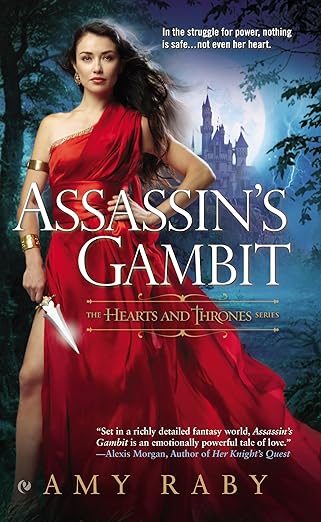
Assassin’s Gambit thrusts us into the heart of an empire where hearts are won with charm but empires are kept with daggers.
Vitala, an assassin and spy, targets the emperor but ends up entangled in a dangerous game of court intrigue and romance.
This novel blends the sharp precision of assassination with the unpredictability of love, proving that the heart can be as effective a target as the back.
Terry Pratchett’s The Hogfather brings his trademark wit to the fore, weaving a tale where the Discworld faces a crisis of mythical proportions that can only be solved by an assassin.
The Guild of Assassins is tasked with a contract on the Hogfather, Discworld’s version of Santa.
What follows is a hilariously twisted tale that questions the foundations of belief and holiday traditions, all while navigating the perils of professional killing.
Andy Peloquin’s Darkblade introduces us to the Hunter of Voramis, an assassin with a blade as cursed as his own soul.
Haunted by his past and feared by almost everyone, the Hunter is a master of death who battles not only his external enemies but also his inner demons.
This novel is an exploration of darkness, not just the kind that fills alleyways at night, but the kind that fills a man’s soul.
Set in a grim world reminiscent of the European Middle Ages, this novel follows Thomas Cale, who has been raised from childhood to be an assassin in the religious sanctuary known as the Sanctuary of the Redeemers.
Cale’s deadly skills are put to the test as he escapes the oppressive environment and faces a wider world rife with war and chaos.
Starting with A Dance of Cloaks, this series features Aaron Felhorn, who is trained from childhood to be the heir to his father’s criminal empire and a master assassin.
The series delves into themes of power, betrayal, and familial bonds, set against a backdrop of a city rife with corruption and violence.
In this opening book of The Chronicle of the Unhewn Throne, the children of the Emperor each follow different paths—one as a monk, another as a soldier, and the third as a minister.
The novel skillfully weaves their stories together with elements of political intrigue, ancient magic, and assassins playing pivotal roles in the unfolding drama of an empire.
The first book in the Farseer Trilogy, Assassin’s Apprentice introduces readers to Fitz, the bastard son of a prince, who is secretly trained in the ways of a royal assassin.
Through Fitz’s eyes, readers explore a realm where loyalty, political intrigue, and dark magic intertwine, setting the stage for a deeply personal and epic-scale adventure.
Robin Hobb’s detailed world-building and complex character development make this a cornerstone of the genre.
Assassin fantasy provides a darkly mesmerizing escape into worlds where the sharp edge of a blade can alter destinies and where whispered secrets wield the power to topple kingdoms.
Each book in this genre offers a unique blend of intrigue, danger, and moral complexity, drawing readers into the shadows alongside characters who are both compelling and conflicted.
From the gritty streets of Cenaria in Brent Weeks’ The Way of Shadows to the holy halls of the Convent of Sweet Mercy in Mark Lawrence’s Red Sister, these stories explore the nuances of power, loyalty, and survival.
They invite us into the minds and hearts of those who operate on the fringes of society, bound by codes that blur the lines between right and wrong.
For readers looking to dive deeper into the shadowy world of assassin fantasy, Jon Cronshaw’s Guild of Assassins offers a thrilling journey into the life of Soren, an apprentice sculptor turned lethal assassin after the brutal murder of his father.
As Soren navigates the treacherous waters of the assassins’ guild, he is forced to confront not only external enemies but also the internal struggle between his quest for vengeance and his remaining shreds of conscience.
Guild of Assassins is a must-read for anyone fascinated by the complexities of a life pledged to secrecy and the pursuit of justice through unconventional means.
Whether you’re a seasoned aficionado of assassin fantasy or a newcomer to the genre, Cronshaw’s vivid storytelling and rich character development promise an engaging and thought-provoking experience.
So, if your reading list needs a dose of danger and a touch of moral ambiguity, pick up a copy of Guild of Assassins.
Let the adventure begin where the shadows deepen, and discover why assassin fantasy continues to captivate the hearts and minds of readers around the world.
Explore the depths of fantasy literature with our in-depth look at 10 underrated tropes that deserve more attention. Discover how elements like reluctant rulers, enchanted landscapes, and magical objects with personality can enrich fantasy storytelling.
In the grand circus of fantasy literature, certain tropes swing from the trapezes and take the lion’s share of attention.
There are a few acts that don’t quite get the applause they deserve.
Discover the intricate tropes that shape ‘The Fall of Wolfsbane’, from the hero’s journey to complex family dynamics, and how they enrich this epic fantasy saga.
As readers, many of us find a certain joy in understanding the tropes that make our favorite stories tick.
Tropes, after all, are more than just recurring themes or motifs in literature; they offer a shorthand that helps us dive deeper into the world of a book, understand its characters better, and appreciate the narrative’s nuances.
They are the threads that weave together the tapestry of a story, offering both familiarity and a foundation for innovation.
Today, I want to takie a closer look at the tropes in my epic fantasy novel, The Fall of Wolfsbane.
So, let’s embark on this journey together, exploring the various tropes present in my story.
From the timeless hero’s journey to the intricate dynamics of political intrigue, each trope plays a vital role in shaping the world of Ragnar and Maja Wolfsbane, our protagonists, and their epic quest.
The Hero’s Journey
At the core of The Fall of Wolfsbane is the classic hero’s journey, reimagined.
Ragnar and Maja, our protagonists, are abruptly thrust from their familiar world into one filled with danger and uncertainty.
Their journey is not just physical but also emotional and spiritual, as they confront challenges that test their resilience and shape their identities.
Political Intrigue and Power Struggles
The novel delves deep into the murky waters of political intrigue, a staple of epic fantasy.
As Ragnar and Maja find themselves entangled in the complex web of empire politics, they must learn to navigate a world where alliances are fragile, and power is the ultimate game.
The Fish-Out-of-Water Scenario
Ragnar and Maja’s experience in the alien world of his captors is a classic ‘fish-out-of-water’ scenario.
This trope brilliantly highlights the clash of cultures and values, as the Wolfsbane siblings struggle to reconcile their inherent beliefs with the new realities they face.
Lost Civilizations and Mystical Artifacts
An intriguing aspect of The Fall of Wolfsbane is the inclusion of lost civilizations and their mystical artifacts.
This trope opens up a world of mystery and ancient power, hinting at deeper lore and hidden histories that enrich the story’s backdrop.
Complex Family Dynamics
The forced family dynamics, particularly between Ragnar and his captors’ sons, bring a unique twist to the narrative.
This trope explores themes of loyalty, rivalry, and the complexities of relationships formed under extraordinary circumstances.
Survival Against All Odds
Both Ragnar and Maja embody the trope of survival against all odds.
Their resilience in the face of adversity and their unyielding spirit in fighting for what they believe in are central to the novel’s theme.
Mentor Figures and Unlikely Alliances
Throughout their journey, Ragnar and Maja encounter mentors and form alliances with unlikely characters, including the wyvern, Witz, and the court jester, Peterade.
These relationships are pivotal in shaping their journey and provide depth and richness to their character development.
The Struggle for Identity
A key element of the story is the struggle for identity, as both protagonists wrestle with maintaining their sense of self in a world that seeks to change them.
This trope resonates deeply with readers, highlighting the universal theme of staying true to oneself.
Court Intrigue and Espionage
Maja’s path, filled with court intrigue and espionage, is a nod to the classic tropes of high-stakes political fantasy.
Her journey offers a closer look at the inner workings of power and the delicate dance of diplomacy and deceit.
Betrayal and Redemption
Themes of betrayal and the quest for redemption are woven throughout the narrative.
These tropes add layers of complexity to the characters and their motivations, driving the story forward with unexpected twists and turns.
In The Fall of Wolfsbane, these tropes are not just narrative devices; they are the pillars that uphold the world I’ve created.
They blend together to form a story that I hope is as intricate as it is entertaining, as thought-provoking as it is thrilling.
I invite you to delve into The Fall of Wolfsbane and experience these tropes firsthand.
As you turn each page, you’ll find yourself immersed in a world that is both familiar and wonderfully new.
Happy reading, and may you find as much joy in exploring the world of The Fall of Wolfsbane as I did in creating it!
It’s a tale of prophecy, power, and the eternal struggle between good and evil, told with a charm that’s as rare as a friendly dragon.
10. “Mistborn” by Brandon Sanderson
Brandon Sanderson’s “Mistborn” series reinvents heroic fantasy with its unique magic system and a plot that turns the typical ‘dark lord’ trope on its head.
It’s a breath of fresh air in a genre that sometimes feels as crowded as a marketplace in a fantasy city.
Heroic fantasy offers an escape into worlds where courage, honour, and magic reign supreme.
These novels are more than just stories; they are portals to realms where the impossible becomes possible, and the mundane becomes magnificent.
Whether you’re a long-time fan or a newcomer to the genre, each book on this list promises a journey filled with adventure, heroism, and, of course, a touch of enchantment.
So grab your cloak and sword (or just a comfy blanket and a cup of tea) and prepare to be transported to worlds beyond your wildest imaginations.
Delve into the heart of nobledark fantasy, where victories are bittersweet and triumphs Pyrrhic, reflecting deep themes of morality and sacrifice.
When you delve into the realm of fantasy literature, you’ll find yourself amidst an array of genres, each with its distinct flavour.
But how do you know when you’ve stepped into the shadowy yet hopeful world of nobledark fantasy?
This sub-genre, a curious blend of grim realities and moral resilience, is marked by certain unmistakable tropes and themes.
Here are ten tropes you might find when reading a nobledark fantasy novel:
1. The Rogue Who Dreams of Redemption
One sure sign you’re reading nobledark fantasy is the presence of a rogue character yearning for redemption.
This isn’t your average dashing rogue, content with their morally grey lifestyle.
Instead, this character often grapples with their past misdeeds and seeks a path to make things right.
Whether it’s a smuggler turning over a new leaf or a spy looking to correct past wrongs, their journey towards redemption is fraught with challenges, reflecting the genre’s blend of darkness and hope.
2. The Loyal Thief with a Heart of Gold
The loyal thief, another classic nobledark character, is a paradox in themselves.
They may live outside the law, pilfering and sneaking around, but their loyalty and sense of justice shine through.
This character often steals not out of greed, but necessity, or for a cause they believe in.
Their moral compass, although unconventional, is unmistakably present, guiding them through the genre’s murky ethical landscape.
3. The Assassin with a Conscience
In nobledark fantasy, assassins aren’t cold-blooded killers but complex characters burdened with conscience.
They kill, yes, but each action weighs heavily on their soul.
This inner conflict – the struggle between their lethal profession and their moral inclinations—is a hallmark of the genre.
It’s about the assassin who pauses, who questions, and who seeks meaning in a profession mired in darkness.
4. The World Weary Warrior Fighting for a Lost Cause
A nobledark narrative often features a warrior who’s seen too much and yet continues to fight for what often seems like a lost cause.
This character has witnessed the horrors of their world, yet they hold onto a flicker of hope.
They fight not because they want to, but because they must, driven by a deep-seated belief in something greater than themselves.
5. The Corrupt World That Tests Morality
The setting of a nobledark fantasy is a character in its own right—a world that’s often corrupt and unforgiving, testing the characters’ morals at every turn.
It’s a world where the right choice is often the hardest one to make, where the line between good and evil is blurred and battered.
6. Bittersweet Victories and Pyrrhic Triumphs
Nobledark fantasy doesn’t shy away from the cost of heroism.
Victories, when they come, are often bittersweet, and triumphs can feel Pyrrhic.
Characters may achieve their goals, but not without sacrifice and loss, underscoring the genre’s theme that even in victory, darkness lingers.
7. The Fallen Hero Seeking Redemption
In nobledark fantasy, a common theme is the fallen hero, once revered, who has lost their way due to a tragic flaw or a past mistake.
This character’s journey towards redemption is fraught with internal and external struggles, as they seek to regain their honour and atone for their sins.
Their path is never straightforward, often filled with moral quandaries and the harsh realities of a world that may not believe in second chances.
8. The Tyrant with a Conscience
Unlike the traditional portrayal of tyrants as irredeemably evil, nobledark fantasy often presents them with a layer of complexity.
These rulers may be driven by noble intentions gone awry or trapped by the very power they wield.
Their actions, while harsh or cruel, are often shown to stem from a twisted sense of duty or a burdened conscience, adding depth to their character and creating a grey area in the moral landscape of the story.
9. Sacrifice and the Cost of Power
Nobledark fantasy frequently explores the theme of sacrifice, particularly the high cost of wielding power or pursuing a greater good.
Characters are often faced with difficult choices that require them to sacrifice their personal desires, relationships, or even their ethical codes.
This theme underscores the notion that in a complex world, power and success come at a significant personal and moral cost.
10. The Blurred Lines Between Magic and Morality
Magic in nobledark fantasy is not just a tool or a weapon; it’s often intertwined with the moral fabric of the universe.
The use of magic can have far-reaching consequences, both beneficial and destructive, and characters who wield it must navigate its temptations and responsibilities.
This creates a dynamic where magic is a double-edged sword, capable of both salvaging and shattering the world’s fragile balance.
Recognising a nobledark fantasy novel is about identifying these unique elements—the flawed heroes striving for goodness, the oppressive worlds that challenge their morals, and the victories that come with their own set of losses.
It’s a genre that mirrors the complexities of real life, where the light of hope and the shadow of despair are perpetually intertwined.
So, the next time you find yourself empathising with an assassin’s plight or cheering for a thief with a cause, you might just be lost in the engrossing world of nobledark fantasy.
Unravel the differences between high and epic fantasy with examples, exploring their unique elements and stakes.
In the grand, dragon-infested world of fantasy literature, distinguishing between high fantasy and epic fantasy can be as tricky as convincing a dragon to part with its gold.
Both genres whisk readers away to realms of magic, heroism, and the occasional inconveniently-timed apocalypse.
But fear not, intrepid reader! Let’s embark on a quest to untangle these subgenres.
High Fantasy: More Than Just Elvish Linguistics
High fantasy, also known as secondary-world fantasy, takes you to an entirely different world.
Think J.R.R. Tolkien’s “The Lord of the Rings,” where Middle-earth is as real as the overdue bills on your kitchen counter.
This genre features worlds with their own set of rules, races like elves and dwarves (who are notoriously bad at following any rules), and a magic system that often requires a PhD to understand.
High fantasy is like that eccentric uncle who insists on speaking in Klingon; it immerses you completely in its world.
Epic Fantasy: It’s Not Just Big, It’s Epic
Epic fantasy, on the other hand, is characterised by its scale and the stakes involved.
George R.R. Martin’s “A Song of Ice and Fire” series is a prime example. Here, it’s not just a personal quest but the fate of entire kingdoms hanging in the balance, often involving a cast of characters so vast you need a family tree to keep track.
Epic fantasy is like a family reunion; you might not know everyone’s name, but you’re all in it together, usually against a tyrannical, power-hungry relative.
The Blurred Line: Where High Meets Epic
The boundary between high and epic fantasy is as blurred as your vision after reading a Brandon Sanderson novel in one sitting.
Sanderson’s “The Stormlight Archive” series exemplifies this blend.
It’s set in a meticulously crafted world (high fantasy) and revolves around grand, world-altering conflicts (epic fantasy).
It’s like a banquet where every dish is both deliciously exotic and alarmingly large.
The Magic Touch
High fantasy often presents magic as an integral part of the world.
In Terry Pratchett’s “Discworld” series, magic is as common as a rainy day in London.
Epic fantasy, like Robert Jordan’s “The Wheel of Time,” might also feature magic, but the focus is more on the epic battles, political intrigue, and the characters’ journeys, which occasionally involve less magic and more trying not to get stabbed in the back.
The Stakes Are High (And Epic)
In high fantasy, the stakes might be significant but often more personal, like Frodo Baggins’ quest to destroy the One Ring.
In epic fantasy, the stakes are, well, epic.
Think of “The Malazan Book of the Fallen” by Steven Erikson, where the fate of entire civilizations rests on the outcomes of conflicts.
While high fantasy takes you to an entirely different world, epic fantasy tells you a story of monumental scale and stakes in that world.
Both genres offer an escape from reality, much like imagining yourself as a hero with fabulous hair and a sword, rather than someone who can’t even wield a frying pan properly.
Whether you prefer the complete immersion of high fantasy or the grand tapestry of epic fantasy, one thing is certain: in these worlds, anything is possible, except perhaps a straightforward plot.
Dive into the grim and gritty world of Grimdark Fantasy with our beginner’s guide. Uncover 33 essential reads that define this subgenre, featuring antiheroes, complex plots, and dark realities.
Welcome to the dark, brooding underworld of fantasy literature—the Grimdark genre.
If you fancy stories where the sunlight rarely breaks through the clouds and your heroes are just villains who’ve had a worse day, then you’ve come to the right place.
This handy beginner’s guide to grimdark fantasy will help you navigate these shadowy realms like a pro.
Defining Grimdark: It’s Not All Unicorns and Rainbows
Unlike your usual fantasy fare where knights in shining armour gallantly rescue innocent princesses from fire-breathing dragons, grimdark doesn’t pull any punches.
It’s a sub-genre of fantasy where the line between good and evil gets as blurry as your vision after a Friday night at the pub.
Grimdark derives its name from the tagline of the tabletop game Warhammer 40,000: “In the grim darkness of the far future, there is only war.”
And in grimdark literature, there’s usually only war, torment, moral ambiguity, and buckets of blood.
Common Tropes: More Blood Than a Tarantino Film
Expect protagonists as cheerful as a goth at a beach party. These aren’t your heroic do-gooders with a heart of gold—they’re complex, flawed, and as likely to rob you as they are to save you.
They’ve got more in common with a seasoned convict than Prince Charming.
The settings are just as jolly.
Imagine if Mordor and the worse parts of Dickensian London had a baby—that’s your average grimdark world.
It’s bleak, it’s grimy, it’s brutal, and the chances of encountering a delightful enchanted forest are about as slim as finding a vegan at a steakhouse.
Themes and Characters: As Pleasant as a Root Canal
In a grimdark tale, don’t be surprised if your favourite character meets a grisly end.
The themes here tend to orbit around war, political intrigue, survival, and the darker side of humanity.
Characters are complex and exist in a moral grey area thicker than a London fog.
So, if you like your characters saintly and your endings happily-ever-after, this genre might give you more shocks than licking a battery.
But, if you’re intrigued by the depths of human depravity and how individuals navigate through a world as welcoming as a bed of nails, then grimdark could be your cup of tea’—dark and bitter.
How It Differs from Other Genres: Apples and Very Rotten Oranges
While traditional fantasy often revolves around a struggle between good and evil, grimdark plunges you into a world where those concepts are about as clear-cut as a Jackson Pollock painting.
Instead of lofty quests and noble heroes, grimdark stories focus on survival in a harsh world.
If epic fantasy is an inspiring orchestral symphony, grimdark is the guttural growl of a death metal band.
It’s raw, it’s intense, and it isn’t for the faint-hearted.
Where to Start Reading Grimdark Fantasy
Here are thirty-three formidable titles to cut your teeth on. Be warned: these aren’t your fluffy bedtime stories.
1. The First Law Trilogy by Joe Abercrombie
Abercrombie, fondly called Lord Grimdark, is the poster boy of this genre. His First Law Trilogy kicks off with ‘The Blade Itself,’ and its world is about as forgiving as a tax collector. Chock full of morally dubious characters, gratuitous violence, and a plot twistier than a pretzel, this series is a masterclass in grimdark.
2. Empires of Dust by Anna Smith Spark
Fancy poetry? Love a bit of the old ultra-violence? Then Anna Smith Spark’s Empires of Dust trilogy is your jam. The series starts with ‘Court of Broken Knives.’ Smith Spark’s style, a lyrical and visceral blend, mirrors the blend of beauty and brutality of the grimdark genre. Her characters are as ruthless as they come, so don’t expect to make any new friends here.
3. The Poppy War by R.F. Kuang
‘The Poppy War’ offers a grimdark tale drenched in historical and cultural richness. R.F. Kuang doesn’t shy away from depicting the raw brutality of war and its dehumanising effects. Here, the heroes make choices that will have you squirming in your seat. It’s as uplifting as a plummeting lift, but by God, it’s compelling.
4. War for the Rose Throne by Peter McLean
Starting with ‘Priest of Bones,’ Peter McLean’s series can be best described as Peaky Blinders with a grimdark twist. It’s filled with gang wars, political machinations, and a world as grim as a Monday morning. The writing is razor-sharp, and the characters are about as trustworthy as a three-pound note. It’s a grim ride, but worth every bloody moment.
5. The Malazan Book of the Fallen by Steven Erikson
This ten-book series is grimdark on an epic scale. With a complex plot, intricate world-building, and a character list longer than your arm, Erikson doesn’t ease up on the grimdark elements. It’s as light-hearted as a funeral in a downpour, but for those with the courage to take it on, it offers a reading experience like no other.
6. The Prince of Nothing series by R. Scott Bakker
Starting with ‘The Darkness That Comes Before,’ Bakker’s series is a philosophical deep-dive into a world that’s as friendly as a starving crocodile. The characters are complex, the philosophy is dense, and the world-building is as comprehensive as it gets. The Prince of Nothing series is perfect for readers who like their fantasy grim, their stakes high, and their themes heavy. It’s as cheery as a windowless cellar, but it’s an enthralling read nonetheless.
7. The Black Company by Glen Cook
Often credited as the grimdark progenitor, Glen Cook’s ‘The Black Company’ focuses on a mercenary company in a cynical, war-torn world. Expect plenty of morally grey characters, grim settings, and an all-round feeling of ‘we’re not in Kansas anymore’. It’s a series that smacks you in the face like a cold breeze, leaving you breathless and eager for more.
8. The Broken Empire Trilogy by Mark Lawrence
This series starts with ‘Prince of Thorns’, a book that introduces us to Jorg Ancrath, a protagonist as heartwarming as a kick in the shins. Lawrence’s narrative is as sharp as a well-honed blade, and his world is a place where hope goes to die. If you fancy a walk on the dark side with a character who wouldn’t know a moral compass if it bit him on the bum, give this trilogy a whirl.
9. The Nevernight Chronicles by Jay Kristoff
‘Nevernight,’ the first book in the series, presents us with Mia Corvere, a plucky young woman with a thirst for revenge and a shadowy talent for murder. She’s about as cuddly as a cactus, but you’ll find yourself rooting for her anyway. Kristoff’s grimdark saga is as dark as a pint of stout and as lethal as a viper’s bite. Strap in for a bumpy, bloody ride!
10. A Song of Ice and Fire by George R.R. Martin
This list wouldn’t be complete without mentioning George R.R. Martin’s epic series, starting with ‘A Game of Thrones’. Full of political intrigue, morally grey characters, and a level of unpredictability that makes Russian roulette look like a safe bet, this series is a must-read for grimdark enthusiasts. Just don’t get too attached to the characters; Martin is notorious for serving them up for dinner.
11. The Night Angel Trilogy by Brent Weeks
Starting with ‘The Way of Shadows,’ Brent Weeks presents a gripping tale of Azoth, a guild rat turned assassin. This trilogy is as cheerful as a tax audit, with moral ambiguity, dark magic, and a grimy underworld. Weeks paints a world steeped in shadows where life is cheap, and redemption comes with a high price. It’s a brutal, gritty ride that’s sure to satiate your grimdark cravings.
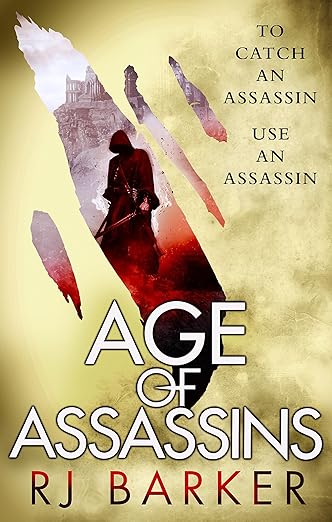
12. The Bone Ships series by RJ Barker
‘The Bone Ships’ sails into grimdark waters with a tale of ancient sea beasts, bone-made vessels, and a society that values death over life. Barker’s maritime world is as unwelcoming as a slap to the face, and his characters are hardened by a life of hardship and danger. If you’ve ever wondered what grimdark would look like on the high seas, this series is your answer.
13. The Steel Remains by Richard K. Morgan
Richard K. Morgan’s grimdark offering introduces us to Ringil Eskiath, a war hero with a biting wit and a preference for men. Expect a fair amount of brutality, cynicism, and the sort of banter that could make a sailor blush. It’s a dark, twisted journey that takes you through war, slavery, and betrayal. It’s as sweet as a vinegar smoothie, but its gripping narrative makes it a grimdark gem.
14. The Night Watch by Sergei Lukyanenko
Venturing into urban grimdark, ‘The Night Watch’ presents a modern-day Moscow teeming with supernatural beings. Lukyanenko’s world is as grim as a winter’s night, filled with vampires, witches, and shapeshifters living under a tense truce. It’s a thrilling, dark tale of power, conflict, and sacrifice that’ll have you wondering what lurks in the shadows of your own city.
15. A Crown for Cold Silver by Alex Marshall
The protagonist of ‘A Crown for Cold Silver’ is an ageing warrior who just wants to retire in peace but gets dragged back into the fray. It’s a tale of revenge filled with ruthless mercenaries, cruel demons, and political conspiracies. The world is as unforgiving as a hailstorm, and the characters are as warm as a winter’s morning. It’s a brutal, no-holds-barred ride into the grimdark genre.
16. Chronicles of the Unhewn Throne by Brian Staveley
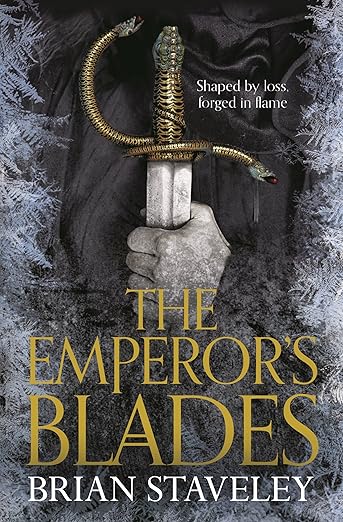
Kicking off with ‘The Emperor’s Blades,’ Brian Staveley’s Chronicles of the Unhewn Throne is as light and fluffy as a lead balloon. The series presents a world on the brink of war, fraught with political intrigue, secret assassins, and divine powers. With complex characters and a multi-layered plot, it offers a delicious slice of grimdark pie.
17. The Vagrant by Peter Newman
Peter Newman’s ‘The Vagrant’ is a bit like Mad Max meets grimdark. In a post-apocalyptic world ravaged by demonic forces, the protagonist, a mute and nameless knight, travels towards a hopeful beacon carrying a legendary weapon and a baby. Newman’s desolate, war-torn landscape and his broken, desperate characters encapsulate the essence of grimdark.
18. The Chronicles of Thomas Covenant, the Unbeliever by Stephen R. Donaldson
This series, starting with ‘Lord Foul’s Bane,’ gives us Thomas Covenant, a leprosy-stricken writer transported to a magical realm where he’s destined to be the saviour. It’s a tale that delves into the darker aspects of the human psyche, shattering the boundaries between good and evil. With its flawed anti-hero and uncompromising narrative, this series is a grimdark classic.
19. The Farseer Trilogy by Robin Hobb
Robin Hobb’s Farseer Trilogy, beginning with ‘Assassin’s Apprentice,’ isn’t as relentlessly grim as some of the other titles on this list, but it’s got enough morally grey characters, political treachery, and brutal realism to earn a spot. It’s a beautifully written tale that delves into the cost of duty and the harsh realities of life. A grimdark offering that will tug at your heartstrings.
20. Beyond Redemption by Michael R. Fletcher
‘Beyond Redemption’ takes grimdark to a new level, exploring a world where insanity is power, and delusions can reshape reality. It’s a dark, unflinching story packed with flawed, deranged characters and a world as welcoming as a nest of vipers. Fletcher’s tale is a mind-bending descent into madness, epitomising the grimdark ethos.
21. Low Town by Daniel Polansky
In ‘Low Town,’ Polansky combines elements of grimdark fantasy with hard-boiled crime. The protagonist, known as the Warden, is a former investigator turned drug dealer navigating through a seedy underworld. It’s as uplifting as a rainy bank holiday, but its compelling mix of mystery, magic, and gritty realism makes for a compelling read.
22. Black Sun Rising by C.S. Friedman
‘Black Sun Rising’ marks the start of Friedman’s Coldfire Trilogy, a unique blend of science fiction and fantasy that’s as cheerful as a stubbed toe. Here, human fears and beliefs can manifest into reality, making for a dangerous, unforgiving world. The characters are a mix of morally ambiguous, complex individuals that fit right into the grimdark mould.
23. The Powder Mage Trilogy by Brian McClellan
The series begins with ‘Promise of Blood,’ and it’s a gunpowder-fuelled epic, teeming with political coups, ancient gods, and magic. McClellan’s world is grim and bloody, and his characters are far from the shining heroes of traditional fantasy. The Powder Mage trilogy is a fantastic entry point for those seeking a touch of the revolutionary in their grimdark reads.
24. The Grim Company by Luke Scull
With a title like ‘The Grim Company,’ you know what you’re getting yourself into. Scull delivers a world where the gods are dead, magic is dying, and humanity is not faring much better. It’s a tale of anti-heroes, dark magic, and a fight against oppressive forces. It’s grim by name and grim by nature, making it an excellent addition to your grimdark reading list.
25. The Gentleman Bastard Series by Scott Lynch
Starting with ‘The Lies of Locke Lamora,’ Lynch’s series is grimdark with a generous dose of wit. It’s a tale of con artists and thieves, set in a world rich with venetian-style intrigue and danger. It’s as light-hearted as a dentist appointment, but its blend of fast-paced plot, complex characters, and razor-sharp dialogue makes it a standout in the genre.
26. The Godblind Trilogy by Anna Stephens
Anna Stephens’s debut series, beginning with ‘Godblind,’ is about as cheerful as a funeral in the rain. With a religious war, morally ambiguous characters, and a truckload of brutality, Stephens takes us on a grimdark journey of epic proportions. It’s a relentless, blood-soaked series that pulls no punches, perfect for those who enjoy their fantasy dark and uncompromising.
27. The Acacia Series by David Anthony Durham
Kicking off with ‘Acacia: The War with the Mein,’ Durham’s series presents a story of political intrigue, war, and betrayal in a world as warm and welcoming as a bear trap. It’s a sweeping tale of power, ambition, and the cost of empire. The Acacia series is a grimdark journey with a touch of epic fantasy that will leave you pondering the grey areas of morality.
28. Chronicles of the Exile by Marc Turner
Marc Turner’s series, starting with ‘When the Heavens Fall,’ provides a grand saga of dark gods, magical artefacts, and a host of characters who’d probably rob their own grandmothers. With its complex plot, morally grey characters, and world steeped in darkness, this series is a grimdark feast for fans of high stakes and epic conflicts.
29. The Five Warrior Angels by Brian Lee Durfee
The series begins with ‘The Forgetting Moon,’ where Durfee serves a banquet of battle-hardened warriors, ancient prophecies, and looming apocalypse. It’s a story of war and destiny, where hope seems as distant as a summer’s day in a British winter. Its harsh world, complex characters, and intricate plot make it a fantastic entry to the grimdark genre.
30. The Worldbreaker Saga by Kameron Hurley
Starting with ‘The Mirror Empire,’ Hurley’s saga plunges us into a world where star-powered magic, sentient plants, and parallel universes are the norm. It’s as comforting as a bed of nails, exploring themes of power, identity, and survival in a world on the brink of annihilation. If you want your grimdark served with a side of originality, The Worldbreaker Saga is just the ticket.
31. The Grimnir Series by Scott Oden
Scott Oden takes us on a bloody romp through a Viking-inspired world in the Grimnir series, starting with ‘A Gathering of Ravens.’ It’s a tale of revenge, filled with brutal battles, ancient magic, and a protagonist who’s as cuddly as a cactus. Oden’s world is harsh and unforgiving, and his characters are as morally grey as they come. It’s a fantastic blend of historical fiction and grimdark fantasy that will leave you thirsting for more.
32. The Grey Bastards by Jonathan French
Jonathan French’s ‘The Grey Bastards’ is a wonderfully filthy dive into a world of half-orcs, treacherous humans, and deadly magic. It’s grimdark with a dash of grit and a generous helping of dark humour. The characters are rough, ready, and morally ambiguous, making it a standout entry in the grimdark genre. It’s a wild, raucous ride that isn’t for the faint-hearted, but if you can handle the grime, it’s well worth the journey.
33. The Coming of Conan the Cimmerian by Robert E. Howard
Although it predates the term ‘grimdark,’ Robert E. Howard’s Conan series, starting with ‘The Coming of Conan the Cimmerian,’ embodies many of the genre’s defining characteristics. Conan’s world is a savage, brutal place filled with dark magic and deadly creatures. The protagonist himself is a far cry from your typical hero, embodying a ruthless, take-no-prisoners approach to life. It’s a foundational work for the grimdark genre, demonstrating that even in fantasy, the world can be a dark, dangerous place.
Honorary Mention: The Horus Heresy Series in the Warhammer 40,000 Universe
Last but definitely not least, let’s delve into the grimdark depths of the Warhammer 40,000 universe with the Horus Heresy series.
This sprawling saga is a monumental piece of grimdark fiction.
Taking us to the 31st millennium, the series explores the galaxy-spanning civil war that nearly tore the imperium of man apart.
The Horus Heresy, spearheaded by the emperor’s favoured son, Horus, pits brother against brother in a devastating conflict.
From the lofty heights of the Imperial Palace to the bloody battlefields of a thousand worlds, no one is safe from the horrors of war.
In true grimdark fashion, the Horus Heresy is a tale of betrayal, of once-noble heroes falling to corruption, and the devastating price of ambition and power.
It offers a grim vision of the future where there is only war and the laughter of thirsting gods.
The series, with contributions from various authors, is a grimdark feast for fans of war-torn galaxies, morally ambiguous characters, and high-stakes battles.
Be warned, though—once you start, you’ll find yourself on a journey as vast and dark as the Warhammer 40k universe itself.
Grimdark fantasy is a journey that’s not for everyone. It’s like Marmite—you either love it, or it gives you nightmares.
But if you can stomach the grit and grime, if you can handle the moral ambiguity and the despair, you’ll find a genre that isn’t afraid to take risks, to defy expectations, and to show the world in all its brutal, messy glory.
So take a deep breath, grab one of these books, and step into the shadows. Who knows? You might find that you like the dark.
So there you have it, a quick and dirty introduction to the world of grimdark fantasy. It’s a genre that pulls no punches and isn’t afraid to show you the world in all its murky shades of grey. But remember, it’s not all doom and gloom’—there’s plenty of dark humour, thrilling action, and captivating stories. Dive in, and who knows? You might find that you enjoy exploring the shadows.
Get your free copy of Birth of Assassins as part of the Ravenglass Universe starter library.