Discover 10 dark magic school stories filled with ambition, treachery, and moral dilemmas. From Guild of Assassins by Jon Cronshaw to other twisted academies, explore the shadows of magical education and the cost of power in these must-read tales.
If you’re a fan of magical academies where the lessons are as dangerous as the students, these dark magic school stories will enthral you.
Filled with treachery, ambition, and moral complexity, these tales delve into the shadows of magical education.
Guild of Assassins by Jon Cronshaw
In Guild of Assassins, Soren, a former sculptor’s apprentice, joins a brutal assassins’ guild to avenge his father’s murder.
The guild’s training programme is as deadly as it is rigorous, with lessons in stealth, combat, and deception.
Soren must grapple with questions of loyalty and morality as he uncovers the guild’s sinister secrets.
This dark tale is perfect for readers who enjoy intense, character-driven stories set in a deadly academic environment.
Quentin Coldwater enrols at Brakebills College for Magical Pedagogy, where the darker side of magic reveals itself in unexpected and often terrifying ways.
The students confront personal demons and the dangerous consequences of power in this gritty, subversive take on magical education.
Explore how Jay Kristoff’s “Nevernight” has transformed fantasy literature with its vivid portrayal of an assassin’s tale, blending dark humor with a rich, evocative narrative that challenges conventional tropes.
In the often serene landscape of fantasy literature, where dragons occasionally soar and magic frequently blooms, Jay Kristoff’s Nevernight arrives like a dagger to the heart—a welcome jolt of adrenaline for those who prefer their tales dark and their humor darker.
Since its debut, Nevernight has carved a niche so deep it might just be considered a grave, redefining elements of the fantasy genre with a gleeful slash of its blood-soaked blade.
A Shadow in the Library: Redefining the Assassin’s Tale
At its core, Nevernight is about Mia Corvere’s indomitable quest for vengeance after her family’s destruction, a story woven with enough shadow to dim a sunlit day.
But Kristoff doesn’t just tell another tale of vengeance; he stitches a new cloak from the old fabric, patterning his narrative with intricacies that whisper secrets and scream lies.
The book’s darkly enchanting world, where shadows whisper and light threatens, has pushed the boundaries of traditional fantasy, asking readers to reconsider what they know about the genre’s capacity for darkness.
In Nevernight, the darkness doesn’t just flirt with the light; it swallows it whole.
Blood Ink: Writing Style that Slays
Kristoff’s narrative style in Nevernight—rich, evocative, and unapologetically brutal—has left as much of a mark on the genre as the protagonist’s blades leave on her enemies.
His prose is a dance of death, every sentence meticulously crafted to ensnare, enchant, and cut.
This approach has influenced a wave of writers to explore more daring, direct, and vivid storytelling techniques.
Gone are the days of meandering descriptions of pastoral landscapes; here, readers relish the visceral visuals of blood-soaked cobblestones and feel the shadows lurking in the corners.
Teaching Old Tropes New Tricks
Nevernight does not shy away from tropes; it embraces them with the gusto of a child in a candy store after dark.
The school setting, the coming-of-age narrative, and the mentor-student dynamics are all present but twisted in such a manner that they seem freshly forged.
The Red Church, serving as the deadly Hogwarts of assassin education, offers lessons in poisons, politics, and the art of silent death, turning the trope of the magical school on its head.
The inclusion of footnotes throughout Mia’s journey offers a meta-textual layer that educates as well as entertains, providing depth and a rich backdrop against which the carnage unfolds.
This inventive narrative device has encouraged authors to experiment with their own storytelling structures, proving that the footnotes of fantasy can be as compelling as their narratives.
A Legacy Written in Blood
Since its release, Nevernight has not only gathered a cult following but has also inspired a shift in how dark themes are integrated into fantasy settings.
It’s a series that invites readers to walk a tightrope over moral abysses and to question every character’s motives—often right before they’re killed in creatively gruesome ways.
Nevernight‘s impact on fantasy literature is as profound as the shadows in which its characters operate.
It challenges, entertains, and revitalizes the genre, proving that even in the darkest night, there are stories waiting to be told—in blood, if necessary.
For those yet to delve into its pages, be warned: Nevernight will change the way you view fantasy literature, and possibly increase your appreciation for well-placed sarcasm and well-wielded daggers.
So, if your idea of a light read involves light treason and lighter morals, Jay Kristoff’s opus might just be the shadow you’re looking to step into.
Dive into the shadowy realm of assassin fantasy, where morality blurs and danger lurks at every turn. Explore the main tropes, themes, and what makes this subgenre a captivating branch of fantasy literature.
Welcome to the dimly lit world of assassin fantasy, a genre where the heroes are as sharp as the knives they hide and moral ambiguities are as common as cloaks and daggers.
For those new to the concept, assassin fantasy delves into the tales of those who operate from the shadows, executing justice or vengeance (and sometimes both) for the right price—or the right cause.
Here, we’ll slice through the main tropes and themes that define this intriguing subgenre.
What is Assassin Fantasy?
Assassin fantasy is a subgenre of fantasy literature that revolves around the lives and lethal escapades of assassins.
Unlike traditional fantasy, where battles are fought in broad daylight with armies clashing over the fate of empires, assassin fantasy tends to focus on the individual, often delving into the darker, more personal conflicts that play out in the back alleys of bustling cities or the silent corridors of power.
Tropes and Themes of Asssassin Fantasy
The Moral Ambiguity of Killing for a Cause
One of the most deliciously complex tropes in assassin fantasy is the ever-present question of morality.
Assassins in these stories often grapple with the ethics of their profession, blurring the lines between right and wrong until they’re as indistinct as footprints in a busy marketplace.
It’s a world where the end often justifies the means, and the means are usually fatal.
The Lone Wolf with a Code
Many assassin characters are crafted in the mould of the lone wolf—a solitary figure who operates outside the law but adheres to a personal code.
This code is as crucial to their identity as their stealthy footwear.
They might kill for money or revenge, but there are always lines they won’t cross… usually.
Complex Mentor-Apprentice Relationships
In a world where trust is as rare as a truthful politician, the relationships between mentors and their apprentices are fraught with tension and fraught with betrayal.
These relationships are a core element of training sequences, where deadly skills are passed down and life lessons are learned in the most hazardous ways imaginable.
Intrigue and Political Machinations
Assassin fantasy novels often unfold against a backdrop of intricate political plots.
Assassins are not just weapons but also key players in games of power, where thrones are the prizes and the players are seldom innocent.
The cloak and dagger aren’t just tools of the trade; they’re metaphors for the subterfuge that runs rampant in the corridors of power.
A Dance with Death
At the heart of assassin fantasy is the ever-present dance with death.
Assassins flirt with their own mortality daily, and their survival depends as much on their skill with a blade as it does on their ability to navigate the perilous politics of their professions.
Their lives are a high-stakes game where a single slip could be fatal.
Why Dive Into Assassin Fantasy?
For those intrigued by the darker side of human nature, assassin fantasy offers a compelling blend of adrenaline and intrigue.
It’s a place where every shadow could hold a secret and every character has an agenda.
If you’re ready to explore the depths of human resolve and the heights of treachery, assassin fantasy might just be your next favourite read.
So, sharpen your blades—or your wits, which are safer—and prepare to delve into tales where the most dangerous thing is not the assassin lurking in the shadows, but the truths they uncover.
Welcome to the dark, intricate world of assassin fantasy, where survival is an art, and the brush strokes are often painted in blood.
Essential Assassin Fantasy Titles
As you embark on a shadowy journey through assassin fantasy, you’ll want to be well-armed with the best titles the genre has to offer.
Here’s a rundown of five essential books where the characters are as sharp as the blades they wield, and survival is the name of the game—if it were ever that simple.
The Way of Shadows by Brent Weeks
In The Way of Shadows, Brent Weeks takes us on a stroll through the city of Cenaria, a place where even the shadows seem to be plotting something nefarious.
This is the story of Azoth, a street urchin who apprentices himself to Durzo Blint, a master assassin whose curriculum vitae is as long as a life sentence.
This novel is an intensive masterclass in dark arts and darker ethics, perfect for those who like their morals as murky as a foggy night in Victorian London.
Jay Kristoff’s Nevernight is as subtle as a dagger to the ribs, and twice as sharp.
Here we meet Mia Corvere, who joins the deadliest flock of acolytes at the Red Church, a school where they teach you how to end lives just after morning chapel.
Mia’s quest for vengeance is fraught with literary booby traps and a shadowy companion that’s literally her own shadow.
Ideal for readers who enjoy their education sprinkled with a bit of murder.
Vlad Taltos by Steven Brust offers a unique blend of high fantasy with a dash of organized crime—think The Godfather with swords and sorcery.
Vlad, a low-ranking thug-turned-assassin, navigates the cutthroat world of Dragaeran society, where social climbers are likely to use actual climbers to dispose of rivals.
This series is a guide on how to manage your career prospects in a world where your next promotion might just come at the sharp end of a dagger.
Joe Abercrombie‘s The Blade Itself plunges us into the grim and gritty Union, where Logen Ninefingers, also known as “the Bloody-Nine,” proves that you can indeed lose a finger and gain a title.
This book isn’t strictly about assassins, but it has enough backstabbing and literal stabbing to qualify.
Abercrombie crafts a world where every alliance is a potential death sentence and the only thing cheaper than life is one’s dignity.
If you ever thought about mixing pirates with assassins and throwing in a magical curse for good measure, The Assassin’s Curse is your kind of tale.
Cassandra Rose Clarke introduces us to Ananna, a pirate princess on the run who inadvertently triggers a curse binding her to an assassin sent to kill her.
This book offers a swashbuckling escape with a duo who could kill each other at any moment but must work together to survive.
It’s like a magical version of couple’s therapy, but with more knives.
In Red Sister, Mark Lawrence proves that the deadliest assassins might just come from a convent.
Nona Grey’s journey from condemned prisoner to novice in the Convent of Sweet Mercy is littered with enough blood and betrayal to make a stone weep.
This is not your typical school; here, they teach you how to survive first and pray later.
The nuns are more likely to pass you a blade than a bible, making it the perfect school for those who like their education with a side of existential dread.
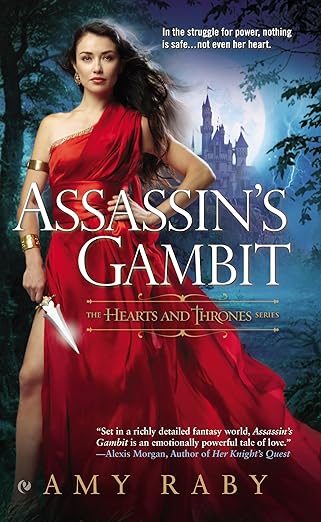
Assassin’s Gambit thrusts us into the heart of an empire where hearts are won with charm but empires are kept with daggers.
Vitala, an assassin and spy, targets the emperor but ends up entangled in a dangerous game of court intrigue and romance.
This novel blends the sharp precision of assassination with the unpredictability of love, proving that the heart can be as effective a target as the back.
Terry Pratchett’s The Hogfather brings his trademark wit to the fore, weaving a tale where the Discworld faces a crisis of mythical proportions that can only be solved by an assassin.
The Guild of Assassins is tasked with a contract on the Hogfather, Discworld’s version of Santa.
What follows is a hilariously twisted tale that questions the foundations of belief and holiday traditions, all while navigating the perils of professional killing.
Andy Peloquin’s Darkblade introduces us to the Hunter of Voramis, an assassin with a blade as cursed as his own soul.
Haunted by his past and feared by almost everyone, the Hunter is a master of death who battles not only his external enemies but also his inner demons.
This novel is an exploration of darkness, not just the kind that fills alleyways at night, but the kind that fills a man’s soul.
Set in a grim world reminiscent of the European Middle Ages, this novel follows Thomas Cale, who has been raised from childhood to be an assassin in the religious sanctuary known as the Sanctuary of the Redeemers.
Cale’s deadly skills are put to the test as he escapes the oppressive environment and faces a wider world rife with war and chaos.
Starting with A Dance of Cloaks, this series features Aaron Felhorn, who is trained from childhood to be the heir to his father’s criminal empire and a master assassin.
The series delves into themes of power, betrayal, and familial bonds, set against a backdrop of a city rife with corruption and violence.
In this opening book of The Chronicle of the Unhewn Throne, the children of the Emperor each follow different paths—one as a monk, another as a soldier, and the third as a minister.
The novel skillfully weaves their stories together with elements of political intrigue, ancient magic, and assassins playing pivotal roles in the unfolding drama of an empire.
The first book in the Farseer Trilogy, Assassin’s Apprentice introduces readers to Fitz, the bastard son of a prince, who is secretly trained in the ways of a royal assassin.
Through Fitz’s eyes, readers explore a realm where loyalty, political intrigue, and dark magic intertwine, setting the stage for a deeply personal and epic-scale adventure.
Robin Hobb’s detailed world-building and complex character development make this a cornerstone of the genre.
Assassin fantasy provides a darkly mesmerizing escape into worlds where the sharp edge of a blade can alter destinies and where whispered secrets wield the power to topple kingdoms.
Each book in this genre offers a unique blend of intrigue, danger, and moral complexity, drawing readers into the shadows alongside characters who are both compelling and conflicted.
From the gritty streets of Cenaria in Brent Weeks’ The Way of Shadows to the holy halls of the Convent of Sweet Mercy in Mark Lawrence’s Red Sister, these stories explore the nuances of power, loyalty, and survival.
They invite us into the minds and hearts of those who operate on the fringes of society, bound by codes that blur the lines between right and wrong.
For readers looking to dive deeper into the shadowy world of assassin fantasy, Jon Cronshaw’s Guild of Assassins offers a thrilling journey into the life of Soren, an apprentice sculptor turned lethal assassin after the brutal murder of his father.
As Soren navigates the treacherous waters of the assassins’ guild, he is forced to confront not only external enemies but also the internal struggle between his quest for vengeance and his remaining shreds of conscience.
Guild of Assassins is a must-read for anyone fascinated by the complexities of a life pledged to secrecy and the pursuit of justice through unconventional means.
Whether you’re a seasoned aficionado of assassin fantasy or a newcomer to the genre, Cronshaw’s vivid storytelling and rich character development promise an engaging and thought-provoking experience.
So, if your reading list needs a dose of danger and a touch of moral ambiguity, pick up a copy of Guild of Assassins.
Let the adventure begin where the shadows deepen, and discover why assassin fantasy continues to captivate the hearts and minds of readers around the world.
Immerse yourself in seven thrilling moments from assassin fantasy novels that kept us riveted, showcasing the cunning and audacity of our favourite killers
Knocking on death’s door has never been as fun as when assassins are at the helm, manipulating the strings of life and death like puppeteers.
As we dive into the sable sea of assassin fantasy, let’s recount seven indelibly carved moments that have made us gasp, laugh, and perhaps spurred us to take up lock-picking (just as a hobby, mind you).
Arya Stark’s transformation from a wide-eyed, wild girl of Winterfell to a Faceless Man’s apprentice has been quite the bloody journey. But it was her jovial dance with the Hound, their offbeat banter mixed with a potpourri of mortal threats, that made us all fall in love with her deadly charm. Who knew sibling revenge could be this amusing?
The King’s Folly (The Lies of Locke Lamora, Scott Lynch)
When Locke decided to masquerade as an obscure foreign nobility and swindle the rich of Camorr, we knew it was going to be entertaining. But who thought it would end up being a cross between Ocean’s Eleven and the Grand Guignol? A truly classic “Ah, bollocks” moment if ever there was one.
The Assassin’s Wager (The Way of Shadows, Brent Weeks)
Watching Azoth’s transformation into Durzo Blint’s apprentice Kylar Stern was like observing a caterpillar morph into a butterfly, but with added knives, shadows and the occasional poisoning. It’s not a proper education unless someone almost dies, right?
Oh, FitzChivalry, you put the ‘fun’ in dysfunctional. From assassinating regicide-plotters to becoming the kingdom’s most beloved traitor, his journey is as fun as it is tragic. Remember that time when he almost assassinated his own uncle? Classic family reunion.
The Banter of Bastards (The Blade Itself, Joe Abercrombie)
Watching Logen Ninefingers and Sand dan Glokta quip about life, death, and the art of creative cursing was like watching a grimdark Morecambe and Wise. A bit darker than your average comedy duo, but that’s the price of admission when dealing with assassins and berserkers.
The Hidden Blade (Nevernight, Jay Kristoff)
When Mia Covere pulled off her first solo assassination and then neatly framed it as an accident, it was the happiest day of her life. Ours, too, for we were gleefully riding shotgun on her vengeance-fuelled rollercoaster. Makes your first driving test pass seem a tad dull, doesn’t it?
The One-Woman Revolution (Throne of Glass, Sarah J. Maas)
When Celaena Sardothien decided she’d had enough of being a pawn and instigated a coup, it was an act of supreme sass. And let’s face it, in the world of assassination, audacity is queen. Always.
So, there you have it. The moments that made us chuckle, grimace, and question our own morality as we cheered for killers.
Let’s raise a glass to our beloved assassins – let’s just make sure to smell for poison first, eh?
If you enjoy stories about thieves and assassins, download your free copy of Birth of Assassins as part your free Ravenglass Universe starter library.
Dive into the evolution of the assassin fantasy genre, from ancient folklore to modern literature. Explore classic tales, seminal works, and today’s intricate narratives that mix mystery, action, and moral ambiguity.
Throughout the vast realms of fantasy literature, there exists a subgenre that focuses on the moral ambiguities of being a killer—the assassin fantasy genre.
From the mysterious and silent killers of ancient tales to the morally complex anti-heroes of modern sagas, the portrayal of assassins in literature has evolved significantly over time.
Today, we’ll delve into the evolution of the assassin fantasy genre, exploring its earliest examples and tracing its development into the modern day.
Origins: Shadows in the Pages
The roots of the assassin fantasy genre can be traced back to ancient civilizations and folklore.
Stories of assassins and their deadly skills have captivated audiences across different cultures.
Ancient texts such as “One Thousand and One Nights” (Arabian Nights) contain tales of skilled killers like the legendary Sinbad, whose exploits blurred the line between hero and assassin.
These early examples showcased the mystique and cunning of assassins, establishing the foundation for the genre.
Assassin Fantasy in Classic Literature
The 19th and early 20th centuries witnessed the emergence of classic literature that incorporated assassin characters.
One of the most notable works was Alexandre Dumas’ “The Count of Monte Cristo.”
Although not primarily an assassin fantasy, it featured the protagonist Edmond Dantès adopting the persona of the Count to exact his revenge.
Dumas’ novel, with its themes of hidden identities, intricate plots, and morally ambiguous characters, set the stage for future developments in the genre.
Rise of the Modern Assassin Fantasy
The modern era marked a significant shift in the portrayal of assassins.
This transformation can be attributed to groundbreaking works such as Fafhrd and the Gray Mouser series by Fritz Leiber, which began in the 1930s.
Leiber’s characters, Fafhrd and the Gray Mouser, were skilled swordsman-thieves who, at times, were employed as assassins.
This series showcased complex anti-heroes operating in a morally gray world, reflecting the shifting perspectives of readers.
In the 1990s, the assassin fantasy genre experienced a surge in popularity with the publication of Robin Hobb’s Farseer Trilogy. Hobb introduced readers to FitzChivalry Farseer, a royal assassin plagued by inner conflicts and external challenges.
Through Fitz’s journey, Hobb delved into themes of loyalty, sacrifice, and the psychological toll of a life bound to shadows and death.
This series ignited a fascination with morally complex assassins and their tormented souls.
The Modern-Day Assassin: A Multifaceted Hero
In contemporary literature, the assassin fantasy genre has evolved to embrace diverse representations of assassins.
Authors like Brent Weeks, with his Night Angel Trilogy, and Jay Kristoff, with the Nevernight Chronicle, have contributed to the genre’s evolution by creating protagonists who are both deadly killers and complex individuals with rich backstories and personal motivations.
These narratives explore the grey areas of morality, offering readers a chance to explore the complexities of the human condition.
Appeal and Enduring Allure
The assassin fantasy genre continues to captivate readers due to several key factors.
First, the enigmatic nature of assassins, shrouded in secrecy and skill, evokes a sense of fascination and curiosity.
Their lethal abilities and the danger they face in their treacherous world create an exhilarating reading experience.
Moreover, the exploration of morally ambiguous characters challenges readers’ perceptions of right and wrong, delving into complex ethical dilemmas.
Furthermore, assassins often navigate treacherous political landscapes, unveiling conspiracies and unveiling hidden truths.
These stories offer a thrilling blend of action, suspense, and intricate plotting, keeping readers on the edge of their seats.
The internal conflicts faced by assassins, as they grapple with their choices and the consequences of their actions, add depth and emotional resonance to the narratives.
10 Essential Assassin Fantasy Reads
“The Blade Itself” by Joe Abercrombie
“The Blade Itself” introduces readers to a gritty and dark world filled with complex characters. Set in a land on the brink of war, the story follows a diverse cast, including Inquisitor Glokta, a former swordsman turned torturer; Logen Ninefingers, a legendary warrior seeking redemption; and Jezal dan Luthar, a self-centered nobleman. Abercrombie’s skillful characterisation and vivid world-building create a compelling narrative that explores themes of power, betrayal, and the blurred lines between heroism and villainy.
“Throne of Glass” by Sarah J. Maas
In “Throne of Glass,” Sarah J. Maas presents readers with a tale of an assassin named Celaena Sardothien. Once the most feared assassin in the kingdom, Celaena finds herself imprisoned and offered a chance at freedom by competing in a deadly tournament. As she navigates the treacherous world of court politics and supernatural forces, Celaena’s journey unfolds with intrigue, romance, and surprising alliances. Maas’ writing captivates readers with its blend of action, magic, and a strong-willed protagonist who must confront her past while forging her future.
“The Lies of Locke Lamora” follows the exploits of Locke Lamora, a charming thief and con artist in the city of Camorr. Lynch’s novel combines elements of fantasy, heists, and political intrigue as Locke and his band of fellow thieves get embroiled in a dangerous game with a mysterious antagonist known as the Gray King. The book weaves intricate plots and clever schemes while showcasing a richly detailed city and complex characters. Lynch’s prose is witty, immersive, and filled with twists and turns that keep readers guessing until the very end.
“Assassin’s Apprentice” by Robin Hobb
“Assassin’s Apprentice” is the first book in Robin Hobb’s Farseer Trilogy, introducing readers to FitzChivalry Farseer, a royal bastard who becomes an apprentice to the kingdom’s assassin. Hobb delves deep into Fitz’s coming-of-age story, exploring his struggles with identity, loyalty, and the burdens of his secret heritage. As Fitz learns the art of assassination, he also discovers the high-stakes political landscape and the challenges of being entangled in the kingdom’s intrigues. Hobb’s exquisite prose and introspective narrative style create an emotionally rich and immersive reading experience.
“Nevernight” by Jay Kristoff
“Nevernight” introduces readers to Mia Corvere, a young woman seeking revenge against those who destroyed her family. In a world where three suns never truly set, Mia trains to become an assassin in the Red Church, an institution that worships the goddess of murder. Jay Kristoff’s writing blends dark fantasy, intricate world-building, and poetic prose to create a gripping tale of vengeance, ambition, and the blurred lines between light and shadow. Mia’s journey is filled with political intrigue, deadly trials, and a touch of forbidden romance.
“Graceling” by Kristin Cashore:
In “Graceling,” Kristin Cashore presents a realm where certain individuals are born with Graces—unique and extraordinary talents. The protagonist, Katsa, possesses a killing Grace and is forced to serve as a deadly weapon for her king. However, as she questions her purpose and fights against oppression, Katsa discovers her own agency and embarks on a quest that challenges her beliefs. Cashore’s novel combines elements of adventure, romance, and self-discovery, crafting a compelling narrative that explores themes of power, choice, and the search for personal identity.
“Kushiel’s Dart” by Jacqueline Carey
Set in a richly imagined alternate version of medieval Europe, “Kushiel’s Dart” follows Phèdre nó Delaunay, a courtesan-spy with a unique ability to experience pleasure and pain as one. As she delves into political intrigue and uncovers conspiracies, Phèdre’s journey takes her across continents, unveiling a complex web of power struggles and forbidden desires. Jacqueline Carey’s novel blends elements of romance, politics, and adventure, creating a lush and sensual narrative that explores themes of love, loyalty, and the consequences of choices made.
“The Way of Shadows” by Brent Weeks
“The Way of Shadows” introduces readers to Azoth, a young orphan in a corrupt city who dreams of becoming the world’s greatest assassin. Under the tutelage of master assassin Durzo Blint, Azoth faces trials that test his skills, resilience, and morality. Brent Weeks’ debut novel combines elements of coming-of-age, dark fantasy, and intricate world-building to deliver a tale of secrets, political intrigue, and the high cost of power. The story delves into the shadows of a morally gray world, exploring themes of sacrifice, redemption, and the search for identity.
“Red Sister” by Mark Lawrence
In “Red Sister,” Mark Lawrence presents a world where young girls are trained in the art of combat and assassination within the walls of the Convent of Sweet Mercy. The story follows Nona Grey, a girl with extraordinary abilities, as she navigates a dangerous and divided empire. Lawrence’s novel combines elements of fantasy, mystery, and action, immersing readers in a complex world filled with ancient prophecies, rival factions, and deadly adversaries. The book explores themes of friendship, loyalty, and the resilience of the human spirit.
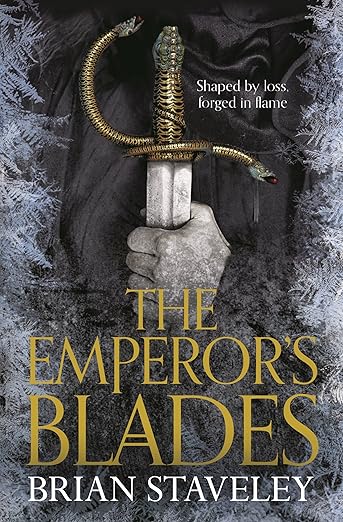
“The Emperor’s Blades” by Brian Staveley
“The Emperor’s Blades” is the first installment of the Chronicles of the Unhewn Throne trilogy. The story follows three siblings—Kaden, Valyn, and Adare—as they face separate challenges in a world torn by war and political turmoil. Kaden trains in a remote monastery, Valyn becomes an elite warrior, and Adare fights for political power. Brian Staveley weaves together a tale of treachery, family loyalty, and the struggle for survival. The book features complex characters, intricate world-building, and a plot that intertwines personal journeys with larger geopolitical conflicts.
The assassin fantasy genre has evolved from ancient tales to modern narratives that explore the complexities of assassins, their moral dilemmas, and their treacherous worlds.
With a rich tapestry of characters and intricate plots, these stories continue to captivate readers by combining elements of mystery, action, and introspection.
Whether you’re drawn to the enigmatic nature of assassins or the exploration of moral ambiguity, the assassin fantasy genre offers a thrilling and thought-provoking reading experience. So, dive into the shadows and steel, and discover the fascinating world of assassins in literature.