How to Handle Colonial Themes in Fantasy Fiction

Learn how to write about colonialism in fantasy responsibly. Explore ways to avoid harmful tropes, create complex societies, and tackle power dynamics to craft stories that challenge, rather than reinforce, colonial narratives.

As fantasy writers tackle themes of colonialism and empire, we face a significant challenge.

How do we explore these themes authentically without falling into damaging stereotypes or accidentally glamorising colonialism?

While writing The Knight and the Rebel, I grappled with these questions constantly.

Here, I’d like to share some insights from that process.

Tropes to Avoid

First, let’s acknowledge the tropes we need to steer clear of:

  • The “noble savage” who supposedly needs civilisation.
  • The “white saviour” liberating the oppressed.
  • Colonised peoples portrayed as one-dimensional victims.
  • The assumption that technological or magical advancement equals moral superiority.
  • The notion that colonisation brings necessary “progress.”

Showing Complex Societies

Instead of depicting Wiete as “primitive,” I portrayed it as a sophisticated society.

It has its own political structures, traditions, and values.

The Empire doesn’t bring civilisation—it imposes a different civilisation designed to serve its own interests.

When Ragnar observes Imperial “improvements” like the Kusten Road, he recognises how these developments primarily benefit Imperial control rather than local people.

Neither the Empire nor the resistance is a monolithic entity.

The Empire includes true believers, pragmatists, and secret doubters.

The resistance features various factions with differing methods and goals.

This complexity avoids simplistic “good vs evil” narratives that can reinforce colonial thinking.

Examining Power Structures

Through Ragnar’s position as Knight Protector, we see how colonial powers co-opt local elites to maintain control.

Through Maja’s chapters, we witness how resistance movements can become corrupted by violence.

These perspectives show how colonialism distorts and damages both coloniser and colonised.

Ragnar’s chapters reveal the Empire’s machinery of control.

Maja’s perspective ensures the human cost of colonisation remains central.

Her story isn’t just about resistance—it’s about preserving culture and identity in the face of systematic erasure.

Conscious Language Choices

I paid close attention to the language used to describe different cultures.

The Empire doesn’t bring “civilisation”—it enforces its own cultural practices through violence.

Words like “savage,” “primitive,” or “barbaric” appear only in the dialogue of Imperial characters.

This highlights their prejudices rather than reinforcing harmful stereotypes.

Magic as a Metaphor

The magic system in The Knight and the Rebel centres around mental influence and control.

This serves as a metaphor for how colonial powers shape the thoughts and beliefs of both the conquered and their own people.

The magic isn’t about superiority—it’s about power and its abuse.

Avoiding Easy Answers

I tried to avoid offering simplistic solutions to colonial oppression.

Neither total assimilation nor violent resistance is presented as the “right” choice.

Characters navigate complex moral territories where every option carries a cost.

Authors Who Tackle Colonial Themes Well

Some authors handle these themes with remarkable depth and sensitivity:

  • N.K. Jemisin’s Broken Earth trilogy examines systemic oppression through a fantasy lens.
  • Samantha Shannon’s The Priory of the Orange Tree explores religious and cultural imperialism.
  • R.F. Kuang’s The Poppy War series confronts the trauma of colonialism.
  • S.A. Chakraborty’s Daevabad Trilogy depicts intricate power dynamics between diverse groups.

Questions to Consider While Writing

When writing, I asked myself these key questions:

  • Does this scene perpetuate harmful stereotypes?
  • Whose perspective am I centring, and why?
  • Am I showing the full humanity of all characters?
  • Am I being honest about the violence of colonialism?
  • Am I inadvertently justifying colonial actions?

Writing With Responsibility

It’s crucial to remember that writing about colonialism in fantasy isn’t just about creating engaging conflict.

It’s an opportunity to examine power structures that continue to shape our world.

As writers, I feel we have a responsibility to handle these themes with care and awareness.

None of us will get it perfectly right.

But by staying conscious of these issues and constantly questioning our assumptions, we can create stories that challenge rather than reinforce colonial narratives.

Join the Conversation

What are your thoughts on handling colonial themes in fantasy?

Which works do you think explore these themes particularly well?

Share your perspectives in the comments.

The Spectrum of Magic Systems: Science Meets Mysticism

Discover how magic systems operate in fantasy literature, from logical hard magic to mystical soft magic, with examples from top fantasy books and tips for crafting your own system.

Magic systems are the backbone of many fantasy worlds.

They shape the rules, conflicts, and characters of the story.

Whether governed by strict logic or cloaked in mystery, magic defines the boundaries of what is possible.

This article explores the spectrum of magic systems, from the scientific and structured to the mystical and enigmatic.

Examples are included to highlight the unique contributions of each type to fantasy literature.


What Is a Magic System?

A magic system is the framework within a fantasy world that dictates how magic functions.

It answers key questions such as who can use magic, what are its limitations, and how does it affect the world.

Magic systems are broadly classified into two types: hard magic and soft magic.


Hard Magic Systems: The Scientific Approach

Hard magic systems operate with clear rules and limitations.

They often resemble a science in their logic and structure.

These systems help readers understand how magic works.

They create tension and opportunities for problem-solving.

Brandon Sanderson’s Mistborn series is a prime example.

In Mistborn, Allomancy is governed by precise laws.

Characters consume metals to gain specific abilities, such as enhanced strength or heightened senses.

The limits of Allomancy—like running out of metals—add stakes and drive the plot forward.

Patrick Rothfuss’s The Kingkiller Chronicle is another example.

In this series, Sympathy, a form of magic, relies on physical principles like energy transfer.

This scientific approach makes the magic feel grounded.

It engages readers who appreciate logical consistency.


Soft Magic Systems: The Mystical Approach

Soft magic systems are less defined.

They leave much to the imagination.

These systems create wonder and highlight themes of mystery and the unknown.

J.R.R. Tolkien’s The Lord of the Rings features a soft magic system.

The true nature of magic in Tolkien’s world remains elusive.

Characters like Gandalf wield immense power, but the mechanics are never fully explained.

This approach reinforces the sense of awe and otherworldliness.

Ursula K. Le Guin’s Earthsea series is another example.

In Earthsea, magic is tied to names and balance, blending the mystical with philosophical themes.

The vagueness of soft magic allows authors to focus on narrative over rules.


Hybrid Magic Systems: Balancing Science and Mystery

Many fantasy authors blend elements of hard and soft magic.

This creates a balance between clarity and wonder.

George R.R. Martin’s A Song of Ice and Fire is a notable example.

In this series, magic starts as a faint and mysterious force.

As the story progresses, magic gains more structure and context.

The reanimation of the dead and the abilities of greenseers illustrate this balance.

Leigh Bardugo’s Grishaverse also uses a hybrid system.

The magic of Grisha follows scientific principles yet retains an air of mystery.

This blend appeals to readers who enjoy both logical systems and the allure of the unknown.


Cultural and Thematic Influences on Magic Systems

Magic systems often reflect the cultural and thematic underpinnings of their worlds.

In N.K. Jemisin’s The Broken Earth trilogy, orogeny (magic) is deeply tied to themes of oppression and control.

The rules of orogeny reflect the harsh realities of a world where power comes at a cost.

Andrzej Sapkowski’s The Witcher series provides another example.

In The Witcher, magic is influenced by Eastern European folklore and superstition.

The blend of cultural roots adds depth and authenticity to the magic systems.

This enriches the world-building and the reader’s experience.


Why Magic Systems Matter in Fantasy

Magic systems do more than create fantastical powers.

They shape the tone, stakes, and themes of a story.

A well-constructed system gives characters meaningful challenges.

It ensures the world feels immersive and believable.

In Sanderson’s Stormlight Archive, the complex mechanics of Stormlight enhance the epic scale of the story.

Conversely, in magical realism like Gabriel García Márquez’s One Hundred Years of Solitude, the undefined nature of magic reflects its seamless blending with reality.


Building Your Own Magic System

If you’re a writer, consider several factors when creating a magic system.

First, define its source: is it natural, divine, or technological?

Second, establish its rules and limits: what can and cannot be done?

Third, link magic to your world: how does it influence culture, politics, or daily life?

Finally, decide its purpose: will it inspire wonder, drive conflict, or solve problems?

By answering these questions, you can craft a unique and integral magic system.


The Spectrum of Magic Systems in Fantasy

Magic systems in fantasy range from the scientific precision of hard magic to the ethereal mystery of soft magic.

Both approaches offer unique storytelling opportunities.

They can create tension, inspire wonder, or explore deeper themes.

From Sanderson’s logical frameworks to Tolkien’s mysterious enchantments, magic systems remain a cornerstone of the genre.

Understanding how magic operates in fantasy helps readers and writers alike appreciate the depth and creativity of these enchanting worlds.


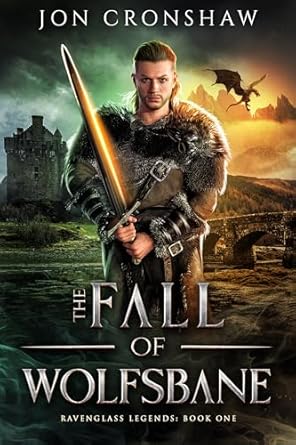
Out now: The Fall of Wolfsbane

When the Ostreich Empire shatters his world and enslaves his people, Ragnar Wolfsbane vows to fight back.

Thrust into a dangerous game of imperial intrigue, Ragnar must learn to navigate a world of forbidden magic and hidden agendas.

But as the true power of ravenglass emerges, Ragnar’s choices could lead to salvation or ruin for those he holds dear.

Immerse yourself in a vivid fantasy realm where the lines between hero and villain blur.

Will Ragnar rise to become the leader his clan needs, or will the Empire’s machinations crush his resolve?

Find out in The Fall of Wolfsbane, a character-driven high fantasy novel.

get your copy.

Lessons for Fantasy Writers from Dostoevsky’s Crime and Punishment

Discover how Dostoevsky’s ‘Crime and Punishment’ offers invaluable lessons for fantasy writers, from complex character development to using moral ambiguities, enhancing settings, and effective dialogue to elevate your fantasy narratives.

Fyodor Dostoevsky’s “Crime and Punishment” is a towering masterpiece of literature.

While it might seem an unconventional choice for fantasy writers, the novel’s exploration of complex themes and its intense focus on character development offer valuable lessons for crafting compelling fantasy narratives that resonate with readers on multiple levels.

Examining Moral Ambiguities

At the heart of “Crime and Punishment” is the story of Raskolnikov.

He is a former student who believes himself above the law and capable of committing a crime for a greater good.

The novel painstakingly explores the moral and psychological repercussions of his actions, providing an in-depth examination of the grey areas of morality.

Lesson: Fantasy writers can similarly challenge their characters with moral dilemmas that test their beliefs and values.

By placing characters in situations where the right choice is not clear-cut, or where the decision could have profound personal and societal repercussions, writers can add depth to their narratives.

This engages readers in complex ethical questions.

The Importance of Setting as Character

Dostoevsky’s St. Petersburg is almost a character in its own right.

It reflects Raskolnikov’s turmoil and the societal conditions that influence his actions.

The oppressive atmosphere of the city, with its stifling heat and cramped, maze-like streets, mirrors the protagonist’s mental state.

It serves as a constant reminder of his isolation and paranoia.

Lesson: In fantasy writing, the setting should do more than just provide a backdrop for action.

It should actively reflect and enhance the themes and emotions of the narrative.

Whether it’s a sprawling city or a secluded magical forest, the environment can be used to mirror the internal conflicts of characters and to heighten the narrative tension.

The Psychological Complexity of Characters

Dostoevsky is a master of psychological realism.

“Crime and Punishment” is a profound exploration of the human psyche.

Raskolnikov’s complex motives, his fluctuating mental state, and his interactions with other characters provide a rich study of human psychology.

Lesson: Fantasy authors should strive to create characters with similar psychological complexity.

Characters should have clear motivations, fears, and desires that drive their actions and interactions.

This depth makes characters more relatable and their journeys more compelling, thereby enhancing the reader’s investment in the story.

Use of Foil Characters

“Crime and Punishment” features several characters that act as foils to Raskolnikov.

This includes the saintly Sonya, whose compassion contrasts sharply with his nihilism.

These characters highlight different facets of the protagonist’s personality.

They help explore the novel’s themes from various angles.

Lesson: Fantasy authors can effectively use foil characters to highlight and contrast the central themes of their stories.

By creating characters that embody opposing traits or ideologies, writers can explore the central conflicts of their narrative more fully and add layers of meaning to their work.

The Role of Dialogue in Unveiling Themes

Much of the philosophical and ethical exploration in “Crime and Punishment” occurs through dialogue.

This allows characters to voice different viewpoints and clash over key issues.

This interaction is crucial for unpacking the novel’s complex themes.

Lesson: Effective use of dialogue in fantasy can serve a similar purpose.

Rather than relying on narrative exposition, authors can use conversations to reveal character motivations, build the world, and address the story’s deeper themes.

Dialogue can be a dynamic tool for advancing the plot while also fleshing out the philosophical and moral underpinnings of the story.

Beyond the Fantasy Genre

Crime and Punishment” provides a blueprint for how deep psychological insight and moral complexity can elevate a narrative.

Fantasy writers looking to enrich their stories can draw from Dostoevsky’s approach to create novels that are not only engaging and imaginative but also profoundly resonant.

By integrating these lessons into their work, fantasy authors can craft stories that captivate the mind and stir the soul, much like Dostoevsky’s enduring classic.

What Fantasy Authors Can Learn from “Cowboy Bebop”

Discover what fantasy authors can learn from “Cowboy Bebop.” Explore how genre blending, iconic characters, atmospheric world-building, episodic storytelling, and subtlety in narrative can enhance your fantasy writing.

“Cowboy Bebop,” the iconic anime series known for its stylish blend of sci-fi and noir elements, isn’t just a revolutionary addition to anime culture.

It’s a masterclass in storytelling, character development, and atmospheric world-building.

While at first glance it may seem distant from the realms of fantasy, the series offers a wealth of inspiration for fantasy authors looking to inject freshness and depth into their narratives.

Genre Blending Mastery

At its core, “Cowboy Bebop” is a seamless blend of genres.

Jazz, western, sci-fi, and noir meld together to create a universe that is both timeless and distinctly original.

This amalgamation not only sets the series apart but also enriches every aspect of its storytelling.

Fantasy writers can take a cue from “Cowboy Bebop” by experimenting with genre blending in their own works.

Imagine a high fantasy world with steampunk technology, or a magical realm influenced by film noir.

Mixing unexpected genres can create a rich tapestry that intrigues readers and broadens the scope of traditional fantasy settings.

Creating Iconic Characters

The characters of “Cowboy Bebop,” from the aloof and mysterious Spike Spiegel to the pragmatic Jet Black, are deeply nuanced and endlessly fascinating.

Each character has a distinct background and personality that inform their motivations and relationships, making them memorable and relatable.

Fantasy authors can learn from this by developing characters with complex pasts and diverse motivations.

Characters should be shaped by their experiences and the world around them, making their actions and growth throughout the story more compelling and believable.

Atmospheric World-Building

“Cowboy Bebop” excels in creating mood and atmosphere.

Each location in the Bebop universe, from the gritty alleys of Mars to the eerie solitude of space, is infused with a sense of mood that enhances the narrative.

The use of music, lighting, and detailed backgrounds contributes to a world that feels lived-in and real.

Fantasy authors can draw inspiration from this approach by focusing on the sensory details of their worlds.

How does the air smell in a bustling market square?

What sounds echo through a haunted forest?

Crafting a vivid sensory experience can deeply immerse readers in the world, making it a character in its own right.

Embracing Episodic Storytelling

While there is an overarching narrative, “Cowboy Bebop” is largely episodic, with each episode (or “session”) exploring a self-contained story.

This structure allows for rich character development and a variety of tones and themes, from tragic to comedic, without losing sight of the larger story arc.

Fantasy authors might explore episodic storytelling within larger narratives.

This can be particularly effective in series, where each book or section might focus on a different aspect of the world or a side character’s backstory, adding layers and texture to the overall plot.

The Art of Subtlety

Perhaps one of the most striking lessons from “Cowboy Bebop” is the power of subtlety.

The series often leaves much unsaid, allowing viewers to infer depth and emotions from the characters’ actions and interactions.

This understated storytelling can be more impactful than explicit exposition.

Fantasy writers can employ this technique by trusting their readers to piece together aspects of the world and characters through hints and implications rather than overt explanations.

This not only respects the intelligence of the reader but also makes the narrative more engaging and thought-provoking.

“Cowboy Bebop” stands as a testament to the power of creative storytelling and artistic ambition.

By incorporating lessons from this genre-defying series, fantasy authors can enhance their craft and create worlds and stories that resonate with sophistication, depth, and innovation.

Just as the crew of the Bebop navigates the stars, fantasy writers can navigate the boundless possibilities of their imagination to craft truly unforgettable tales.

The Role of Deconstruction in Creating Rich Fantasy Worlds

Explore how Jacques Derrida’s deconstruction theory enriches fantasy literature, offering authors new ways to challenge norms and deepen narratives. Dive into the philosophical influence on fantasy storytelling.

In the intricate and imaginative craft of fantasy writing, where authors build worlds and narratives that stretch beyond the bounds of reality, philosophical insights can offer profound depth and perspective.

Jacques Derrida, a key figure in the field of post-structuralism and known for his theory of deconstruction, provides a unique lens through which fantasy authors can explore and enhance their storytelling.

Let’s delve into the complex world of Derrida’s philosophy and uncover what fantasy writers can learn from his ideas.

The Art of Deconstruction

Derrida’s concept of deconstruction, which involves questioning and breaking down established structures and ideas, can inspire fantasy authors to examine and subvert traditional genre tropes.

This approach can lead to more original, thought-provoking narratives that challenge conventional storytelling.

Exploring Layers of Meaning

Derrida’s work often focused on the multiple layers of meaning in texts.

Fantasy writers can apply this notion by creating narratives with rich symbolism, themes, and subtexts, allowing readers to uncover deeper meanings with each read.

Challenging Binary Oppositions

Derrida challenged binary oppositions such as good/evil and reality/illusion.

Fantasy authors can embrace this by crafting characters and worlds that exist beyond simple binaries, exploring moral ambiguity, and presenting multifaceted perspectives on their world’s conflicts and challenges.

The Fluidity of Language and Meaning

Derrida emphasized the fluidity of language and meaning, suggesting that words can have multiple interpretations.

Fantasy writers can use this concept to play with language, create unique dialects, and explore the power of words and names in their worlds.

The Nature of Reality and Perception

Derrida’s ideas about the nature of reality and perception can inspire fantasy authors to question and experiment with the very nature of reality in their narratives, perhaps through unreliable narrators, dream sequences, or alternative dimensions.

Critiquing Established Narratives

Derrida often critiqued established historical and philosophical narratives.

Fantasy authors can similarly critique real-world histories and narratives within their fictional worlds, offering commentary or alternative perspectives through their storytelling.

Embracing Complexity and Ambiguity

Derrida’s philosophy embraces complexity and ambiguity.

In fantasy writing, weaving complex plots and embracing ambiguity in themes and characters can add depth and intrigue, encouraging readers to engage more deeply with the story.

Infusing Derrida’s Philosophical Insights into Fantasy

Jacques Derrida’s philosophical contributions, particularly his ideas on deconstruction, language, and reality, offer valuable insights for fantasy authors.

By incorporating elements of his philosophy, writers can craft fantasy narratives that are not only imaginative and captivating but also intellectually stimulating and philosophically rich.

So, fantasy authors, are you ready to deconstruct your narratives and explore the depths of meaning in your fantastical worlds?

How will the philosophical teachings of Jacques Derrida influence your approach to fantasy storytelling?

Share your thoughts, and let’s discuss how the principles of deconstruction can reshape the landscape of fantasy literature.

How Fantasy Authors Can Use QAnon to Tell Better Stories

Explore the surprising parallels between QAnon’s narrative techniques and fantasy literature. Learn how the art of mystery, complex world-building, and engaging storytelling can enhance fantasy writing, while understanding the responsibility that comes with influencing readers.

The world of fantasy fiction and the realm of conspiracy theories like QAnon may seem worlds apart.

However, both weave intricate narratives that captivate their audiences, often blurring the lines between reality and fiction.

Here, we explore seven lessons that fantasy authors can draw from the QAnon phenomenon, emphasizing how storytelling elements can be powerful tools in both fiction and real-world narratives.

1. The Power of Mystery and Unanswered Questions

QAnon thrives on mysteries and unanswered questions, much like a compelling fantasy saga.

The allure of the unknown and the promise of hidden truths can keep readers or followers engaged, always searching for more.

Fantasy authors can harness this by creating intricate plot lines and enigmas that keep readers turning pages.

2. Building a Rich, Complex World

QAnon’s narrative unfolds in a complex world filled with hidden agendas and secret societies.

Similarly, a well-crafted fantasy novel requires a richly detailed world, complete with its history, rules, and social structures.

This depth creates an immersive experience for the reader, making the fictional world believable and engaging.

3. The Appeal of the ‘Underdog’ Narrative

At the heart of QAnon is the narrative of the underdog fighting against powerful, shadowy forces.

This theme resonates deeply with human psychology and is a staple in fantasy literature.

An underdog protagonist facing formidable challenges can make for a compelling and relatable story.

4. The Use of Symbolism and Archetypes

QAnon employs potent symbols and archetypes that resonate with its followers.

Similarly, successful fantasy stories often utilize universal symbols and archetypes to convey deeper meanings and connect with readers on a subconscious level.

5. Creating a Sense of Community and Belonging

QAnon has created a strong sense of community among its followers.

In fantasy literature, creating factions, guilds, or groups with shared goals and ideologies can engage readers, making them feel part of a community within the story.

6. The Dark Side of Echo Chambers

QAnon illustrates the dangers of echo chambers, where only one viewpoint is shared and reinforced.

For fantasy authors, this serves as a cautionary tale about the importance of diverse perspectives and characters in their storytelling.

Including a range of voices and views can add depth and prevent a narrative from becoming one-dimensional.

7. The Responsibility of Storytellers

QAnon’s spread highlights the responsibility of storytellers in influencing their audience.

Fantasy authors hold the power to shape narratives that can impact readers’ thoughts and emotions.

This power comes with the responsibility to consider the implications and messages their stories convey.


While the QAnon conspiracy and fantasy fiction are fundamentally different, the mechanisms that make them compelling share common ground.

By understanding these aspects, fantasy authors can craft narratives that are not only captivating but also responsible and enriching.

How Fantasy Writers Can Draw Inspiration from Red Dwarf

Dive into how the sci-fi sitcom ‘Red Dwarf’ offers a treasure trove of storytelling insights for fantasy authors. From its unique blend of humour and character-driven narratives to embracing high-concept ideas, this post explores how the series’ creative elements can enrich fantasy writing, providing tips for crafting captivating and well-rounded fantastical tales.

In the boundless realm of fantasy literature, where authors conjure tales from the depths of their imagination, inspiration can emerge from a myriad of sources, including the world of science fiction comedy.

Red Dwarf,” a beloved sci-fi sitcom known for its unique blend of humour, character-driven stories, and speculative science, offers a wealth of creative insights for fantasy authors.

Let’s venture aboard the mining spaceship Red Dwarf and uncover what fantasy writers can learn from this quirky and endearing series.

  1. The Importance of Strong Character Dynamics

“Red Dwarf” excels in its portrayal of complex character dynamics and relationships.

Fantasy authors can draw from this by creating diverse and multifaceted characters whose interactions and growth drive the narrative, adding depth and relatability to their fantastical worlds.

  1. Blending Humour with Serious Themes

The show is adept at weaving humour into its narrative while tackling serious and sometimes existential themes.

Fantasy writers can employ a similar balance, using humour to explore deep themes and add layers to their storytelling, making their tales both thought-provoking and entertaining.

  1. Utilizing High-Concept Ideas

“Red Dwarf” is known for its high-concept sci-fi ideas, often used as a backdrop for character development and humour.

Fantasy authors can incorporate high-concept ideas into their world-building, using them to challenge characters and develop the plot in creative ways.

  1. Embracing the Absurd and Unconventional

The series often embraces absurdity and unconventional plotlines.

Fantasy writers can take inspiration from this willingness to explore the bizarre and unusual, using their imagination to push the boundaries of traditional fantasy storytelling.

  1. Developing a Cohesive Narrative Arc

Despite its episodic nature, “Red Dwarf” maintains a cohesive narrative arc across its seasons.

Fantasy authors should aim to develop overarching storylines in their work, ensuring that each chapter or book contributes to the larger narrative while being enjoyable on its own.

  1. Balancing Different Tones and Genres

“Red Dwarf” skilfully balances different tones and genres, from comedy to drama to sci-fi.

Fantasy writers can similarly blend genres, combining elements of adventure, romance, mystery, or even horror to create a rich and varied reading experience.

  1. The Power of Nostalgia and References

The show often references popular culture and sci-fi tropes, playing on nostalgia and familiarity.

Fantasy authors can utilise references to classic myths, folklore, or other fantasy works to create resonance with readers and enrich their narrative tapestry.

Crafting Fantastical Tales with Red Dwarf’s Ingenuity

“Red Dwarf,” with its unique mix of humour, character depth, and imaginative sci-fi concepts, offers valuable lessons for fantasy authors.

By integrating these elements, writers can craft fantasy stories that captivate and amuse, much like the adventures of Lister, Rimmer, Cat, and Kryten aboard the Red Dwarf.

So, fantasy authors, are you ready to navigate through the cosmos of your imagination, inspired by the quirky genius of “Red Dwarf”?

How will the show’s blend of comedy, character, and speculative ideas influence your fantastical worlds and stories?

Share your thoughts, and let’s discuss how a spacefaring sitcom can inspire the art of fantasy literature.

What Are The Most Overused Tropes In Fantasy Fiction?

Discover the most overused tropes in fantasy fiction! From the Chosen One to the Dark Lord, explore common clichés and how to use them creatively. Avoid predictability and make your fantasy story stand out.

Welcome to the whimsical world of fantasy literature, where dragons soar, magic reigns supreme, and originality often goes on an extended holiday.

As we embark on this journey, it’s worth noting that fantasy, in its insatiable appetite for the mystical and the mythical, has developed a bit of a sweet tooth for certain narrative tropes.

These tropes are like the high street chains of the literary world – no matter where you go, there they are, serving up the same familiar fare with only the names changed to protect the not-so-innocent.

In this exploration, we’re not just skimming the surface; we’re diving headfirst into the depths of the genre’s most beloved (and berated) conventions.

From the omnipresent ‘Chosen One’, burdened with saving the world (and carrying the plot), to the ever-convenient ‘Deus ex Machina’, swooping in to tie up those pesky plot holes, we’ve got them all lined up.

Think of this as your guidebook to the well-trodden paths of fantasy fiction.

As we venture through this enchanted realm, we’ll take a gander at each trope with a discerning eye and a notepad full of snide remarks.

So, sharpen your swords (or wits, as the case may be), summon your familiars, and prepare for a tour of fantasy’s most overworked narrative devices.

Spoiler alert: it’s a journey filled with more predictability than a fortune teller’s playbook, but who knows? You might just find a dragon or two worth fighting along the way.

Contents:

1. The Chosen One: Destiny’s Favourite Child

Meet ‘The Chosen One’, the character who’s been handpicked by fate, destiny, or a particularly cryptic prophecy to save the world.

It’s a wonder how fate always seems to have a favourite, often neglecting basic character development in favour of a glorified birthright.

Because why bother with complex character arcs when you can simply be ‘chosen’?

2. The Magic Sword: Overcompensating Much?

Then we have the ‘Magic Sword‘, the all-powerful weapon that’s often the only thing standing between our hero and certain doom.

It’s quite miraculous how these swords always end up in the right hands, isn’t it?

Never mind that the protagonist goes from zero to hero in a flash – all thanks to a glorified piece of metal.

Talk about being overpowered!

3. The Dark Lord: Because Evil Needs a Hobby

Ah, ‘The Dark Lord’, the embodiment of all things evil, typically with a penchant for world domination or destruction.

It’s almost as if these villains walked straight out of a Villainy 101 class, complete with a sinister cloak and a lacklustre backstory.

Predictable? Yes.

Original? As much as reheated tea.

4. The Wise Old Mentor: Because Who Needs Google?

Of course, what’s a fantasy story without ‘The Wise Old Mentor‘?

This is the character who’s lived through everything and has all the answers, neatly bypassing the protagonist’s need for self-discovery.

They’re like walking, talking encyclopaedias, but with more wrinkles and cryptic advice.

5. The Damsel in Distress: Saving the Princess, Again

Next, we have the ‘Damsel in Distress’, often a princess with an alarming tendency to get kidnapped.

It’s almost as if their sole purpose in life is to be rescued, thus providing our hero with a convenient quest.

Their character depth is as shallow as a puddle, but who needs depth when you’ve got a pretty face, right?


6. The Orphan Hero: A Sob Story with a Sword

Enter ‘The Orphan Hero’, a protagonist whose parents have conveniently been written out of the plot, usually in the most tragic way possible.

This character is on a quest not just for adventure, but to find their place in a world that’s already handed them a rather rough start.

It’s a heart-wrenching story, if only it weren’t as overused as a medieval tavern’s ale mug.

7. The Love Triangle: Because Why Choose?

Next up, ‘The Love Triangle’, the classic romantic tangle where our protagonist must choose between two swoon-worthy love interests.

It’s the literary equivalent of a soap opera, with more angst and star-crossed glances than a teenage diary.

Nothing says ‘complex character development‘ like being unable to decide who to smooch, right?

8. The Horde of Mooks: Cannon Fodder Galore

Behold ‘The Horde of Mooks’, a mass of nameless, faceless minions sent to their doom with the regularity of clockwork.

These poor souls are less ‘threatening adversaries’ and more ‘sword practice’.

Their sole purpose? To make our hero look good while barely breaking a sweat.

If only real problems were so easily dispatched.

9. The Big Damn Heroes: Just in the Nick of Time

And then there’s the ‘Big Damn Heroes’, a group of characters who swoop in to save the day just when all seems lost.

Their timing is impeccable, their skills unmatched, and their ability to steal the spotlight from the protagonist is downright uncanny.

Who needs a well-constructed plot when you have friends in high places?

10. The Deus ex Machina: The Lazy Writer’s Best Friend

Finally, we come to ‘The Deus ex Machina’, the literary equivalent of a magic wand wave to resolve any plot crisis.

It’s the narrative ‘get out of jail free’ card, often involving a god, a machine, or some other contrivance that comes out of nowhere.

Why bother tying up loose ends when the universe can just intervene on your behalf?

A Twist on the Tale – The Art of Subverting Tropes

These top ten most overused tropes are the threads that have been woven and re-woven into the fabric of storytelling.

But here’s the twist – these tropes are not inherently the villains of our tale.

In fact, when acknowledged and approached with a wink, they can be the secret ingredients to a rich and compelling narrative.

The key lies not in shunning these tropes but in understanding them, recognising their presence, and then, most intriguingly, playing with them.

A trope can be a foundation, a starting point from which a story can diverge into uncharted territories.

Subverting a trope, flipping it on its head, or giving it a fresh coat of paint can transform the familiar into something startlingly original.

Imagine a ‘Chosen One’ who refuses the call, a ‘Magic Sword’ that’s more trouble than it’s worth, or a ‘Damsel in Distress’ who’s the mastermind of her own kidnapping.

These twists make the narrative more than just a regurgitation of the same old stories – they turn it into a conversation with the reader, a playful dance of expectations and surprises.

In the hands of a skilful writer, these overused tropes can be the stepping stones to deeper, more meaningful storytelling.

They can add layers of complexity and humour, making the story more engaging and, dare we say, more enchanting for the reader.

It’s a delicate balance, like seasoning a dish – just enough can enhance the flavour, but too much can overwhelm it.

So, to all the aspiring fantasy writers out there, don’t shy away from these tropes.

Instead, invite them in, offer them a seat, and then tell them the story they weren’t expecting to hear.

After all, the best tales are those that feel familiar but leave us marvelling at their ingenuity.