
The Spectrum of Magic Systems: Science Meets Mysticism

Discover how magic systems operate in fantasy literature, from logical hard magic to mystical soft magic, with examples from top fantasy books and tips for crafting your own system.

Magic systems are the backbone of many fantasy worlds.

They shape the rules, conflicts, and characters of the story.

Whether governed by strict logic or cloaked in mystery, magic defines the boundaries of what is possible.

This article explores the spectrum of magic systems, from the scientific and structured to the mystical and enigmatic.

Examples are included to highlight the unique contributions of each type to fantasy literature.


What Is a Magic System?

A magic system is the framework within a fantasy world that dictates how magic functions.

It answers key questions such as who can use magic, what are its limitations, and how does it affect the world.

Magic systems are broadly classified into two types: hard magic and soft magic.


Hard Magic Systems: The Scientific Approach

Hard magic systems operate with clear rules and limitations.

They often resemble a science in their logic and structure.

These systems help readers understand how magic works.

They create tension and opportunities for problem-solving.

Brandon Sanderson’s Mistborn series is a prime example.

In Mistborn, Allomancy is governed by precise laws.

Characters consume metals to gain specific abilities, such as enhanced strength or heightened senses.

The limits of Allomancy—like running out of metals—add stakes and drive the plot forward.

Patrick Rothfuss’s The Kingkiller Chronicle is another example.

In this series, Sympathy, a form of magic, relies on physical principles like energy transfer.

This scientific approach makes the magic feel grounded.

It engages readers who appreciate logical consistency.


Soft Magic Systems: The Mystical Approach

Soft magic systems are less defined.

They leave much to the imagination.

These systems create wonder and highlight themes of mystery and the unknown.

J.R.R. Tolkien’s The Lord of the Rings features a soft magic system.

The true nature of magic in Tolkien’s world remains elusive.

Characters like Gandalf wield immense power, but the mechanics are never fully explained.

This approach reinforces the sense of awe and otherworldliness.

Ursula K. Le Guin’s Earthsea series is another example.

In Earthsea, magic is tied to names and balance, blending the mystical with philosophical themes.

The vagueness of soft magic allows authors to focus on narrative over rules.


Hybrid Magic Systems: Balancing Science and Mystery

Many fantasy authors blend elements of hard and soft magic.

This creates a balance between clarity and wonder.

George R.R. Martin’s A Song of Ice and Fire is a notable example.

In this series, magic starts as a faint and mysterious force.

As the story progresses, magic gains more structure and context.

The reanimation of the dead and the abilities of greenseers illustrate this balance.

Leigh Bardugo’s Grishaverse also uses a hybrid system.

The magic of Grisha follows scientific principles yet retains an air of mystery.

This blend appeals to readers who enjoy both logical systems and the allure of the unknown.


Cultural and Thematic Influences on Magic Systems

Magic systems often reflect the cultural and thematic underpinnings of their worlds.

In N.K. Jemisin’s The Broken Earth trilogy, orogeny (magic) is deeply tied to themes of oppression and control.

The rules of orogeny reflect the harsh realities of a world where power comes at a cost.

Andrzej Sapkowski’s The Witcher series provides another example.

In The Witcher, magic is influenced by Eastern European folklore and superstition.

The blend of cultural roots adds depth and authenticity to the magic systems.

This enriches the world-building and the reader’s experience.


Why Magic Systems Matter in Fantasy

Magic systems do more than create fantastical powers.

They shape the tone, stakes, and themes of a story.

A well-constructed system gives characters meaningful challenges.

It ensures the world feels immersive and believable.

In Sanderson’s Stormlight Archive, the complex mechanics of Stormlight enhance the epic scale of the story.

Conversely, in magical realism like Gabriel García Márquez’s One Hundred Years of Solitude, the undefined nature of magic reflects its seamless blending with reality.


Building Your Own Magic System

If you’re a writer, consider several factors when creating a magic system.

First, define its source: is it natural, divine, or technological?

Second, establish its rules and limits: what can and cannot be done?

Third, link magic to your world: how does it influence culture, politics, or daily life?

Finally, decide its purpose: will it inspire wonder, drive conflict, or solve problems?

By answering these questions, you can craft a unique and integral magic system.


The Spectrum of Magic Systems in Fantasy

Magic systems in fantasy range from the scientific precision of hard magic to the ethereal mystery of soft magic.

Both approaches offer unique storytelling opportunities.

They can create tension, inspire wonder, or explore deeper themes.

From Sanderson’s logical frameworks to Tolkien’s mysterious enchantments, magic systems remain a cornerstone of the genre.

Understanding how magic operates in fantasy helps readers and writers alike appreciate the depth and creativity of these enchanting worlds.


Out now: The Fall of Wolfsbane
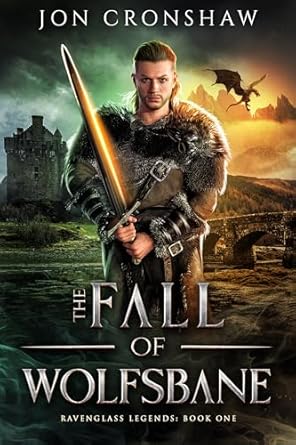
When the Ostreich Empire shatters his world and enslaves his people, Ragnar Wolfsbane vows to fight back.

Thrust into a dangerous game of imperial intrigue, Ragnar must learn to navigate a world of forbidden magic and hidden agendas.

But as the true power of ravenglass emerges, Ragnar’s choices could lead to salvation or ruin for those he holds dear.

Immerse yourself in a vivid fantasy realm where the lines between hero and villain blur.

Will Ragnar rise to become the leader his clan needs, or will the Empire’s machinations crush his resolve?

Find out in The Fall of Wolfsbane, a character-driven high fantasy novel.

get your copy.

The Marvellous Evolution of Magic Systems in Fantasy

Explore the captivating world of magic systems in fantasy literature. Understand their importance, varieties, evolution, and examples from renowned authors like Tolkien, Le Guin, and Sanderson.

Today, we’re going on a trip to the fantastical realm of magic systems in fantasy, the invisible scaffolding supporting the marvellous spectacles in our beloved enchanting tales.

As ubiquitous as a unicorn in a fairy tale, these systems are the heart and soul of many a fantastical narrative.

What is a Magic System?

A magic system is the set of rules that governs the use of magic in a fantasy world.

Yes, that’s right, even magic—seemingly the epitome of unregulated whimsy—has rules.

Magic systems dictate who can use magic, what they can and cannot do with it, and what consequences follow when they twirl their wand, click their ruby slippers, or utter cryptic phrases (which, for some reason, are often in Latin).

Why are Magic Systems Necessary?

You might ask, “Why bother with all these rules? Isn’t magic meant to be, well, magical?”

Magic systems are not an elaborate scheme to sap the fun out of wizards’ lives.

On the contrary, they give structure and believability to a world.

Imagine watching a Quidditch match where players can score a million points with a wave of their wand.

That would make for a rather short and dull game, wouldn’t it?

Simply put, restrictions breed creativity and tension.

They allow for plot twists, character growth, and most importantly, they keep us, the readers, at the edge of our seats.

After all, where would be the excitement if our hero could simply wave away every dragon, riddling sphinx, or marauding orc army with the flick of a wrist?

The Magical Spectrum: From Mystical to Scientific

Magic systems come in all shapes and sizes, from those shrouded in the mists of mystery to those laid out like a physics textbook.

On the one end of the spectrum, we have Mystical Magic Systems.

These are the systems that maintain an aura of mystery and capriciousness.

They function more like an art than a science, relying heavily on intuition, emotions, or the whims of magical entities.

Rules? Pah! These systems scoff at rules. They are as unpredictable as a box of kittens, and just as likely to change direction without notice.

At the other end, we have Scientific Magic Systems.

These systems have detailed rules and clear limitations.

They’re logical, predictable, and follow consistent principles, much like the laws of physics (well, if physics included spells and potions, of course).

They can make magic feel as commonplace as making a cup of tea, but when done right, they give a sense of realism to the fantastical.

They are to magic what an Ikea manual is to flat-pack furniture— demystifying, useful, but sometimes downright baffling.

Of course, most magic systems fall somewhere in between these two extremes.

They maintain an air of enigma while also keeping a tight leash on magical escapades.

The magic may be mysterious, but its application and limitations are usually well-defined.

In the end, the choice of magic system depends on what serves the story best.

Some tales benefit from the ethereal nature of a mystical system, while others require the rigour of a scientific system.

Just like a good cuppa, it’s all about personal taste and the right blend.

The Evolution of Magic Systems

Magic systems in fantasy literature have evolved from the grand, ambiguous power of the likes of Gandalf to the intricately detailed and logical systems seen in novels like Brandon Sanderson’s “Mistborn” series.

Tolkien’s Influence

In the beginning, there was Tolkien. Now, don’t get me wrong. I’m not implying that J.R.R. was the first to pen fantasy. But let’s face it, his influence on the genre is as immeasurable as the length of a hobbit’s second breakfast.

In “The Lord of the Rings,” magic is as elusive as a straight answer from a politician.

It’s more about a sense of wonder, a mystical force that surrounds wizards, elves, and enchanted objects.

Gandalf, our favourite wizard (sorry, Rincewind), seldom explains his power, and we wouldn’t have it any other way.

Le Guin’s True Names

Then, we have our good friend Ursula K. Le Guin, who introduced us to the wizard Ged in “A Wizard of Earthsea.”

Le Guin’s magic is based on the “True Names” of things.

It’s a bit like having a secret nickname for your toaster that, once uttered, can make it dance the cha-cha.

It’s a more systematic approach than Tolkien’s, yet it still retains a certain enigmatic quality.

Pratchett’s Colourful Chaos

Terry Pratchett took us in a completely different direction in his “Discworld” series.

In this flat world carried on the back of four elephants standing on a giant turtle (yes, you read that correctly), magic is a common and chaotic force, rather like trying to herd cats during a full moon.

Pratchett’s wizards spend more time trying to avoid magic, for fear of the unpredictable effects.

It’s like dealing with a highly caffeinated toddler—you never know what will happen, but it’s certain to be loud and potentially destructive.

The Wheel Turns

Now, let’s take a leap across the pond to our American friends. Robert Jordan’s “Wheel of Time” series presents us with a distinct magic system with a strong gender divide.

Women channel the ‘One Power’ far more safely than men, who risk madness and death.

It’s a bit like asking your partner to control the TV remote—sometimes it’s safer to just do it yourself.

Magic as Science

In more recent times, Brandon Sanderson has become the darling of logical magic systems.

His novels, particularly those in the “Mistborn” series, present magic as a science, with clear rules and limitations.

Sanderson’s “Allomancy” involves ingesting and “burning” different types of metal to gain specific powers.

It’s like a high-stakes version of choosing your breakfast cereal—each one gives you a different kind of boost.

The evolution of magic systems mirror our own changing understanding of the world.

As our knowledge has grown, so too has the complexity and logic of the magic in our favourite novels.

Yet, the sense of wonder remains.

After all, as Arthur C. Clarke said, “Any sufficiently advanced technology is indistinguishable from magic.”

Recommended Reads

Below you’ll find some books with unique magic systems from a range of fantasy sub-genres.

Whether you’re a fan of epic fantasy, or prefer your stories with vampires and werewolves, this list has something for you.

“Mistborn” by Brandon Sanderson

Starting us off, we have Brandon Sanderson’s “Mistborn” series. In this world, magic comes from ingesting bits of metal, a practice known as Allomancy. Better yet, if you can stomach a mix of various metals, you become a Mistborn, capable of wielding extraordinary power. If that’s not a unique take on “You are what you eat,” I don’t know what is.

“The Fifth Season” by N.K. Jemisin

Next, we find ourselves in the world of “The Fifth Season” by N.K. Jemisin. Here, magic is a force of nature, quite literally! The magic system, orogeny, allows certain individuals to manipulate thermal, kinetic, and related forms of energy to prevent and cause earthquakes. It’s like being a living, breathing weather app with the added bonus of earthquake alerts.

“Jonathan Strange & Mr Norrell” by Susanna Clarke

Susanna Clarke’s “Jonathan Strange & Mr Norrell” brings us a magic deeply rooted in British history and folklore, with a library’s worth of fictitious books about magic. It’s a beautifully intricate system where magic is more about knowledge, study, and the ability to argue with a straight face that the colour of your socks affects the potency of your spells.

“The Poppy War” by R.F. Kuang

With R.F. Kuang’s “The Poppy War,” we delve into a magic system inspired by Chinese history and myth. Shamanism allows individuals to access the power of gods, but it comes with a price. It’s a bit like renting your mind to a deity with questionable intentions. Remember to always read the terms and conditions before signing on the dotted line.

“A Darker Shade of Magic” by V.E. Schwab

In V.E. Schwab’s “A Darker Shade of Magic”, we find not one, but four Londons, each with a different relationship to magic. The catch? Only the rare Antari can travel between them. It’s like having a magical Oyster card with unlimited travel. Just mind the gap between Red London and White London!

“The Black Tides of Heaven” by JY Yang

JY Yang’s “The Black Tides of Heaven” presents us with the Tensorate series, where magic, or the Slack, is manipulated through a complex system of elemental sigils. It’s a world where gender fluidity is the norm and the magic system is about as simple as quantum physics.

“Storm Front” by Jim Butcher

If you prefer your magic with a side of detective work, Jim Butcher’s “Dresden Files” series, starting with “Storm Front,” is your cup of tea. Here, wizard Harry Dresden solves magical crimes in Chicago. Magic is as everyday as a cuppa, but with more fireballs. Just remember, don’t tick off the faeries!

“Who Fears Death” by Nnedi Okorafor

Nnedi Okorafor’s “Who Fears Death” gives us a post-apocalyptic Africa where magic is a deeply personal and transformative power. It’s a harrowing but captivating journey. Warning: this book may cause an existential crisis and a sudden urge to explore your own magical abilities.

“The Name of the Wind” by Patrick Rothfuss

In “The Name of the Wind”, Patrick Rothfuss gives us Sympathy, a magic system steeped in scientific principles. It’s the kind of magic system that would make Newton proud, if he wasn’t too busy being miffed about that apple.

“Assassin’s Apprentice” by Robin Hobb

Journeying into the realm of Robin Hobb’s Farseer trilogy, we find the Wit, a deeply intimate and often stigmatised form of magic. It grants the user a telepathic link with animals, lending an altogether different perspective on the phrase ‘walkies’. It’s like being Dr. Dolittle, but with more political intrigue and fewer dancing pushmi-pullyus. Just remember, while talking to your dog about the state of the kingdom, don’t forget his regular scratch behind the ears.