Why We Love Reluctant Assassins in Dark Fantasy

Discover why reluctant assassins captivate readers in dark fantasy. From Guild of Assassins to complex choices, explore how characters like Soren embody transformation, moral struggle, and the power of necessity over choice.

There’s something deeply compelling about watching someone become what they once despised.

The reluctant assassin – forced into darkness rather than born to it – speaks to our fears about what circumstances might make of us.

Perhaps this is why these characters grip us so powerfully.

They show us how anyone might walk darker paths, given the right push.

Soren’s Reluctant Transformation in Guild of Assassins

My novel Guild of Assassins explores this transformation through Soren’s journey from sculptor to killer.

What makes his path fascinating isn’t just the change itself, but how understandable each step becomes.

He begins seeking justice for his father’s murder, only to become the very thing he hunts.

Like the best reluctant assassins, his corruption comes through choices that feel inevitable rather than evil.

A Psychological Evolution We Can Believe

The psychological evolution grips us because it feels terrifyingly plausible.

When Soren learns to craft poisons from Tamasin, to dissect bodies with Quillon, to manipulate minds with Elysia, each new skill carries him further from who he was.

But we understand every step.

The hands that once created beauty learn to deal death not through choice but necessity.

Corruption Through Small Compromises

This speaks to something true about human nature.

Corruption often comes not through grand choices but through small compromises.

Each lesson mastered, each skill gained, each bit of humanity surrendered seems necessary in the moment.

Like watching a car crash in slow motion, we understand every decision even as we recognise where the path leads.

Training That Transforms Rather Than Corrupts

The guild training sequences particularly highlight this transformation.

Soren doesn’t embrace killing arts because he’s secretly bloodthirsty, but because survival demands it.

Each brutal lesson, each impossible choice, strips away another piece of who he was while adding another piece of who he’s becoming.

Like the best reluctant assassins, his change feels organic rather than sudden.

The Horror of Awareness

What makes these characters compelling isn’t their skill at killing but their awareness of what they’re losing.

When Soren realises his sculptor’s hands now deal death more often than create beauty, when he recognises how the guild has reshaped his perception, his horror mirrors our own.

Yet he continues because stopping feels impossible.

Friendship as Witness to Transformation

The relationship with Alaric adds another layer to this reluctant transformation.

Their friendship survives Soren’s darkness not because Alaric fails to see it, but because he understands its necessity.

Like the best reluctant assassin stories, it shows how corruption can be understood even by those who witness it.

Circumstance Over Choice

Perhaps most powerfully, these characters show us how circumstance rather than choice often shapes who we become.

Soren doesn’t choose to join the guild – he’s forced into it at blade-point.

Yet once on that path, each subsequent choice feels necessary rather than freely made.

Like the best reluctant assassins, his transformation comes through submission to reality rather than embrace of darkness.

The Threshing: Reluctance as Motivation

The Threshing sequence crystallises why these characters grip us.

When Soren faces Kierak, his victory comes not because he’s embraced being a killer, but because circumstances have forced him to become one.

His reluctance makes his capabilities more terrifying rather than less.

We understand how anyone might walk this path.

Exploring the Dark Potential in Us All

This reflects something profound about human nature.

That we’re all potentially capable of darkness given the right circumstances.

Through characters like Soren, we explore our own capacity for transformation, our own potential for becoming what we fear.

Their reluctance makes their change more relatable rather than less.

Transformation Beyond Simple Corruption

Yet these stories don’t present transformation as simple corruption.

Through Soren’s struggle to retain humanity, through his efforts to maintain connections despite darkness, we see how reluctant assassins often preserve something of themselves even as they change.

Their reluctance becomes their saving grace.

Why We’re Drawn to Reluctant Assassins

Maybe this is why we’re drawn to these characters.

They show us how darkness can claim anyone while suggesting that something of our original self might survive.

Through Soren’s journey, we explore not just how people become killers, but how they might retain humanity even after becoming one.

Reluctant Assassins and Our Potential for Transformation

In the end, reluctant assassins captivate us because they reflect our own potential for transformation.

Through characters like Soren, we examine how circumstance shapes identity, how necessity can reshape morality, how anyone might walk darker paths while struggling to remember lighter ones.

Your Thoughts on Reluctant Assassins

What reluctant assassin characters have most resonated with you?

How do you think they differ from characters who choose darker paths willingly?

Share your thoughts below.

Bravery vs. Desperation: A Look at Dark Fantasy Protagonists

Explore how dark fantasy heroes are shaped by desperation rather than traditional bravery. Through characters like Soren in Guild of Assassins, these stories reveal the raw survival instinct that defines dark fantasy protagonists.

Traditional fantasy celebrates heroic courage, choosing to face danger for noble causes.

But dark fantasy understands that sometimes what looks like bravery is really desperation.

That choices made with knives at our throats aren’t really choices at all.

This distinction creates protagonists who feel real precisely because their actions stem from necessity rather than nobility.

Soren’s Journey in Guild of Assassins

My novel Guild of Assassins explores this tension through Soren’s journey.

His initial pursuit of his father’s killer might seem brave.

But it’s really grief and rage driving him forward.

When Raz offers him the choice between joining the guild or death, his “decision” isn’t courage but survival instinct.

Like the best dark fantasy protagonists, his path is shaped more by desperate circumstances than heroic choices.

Psychological Complexity Born from Desperation

This creates a fascinating psychological complexity.

When Soren enters the guild’s training, he’s not volunteering for hardship.

He’s accepting it because the alternatives are worse.

Each skill learned, each compromise made, comes from necessity rather than choice.

Yet somehow, real courage emerges through these desperate acts.

Training as a Test of Desperation

Consider the training sequences.

Soren doesn’t face Varus’s brutality or master Tamasin’s poisons because he’s brave.

He does so because he must to survive.

Yet in choosing to endure rather than break, in maintaining his friendship with Alaric despite pressure to compete, he displays a different kind of courage.

One born from desperation rather than virtue.

Desperation Masquerading as Bravery

The distinction becomes clearest during the Threshing.

Soren and Alaric’s decision to stand together might seem brave.

But it’s really about refusing to face their darkness alone.

Their loyalty comes not from nobility but from a desperate need for human connection in an inhuman situation.

Like the best dark fantasy, it shows how something like courage can emerge from primal necessity.

Human Nature and Desperate Choices

This reflects something true about human nature.

That our most profound choices often come not from heroic intention but from desperate circumstance.

When Soren kills during the Threshing, it’s not bravery driving his blade but raw survival instinct.

Yet his choice to retain some humanity through loyalty, to not completely surrender to savagery, is where real courage emerges.

The Guild’s Method: Desperation Over Bravery

The guild masters understand this distinction.

They don’t try to inspire bravery in their students.

They create desperation through systematic pressure.

Each brutal lesson, each impossible choice, forces recruits to act from necessity rather than virtue.

Like the best dark fantasy institutions, they recognise that desperation shapes more reliable tools than courage.

Relationships Driven by Desperation

Even relationships reflect this dynamic.

Soren and Alaric’s friendship endures not because they’re brave enough to maintain it.

But because they’re desperate enough to need it.

Their loyalty comes from recognising their mutual need for human connection to survive the guild’s corruption.

It’s necessity masquerading as choice.

Desperation Forging a Different Kind of Courage

Perhaps most interestingly, these stories show how desperation can forge something stronger than simple bravery.

Through enduring impossible situations, through making choices with no good options, characters develop a harder kind of courage.

One born from surviving rather than choosing danger.

The Threshing as a Test of Forced Courage

The Threshing sequence crystallises this theme.

Soren and Alaric don’t fight Kierak because they’re brave.

They fight because they have no choice.

Yet in choosing how they fight – standing together, maintaining some fragment of humanity – they display a courage that emerges from rather than precedes their desperate circumstances.

The Profound Truth About Human Nature

This reflects something profound about human nature.

That our finest moments often come not from choosing to be brave.

But from refusing to break when circumstances force us to be.

Through characters like Soren, we explore how courage can emerge from cornered animals rather than willing heroes.

Why Dark Fantasy Protagonists Feel More Real

Maybe this is why dark fantasy protagonists feel more real than traditional heroes.

Their actions stem from relatable desperation rather than aspirational bravery.

When Soren kills, when he compromises his principles, when he betrays his former self, we understand because we recognise how desperation can reshape anyone.

True Courage Emerging from Desperation

Yet these stories don’t completely dismiss true courage.

Rather, they show how it can emerge from desperate circumstances rather than preceding them.

Through Soren’s journey, we see how enduring desperate situations, making impossible choices, and refusing to completely surrender humanity can forge a different kind of bravery.

Chosen vs. Forced Courage

In the end, perhaps the real distinction isn’t between bravery and desperation, but between chosen and forced courage.

Dark fantasy recognises that sometimes the most profound acts of bravery come not from choosing to face danger.

But from how we face the dangers we never chose.

Your Thoughts on Bravery and Desperation in Dark Fantasy

How do you think desperation differs from bravery in dark fantasy?

What examples have most powerfully explored this distinction for you?

Share your thoughts below.

The Role of Lost Innocence in Fantasy: A Dark Perspective

Explore how dark fantasy portrays lost innocence as a journey into maturity. Through characters like Soren in Guild of Assassins, these stories reveal the hard truths and compromises required to survive in harsh, unforgiving worlds.

The loss of innocence isn’t just a theme in dark fantasy.

It’s often the whole point.

These stories show us not just that innocence dies, but how it dies.

One compromise, one trauma, one impossible choice at a time.

Through characters forced to grow up too fast, we explore how harsh realities reshape those who face them.

Soren’s Journey in Guild of Assassins

My novel Guild of Assassins presents this transformation with brutal clarity through Soren’s journey.

He begins as a sculptor’s apprentice, someone who creates beauty from stone.

By the end, those same hands deal death instead of crafting art.

It’s a metamorphosis that feels inevitable precisely because each step away from innocence comes through understandable choices.

Becoming Conscious of One’s Own Darkness

What makes these stories resonate isn’t just the loss of innocence itself.

It’s watching characters become conscious of their own corruption.

When Soren masters Tamasin’s poisons or learns Elysia’s manipulation, he’s not just gaining skills.

He’s losing pieces of himself.

Like the best coming-of-age narratives in dark fantasy, it shows how awareness of one’s own darkness becomes part of growing up.

Training That Strips Away Innocence

The training sequences particularly highlight this evolution.

Each lesson strips away another layer of innocence while adding another capability.

Quillon teaches anatomy by making recruits dissect bodies, turning human beings into collections of vulnerabilities.

Varus breaks down resistance to violence through systematic brutality.

The physical training parallels psychological transformation.

Institutions That Shape Innocence Lost

But these stories recognise that lost innocence isn’t just about individual choices.

The guild itself represents how institutions systematically strip away innocence to create useful tools.

The masters don’t just teach skills; they reshape worldviews.

Like the best dark fantasy, it shows how systems are designed to break down and rebuild people.

Friendship Through the Loss of Innocence

The relationship between Soren and Alaric adds another layer to this theme.

Their friendship survives their loss of innocence, but it also enables it.

They help each other retain humanity while simultaneously supporting each other’s descent into darkness.

It’s a complex dynamic that shows how relationships evolve as innocence fades.

Gaining Darker Wisdom Through Lost Innocence

Perhaps most powerfully, these stories explore how lost innocence changes perception itself.

As Soren progresses through his training, he begins seeing the world differently.

People become targets.

Relationships become tactical advantages.

Violence becomes normal.

Like the best dark fantasy, it shows how losing innocence means gaining a darker kind of wisdom.

The Threshing as a Final Transformation

The Threshing sequence crystallises this theme.

It’s not just a test of survival but a final stripping away of innocence.

When Soren and Alaric face Kierak, they’re forced to become killers not just in theory but in practice.

Their transformation becomes complete through blood and necessity.

Gaining Wisdom Through Darkness

Yet these stories don’t present lost innocence as simple corruption.

There’s often a tragic wisdom gained through darkness.

When Soren finally confronts Kierak, his victory comes not just from physical capability but from understanding darker truths about survival and human nature.

Innocence is replaced by a harder kind of knowledge.

Growing Up Through Hard Truths

This reflects something true about growing up in any world.

Maturity often comes through losing comfortable illusions.

Dark fantasy just makes this process more explicit, more violent, more immediate.

Through characters like Soren, we explore how reality strips away innocence whether we’re ready or not.

Lost Innocence as a Survival Tool

The genre also recognises that lost innocence isn’t always tragic.

Sometimes it’s necessary for survival.

When Soren learns to kill, when he masters manipulation and deception, he’s gaining tools he needs to navigate his harsh reality.

Like the best dark fantasy, it shows how losing innocence can be a form of adaptation.

What Remains After Innocence is Lost

Perhaps most importantly, these stories explore what remains after innocence is lost.

Through Soren and Alaric’s enduring friendship, through small acts of loyalty in a brutal world, we see how some core of humanity can survive even as innocence dies.

These moments matter precisely because they’re chosen despite darkness, not in ignorance of it.

Why Stories of Lost Innocence Resonate

This is why stories of lost innocence in dark fantasy resonate so deeply.

They show us not just that growing up means losing illusions, but how that process shapes us.

Through characters like Soren, we explore how people adapt to harsh realities while struggling to retain something of themselves.

Your Thoughts on Lost Innocence in Dark Fantasy

How do you think dark fantasy’s treatment of lost innocence differs from other genres?

What stories have most powerfully explored this theme for you?

Share your thoughts below.

The Dark Mentor: How Tough Teachers Shape Fantasy Heroes

Discover how dark mentors shape fantasy protagonists through trauma and harsh lessons. From Guild of Assassins to Night Angel, modern fantasy explores how brutal training forges strength, testing heroes with tough choices and intense psychological challenges.

The wise, benevolent mentor figure is a fantasy staple.

Think Gandalf or Dumbledore.

But modern fantasy increasingly embraces darker mentors, those who shape protagonists through trauma rather than wisdom.

These harsh teachers don’t guide heroes toward the light.

They push them into darkness to forge them into something new.

Dark Mentorship in Guild of Assassins

My novel Guild of Assassins explores the concept of dark mentorship through its array of guild masters.

Each embodies a different shade of harsh instruction.

Varus breaks bodies with systematic brutality.

Quillon strips away humanity through clinical detachment.

Tamasin poisons minds as readily as bodies.

Elysia shapes souls through manipulation.

Together, they don’t just teach skills – they remake their students entirely.

The Devil’s Choice: Transformation Begins

This transformation begins with Raz, who offers Soren and Alaric a devil’s choice: join or die.

It’s a moment that exemplifies dark mentorship – not guidance freely given, but corruption imposed through impossible choices.

Like the best dark mentors, Raz doesn’t just teach; he forces fundamental transformation.

Trauma Bonds and Psychological Manipulation

The psychology behind these relationships fascinates because it mirrors real trauma bonds.

When Varus breaks his students then praises their recovery, when Tamasin poisons then provides antidotes, they create dependency through calculated abuse.

It’s reminiscent of how Durzo Blint shapes Azoth in the Night Angel trilogy or how the Pale Woman moulds Fitz in Robin Hobb’s works.

Cruelty That Proves Effective

What makes dark mentors compelling isn’t just their cruelty, but how their methods prove horrifyingly effective.

Each brutal lesson, each psychological breakdown, strips away weakness and builds capability.

When Soren faces the Threshing, it’s their harsh teachings that enable his survival.

Like the best dark mentors, they create strength through trauma.

Not Just Villains, But Professionals

But these relationships carry deeper complexity.

The guild masters aren’t cartoon villains revelling in cruelty.

They’re professionals practising tested methods.

Their brutality serves a purpose.

Even their abuse follows codes and traditions.

Like the best dark mentors, they believe in their methods’ necessity.

The Dark Truth About Mentorship

This reflects a darker truth about mentorship itself – that sometimes growth requires breaking.

When Quillon forces recruits to dissect bodies, when Elysia teaches them to manipulate emotions, they’re not just teaching skills but reshaping worldviews.

The best dark mentors don’t just instruct; they transform.

Mentorship as Part of a System

The institutional aspect adds another layer.

The guild masters don’t act alone but as part of a system designed to break and rebuild.

Their different approaches – physical, psychological, emotional – create a comprehensive transformation programme.

Like the best dark mentor narratives, it shows how institutions systematise trauma as a teaching tool.

Brutality That Achieves Results

Perhaps most disturbingly, these relationships often work.

Under the masters’ harsh tutelage, Soren develops capabilities he never imagined possible.

Each brutal lesson, each psychological wound, shapes him into something stronger.

Like the best dark mentors, they achieve results that justify their methods – at least in their own minds.

Conflicted Feelings Towards Mentors

This creates compelling psychological complexity.

Students often develop conflicted feelings toward their harsh teachers.

Hatred mixed with grudging respect, fear tangled with a desire for approval.

When Soren masters a lesson, when he earns rare praise, we understand both his pride and his shame at valuing a tormentor’s validation.

Dark Mentors as Mirrors for Protagonists

Dark mentors also serve as mirrors showing protagonists what they might become.

Each guild master represents a possible future for their students – different flavours of the monster they’re creating.

Like the best dark mentors, they force protagonists to confront uncomfortable truths about their own transformation.

Raising Uncomfortable Questions

These relationships raise uncomfortable questions.

Does the end justify the means?

Can positive change come through negative methods?

Is there wisdom in brutality?

Through characters like the guild masters, we explore how teaching and trauma intertwine, how growth can require destruction.

Why Dark Mentors Resonate

Perhaps this is why dark mentors resonate so deeply.

They acknowledge that real transformation often comes through pain rather than gentle guidance.

They show us that sometimes we must be broken to become stronger.

That wisdom can come wrapped in cruelty.

That growth often requires darkness.

Your Thoughts on Dark Mentors

Who are your favourite dark mentors in fantasy?

How do you think they differ from more traditional mentor figures?

Share your thoughts below.

Why Modern Fantasy Assassins Are More Complex Than Ever

Explore how assassins in fantasy have evolved from silent killers to complex characters. From Guild of Assassins to Nevernight, modern fantasy now delves into the psychology, institutions, and moral challenges behind the assassin’s path.

Fantasy’s love affair with assassins has come a long way from silent killers lurking in shadows.

Modern fantasy has transformed the archetype from simple dealer of death into something far more complex.

It’s now a lens through which we examine mortality, morality, and the price of power.

Guild of Assassins: A Perfect Example of Evolution

My novel Guild of Assassins represents this evolution perfectly.

When Soren enters the guild, he encounters not just killers, but professionals practising a dark craft.

Each master embodies different aspects of the trade.

Varus demonstrates martial prowess, Tamasin teaches the poisoner’s art, Quillon embodies clinical precision, and Elysia masters manipulation.

Like the best modern assassin fantasy, it presents killing as a multifaceted discipline requiring both physical and psychological transformation.

Shifting Away from Traditional Fantasy Assassins

This marks a significant shift from traditional fantasy assassins, who often relied on almost supernatural stealth and combat abilities.

Think of Fritz Leiber’s Gray Mouser or early D&D representations – assassins as merely thieves with deadly skills.

Modern fantasy recognises that killing is as much about psychology as it is about physical capability.

The Lineage of the Assassin Archetype

The evolution becomes clear when we trace the lineage of assassin characters.

Early works like Raymond E. Feist’s Assassin’s Apprentice began exploring the psychological toll of killing.

Brent Weeks’ Night Angel trilogy expanded this by examining how institutions shape killers.

Jay Kristoff’s Nevernight delved deep into the culture and philosophy of assassination.

Each iteration added layers of complexity to the archetype.

Assassins: Made, Not Born

Guild of Assassins continues this trend by focusing on how killers are made rather than born.

Through Soren’s training, we see how ordinary people become extraordinary killers through systematic breaking and rebuilding.

Each lesson strips away another piece of humanity while adding another lethal capability.

It’s a transformation that feels horrifyingly plausible.

Killing as a Transformation of Perception

Modern assassin fantasy also recognises that killing isn’t just about the act itself.

When Soren learns from Tamasin about poisons or studies manipulation with Elysia, he’s not just gaining skills.

He’s entering a different way of seeing the world.

Like the best contemporary takes on assassins, the story shows how the craft reshapes perception itself.

Complex Assassin Institutions

This complexity extends to institutions.

Gone are the days of lone killers operating in shadows.

Modern fantasy presents assassins’ guilds as complex organisations with their own cultures, traditions, and moral codes.

The guild in Guild of Assassins feels real precisely because it has bureaucracy, politics, and internal conflicts alongside its deadly arts.

Training Beyond Physical Skills

The training sequences particularly highlight this evolution.

Earlier fantasy might have focused purely on physical skills – weapon mastery, stealth, poison craft.

Modern takes recognise that creating killers requires psychological conditioning.

The guild doesn’t just teach Soren how to kill; it teaches him to see killing as natural.

Evolving Relationships Among Assassins

Relationships between assassins have evolved too.

Where once they might have been depicted as lone wolves, modern fantasy explores how killers form bonds.

Soren and Alaric’s friendship, the complex dynamics between recruits, and the master-apprentice relationships all show how human connections persist even in inhuman professions.

Exploring Deeper Themes Beyond Technique

Perhaps most significantly, modern assassin fantasy has moved beyond simple questions of technique to explore deeper themes.

Through Soren’s journey, we examine how violence transforms its practitioners.

We see how institutions normalise atrocity and how survival demands moral compromise.

The assassination becomes a metaphor rather than a mere plot device.

The Threshing: A Crucible for Transformation

The Threshing sequence demonstrates this perfectly.

It’s not just a test of killing skill but a crucible that forces characters to confront what they’ve become.

Like the best modern assassin fantasy, it uses violence to illuminate character rather than simply advance plot.

Broader Changes in Fantasy Literature

This evolution reflects broader changes in fantasy literature.

As the genre has matured, it’s moved from simple adventure stories to complex examinations of human nature.

Assassins have evolved from plot devices into vehicles for exploring fundamental questions about mortality, morality, and the human capacity for transformation.

The Primal Appeal of Assassin Stories

Yet something primal still draws us to assassin stories.

Perhaps because they embody both power and price – the ability to reshape reality through death, but only at the cost of one’s humanity.

Modern fantasy simply makes this exchange more explicit, more psychological, more real.

Guild of Assassins and the Future of Assassin Tropes

Guild of Assassins shows where the trope might go next.

Deeper into institutions, deeper into psychology, deeper into the fundamental questions of what it means to kill professionally.

It suggests that assassin fantasy’s evolution isn’t complete but is continuing into ever more complex territory.

Your Thoughts

How do you think assassin tropes in fantasy have changed over time?

What’s your favourite take on fantasy assassins?

Share your thoughts below.

Battle Royale in Fantasy: Why Survival Contests Grip Our Imagination

Explore why survival contests in fantasy stories captivate us. From the Threshing in Guild of Assassins to The Hunger Games, discover how these battles reveal human nature, challenge morality, and satisfy our darker curiosities.

There’s something primitively compelling about survival contests in fantasy.

Strip away society’s rules, force characters to fight to the death, and we can’t look away.

But why?

What makes sequences like the Threshing in my novel Guild of Assassins so gripping isn’t just the violence – it’s what these contests reveal about human nature.

The Structure of Survival Contests

Consider how the Threshing is structured.

Ten recruits are trapped on a derelict ship, forced to kill until only two remain.

It’s a premise we’ve seen before – from The Hunger Games to Battle Royale – yet it continues to captivate.

Perhaps it’s because it strips away civilisation’s veneer to reveal what lies beneath.

The Psychological Horror of Survival Contests

The psychological horror of the Threshing comes not from the violence itself but from watching characters we’ve grown to know face impossible choices.

Soren and Alaric’s decision to stand together rather than turn on each other becomes powerful precisely because we understand the cost.

Every moment of loyalty is bought with blood.

Character Growth Under Extreme Pressure

These contests work because they force character growth through extreme pressure.

When Soren confronts Kierak during the Threshing, it’s not just a physical battle but the culmination of his transformation.

The person who steps off that ship isn’t the same one who boarded it.

Like the best survival contests, the Threshing shapes its participants irreversibly.

Examining Primal Questions from a Safe Distance

But there’s another layer to our fascination.

These scenarios let us explore primal questions from a safe distance.

What would we do to survive?

How far would we go?

Would we maintain our humanity or embrace savagery?

Through characters like Soren, we can examine these uncomfortable questions without having to actually face them.

The Role of Isolation in Survival Contests

The setting itself becomes crucial.

The derelict ship creates perfect isolation – no escape, no outside help, no rules except survival.

Like the arena in The Hunger Games or the island in Battle Royale, it becomes a microcosm where society’s laws no longer apply.

This isolation forces characters to reveal their true nature.

Testing Loyalty as Well as Combat Skill

Yet the best survival contests aren’t just about physical prowess.

The Threshing works because it tests loyalty as much as combat skill.

When Soren and Alaric face their final confrontation with Kierak, their victory comes not just from fighting ability but from their choice to stand together.

The contest reveals character through choices, not just action.

Controlled Violence as a Tool of Transformation

These scenarios also expose how institutions use controlled violence to shape their members.

The guild doesn’t just want survivors – it wants killers who’ve proven themselves through blood.

Like the best survival contests in fantasy, the Threshing serves as both test and transformation.

It’s not just about who lives, but what they become.

The Psychological Elements That Keep Us Hooked

The psychological elements grip us most.

Watching alliances form and break, seeing how different characters handle extreme pressure, observing how survival instincts war with moral principles – these human elements make the violence meaningful rather than gratuitous.

We’re not just watching people fight; we’re watching them choose who they become.

Forced Moral Compromises

Perhaps most compelling is how these contests force moral compromise.

When Soren kills during the Threshing, each death marks another step away from who he was.

Like the best survival scenarios, it shows how circumstance can make monsters of anyone.

The real horror isn’t the violence but how understandable each choice becomes.

Why Survival Contests Fascinate Us

This is why survival contests continue to grip our imagination.

They’re not just about action or violence – they’re about human nature under extreme pressure.

Through scenarios like the Threshing, we explore fundamental questions about survival, morality, and what we’d be willing to sacrifice when pushed to our limits.

Satisfying Darker Curiosities

They also satisfy something darker in our psyche – the part that wonders how we’d fare in such a contest.

Would we be Soren, maintaining some fragment of humanity through loyalty?

Or would we become Kierak, embracing brutality as a means of survival?

The answers may disturb us, but the questions fascinate nonetheless.

Survival Contests and Primal Human Nature

In the end, survival contests endure in fantasy because they speak to something primal in human nature.

They strip away civilisation’s constraints to reveal what lies beneath.

Through characters like Soren and Alaric, we explore our own capacity for both nobility and savagery when survival demands choosing between them.

Your Thoughts

What are your favourite survival contests in fantasy?

How do you think they illuminate human nature?

Share your thoughts below.

Lessons for Fantasy Writers from Dostoevsky’s Crime and Punishment

Discover how Dostoevsky’s ‘Crime and Punishment’ offers invaluable lessons for fantasy writers, from complex character development to using moral ambiguities, enhancing settings, and effective dialogue to elevate your fantasy narratives.

Fyodor Dostoevsky’s “Crime and Punishment” is a towering masterpiece of literature.

While it might seem an unconventional choice for fantasy writers, the novel’s exploration of complex themes and its intense focus on character development offer valuable lessons for crafting compelling fantasy narratives that resonate with readers on multiple levels.

Examining Moral Ambiguities

At the heart of “Crime and Punishment” is the story of Raskolnikov.

He is a former student who believes himself above the law and capable of committing a crime for a greater good.

The novel painstakingly explores the moral and psychological repercussions of his actions, providing an in-depth examination of the grey areas of morality.

Lesson: Fantasy writers can similarly challenge their characters with moral dilemmas that test their beliefs and values.

By placing characters in situations where the right choice is not clear-cut, or where the decision could have profound personal and societal repercussions, writers can add depth to their narratives.

This engages readers in complex ethical questions.

The Importance of Setting as Character

Dostoevsky’s St. Petersburg is almost a character in its own right.

It reflects Raskolnikov’s turmoil and the societal conditions that influence his actions.

The oppressive atmosphere of the city, with its stifling heat and cramped, maze-like streets, mirrors the protagonist’s mental state.

It serves as a constant reminder of his isolation and paranoia.

Lesson: In fantasy writing, the setting should do more than just provide a backdrop for action.

It should actively reflect and enhance the themes and emotions of the narrative.

Whether it’s a sprawling city or a secluded magical forest, the environment can be used to mirror the internal conflicts of characters and to heighten the narrative tension.

The Psychological Complexity of Characters

Dostoevsky is a master of psychological realism.

“Crime and Punishment” is a profound exploration of the human psyche.

Raskolnikov’s complex motives, his fluctuating mental state, and his interactions with other characters provide a rich study of human psychology.

Lesson: Fantasy authors should strive to create characters with similar psychological complexity.

Characters should have clear motivations, fears, and desires that drive their actions and interactions.

This depth makes characters more relatable and their journeys more compelling, thereby enhancing the reader’s investment in the story.

Use of Foil Characters

“Crime and Punishment” features several characters that act as foils to Raskolnikov.

This includes the saintly Sonya, whose compassion contrasts sharply with his nihilism.

These characters highlight different facets of the protagonist’s personality.

They help explore the novel’s themes from various angles.

Lesson: Fantasy authors can effectively use foil characters to highlight and contrast the central themes of their stories.

By creating characters that embody opposing traits or ideologies, writers can explore the central conflicts of their narrative more fully and add layers of meaning to their work.

The Role of Dialogue in Unveiling Themes

Much of the philosophical and ethical exploration in “Crime and Punishment” occurs through dialogue.

This allows characters to voice different viewpoints and clash over key issues.

This interaction is crucial for unpacking the novel’s complex themes.

Lesson: Effective use of dialogue in fantasy can serve a similar purpose.

Rather than relying on narrative exposition, authors can use conversations to reveal character motivations, build the world, and address the story’s deeper themes.

Dialogue can be a dynamic tool for advancing the plot while also fleshing out the philosophical and moral underpinnings of the story.

Beyond the Fantasy Genre

Crime and Punishment” provides a blueprint for how deep psychological insight and moral complexity can elevate a narrative.

Fantasy writers looking to enrich their stories can draw from Dostoevsky’s approach to create novels that are not only engaging and imaginative but also profoundly resonant.

By integrating these lessons into their work, fantasy authors can craft stories that captivate the mind and stir the soul, much like Dostoevsky’s enduring classic.

The Unconventional Hero of The Land: Thomas Covenant’s Legacy

Explore the groundbreaking impact of Stephen Donaldson’s “Thomas Covenant” series in fantasy literature. Discover how its unconventional hero and exploration of moral ambiguity and unbelief challenged and reshaped the conventions of the fantasy genre.

In the annals of fantasy literature, where heroes are typically as shiny and flawless as a knight’s armour, Stephen Donaldson’s “Thomas Covenant” series sticks out like a sore thumb – a leprous, cynical sore thumb.

Here comes Covenant, a man as unlikely a hero as a goblin at a fairy tea party, thrust into a fantastical world that he stubbornly refuses to believe in, even as it believes in him.

An Unheroic Hero: Flipping the Fantasy Script

Donaldson didn’t just create a protagonist; he lobbed a grenade into the cosy, comfortable lap of fantasy heroism.

Thomas Covenant is bitter, broken, and about as heroic as a wet weekend in Wales.

His arrival in the Land, a realm brimming with magic and wonder, is met not with valiant quests but with disbelief and despair.

Donaldson challenged the very notion of what a fantasy hero could be, giving readers a protagonist who was as relatable as he was frustrating.

The Power of Unbelief: A New Kind of Magic

In a genre where belief is often the key to magical powers and happy endings, Donaldson’s Covenant wields the power of unbelief.

His stubborn refusal to accept the reality of the Land becomes his strength, a curious inversion of the typical fantasy narrative where belief is the hero’s greatest weapon.

Donaldson asks the question: what happens when the chosen one refuses to choose?

Complex Moral Ambiguities: No Black and White Here

Donaldson’s series is as much a foray into moral ambiguity as it is into fantasy.

Covenant’s actions and decisions are not clear-cut; they are mired in shades of grey, forcing readers to grapple with the uncomfortable complexities of his character.

This is no tale of good versus evil; it’s a tale of human versus self, a journey into the darker recesses of the soul.

Influence on the Genre: The Anti-Hero Trendsetter

The “Thomas Covenant” series set a precedent for complex, morally ambiguous protagonists in fantasy.

It paved the way for a generation of anti-heroes, characters who defy the traditional mould of the noble, self-sacrificing hero.

In the wake of Covenant, fantasy became a playground for exploring the nuances of character and the inner conflicts that drive us.

The Lasting Legacy of Unbelief

Stephen Donaldson’s “Thomas Covenant” series is a landmark in fantasy literature, not just for its unconventional hero, but for its deep dive into the complexities of the human psyche.

Covenant’s journey through disbelief and despair, set against the backdrop of a richly imagined world, challenged readers to rethink what fantasy could be.

The series stands as a testament to the genre’s capacity for innovation and introspection, proving that sometimes, the most powerful magic lies in the murky waters of the human heart.

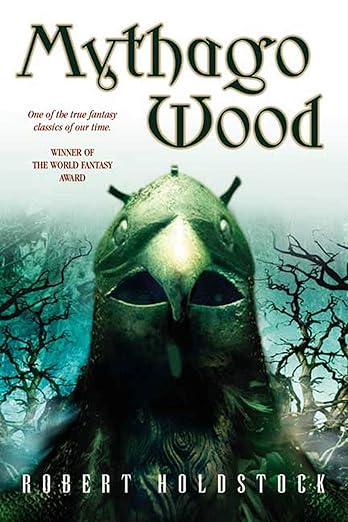
The Enduring Influence of “Mythago Wood” on Contemporary Fantasy

Discover the enchanting forest of “Mythago Wood,” where Robert Holdstock masterfully blends ancient myths with deep psychological themes. Explore a fantasy world where the lines between reality and legend blur, offering a unique and captivating reading experience that delves deep into the human psyche.

In the often neatly trimmed garden of fantasy literature, Robert Holdstock’s “Mythago Wood” series sprouted like a wild, untamed thicket, refusing to be pruned.

With its blend of ancient myth and psychological exploration, Holdstock didn’t just write a fantasy series; he dug down to the very roots of mythology and gave them a good, hard tug, unsettling more than a few earthworms in the process.

A Wood Not Just Haunted, But Alive

Holdstock’s Mythago Wood was no ordinary forest.

It was a place where myths and legends took physical form, sprouting from the collective unconscious like some sort of Freudian shrubbery.

This concept of a living, breathing woodland where heroes and monsters of legend roamed was as groundbreaking as it was eerie.

Gone were the typical castles and dragons; here was a forest where taking a wrong turn could mean coming face to face with a legend – and not all legends are particularly friendly.

Blurring Realities: Where Psyche Meets Myth

The genius of “Mythago Wood” lay in its blurring of the lines between psychological reality and mythical archetype.

Holdstock wove a narrative where personal traumas and family dynamics were entangled with the myths emerging from the wood.

This interplay between the personal and the mythical added a layer of complexity to the fantasy genre, exploring themes that went beyond the standard fare of quests and sword fights.

The Echoes Through Modern Fantasy

The influence of Holdstock’s work can be seen in the way modern fantasy often intertwines the deeply personal with the grandly mythical.

His exploration of ancient myths in a contemporary setting paved the way for works that delve into the psychological underpinnings of folklore and legend.

Authors like Neil Gaiman, with his blend of myth and modernity, owe a nod to the trails blazed by Mythago Wood.

Legacy: A Forest of Imagination

“Mythago Wood” remains a towering oak in the forest of fantasy literature.

Its legacy is found in its innovative approach to myth and psychology, its richly layered narrative, and its reimagining of what a fantasy setting can be.

Holdstock showed us that the oldest stories might be sleeping right beneath our feet, waiting to sprout forth in unexpected and sometimes unsettling ways.

CA Woodland Walk Like No Other

Robert Holdstock’s “Mythago Wood” invites us on a woodland walk that takes us deep into the heart of myth and psyche.

In its shadowed glades and dappled clearings, we encounter not just the stuff of legends but the very essence of storytelling itself.

Mythago Wood continues to inspire and challenge, a wild forest in the landscape of fantasy literature, where the myths are real and the reality is mythic.