Nobledark: Balancing Grimdark Nihilism and Noble Bright Hope

Explore the contrasting worlds of Grimdark and Noble Bright in modern fantasy. Discover how these extreme genres, along with Nobledark and Grimbright, create complex, engaging stories where the lines between good and evil are constantly shifting.

In the vast landscape of modern fantasy, readers find themselves navigating between two rather extreme realms.

Grimdark and Noble Bright.

It’s a bit like choosing between spending a weekend in a haunted mansion or at a blissful monastery.

Both have their appeal, depending on your taste for misery or calm.

But what happens when you want a bit of both?

That’s where the delicate balance of modern fantasy comes in.

Where the lines blur, and things get interesting.

And by “interesting,” I mean positively bleak, yet with just a glimmer of hope.

Grimdark: Where Happiness Goes to Die

Grimdark is the literary equivalent of being handed a bouquet of roses only to realise the stems are covered in thorns.

And the roses?

They’re probably poisonous.

Here, the world is a grim place, the characters are darker than a moonless night, and the only thing lower than the protagonist’s moral compass is their life expectancy.

In a Grimdark setting, you don’t just survive; you endure.

And usually with a substantial amount of collateral damage.

But what is it that makes Grimdark so appealing?

Is it the promise of a story where absolutely no one is safe?

Or is it the joy of watching characters you’ve come to love spiral into madness, corruption, or worse—politics?

Perhaps it’s the satisfaction of seeing that, no matter how bad your day has been, at least you’re not caught in a never-ending cycle of betrayal, violence, and despair.

There’s a certain catharsis in that.

A grim reminder that things could always be worse—so much worse.

Noble Bright: Sunshine and Rainbows (But Don’t Forget the Sword)

On the opposite end of the spectrum, we have Noble Bright.

Here, the heroes are heroic, the villains are villainous, and the world is—dare I say it?—a decent place to live.

In this setting, good deeds are rewarded, evil is punished, and the characters have the kind of unwavering moral compasses that would make a saint blush.

It’s a world where you can rest easy knowing that everything will turn out fine.

And if it doesn’t, it’s because you’ve wandered into a different genre.

Noble Bright offers readers an escape to a world where hope is not just a distant dream, but a tangible reality.

It’s the kind of place where you can believe in happy endings, even if you’ve just seen the hero’s best friend impaled on a lance.

Because in Noble Bright, good ultimately prevails, no matter the odds.

And while that may sound a bit too saccharine for some, there’s something to be said for a world where the darkness never quite snuffs out the light.

Nobledark: The Tragic Hero’s Dilemma

Now, let’s talk about Nobledark, the lovechild of Grimdark and Noble Bright, and my personal favourite flavour of fantasy.

Nobledark is the sweet spot where flawed heroes—who are not entirely unlike your average tax accountant—struggle to hold onto their moral compass in a world that’s just waiting for them to fail.

Here, the world is brutal, harsh, and unforgiving.

But our heroes cling to their ideals like a sailor clings to a life raft in a storm.

They know the world is dark.

But that doesn’t stop them from trying to make it a little less so.

In a Nobledark setting, you won’t find your characters smiling much.

But when they do, it’s probably because they’ve done something incredibly brave, incredibly stupid, or both.

This is the fantasy of reluctant heroes, where doing the right thing often comes at a terrible cost.

And where the path to victory is paved with difficult choices and broken dreams.

But despite the overwhelming odds, these characters don’t give up.

They fight, they bleed, and they endure.

Not because they believe they’ll succeed, but because they believe it’s worth trying.

Grimbright: Utopia with a Dark Twist

And then there’s Grimbright, where the world itself is a utopia—clean streets, happy citizens, probably an excellent public transport system.

But the protagonist?

They’re the type who’d pickpocket a beggar and sell their grandmother’s wedding ring for a quick profit.

Grimbright is where you get all the shiny, perfect settings of Noble Bright.

But with a protagonist who’s about as trustworthy as a politician at election time.

The result is a deliciously twisted narrative where the anti-hero thrives in a world that doesn’t deserve them.

Or maybe they’re exactly what it deserves.

Grimbright subverts the traditional expectations of both utopian settings and anti-heroes.

It’s a world where everything looks perfect on the surface, but there’s always a dark undercurrent.

Often driven by the protagonist’s less-than-honourable intentions.

This genre appeals to those who like their fantasy with a side of cynicism.

Where the world may be bright, but the characters are anything but.

Finding the Balance

So, where does modern fantasy sit in all of this?

The truth is, the best stories often find a balance between these extremes.

Readers today are drawn to complexity, to worlds that aren’t entirely hopeless but aren’t sparkling with blind optimism either.

They want heroes who aren’t infallible.

But who try their damnedest to do what’s right, even when the right thing isn’t clear—or easy.

In a world that often feels like it’s teetering between chaos and calm, it’s no wonder that readers gravitate towards fantasy that reflects this delicate balance.

Nobledark, with its flawed heroes and brutal worlds, offers the perfect blend of hope and despair.

It’s a reminder that while the world may be a dark and terrible place, it’s the fight to make it better that truly matters.

And if you happen to take a few arrows to the knee along the way?

Well, at least you’re in good company.

Conclusion: Choose Your Poison

In the end, whether you prefer the bleak nihilism of Grimdark, the radiant hope of Noble Bright, or the grim determination of Nobledark, there’s a place for everyone in modern fantasy.

It’s a genre that thrives on diversity.

Where the lines between good and evil, light and dark, are constantly shifting.

So choose your poison wisely.

Or, better yet, sample a bit of everything.

After all, in the world of fantasy, it’s not about finding the light at the end of the tunnel.

It’s about enjoying the journey through the darkness, even if you stumble a few times along the way.

Just remember to bring a torch.

And maybe a sword.

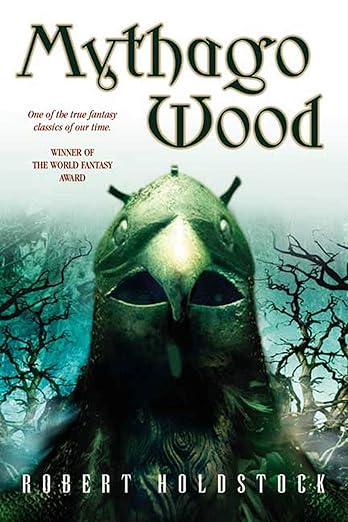
The Enduring Influence of “Mythago Wood” on Contemporary Fantasy

Discover the enchanting forest of “Mythago Wood,” where Robert Holdstock masterfully blends ancient myths with deep psychological themes. Explore a fantasy world where the lines between reality and legend blur, offering a unique and captivating reading experience that delves deep into the human psyche.

In the often neatly trimmed garden of fantasy literature, Robert Holdstock’s “Mythago Wood” series sprouted like a wild, untamed thicket, refusing to be pruned.

With its blend of ancient myth and psychological exploration, Holdstock didn’t just write a fantasy series; he dug down to the very roots of mythology and gave them a good, hard tug, unsettling more than a few earthworms in the process.

A Wood Not Just Haunted, But Alive

Holdstock’s Mythago Wood was no ordinary forest.

It was a place where myths and legends took physical form, sprouting from the collective unconscious like some sort of Freudian shrubbery.

This concept of a living, breathing woodland where heroes and monsters of legend roamed was as groundbreaking as it was eerie.

Gone were the typical castles and dragons; here was a forest where taking a wrong turn could mean coming face to face with a legend – and not all legends are particularly friendly.

Blurring Realities: Where Psyche Meets Myth

The genius of “Mythago Wood” lay in its blurring of the lines between psychological reality and mythical archetype.

Holdstock wove a narrative where personal traumas and family dynamics were entangled with the myths emerging from the wood.

This interplay between the personal and the mythical added a layer of complexity to the fantasy genre, exploring themes that went beyond the standard fare of quests and sword fights.

The Echoes Through Modern Fantasy

The influence of Holdstock’s work can be seen in the way modern fantasy often intertwines the deeply personal with the grandly mythical.

His exploration of ancient myths in a contemporary setting paved the way for works that delve into the psychological underpinnings of folklore and legend.

Authors like Neil Gaiman, with his blend of myth and modernity, owe a nod to the trails blazed by Mythago Wood.

Legacy: A Forest of Imagination

“Mythago Wood” remains a towering oak in the forest of fantasy literature.

Its legacy is found in its innovative approach to myth and psychology, its richly layered narrative, and its reimagining of what a fantasy setting can be.

Holdstock showed us that the oldest stories might be sleeping right beneath our feet, waiting to sprout forth in unexpected and sometimes unsettling ways.

CA Woodland Walk Like No Other

Robert Holdstock’s “Mythago Wood” invites us on a woodland walk that takes us deep into the heart of myth and psyche.

In its shadowed glades and dappled clearings, we encounter not just the stuff of legends but the very essence of storytelling itself.

Mythago Wood continues to inspire and challenge, a wild forest in the landscape of fantasy literature, where the myths are real and the reality is mythic.

From Mead Halls to Magic: Beowulf’s Timeless Influence on Fantasy Literature

Explore the legendary saga of ‘Beowulf’ and its profound influence on fantasy literature. Discover how this ancient epic has shaped heroes, villains, and narratives in modern fantasy, echoing through time to inspire a genre rich in mythic tales and legendary adventures.

In the shadowed, fire-lit mead halls of fantasy literature, where heroes and monsters clash in tales as old as time, one epic stands as a towering figure: “Beowulf.”

This ancient Anglo-Saxon poem, recounting the deeds of its eponymous hero against the monstrous Grendel, his mother, and a dragon, has resonated through the ages, weaving its way into the very fabric of modern fantasy.

Let’s don our mail shirts and delve into the dragon’s lair to explore how “Beowulf” has shaped the genre we love.

A Hero’s Tale: The Story of Beowulf

Before we embark, a quick refresher for those who haven’t recently set foot in Geatland.

“Beowulf” is the tale of a hero who comes to the aid of Hrothgar, the king of the Danes, whose great hall is under attack by the monstrous Grendel.

After slaying Grendel and later his vengeful mother, Beowulf returns home to become king of the Geats, eventually meeting his end in battle with a dragon.

The Archetypal Hero: Beowulf’s Legacy

Beowulf is the quintessential hero – brave, strong, and honorable – and his story lays the groundwork for the archetypal fantasy hero.

From Tolkien’s Aragorn to George R.R. Martin’s Jon Snow, echoes of Beowulf resound in characters who face overwhelming odds and monstrous adversaries with courage and strength.

Monsters and Dragons: A Bestiary’s Origin

“Beowulf” is rich with monstrous figures, from Grendel and his mother to the fire-breathing dragon.

These creatures have become staples in fantasy literature, inspiring the creation of countless literary beasts and villains.

The poem serves as a reminder that our fascination with the monstrous and the otherworldly is as ancient as storytelling itself.

The Hero’s Journey: Beowulf’s Narrative Influence

The narrative structure of “Beowulf,” with its themes of heroism, monster-slaying, and the fight against inevitable decline and death, has influenced countless fantasy stories.

The epic’s blend of action, adventure, and introspection has become a template for the fantasy genre, guiding authors in their creation of compelling, resonant narratives.

A Dark and Ancient World: Setting the Scene

The world of “Beowulf,” with its dark, foreboding landscapes and its mead halls echoing with song and story, has influenced the settings of many fantasy novels.

This atmospheric backdrop has inspired authors to create worlds that are rich in history and lore, imbued with a sense of age and mystery.

The Moral Landscape: Good vs. Evil

The battle between good and evil is central to “Beowulf,” and this theme has remained a cornerstone of fantasy literature.

The epic’s portrayal of Beowulf as a virtuous hero battling against dark, malevolent forces has shaped the moral landscape of the fantasy genre, reinforcing the timeless appeal of the struggle between light and darkness.

The Enduring Echoes of Beowulf

“Beowulf” has left an indelible mark on the world of fantasy literature.

Its themes, characters, and narrative structure have become integral to the genre, inspiring generations of writers and readers alike.

In the realm of fantasy, where heroes embark on epic quests and face fearsome foes, the spirit of “Beowulf” lives on, as powerful and resonant as it was in the smoky mead halls of yore.

In this ancient epic, we find the roots of the stories we continue to tell and cherish – tales of heroism, adventure, and the eternal battle between good and evil.

Fall of Wolfsbane by Jon Cronshaw (Ravenglass Legends, book 1)

Winter in Fantasy: A Chillingly Enthralling Narrative

Explore how winter shapes narratives in fantasy literature, featuring Game of Thrones, Narnia, and Hogfather, with a touch of dark humour.

In the realm of fantasy literature, winter isn’t just a season; it’s a character, an antagonist, and sometimes, a stark (no pun intended) reminder that nature often has the upper hand.

From the ominous winters of “A Game of Thrones” to the eternal snows of “The Chronicles of Narnia” and the uniquely humorous yet poignant “Hogfather,” winter in fantasy books is as evocative as it is chillingly symbolic.

Let’s wrap up warm and explore how this frosty season weaves its magic in literature as is only appropriate when discussing endless nights and icy landscapes.

A Song of Ice and Fire: When Winter is Coming (Eventually)

In George R.R. Martin’s “A Some of Ice and Fire,” winter is less a season and more a looming existential threat, much like the in-laws arriving for Christmas.

The Stark family’s motto, “Winter is Coming,” serves as a constant, ominous reminder of the harsh, unforgiving landscape and the even more unforgiving human nature.

In Westeros, winter symbolises the brutal struggles for survival and power.

It’s a time when the line between life and death becomes as thin as the ice upon which one might foolishly decide to dance.

The Chronicles of Narnia: Eternal Winter, No Christmas

C.S. Lewis’s Narnia, under the White Witch’s rule, is a land where it’s “always winter but never Christmas.”

Talk about adding insult to injury.

This eternal winter represents a loss of hope and joy, a spell that needs breaking. It’s a world waiting for a thaw, both literally and metaphorically. The

Pevensie children’s arrival marks the beginning of this end, much like finding a long-lost pair of warm socks just when you need them.

Hogfather: Winter with a Terry Pratchett Twist

Terry Pratchett’s “Hogfather” takes the concept of winter in fantasy and turns it on its head, then gives it a gentle push down a snowy hill.

In the Discworld, the Hogfather (the equivalent of Father Christmas) is missing, and with him, the essence of the season. Here, winter is a time of belief, of the power of myths and stories.

It’s a season that balances the fine line between light-hearted celebration and the darker aspects of folklore.

Pratchett’s winter is a reminder that sometimes, even in the coldest of times, a bit of belief can go a long way in keeping the darkness at bay.

Winter in Fantasy: More Than Just a Setting

In these works, winter is more than a backdrop; it’s a catalyst for change.

It tests characters, shapes narratives, and often symbolises the hardships and challenges that must be overcome.

Winter in fantasy embodies the struggle against seemingly insurmountable odds, the fight for survival in the harshest of times, and occasionally, the dark humour in acknowledging that sometimes, life is indeed as unpredictable as a snowstorm in July.

So, as we close this frostbitten chapter, let’s acknowledge that winter in fantasy literature is as varied and deep as the snowdrifts in Narnia.

It can be a looming threat, a spell to be broken, or a time of belief and magic.

One thing is certain, though: when winter falls in these fantastical worlds, it brings with it a narrative chill that is as compelling as it is cold.

Just remember, when exploring these icy literary landscapes, it’s always wise to keep a cup of hot cocoa at hand – and perhaps a sword, just in case.