This week, I finished outlining RAF Dragon Corps Book 3 and wrote the first chapter, officially kicking off the next stage of the series.
This instalment takes the story into the Battle of Britain and the Blitz, so there’s plenty of research and planning involved before the dragons take to the skies once more.
I’ve also been planning the next Ravenglass Guardians novel, this time focusing on the Keepers.
Each Guardians book explores a different path within the order, and I’m excited about the themes and conflicts this one will tackle.
On the reading front, I’ve been making my way through Kaiju Battlefield Surgeon by Matt Dinniman.
It’s much darker than Dungeon Crawler Carl, with less humour and more horror, but it’s exceptionally well done and has completely pulled me into its world.
A week of planning, plotting, dragons, Guardians, and giant monsters.
There’s something undeniably compelling about fantasy that delves into the darker side of human nature.
In gritty political and military fantasy, the stakes are high, the conflicts are complex, and the characters often walk a razor’s edge between right and wrong.
These stories invite readers into worlds where power is rarely pure, and survival often demands impossible choices.
Whether it’s the brutal realities of war, the intricate dance of political manoeuvring, or the personal sacrifices made for the greater good, this subgenre challenges readers to think deeply while delivering action-packed, emotionally charged narratives.
The books in this list exemplify the best of what political and military fantasy can offer.
They combine intricate worldbuilding, morally ambiguous characters, and high-stakes conflict to craft stories that stay with you long after you’ve turned the last page.
If you love tales where ambition collides with loyalty, and where every victory comes at a price, these works are sure to captivate you.
Packed with gritty battles, political machinations, and morally grey characters, this series is a masterclass in showing the complexities of power and war.
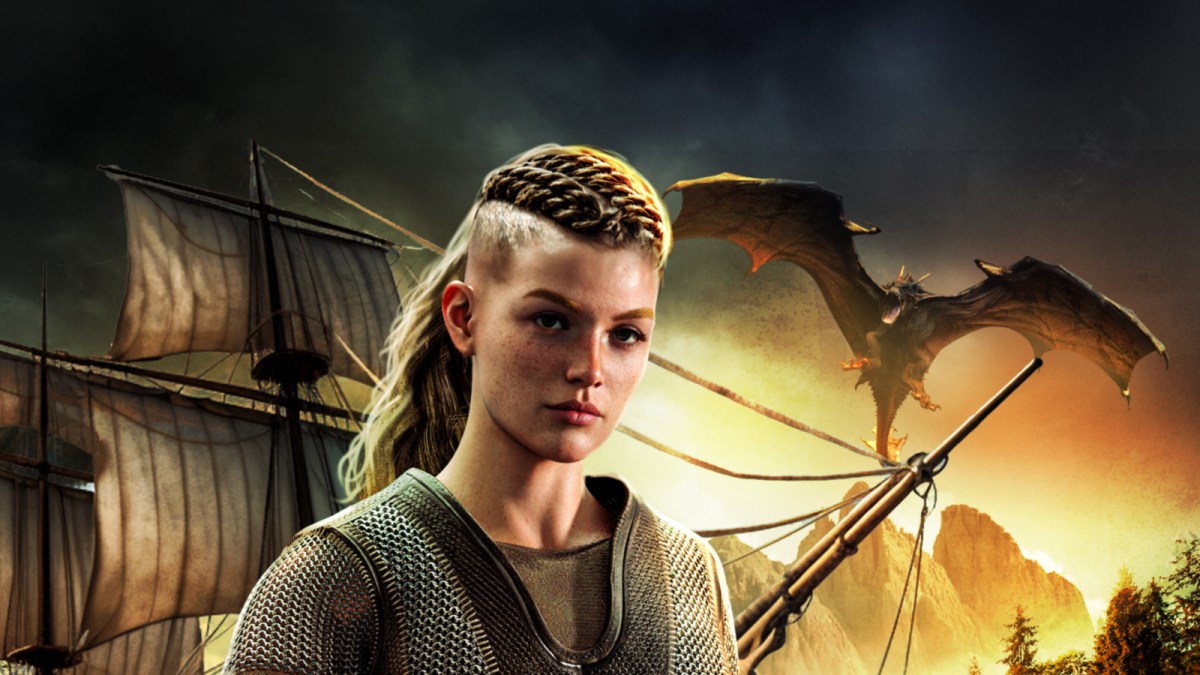
If you’re looking for a gripping mix of rebellion, perilous politics, and ancient magic, The Fall of Wolfsbane is the perfect starting point.
The first book in the Ravenglass Legends series introduces Ragnar and Maja Wolfsbane, siblings navigating the upheaval of empire, rebellion, and destiny.
With its blend of high stakes, richly crafted worldbuilding, and complex characters, The Fall of Wolfsbane is a must-read for fans of gritty political and military fantasy.
Start your journey into Ravenglass Legends today—you won’t want to put it down!
In the grand, often predictable banquet of modern fantasy, Joe Abercrombie‘s “The First Law Trilogy” strides in like a barbarian at a tea party, upsetting the table and redefining the taste of the genre.
Abercrombie, dubbed ‘Lord Grimdark‘ by fans, didn’t just write a fantasy series; he took a battle-axe to convention, carving out a niche that’s as deep and dark as his characters.
Let’s don our metaphorical mail and explore how this trilogy has left an indelible scar on the face of fantasy literature.
What’s the First Law Trilogy?
For those who’ve been gallivanting in less grim parts of the fantasy world, “The First Law Trilogy” consists of “The Blade Itself,” “Before They Are Hanged,” and “Last Argument of Kings.”
These books introduce us to a world where the line between hero and villain is as blurred as a drunkard’s vision, and moral ambiguity reigns supreme.
It’s a world filled with flawed, often unlikable characters, gritty realism, and a healthy dose of cynicism.
A New Kind of Hero
One of Abercrombie’s most significant impacts on fantasy is his redefinition of the ‘hero.’
Gone are the shining knights and wise wizards.
Instead, we meet the likes of Logen Ninefingers, a barbarian with a bloody past, and Sand dan Glokta, a torturer who’s as sharp with his words as he is with his instruments.
Abercrombie’s heroes are deeply flawed, often morally compromised, and incredibly human.
This shift has encouraged a wave of fantasy literature that embraces more complex and nuanced protagonists.
Gritty Realism
Abercrombie’s trilogy also stands out for its gritty realism.
Battles are brutal, victories are pyrrhic, and magic comes with a hefty price.
This unflinching look at the harsh realities of a fantasy world, where the ‘good guys’ don’t always win (or even know what ‘good’ is), has influenced modern fantasy to lean towards darker, more realistic narratives.
Expectations are set up only to be toppled like a game of Jenga under a sorcerer’s curse.
This approach not only makes for compelling storytelling but also encourages readers and writers alike to question and rethink the standard fantasy narrative structures.
The Ripple of Grimdark
The ripple effects of “The First Law Trilogy” can be seen across modern fantasy.
The term ‘grimdark‘ has become a genre in itself, characterised by moral ambiguity, complex characters, and often a bleak outlook.
Abercrombie’s work has opened the gates for other writers to explore themes and characters that might have once been considered too dark or complex for fantasy.
The Sharp Edge of Change
Abercrombie’s “The First Law Trilogy” has, without doubt, sharpened the edge of modern fantasy.
It’s a series that invites us to explore the shadows, to see the world not in black and white, but in varying shades of grey.
In doing so, Abercrombie hasn’t just told a gripping story; he’s redefined what a fantasy story can be.
In the realm of fantasy literature, that’s no small feat – it’s as rare and valuable as a wizard’s final words.
To provide the best experiences, we use technologies like cookies to store and/or access device information. Consenting to these technologies will allow us to process data such as browsing behavior or unique IDs on this site. Not consenting or withdrawing consent, may adversely affect certain features and functions.
Functional
Always active
The technical storage or access is strictly necessary for the legitimate purpose of enabling the use of a specific service explicitly requested by the subscriber or user, or for the sole purpose of carrying out the transmission of a communication over an electronic communications network.
Preferences
The technical storage or access is necessary for the legitimate purpose of storing preferences that are not requested by the subscriber or user.
Statistics
The technical storage or access that is used exclusively for statistical purposes.The technical storage or access that is used exclusively for anonymous statistical purposes. Without a subpoena, voluntary compliance on the part of your Internet Service Provider, or additional records from a third party, information stored or retrieved for this purpose alone cannot usually be used to identify you.
Marketing
The technical storage or access is required to create user profiles to send advertising, or to track the user on a website or across several websites for similar marketing purposes.