Magic systems in fantasy literature are like the spices in a curry, the kick in your favourite cocktail, or the jam in your doughnut (note to self: must order some doughnuts…and cocktails).
They’re the magical ingredient that makes the world feel truly fantastical.
Here, are some of the coolest magic systems that have graced the pages of fantasy literature.
Allomancy – Mistborn Series by Brandon Sanderson
Allomancy, featured in Brandon Sanderson’s Mistborn series, is a magic system that’s all about balance. The Allomancers ingest metals and ‘burn’ them to gain specific abilities. It’s like swallowing a coin and suddenly being able to jump over buildings. It’s all very scientific, you see.
The One Power – Wheel of Time by Robert Jordan
The One Power in Robert Jordan’s Wheel of Time is divided into male and female halves: Saidin and Saidar. It’s a bit like a magical tug of war, where balance and cooperation are key. Just remember, this one could lead to going mad, so don’t get too carried away.
Naming – The Kingkiller Chronicle by Patrick Rothfuss
In Patrick Rothfuss’s Kingkiller Chronicle, knowing something’s true name gives you power over it. It’s a bit like calling your dog by its full name when it’s been naughty. Except in this case, you could control the wind, fire, or even time itself. Now that’s powerful.
The Skill and The Wit – Farseer Trilogy by Robin Hobb
In Robin Hobb’s Farseer Trilogy, magic comes in two flavours: The Skill and The Wit. The Skill is all about telepathy and compulsion, while The Wit is a deeper, more primal magic that forges bonds with animals. It’s like being a magical Dr. Dolittle.
Lygari – The Broken Empire Series by Mark Lawrence
Lygari in Mark Lawrence’s Broken Empire series is a magic of manipulation. It involves bending reality to one’s will, like convincing the universe that gravity is merely a suggestion. It’s the perfect magic system for anyone who’s ever wanted to argue with physics and win.
Charter Magic – The Old Kingdom Series by Garth Nix
Charter Magic in Garth Nix’s Old Kingdom series involves drawing symbols to create spells. It’s a bit like magical calligraphy, where a beautifully drawn Charter Mark could save your life, or a poorly scribed one could turn you into a frog. So, remember to cross your ‘t’s and dot your ‘i’s!
The Warrens – Malazan Book of the Fallen by Steven Erikson
The Warrens in Steven Erikson’s Malazan Book of the Fallen are a series of magical realms that mages draw power from. Each Warren is tied to a specific element or concept. It’s like having a magical timeshare, with the added bonus of cosmic power.
Hands of Power – Lightbringer Series by Brent Weeks
The Hands of Power in Brent Weeks’s Lightbringer Series involve turning light into physical substances. Each colour has different properties and uses. It’s like being a magical artist, only instead of painting a rainbow, you’re using one to conquer the world.
Orogeny – The Broken Earth Trilogy by N.K. Jemisin
In N.K. Jemisin’s Broken Earth Trilogy, Orogenes have the ability to manipulate thermal, kinetic, and related forms of energy to quell or create earthquakes, essentially making them living fault lines. This magic system is as much about geology as it is about power, making it a truly ground-breaking addition to the genre.
Glamour – The Glamourist Histories by Mary Robinette Kowal
In the Regency-era Glamourist Histories series by Mary Robinette Kowal, Glamour is a magic system that allows one to create illusions by manipulating strands of the ether. It’s like painting with light and heat, weaving them together to create a masterpiece of deception.
The Grisha Orders – Grishaverse by Leigh Bardugo
Leigh Bardugo’s Grishaverse presents a world where the Grisha, gifted individuals, possess the ability to manipulate matter at its most fundamental levels. Divided into three orders (Corporalki, Etherealki, and Materialki), the magic feels like a blend of science and art, with a dash of military discipline.
Elemental magic – Codex Alera Series by Jim Butcher
In the Codex Alera series by Jim Butcher, citizens can control elemental furies – spirits of earth, air, fire, water, and metal. It’s a captivating blend of Roman history and Pokémon-like creature collection, with a high-stakes twist.
Dust – His Dark Materials by Philip Pullman
In Philip Pullman’s His Dark Materials, Dust isn’t just dirt. It’s a mysterious, elemental particle that is linked to consciousness and can reveal profound truths about the universe. It’s as if quantum physics had a magical, philosophical cousin.
The Lores – The Inheritance Trilogy by N.K. Jemisin
In N.K. Jemisin’s Inheritance Trilogy, godlings and gods can use one of four lores – Sieh (lore of childhood), Zhakkarn (lore of war), Kurue (lore of love), or Nahadoth (lore of chaos and change) to manipulate reality. It’s an epic, divine twist on the concept of ‘knowledge is power’.
Sympathy – The Kingkiller Chronicle by Patrick Rothfuss
Another magic system from The Kingkiller Chronicle is Sympathy, a scientific, almost mathematical system of magic. It involves creating a sympathetic link between two objects so that what happens to one happens to the other. It’s like the most complex, magical version of the domino effect you can imagine.
Thaumaturgy – The Craft Sequence by Max Gladstone
In Max Gladstone’s Craft Sequence, Thaumaturgy is a contractual magic powered by starlight and gods. Its practitioners, known as Craftsmen and Craftswomen, can manipulate energy, matter, time, space, and even souls—often via legalese. It’s as if a law degree came with a side order of reality-bending power.
The Discipline – Sword of Truth by Terry Goodkind
In Terry Goodkind’s Sword of Truth series, the Discipline isn’t just about self-control. It’s a state of mind that allows one to access and use Additive and Subtractive Magic. It’s like if meditation could unlock the ability to manipulate life, death, and everything in between.
The Four Disciplines – The Inheritance Cycle by Christopher Paolini
Next, we have the Four Disciplines from The Inheritance Cycle by Christopher Paolini. These involve the control of magic via the ancient language, the ability to transform matter, the ability to store energy in gems, and the power to enter and manipulate the minds of others. It’s a magical buffet that covers all the bases from mind control to energy manipulation.
The Deathly Hallows – Harry Potter Series by J.K. Rowling
There’s more to the Harry Potter series than waving wands and shouting Latin phrases. The Deathly Hallows, a trio of powerful magical artefacts, are a mere legend to most, but to others, they’re the ultimate magical upgrade. Cloak of invisibility, anyone?
The Force – Star Wars by George Lucas
Yes, Star Wars counts as fantasy literature. The Force, that mystical energy field that gives Jedi their power, is an iconic magic system. It’s essentially telekinesis, mind control, and precognition rolled into one. Use it wisely, young Padawan.
And there you have it – twenty of the coolest magic systems in fantasy literature.
Whether you’re a burgeoning wizard, a keen reader, or just appreciate a good magic system, we’ve got you covered.
After all, who needs reality when you can have magic?
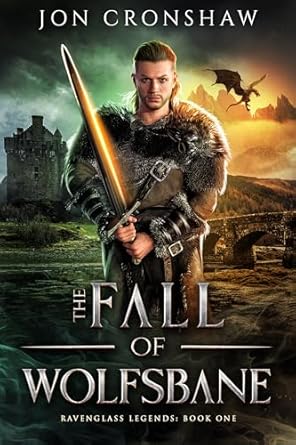
Out now: The Fall of Wolfsbane
When the Ostreich Empire shatters his world and enslaves his people, Ragnar Wolfsbane vows to fight back.
Thrust into a dangerous game of imperial intrigue, Ragnar must learn to navigate a world of forbidden magic and hidden agendas.
But as the true power of ravenglass emerges, Ragnar’s choices could lead to salvation or ruin for those he holds dear.
Immerse yourself in a vivid fantasy realm where the lines between hero and villain blur.
Will Ragnar rise to become the leader his clan needs, or will the Empire’s machinations crush his resolve?
Find out in The Fall of Wolfsbane, a character-driven high fantasy novel.