Jon Cronshaw – The King of Nobledark

Epic & dark fantasy author. Wyverns, assassins & hope that bleeds but never dies.

Jon Cronshaw – The King of Nobledark

Tag: Fantasy Novels

  • From Horned Helmets to Yggdrasil: Identifying a Norse Fantasy World

    From Horned Helmets to Yggdrasil: Identifying a Norse Fantasy World

    As seasoned voyagers of the boundless realms of fantasy literature, you’ve undoubtedly encountered all manner of fantastical worlds.

    But occasionally, amidst your literary explorations, you might stumble into a realm where the air is thick with the scent of mead and the echoes of ancient sagas.

    It’s here, amidst the clanging of swords and the mysterious whisperings of the old gods, that you realise you’re not just in any fantasy world – you’re in a Norse-inspired one.

    So, how can you be sure that your latest escapade is steeped in the rich, mythic traditions of the Vikings?

    Here are some tell-tale signs that you’re voyaging through the sagas of the North:

    The Fashion Sense is…Pointy

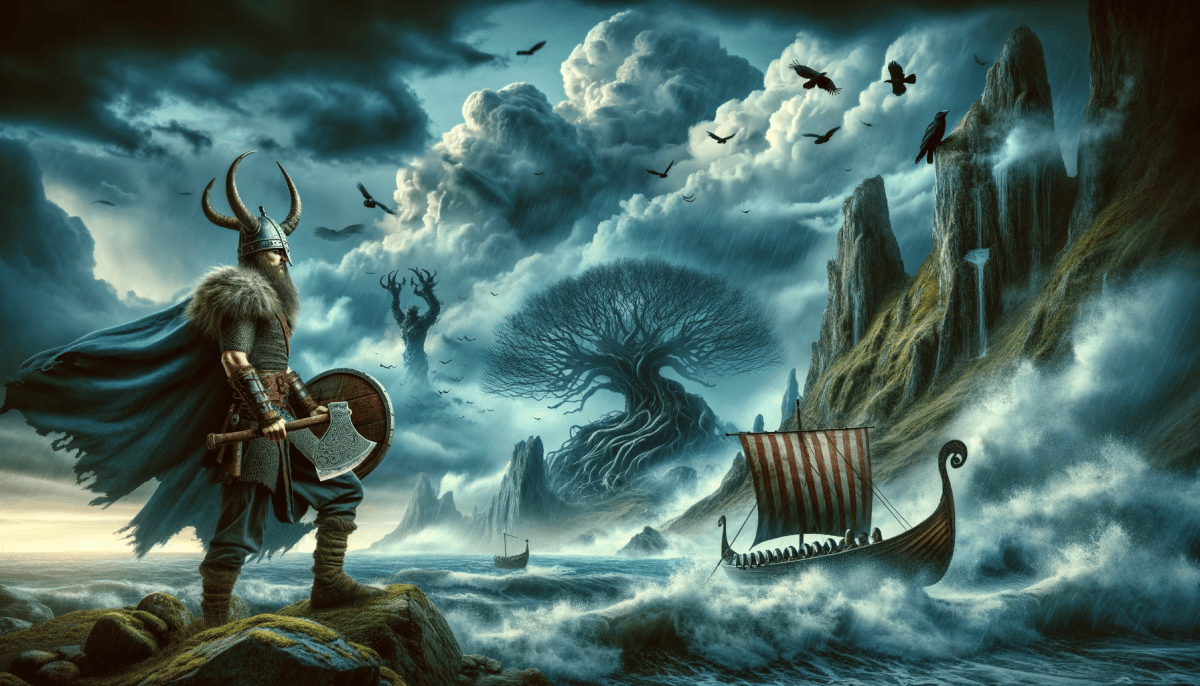
    If you’re noticing an excessive amount of horned helmets, you’re not at a heavy metal concert – you’re in Viking territory.

    Never mind the historical inaccuracy; these helmets are as essential to Norse fantasy as a dragon is to a knight’s career.

    Names You Can’t Pronounce Without Spraining Your Tongue

    Characters have names like Björnulf, Þórunn, and Hræsvelgr.

    You’ll need a degree in Old Norse and a strong jaw to tackle these linguistic acrobatics.

    Trees Aren’t Just Trees

    You come across a tree, but it’s not just any tree – it’s Yggdrasil, the cosmic World Tree.

    It’s not just for decoration; it’s a full-fledged character with more depth and backstory than the protagonist.

    A Diet Rich in Mead and Monologues

    Everyone drinks mead as if water was never invented, and they speak in monologues.

    Forget small talk; these folks wouldn’t know subtlety if it hit them with a battle-axe.

    The Weather is as Moody as the Gods

    The weather can’t seem to decide if it wants to freeze you to death or soak you to the bone.

    And speaking of gods, they’re as temperamental as the weather and twice as likely to meddle in your life.

    Ravens Are Not Just Birds

    Seeing ravens?

    These are not your average birds; they’re probably spying for Odin.

    Better watch what you say, or it might just reach the ears of the All-Father.

    Longboats and Sea Voyages Are The Norm

    If there’s more time spent on longboats than on land, and ‘raiding’ is considered a respectable career choice, then you’re definitely in Norse fantasy territory.

    Epic Sagas Are Everyone’s Bedtime Stories

    The characters are likely to reference epic sagas and heroic deeds like you talk about last night’s TV show.

    Bonus points if they’re recited in verse by a skald around a fire.

    Apocalyptic Obsession

    If there’s an unusual fixation on an apocalyptic event involving a giant wolf swallowing the sun, welcome to Ragnarök obsession, a key feature of Norse-inspired narratives.

    Dragons and Dwarves Galore

    Dragons are hoarding gold, and dwarves are crafting magical items.

    It’s like a mythological creature conference, and everyone’s invited.


    So, if you find yourself nodding along to more than a few of these points, congratulations!

    You’re deep in the realms of a Norse-inspired fantasy novel.

    Embrace the madness, enjoy the mead, and remember, if you ever get lost, just follow the ravens – they know where the story is heading.

    Just don’t expect them to give you straightforward directions.

    After all, where’s the fun in that?

  • The Assassin’s Tools: A Close Look at Weapons in Fantasy Novels

    Ah, fantasy novels—the realm where swords glow in the dark, arrows never miss, and a simple dagger can have as much backstory as a royal lineage.

    But when it comes to the assassin’s tools of the trade, let’s just say things get particularly… interesting.

    These artisans of death employ an arsenal that is as varied as it is lethal, often with a touch of magical pizzazz to boot.

    So, grab a cuppa, perhaps don a black cloak for ambiance, and let’s delve into the enthralling world of assassin weaponry in fantasy novels.

    It’s not just sharp objects; it’s a lifestyle choice.

    Daggers

    In the culinary world, the chef’s knife is versatile and essential.

    In the world of killing, the dagger takes that esteemed position.

    It’s discreet, easily concealed, and, if you throw in a touch of poison, has a 100% customer dissatisfaction rate.

    Some daggers even have cutesy names, like “Heartseeker” or “Soulpiercer,” for that added touch of sentimentality as you end someone’s existence.

    Crossbows

    Sure, up-close and personal has its merits, but so does a clean kill from 50 yards away while you munch on some popcorn.

    The crossbow is the introvert’s weapon, allowing you to perform your job effectively without the messy emotional engagement.

    And in fantasy settings, these bad boys often come with enchantments—exploding bolts, anyone?

    Blowdarts

    The blowdart: the introvert’s weapon for the introverted assassin.

    Its user can be miles away, and no one hears a thing.

    One moment, your target is regaling his friends with tales of his latest hunting expedition; the next, he’s the one being carried off on a stretcher.

    The ultimate party pooper, if you will.

    Poison Ringsl

    Fashion-forward and functional, poison rings are the ultimate multitaskers.

    Perfect for when you want to appear stylish while delivering a dose of the deadly.

    Just a casual flick of the finger, and your target’s drink goes from refreshing to lethal.

    In a world that values aesthetics, this is killing with flair.

    Magic

    Why go the mundane route when you can set someone ablaze with your mind or make them dance to their death?

    Magic offers a range of creative options for the imaginative assassin.

    Whether it’s conjuring shadows to do your bidding or weaving spells that make your weapons return to you like a faithful dog, magic brings that extra zing.

    Cursed Objects

    These are not for the faint of heart or those who lack a sense of theatrics.

    Cursed objects can range from coins that bring ruin to mirrors that trap souls.

    While their usage requires a tad more preparation and possibly a monologue, the results are often Shakespearean in their tragedy.

    So, the next time you’re lost in the deadly intrigues and thrilling escapades of an assassin fantasy novel, spare a thought—or a shudder—for the lethal tools that make it all possible.

    After all, an assassin is only as good as the tools they wield, and in the realm of fantasy, those tools are as spellbinding as they are deadly.

  • Unsung Heroes: The Sidekicks of Famous Rogues in Fantasy

    Unsung Heroes: The Sidekicks of Famous Rogues in Fantasy

    In the dappled shadows of fantasy literature where the roguish anti-heroes revel in their morally ambiguous glory, there scuttles a far less celebrated caste—the sidekick.

    These often overlooked stalwarts of story are the wind beneath the rogues’ proverbially dubious wings, providing comic relief, moral compasses, or even a well-timed kidney punch just as the tavern brawl turns sour.

    Let’s hoist these unsung heroes from the footnotes to the marquee, shall we?

    After all, behind every great rogue is a sidekick rolling their eyes.

    The Sane to Their Insane

    Firstly, spare a thought for the long-suffering sidekick who plays the straight man to the rogue’s maverick.

    They are the ones holding the horse, picking up the tab, and generally ensuring that the rogue doesn’t end up in a gibbet before the story’s end.

    They provide a sense of normalcy and, dare we say, sanity in a life otherwise beset by the rogue’s penchant for chaos.

    The Conscience in the Shadows

    For every rogue with a heart of gold (or at least, brass), there’s a sidekick whispering morally sound advice into their ear, often ignored but indispensable.

    They are Jiminy Cricket in leather boots, the ones tugging at the rogue’s sleeve, reminding them of the ‘right thing to do’ amidst the seductive call of treasure chests and ill-advised seductions.

    The Butt of All Jokes

    Without the trusty sidekick, who would suffer the indignity of pratfalls, misfired spells, or the classic accidental ingestion of a love potion?

    They endure it all with a grin (or a grimace), knowing their suffering is for the greater comedic good.

    The Unexpected Hero

    When push comes to shove (often off a perilous cliff), it’s sometimes the sidekick who saves the day.

    They’re the unexpected heroes, the ones pulling the rogue’s backside out of the proverbial and literal fire, only to fade into the background once the applause rolls in.

    The Loyalty Behind the Legend

    A rogue’s loyalty is often questionable at best, but their sidekick’s fidelity is as steadfast as a monk’s vow of silence.

    Whether it’s a matter of debt, honour, or the rarest kind of friendship, these sidekicks stick around through thick and thin.

    They’re the Samwise to your Frodo, if Frodo regularly nicked the silverware.

    The Mirror to Their Madness

    The sidekick often serves as a reflection of the rogue, highlighting their virtues and vices with stark clarity.

    Without these trusty companions, the rogue’s dazzling brilliance might just be a tad too blinding.

    The sidekick grounds them, reminding us that even the most maverick of heroes needs a helping hand—or at least someone to groan at their puns.

    The Harbingers of Growth

    Let’s not forget, the sidekick is often crucial to the rogue’s character arc.

    It is their influence, their challenges, and their unwavering belief that spur the rogue towards personal growth.

    They are the catalysts for change, the unsung therapists guiding our anti-heroes towards a semblance of personal development.

    The Best Fantasy Rogues’ Sidekicks

    It’s time to shine a well-deserved spotlight on the best of the best—the stalwart companions of some of fantasy’s most beloved rogues.

    These are the sidekicks who’ve saved skins, shared burdens, and stood by their partners in crime through thick and thin.

    Royce Melborn – The Shadowy Counterpart in Riyria

    Royce Melborn of “The Riyria Revelations” is half of the most notorious pair of thieves across the land of Elan.

    If Hadrian is the brawn, Royce is the shadow—slipping through darkness, a whisper that spells death for the unsuspecting.

    But more than just a lethal blade in the dark, he’s a true companion to Hadrian.

    Their banter is the stuff of legend, and his loyalty—once earned—is as solid as the steel he wields.

    Jean Tannen – The Gentle Giant of Camorr

    In Scott Lynch’s “The Lies of Locke Lamora,” Jean Tannen is the rock to Locke’s hard place.

    This bespectacled bruiser can crunch skulls as easily as he can recite poetry.

    But Jean’s more than just muscle; his heart and his steadfastness often serve as the moral compass for the Gentleman Bastards, especially when Locke’s schemes spiral out of control—which is always.

    Nighteyes – The Furred Philosopher and Companion

    Nighteyes from Robin Hobb’s “Farseer Trilogy” redefines what it means to be a sidekick.

    As a wolf bonded to Fitz, Nighteyes is more than a pet; he’s a brother, confidant, and comrade.

    This four-legged philosopher brings wisdom, wit, and an unwavering loyalty to the table, showing that sometimes the best friends come with fur and fangs.

    Azoth – The Apprentice to a Master Assassin in “The Night Angel Trilogy”

    The transformation of Azoth into Kylar Stern in Brent Weeks’ “The Night Angel Trilogy” sees him as a sidekick to the master assassin, Durzo Blint.

    Azoth’s loyalty and his journey from street rat to skilled killer is a poignant representation of the sidekick as both student and eventual hero in his own right.

    His moral compass remains intact, often leading him to question the darker paths they tread.

    Wayne – The Eccentric Sidekick in the Mistborn Era 2

    Wayne from Brandon Sanderson‘s “Mistborn” series is a master of accents, disguises, and the fine art of “borrowing.”

    As Waxillium Ladrian’s partner, Wayne is equal parts infuriating and indispensable.

    With a penchant for mischief and a unique sense of justice, he provides not only comic relief but also a reminder that even the most solemn moments can benefit from a touch of the absurd.

    So, let us raise a tankard to these paragons of patience, these models of loyalty—the sidekicks of fantasy’s most famous rogues.

    May their wit be as quick as their reflexes, and may their rogues’ fortunes be enough to at least keep them in decent boots.

    And remember, behind every rogue’s triumphant smirk, there’s a sidekick, probably muttering, “I told you so.”

  • Lifelong Lessons We Can Learn from Assassin Fantasy Protagonists

    Lifelong Lessons We Can Learn from Assassin Fantasy Protagonists

    When searching for role models to navigate the complex maze of life, who better to look up to than assassins?

    You know, those mythical beings who earn their crust by severing the life threads of others—often with a dramatic flair that would make even Shakespeare say, “Tone it down, mate.”

    It turns out, these dark, brooding figures from the literary world can teach us more than just how to don a cloak with menacing elegance.

    Here are some lifelong lessons we can glean from these shady characters.

    And don’t worry, none of them involve lethal weapons or hiding in shadows. Well, mostly.

    Trust No One, Not Even Your Shadow

    If assassin novels teach us anything, it’s that betrayal is as common as a weather complaint

    in Britain. One minute you’re sharing a goblet of mead with your best mate, and the next, you’re pulling a dagger out of your back.

    It’s a harsh lesson in trust—or rather, the lack of it.

    But let’s face it, in a world where online privacy is a joke, perhaps a little paranoia is just what the doctor ordered.

    Flexibility is Key

    Assassins have to be adaptable, changing plans on the fly when things go pear-shaped, which they inevitably do.

    While your daily obstacles might not involve dodging crossbow bolts or evading capture, adaptability is a skill we can all apply, whether it’s pivoting in a dead-end job or handling the ever-changing landscape of ‘cancel culture.’

    The Fine Art of Observation

    The third rule of Assassination Club is: know your mark. (The first and second rules are obviosuly not to talk about Assassination Club).

    These chaps and chapettes are masters of observation, analysing minute details that others might overlook.

    Granted, you’re not tracking a target, but honing your observation skills can be handy.

    You never know when you’ll need to recall the alibi you gave for not attending that Zoom meeting you skillfully dodged.

    The Value of Precision

    Why use ten words when one will do?

    Or ten stabs, for that matter.

    Assassins are all about efficiency and precision, a lesson easily applied to our bloated inboxes and to-do lists.

    Focus on what truly matters and cut out the rest—metaphorically speaking, of course.

    Emotional Distance: Not Just for British Aristocracy Anymore

    Most assassin protagonists are emotionally distant, not by choice but as a survival mechanism.

    While total emotional detachment isn’t advisable unless you want a future filled with cats and microwave dinners, a little emotional distance can help.

    Whether it’s not taking criticism to heart or weathering a Twitter storm, sometimes it’s okay to put up your emotional barriers.

    Just not too high, or you’ll end up as approachable as a porcupine in a balloon shop.

    Plan but Prepare for Chaos

    Every assassin knows the value of meticulous planning, but they also know that even the best-laid plans can go awry.

    Life’s like that: a series of chaotic events occasionally interrupted by moments of stability.

    Or is it the other way around?

    Either way, planning is good; adaptability is better.

    The Road to Redemption is Paved with… Well, You Know

    A common trope among our morally grey friends is the journey towards redemption.

    Now, you may not have a dark past filled with death and destruction (if you do, this blog is not for you), but everyone has something they’d like to atone for.

    Remember, it’s never too late to turn things around. Usually.

    So, there you have it. Life lessons from people whose life’s work is to end others’ lives.

    Is it unconventional? Absolutely.

    Ethically questionable? Probably.

    But hey, it’s a cruel world out there.

    Might as well take advice from the experts in dealing with it.

  • The Morality of Assassination: Ethical Quandaries in Fantasy Novels

    The Morality of Assassination: Ethical Quandaries in Fantasy Novels

    Ah, the intoxicating allure of fantasy novels—those literary escapes where dragons are slain, quests are fulfilled, and apparently, it’s ethical to kill people for money.

    Yes, dear readers, we’re talking about the delightful realm of professional make-believers: assassins.

    But it’s not all dark cloaks and poisoned daggers; there’s also the niggling issue of morality.

    So, let’s cut through the ethical fog like an assassin’s blade through butter, shall we?

    When Killing Becomes a Career

    What differentiates an assassin from your run-of-the-mill homicidal maniac?

    Well, professionalism for starters.

    Assassins don’t kill because they have a penchant for death; they kill because they’re paid to do it.

    It’s a vocation like any other.

    But that raises the question: if one is ‘just doing their job,’ does that absolve them of the moral weight of their actions?

    It’s a classic case of separating the ‘work self’ from the ‘personal self,’ except the work involves a substantially higher body count.

    The Lesser of Two Evils

    Fantasy novels often paint assassinations as necessary evils in a grander scheme.

    Kill a corrupt king, and save a kingdom. Eliminate a warlord, prevent a war.

    In these instances, the ethics become murky. Can one life be weighed against many?

    If the scales tip toward greater good, does that give our assassin a moral free pass?

    It’s like choosing to eat a salad over a chocolate cake for the ‘greater good’ of your health, but with far graver consequences.

    The Target Matters, Apparently

    Here’s a curious double standard: Assassinate a villain, and you’re a hero; kill an innocent, and suddenly you’re a monster.

    In other words, the morality of an assassination is often determined not by the act itself, but by the societal value placed on the target.

    It’s the ultimate case of victim-blaming where one person’s villain is another person’s hero, yet the ethical evaluation changes based on popular opinion.

    The Emotional Detachment Clause

    One could argue that assassins don’t make the choice to kill; rather, they serve as an instrument for someone else’s will.

    They detach emotionally to carry out their duties, reducing their moral accountability.

    But then again, outsourcing your ethical dilemmas doesn’t necessarily absolve you of them. It’s like blaming your dog for eating the last piece of cake.

    Convenient, but not exactly just.

    The Code of Conduct

    Many fantasy novels introduce a ‘code’ that assassins follow—a set of rules or ethics that govern who they can and cannot kill.

    This self-imposed moral framework serves as a mechanism to justify their actions. However, whether that code stands up to ethical scrutiny is another matter.

    After all, creating your own moral compass doesn’t necessarily mean you’re heading in the right direction.

    The Redemption Factor

    Ah, the sweet scent of redemption—an aroma more enticing than freshly baked bread.

    Fantasy novels love to set their assassins on paths toward redemption, often through acts of heroism or sacrifice.

    But does a good deed wash out the bad, or are we simply enjoying a narrative that indulges our desire for clear-cut moral judgments?

    The Morality Spectrum

    At the end of the day, the ethics of assassination in fantasy novels reflect the complex morality of the real world.

    There are no easy answers, only shades of grey—each darker and more ambiguous than the last.

    Assassins serve as a lens through which we can examine our own moral compass, forcing us to confront uncomfortable questions about the nature of right and wrong.

    So, the next time you find yourself lost in a fantasy world, captivated by the enigmatic allure of an assassin, take a moment to ponder the ethical implications.

    Because as much as we might enjoy the escapism, these tales compel us to scrutinize the complicated, messy aspects of morality, offering us not just a story, but a provocative ethical exercise.

  • The Essential Guide to Assassin Fantasy Tropes

    The Essential Guide to Assassin Fantasy Tropes

    So, you’ve met the colourful ensemble of assassins in the realm of fantasy literature.

    Now let’s talk about the tropes that make these deadly darlings as predictable as a soap opera plot twist.

    You might think assassins are all about shock value, but let’s be honest—they’re as full of clichés as a politician’s promise.

    The Untraceable Poison

    The quintessential tool for anyone wanting to dispatch someone without muss or fuss.

    This poison is always untraceable, available only from a rare flower that blooms once in a blue moon, on a mountaintop guarded by dragons.

    Convenient, isn’t it?

    Signature Twist: The antidote is just as difficult to procure, leading to a dramatic race against time.

    The Mentor Figure

    Behind every angsty, overly competent assassin is an even more competent mentor figure.

    Usually greying and filled with wisdom, this character is often employed to remind our hero about “the code” and to occasionally slap them back to their senses.

    Signature Twist: Mentor turns out to be the villain. Oh, the betrayal!

    The Shadowy Assassin Guild

    Let’s face it, lone wolves are so last season.

    Nowadays, you’re not a legit assassin unless you belong to a highly secretive, ludicrously named guild.

    From “The Shadow’s Hand” to “Death’s Whisperers,” it seems assassins are as fond of drama as they are of daggers.

    Signature Twist: The guild turns out to be corrupt (shock, horror!), giving our hero a brand new kill list.

    The Love Interest Who Changes Everything

    This is the equivalent of a midlife crisis but with more stabbing.

    Suddenly, our cold-hearted killer meets someone who melts their icy demeanour faster than climate change is melting the polar ice caps.

    Cue moral dilemma.

    Signature Twist: The love interest is the next target. Love or duty? Ah, the eternal question.

    The Loyal Sidekick

    The Watson to the assassin’s Holmes.

    This character is usually less skilled but provides emotional support, comic relief, or a conveniently timed distraction.

    You know, like a human fidget spinner for the assassin.

    Signature Twist: The sidekick actually saves the day, reversing the roles and making the protagonist look like a bit of an idiot.

    The Perfect Disguise

    Apparently, all an assassin needs to remain incognito is a hooded cloak.

    Forget DNA, facial recognition, or even a basic “Wanted” poster.

    A piece of fabric makes them unrecognizable, and they blend into the crowd like sugar in tea.

    Signature Twist: The disguise is penetrated by a child or a beggar—the overlooked members of society. Always a humbling moment.

    The Unanticipated Redemption Arc

    No one wants to root for someone who’s all bad, hence the redemption arc.

    Our assassin, who has hitherto dispatched people with the emotional range of a teaspoon, suddenly discovers empathy. Who knew?

    Signature Twist: The redemption is a farce; it’s all part of an elaborate plot twist that leaves readers (and enemies) shocked.

    The Not-So-Final Retirement

    Finally, the stage where our assassin hangs up their blades, settles down, and considers taking up knitting.

    But who are we kidding?

    Once an assassin, always an assassin.

    Signature Twist: They come out of retirement for one last job. Predictable, yet we eat it up every time.

    So, the next time you pick up an assassin-based fantasy novel, you’ll know exactly what you’re in for.

    Tropes, like death and taxes, are inevitable.

    But they’re also what make these deadly stories as comforting as a cuppa on a rainy day. Enjoy your murderous reading!

  • Assassin Archetypes: The Different Types of Assassins You’ll Encounter in Fantasy Novels

    Assassin Archetypes: The Different Types of Assassins You’ll Encounter in Fantasy Novels

    Ah, assassins. Those lovable rogues who kill people for money, political advantage, or, you know, just for the sheer artistic expression of it.

    With more stealth than a cat burglar and more blades than a Swiss Army knife, they’ve been gracing the pages of fantasy literature for years.

    Much like that creepy guy at the pub who won’t stop talking about his knife collection, they’re hard to ignore.

    So, as we venture into the labyrinthine corridors of fantasy literature, let’s look at the types of assassins you’re likely to bump into (and hopefully, survive to tell the tale).

    The Old Timer

    This geezer’s been around the block more times than a Deliveroo cyclist.

    He’s a master of the game, knows every trick in the book, and makes youngsters look like mere novices wielding a butter knife.

    Just because he might need a little WD-40 on those joints doesn’t mean he won’t cut you seven ways to Sunday.

    Signature Move: The “I’ve seen it all” eye-roll followed by a swift knife throw.

    The Brooding Anti-Hero

    This one comes with a lifetime supply of angst and emotional baggage, conveniently stored in a dark leather cloak.

    Typically a protagonist, he’s either out for revenge or running away from a past that includes more skeletons than a medical school’s supply closet.

    He’ll reluctantly save the world, but only if he can do it while maintaining a sulky demeanour.

    Signature Move: The monologue about how life has been unfair to him, just before slitting someone’s throat.

    The Femme Fatale

    She’s as deadly as she is beautiful, and often clad in impractical but jaw-dropping attire. (Really, how does one sprint across rooftops in stilettos?)

    She doesn’t only have a dagger up her sleeve but also a cunning plan.

    The Femme Fatale will kill you, steal the artifact, and break your heart—all before brunch.

    Signature Move: Poisoned lipstick. Fatal and fabulous.

    The Ethical Assassin

    This character is the fantasy equivalent of the person who brings a reusable cup to a gunfight.

    They’ve got a code, you see—no women, no children, and absolutely no killing of innocent unicorns.

    They’re the vegans of the assassin world; they’ll still kill you, but they’ll feel guilty about it.

    Signature Move: The apologetic letter left on your corpse, explaining that it was, regrettably, just business.

    The Magical Menace

    Why settle for mere mortal methods when you can warp time, control minds, or teleport behind your target with a whimsical flick of the wrist?

    Yes, this assassin makes you question the fairness of the universe.

    They’ve got magic to do their dirty work. Not content with just a blade, they’ve added pyrotechnics for good measure.

    Signature Move: Turning you into a toad, then squishing you. Efficient, really.

    The Comic Relief

    This one’s less ‘cloak and dagger’ and more ‘joke and snigger.’

    They’ll kill you, but they’ll make a pun while doing it.

    Most often found in ensembles where their levity balances out the incessant brooding of the Anti-Hero.

    Signature Move: Telling a “knock-knock” joke, then knocking you dead.

    The Incompetent

    The ‘comic relief’s’ not-so-distant cousin.

    This assassin’s bark is far worse than their bite, and they’re likely to trip on their cloak, fall on their own dagger, or mistakenly poison themselves.

    They’re like the Mr. Bean of the assassin world, only far less endearing.

    Signature Move: Accidentally killing themselves, thereby saving you the trouble.

    So there we have it, a merry band of miscreants who’ll keep you looking over your shoulder in every imaginary realm.

    Whether they’re old or young, magical or mirthful, they share a common purpose: to add a dash of deathly excitement to your next fantasy adventure.

    Choose your favourite, but remember: being fond of an assassin is like cuddling a cactus—painful and ill-advised.

    Fantasy promotional banner showing a hooded assassin in dark armour holding a glowing red blade, with a snarling dragon behind him against a fiery mountain landscape. Large text reads “FREE ASSASSIN FANTASY TALES”, with a “Download Now” button in the bottom-right corner.
  • The Five Best Fantasy Books to Win the Hugo Award: A Triumph Over Sci-Fi

    The Five Best Fantasy Books to Win the Hugo Award: A Triumph Over Sci-Fi

    Today, we delve into the fantastical world of the Hugo Awards.

    Though primarily a sci-fi playground, over the years we’ve seen a few notable gems from the fantasy genre that have managed to claim the best novel prize.  

    What are the Hugo Awards, and why do they matter?

    Established in 1953, the Hugo Awards recognise the best works in science fiction and fantasy literature. Named in honour of Hugo Gernsback, the founding father of science fiction magazines, these awards are presented annually at the World Science Fiction Convention (Worldcon).

    It’s not just about the honour, though—winners can also expect a rocket-shaped trophy, which we imagine makes quite the conversation starter.  

    While sci-fi tends to dominate the Hugo Awards, a handful of fantasy novels have managed to swoop in and snatch the prize.

    So, today I want to share five of the best fantasy novels that have won the Hugo Award.  

    1. “Jonathan Strange & Mr Norrell” by Susanna Clarke (2005)

    In an alternate history where magic once existed and is now all but forgotten, enter two magicians: the reclusive Mr Norrell and his ambitious pupil, Jonathan Strange. This enchanting tale of their rivalry, friendship, and the rediscovery of English magic is as thick as the ancient tomes they study (literally—it’s a hefty 800 pages). But fear not, for Susanna Clarke weaves a spellbinding narrative that will have you turning pages faster than you can say “Wingardium Leviosa.”  

    2. “American Gods” by Neil Gaiman (2002)

    Neil Gaiman, the master of modern myth-making, brings us an epic road trip through the hidden heart of America. The story follows Shadow, an ex-con who finds himself entangled in a war between old gods, brought to America by immigrants, and new gods born from modern obsessions. With a cast of characters that includes leprechauns, trickster gods, and an undead wife, “American Gods” is a fantastical, mind-bending experience that proves Gaiman’s status as a literary god himself.  

    3. “The City & The City” by China Miéville (2010)

    Imagine two cities, occupying the same geographical space but completely invisible to one another. Citizens of each city must “unsee” the inhabitants and buildings of the other, or risk the wrath of a mysterious force known as Breach. When a murder investigation forces Inspector Tyador Borlú to traverse the border between these cities, he uncovers a conspiracy that threatens the delicate balance between the two. Miéville’s mastery of blending fantasy, mystery, and political intrigue makes “The City & The City” a truly unique and captivating read.  

    4. “A Game of Thrones” by George R.R. Martin (1997)

    Ah, “A Game of Thrones”–the book that launched a thousand memes (and an incredibly popular television series). In this first instalment of the “A Song of Ice and Fire” series, George R.R. Martin transports us to the brutal and treacherous realm of Westeros, where noble houses vie for power, control, and ultimately, the Iron Throne. With a dizzying array of characters, intricate plotlines, and a penchant for killing off fan favourites, “A Game of Thrones” is an epic, blood-soaked fantasy that keeps readers on their toes and their hearts in their throats.  

    5. “The Stone Sky” by N.K. Jemisin (2018)

    In this triumphant conclusion to the “Broken Earth” trilogy, N.K. Jemisin takes us back to the Stillness—a continent plagued by catastrophic climate events, oppressive social structures, and the occasional earth-shattering superweapon. As mother and daughter Essun and Nassun face off to determine the fate of their shattered world, Jemisin weaves a masterful tale of power, sacrifice, and the lengths people will go to survive. “The Stone Sky” not only won the Hugo Award, but also completed Jemisin’s hat trick, as each book in the trilogy took home the prize.  

    Fantasy for the WIn!

    While science fiction may be the star of the Hugo Awards, these five fantasy novels have proven their worth by winning the coveted rocket trophy.

    With their rich worlds, unforgettable characters, and spellbinding stories, they have earned their place among the stars of speculative fiction.

    So, brew yourself a cuppa, grab a cosy blanket, and escape into the fantastical realms of these award-winning novels. Happy reading!

  • Capers and Castles: A Guide to the 10 Must-Read Fantasy Novels Featuring Thieves

    Capers and Castles: A Guide to the 10 Must-Read Fantasy Novels Featuring Thieves

    Trial of Thieves by Jon Cronshaw

    Fantasy novels often offer a unique twist to traditional crime stories, and tales about thieves are no exception.

    Whether it’s a heist gone wrong, a daring escape, or a cunning scheme, these stories are full of action, suspense, and thrilling twists.

    Here are ten must-read fantasy novels about thieves that will keep you on the edge of your seat:

    1. “The Lies of Locke Lamora” by Scott Lynch.

    Set in the city of Camorr, the Gentlemen Bastards series follows the adventures of Locke Lamora and his band of thieves. The books are filled with complex heists, daring escapes, and political machinations, and the characters are both lovable and deeply flawed. Lynch’s writing is sharp and witty, and the world of Camorr is a rich and fully realized setting.

    2. “Thief of Time” by Terry Pratchett.

    Set in Discworld, this novel follows the adventures of thief-turned-monk Lu-Tze and his journey to prevent Time itself from being stolen. Pratchett’s signature wit and humour shine in this book, making it a must-read for fans of his work.

    3. “Six of Crows” by Leigh Bardugo.

    Set in Bradugo’s Grishaverse, this story follows a group of six criminals hired for a nearly impossible heist. With a diverse cast of characters and fast-paced action, Six of Crows is a thrilling ride from start to finish.

    4. “Farseer Trilogy” by Robin Hobb.

    This classic fantasy series follows the story of FitzChivalry Farseer, an assassin and thief who is forced to navigate the dangerous world of the Six Duchies. Hobb’s writing is rich and descriptive, and the characters are complex and fully realized. Fitz is a compelling protagonist, and his adventures are both thrilling and thought-provoking.

    5. “Riyria Revelations” by Michael J. Sullivan.

    This six-book series follows the adventures of Royce and Hadrian, two thieves who find themselves caught up in a web of political intrigue and ancient magic. The witty banter between the two leads, combined with Sullivan’s intricate world-building and fast-paced action, make Riyria Revelations a must-read for fans of the genre.

    6. “The Master Thief series” by Ben Hale.

    A delightful romp through a world of thieves, con artists, and other unsavoury characters. The main character, Jute, is a street thief who finds himself drawn into a larger scheme that will test his skills and loyalty. The books are filled with twists and turns, and the writing is both witty and action-packed.

    7. “Lightbringer series” by Brent Weeks.

    This series follows the adventures of Gavin Guile, a powerful magician and master thief who must navigate the dangerous world of the Chromeria. Weeks’ writing is fast-paced and action-packed, and the world of the Chromeria is rich and complex. The characters are fully realized, and the twists and turns of the plot will keep you on the edge of your seat.

    8. “Mistborn series” by Brandon Sanderson.

    Set in the world of Scadrial, the Mistborn series follows the story of Vin, a young thief who discovers she has the ability to use magic. Sanderson’s writing is fast-paced and action-packed, and the world of Scadrial is rich and complex. Vin’s journey from street urchin to powerful Allomancer is both thrilling and heart-warming, and the twists and turns of the plot will keep you on the edge of your seat.

    9. “Thief of Magic” by Trudi Canavan.

    This second book in the Millennium’s Rule series follows the adventures of Rielle, a young thief who discovers she has a talent for magic.

    10. “The Thief’s Gamble” by Juliet E. McKenna.

    This book is the first in a series of novels that follow the adventures of Kaira, a young thief who finds herself caught up in a world of magic and political intrigue. With a strong and likable protagonist, fast-paced action, and intricate world-building, The Thief’s Gamble is a must-read.

    If you love fantasy with thieves, you can get my novel Birth of Assassins for free as part of the Ravenglass Universe starter library.

  • Walk the Line of Morality: 10 Fantasy Novels with Thieving Protagonists

    Walk the Line of Morality: 10 Fantasy Novels with Thieving Protagonists

    In the usual realm of swords, sorcery, dragons and direwolves, aren’t we all occasionally partial to a protagonist that’s a bit, well… shifty?

    I’m not talking about the big muscle-bound, honour-bound heroes that are as predictable as the British weather, I’m talking about the sneak-thieves, the tricksters, the rogues!

    There’s something devilishly enjoyable about a character that walks the line of morality, their pockets full of ill-gotten goods, their minds full of cunning plans, and their hearts (eventually, after some character development) full of the right intentions.

    So, buckle up as we take a tour of fantasy’s ten finest novels where the heroes are thieves, and the morals are as loose as a poorly-fastened coin purse.

    1. “The Lies of Locke Lamora” by Scott Lynch:

    In the gloomy yet enthralling city of Camorr, young Locke Lamora isn’t just a thief—he’s a bloody artist, he is.

    His plots aren’t petty pickpocketing, but intricate scams comparable to a masterpiece painting, each stroke of deceit layered carefully to create an overall image of bromance.

    Picture an underworld Ocean’s Eleven, with a dash of Italian renaissance and a liberal helping of naughty words.

    One might say it’s crime at its most entertainingly convoluted.

    If you fancy your thieves with a bit of style and a whole lot of cunning, then Mr. Lynch’s work might be right up your crooked alley.

    2. “Theft of Swords” by Michael J. Sullivan:

    Ever seen a pair of thieves who can banter as smoothly as they can pilfer?

    Meet Hadrian and Royce, the dynamic duo of larceny, the jesters of jeopardy, the… you get the idea.

    These two might be the most likeable robbers you’ll ever read about.

    Expect swordplay, sarcasm and situations so sticky they’d put a jar of Marmite to shame.

    3. “Six of Crows” by Leigh Bardugo:

    This ensemble cast of characters, led by the wily thief Kaz Brekker, are about as far from virtuous knights as you can get.

    Bardugo creates a motley crew of criminals and misfits, each with their own set of unique skills, emotional baggage, and snappy one-liners.

    The group’s mission? To infiltrate an impenetrable fortress, of course!

    What could possibly go wrong?

    4. “The Hobbit” by J.R.R. Tolkien:

    Remember our good old friend Bilbo Baggins?

    Yes, that cuddly, comfort-loving hobbit who got dragged on a journey by thirteen dwarves and a wizard with an apparent disregard for proper notice.

    Hired as a burglar to reclaim the dwarves’ treasure from Smaug the dragon, Bilbo might be the most unlikely, and yet most endearing, thief in all of fantasy literature.

    5. “The Queen’s Thief” series by Megan Whalen Turner:

    If you’re a fan of political intrigue, clever schemes, and a thief who’s a touch more regal than your average cutpurse, then you’ll love Gen, the protagonist of this enthralling series.

    Starting with “The Thief,” the series follows Gen’s evolution from a simple (if ridiculously talented) thief to a player in the highest echelons of power.

    6. “Among Thieves” by Douglas Hulick:

    What’s that? You want more thieves? Well, I hope you’re not tired of twisty alleyways and shadowy figures because that’s exactly what you’re getting in the form of Drothe, a Nose (information gatherer) for one of the criminal organizations in the city of Ildrecca.

    With its gritty atmosphere and compelling plot, you’ll feel like you’re right there in the criminal underworld (without the risk of being pickpocketed).

    7. “Mistborn: The Final Empire” by Brandon Sanderson:

    Our next stop on the larceny express takes us to the heart of the “Mistborn” series.

    The story begins in a city oppressed under the iron fist of the Lord Ruler, where our resourceful heroine Vin exists as part of a thieving crew.

    But Vin isn’t just any common thief—she’s a Mistborn, able to consume metals and gain powers from them.

    She’s soon embroiled in a plot to overthrow the tyrant, and you can bet your last bent copper that there will be heists, intrigue, and a fair amount of metal-fuelled mayhem.

    8. “The Blacktongue Thief” by Christopher Buehlman:

    This is a tale with a fresh and compelling voice that might just swipe the top spot on your favourite thieves list.

    Our main character, Kinch Na Shannack, is a thief trained by the Takers Guild (so he’s got a professional edge, you see).

    He owes the guild an awful lot of money (or ‘guilders’ as they call it), so he’s trying to earn… or, let’s be honest, steal, his way out of debt.

    He’s sardonic, rough around the edges, and utterly captivating.

    This book is a wild, action-packed ride filled with danger, dark humour, and a dash of magic.every.

    9. “The Palace Job” by Patrick Weekes:

    Want some audacious heists with a side of snappy dialogue and a diverse cast of characters?

    Look no further than “The Palace Job.”

    This tale follows Loch and her eccentric crew (which includes a death priestess and a unicorn, among others) as they attempt to steal from the most secure building in the Republic.

    It’s Ocean’s Eleven meets high fantasy, and it’s every bit as delightful as that sounds.

    10. “Master Thief” series by Ben Hale:

    Rounding off our list, we have Ben Hale’s “Master Thief” series.

    Here, we follow the (mis)adventures of Jack Myst, the titular master thief who’s so adept at his craft that he’s practically an artist.

    Well, an artist in stealing everything from precious gems to tightly guarded secrets.

    The story is a delightful romp of thievery set against a backdrop of a richly built world.

    And Jack? Well, he’s as charismatic a rogue as they come.

    So, go ahead, immerse yourself in these fascinating worlds of fantasy where the thieves reign supreme.

    Remember, though—stealing is wrong.

    But reading about it? Now that’s a crime I’m willing to commit.