Exploring David Eddings’ ‘The Belgariad’ and its undeniable influence on modern fantasy, from ‘Game of Thrones’ to ‘Harry Potter’.
Once upon a time, as all good stories start, in the small town of Spokane, Washington, a man by the name of David Eddings put pen to paper and began to weave a tale of prophecy, magic and, most importantly, a farm boy named Garion.
A tale that, unbeknownst to him, would shape the course of modern fantasy literature.
This tale?
“The Belgariad.”
The Chosen One
Now, I know what you’re thinking. “Oh, not another Chosen One narrative.”
Yes, I hear you, and I can only offer a shrug and a sheepish grin in response.
But if one were to dismiss Eddings’ work as just another predictable riff on the same old trope, they’d be missing out on an influential cornerstone of the genre.
“The Belgariad,” with its magical orbs, prophecies, and a cast of characters so colourful they make a bag of Skittles look positively monochrome, has had a reach far greater than it’s given credit for.
Its influence can be seen in the works of authors from across the globe, like a whisper of Spokane in every fantasy bookshop.
Now, Martin’s work might be a bit grimmer (read: “Red Wedding”), but dig a bit deeper and you’ll see Eddings’ fingerprints all over it.
The intricate politics, the sprawling world-building, the stark contrast of good versus evil—all hallmarks of “The Belgariad.”
Even the character of Jon Snow, the broody, duty-bound hero, echoes Garion in more ways than one (though I’ll grant you, Jon’s direwolf beats Garion’s horse in a coolness contest).
The boy who lived…
Or what about J.K. Rowling’s “Harry Potter” series?
The boy who didn’t know he was a wizard until a giant man broke down his door one day?
Smells a bit like Garion’s own journey, doesn’t it?
The parallels go beyond the surface, though; they both grapple with destiny, they both have a dark lord to defeat, and they both have a wise old mentor guiding them (no points for guessing which one has a longer beard).
Into the Cosmere
Let’s not forget Brandon Sanderson, who seems to have taken a leaf or two out of Eddings’ book.
Sanderson’s “Mistborn” series, with its complex magic system, may seem far removed from “The Belgariad,” but look closer.
The deep, diverse world and the idea of prophecy as a central plot device?
That’s all very Eddings.
Plus, there’s also the whole “humble beginnings” thing.
Vin, the street urchin turned hero of “Mistborn,” could be Garion’s long-lost sister (or at least distant cousin twice removed).
A lasting legacy
So, whether you’re a fan of the “Game of Thrones” bloodbaths, the “Harry Potter” wizarding world, or the “Mistborn” metallic magic, you’ve got a bit of “The Belgariad” in your bookshelf.
Eddings may not have reinvented the wheel (or the magic orb, as it were), but he certainly gave it a good spin.
His work stands as a testament to the impact of a well-told story, and a reminder that even the most unassuming farm boy can end up saving the world.
In the end, the influence of “The Belgariad” is a bit like Garion’s magic—it’s there, bubbling under the surface, quietly shaping the course of things.
You just have to know where to look.
And don’t worry—unlike Garion, you won’t need a grumpy old sorcerer to help you out.
Embark on a captivating journey through the enchanting world of coming-of-age fantasy. Explore themes, top books, and claim your free starter library. Let the adventure begin!
Welcome to the enchanting world of coming-of-age fantasy!
In this post, you’ll discover the heart of this genre, exploring why readers are so drawn to these tales, and highlighting the top books and authors that have defined it.
And as a special treat, don’t miss the chance to claim your free Ravenglass Universe starter library when you join our newsletter today.
What is Coming-of-Age Fantasy?
Coming-of-age fantasy is a subgenre of fantasy literature that focuses on the growth and development of a young protagonist.
The stories often centrr around themes of self-discovery, responsibility, and the transition from childhood to adulthood.
With the backdrop of a magical world, these narratives resonate with readers as they follow the protagonist’s journey, both physical and emotional.
Themes and Subjects of Coming-of-Age Fantasy
Coming-of-age fantasy stories are rich in themes that explore the human experience. Common themes include:
Self-Discovery: As the protagonist navigates their world, they often discover hidden talents, powers, or abilities that define their identity and influence their destiny.
Friendship: The bonds formed with companions on the journey are integral to the protagonist’s growth, teaching them about trust, loyalty, and sacrifice.
Responsibility: As they mature, the protagonist learns to shoulder the weight of their newfound powers and the expectations placed upon them.
Conflict: Coming-of-age fantasy tales often involve battles against external forces, such as evil sorcerers or malevolent creatures, as well as internal struggles within the protagonist’s own heart and mind.
Good vs. Evil: The protagonist discovers moral ambiguity and navigates the complexities of right and wrong, light and dark.
Love: The protagonist experiences various forms of love—familial, romantic, platonic—that shape their character and choices.
Choice: At critical junctures, the protagonist must make difficult decisions that determine their fate and the fate of others.
Identity: The protagonist undertakes a journey of self-discovery to determine who they are and who they want to become.
Independence: The protagonist gains freedom from authority figures or home environments, allowing them to think and act for themselves.
Courage: Finding bravery in the face of fear and danger is central to the protagonist’s triumph over adversity.
Top Coming-of-Age Fantasy Books
Some of the most celebrated books and authors in coming-of-age fantasy include:
The Hobbit by J.R.R. Tolkien:
This classic novel follows the journey of Bilbo Baggins, a young hobbit who discovers his own courage and resourcefulness as he embarks on a perilous quest.
Harry Potter series by J.K. Rowling:
This beloved series chronicles the life of young wizard Harry Potter as he navigates the magical world of Hogwarts, learning about friendship, love, and the power of courage.
His Dark Materials trilogy by Philip Pullman:
A thought-provoking series that explores themes of self-discovery, morality, and the nature of consciousness, as young Lyra Belacqua sets out on an epic journey through parallel worlds.
The Name of the Wind by Patrick Rothfuss:
This captivating novel follows the life of Kvothe, a legendary figure who recounts his rise from a lowly orphan to a renowned magician and adventurer.
A Wrinkle in Time by Madeleine L’Engle:
A moving story of Meg Murry, an awkward teen girl who embarks on an adventure across dimensions to find her missing father.
Sabriel by Garth Nix:
Sabriel, a young necromancer, must venture into the perilous Old Kingdom to rescue her father from the Land of the Dead.
The Belgariad by David Eddings:
Garion, an orphaned farm boy, discovers his destiny in a quest to retrieve a powerful orb and fulfill an ancient prophecy.
A Wizard of Earthsea by Ursula K. Le Guin:
The story of Ged, a sorcerer who must journey far from home to escape the darkness he unleashed into the world.
The Rithmatist by Brandon Sanderson:
Joel, a non-magical student at a school for Rithmatists–those who can animate chalk drawings and use them for defense–gets caught up in a dangerous mystery.
Assassin’s Apprentice by Robin Hobb:
This novel follows the life of FitzChivalry Farseer, a royal bastard who is apprenticed to become an assassin in the Six Duchies. As Fitz navigates court intrigue and the skills of his grim trade, he also struggles to find his place in a world that does not always welcome him.
Now that you’ve been introduced to the captivating world of coming-of-age fantasy, it’s time to embark on your own adventure.
Join my newsletter today and receive a free Ravenglass Universe starter library, filled with spellbinding tales that will transport you to a world of magic, mystery, and wonder.
Don’t miss this exclusive offer—claim your free books now and let the adventure begin!
Dive into an alternative interpretation of Harry Potter’s world, linking elements of Fight Club & Piranesi, exploring themes of dissociative identity disorder and trauma.
Imagine this—young Harry Potter, our spectacled, raven-haired hero, never escapes the dank, dark closet beneath the stairs on Privet Drive.
Bit depressing, isn’t it?
But this is where we start to delve into a narrative blender that purées J.K. Rowling’s wizarding world, a pinch of Chuck Palahniuk’s ‘Fight Club’ and a dash of Susanna Clarke’s ‘Piranasi.’
Bear with me, and don’t spill your tea.
Harry, Meet Tyler
Our Harry Potter, much like Tyler Durden of Fight Club, might very well be stricken with dissociative identity disorder.
This condition manifests as a disconnect or breakdown of memory, awareness, identity, or perception.
In plain English, Harry might be inventing Hogwarts, wands, and a bloke named Voldemort as an escape mechanism from the harsh realities of his abuse-laden existence.
A Whole New (Imaginary) World
In this alternate reading, Harry’s ‘Hogwarts’ is a mental construct, built brick by brick from his desperate yearning for escape and desire for familial connection.
Similar to how Durden personifies the narrator’s subconscious wrath and frustration in Fight Club, Hogwarts could be seen as Harry’s subconscious longing for acceptance and identity.
Even the towering figures of Dumbledore and Hagrid might merely be personifications of Harry’s longing for protective father figures.
Well, he could symbolise Harry’s internalised self-loathing and fear, with ‘He-Who-Must-Not-Be-Named’ being a little more ‘He-Who-Must-Not-Be-Faced.’
Mapping Potter’s Infinite House
Susanna Clarke’s Piranesi navigates an endless, labyrinthine house filled with statues, his only company being the mysterious ‘Other.’
Does this sound familiar? The sprawling corridors of Hogwarts, the innumerable staircases, shifting and changing at whim—could all this symbolise Harry’s inner turmoil and quest for a sense of self?
The ‘Other’ in Piranesi is the only person he interacts with, the only source of human connection, albeit a sinister one.
This could mirror Harry’s relationships with the Dursleys, his only source of human contact, though a rather cruel and abusive one.
Unfogging the Future
As we sit here, perched upon this theory, we can start to wonder, could Harry ever escape this internal Hogwarts?
In Fight Club, the narrator symbolically ‘kills’ Durden, thereby reclaiming control over his life.
Could Harry defeat his internal Voldemort, finally accepting his reality and dealing with his trauma?
Similarly, in Piranesi, the protagonist realises the labyrinthine house isn’t the entire world, thereby expanding his perception of reality.
Would Harry too, ever see beyond the enigmatic walls of his internal Hogwarts?
One Does Not Simply Walk out of Hogwarts
Well, we’ve certainly taken a right turn off Diagon Alley, haven’t we?
This whimsical theory of a dissociative Potterverse isn’t just a stray Dementor’s flight of fancy, but a deeper exploration into how our minds adapt and create safety nets in traumatic situations.
It’s a testament to the resilience of the human psyche, even if it involves a bit of Quidditch and a three-headed dog named Fluffy.
So, next time you reread the beloved series, spare a thought for this theory. It might just add a unique flavour to your Butterbeer.
As for Harry, we can hope that he finds his way, whether that’s up the stairs from the cupboard, or through the shifting halls of his very own Hogwarts.
Embark on a journey through fantasy literature’s memorable bromances, from Gentleman Bastards to the unforgettable duo in Stormlight Archive.
As avid readers of fantasy literature will attest, there’s little in this genre that captures our hearts and imaginations quite like a good bromance.
These intimate friendships, often between two (occasionally more) men, present an opportunity for deep character development, exhilarating adventures, and emotional resonance that many of us can relate to.
But fear not, this isn’t a dissertation on the sociological aspects of male bonding in fiction.
Think of it as a merry skip through the flowering fields of fantasy bromances, occasionally stopping to point and exclaim, “Look at those guys, aren’t they just great together!”
If ever there was a tale that warmed the cockles of your heart with its hearty bromance, it’s Scott Lynch’s series.
Locke Lamora and Jean Tannen have the kind of bond that makes you want to cry into your ale.
They’re thieves, con-artists, and brothers in all but blood.
They banter, they bicker, and they save each other’s backsides with alarming regularity.
That’s the thing about Locke and Jean—it’s not just about fighting the baddies together, it’s about saving each other from their own worst habits.
Hadrian and Royce
In a similar vein, we have the unforgettable duo of Hadrian and Royce from Michael J. Sullivan’s Riyria Revelations.
What starts as a business partnership between a kind-hearted warrior and a cynical thief eventually blossoms into an unshakable friendship that’s full of witty banter and nail-biting escapades.
It’s quite like if you took a shilling for every time they save each other, you’d be as rich as the king in no time.
The Greatcoats themselves—Falcio, Kest, and Brasti—have a friendship that can only be described as…well, coat of arms deep.
They squabble like schoolboys one moment and are ready to take a sword for each other the next.
Not to mention their synchronised cloak-swirling—that’s some real friend goals there.
Clay and Gabriel
But hold your horses…or should I say wyverns?
Nicholas Eames’ ‘Kings of the Wyld’ series boasts Clay Cooper and Gabriel.
These two old warriors come out of retirement for one last hurrah, enduring all manner of beasts and bedlam.
Their banter will have you chuckling like a goblin on giggleweed, but at the same time, their loyalty will make you sob like a heartbroken dragon.
An emotional rollercoaster, isn’t it?
Jon and Samwell
Next stop is at the frosty wall of Westeros.
If you listen closely, you might just hear the sound of Jon Snow and Samwell Tarley’s friendship, a heartwarming chord that rings true even amidst the incessant chill.
In George R.R. Martin’s ‘A Song of Ice and Fire,’ Jon and Sam start as green boys at the Night’s Watch but soon develop an enduring friendship that weathers both White Walkers and the politics of the realm.
Jon, the brooding bastard, and Sam, the self-deprecating scholar, are as different as ice and fire, but they stick together like two wights in a snowstorm.
Kaladin and Adolin
Our next bromance takes us to the ‘Stormlight Archive’ by Brandon Sanderson, where we meet the mighty Kaladin and the charismatic Adolin Kholin.
Although their friendship starts on rocky grounds (and who can blame them—class tensions, haunted pasts, and all that), they grow to rely on each other.
Adolin might be the charming prince, and Kaladin a brooding ex-slave, but their friendship shines brighter than a Shardblade in battle.
Plus, nothing says ‘bromance’ quite like fighting an ancient, desolate evil together, does it?
Harry and Ron
Harry Potter and Ron Weasley from J.K. Rowling’s ‘Harry Potter’ series undoubtedly deserve a mention.
Despite the magic and mayhem of Hogwarts, these two chaps stick together through thick and thin (and troll encounters).
0They’re the epitome of childhood friends turned lifelong companions.
It’s a true bromance when your mate is willing to face down You-Know-Who and play life-threatening chess for you.
Kvothe and Simmon
Turning the pages to Patrick Rothfuss’s ‘The Kingkiller Chronicle,’ we find the bond between Kvothe and Simmon.
Kvothe might be the protagonist, the dramatic hero with a tragic past, but it’s Simmon’s steady loyalty that lights up their friendship.
Sim is there through Kvothe’s ups, downs, and frequent tavern brawls.
Sure, Simmon might not be a legendary hero or a magical prodigy, but he’s a bloody good made, and isn’t that what counts?
Kennit and Wintrow
Next, we whisk ourselves to the high seas of Robin Hobb’s ‘Liveship Traders.’
Here, we witness the understated, deeply emotional bond between Captain Kennit and his shipmate Wintrow Vestrit.
Their relationship may start with coercion, but it evolves into an unexpected friendship full of emotional depth.
It’s a rare bromance, crafted masterfully by Hobb, and one that’s hard to forget.
Frodo and Sam
And of course, how can any discussion about bromances in fantasy literature be complete without mentioning Samwise Gamgee and Frodo Baggins from ‘The Lord of the Rings?’
Their enduring, pure, and simple friendship as they journey through Middle Earth is stuff of legends. Sam carrying Frodo up Mount Doom is nothing short of bromance in its most epic form.
“I can’t carry it for you, but I can carry you.”
If you’re not a tad teary after that, well, I’m afraid you might just be a stone troll.
Honourable mention: FitzChivalry and Nighteyes
Our exploration of bromances in fantasy literature would be woefully incomplete without delving into the peculiar, profound relationship that transcends the barriers of species: FitzChivalry Farseer and Nighteyes from Robin Hobb’s ‘Farseer Trilogy.’
You see, the ‘bromance’ that Fitz, the royal bastard, shares with Nighteyes, his wolf companion, is quite unlike any other we’ve discussed so far.
It’s not just friendship, it’s a ‘soulship’ if you will, a bond of minds and spirits.
Through the Wit (a form of magic that allows telepathic and empathic bonds with animals), these two are bound together in ways that redefine the traditional concepts of friendship.
Nighteyes isn’t just Fitz’s pet or even his sidekick—he’s his confidant, his moral compass, and quite frankly, the sensible one in the pair (and yes, we’re talking about a wolf here).
When you have a wolf advising you on your love life, you know you’ve got something unique.
Their banter (if you can call telepathic wolf-human conversations that) is full of playful humour and wisdom.
It’s touching how Nighteyes, the wolf, often ends up being the one teaching Fitz about loyalty, courage, and living in the moment.
One might even say he’s the real hero of the story—Fitz certainly wouldn’t be the same without him.
But it’s not all sunshine and howls—their bond carries a profound sense of melancholy too.
As readers, we’re reminded of the fleeting nature of Nighteyes’ life compared to Fitz’s, a fact that lends an additional depth to their relationship.
It’s this blend of love, wisdom, and impending heartbreak that makes their bond feel so real and resonates with readers even after they close the book.
And in the echoing words of Nighteyes, “We are pack.”
It’s friendships like these that teach us the true magic in fantasy isn’t always about casting spells or slaying monsters—sometimes, it’s about having someone who’ll stand by your side, laugh at your bad jokes, and help you pick yourself up when you’ve had one too many pints of dwarven ale.
And aren’t those just the best types of friendships?
If you love a good bromance in fantasy, you might enjoy my Dawn of Assassins series which centres around the friendship of Fedor and Lev.
Read the prequel novel Birth of Assassins for free as part of your starter library.
Discover the world of fantasy literature with our beginner’s guide! Explore recommended books and series for new readers, including The Lord of the Rings, A Song of Ice and Fire, Harry Potter, and more. Start your epic adventure today!
Fantasy literature is a beloved genre that has captured the hearts of readers for centuries.
From epic adventures to intricate world-building, fantasy stories offer something for everyone. But with so many books and series to choose from, it can be overwhelming for new readers to know where to start.
In this beginner’s guide to fantasy literature, you’ll find some recommended books and series for those just starting to explore this fantastic genre.
The Lord of the Rings
One of the most popular fantasy series of all time is J.R.R. Tolkien’s “The Lord of the Rings.” This classic series, which follows hobbit Frodo Baggins on his quest to destroy the One Ring, is considered the foundation of modern fantasy literature.
The series is known for its intricate world-building, memorable characters, and epic battles. If you’re new to fantasy, “The Lord of the Rings” is a great place to start.
A Song of Ice and Fire
George R.R. Martin’s “A Song of Ice and Fire” series, which was adapted into the hit TV show “Game of Thrones,” has grown in popularity in recent years. This series, set in the medieval-inspired world of Westeros, is known for its complex political intrigue, rich world-building, and morally-grey characters.
If you’re a fan of the TV show, be sure to check out the books as well.
The Wheel of Time
Another adapted for a high-budget TV show is “The Wheel of Time” series by Robert Jordan. This series, which follows a group of friends as they struggle to save the world from an ancient evil, is known for its expansive world-building, richly-detailed magic system, and huge cast of characters.
Kingkiller Chronicle
For readers looking for something a little different, the “Kingkiller Chronicle” series by Patrick Rothfuss is a great option. This series, which follows the journey of a young musician who is also a powerful magician, is known for its unique magic system and character-driven story.
Harry Potter
For those looking for a fantasy set in our world, the “Harry Potter” series by J.K. Rowling is a must-read. These books, which follow the adventures of a young wizard and his friends at a magical school, are known for their charming characters, inventive world-building, and exciting plot.
Gentlemen Bastard
Finally, for readers looking for something a little more out of the box, the “Gentleman Bastard” series by Scott Lynch is a great option. This series, set in a fantasy world with a unique magic system, gritty world-building, and one of the best anti-hero pairings in fantasy..
How many have you read?
These are just a few of the many fantasy series and books available for new readers to explore. Whether you’re looking for epic adventures, intricate world-building, or memorable characters, fantasy literature has something for everyone.
So, grab a book and start exploring the fantastic world of fantasy today!
Embark on a thrilling journey where gaming and fantasy collide! Join us as we uncover the captivating world of T.L. Branson, the mastermind behind action-packed tales. Discover the inspiration behind his books and the secrets of his creative process. Get ready for an immersive adventure that will leave you craving for more.
If you’re a fan of immersive and action-packed stories that blend elements of gaming and fantasy, then you’re in for a treat.
In this interview, we’ll get to know the author T. L. Branson, about his books, his inspiration, and the answer to the most important question—what would he name his pet dragon?
So, grab a cup of tea and join us as we delve into the mind of T.L. Branson.
What inspired you to start writing in the fantasy genre?
From the moment I picked up R.A. Salvatore’s The Hundred Orcs, I’ve been in love with fantasy novels. I’d “fantasized” about writing my own for years. I pictured myself out on a park bench in the beautiful sunshine creating worlds of adventure…
Yeah, that never happened.
But, I did get to a point where the stories in my head were bursting at the seams to get out and onto the page, and in 2016, I bit the bullet and started writing.
It was in a house in Western Pennsylvania where it’s gray, overcast, and cold most of the year, but the location wasn’t what mattered. The time spent writing was, and it’s a process that still works today. We authors like to say “Butt in chair” time.
How do you approach world-building in your stories?
I try to have a fully-formed world before I even begin the writing process. This takes a lot of brainstorming sessions. Usually I’ll be mulling over ideas for days or weeks.
This might be a scheduled time where I’m actively writing notes in Word, or while I’m driving my car (the worst because I can’t write things down), or waiting at a doctor’s office.
As soon as I’m able, I’m adding notes to my file. It works best when my laptop and phone are synced to the same Note so I can update it no matter where I am and the changes are there.
My notes will often contradict themselves as I come up with newer and better ideas. I never delete old ideas, just add new ones to the Note.
Then when I’m ready to begin writing, I go through, compile all the good ideas, throw out the old, and start organizing them into a cohesive whole.
Can you walk us through your writing process?
I’m what they call a plotster. There are three kinds of writers: plotters, pantsers, and plotsters.
The first plots out their entire novel in great detail before ever beginning. They have pages and pages of outlines with detailed info about what happens in each scene and how the plot progresses.
Pantsers have no plan at all. They just start writing and what happens happens.
A plotster is a pantser that doesn’t like having no direction at all. We like a little structure, but we also don’t want to be so bogged down by a formal outline. We want the ability for the story to go a different direction if it feels like it needs to while writing.
To change anything to a plotter means hours of revision work to their outline. And hours wasted.
So what I prefer to do is map out the next 3-4 chapters. Sometimes this is very detailed about what exactly needs to happen. Sometimes it just includes a note like “We must meet the water elf queen in this chapter.” Other times it includes full blocks of dialogue that popped into my head one day and I wrote it all down line for line.
The point is, I like my story to be organized, yet open to interpretation and change without losing hours of work thanks to a rigid outline.
Would you survive in your own fantasy world?
Probably. Very few people have magic, so most everyone is an ordinary person. And all of the conflict happens between the nobles and rebels. If you’re not a rebel or a noble, you’re probably safe.
There is always collateral damage, and I couldn’t help it if my house suddenly collapsed due to a conflict I couldn’t control. But it’s not a brutal world where no one leaves the safety of the commune or anything.
What themes do you explore in your work?
I don’t really do themes. I write for fun. Just good old romps, battles, and magical creativity.
What do you consider to be your biggest influences as a writer?
Other writers. I’m a voracious reader. Also video games. The amount of story elements or inspirations that came from playing RPGs is amazing.
This isn’t copying something that already exists. It’s usually a small element that influence how my world already operates, but heightens it.
For instance, I was watching Dr. Strange while writing my first novel, and he punched a guy in the chest and his spirit flew out of him. Or something like that. The magic in my books deals a lot with souls, so this seemed like an excellent opportunity to heighten the main character’s magical abilities by allowing him to eject souls with something like a punch, rather than simply removing them from the body.
What do you hope readers take away from your stories?
Just like themes, this isn’t something I think about. I’ve got a story in my head, and I write about it because it sounds fun to me. I don’t have any hidden messages intentionally built in. We all have pasts and history and values that we inherently bake into the story because it’s who we are, but I don’t ever sit down and say “I want this book to influence people this way”
Would you rather have a pet dragon or a unicorn, why?
Dragon, no question. I’m sure a unicorn is safer, but I’m not much of a horse person. Dragons just sound fun. I’m kind of like Hagrid in that regard.
If you could have any magical ability, what would it be?
Either invisibility or flight, though I’m almost certain it’s flight.
If you were stuck on a deserted island with one of your characters, who would it be and why?
Ocken. He’s tall and strong. He’d be great for building shelter and doing all the “hard work.” Not that I wouldn’t do anything, but surviving on an island is no joke and having some muscle around would be helpful. Plus, he doesn’t talk much, so he wouldn’t bother me while I was reading, provided I had a crate full of books whilst being stranded on the island.
What would you name your pet dragon?
No idea. Fireball?
Where is the best place to start reading your work?
“We start at the very beginning. A very good place to start.” But no seriously, Book 1 is a great place to start. It doesn’t matter what series.
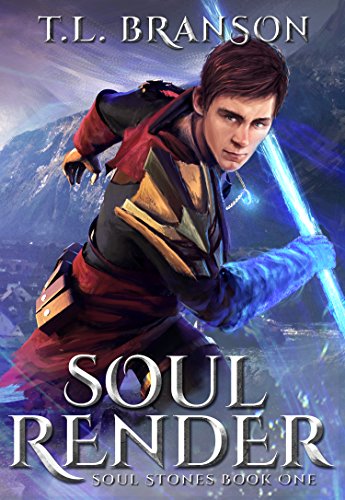
T.L. Branson is an author of YA and Epic Fantasy. His debut novel, Soul Render, is the first in a planned quartet. Branson started writing when he was eighteen but didn’t take it seriously until eleven years later. Born in Pennsylvania, he currently lives in California with his wife and two children.
He finds his inspiration from the kings (and queen) of story, J.R.R. Tolkien, C.S. Lewis, George Lucas, and J.K. Rowling. That’s code for “he’s a total nerd!”
Branson first fell in love with fantasy when he picked up a copy of R.A. Salvatore’s The Thousand Orcs. Since then, not a day goes by where his mind doesn’t wander into the realm of elves, dwarves, and orcs or crave for an epic adventure.