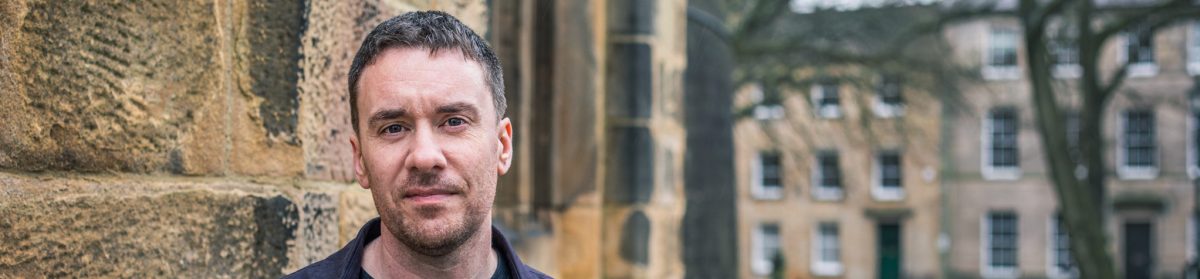
Author Spotlight: Jan Foster and Her Historical Fantasy Worlds

Dive into the magical worlds of Jan Foster, British historical fantasy author, as she discusses her inspirations, writing process, and magical creatures in her stories.

Dive into the magical worlds of Jan Foster, British historical fantasy author, as she discusses her inspirations, writing process, and magical creatures in her stories.

Today we are joined by British historical fantasy author Jan Foster.

With a passion for history, Jan has created a world filled with magic and intrigue.

In this interview, we’ll dive into the inspiration behind her world, her writing process, and what readers can expect from her books.

So grab yourself a cuppa and join us on this journey into the world of historical fantasy.

What inspired you to start writing in the fantasy genre?

I write historical fantasy and history, although written often by the victors, could be read as absolute. Fantasy allows me to ask the ‘What if’ questions – like, what if I had to live with wings but pass as a human, what if the world as fae knew it was ruled by an immortal woman, and what if a bastard son was made vampire and took over the English throne. It’s fun to explore these ideas and play with them in a parallel world.

How do you approach world-building in your stories?

I have a world within the human world, whose society structure is based on nature’s creatures. The beings who inhabit this hidden world have to, at times, interact with the human world though but because they are more ancient, it’s accepted that they shouldn’t interfere too much and change the course of human history. Because its a parallel world, there is crossover though, and I tried to imagine the view which an ancient observer would have on the human world with the benefit of their long life and experience. Naturae itself is on a real (geographically speaking) island, so I had to incorporate the topography into the design of it!

Can you walk us through your writing process?

My stories are quite character driven (as in, I want the character to start at one point in their journey, face their challenge and then, grow from it – thus making up their arc), but I always start the plotting with the history. I look for years where there was a lot happening in the society – preferably a seismic shift because of change in ruler/religion/discovery and imagine how that might effect a character’s aims in their story arc. Once I’ve noted down those events and plotted out the character’s arc within the context, the storyline is virtually broken down into chunks for me to write. It takes a lot of research and pondering to see how the jigsaw of multiple POV’s is going to fit together so its a long process. Recently, I thought it would be quicker to write against a beat sheet, for a romantic fantasy, but it actually took me longer because I was so worried about keeping to the desired structure and at times, it just didn’t ‘feel’ right to move ahead with the plotline then. I think, when all is said and done, I’m a plantster through and through – I have a rough idea of where things are heading and when in the story, but let it evolve a bit more naturally than sticking to a word count for an intended end number of words!

Would you survive in your own fantasy world?

Absolutely – but not if I was still a human. I’d quite like to be a witch though.

What themes do you explore in your work?

Belief, right to rule, female empowerment (in a time when women were definitely second class citizens)

What do you consider to be your biggest influences as a writer?

I read widely, especially historical/historical fantasy, but I also LOVE thrillers. I’d like to think some of my influences are those who write in these genres, but I also highly rate authors / specialists who talk about story structure like John Truby and Lisa Cron.

What’s the strangest thing you’ve had to research for your stories?

Blacksmithing and medieval spycraft!

What do you hope readers take away from your stories?

I’d love it if they could see the parallels I infer with modern life from the history I cover, but perhaps that’s a wish too far. Mostly, I just want to tell a good story to escape into!

Would you rather have a pet dragon or a unicorn, why?

Dragon – I grew up with probably every Anne McCaffrey book she ever wrote so it had to be really!

If you could have any magical ability, what would it be?

I’m easy to please – I just want to be able to fly. Telekinesis would be cool though, or am I just too lazy to reach for my brew when I’m reading?

If you were stuck on a deserted island with one of your characters, who would it be and why?

Spenser – my Fae Ambassador to Europe. He’s a bit of a fop, a dandy, highly entertaining and well travelled, but would have so many tales to tell I’d never get bored. Plus he’s kinda hunky for a fae.

What would you name your pet dragon?

Clawsome

Where is the best place to start reading your work?

Sign up to my newsletter and receive a free novel – the prequel set in Viking era, Risking Destiny. You can sign up on my website and find out more about the Naturae series there as well.

Visit: escapeintoatale.com

About the Author.

By day, Jan juggles consultancy work with her family, but by night she sneaks off, into the past. Her penchant for sprinkling history with magic is fueled by coffee and Cadburys. When not writing, Jan takes her dogs and small monsters into the countryside, especially if there is a castle or historic building there with a cosy coffee shop in which to escape the rain of Manchester, England

Find Jan online:

Facebook: facebook.com/janfosterauthor

Amazon Author Page: amazon.com/~/e/B084LF154S

Blog: escapeintoatale.com/short-stories-and-articles/

Twitter: twitter.com/escapeintoatale

Goodreads: goodreads.com/author/show/20093349.Jan_Foster

Instagram: instagram.com/jan.foster.author

Tiktok: tiktok.com/@janfosterauthor

Newsletter: subscribepage.com/mailingsubscribe

When History Meets Fantasy: An Interview With Author CL Jarvis

Dive into a conversation with CL Jarvis, historical fantasy author, as she talks world-building, writing process, and her debut novel.

Get ready to be transported to a world of magic and science as we talk to historical fantasy author CL Jarvis.

With a passion for history and a love of science, CL Jarvis has created a world filled with magic and intrigue.

In this interview, we’ll dive into the inspiration behind her world, her writing process, and what readers can expect from her series.

So grab a cup of tea and join us on this journey into the world of historical fantasy with CL Jarvis.

How do you approach world-building in your stories?

My stories are set in a historical Edinburgh with added magic, so some of the world-building is already done for me. But it requires a lot of research to ensure it’s historically accurate (without drowning the reader in info). My goal is to nail the sensory, geographical experience of being in this world.

Can you walk us through your writing process?

I’m an intuitive/pantser writer. Any project starts with 1-2 key scenes that first spark my imagination, so I write those out first. Then I’ll write a few more exciting scenes, step back, and try to figure how to fit a plot in there. I prefer a simple three-act structure—I don’t need to reinvent the wheel with my story arcs. If I was sensible, I’d outline more…but I find the most interesting, original bits of sparkle/insight come out when I’m writing on the fly, and they’re what make the writing process exciting to me.

Would you survive in your own fantasy world?

They have coffee, so probably.

What themes do you explore in your work?

Though there are plenty of ribald jokes and fight scenes, my debut novel also asks questions about access to knowledge: when “trust the experts” becomes elitist gatekeeping, and making medical/scientific knowledge accessible flips into propagating inaccuracies. These were issues in the 18th century with the rise of the professional class (and greater access to university education/newspapers), and it’s an issue today.

What’s the strangest thing you’ve had to research for your stories?

Period-appropriate swearing and foods are the most fun.

What do you hope readers take away from your stories?

The Georgian era is a fascinating time period: weird, scandalous, grubby…but modern in surprising ways. While these are adventure fantasies, I hope readers come away with a bit of my enthusiasm for the era.

Would you rather have a pet dragon or a unicorn, why?

Dragon. Who wouldn’t want the perk of flying?

And what would you name them?

Growler

Where is the best place to start reading your work?

The Doctrines of Fire is my series starter.

About the author:

In my 9-5 life I’m a mixture of writer and scientist. I’m from Scotland (currently based in Edinburgh) but have lived in the US long enough to mess up my grammar and spelling. I have a vociferous cat and drink a lot of coffee.

Find out more

Website: clairejarvis.com

Instagram: instragram.com/cljarvisauthor

TikTok: tiktok.com/@cljarvisauthor

Magic, Mythology, and More: A Conversation with E C Greaves

Discover the world of fantasy adventure with E C Greaves. Explore captivating tales, unique world-building, and the author’s creative process.

Author E C Greaves interview

Welcome to this exciting interview with E C Greaves, an author and illustrator who has made a name for himself in the world of fantasy adventure stories.

Born in Solihull, UK, Ed now resides in Christchurch, New Zealand, where he continues to create unique and interesting tales that have a mildly Slavic tinge to them.

When he’s not weaving tales of magic and adventure, Ed can be found pursuing a variety of passions. He restores old vehicles, codes video games, and teaches history to high school kids. It’s hard to believe that he manages to fit all of this into his schedule, but perhaps his secret lies in the fact that he seems to be completely immune to the effects of aging—despite being far too old to explain the lack of grey hair!

As we delve deeper into this interview, we’ll learn more about Ed’s creative process and how he approaches his work as an author. So sit back, relax, and join us as we explore the fascinating world of E C Greaves…

What inspired you to start writing in the fantasy genre?

In short; long and exceptionally boring train rides to a long (and by some eldritch curse) even more boring job in finance—believe it or not, but I wrote the entire first novel on my phone!

And, I suppose since I grew up with a total nerd for a dad (playing D&D, and various fantasy games on the Atari STE with him, as a kid) fantasy was really the only genre I’d ever read, so it was all I thought to write.

How do you approach world-building in your stories?

Whilst I do have a general idea of what the world looks like—tech level, magic or whatever, types of creatures and peoples, regions, etc.—I pretty much just write stories that take my characters wherever they need to go. From there, I sorta make it up as I go along, and flesh out whatever I need to.

I take this, and jot it down in one of about 35,000 google docs (on my phone, of course), and forget about it until I catch a contradiction once a book is already pretty much finished!

Can you walk us through your writing process?

During the day, I procrastinate a whole lot. Then, in the evening, I reread some existing stuff. Finally, at around midnight, once I can no longer escape it, I start writing. It takes me through til perhaps 2 or 3 am. Which is when I try desperately to get enough sleep to survive the following day!

I usually begin with a conversation, description, or situation that sorta comes to me from the ether—more often than not, something I thought of when I was driving. And then I build on that.

My characters tend to take the story where they want it to go, and I’m most definitely not a “plan every chapter” kind of author.

As such, I let them guide me, and I then go through and tie the stuff I wrote back to the general idea I had for an overarching plot, or I try to work in stuff that references earlier things—you know, to make it seem like I actually DID plan that sweet twist!

The entire time, because I have ADHD and it’s one of the best ways I’ve found I can focus, I drink a billion litres of caffeine—coffee, cola, energy drinks—and I usually chain smoke home-grown tobacco.

Would you survive in your own fantasy world?

You know what? I think I just might.

It’s not all that much more dangerous than our own history was. I grew up on a small farm, and I am fairly handy.

Oh, and I know how to make blackpowder. Anyone with that knowledge would do just fine in a pseudo-medieval (low magic) fantasy world, I think.

What themes do you explore in your work?

Identity and belonging, motherhood, legacy, freedom vs responsibility/authority, and what exactly constitutes “right.”

What do you consider to be your biggest influences as a writer?

In all honesty—and this really isn’t something I’ve seen another author admit,—but…

I don’t actually read many books.

As such, I am more influenced and informed by general conversation and discussion on politics and philosophy, by life and the real world (particularly ancient and medieval history), and by childhood influences—earlier fantasy works (usually films) like Conan, Dungeons and Dragons sessions I played when I was like 7, hours spent poring over the pictures in Dragon magazines, countless video games (from Drakkhen and Hero’s Quest, to Ultima 7 and Baldur’s Gate).

What’s the strangest thing you’ve had to research for your stories?

The stages of pregnancy, and then what happens AFTER you’ve had a baby—how long before milk dries up, and under what conditions? how long before periods come back? what happens to your body? Etc etc

Needless to say, the algorithms started targeting me with a lot of maternity stuff on devices where I’d forgotten to block ads!

What do you hope readers take away from your stories?

I don’t aim to convince readers of anything, and I try very hard to separate my own views from those of my characters. For me, my writing serves as entertainment first and foremost.

That said, I do hope they consider their own views on some of the thematic stuff, and some of the more “thorny” or “weighty” topics discussed within.

Would you rather have a pet dragon or a unicorn, why?

A unicorn. When I was a kid, I had this beautifully illustrated book about woodland critters who hung out with these industrious little gnomes.

In one of the books, they meet these total dick elves, who at one point, steal a unicorn egg or something. I honestly can’t recall much more than a few pictures (of a stripy guy transforming into a fish, and of a telescope putting ink around another guy’s eye).

What I remember clearly, however, is this beautiful picture of a unicorn/pegasus hatched out of an egg. It was really cute and pure, and for a weird little kid who liked goblins and mud, and who was picked on quite a bit, that little white horse creature seemed to represent an innocence and goodness that I think I sorely wished was more prevalent in the world.

Weird, I know.

Wish I knew what those books were!

If you could have any magical ability, what would it be?

Teleportation.

It is, by far, the most powerful/useful ability besides perhaps just straight-up omnipotence. 9-out-of-10 dentists agree.

If not that, cos it’s cheating, then the ability to live happily and healthily without doing harm to any other living being. Photosynthesis or something!

I would also like to be able to communicate with any other living being too (maybe even some dead ones… Just to spice it up!)

If you were stuck on a deserted island with one of your characters, who would it be and why?

I’d want to pick one of the Vulkari, but they’d all probably just eat me.

And whilst Zyntael could perhaps use her weird necromancy to convince the Spirits to help us, I think Phobos Lend would know of some way off the island. Either that, or he’d have a stash of rum and pipe leaf.

What would you name your pet dragon?

Wait, you mean that I didn’t get the Unicorn after all? And I poured my heart out for that question!

Fine.

“Little Stinker.”

It is my go-to pet name in anything where you can have a pet.

Where is the best place to start reading your work?

It’s available on Amazon here:

But, you know what? I really appreciate you humouring me.

So here, have the first book in the trilogy for free!

https://BookHip.com/BDZBZTW

Find out more.

Website: ecgreaves.com

Facebook: facebook.com/ECGreaves.Author

Twitter: twitter.com/GreavesEc

Enchanted Words: An Interview With Epic Fantasy Author Melinda Kucsera

Explore the fantasy world of author Melinda Kucsera as she shares her writing process, inspirations, and the eternal debate: pet dragon or unicorn? Dive into her captivating stories and discover where to start reading.

Melinda Kucsera is the author of over twenty fantasy titles.

In this interview, we will delve into her writing process, her inspiration, and whether she’d prefer a pet dragon or unicorn.

So pour yourself a nice cup of tea and let’s get started…

What inspired you to start writing in the fantasy genre?

I kept meeting people in fantasy garb who were looking for their long-lost queen. I offered to help them, only to discover that no one else can see them except me, and to help them, I need to write books about a reluctant mage and an ancient curse. They claim this will break the curse and free the queen, but I’m a bit skeptical at this point since I’ve written twenty books and I still haven’t broken the curse or freed her. I’m not saying the characters are lying to me, but someone is. 🤣

How do you approach world-building in your stories?

I keep the characters from going on at length about every facet of their world and just show the parts that actually relate to the story I’m writing. The characters don’t like when I do this, but no one wants an info dump, least of all me.

Can you walk us through your writing process?

I create a plan, then pat myself on the back for a job well done. After that, I set the plan aside and go to work. Unfortunately, my characters are stuck in my apartment while I’m at work. They pull out the plan, decide we’re not doing what’s planned, rip up the plan, set the pieces of the plan on fire and leave me to sweep up the ashes of the plan as they skip off into the sunset and do their own thing.

Would you survive in your own fantasy world?

Yes, I’d survive and live quite well in my fantasy world because I know how to follow the rules of the enchanted forest. I also know where to find quality medical care and affordable housing.

What themes do you explore in your work?

The themes I like best lately are: can you go home again, and other family-related themes. Who am I if I lose my magic, and other questions about identity. Can dreams come true and if they do, what do you do after that happens?

What do you consider to be your biggest influences as a writer?

The Lord of the Rings trilogy is a huge influence on me. I read it after I saw the first Peter Jackson film when I was in college.

What’s the strangest thing you’ve had to research for your stories?

What happens to your intestines if you get stabbed? Did you know, they can slide aside so a knife can slip past them and not even nick them? Yeah, I didn’t know that either until I went down that rabbit hole. It depends on where the person was stabbed, and it’s a common occurrence according to the research I did.

What do you hope readers take away from your stories?

A warm hug and a bemused smile because where they thought the story was going isn’t where it went, but where it ended up is better than what they thought.

Would you rather have a pet dragon or a unicorn, why?

I’d rather have a dragon. In fact, I have a dozen right now scattered across multiple books that are published and coming soon. I really don’t need another. 😂

If you could have any magical ability, what would it be?

If I could have any power, it would be the power to heal.

What would you name your pet dragon?

My dragons usually name themselves, then tell me what to call them, and I respect their wishes, so they don’t incinerate me.

Where is the best place to start reading your work?

Curse Breaker Enchanted is the best place to start and not just because it’s my first or my favorite or the book I can’t leave alone. Everything grew from that book, including the prequels.

About the author.

Melinda writes epic fantasy books when her characters allow. They sometimes drag her off on unrelated adventures to save the the greater universe where her books take place, but that’s a story for another time.

Find Melita online:

Websitemelindakucsera.com/the-more-epic-version

Youtubeyoutube.com/user/mkucsera28

Facebookfacebook.com/melinda.kucsera

Innstagram: instagram.com/MelindaKucsera28

Twitter: twitter.com/MelindaKucsera

TikTok: TikTok.com/@melindakucsera_fantasy

Pinterest: pinterest.com/MelindaKucsera9

Warhammer 40,000: An Influential Force in Modern Fantasy Literature

Discover the profound impact of Warhammer 40,000 on modern fantasy literature. From its dark setting and intricate world-building to its influence on grimdark sub-genre, explore the lasting legacy of this iconic science fiction franchise.

Warhammer 40,000, often referred to as just 40k, is a tabletop wargame and science fiction franchise created by Games Workshop in the 1980s.

Since its inception, it has grown into a massive and sprawling universe with a dedicated following of fans and hobbyists. However, beyond its reach in the gaming world, Warhammer 40k has also left a lasting impact on modern fantasy literature.

One of the key elements that sets 40k apart from other science fiction and fantasy franchises is its dark and grim setting.

The universe of 40k is brutal and dystopian. It’s a universe where humanity is constantly threatened by a multitude of alien races, internal conflicts, and the machinations of Chaos.

This bleakness and sense of hopelessness has been a major influence on many writers in the fantasy genre, particularly those writing in the grimdark sub-genre.

A hallmark of 40k is its rich and detailed world-building and expansive history and lore which has been developed over the course of decades. This has inspired many writers to adopt a similar approach in their own works, creating fully realized and intricate fantasy worlds that rival those of 40k.

The intricate and complex political structures in 40k, such as the Imperium of Man and the various factions within it, have influenced the way many writers depict power dynamics and factions in their own works.

This can be seen in the way that many fantasy novels now feature multiple, often conflicting entities vying for control and power, much like in 40k. There are no obvious good guys and bad guys—every faction is corrupt in its own way.

The success and popularity of 40k has also opened the door for other similar franchises and series, such as the Malazan Book of the Fallen series by Steven Erikson, which draws heavily from 40k’s themes and ideas. This has led to the rise of a new sub-genre of fantasy that is characterized by dark, grim worlds, complex politics, and intricate world-building, much like 40k.

It’s fair to say that Warhammer 40,000 has had a profound impact on modern fantasy literature that will no doubt expand in the years to come. From its dark world-building, to its intricate political structures, it has inspired countless writers and has left a lasting legacy in the fantasy genre.

Whether you are a fan of the franchise or not, it cannot be denied that Warhammer 40,000 has made a significant contribution to modern fantasy literature.

If you love dark fantasy, you can get the novel Birth of Assassins for freea as part of the Ravenglass Universe starter library.

The book that made me want to write: Robin Hobb’s Assassin’s Apprentice

Robin Hobb’s ‘Assassin’s Apprentice’ is the book that inspired me to write fiction. Explore the immersive world, compelling characters, and expertly crafted plot of this character-driven epic fantasy. Discover the influence of Hobb’s writing on the author’s own work.

As a fantasy reader, I’m always on the lookout for my next great adventure.

But Robin Hobb’s Assassin’s Apprentice is the book that made me want to write fiction.

I’d worked as a professional writer throughout my twenties and early-thirties in both academia and journalism, and I knew I wanted to write a novel.

In 2013, I’d just turned thirty, I was a new dad, and I read Assassin’s Apprentice for the first time.

I fell in love with Fitz’s story from the very first page. He is a complex and relatable character who is easy to care about and I quickly found myself invested in his journey.

And of course, there is the Fool—the non-binary court jester, and mentor to Fitz who repels and intrigues those around him in equal measure. Over the nine-book series, we get to watch one of the best platonic love stories in fiction play out.

The writing is excellent. Hobb’s prose is evocative and poetic, making for a truly immersive reading experience. Her attention to detail, whether in describing the world or the characters, is remarkable and adds to the realism of the story.

The world-building in Assassin’s Apprentice is incredible. Hobb has created a rich and detailed world that is both believable and fantastical. The world of the Six Duchies is one that I found myself fully immersing in and exploring, and I couldn’t help but feel like I was right there alongside Fitz.

The book deals with the themes of identity, belonging, and the nature of power, the inevitable clash between duty and desire (which is something I find myself revisiting again and again in my own fiction). Hobb explores these themes with subtlty and nuance that makes the story feel grounded in reality.

The plot itself is expertly crafted, unfurling slowly, but in a way that never drags. It is full of twists and turns that keep readers guessing.

Assassin’s Apprentice and the rest of the Farseer series is essential reading for anyone who loves character-driven epic fantasy.

And I’m sure that if you have read my Ravenglass Chronicles series, you will see her influence on my writing.

To claim your FREE Ravenglass Universe starter library, click HERE.