Blood, blades, and betrayal might draw readers to dark fantasy.
But it’s the quiet moments – the internal struggles, the fraying of conscience, the tested loyalties – that truly hook us.
When done right, character depth transforms dark fantasy from mere violence into a profound exploration of human nature.
Soren’s Transformation in Guild of Assassins
Consider how my novel Guild of Assassins handles Soren’s transformation.
Yes, there’s plenty of action – fights, assassinations, the brutal Threshing.
But the story’s real power lies in watching Soren grapple with what he’s becoming.
His hands, once devoted to creating beauty from stone, now deal death.
Each kill chips away at his humanity, like a chisel slowly revealing a darker form beneath.
The Cost of Vengeance
This internal conflict elevates the narrative beyond simple revenge.
We’re not just watching Soren learn to kill – we’re watching him struggle with the cost of vengeance.
When he finally confronts Kierak during the Threshing, the physical battle matters less than the psychological one.
Has Soren become the very thing he set out to destroy?
External Conflicts as Catalysts for Internal Struggles
The best dark fantasy recognises that external conflicts are merely catalysts for internal ones.
Mark Lawrence’s Prince of Thorns works not because Jorg is brutal, but because we understand the trauma driving his brutality.
Joe Abercrombie’s The Blade Itself captivates because Logen’s struggle with his berserker nature reveals universal truths about violence and identity.
Evolving Friendships Under Pressure
Character depth also transforms relationships.
Soren and Alaric’s friendship resonates because we see how their bond evolves under pressure.
Their loyalty isn’t just plot convenience – it’s repeatedly tested, questioned, and ultimately strengthened by their shared trauma.
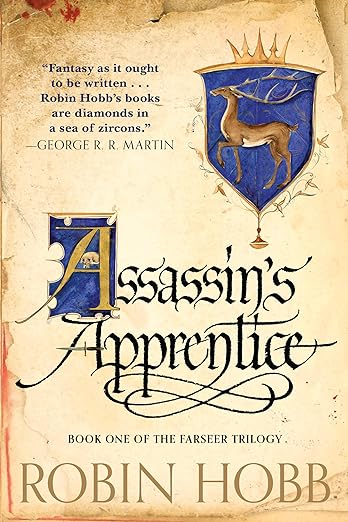
Like Fitz and the Fool in Robin Hobb’s works, their relationship becomes more meaningful precisely because we understand its cost.
The Guild as More Than a Backdrop
The guild itself becomes more than just a backdrop for training montages.
Through Soren’s eyes, we see how each master embodies different aspects of the assassin’s craft.
Varus’s brutality, Tamasin’s poisonous wisdom, Quillon’s clinical detachment – they’re not just teachers but mirrors reflecting what Soren might become.
Depth in Secondary Characters
Even secondary characters gain depth through their struggles.
Nia’s street-smart cynicism masks deeper wounds.
Isolde’s scholarly precision reveals a need for control in a chaotic world.
Ganrel’s smooth manipulation hints at past betrayals.
Their interactions create a web of competing motivations far more compelling than simple plot mechanics.
Violence as Character Development
This emotional complexity makes the violence matter.
When Soren kills during the Threshing, it’s not just action – it’s character development.
Each death forces him to confront what he’s becoming.
The physical consequences pale compared to the psychological ones.
Like the best dark fantasy, the external violence serves to illuminate internal battles.
Moral Complexity Over Shock Value
The genre works best when it recognises that darkness isn’t just about blood and death – it’s about moral complexity.
Through Soren’s eyes, we explore how good intentions lead to atrocity, how survival demands compromise, how vengeance corrupts the vengeful.
These themes resonate because they’re grounded in character, not plot.
Beyond Grimdark: Character Depth in Dark Fantasy
grDark fantasy often gets dismissed as grimdark violence porn.
But stories like Guild of Assassins show how character depth transforms darkness from shock value into meaningful exploration of human nature.
Real darkness isn’t found in gore or body counts – it’s in watching characters we care about make impossible choices.
Why Character Depth Matters
This is why character-driven dark fantasy lingers with us.
Plot may drive the story forward, but character depth makes it matter.
When we understand Soren’s internal struggle, his external battles gain meaning.
His choices have weight because we feel the cost of each compromise, each lost piece of humanity.
Finding Hope Amid Darkness
Perhaps most importantly, character depth allows dark fantasy to explore hope amid darkness.
Through Soren and Alaric’s enduring friendship, through small acts of loyalty in a brutal world, we see how light persists even in shadow.
These moments of grace matter precisely because they’re earned through character development, not plot convenience.
The Real Battlefield: The Human Heart
In the end, the best dark fantasy recognises that true darkness isn’t found in violence but in the human heart.
Through deep characterisation, it transforms genre tropes into vehicles for exploring fundamental truths about human nature.
The magic and monsters serve only to illuminate the real battlefield – the one within.
Your Thoughts
How do you think character development enhances dark fantasy?
What are your favourite examples of character-driven dark fantasy?
Share your thoughts below.