Blog

Why Official Records Are More Powerful Than Secrets

Most conspiracies don’t hide the truth. They create a new one. A look at records, institutions, agent provocateurs, and the ideas behind the fantasy spy thriller Silent Watcher.

When most people think of a conspiracy, they imagine a secret.

A hidden document. A buried truth. A meeting that took place behind closed doors.

The assumption is that the truth exists somewhere, intact and waiting to be discovered. If you can find it, you’ve solved the puzzle.

But I’ve become increasingly interested in a different kind of conspiracy.

One that doesn’t hide the truth.

One that writes a new version of it.

Instead of burying the record, it creates the record.

And that’s much harder to fight.

A hidden secret is vulnerable. Someone talks. A document leaks. A witness comes forward.

But what happens when the official version is already public?

What happens when the lie is stamped, filed, cross-referenced, and accepted as fact?

Now the argument isn’t between truth and secrecy.

It’s between the record and memory.

Between the official account and the person insisting it happened differently.

Most institutions are built to trust records. That’s not a flaw. It’s how they function. Courts, governments, businesses, historians, and archivists all depend on documentation.

The person who understands that doesn’t need to destroy the system.

They just need to feed it.

This isn’t really about shadowy cabals. The methods themselves are old.

Take the agent provocateur.

We tend to think of infiltrators as people who gather intelligence. Sometimes they do. But sometimes they’re there to create the thing they later report on.

A group grumbles. An infiltrator pushes. The group becomes more extreme. Violence follows.

The violence is real.

The arrests are real.

The official report is technically accurate.

The lie sits elsewhere.

The lie is that the people writing the report helped create the event they are now documenting.

Or consider the manufactured pretext.

The decision comes first. The justification comes later.

The conclusion already exists. The evidence is assembled afterwards. Once the file is complete, it reads like a normal sequence of events.

History contains plenty of examples of this.

The details change. The structure rarely does.

Then there’s the quieter version.

The revised report.

The altered statement.

The death ruled an accident because accident is the category that closes the file.

None of these changes needs to be dramatic.

Each individual decision can appear reasonable.

But over time those decisions create a documented reality that never actually happened.

That’s the version that unsettles me most.

Because it doesn’t require a mastermind.

Just a chain of ordinary people making small decisions inside a system.

No villain.

Just process.

The investigator facing this kind of problem has a very different challenge from the investigator hunting a buried secret.

There is no hidden vault.

No missing file.

No smoking gun.

The official account is right there on the desk waiting for them.

The evidence is present.

The evidence is organised.

The evidence says they’re wrong.

And the deeper they look, the worse things become.

Because the people producing the records are often the same people being investigated.

Every document might be genuine.

Every document might be planted.

Every clue might be a clue because someone wanted it found.

At a certain point, certainty disappears altogether.

The investigator can no longer trust the records.

But they can’t function without them either.

That’s what makes authored truth so dangerous.

A hidden truth can be recovered.

An authored truth attacks the idea of truth itself.

The real version becomes just another competing story.

One person’s memory against an entire archive.

I started thinking about these ideas because I wanted to write about them.

Eventually that became Silent Watcher.

The protagonist, Anselma, belongs to an organisation responsible for observing events and producing the official record. She’s sent to a quiet town to investigate the death of another Watcher.

The official report says everything is resolved.

The town disagrees.

The evidence disagrees.

Then she discovers documents in her own handwriting, carrying her own signature, authorising actions she has no memory of taking.

It’s a fantasy novel.

But the machinery underneath it isn’t really fantasy at all.

It’s about institutions that no longer need to hide the truth because they’ve learned something more effective.

They can write it.

And once they do, the hardest thing isn’t proving the conspiracy.

It’s proving that your version of events deserves to be believed at all.

Silent Watcher is a standalone fantasy spy novel for readers of Seth Dickinson, John le Carré, and K. J. Parker.

10 Indie Fantasy Books to Read If You Love John Gwynne

Ten indie fantasy books to read if you love John Gwynne, from dragon riders and old gods to rebellion, war, loyalty and hard-won heroism.

John Gwynne readers tend to know what they are looking for.

Big battles. Deep loyalties. Old gods, monsters, bloodshed, and characters trying to do the right thing when the world gives them every reason not to. You want stakes that feel real, but you also want people worth fighting for.

The good news is that there is plenty of fantasy out there for you.

The better news is that some of the strongest books in that space are being published independently.

The ten books below all come from indie authors. That means supporting writers who have chosen to build their own careers, publish on their own terms, and take their work directly to readers rather than waiting for approval from the corporate publishing machine.

Independent fantasy is no longer a fallback option. It is where many of the genre’s most exciting writers are working: authors able to take risks, write the stories they want to write, and put out books at a pace traditional publishing often cannot match.

These are not copies of John Gwynne’s work. They each bring something of their own. But if you love the scale, heart, grit, found-family loyalty, and hard-won heroism of The Faithful and the Fallen or The Bloodsworn Saga, there should be something here for you.

Here are ten indie fantasy books to try after John Gwynne.


Herald by Rob J. Hayes

Herald begins in a world still living with the consequences of a war against Heaven itself.

Ancient terrors are returning, tyrant kings hunt the blood of gods, and a prophecy draws together three people from very different corners of the world.

There is a sense of large-scale danger here that should appeal to readers who enjoy the gathering darkness of The Faithful and the Fallen.

Hayes brings gods, monsters, war, and desperate acts of courage together in a story that feels built for readers who like their epic fantasy big.

A Breaking of Realms by Jasmine Young

Jasmine Young’s A Breaking of Realms puts dragons at the centre of a world shaped by power, status, and brutal political rules.

Skálda wants to become a Dragonlord, but when a dragon from another world chooses her, she becomes a target instead.

The story has dragon riders, rival powers, dangerous bonds, and a heroine forced to decide what she is willing to lose for freedom.

 Gwynne readers who enjoy creature-led fantasy, fierce loyalties, and high emotional stakes may find this one a strong fit.

Dragon’s Reach by JA Andrews

Dragon’s Reach follows Sable, a thief from the slums who can tell when people are lying.

Her attempt to escape a gang boss instead pulls her into a wider struggle against the Kalesh Empire and the lies holding it together.

Along the way, she gathers an unlikely group of companions, each carrying secrets of their own.

This is a good choice for Gwynne readers who like resistance against empire, a growing band of allies, and a story where truth can be as dangerous as a sword.

Oaths of Blood by Logan D. Irons

Set during the First Crusade, Oaths of Blood begins with mercenary captain Robert Cutnose preparing to storm Jerusalem.

What waits inside the city is worse than anything the siege has prepared him for, drawing him into an ancient conflict between secret orders, immortal hunters, and blood-soaked relics.

The historical setting gives the violence and religious conflict a raw edge, while the supernatural threat keeps widening beyond one man’s revenge.

Readers who like the brutality, battle scenes, and moral greyness of darker Gwynne might want to start here.

The Way of Edan is a big, thoughtful epic fantasy about holy war, prophecy, cultural conflict, and the people caught beneath them.

The Way of Edan by Philip Chase

The expansionist Kingdom of the Eternal is pushing its faith across Eormenlond by force, while resistance grows among those facing conversion or conquest.

At the centre is Dayraven, a young man carrying a curse that may shape the future of the world.

It has the old-world weight, emotional seriousness, and Anglo-Saxon flavour that make it an easy recommendation for fans of John Gwynne.

Rise of the Ranger by Philip C. Quaintrell

Rise of the Ranger begins with a prophecy, fractured kingdoms, and an old enemy preparing to return.

Asher is a ranger, assassin, and survivor with a past stretching back far further than he remembers.

The series has the feel of classic quest fantasy, but it moves with enough pace to keep the story from becoming too comfortable.

Readers who enjoy ancient evils, hard-fought battles, and a lone warrior drawn into the fate of the wider world should give it a look.

Birthrights by David A. Trotter

Birthrights takes place in Tur’Mor, a sprawling city-state where industry, religion, wealth, and corruption are all fighting for control.

A broken warrior searches for answers, while a group of misfits in the city’s poorer districts try to survive with their own secrets intact.

Beneath the surface, forgotten magic and buried truths are beginning to push back into the world.

This is a strong choice for readers who like Gwynne’s interest in divided societies, found family, and old powers returning to disrupt the present.

Makerborn by Daymon Ashcord

Makerborn opens after a god war, in an empire built on slavery, fear, and the suffering left behind by victory.

Alandra serves the empire that stole her daughter, while Bez survives torture and experimentation with only vengeance keeping him alive.

Their personal struggles pull them towards secrets that could unravel the empire itself.

It is darker than Gwynne’s work in places, but readers who enjoy flawed characters fighting through grief, loyalty, and impossible choices should find plenty to hold onto.

Empire of Ruin by David Green

Empire of Ruin is set in a nation built on conquest, where the emperor has turned magic into a weapon of genocide.

As old enemies return and the empire’s lies begin to fracture, several characters are forced to question their loyalties, their history, and the people they trusted.

The threat is large, but the story keeps its focus on family, divided allegiances, and the human cost of war.

Gwynne readers who enjoy huge stakes, magic with consequences, and characters trying to do the right thing inside a failing system should find a lot here.

The Fall of Wolfsbane by Jon Cronshaw

The Fall of Wolfsbane follows Ragnar and Maja Wolfsbane after the Ostreich Empire conquers their home, kills their father, and takes them into the heart of the enemy’s world.

Ragnar is raised among imperial warriors and wyverns, while Maja must survive court politics with a dangerous gift for influencing minds.

 Readers who enjoy Gwynne’s mix of family loyalty, hard choices, rebellion, and the slow rise of heroes should find plenty to enjoy here.


John Gwynne has set a high bar for epic fantasy: stories with real darkness, characters worth caring about, and courage that costs something.

Every book here comes from an independent author, which means every read, review, recommendation, and newsletter sign-up makes a practical difference.

Supporting indie fantasy is not charity. It is a way of finding ambitious books that might never have made it through the narrow gates of corporate publishing.

I have put The Fall of Wolfsbane at the end because it is my own book, and I wanted the rest of this list to stand on its own first. But if you enjoy conquest and rebellion, wyverns, divided loyalties, and characters trying to hold onto themselves inside an empire built on violence, I hope you will give it a try.

And if there is an indie fantasy book John Gwynne fans should know about, leave it in the comments. There are always more stories worth finding.


Note: This post include affiliate links.

Where to Start in Fantasy: Five Paths for New Readers

Not sure where to start in fantasy? Five reading paths for new readers, from magic systems and adventure to character, prose and grit.

Search for where to start in fantasy and you will usually get the same handful of books.

Mistborn. The Name of the Wind. The Way of Kings. A Game of Thrones. Then probably Mistborn again, in case you missed it.

They are all worthwhile books. But fantasy is far bigger than any one list of obvious starting points.

The right place to begin depends on what you want from a story.

Some readers want magic with clear rules and clever pay-offs. Some want characters they can live with for thousands of pages. Some want a crew, a journey, and people who feel like friends by the end. Others want sentences that make them stop and read them twice.

And some want fantasy that understands violence has a cost.

I read more than I write, and after years of reading fantasy I do not think there is one correct entry point. There are different routes into the genre.

Below are five of them.

Each path has three books: a place to begin, a next step, and a book that opens things up further. Pick the one that sounds closest to what you want right now.

Do not worry too much about choosing perfectly. Read the first book. Give it a hundred pages. You will know soon enough whether it is for you.

None of these paths is more valid than the others. The only thing that matters is finding the kind of fantasy that makes you want to carry on.

Path 1: I Want Clear Rules and Clever Worldbuilding

This is for readers who want magic to make sense.

You want rules, limits, consequences, and climaxes built around information that was there all along. You want to understand how the world works well enough to spot the answer before the characters do.

Start with: Brandon Sanderson, Mistborn: The Final Empire

This remains one of the best places to start for readers who want a modern, accessible fantasy novel with a clear magic system.

Vin is a teenage thief in a world ruled by an immortal tyrant. She discovers she can use Allomancy, a form of magic based on burning metals to gain specific abilities.

Each metal does one thing. Each power has a cost. Sanderson makes the rules clear, then spends the book finding smart ways to push against them.

It is also a heist story, which helps. The characters have a plan, the plan has problems, and the magic is tied directly into the plot rather than sitting beside it.

If this works for you, there is plenty more Sanderson waiting. The wider Cosmere alone can keep you busy for years.

Then: Brian McClellan, Promise of Blood

Promise of Blood takes some of the pleasures of Sanderson’s work and puts them in a sharper, more political setting.

This is flintlock fantasy: muskets, revolutions, coups, and magic threaded through a world that feels close to the French Revolution.

There are several systems at work here. Powder mages can draw power from gunpowder. Privileged use more traditional sorcery. Knacked have small, strange gifts that can be useful in the right situation.

The plot moves quickly. The main characters are adults who know what they are doing, even when they are making terrible decisions. It has the pace of a thriller without losing the satisfaction of a well-built fantasy world.

Then: Will Wight, Unsouled

Unsouled is the first book in Will Wight’s completed twelve-book Cradle series.

Lindon comes from a society built around personal advancement and martial power. He has been marked as Unsouled: someone with no future, no gift, and no place in the hierarchy.

Then he is given a reason to fight anyway.

This is progression fantasy at its best. The pleasure is watching Lindon learn, train, fail, adapt, and become stronger through effort rather than luck.

The books are fast, addictive, and very hard to put down once the series finds its stride.

Where to go next

Try The Way of Kings if you want a much bigger Sanderson series with more characters, more history, and a larger canvas.

Try Robert Jackson Bennett’s Foundryside if you want a heist story with unusual magic and a more contained trilogy.

Path 2: I Want Characters Who Feel Like Real People

This is the path for readers who are there for the people.

The world can be interesting. The magic can be impressive. But what matters most is whether the characters feel alive.

You want to know what they are thinking. You want to see them make mistakes, carry regrets, hurt people they love, and try to become better.

Start with: Robin Hobb, Assassin’s Apprentice

Robin Hobb writes characters with a level of emotional precision that few fantasy writers can match.

Assassin’s Apprentice is told through Fitz, the bastard son of a prince. He grows up at court, caught between the people who want to use him and the people who claim to care about him.

Fitz is not always easy to read. He can be stubborn, loyal beyond reason, and blind to the damage being done around him.

That is part of why he works.

Hobb makes you feel every bad decision, every betrayal, and every small act of kindness. The first Farseer trilogy is a strong starting point, but it is only the beginning of Fitz’s story.

If you carry on through Tawny Man and Fitz and the Fool, you get one of the longest and most affecting character arcs in fantasy.

Then: Michael J. Sullivan, Theft of Swords

Where Hobb can break your heart, Michael J. Sullivan is often warmer.

Theft of Swords introduces Hadrian and Royce: a swordsman and a thief who work together as Riyria, taking jobs for people who can afford them.

The books grow into something bigger, with conspiracies, lost history, political upheaval, and old secrets coming back to the surface.

But the friendship between Hadrian and Royce is what holds it together.

They are different in almost every way. Hadrian believes people can be better. Royce generally assumes they cannot. Watching that partnership change over the series is one of the great pleasures of the books.

Then: Tad Williams, The Dragonbone Chair

Tad Williams helped shape much of what modern epic fantasy became.

The Dragonbone Chair begins with Simon, a kitchen boy in a castle who finds himself caught up in events far larger than he understands.

This is old-school epic fantasy in the best sense. It takes its time. It lets the world feel lived in. It gives its characters room to grow.

Simon starts out young, uncertain, and sometimes frustrating. That is deliberate. The pleasure comes from watching him become someone capable of carrying the weight the story puts on him.

Memory, Sorrow, and Thorn is a finished trilogy and remains one of the foundations of modern epic fantasy.

Where to go next

Try Lois McMaster Bujold’s The Curse of Chalion and Paladin of Souls for intelligent, character-led adult fantasy.

Try Guy Gavriel Kay’s Tigana for a more lyrical standalone about memory, loss, and the cost of liberation.

Path 3: I Want Adventure with Friendship at the Centre

This is for readers who want a party, a crew, or a band of people who become more important than the quest itself.

You want arguments around a campfire. You want badly timed jokes, impossible plans, old grudges, and people risking everything for each other.

Start with: Nicholas Eames, Kings of the Wyld

Imagine a group of ageing mercenaries getting the band back together for one last job.

That is the basic idea behind Kings of the Wyld, and it is much better than that description makes it sound.

Clay Cooper used to be part of the most famous mercenary band in the world. Years later, his old friend turns up needing help to rescue his daughter from a city surrounded by monsters.

The group reunites. They are older, slower, carrying injuries and baggage, but they still know how to fight.

The book is funny without feeling weightless. It understands nostalgia, friendship, and the strange pain of realising your best years might be behind you.

Then it makes you care enough to hurt you.

Then: Scott Lynch, The Lies of Locke Lamora

Locke Lamora is a thief, con artist, and professional liar in a fantasy city inspired by Renaissance Italy.

He and the Gentleman Bastards run elaborate scams on wealthy targets. Then they attract the attention of people far more dangerous than the people they usually steal from.

The plotting is intricate, but the relationships are what make the book work.

Lynch cuts between the present-day con and the earlier years when Locke’s crew came together. By the time the plan starts collapsing, you know exactly what these people mean to each other.

It is clever, fast, filthy, funny, and often brutal.

Then: Sebastian de Castell, Traitor’s Blade

Falcio val Mond is one of the last Greatcoats: travelling magistrates and swordsmen once sworn to serve the king.

The king is dead. The country is falling apart. Falcio and his two oldest friends are still trying to carry out their final duty.

Traitor’s Blade has duels, plots, betrayals, and plenty of swashbuckling energy. But it also has real moral weight.

Falcio, Kest, and Brasti feel like men who have known each other too long to bother pretending. Their friendship is built on loyalty, irritation, shared history, and the certainty that they will show up when it counts.

Where to go next

Try Joe Abercrombie’s The Heroes if you want a war story about the people trapped inside it.

Or go back to Michael J. Sullivan and read more Hadrian and Royce.

Path 4: I Want Literary Prose and Mythic Weight

This is for readers who come to fantasy through literary fiction, or who want fantasy where the writing itself is part of the pleasure.

You are not reading only to find out what happens next. You want atmosphere. You want ambiguity. You want stories that leave room for silence and unanswered questions.

Start with: Ursula K. Le Guin, A Wizard of Earthsea

Ursula K. Le Guin wrote fantasy with a clarity and control few writers have matched.

Earthsea is a world of islands, old names, dragons, sea journeys, and quiet danger. Magic comes through knowing the true names of things.

The first book follows Ged, a boy with enormous power and very little wisdom. He makes a mistake that follows him for years.

It is a short novel, but it does not feel small.

The books deepen as they go. The Tombs of Atuan is stranger and more intimate. Tehanu, written years later, is one of the best books fantasy has produced about adulthood, power, and the lives people are expected to live.

Then: Susanna Clarke, Piranesi

Do not read much about this one before you begin.

The narrator lives in a vast House filled with statues, halls, tides, birds, and bones. He believes he understands the House. Gradually, both he and the reader begin to realise he does not.

Piranesi is short, strange, and quietly moving.

It is the kind of book that changes shape as you read it. By the end, you may find yourself thinking back over details that seemed unimportant at the start.

Then: Patricia A. McKillip, The Riddle-Master of Hed

Patricia A. McKillip remains one of the most under-read great fantasy writers.

Her work has the texture of myth without feeling like an imitation of older stories. Songs matter. Names matter. Old stories matter because they are rarely as dead as people think.

The Riddle-Master of Hed follows Morgon, prince of a small island kingdom, who learns that his ordinary life is tied to something far older and more dangerous.

The trilogy is full of riddles, old powers, and a sense that the world is holding back more than it reveals.

If McKillip works for you, read The Forgotten Beasts of Eld next.

Where to go next

Try Robin Hobb’s Farseer books for character-led fantasy with real emotional depth.

Try Sofia Samatar’s A Stranger in Olondria for a book about books, language, memory, and ghosts.

Path 5: I Want Gritty Fantasy with Moral Complications

This is for readers who want fantasy that does not treat violence as clean or heroism as easy.

You want characters making difficult choices in bad situations. You want consequences. You want people trying to do the right thing when there may not be a right answer available.

That does not mean every book needs to be bleak.

The best dark fantasy still gives you people worth caring about.

Start with: John Gwynne, Malice

John Gwynne writes big, muscular epic fantasy with battle, monsters, old gods, betrayals, and large casts of characters.

But Malice has more heart than its reputation for bloodshed might suggest.

It is the first book in The Faithful and the Fallen, a completed quartet set in a world where old prophecies are starting to come true and the people caught in them have to decide what they are willing to become.

The story has darkness, but it also understands loyalty and courage. Gwynne gives you characters who are scared, angry, grieving, and still trying to stand up for each other.

If you like this, his later work is also worth reading, especially The Shadow of the Gods.

Then: Joe Abercrombie, The Blade Itself

Joe Abercrombie helped define what many readers now mean when they talk about grimdark.

The Blade Itself follows Logen Ninefingers, a northern warrior trying to leave his bloody past behind; Sand dan Glokta, a crippled torturer who has become very good at spotting lies; and Jezal dan Luthar, a vain nobleman with more confidence than sense.

The dialogue is brilliant. The violence is ugly. The characters are selfish, damaged, funny, and often more human than they want to admit.

Abercrombie does not offer easy moral lessons. He is more interested in what people do when they have already become the worst version of themselves.

The standalones that follow the original trilogy are some of his best work, especially The Heroes and Best Served Cold.

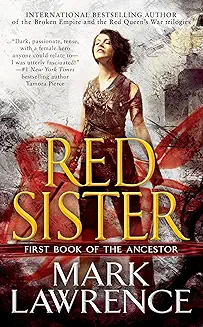
Then: Mark Lawrence, Red Sister

Nona Grey is sent to a convent where girls are trained to become warriors, assassins, scholars, and nuns.

The world is dying. The sun is failing. The convent holds secrets that reach far beyond its walls.

Red Sister has a strong central character, excellent action, and a setting that becomes stranger and more interesting the further you go.

Nona is dangerous, angry, and fiercely loyal. The book gives her room to be all of those things without pretending that any of them are simple.

Mark Lawrence’s earlier Prince of Thorns books are much harsher. I would start here.

Where to go next

Try Anna Smith Spark’s https://geni.us/N7yI for darker fantasy with a more lyrical style.

Try Glen Cook’s The Black Company for one of the books that helped establish the modern military fantasy tradition.

A Final Thought

Most readers do not stay on one path forever.

Readers who begin with Sanderson often end up reading Hobb. Readers who love Hobb often find their way to Le Guin. Readers who start with Le Guin sometimes want something harder and turn to Abercrombie.

The genre is bigger than any one shelf in a bookshop.

Do not worry about finding the perfect book. Pick the path that sounds right for you now. Read the first recommendation. See what it gives you.

If you finish it and want more, carry on.

If you finish it and feel nothing, try another route.

Part of becoming a fantasy reader is working out what you want from stories. The only real way to do that is to keep reading.

The five starting books here—Mistborn, Assassin’s Apprentice, Kings of the Wyld, A Wizard of Earthsea, and Malice—give you a good sense of the range fantasy can offer.

Read all five over the next year and you will know far more about your own taste than any guide can tell you.

Whatever path you choose, I hope it leads you to something you love.

Happy reading!


Note: This post includes affiliate links.

Writing Through the Heatwave & Returning to Mark, The Chosen One | Author Diary, June 26, 2026

Writing through the UK heatwave, revisiting Mark, The Chosen One, and reading The Hobgoblin Riot. Plus updates on my fantasy writing and the sequel to Orphan Farm Boy of Destiny.

This week’s been a challenge thanks to the UK heatwave, but I’ve still managed to make progress on my latest fantasy project.

I’ve been working through what I have so far on Mark, The Chosen One, a follow-up to my Patreon novella Orphan Farm Boy of Destiny.

The story picks up 20 years later. Mark is now in his forties, has a teenage son, and hasn’t picked up a sword in over two decades.

The Dark Lord never appeared when prophecy said he would… but now the prophecy has finally come true.

After years of living an ordinary life, Mark must decide whether he can become the hero everyone expected him to be.

On the reading front, I finished Dominion of Blades by Matt Dinniman and immediately started Book 2, The Hobgoblin Riot. I’m really enjoying the series and seeing another side to Dinniman’s writing outside Dungeon Crawler Carl.

Nine Years of Publishing, Dragon Corps Progress & Sentinel Edits | Author Diary – June 19, 2026

This week: 60% through RAF Dragon Corps Book 3, editing The Sentinel’s Mercy, and celebrating nine years since publishing Wizard of the Wasteland.

This week I’ve continued working on RAF Dragon Corps Book 3 and have now reached the 60% mark in the draft.

 It’s been great returning to the skies over wartime Britain and continuing the series.

I’ve also been working through The Sentinel’s Mercy, getting the manuscript ready to send off for a professional edit. It’s always satisfying to move a project closer to publication.

And this week marks a special milestone: nine years since I published my first novel, Wizard of the Wasteland.

Looking back on nearly a decade as an indie author, I reflect on how far things have come, the lessons I’ve learned, and the stories still waiting to be told.

Thanks to everyone who’s joined me on this journey. Here’s to the next nine years!


Meta Description:
This week: 60% through RAF Dragon Corps Book 3, editing The Sentinel’s Mercy, and celebrating nine years since publishing Wizard of the Wasteland.

What a John le Carré Spy Novel Looks Like in a Fantasy World

What happens when the paranoia, bureaucracy, and moral ambiguity of a John le Carré spy novel collide with epic fantasy? A look at fantasy espionage, institutional corruption, and the ideas behind Silent Watcher.

There’s a moment in a lot of epic fantasy where someone unrolls a map and explains the problem.

An ancient evil is rising. A kingdom is falling. A prophecy must be fulfilled. The lines are clear. The enemy is obvious.

John le Carré spent an entire career writing stories that work in exactly the opposite way.

Nobody unrolls a map because nobody can agree what the map means. The enemy isn’t a dark lord. It’s a department. A committee. A chain of decisions made by people who all believe they’re doing their jobs properly.

The hero isn’t chosen. They’re assigned.

Usually against their will.

And the great fear isn’t that evil will win. It’s that everyone involved has quietly stopped being able to tell the difference between winning and losing.

I’ve been thinking about that a lot while writing Silent Watcher, because fantasy rarely operates on those terms.

Fantasy is full of wars, rebellions, coups, and corrupt rulers.

Yet the genre is surprisingly trusting of institutions.

The rightful king returns. The true heir takes the throne. The wise order of mages was right all along. Even when institutions are corrupt, the corruption usually comes from somewhere else. A traitor. A dark influence. A villain who has infected an otherwise healthy system.

Remove the bad actor and everything works again.

Le Carré’s fiction runs on a different assumption.

The institution is the problem.

Not because a villain corrupted it.

Because the institution itself produces outcomes nobody would choose individually.

Everyone follows procedure.

Everyone acts reasonably.

Everyone passes responsibility to the next desk.

Then something terrible happens and nobody can point to the exact moment it became inevitable.

That’s a very different engine for a story.

One of the great strengths of a spy novel is uncertainty.

The protagonist always knows less than the people they’re investigating.

Every document could be planted.

Every witness could be rehearsed.

Every clue could have been left there deliberately.

The people creating the evidence are often the same people being investigated.

That translates remarkably well into fantasy if you build the institution correctly.

Imagine an order whose authority comes entirely from observation and record-keeping. Their reports become official history. Their archives become accepted truth.

Now imagine those records can be altered.

Reports disappear.

Names change.

Signatures appear on documents that were never signed.

Events are rewritten after they happen.

Suddenly the protagonist loses the one thing investigators normally rely on: certainty about the evidence.

That’s where the paranoia begins.

You don’t need magic to do this. Le Carré managed perfectly well with filing cabinets and classified documents.

Fantasy just gives you sharper tools.

The strongest influence le Carré had on me isn’t really about plot.

It’s about protagonists.

George Smiley isn’t an action hero.

His gift is attention.

He notices the inconsistency. The detail that’s slightly wrong. The explanation that’s a little too neat.

His heroism comes from refusing to look away.

Fantasy has an equivalent archetype, but we don’t use it very often.

The witness.

The observer.

The person whose job is not to fight, but to see.

And that’s where things become interesting.

Because what happens when a person trained to observe injustice realises that observation has become complicity?

What happens when faithfully recording events helps preserve a lie?

What happens when “watching without shaping” becomes an excuse for doing nothing?

Those feel like le Carré questions to me.

They’re also fantasy questions.

We just don’t ask them often enough.

So, why isn’t rthere more fantasy like this?

Part of the reason is that these stories are harder to sell.

The pleasures are quieter.

They’re built from suspicion, investigation, and revelation rather than spectacle.

As fantasy readers, we often expect a restoration at the end. The crown returns. The kingdom is saved.

A le Carré story isn’t usually interested in restoration.

It’s interested in asking whether the system was worth saving in the first place.

That doesn’t mean nobody is working in this space.

Seth Dickinson’s The Traitor Baru Cormorant is probably the clearest modern example. K. J. Parker spends a lot of time examining institutions through the lens of clever people trapped inside them. Robert Jackson Bennett and Daniel Abraham both understand that information and administration can be just as powerful as armies.

None of them are writing le Carré in a fantasy world.

But they’re all mining the same vein.

The one beneath the institution rather than the battlefield.

The one where the real horror isn’t the monster outside the walls.

It’s discovering the walls were built to keep you looking the wrong way.


If that sounds like your kind of fantasy, it’s very much the territory Silent Watcher occupies.

A Watcher arrives in a quiet provincial town to investigate a colleague’s death. The official record doesn’t match the evidence. Witnesses repeat the same stories. Documents vanish. Then she discovers reports carrying her own signature that she has no memory of writing.

It’s a standalone fantasy spy thriller for readers of Seth Dickinson, John le Carré, and K. J. Parker.

Why I Don’t Think Hard and Soft Magic Are Useful Labels

A fantasy author’s perspective on hard and soft magic, worldbuilding, and why mystery remains one of the genre’s greatest strengths.

 For the past twenty years, fantasy readers and writers have increasingly discussed magic through the language of “hard” and “soft” magic systems.

The distinction comes largely from Brandon Sanderson’s essays on magic, and it has become so widely adopted that many readers now treat it as the default way to think about fantasy.

I understand why.

The framework is useful. It gives people a shared vocabulary. It helps explain why a magic system in a role-playing game, a video game, or a progression fantasy often feels satisfying. Readers enjoy understanding the tools available to characters. They enjoy seeing clever solutions emerge from established rules.

The problem comes when the framework stops being descriptive and starts becoming prescriptive.

Over time, the language of hard and soft magic has created a hierarchy. Magic that operates according to explicit rules is often treated as more sophisticated, more developed, or more believable. Magic that retains mystery is frequently discussed as though it occupies a lower rung on the ladder.

Yet some of the richest magical traditions in fantasy operate according to very different principles.

In Earthsea, magic is tied to true names. In Jonathan Strange & Mr Norrell, magic emerges from folklore, history, scholarship, and forgotten traditions. In Tolkien’s work, magic carries spiritual and moral significance. In each case, the power of the magic comes from what it means within the world and the story.

These systems possess depth, consistency, and internal logic. They shape cultures, histories, beliefs, and characters. They feel ancient and real.

They simply invite the reader to engage with them differently.

One of the great pleasures of fantasy is encountering something larger than human understanding. Many mythologies, religions, and folk traditions revolve around powers that can be glimpsed but never fully grasped. Their significance lies partly in their mystery.

Fantasy inherits much of that tradition.

When every magical phenomenon is catalogued, measured, quantified, and explained, magic begins to resemble engineering. It becomes a branch of fictional physics. That approach can produce excellent stories, but it represents one tradition among many rather than the destination toward which all fantasy naturally progresses.

As fantasy readers, we often talk about immersion. Yet genuine immersion does not always come from knowing every rule. Sometimes it comes from sensing that there are truths beneath the surface that nobody fully understands.

That is largely how I approach magic in the Ravenglass Universe.

The setting contains rules. Ravenglass behaves in particular ways. Blood can awaken its power. Tears can shape it. The Shadow Realm follows principles of its own. Certain actions carry predictable consequences.

Beneath the stories, there is a coherent system.

The characters, however, only possess fragments of that knowledge.

A Guardian scholar might understand one aspect of ravenglass. An assassin might know another. A wyvern might possess memories stretching back centuries. Ancient records preserve clues. Myths preserve others. Some pieces have been lost. Some have been deliberately hidden. Some are misunderstood.

fAs a result, the people living within the world experience magic in the same way real societies experience history, religion, or science. Knowledge accumulates unevenly. Competing explanations coexist. Certainty remains elusive.

That uncertainty creates wonder.

When Ragnar encounters ravenglass for the first time, he does not receive a rulebook. When Soren learns to forge a blade, he discovers one small corner of a much larger reality. When Adelinde uncovers forbidden histories, she finds evidence of a force beyond human understanding.

The mystery itself becomes part of the setting.

I sometimes wonder whether terms like hard magic and soft magic have outlived their usefulness.

They encourage us to sort magic into categories rather than asking what role it serves within a story. They turn a wide spectrum of approaches into a binary choice. They also carry unintended value judgements that place certain traditions above others.

Fantasy has always been broad enough to contain all of these approaches.

Some stories thrive on clearly defined magical tools. Others thrive on folklore, symbolism, myth, religion, dream logic, or half-forgotten truths. Some combine several traditions at once.

The question is never whether a magic system is hard or soft.

The question is whether it creates the experience the story needs.

For many fantasy readers, part of the appeal of magic lies in the feeling that there is always another layer beneath the one we can see. A forgotten name. A lost story. A secret buried in an old chronicle. A truth that remains just beyond reach.

That sense of mystery has carried fantasy for centuries.

I suspect it will continue to do so long after the current labels have faded from fashion.

Dragons, Swords & Dark Reads | Author Diary, June 12, 2026

This week: seven chapters drafted for RAF Dragon Corps Book 3, work begins on Five of Swords, The Prince and the Fool launches, and Orphan Farm Boy of Destiny is now free on Patreon.

This week, I’ve been making strong progress on RAF Dragon Corps Book 3, completing the first draft of the opening seven chapters.

The Battle of Britain is beginning to take shape, and I’m enjoying getting back into the world of dragon riders, aerial combat, and wartime Britain.

I’ve also started work on Five of Swords, continuing my return to The Ravenglass Chronicles.

On the reading front, I finished Kaiju: Battlefield Surgeon by Matt Dinniman. It’s an incredibly dark book, veering into horror at times, but I found it compelling from start to finish. I’ve now moved on to Dominion of Blades by the same author and am enjoying seeing a different side of his storytelling.

In publishing news, The Prince and the Fool is out today, marking the next chapter in the Ravenglass Legends saga. Also, my satirical fantasy novella Orphan Farm Boy of Destiny is now available free to followers on Patreon.

A busy week of writing, reading, and new releases!

Dragons, Guardians & Giant Monsters | Author Diary – June 5. 2026

This week: outlining RAF Dragon Corps Book 3, planning the Keeper-focused Ravenglass Guardians novel, and reading the dark and gripping Kaiju Battlefield Surgeon by Matt Dinniman.

This week, I finished outlining  RAF Dragon Corps Book 3 and wrote the first chapter, officially kicking off the next stage of the series.

This instalment takes the story into the Battle of Britain and the Blitz, so there’s plenty of research and planning involved before the dragons take to the skies once more.

I’ve also been planning the next Ravenglass Guardians novel, this time focusing on the Keepers.

Each Guardians book explores a different path within the order, and I’m excited about the themes and conflicts this one will tackle.

On the reading front, I’ve been making my way through Kaiju Battlefield Surgeon by Matt Dinniman.

It’s much darker than Dungeon Crawler Carl, with less humour and more horror, but it’s exceptionally well done and has completely pulled me into its world.

A week of planning, plotting, dragons, Guardians, and giant monsters.