Discover how dark fantasy redefines coming-of-age stories by exploring the loss of innocence, the price of knowledge, and the corruption of ideals. Uncover the haunting truths behind Soren’s transformation in Forged in Blood.
Coming-of-age stories have always captivated readers.
When filtered through the lens of dark fantasy, they take on a particularly haunting resonance.
In my novel Forged in Blood, from the Guild of Assassins trilogy, we witness Soren’s transformation from an idealistic sculptor’s apprentice into a ruthless assassin.
His journey reflects a darker truth about growing up: sometimes innocence isn’t gently shed but violently stripped away.
Beyond Traditional Coming-of-Age
Traditional coming-of-age stories often focus on self-discovery and first experiences.
Dark fantasy takes these familiar themes and twists them, showing how knowledge can corrupt and experience can destroy.
When Soren first joins the Guild seeking justice for his father’s murder, he still believes in clear divisions between right and wrong.
By the end, those moral lines have blurred beyond recognition.
The Price of Knowledge
Like Kvothe in Patrick Rothfuss’s The Name of the Wind, Soren’s pursuit of knowledge and power comes with unexpected costs.
But where Kvothe’s story maintains elements of wonder, dark fantasy protagonists often discover that knowledge brings not enlightenment but disillusionment.
Think of Robin Hobb’s Fitz, whose training as an assassin forces him to confront brutal truths about loyalty and sacrifice.
Broken Friendships
One of the most painful aspects of dark coming-of-age stories is the destruction of childhood friendships.
In Forged in Blood, Soren’s relationship with his best friend Alaric slowly deteriorates as their paths diverge.
This mirrors George R.R. Martin’s treatment of the Stark children, showing how circumstance and choice can shatter even the strongest bonds.
The Loss of Choice
Perhaps the most terrifying aspect of these stories is how they strip away the illusion of choice.
When Soren begins his training, he believes he’s choosing his path.
Gradually, he realises he’s been manipulated from the start, much like Pierce Brown’s Darrow in Red Rising.
The real horror lies not in the loss of innocence itself, but in the recognition that it might have been inevitable.
The Corruption of Ideals
Dark fantasy coming-of-age stories often show how ideals become corrupted.
Soren begins as an artist, creating beauty from raw stone.
His transformation into an assassin perverts this artistic talent into something darker – he’s still shaping and creating, but now his medium is death.
This mirrors how Mark Lawrence’s Jorg Ancrath twists his noble education into tools for revenge and conquest.
Why These Stories Matter
These darker coming-of-age tales resonate because they reflect truths about growing up that more optimistic stories often ignore.
Knowledge can destroy as easily as it empowers.
Growth often requires sacrifice.
Childhood friendships don’t always survive into adulthood.
Our choices may be more limited than we believe.
Talent can be turned to dark purposes.
The Appeal of Darkness
What makes these stories compelling isn’t just their darkness, but how they reflect real aspects of growing up through a darker lens.
When Soren finally completes his transformation, it’s tragic precisely because we understand every step that led him there.
We see our own compromises and lost innocence reflected in these darker mirrors.
Beyond Simple Corruption
The best dark fantasy coming-of-age stories aren’t simply about corruption.
They’re about the complexity of growth, the price of knowledge, and the sometimes terrible choices we make in pursuit of our goals.
They remind us that growing up isn’t always about becoming better – sometimes it’s about becoming what we need to be to survive.
What dark fantasy coming-of-age stories have resonated most with you?
How do they differ from more traditional coming-of-age tales?
Share your thoughts in the comments below.
Want to explore more dark fantasng? Check out my Patreon for early access to chapters, exclusive content, and behind-the-scenes insights into the writing process. See how stories evolve from first draft to final publication, and join a community of readers passionate about dark fantasy.
Explore how emotional depth and character development transform dark fantasy from mere action to powerful storytelling. Discover why internal struggles, tested loyalties, and moral complexity give dark fantasy its lasting impact on readers.
Blood, blades, and betrayal might draw readers to dark fantasy.
But it’s the quiet moments – the internal struggles, the fraying of conscience, the tested loyalties – that truly hook us.
When done right, character depth transforms dark fantasy from mere violence into a profound exploration of human nature.
Soren’s Transformation in Guild of Assassins
Consider how my novel Guild of Assassins handles Soren’s transformation.
Yes, there’s plenty of action – fights, assassinations, the brutal Threshing.
But the story’s real power lies in watching Soren grapple with what he’s becoming.
His hands, once devoted to creating beauty from stone, now deal death.
Each kill chips away at his humanity, like a chisel slowly revealing a darker form beneath.
The Cost of Vengeance
This internal conflict elevates the narrative beyond simple revenge.
We’re not just watching Soren learn to kill – we’re watching him struggle with the cost of vengeance.
When he finally confronts Kierak during the Threshing, the physical battle matters less than the psychological one.
Has Soren become the very thing he set out to destroy?
External Conflicts as Catalysts for Internal Struggles
The best dark fantasy recognises that external conflicts are merely catalysts for internal ones.
Mark Lawrence’s Prince of Thorns works not because Jorg is brutal, but because we understand the trauma driving his brutality.
Joe Abercrombie’s The Blade Itself captivates because Logen’s struggle with his berserker nature reveals universal truths about violence and identity.
Evolving Friendships Under Pressure
Character depth also transforms relationships.
Soren and Alaric’s friendship resonates because we see how their bond evolves under pressure.
Their loyalty isn’t just plot convenience – it’s repeatedly tested, questioned, and ultimately strengthened by their shared trauma.
Like Fitz and the Fool in Robin Hobb’s works, their relationship becomes more meaningful precisely because we understand its cost.
The Guild as More Than a Backdrop
The guild itself becomes more than just a backdrop for training montages.
Through Soren’s eyes, we see how each master embodies different aspects of the assassin’s craft.
Varus’s brutality, Tamasin’s poisonous wisdom, Quillon’s clinical detachment – they’re not just teachers but mirrors reflecting what Soren might become.
Depth in Secondary Characters
Even secondary characters gain depth through their struggles.
Nia’s street-smart cynicism masks deeper wounds.
Isolde’s scholarly precision reveals a need for control in a chaotic world.
Ganrel’s smooth manipulation hints at past betrayals.
Their interactions create a web of competing motivations far more compelling than simple plot mechanics.
Violence as Character Development
This emotional complexity makes the violence matter.
When Soren kills during the Threshing, it’s not just action – it’s character development.
Each death forces him to confront what he’s becoming.
The physical consequences pale compared to the psychological ones.
Like the best dark fantasy, the external violence serves to illuminate internal battles.
Moral Complexity Over Shock Value
The genre works best when it recognises that darkness isn’t just about blood and death – it’s about moral complexity.
Through Soren’s eyes, we explore how good intentions lead to atrocity, how survival demands compromise, how vengeance corrupts the vengeful.
These themes resonate because they’re grounded in character, not plot.
Beyond Grimdark: Character Depth in Dark Fantasy
grDark fantasy often gets dismissed as grimdark violence porn.
But stories like Guild of Assassins show how character depth transforms darkness from shock value into meaningful exploration of human nature.
Real darkness isn’t found in gore or body counts – it’s in watching characters we care about make impossible choices.
Why Character Depth Matters
This is why character-driven dark fantasy lingers with us.
Plot may drive the story forward, but character depth makes it matter.
When we understand Soren’s internal struggle, his external battles gain meaning.
His choices have weight because we feel the cost of each compromise, each lost piece of humanity.
Finding Hope Amid Darkness
Perhaps most importantly, character depth allows dark fantasy to explore hope amid darkness.
Through Soren and Alaric’s enduring friendship, through small acts of loyalty in a brutal world, we see how light persists even in shadow.
These moments of grace matter precisely because they’re earned through character development, not plot convenience.
The Real Battlefield: The Human Heart
In the end, the best dark fantasy recognises that true darkness isn’t found in violence but in the human heart.
Through deep characterisation, it transforms genre tropes into vehicles for exploring fundamental truths about human nature.
The magic and monsters serve only to illuminate the real battlefield – the one within.
Your Thoughts
How do you think character development enhances dark fantasy?
What are your favourite examples of character-driven dark fantasy?
Two siblings. Two paths. One destiny that could shake an empire to its core.
In The Knight and the Rebel, the third book in the Ravenglass Legends series, Ragnar and Maja’s worlds collide in an epic tale of power, loyalty, and rebellion.
As Ragnar rises within the very empire that destroyed their homeland, Maja fights to bring it down. But as secrets unravel and danger mounts, nothing is as straightforward as it seems.
With wyverns soaring through the skies and ravenglass whispering dark truths, Ragnar and Maja must each grapple with their choices.
Can Ragnar reform the empire from within?
And can Maja’s rebellion succeed without tearing apart everything she loves?
Filled with action, political intrigue, and characters that will stay with you long after the last page, The Knight and the Rebel is a fantasy epic that fans of Joe Abercrombie and Robin Hobb won’t want to miss.
Early Access on Patreon: New Chapters Every Weekday!
Eager to dive into this gripping adventure before it’s published?
As a Patreon subscriber, you’ll get exclusive early access to work-in-progress chapters of The Knight and the Rebel every weekday!
Follow the story as it unfolds, and be the first to experience the twists and turns of this thrilling saga.
Dive into a world of shadows and secrets with this gripping excerpt from “Guild of Assassins,” the new epic fantasy novel by [Author Name]. When a young sculptor’s apprentice loses his father to a mysterious assassin, he sets out on a quest for justice that will change his life forever.
Soren buckled the leather apron straps around his waist, steeling himself as he marched into Master Kurgan’s studio. The familiar scent of clay and dust lingered in the air, the rhythmic tap of chisel on stone filling the workshop.
Kurgan’s stern eyes narrowed as he looked up from his work, his thin fingers poised above an emerging stone portrait. His bushy eyebrows furrowed. “You’re late.”
Soren swallowed hard. “I apologise, master. I lost track of time. It won’t happen again.”
Kurgan sniffed. “Perhaps you should lose track of those daydreams instead.”
“I really am sorry. I was—”
“I don’t need excuses.” Kurgan pointed at Soren’s cluttered workbench, gesturing towards the coating of dust. “I need you to focus on your work, boy.”
Soren dipped his head. “I know.”
“You’ll never master your craft if you’re always chasing shadows.”
Soren picked up his chisel and mallet, the tools at home in his grip, and continued working on his latest piece—an alabaster wyvern with its wings outstretched.
“Remember, Soren, the world beyond Nebel Hafen’s walls may seem alluring, but it’s as cold and unforgiving as the Braun Sea.”
Soren gritted his teeth and tried to ignore the thought nagging at him. There had to be more to life than this.
The day wore on and Soren soon regained focus on his work, the wyvern’s form slowly revealing itself with each strike of his chisel. It was the closest thing to magic in this world—the ability to create something beautiful and lasting from something as mundane as a block of lifeless stone.
The light from outside caught his attention. He blinked up at the window, his eyes dry and tired from dust and concentration. White-capped waves crashed against the harbour wall as the afternoon sun shone down on the Braun Sea.
Soren took this as his cue and broke away from his work. He cleaned his tools and swept the floor. He gazed at the half-finished wyvern on his workbench, its pink alabaster seeming almost translucent in the dim light. He couldn’t wait to get back to work on it, but errands for his master loomed.
Alaric appeared near the workshop door. He leant against the frame with one foot on the wall, a smirk on his face, and his hair still damp, no doubt from a morning spent at sea.
“Hey, Sor.”
Soren waved a hand in greeting.
“Need any help?”
“Thank you. That would be great.” Soren wiped Kurgan’s tools and gestured to his own workbench. “Help me finish up here. I need to run some errands for Master Kurgan.”
“Sure thing.” Alaric pushed off his leaning post.
Soren placed the last of Kurgan’s tools down and let out a sigh.
“What happened?”
“Nothing. I’m fine.”
“Let me guess.” Alaric grinned. “Old Kurgan wants you to clean his smallclothes.”
“Ha ha. Very funny.”
“It’s not that funny.”
“I know.” Soren cocked an eyebrow.
Alaric wandered over to the wyvern statue and pushed out his bottom lip. “This yours?”
“Yeah, he has me doing pointless little ornaments. Apprentice pieces, he calls them.”
“I guess we’ve all got to start somewhere. Your father had me mending nets again today. I want to be on the bow with a harpoon, bringing in a sperm whale. But, no, I get to sit in the hold, fiddling with old nets while my fingers turn red.”
“And I want to carve mountains.”
“Ah, the life of an artist.” Alaric ran his hands over the statue. “So mysterious and full of torment.”
“Torment? Hardly. It’s just…sometimes. I don’t know.”
“Oh, here we go.”
Soren glanced towards the window. “I feel like I’m stuck in this place, doing the same thing, day after day after day.”
“Welcome to being an apprentice.” Alaric clapped him on the back. “We all feel that way sometimes. At least when you’re finished, you don’t stink of fish guts, or have frostbite to contend with. You know, it was so cold out there today, I felt like my nose was going to freeze off. Imagine that. Your nose getting so cold it would drop off your face.”
“I guess.”
“I know you feel trapped in this place—we all do. But you have an incredible talent. And, one day, you’ll show everyone just how great you can be.”
“It can’t come soon enough.”
“Well, don’t let me get in the way of your fun.”
Alaric headed for the door.
“Yeah, right. Fun.”
Soren glanced around his still unfinished tasks and sighed as the door clicked shut behind Alaric. “Some help you were.”
A narrow stone path led to the cottage Soren shared with his father. He marched homewards, his head pounding, his arms aching, his legs spent. The thatched roof and whitewashed walls had weathered many storms, standing steadfast against the elements.
Warmth hit him as he opened the door and stepped across the threshold.
“Ah, there you are.” Soren’s father smiled across the kitchen as he bustled around, chopping vegetables with deft hands and stirring pots with practised ease. “I was ready to send out a search party.”
“Sorry about that.” Soren offered him a tired smile. “I had errands to run for the master.”
“Ah, well, needs must. I brought back some fine trout today. Not keen on these winds we’ve had coming from the north. Burn the skin off your knuckles if you’re not careful.”
“Alaric said it was cold.”
His father chuckled. “Aye. Very cold below deck out of the winds, I’m sure. He had it easy and he still found time to complain. Needs to buck his ideas up, that one.”
“I think he’s just itching to do more.”
“Oh? Has he been complaining?”
“No.” Soren shook his head. “I just remember him talking about how much he wanted to catch a whale, that’s all.”
“We’re a fisher, not a whaler.”
“I know.” Soren rolled up his sleeves and washed his hands at the basin. “Let me help.”
As they worked side by side, Soren couldn’t help but admire the precision and skill with which his father worked on the fish. With each cut, he removed the bones and excess skin, leaving behind perfect fillets. The sharp blade glinted against the warm light.
“You’ve got that look on your face again.” His father watched him with a sidelong glance. “Everything alright?”
Soren hesitated before answering. “I’m fine. I’m just looking forward to finishing my apprenticeship. I feel like…I don’t know. I can do so much more than ornaments. I’ve improved so much and I’m ready to do more…I know I am.”
“You’ve got a keen eye and a steady hand, son. But Master Kurgan has done you well.”
“I know. It’s just…”
“Just what?”
“I feel like there’s something more out there for me.”
“Like what?”
Soren shrugged. “I don’t know. I suppose it’s like Alaric—he’s stuck in the bowels of a ship all day, fixing nets when he’d rather be out hunting whales.”
“I see.”
“What I mean is, I don’t know if I can stay doing what I’m doing for another five years.”
His father paused, his eyes meeting Soren’s. “You’re free to follow your own path, son. But don’t forget where you come from. It might not be glamorous, but it’s honest work. In time, it’ll put food on your table.”
“I know.”
“I’ve paid a decent chunk of coin for that apprenticeship. I could have insisted you follow in my footsteps, but I wanted more for you.”
Soren forced a smile. “I know. And you’re right. I just…I just need to keep focused on getting better, focused on learning my craft.”
“That’s my boy.”
The next day, Soren’s arms were aching from hours of chiselling. He took a step back to admire the completed wyvern sculpture. A mixture of pride and satisfaction bloomed within him that he had transformed a lifeless slab of alabaster into a work of art.
He walked around the piece, studying it from all angles. Master Kurgan would have no choice but to let him move on to more challenging pieces.
A sudden draught drew his attention away from his work.
The door closed behind Alaric. “Nice job.” He sidled up to Soren and gazed down at the sculpture, rubbing his chin. “Is it supposed to look like a chicken?”
“It’s supposed to be a wyvern.” Soren wiped his brow with a dirty sleeve and registered Alaric’s smirk. “Oh, we’re doing this again, are we?”
“Seriously, though, it’s impressive.” Alaric leant in close, his voice dropping to a whisper. “I bet Kurgan did the finishing touches, though. No way you’d be able to do those scales like this without him holding your hand.”
Soren narrowed his eyes. “You can joke all you want, but it was all me.” He studied his work from several angles. “And I have outdone myself, if I’m being honest.”
“Because you’ve not been honest all this time?”
“You know what I mean.”
Alaric shook his head and grinned. “Nah. It’s good. You’ve done alright.” He gave Soren’s arm a playful punch.
“Careful!” Soren grabbed his chisel, catching it before it fell off the edge. “Tools of the trade.” He glanced towards the door. “But thanks, though. Kurgan’s been pushing me harder than ever. Sometimes I wonder if he will ever think I’m truly ready.”
“Maybe he wants you to reach your full potential, or something.” Alaric leant against a nearby table and picked up a hammer, turning it in his hand. “There’s always room for improvement, right?”
“Easy for you to say.”
“You’re right about that. Turns out I’m pretty good at this speaking lark.” He placed the hammer down and gestured to the door. “Come on. Let’s take a break. There’s more to life than chipping away at rocks.”
“What you got in mind?”
“I don’t know. Let’s have some fun. Cause some trouble, like we used to.”
“I’m not sure that’s a good idea.”
Alaric waved his hands. “Alright. No trouble. But all work and no play makes Soren a dull boy.”
“Fine. You win.”
“Excellent. Get some coin together. We could eat, have a few drinks, play some cards, whatever.”
Soren smiled. “Sounds good to me.”
“Let’s go then, before old Kurgan comes back and gets you to scrub his privy.”
The door opened, bringing with it the chill from outside.
“Oh, well.” Alaric took a step back. “Too late. Looks like you’ve missed the boat.”
Kurgan marched in with his arms folded and scowled at Alaric. “You again?” He gestured to the door. “Go on, do one. Be off with you.”
Soren gave his friend a helpless shrug. “I need to stay here.”
Alaric nodded and ducked past Kurgan. “Later, then?”
“Yeah. Later,” Soren said as Alaric departed.
Kurgan strode over to Soren’s workbench and gazed down at the wyvern. He stood silent for several seconds, his head turning this way and that as he tapped his chin. “You’ve done an adequate job there, boy.” He pointed to the tail. “Watch your tapering on the base. And the barb doesn’t look like that.” He lifted the wyvern and turned it in his hands. “You haven’t touched the underside of its feet. And wyverns have four claws, not three.”
Soren looked at his wyvern through Kurgan’s eyes and noted the flaws for the first time. “Thank you, master.”
“Also, you should add more depth to the scales. Remember, to capture reality, you have to exaggerate it slightly.”
“Thank you, master.”
“Remember, Soren”—Kurgan lay a hand on his shoulder—“true mastery comes not from talent but from humility and perseverance.” He raised a finger. “Talent gets you in the door. But it’s a commitment to learning one’s craft that marks a true artist.”
“Of course, master.” Soren hesitated for a moment, then spoke. “I was wondering…”
“What is it?”
“How many pieces like this did you have to do before you completed your apprenticeship?”
Kurgan shrugged and pursed his lips. “A few hundred at least, maybe a thousand or so.”
Soren gaped. “Are you…are you joking?”
“No joke.” Kurgan stroked his moustache. “And let’s just say, my old master wasn’t as lenient as I am.” He rolled up his sleeve, revealing faint scars across the backs of his hands and arms.
“What happened?”
“They’re reminders. They’re reminders of the importance of hard work, of commitment to your craft.” He jerked his sleeve back down. “But they also remind me that violence is ugly and terrible.”
Soren looked down at the back of his hands and chewed on the inside of his lip. “Thank you.”
“I received those beatings for much less than your mistakes.”
“I will try my best. I swear it in the eyes of Creation.”
“Good.” Kurgan cleared his throat. “Maybe if that fish boy wasn’t in here every day, you might produce some better work.” He placed the statue down and gestured to a block of white marble resting on a nearby bench. “I’d like you to try another piece. Work from the same brief, but this time in Sieshin marble. The stone is much harder to work, so keep your chisel sharp and your rhythm steady.”
“Another wyvern?”
Kurgan nodded. “Another wyvern. Is that going to be a problem?”
“No, master.”
“Have you considered experimenting with different materials?” He gestured to a collection of various stones and metals along the workshop wall. “It might help you grow as an artist.”
“I like working with alabaster. I really want to get good with it.”
“And leave everything else behind?” Kurgan shrugged as he began to pace. “Heed my words, boy. If you only master one thing, you will be an apprentice forever.”
Soren shook his head. “How am I supposed to become a great artist if I don’t have a specialism?”
“The specialism comes when you have mastered all parts of your craft. A solution in modelling may provide a fresh perspective on carving. Techniques and processes can be adapted from one medium to another. Don’t allow complacency to stifle your growth. If you’re not growing, you’re dying.”
“I understand.”
Kurgan patted Soren’s back. “You don’t.” He chuckled to himself. “But you will.”
The sun had dipped below the horizon by the time Soren locked up the workshop for the night. The dying light cast long shadows across the cobblestones, while a chilling breeze whispered through the air, carrying with it the scent of brine and the faint hints of fish and seaweed.
He double-checked the lock and started when Alaric slipped from the shadows.
“By Creation.” Soren’s hand shot to his chest. “You shouldn’t sneak up on people like that.”
Alaric rubbed his hands together, his face obscured by his hood. “So, what’s the plan?”
“Plan for what?”
“For tonight, fool.”
Soren shrugged a shoulder. “I’m tired, my arms ache, and I’m covered in dust. I just want to head home…It’s been a long day.”
Alaric grinned and placed both of his hands on Soren’s shoulders. “Great. We’ll head to yours. Get yourself changed and grab some coin, and then the night is ours.”
Soren let out a sigh and nodded. “Fine.” He headed back along the path through Meerand, Alaric at his side.
“I bet this place used to be so different back in the day.” Alaric gestured up to Meerand Castle. “Imagine living in that place when it was whole.”
“You’re not going to start with stories of the Guardians again, are you?”
Alaric shook his head. “I wonder what it was like, though, all those people. I bet there must have been hundreds of people living there.”
Soren gazed up at the ruins. “I guess everything comes to an end. I wonder what happened to them?”
“Maybe they’re still around, working in secret.”
“Yeah. And maybe the Wolfsbane clan are still hiding in the forests.”
Alaric sniffed. “I think we can definitely say that’s not happening.”
“Would you have joined?”
“What? The Guardians?”
“Yeah.”
“I don’t know. Maybe. Might be more fun than mending nets. Be a hero. Go on adventures. Bit of swashbuckling. Yeah, I could do that.”
“I bet it would be boring. I’d join up, do a seven-year apprenticeship, and then I’d probably end up in the offices, doing paperwork, knowing my luck.”
“You make your own luck in this world.”
“You sound like Master Kurgan.”
“Don’t say that. Never say that.”
“Are you going to start lecturing me on proper chisel care?”
Alaric laughed. “Yeah. And make sure you dust off those…tooly things.”
As they reached his cottage, Soren pushed open the door and entered the kitchen, still grinning, Alaric following on behind.
“Father?”
No answer.
Soren glanced around the dimly lit room. His gaze fell upon his father’s pipe smouldering on the table.
A muffled thump echoed from elsewhere in the cottage.
Soren turned to Alaric, his grin fading. “Stay here.” He bolted across the kitchen and headed for his father’s chamber. He threw open the door.
Soren froze. There, sprawled across the floor, was his father—his limbs contorted at unnatural angles, his throat cut.
Crimson blood pooled by his father’s side, and his eyes stared vacantly.
“This is…this is…”
Alaric joined Soren’s side and stared. “By Creation—”
“What kind of monster—?”
“Shh.” Alaric gestured behind him and ducked. “Someone’s here.”
Soren’s heart thundered in his chest. He willed his body to respond, and he crouched, hearing light footsteps move through the house.
But he couldn’t stay down long. He rose to stand. “We need to know who did this.”
Alaric jerked him back. “Are you completely mad?”
Soren shrugged off Alaric’s hold. “Better mad than a coward.”
“Fine.” Alaric’s jaw clenched. “But if we die, I’m blaming you.”
Soren crept through the cottage, every creak of the floorboards seeming to echo off the walls.
“Damn, he didn’t even let him finish his pipe.” Alaric shook his head. “That’s just rude.”
Soren glowered at Alaric.
By the faint light of the moon, he caught a glimpse of someone retreating outside. A man in grey, his face twisted by a gnarled scar across his right eye.
The man vanished into the night.
Soren wanted to give chase. But all he could do was stand in place, paralysed by it all. He stood at the cottage door and looked out into the darkness. “I swear in the eyes of Creation…”
Alaric stood beside him, his expression grim. “What do you want to do?”
“Find him.” Soren took his time scanning for any signs of the killer. “And catch him.”
“And then what?”
“And then we bring him to justice.”
Alaric nodded. “What about…” He gestured behind him.
“I can’t think about that right now.”
As they stepped outside, Soren took a deep breath. “We need information. Someone must have seen this bastard skulking around.”
Dive into the shadowy realm of assassin fantasy, where morality blurs and danger lurks at every turn. Explore the main tropes, themes, and what makes this subgenre a captivating branch of fantasy literature.
Welcome to the dimly lit world of assassin fantasy, a genre where the heroes are as sharp as the knives they hide and moral ambiguities are as common as cloaks and daggers.
For those new to the concept, assassin fantasy delves into the tales of those who operate from the shadows, executing justice or vengeance (and sometimes both) for the right price—or the right cause.
Here, we’ll slice through the main tropes and themes that define this intriguing subgenre.
What is Assassin Fantasy?
Assassin fantasy is a subgenre of fantasy literature that revolves around the lives and lethal escapades of assassins.
Unlike traditional fantasy, where battles are fought in broad daylight with armies clashing over the fate of empires, assassin fantasy tends to focus on the individual, often delving into the darker, more personal conflicts that play out in the back alleys of bustling cities or the silent corridors of power.
Tropes and Themes of Asssassin Fantasy
The Moral Ambiguity of Killing for a Cause
One of the most deliciously complex tropes in assassin fantasy is the ever-present question of morality.
Assassins in these stories often grapple with the ethics of their profession, blurring the lines between right and wrong until they’re as indistinct as footprints in a busy marketplace.
It’s a world where the end often justifies the means, and the means are usually fatal.
The Lone Wolf with a Code
Many assassin characters are crafted in the mould of the lone wolf—a solitary figure who operates outside the law but adheres to a personal code.
This code is as crucial to their identity as their stealthy footwear.
They might kill for money or revenge, but there are always lines they won’t cross… usually.
Complex Mentor-Apprentice Relationships
In a world where trust is as rare as a truthful politician, the relationships between mentors and their apprentices are fraught with tension and fraught with betrayal.
These relationships are a core element of training sequences, where deadly skills are passed down and life lessons are learned in the most hazardous ways imaginable.
Intrigue and Political Machinations
Assassin fantasy novels often unfold against a backdrop of intricate political plots.
Assassins are not just weapons but also key players in games of power, where thrones are the prizes and the players are seldom innocent.
The cloak and dagger aren’t just tools of the trade; they’re metaphors for the subterfuge that runs rampant in the corridors of power.
A Dance with Death
At the heart of assassin fantasy is the ever-present dance with death.
Assassins flirt with their own mortality daily, and their survival depends as much on their skill with a blade as it does on their ability to navigate the perilous politics of their professions.
Their lives are a high-stakes game where a single slip could be fatal.
Why Dive Into Assassin Fantasy?
For those intrigued by the darker side of human nature, assassin fantasy offers a compelling blend of adrenaline and intrigue.
It’s a place where every shadow could hold a secret and every character has an agenda.
If you’re ready to explore the depths of human resolve and the heights of treachery, assassin fantasy might just be your next favourite read.
So, sharpen your blades—or your wits, which are safer—and prepare to delve into tales where the most dangerous thing is not the assassin lurking in the shadows, but the truths they uncover.
Welcome to the dark, intricate world of assassin fantasy, where survival is an art, and the brush strokes are often painted in blood.
Essential Assassin Fantasy Titles
As you embark on a shadowy journey through assassin fantasy, you’ll want to be well-armed with the best titles the genre has to offer.
Here’s a rundown of five essential books where the characters are as sharp as the blades they wield, and survival is the name of the game—if it were ever that simple.
The Way of Shadows by Brent Weeks
In The Way of Shadows, Brent Weeks takes us on a stroll through the city of Cenaria, a place where even the shadows seem to be plotting something nefarious.
This is the story of Azoth, a street urchin who apprentices himself to Durzo Blint, a master assassin whose curriculum vitae is as long as a life sentence.
This novel is an intensive masterclass in dark arts and darker ethics, perfect for those who like their morals as murky as a foggy night in Victorian London.
Jay Kristoff’s Nevernight is as subtle as a dagger to the ribs, and twice as sharp.
Here we meet Mia Corvere, who joins the deadliest flock of acolytes at the Red Church, a school where they teach you how to end lives just after morning chapel.
Mia’s quest for vengeance is fraught with literary booby traps and a shadowy companion that’s literally her own shadow.
Ideal for readers who enjoy their education sprinkled with a bit of murder.
Vlad Taltos by Steven Brust offers a unique blend of high fantasy with a dash of organized crime—think The Godfather with swords and sorcery.
Vlad, a low-ranking thug-turned-assassin, navigates the cutthroat world of Dragaeran society, where social climbers are likely to use actual climbers to dispose of rivals.
This series is a guide on how to manage your career prospects in a world where your next promotion might just come at the sharp end of a dagger.
Joe Abercrombie‘s The Blade Itself plunges us into the grim and gritty Union, where Logen Ninefingers, also known as “the Bloody-Nine,” proves that you can indeed lose a finger and gain a title.
This book isn’t strictly about assassins, but it has enough backstabbing and literal stabbing to qualify.
Abercrombie crafts a world where every alliance is a potential death sentence and the only thing cheaper than life is one’s dignity.
If you ever thought about mixing pirates with assassins and throwing in a magical curse for good measure, The Assassin’s Curse is your kind of tale.
Cassandra Rose Clarke introduces us to Ananna, a pirate princess on the run who inadvertently triggers a curse binding her to an assassin sent to kill her.
This book offers a swashbuckling escape with a duo who could kill each other at any moment but must work together to survive.
It’s like a magical version of couple’s therapy, but with more knives.
In Red Sister, Mark Lawrence proves that the deadliest assassins might just come from a convent.
Nona Grey’s journey from condemned prisoner to novice in the Convent of Sweet Mercy is littered with enough blood and betrayal to make a stone weep.
This is not your typical school; here, they teach you how to survive first and pray later.
The nuns are more likely to pass you a blade than a bible, making it the perfect school for those who like their education with a side of existential dread.
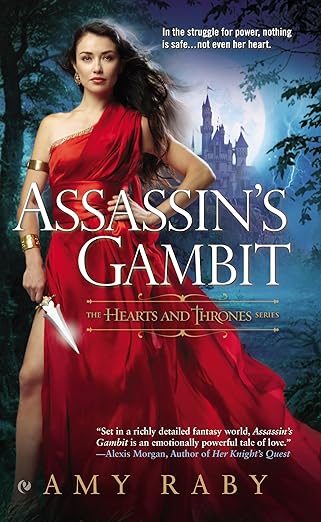
Assassin’s Gambit thrusts us into the heart of an empire where hearts are won with charm but empires are kept with daggers.
Vitala, an assassin and spy, targets the emperor but ends up entangled in a dangerous game of court intrigue and romance.
This novel blends the sharp precision of assassination with the unpredictability of love, proving that the heart can be as effective a target as the back.
Terry Pratchett’s The Hogfather brings his trademark wit to the fore, weaving a tale where the Discworld faces a crisis of mythical proportions that can only be solved by an assassin.
The Guild of Assassins is tasked with a contract on the Hogfather, Discworld’s version of Santa.
What follows is a hilariously twisted tale that questions the foundations of belief and holiday traditions, all while navigating the perils of professional killing.
Andy Peloquin’s Darkblade introduces us to the Hunter of Voramis, an assassin with a blade as cursed as his own soul.
Haunted by his past and feared by almost everyone, the Hunter is a master of death who battles not only his external enemies but also his inner demons.
This novel is an exploration of darkness, not just the kind that fills alleyways at night, but the kind that fills a man’s soul.
Set in a grim world reminiscent of the European Middle Ages, this novel follows Thomas Cale, who has been raised from childhood to be an assassin in the religious sanctuary known as the Sanctuary of the Redeemers.
Cale’s deadly skills are put to the test as he escapes the oppressive environment and faces a wider world rife with war and chaos.
Starting with A Dance of Cloaks, this series features Aaron Felhorn, who is trained from childhood to be the heir to his father’s criminal empire and a master assassin.
The series delves into themes of power, betrayal, and familial bonds, set against a backdrop of a city rife with corruption and violence.
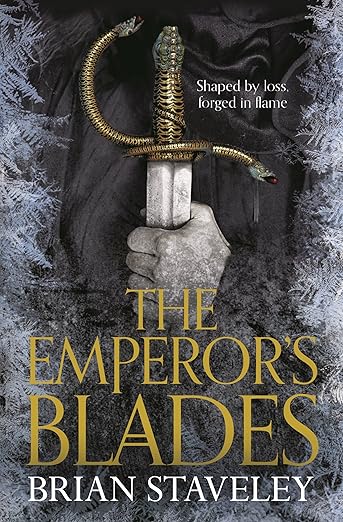
In this opening book of The Chronicle of the Unhewn Throne, the children of the Emperor each follow different paths—one as a monk, another as a soldier, and the third as a minister.
The novel skillfully weaves their stories together with elements of political intrigue, ancient magic, and assassins playing pivotal roles in the unfolding drama of an empire.
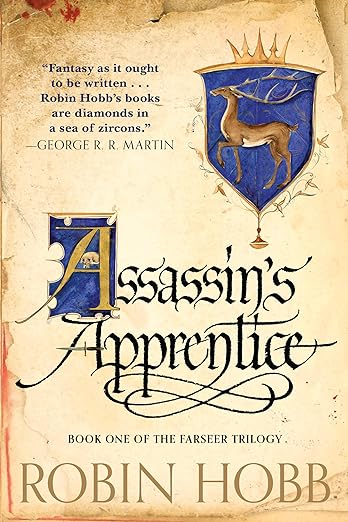
The first book in the Farseer Trilogy, Assassin’s Apprentice introduces readers to Fitz, the bastard son of a prince, who is secretly trained in the ways of a royal assassin.
Through Fitz’s eyes, readers explore a realm where loyalty, political intrigue, and dark magic intertwine, setting the stage for a deeply personal and epic-scale adventure.
Robin Hobb’s detailed world-building and complex character development make this a cornerstone of the genre.
Assassin fantasy provides a darkly mesmerizing escape into worlds where the sharp edge of a blade can alter destinies and where whispered secrets wield the power to topple kingdoms.
Each book in this genre offers a unique blend of intrigue, danger, and moral complexity, drawing readers into the shadows alongside characters who are both compelling and conflicted.
From the gritty streets of Cenaria in Brent Weeks’ The Way of Shadows to the holy halls of the Convent of Sweet Mercy in Mark Lawrence’s Red Sister, these stories explore the nuances of power, loyalty, and survival.
They invite us into the minds and hearts of those who operate on the fringes of society, bound by codes that blur the lines between right and wrong.
For readers looking to dive deeper into the shadowy world of assassin fantasy, Jon Cronshaw’s Guild of Assassins offers a thrilling journey into the life of Soren, an apprentice sculptor turned lethal assassin after the brutal murder of his father.
As Soren navigates the treacherous waters of the assassins’ guild, he is forced to confront not only external enemies but also the internal struggle between his quest for vengeance and his remaining shreds of conscience.
Guild of Assassins is a must-read for anyone fascinated by the complexities of a life pledged to secrecy and the pursuit of justice through unconventional means.
Whether you’re a seasoned aficionado of assassin fantasy or a newcomer to the genre, Cronshaw’s vivid storytelling and rich character development promise an engaging and thought-provoking experience.
So, if your reading list needs a dose of danger and a touch of moral ambiguity, pick up a copy of Guild of Assassins.
Let the adventure begin where the shadows deepen, and discover why assassin fantasy continues to captivate the hearts and minds of readers around the world.
I’ve been dying to share this with you for months, and the day has finally arrived. It’s my great pleasure to unveil the official book trailer for my upcoming epic fantasy novel, “Guild of Assassins”!
With this series. I wanted to create a tale that would transport you to a world of intrigue, where shadows hide secrets and danger lurks around every corner.
At the heart of “Guild of Assassins” is Soren, a young sculptor’s apprentice whose life is shattered when his father is murdered by a mysterious assassin.
Driven by grief and a thirst for justice, Soren sets out to uncover the truth. But his quest takes a dark turn when he’s forced to join the very guild responsible for his father’s death.
As Soren navigates the cutthroat politics of the assassins’ guild and endures a training regimen that pushes him to his limits, he discovers a web of secrets that could bring an empire to its knees.
But to survive, Soren must embrace the way of the assassin and become the very thing he hates most.
This story is packed with pulse-pounding action, searing betrayals, and a deeply human story of loss, redemption, and the price of vengeance.
“Guild of Assassins” is perfect for fans of Robin Hobb, Mark Lawrence, and Michael J. Sullivan. If you love gritty, immersive fantasy tales that keep you turning pages late into the night, this book is for you.
I’d love to hear your thoughts on the trailer…and of the story.
Drop a comment below and let me know what you think!
Join me in this week’s Author Diary as I share updates on my latest writing projects and delve into some enthralling book and TV series experiences.
📝 “Punks Versus Zombies” Updates:
This week, I’ve added two new episodes to the “Punks Versus Zombies” series. Continuing this saga is always an exciting challenge, and I’m eager to see how the story will evolve as it unfolds further.
📖 New Short Story Release:
I’m thrilled to announce another addition to the Ravenglass Legends series—a prequel short story titled “The Beast Hunt.” It’s now available on Ream (Visit: joncronshawauthor.com) and adds depth to the backstory of the world I’ve been crafting.
📚 Reading Journey:
Recently Finished: “Forest Mage” by Robin Hobb, which was a fantastic read, full of intricate developments and compelling character arcs.
Currently Reading: “Renegade Mage,” the third book in the series. This continuation promises more intrigue and magical challenges, and I’m thoroughly enjoying the journey so far.
🎥 Entertainment Wrap-Up:
I’ve just finished watching the Fallout TV show on Amazon Prime. The series did an excellent job of capturing the essence of the game, and I thoroughly enjoyed the depth and twists of the storyline.
Feel free to discuss your own writing endeavors, your thoughts on the Fallout TV series, or your current reading list. Don’t forget to like, share, and subscribe for weekly insights into my author’s life and explorations in storytelling!
Discover the enchanting dance of human-animal bonds in fantasy fiction, where dragons and beasts aren’t just companions, but soulmates and telepathic partners. From “Dragonriders of Pern” to “The Farseer Trilogy,” delve into the complex, compelling layers these bonds add to the fabric of fantasy narratives.
In the intricate dance of fantasy fiction, there’s a tango that often goes unnoticed yet is as pivotal as a plot twist – the human-animal bond.
This isn’t your garden-variety, ‘man’s best friend’ scenario; it’s more ‘man’s best friend can breathe fire and has a penchant for telepathy’.
From Anne McCaffrey’s “Dragonriders of Pern” to Robin Hobb’s “The Farseer Trilogy”, the bond between human and beast (mythical or otherwise) adds layers to the narrative fabric that are as complex as they are compelling.
Dragonriders of Pern: Telepathy and the Ultimate Sky Ride
Anne McCaffrey‘s “Dragonriders of Pern” elevates the human-animal bond to stratospheric levels.
Here, dragons are not just oversized reptiles but telepathically bonded partners.
This bond isn’t just about shared emotions; it’s a union that defines identity and purpose.
The dragons of Pern aren’t just transportation with scales; they are soulmates with wings, sharing everything from thoughts to feelings, making your average pet-owner relationship seem as exciting as watching paint dry on a dungeon wall.
The Farseer Trilogy: Wit and Skill, Beyond Ordinary Kinship
Robin Hobb’s “The Farseer Trilogy” takes the bond a step further, with two distinct types of connections: the Wit and the Skill.
The Wit is a frowned-upon bond with animals, seen as something only slightly more respectable than being a court jester.
The Skill, however, is a telepathic link with humans, considered far more noble.
This dichotomy not only provides an intriguing plot device but also mirrors our own world’s class divisions and prejudices – with a fantastical twist.
His Dark Materials: Daemons and the Soul Outside Your Body
Philip Pullman’s “His Dark Materials” introduces us to daemons, animal representations of a person’s soul.
These aren’t just pets; they are the essence of a person’s being in animal form.
The bond here is not just deep; it’s existential.
Lose your daemon, and you lose yourself – a consequence far graver than forgetting where you left your keys.
The Temeraire Series: A Historical Twist on Dragon-Human Bonds
Naomi Novik’s “Temeraire” series presents an alternate history where dragons are a vital part of military forces during the Napoleonic Wars.
The bond between Captain William Laurence and his dragon, Temeraire, is one of mutual respect and deep friendship.
Their relationship challenges the norms of their society and highlights themes of loyalty, duty, and the struggle against societal constraints.
How to Train Your Dragon: A Tale of Friendship and Understanding
In Cressida Cowell’s “How to Train Your Dragon,” the focus is on the growing relationship between Hiccup and Toothless, a dragon he initially intends to kill.
Their evolving friendship represents a journey of understanding and breaking down prejudices, as they learn to trust and depend on each other in a world that often misunderstands both of them.
The Inheritance Cycle: Bonds Beyond Battles
In “The Inheritance Cycle” by Christopher Paolini, the bond between Eragon and Saphira is explored not just in battles but in everyday interactions.
Their relationship showcases how deep connections can influence personal growth and understanding, helping each other overcome fears, insecurities, and challenges.
A Symphony of Bonds in Fantasy Literature
In the realm of fantasy, the human-animal bond, particularly between humans and dragons, is a symphony of complex, emotional, and profound connections.
These bonds are not mere plot devices; they are the heart and soul of many narratives, offering insights into trust, friendship, loyalty, and growth.
Characters like Eragon and Saphira, Laurence and Temeraire, Hiccup and Toothless embody the depth and richness of these relationships.
Through their stories, we see reflections of our own bonds with the natural world, reminders of the deep connections that can exist beyond the human experience.
In fantasy literature, these relationships are not just about the fantastical; they are a mirror to our own hearts and souls, echoing the unspoken bonds we share with those we care about, both human and otherwise.
Welcome to this week’s Author Diary! It’s been a busy week full of writing, reading, and engaging entertainment.
🧟♂️ “Punks Versus Zombies” Updates
I’ve added two new episodes to the “Punks Versus Zombies” series. To make it even more accessible, I’ve uploaded a compilation of the audio versions of episodes 17-24 on YouTube. This format brings a new dimension to the storytelling experience, and I hope you enjoy it!
📖 New Short Story Release
I’m excited to share a new short story, “Siren’s Song,” a prequel to the Ravenglass Legends series. It’s available for free on my Ream page at joncronshawauthor.com. Dive into this enchanting tale and explore more of the Ravenglass universe.
📚 Reading Journey
Recently Read: “Shaman’s Crossing” by Robin Hobb, which I found to be an excellent start to her series.
Currently Reading: “Forest Mage,” the second book in the series. It continues to captivate with its rich storytelling and compelling character development.
🎥 Entertainment
Finished Watching: Guy Ritchie’s “The Gentlemen.” This series wrapped up nicely, providing a satisfying conclusion to its cleverly woven plot.
Currently Watching: Halfway through the Fallout TV series on Amazon Prime. It’s been a thrilling ride, perfectly capturing the essence of the game while delivering a strong narrative.
As I continue to create and consume stories, whether through writing or media, I look forward to sharing more about my journey with you.
Feel free to share your thoughts on any of the series I’ve mentioned, your own creative projects, or what you’re currently reading or watching. Don’t forget to like, share, and subscribe for weekly insights into my author’s life and creative processes!
Dive into Robin Hobb’s “Assassin’s Apprentice,” where fantasy meets complexity and morality blurs. Explore how FitzChivalry Farseer, an unlikely hero with a dark skill set, reshapes our understanding of fantasy protagonists. Unpack Hobb’s intricate world of magic and politics, delving into a narrative that goes beyond good vs. evil. Discover how this groundbreaking story influences modern fantasy, paving the way for deeper character development and more nuanced storytelling in the genre.
In the often bright and valiant world of fantasy literature, Robin Hobb‘s “Assassin’s Apprentice” arrived like a shadow in the night.
With this book, Hobb didn’t just introduce readers to a new story; she introduced us to FitzChivalry Farseer – a hero as unlikely as finding a courteous goblin.
This tale of an assassin’s apprentice was a sharp turn from the usual path of swords and sorcery, taking the road less travelled – and considerably darker.
An Assassin with a Heart: Shaking Up the Hero Mold
Fitz wasn’t your typical fantasy protagonist.
He was no noble knight on a gleaming steed nor a wise wizard with a long beard and a penchant for riddles.
Instead, he was a boy with a knack for killing and a complicated moral compass.
Hobb crafted a character that was as complex as he was conflicted, bringing a depth to Fitz that went beyond the traditional good versus evil narrative.
He was a walking contradiction, a hero in a role usually reserved for villains.
Magic and Mind: A Different Kind of Power
In “Assassin’s Apprentice”, magic wasn’t just about throwing fireballs or summoning storms.
Hobb introduced the Wit and the Skill – two forms of magic that were as nuanced as they were powerful.
The Wit, a bond with animals, was considered a lowly, almost taboo form of magic, while the Skill was a prestigious, mind-influencing ability.
This reimagining of magic systems injected a fresh dose of intrigue into the fantasy genre, turning magic into a source of inner turmoil as much as external power.
Narrative Grit: The Nitty-Gritty of Royal Politics
Hobb’s narrative delved deep into the murky waters of court intrigue and politics, with all the backstabbing and power plays one might expect in a den of vipers rather than a royal court.
This focus on the political, often from the perspective of someone usually left in the shadows, gave the fantasy genre a grittier, more realistic edge.
It was like lifting a rock to see the unsightly creatures writhing underneath – fascinating, if somewhat unsettling.
Influence on Modern Fantasy: The Echoes of Fitz’s Blade
The influence of “Assassin’s Apprentice” on modern fantasy is as clear as the scars on Fitz’s soul.
The series paved the way for a more nuanced approach to character development, where heroes were allowed to be flawed, and villains occasionally sympathetic.
Hobb’s blend of personal struggle, political intrigue, and a less conventional approach to magic has left an indelible mark on the genre, inspiring authors to explore the grey areas of their characters and worlds.
The Enduring Legacy of a Reluctant Assassin
“Assassin’s Apprentice” was more than just a fantasy novel; it was a masterclass in character-driven storytelling.
Robin Hobb created a world where the line between hero and villain was as thin as a knife’s edge, and just as sharp.
In the annals of fantasy literature, FitzChivalry Farseer remains a testament to the genre’s ability to evolve, to push boundaries, and to redefine what it means to be a hero.
The echoes of Fitz’s blade, and the choices he made with it, continue to resonate in the modern fantasy landscape.